
Review Updates
(3 total)- 2026-07-21 — Added 'cut in half' module
- 2026-07-21 — Added star rating module
- 2025-09-11 — Review published
CUT-IN-HALF: SAUCONY ENDORPHIN SPEED 5
Teardown Analysis
Tap the hotspots to reveal component specifications.
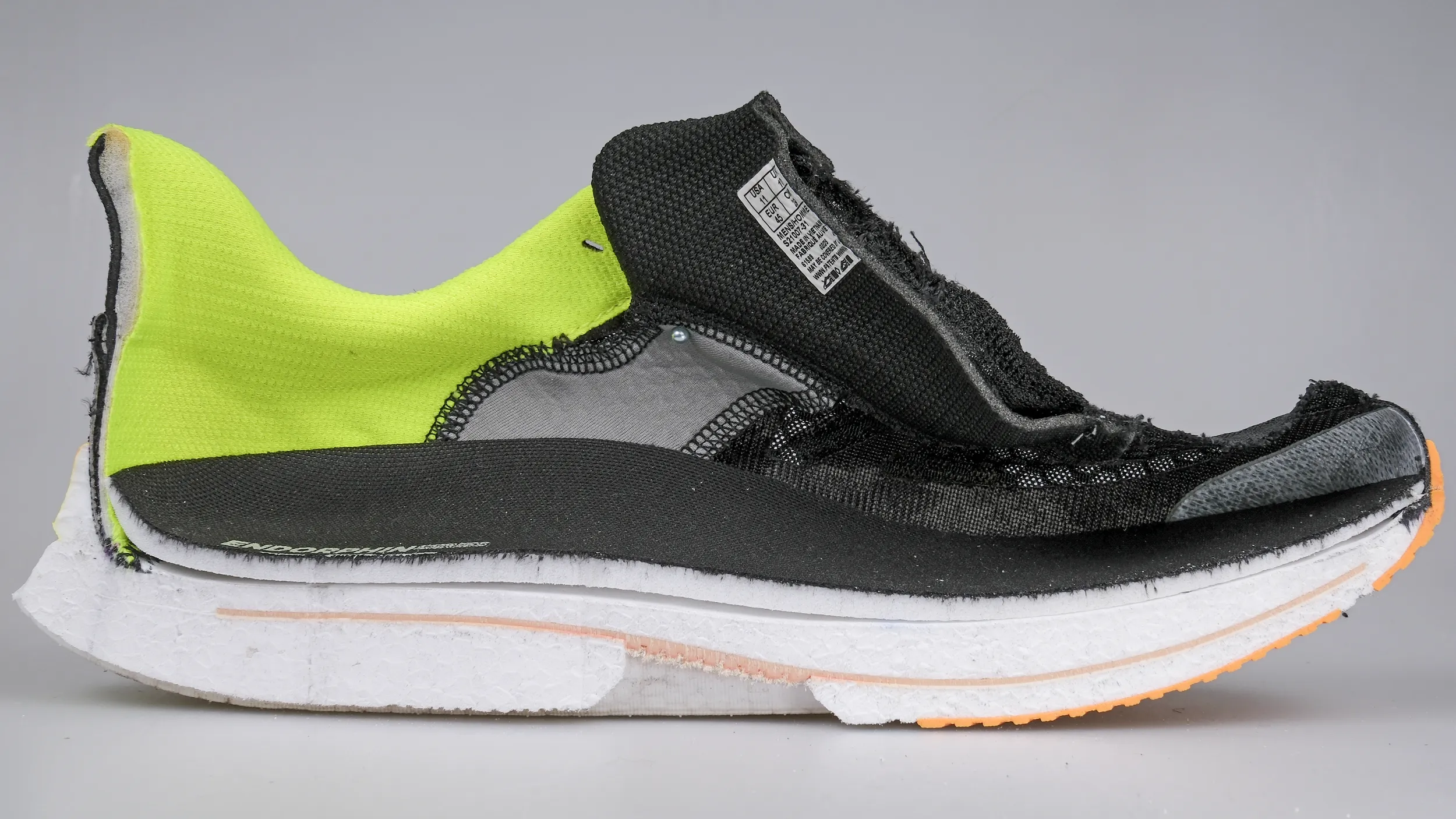
Select a component
Pros
- Usable and versatile cushioning
- No penalty for slow speeds and heel striking
- Accommodating and breathable upper
- Stable for a plated trainer
- Lightweight
Cons
- No widths
- Nylon plate produces weak snap and rocker effect
- Short tongue provides inadequate coverage
In this review:
SUMMARY
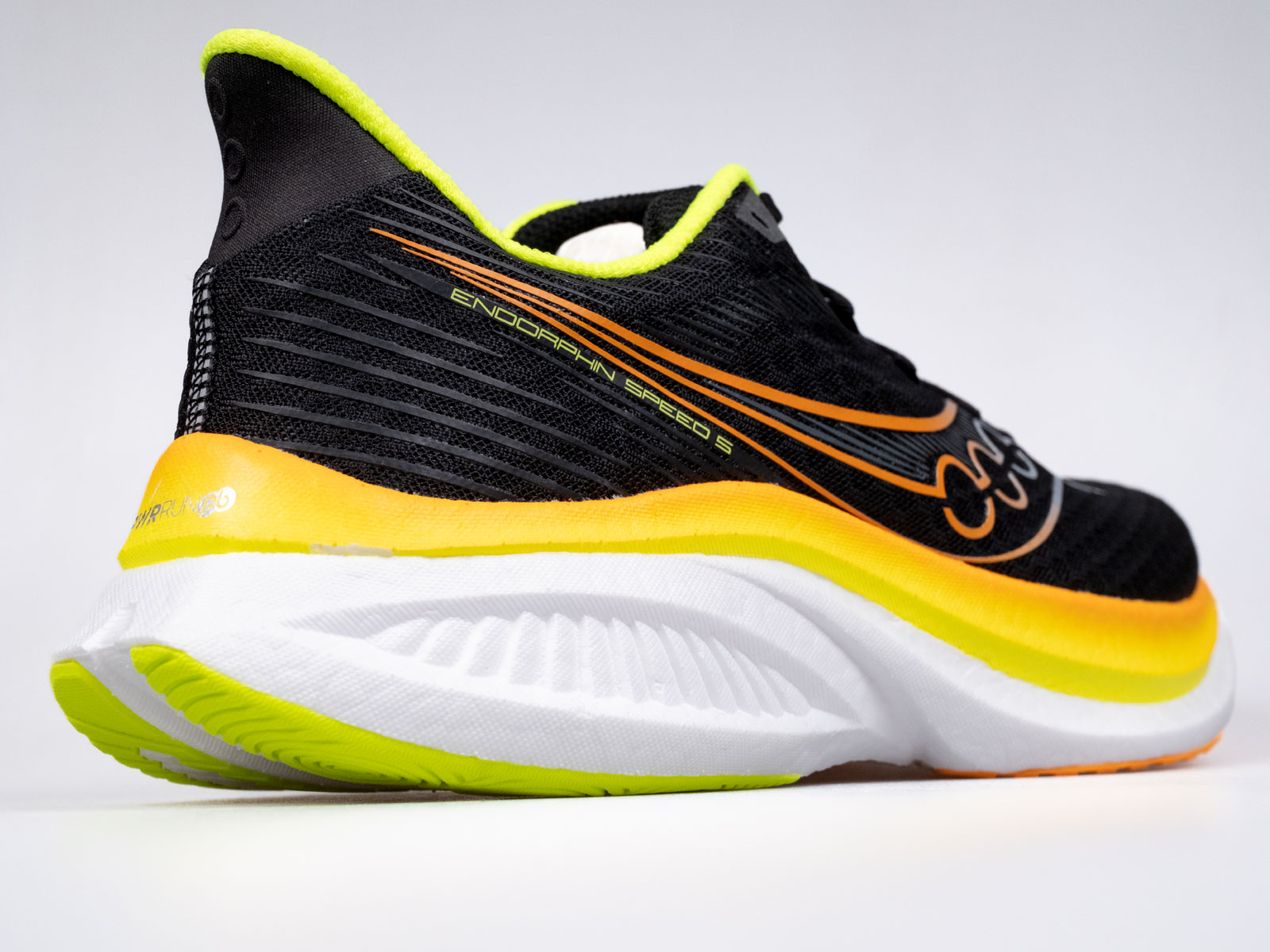
A plated running shoe is usually associated with a propulsive rocker, snappy rearfoot, an unstable heel, and a narrow upper. Such preconceived notions exist for a reason; the unique geometry of a typical plated midsole favors forefoot strikers and faster running speeds over heel strikers and easy paces. The trade-off is simple: exchange user-friendliness for a springy, speed promoting ride.
The Saucony Endorphin Elite 5 dispels such notions. This shoe features a dual-layered PEBA foam (Pwrrun PB) midsole with a full-length Nylon plate, yet offers the usability of an everyday trainer. Not only is the midsole cushioned and supportive enough for heel strikers and slow running speeds, but the upper also fits like a non-plated daily trainer. While optional widths are unavailable, the spacious forefoot will accommodate most foot profiles. The toe box is wide enough to let the foot splay. The Speed 5’s versatile ride and build quality make it capable of everyday miles, tempo runs, intervals, and marathons.
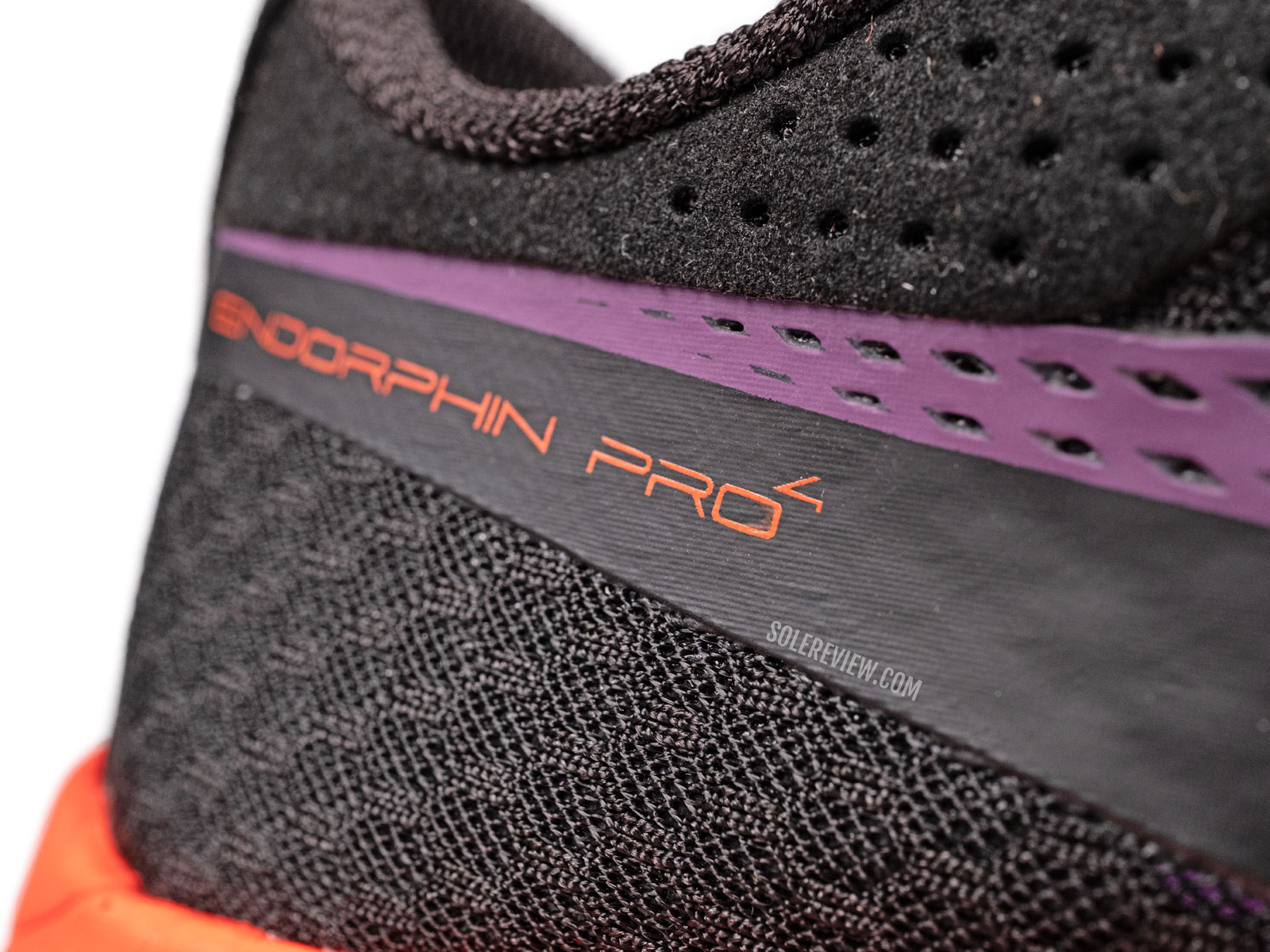
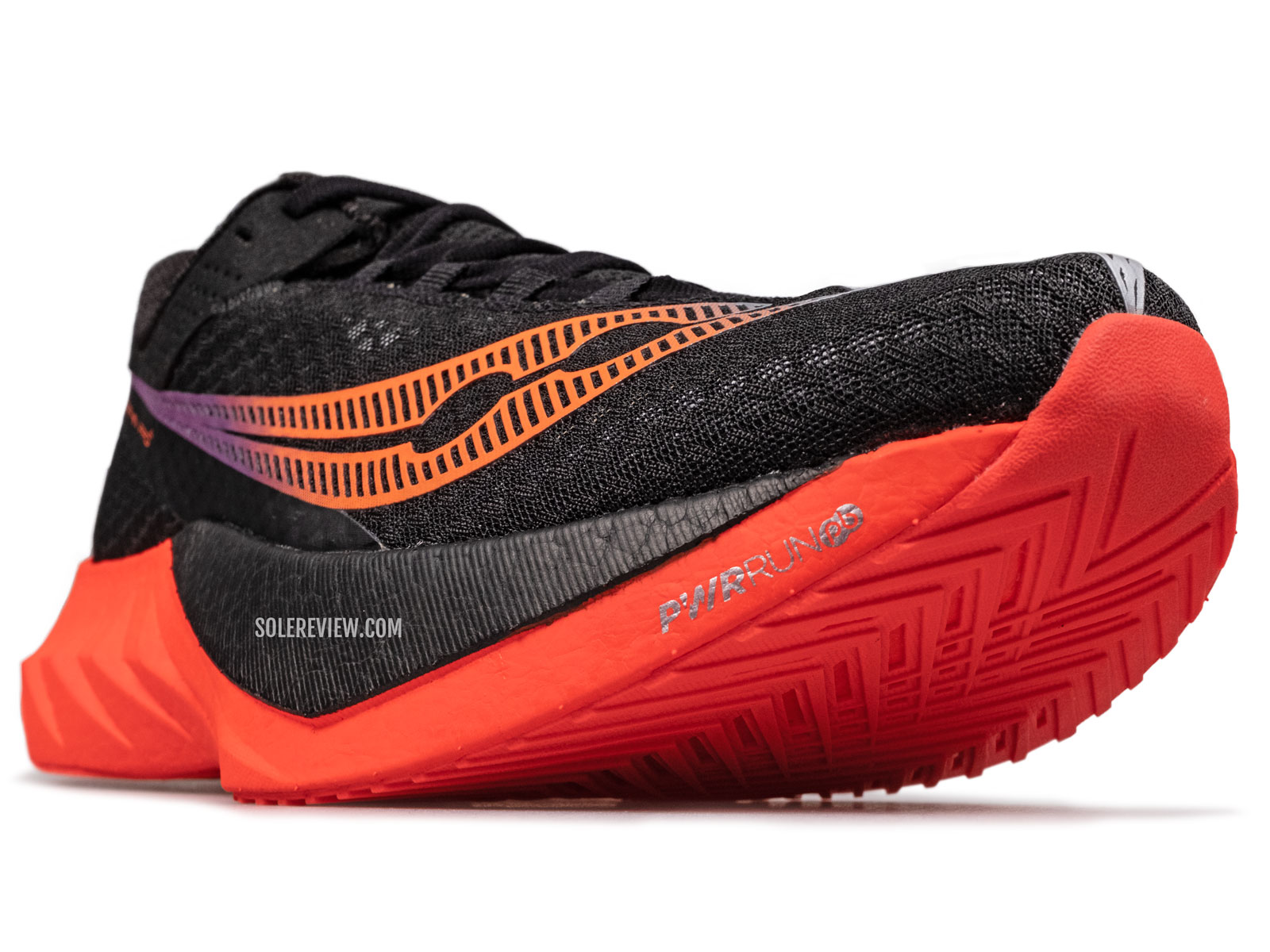
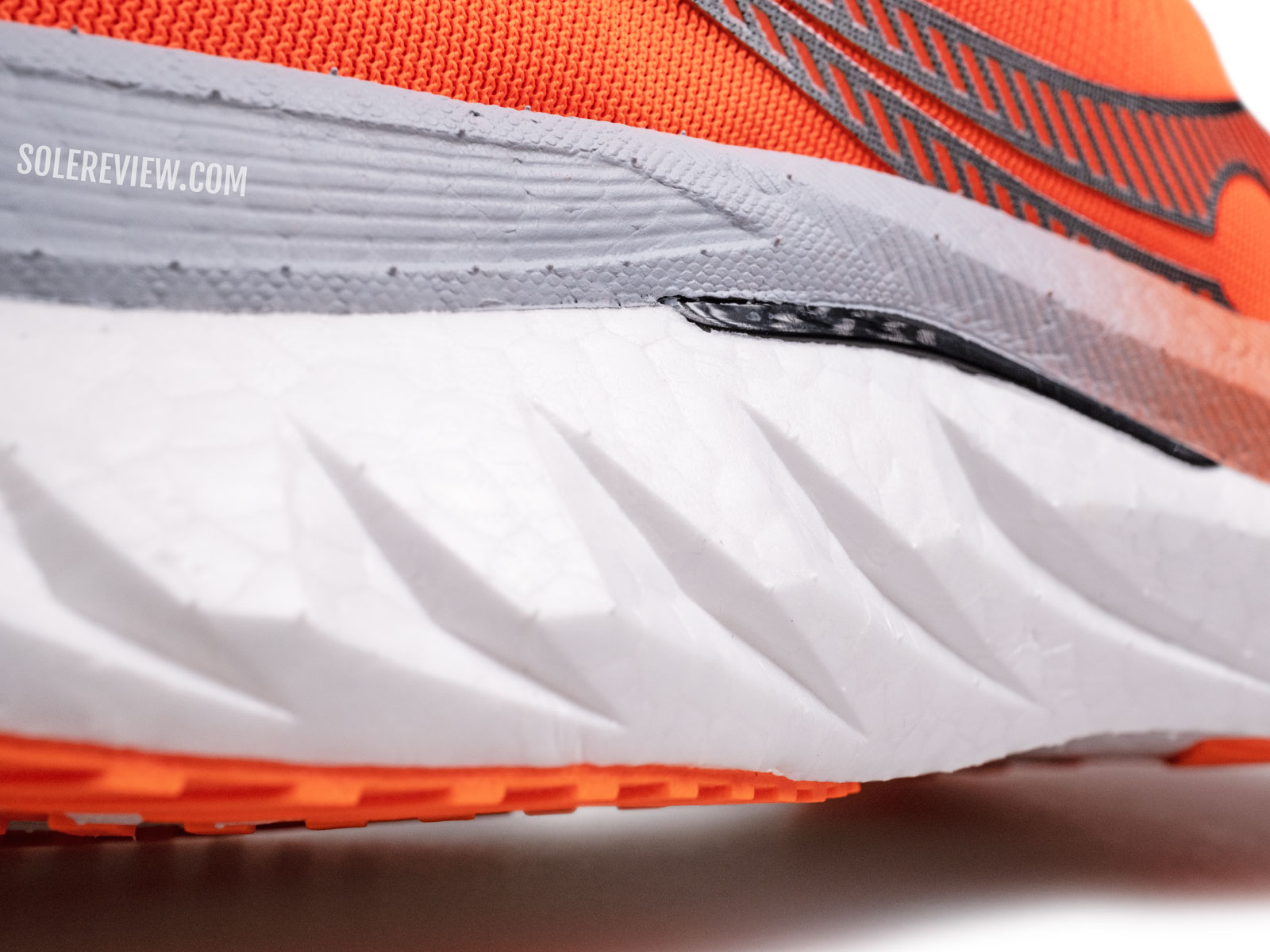
Despite its 'wing' plate, the Speed 4 is not as stable as the Pro 4.
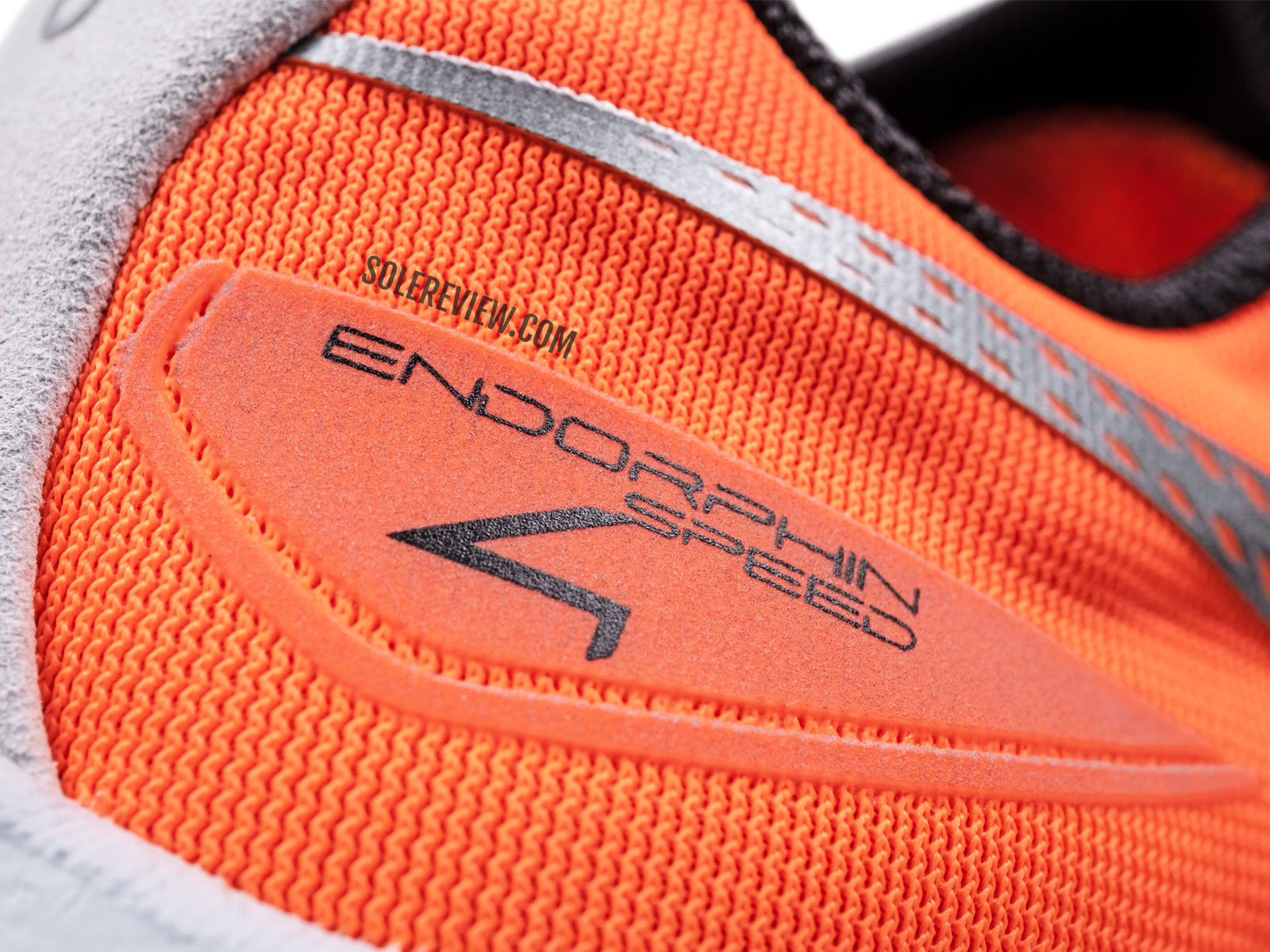
The proverb ‘you can’t have your cake and eat it too’ applies to the Endorphin Speed 5. The user-friendly cushioning is the result of reining in other aspects of the ride. Runners will not experience the sharp rearfoot snap, a propulsive rocker, nor the tight racing-shoe fit. The competent Endorphin Speed 5 meets the needs of many, but it’s not the one for thrills. The more expensive Endorphin Pro 4 delivers a stronger rearfoot snap, a rocker that’s more persuasive in rolling the foot forward, and a snug race-day upper. If it’s just the tight upper you’re looking for, then last year’s Endorphin Speed 4 fits narrower than the Speed 5 because of the heel design.
WHAT THE ENDORPHIN SPEED 5 DOES WELL
– Everyday runs, tempo training, and marathons.
– Works best at 4:00 min/km (6:30 min/mile) and slower.
– Offers heel strike-friendly cushioning and support.
– Does not penalize slow running speeds.
– Has sufficient splay room for the toes.
– Fits most foot profiles due to its accommodating upper.
– Grips well on dry surfaces.
– Pwrrun PB offers higher resistance to creasing than other PEBA foams.
– Excellent ventilation because of the lightweight mesh and roomy fit.
– Offers better durability than most super-foam trainers.
– The removable footbed and spacious fit make it orthotic-friendly.
WHAT THE ENDORPHIN SPEED 5 DOES POORLY
– Lacks the springy, energetic ride of other plated super-foam trainers.
– The spacious upper doesn’t create a strong connection between the foot and the midsole.
– The rocker doesn’t have an early-stage effect.
– The short tongue does not provide sufficient coverage under the last lacing row.
– Lacks sufficient trims for visibility in low-light conditions.
– The Nylon plate lacks the stiffness of carbon composite plates, making the rocker and rearfoot rebound less effective.
POTENTIAL ISSUES
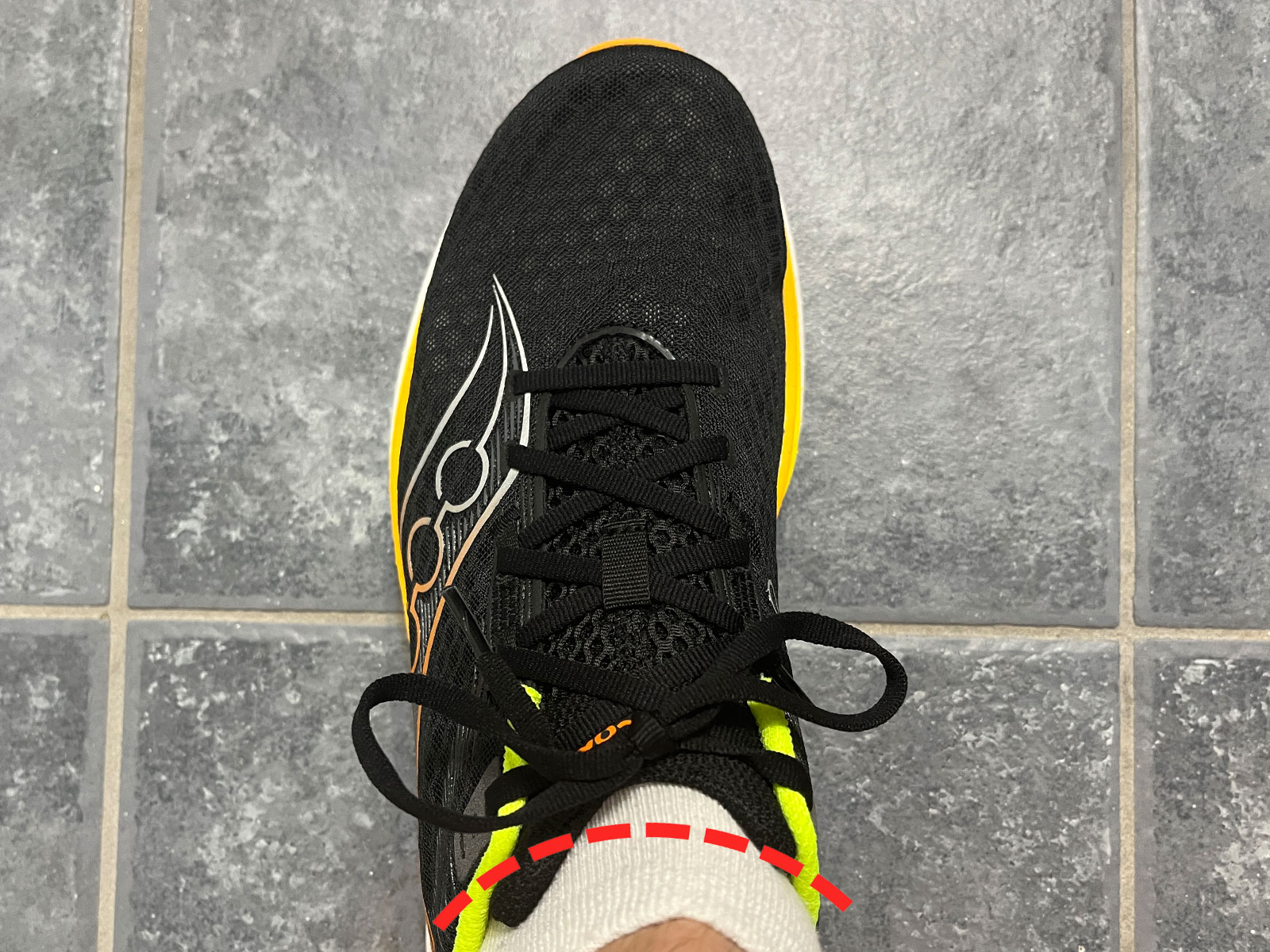
The Endorphin Speed 5’s faults are more like minor inconveniences, but we’ll point them out anyway. The tongue length is at least 10 mm shorter than it needs to be, lacking the runway for the last two lacing rows. That doesn’t pose a problem during straight-line running. However, during fast cornering, the firm collar presses down on the inner midfoot. It’s hard to say why Saucony shortened the tongue on this update, but that’s how things are.
A couple of other minor areas may require your attention. Narrow-footed runners will find a roomier fit than the Endorphin Speed 4 due to the redesigned heel collar. Lastly, both the Saucony Endorphin Speed 5 and Pro 4 emit a solvent-like smell that may disagree with sensitive runners. We mentioned this issue in the Endorphin Pro 3 review, and Saucony has not fixed it since.
WHAT HAS CHANGED
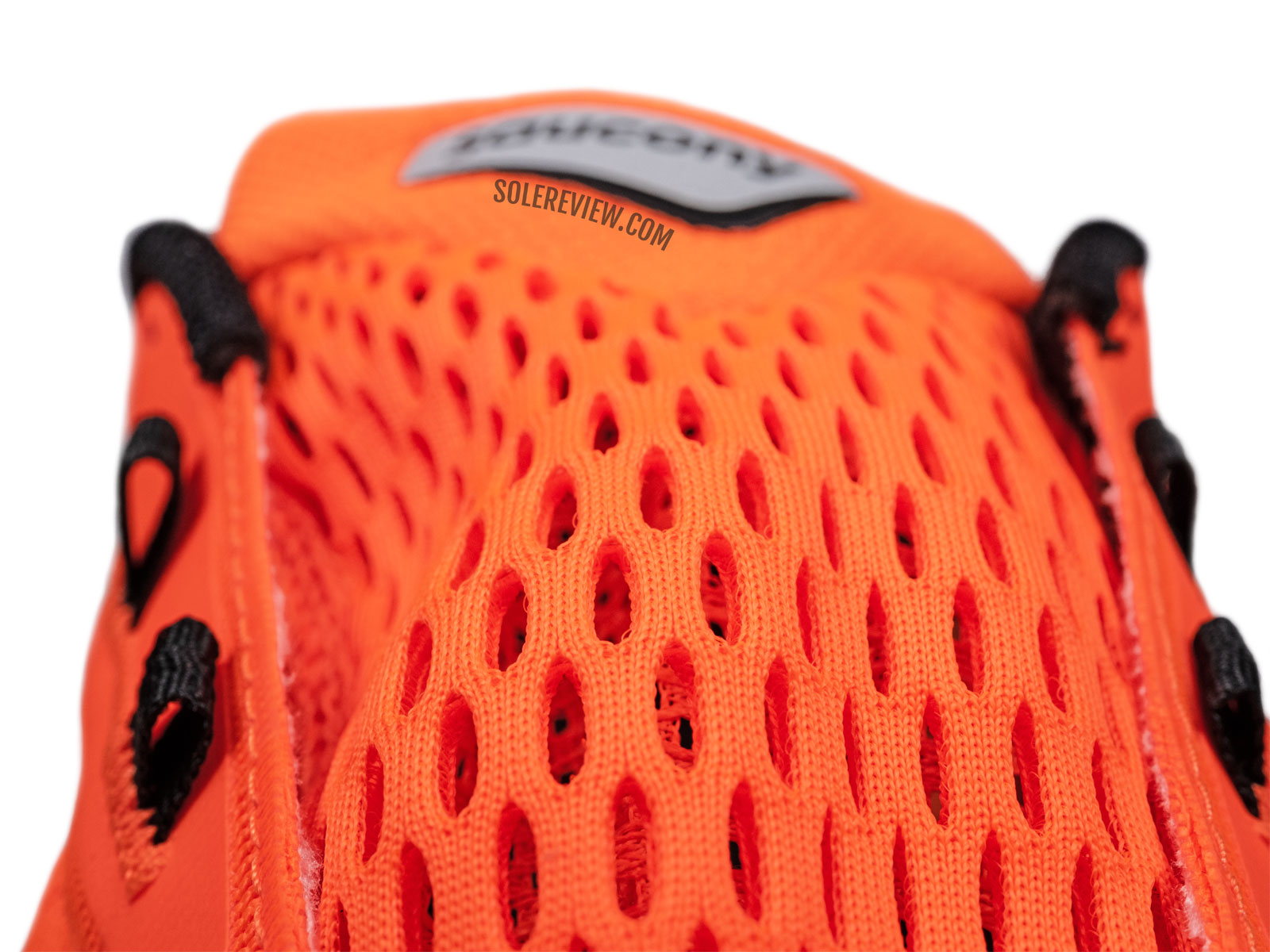
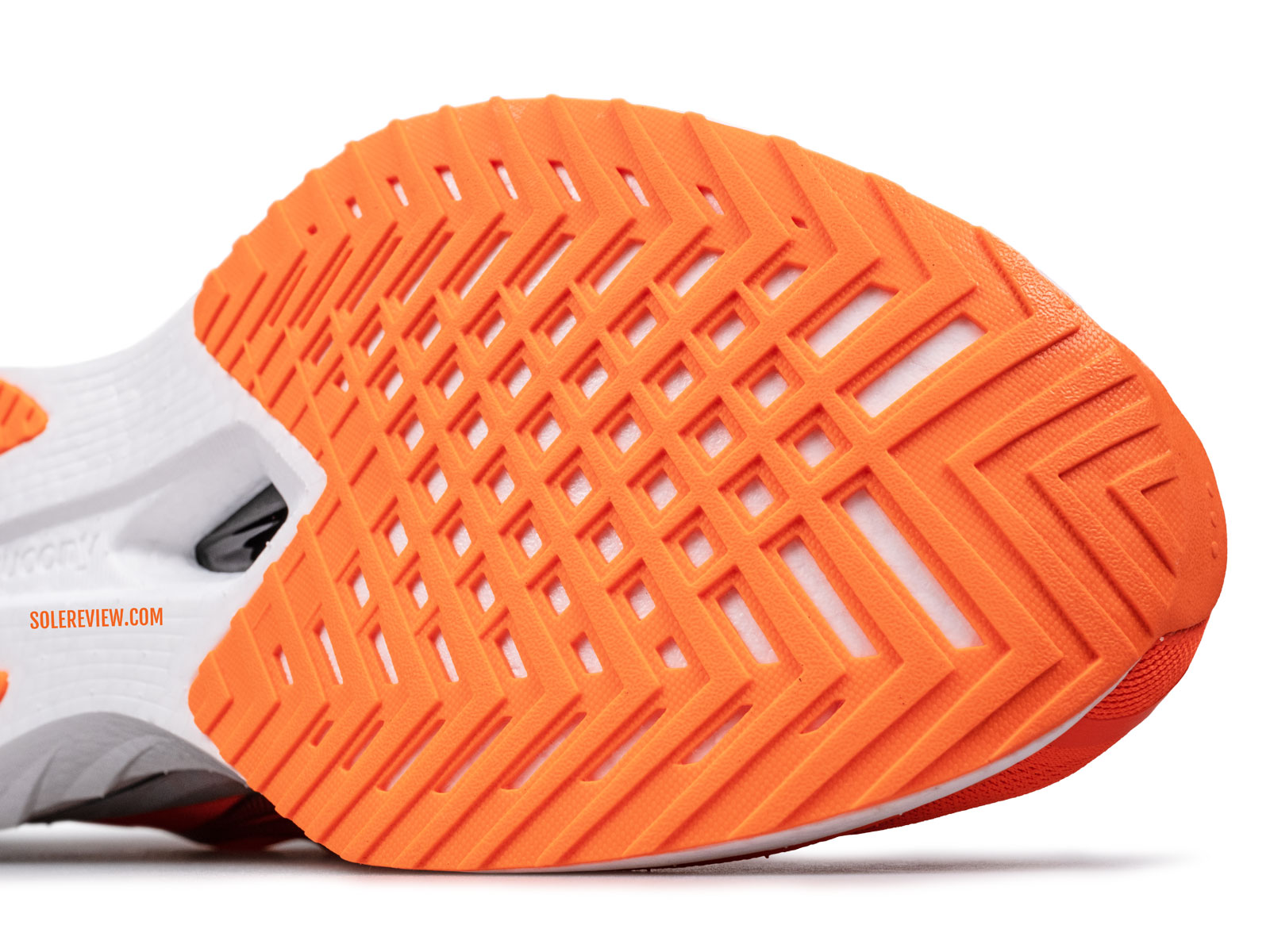
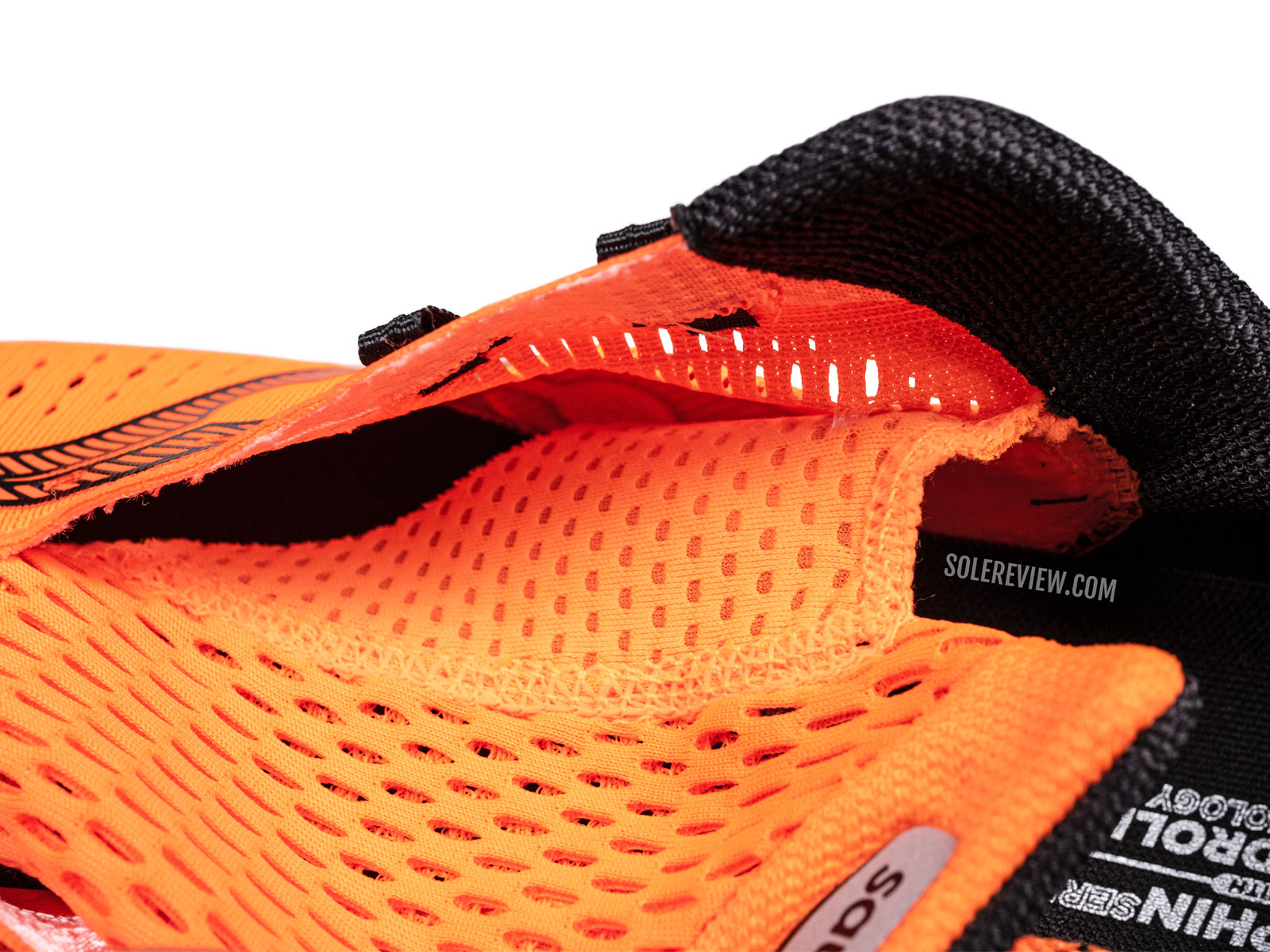
– Increased forefoot and toe box space.
– Improved rearfoot stability due to redesigned sidewalls.
– Weaker power delivery from the foot to the midsole due to the roomier fit.
– Better support for overpronators.
– Shorter tongue than before.
– Smaller internal tongue gusset.
– Updated heel collar design with Achilles lip.
– New mesh.
– Significantly reduced low-light visibility.
– Removed the speed lacing loops.
– The lateral ‘wing’ of the Nylon plate is no longer visible.
– Forefoot outsole exposes more midsole foam; slightly lower grip.
THE RIDE EXPERIENCE
Saucony plays a slightly different version of the PEBA foam game. The Pwrrun PB foam midsole consists of thousands of small globes packed tightly together. It’s very similar to how Saucony Pwrrun+ (E-TPU) foam is molded, except that the base material is PEBA. This construction infuses the midsole with a more resilient feel than competing super-foams. It takes a higher level of loading (be it weight, speed, or both) for the springiness to be fully realized, rather than being easily accessible. Pwrrun PB is firmer than Asics FF Turbo+/Leap, adidas Lightstrike Pro, and Brooks DNA Gold. Unsurprisingly, the cushioning feels less bouncy when benchmarked against competing foams, and for lack of a better word, less thrilling. The bounciness is more contained, subdued, the kind that doesn’t throw the foot around. At slower speeds, the midsole responds with a softness that has only a hint of bounciness.
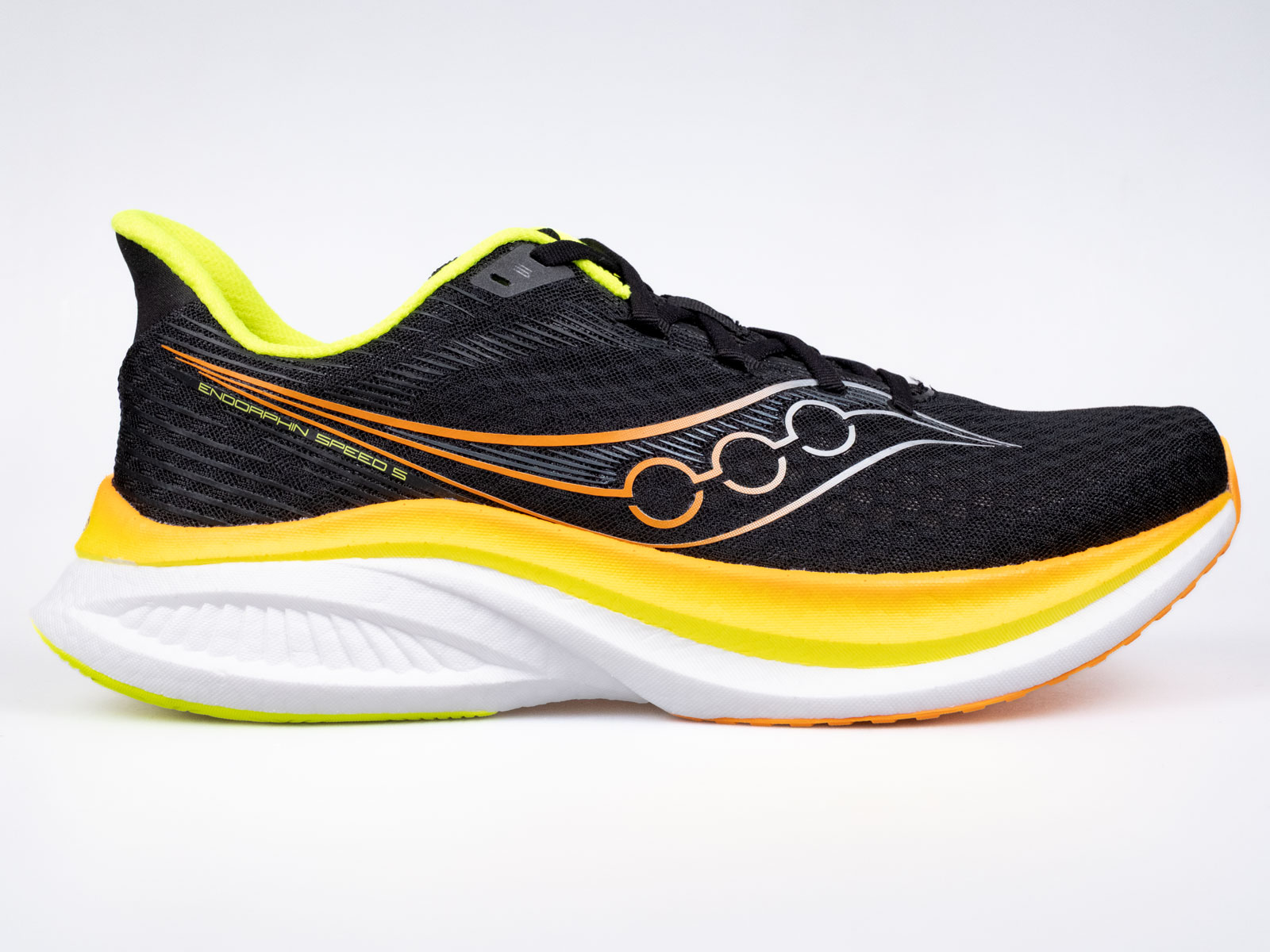
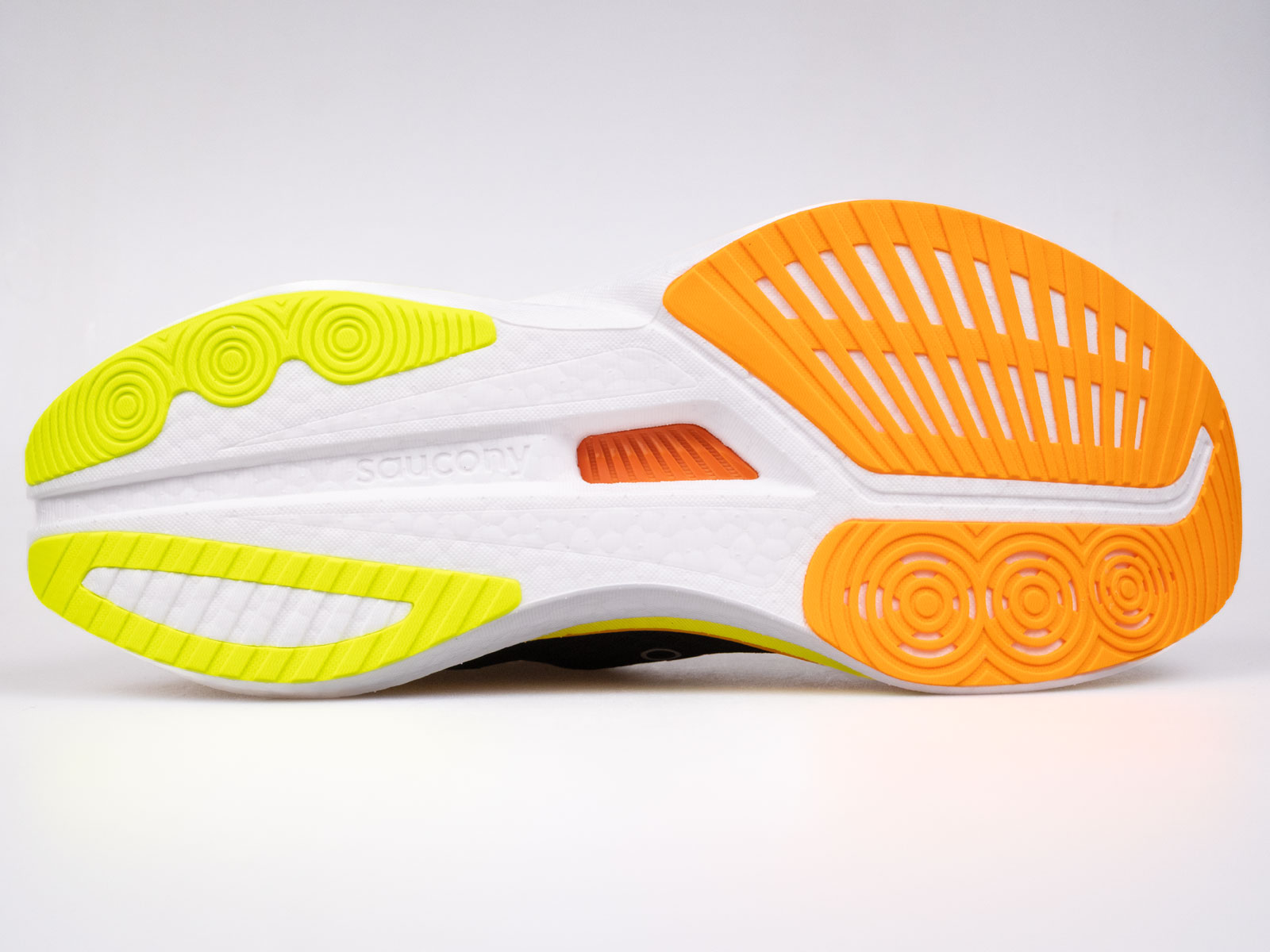
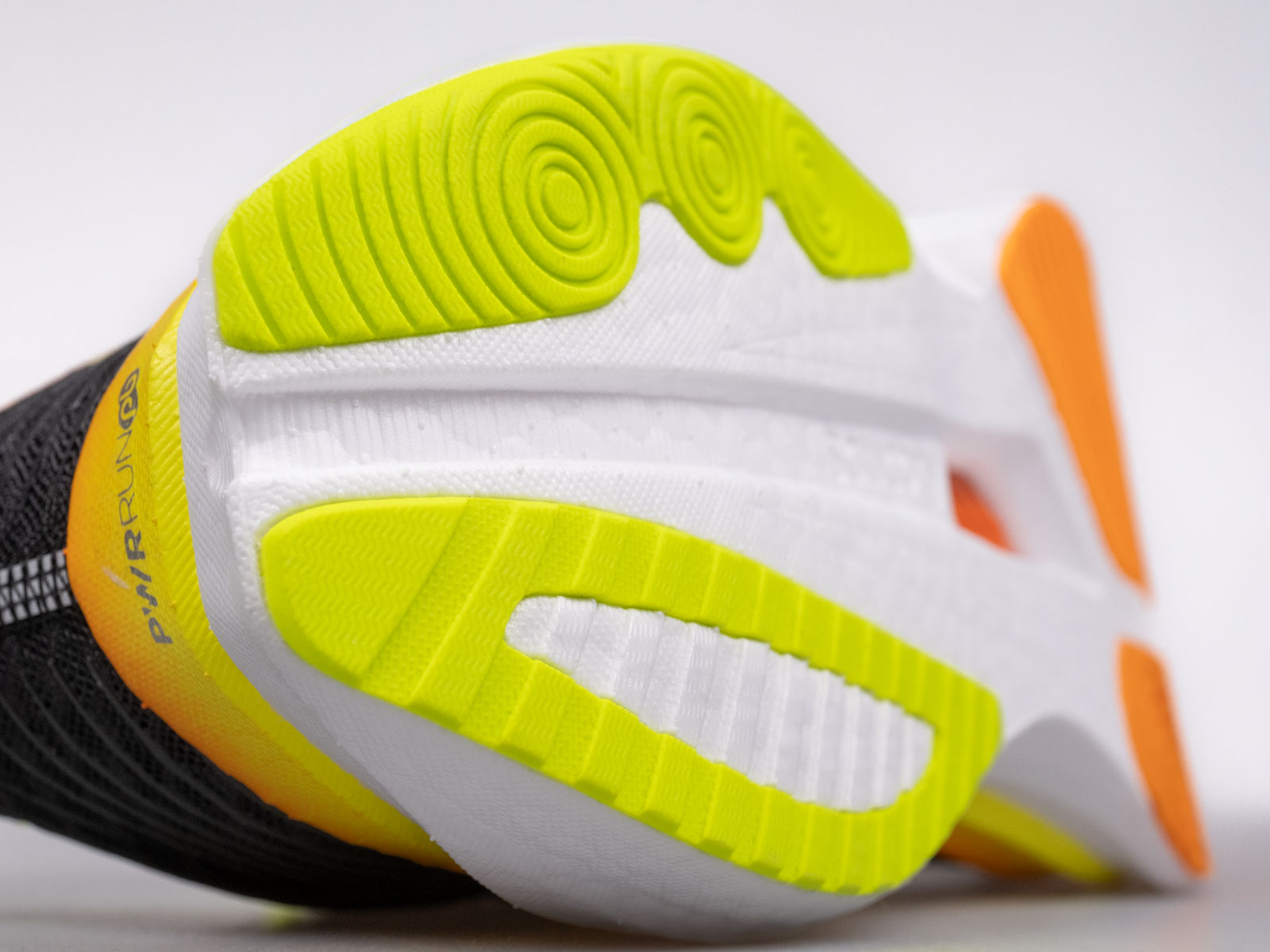
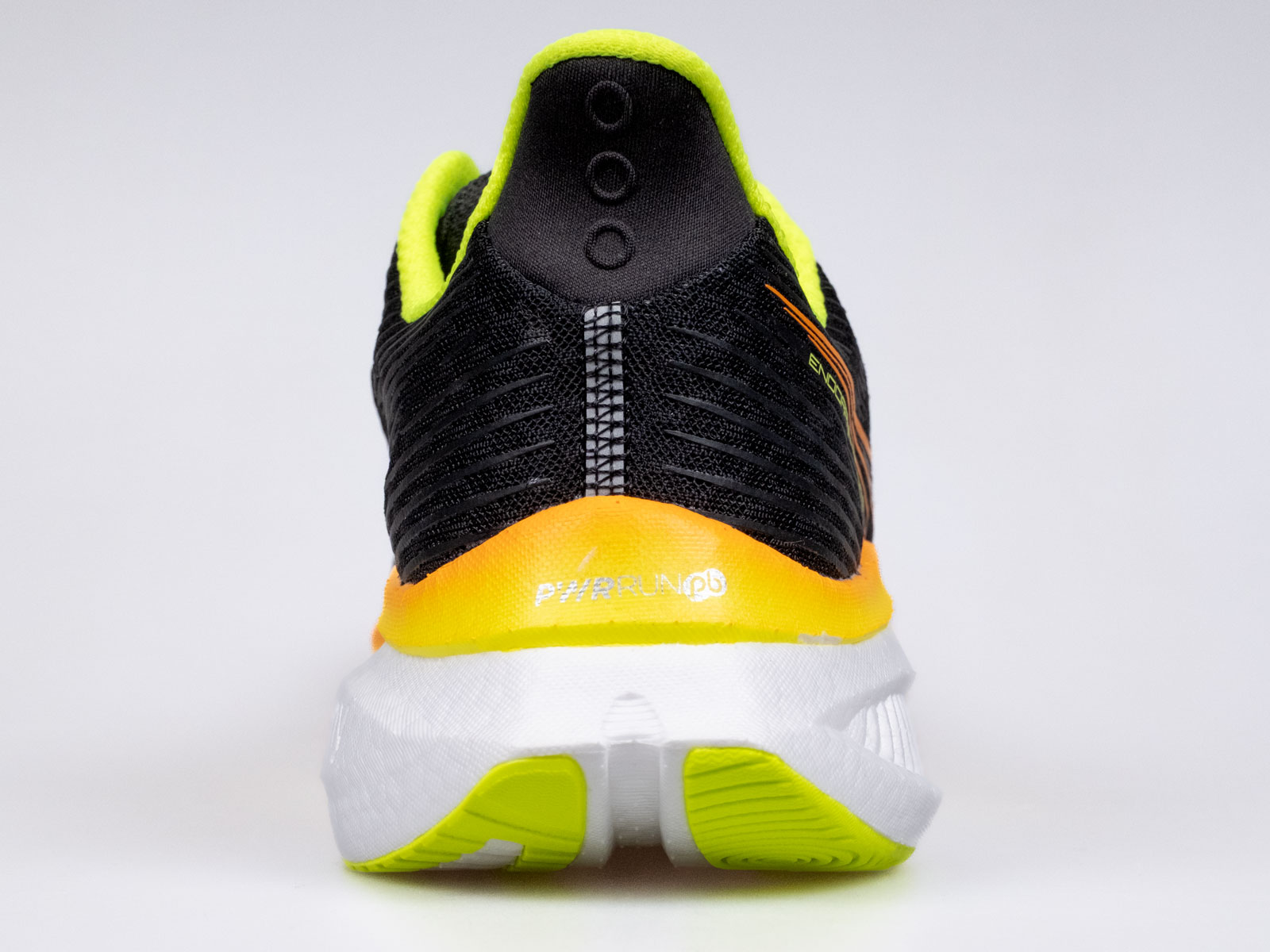
The reslient Pwrrun PB, wide midsole base, and the flat outsole make the Endorphin Speed 5 relatively stable for a trainer with a curved plate. Except for a tiny window that provides a glimpse of the plate, the outsole geometry is mostly flat. The shallow transition groove under the heel has a negligible effect on the cushioning, but plays a small role in centering the weight.
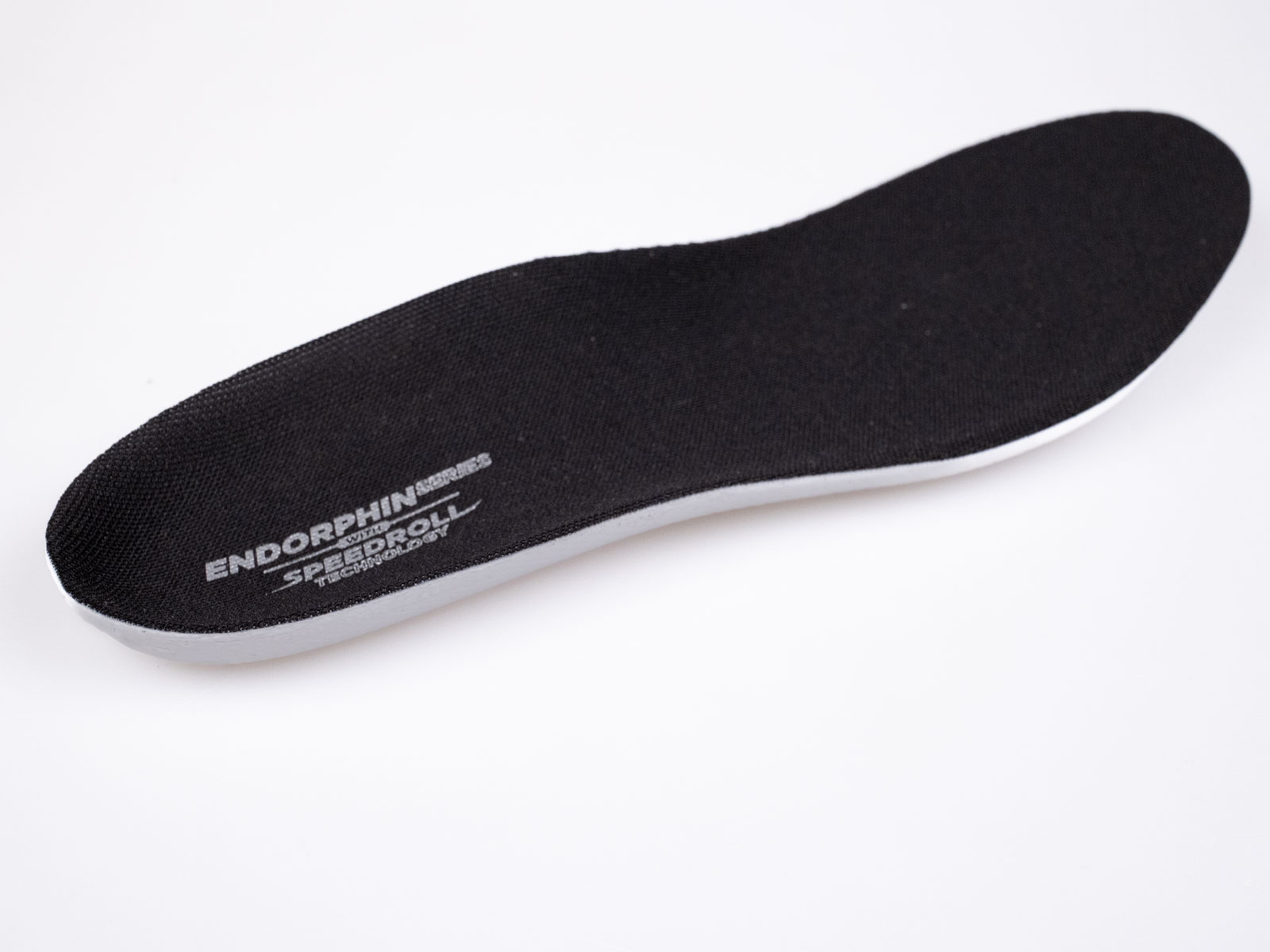
The midsole is supportive enough for heel strikers and heavy runners, and doesn’t penalize slow speeds. The Endorphin Speed 5 is a better shoe for overpronators than the Speed 4 was. The medial (inner) midsole is reinforced with a wider base, making the midsole more resistant to deformation. The foot also sits closer to the heel because of the redesigned upper, positioning it over the wider (and more stable) part of the midsole. Replacing the stock footbed with an orthotic is also an option.
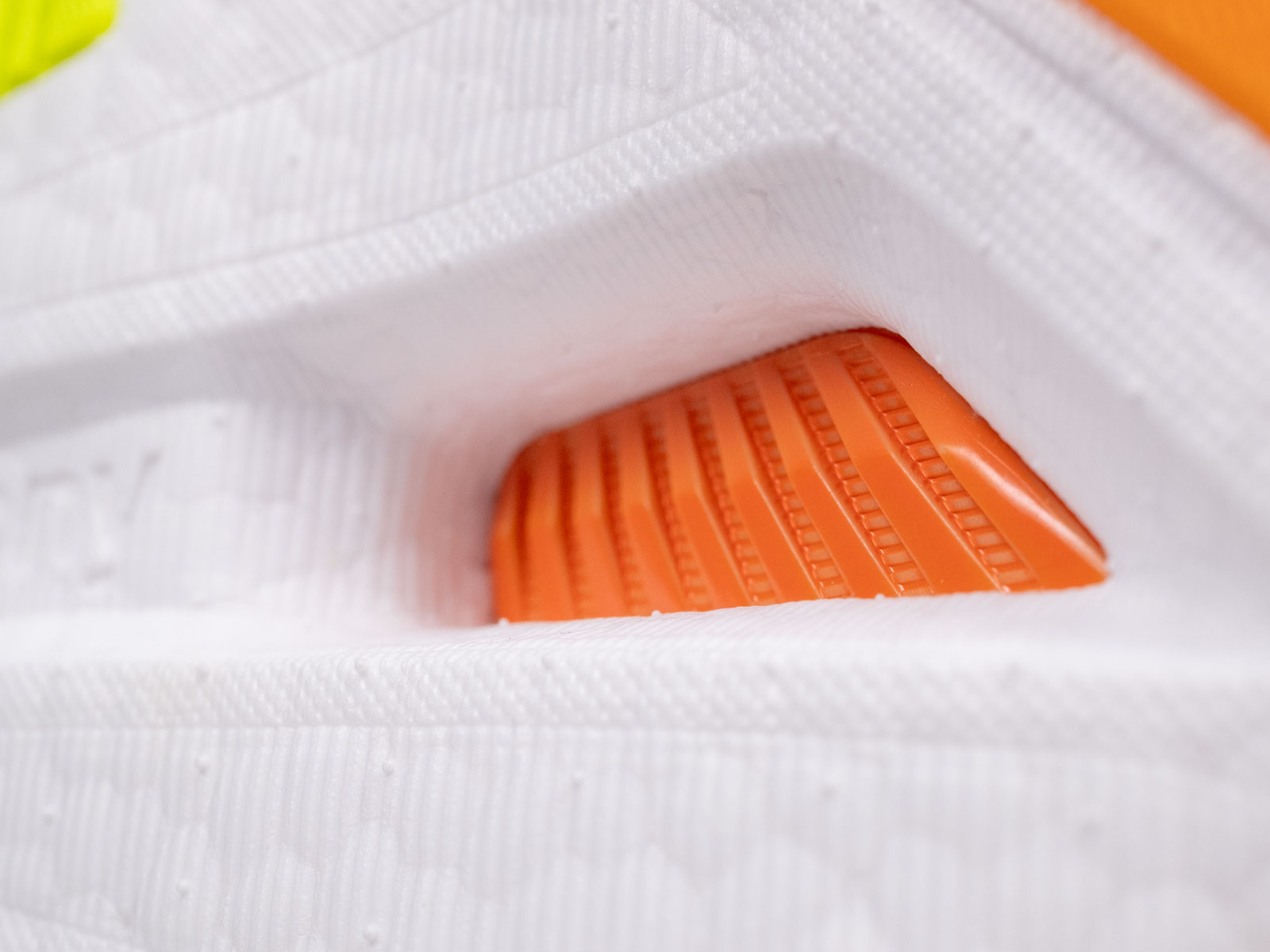
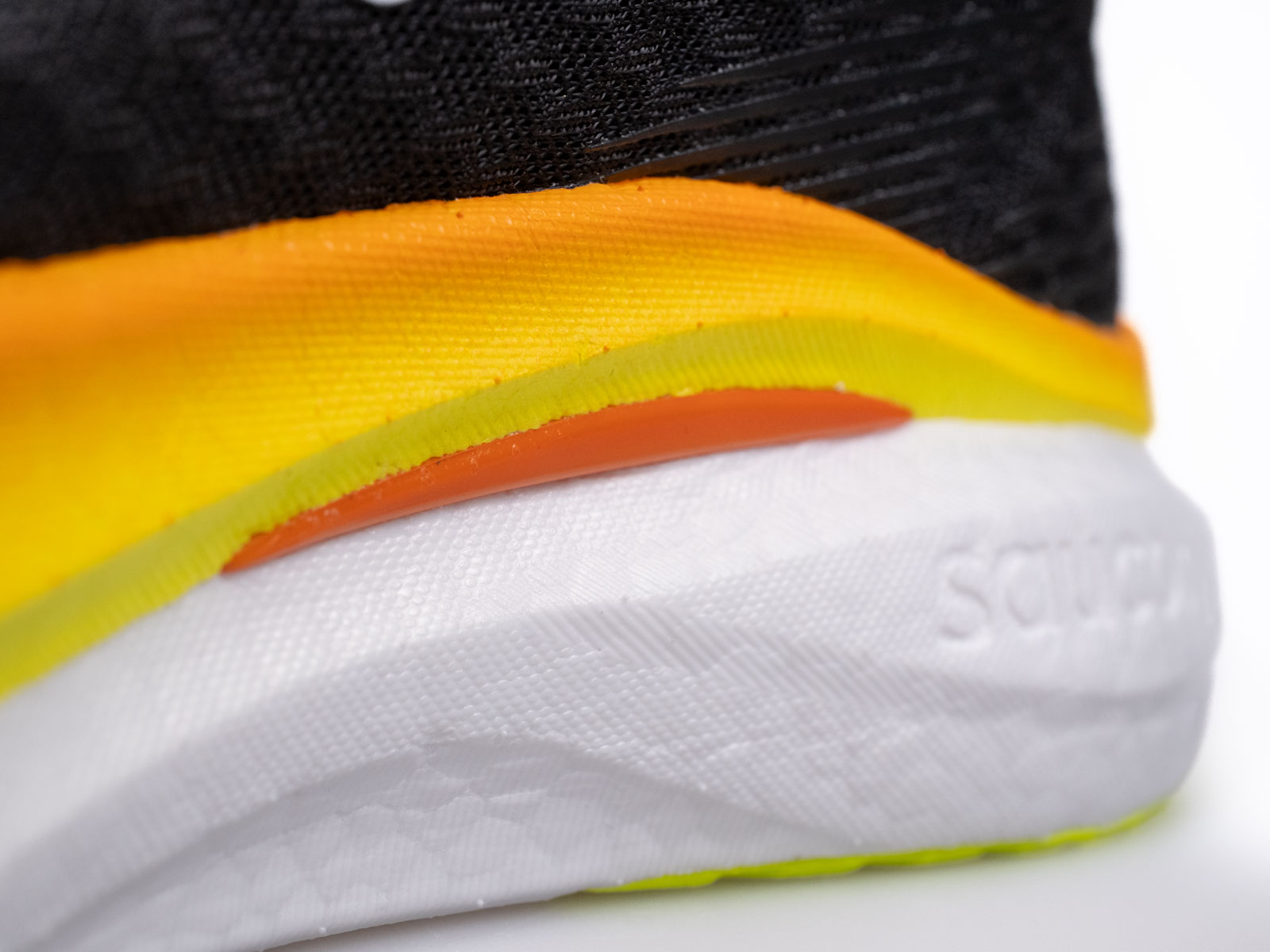
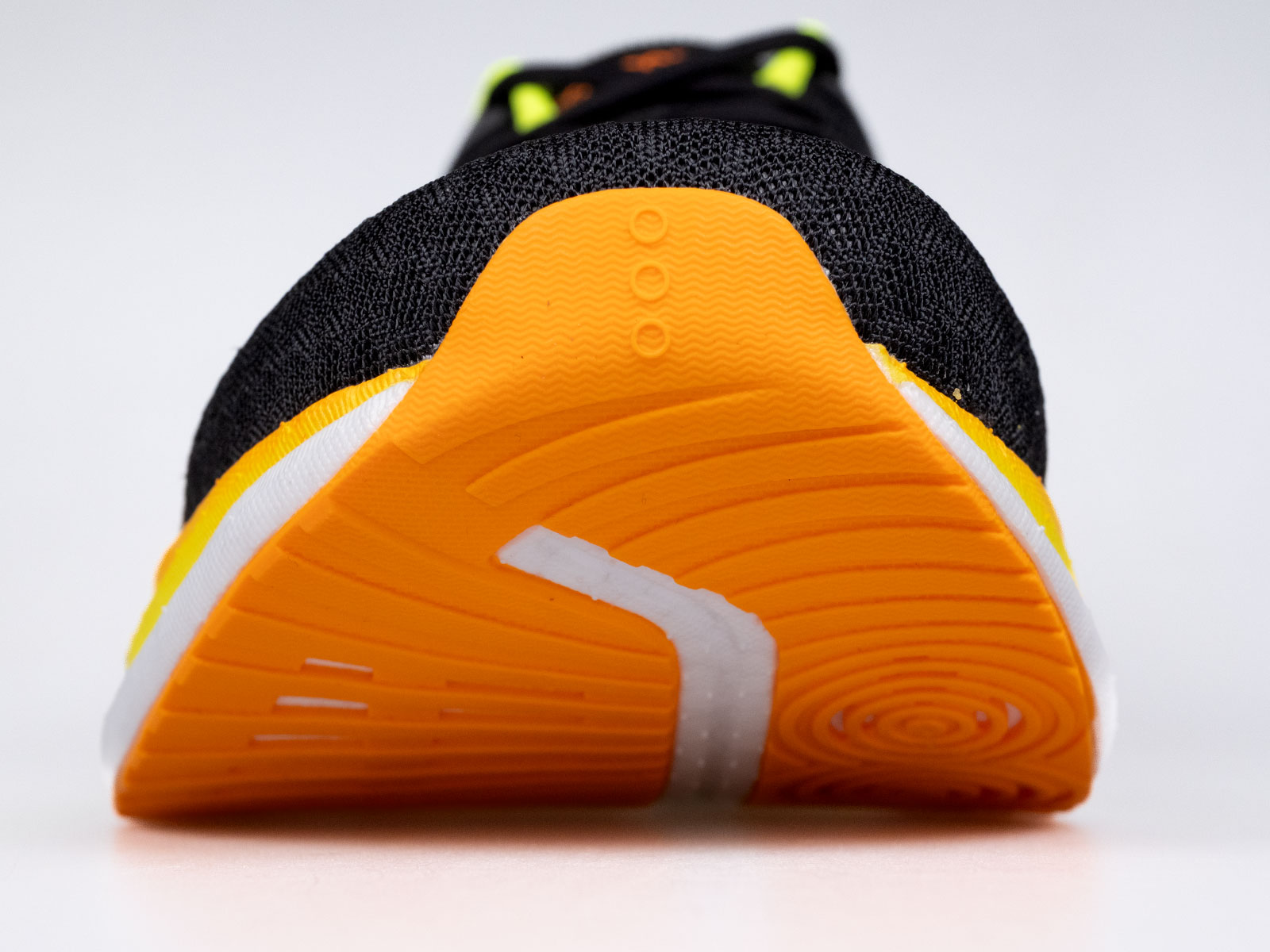
The Nylon plate inside the midsole lacks the stiffness of a carbon-composite, so both the rearfoot snap and forefoot rocker effect are weaker than on the Endorphin Pro 4. A Nylon plate doesn’t release potential energy the way a carbon plate does, and it’s also much easier to bend. Unlike the Endorphin Pro 4, it’s possible to flex the Endorphin Speed 5 (and Speed 4) without much effort.
In short, while there is a forefoot rocker, it’s not as assistive or propulsive as a carbon-plated one. While far from lethargic, the Speed 5 is not the fastest-feeling shoe on the block. The (more) spacious upper and softer outsole also give the transitions a less serious quality than the Pro and Speed 4. Nonetheless, the resilient cushioning and Nylon plate make the transitions smooth and efficient during tempo runs, intervals, and mile repeats.
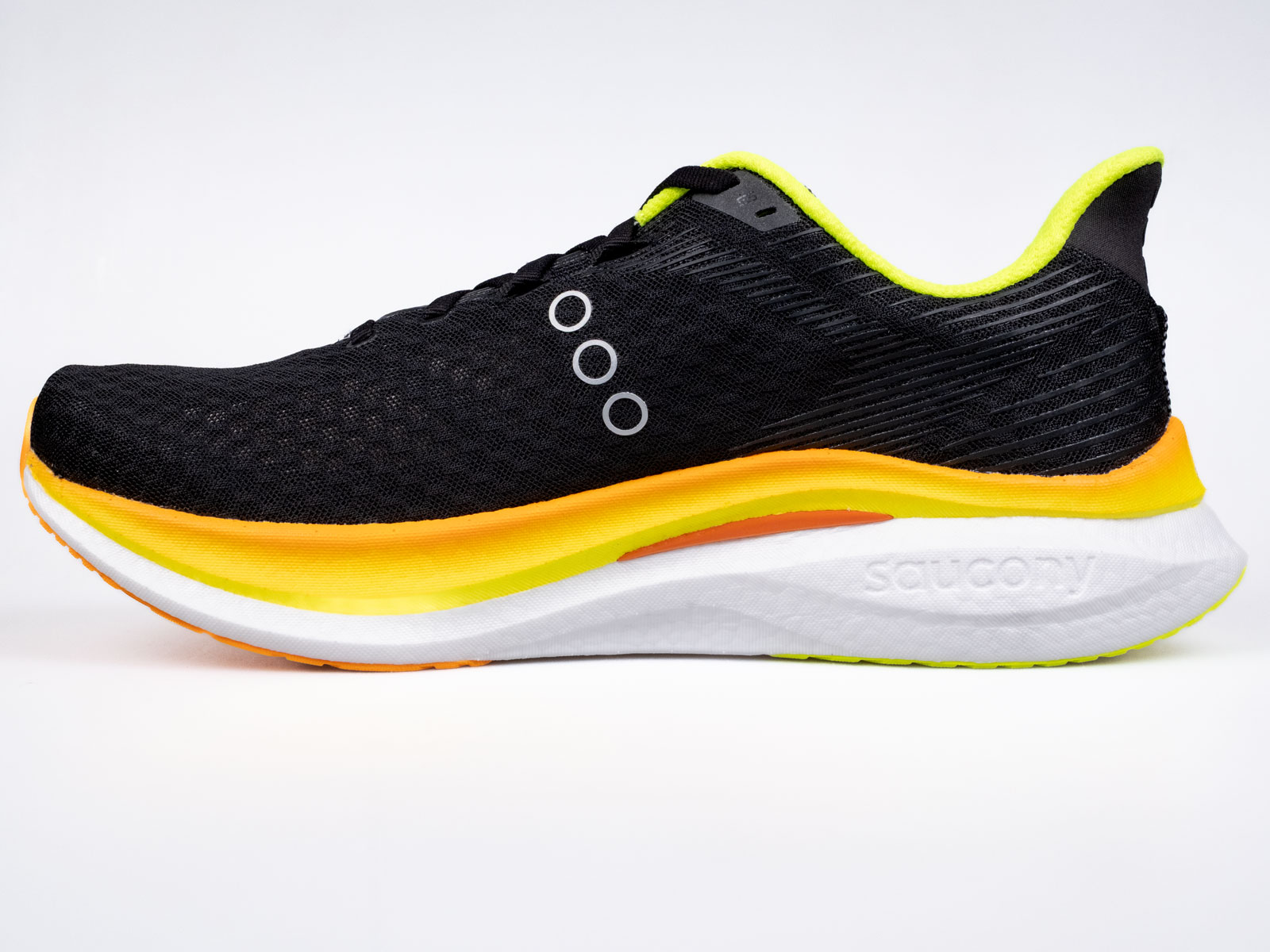
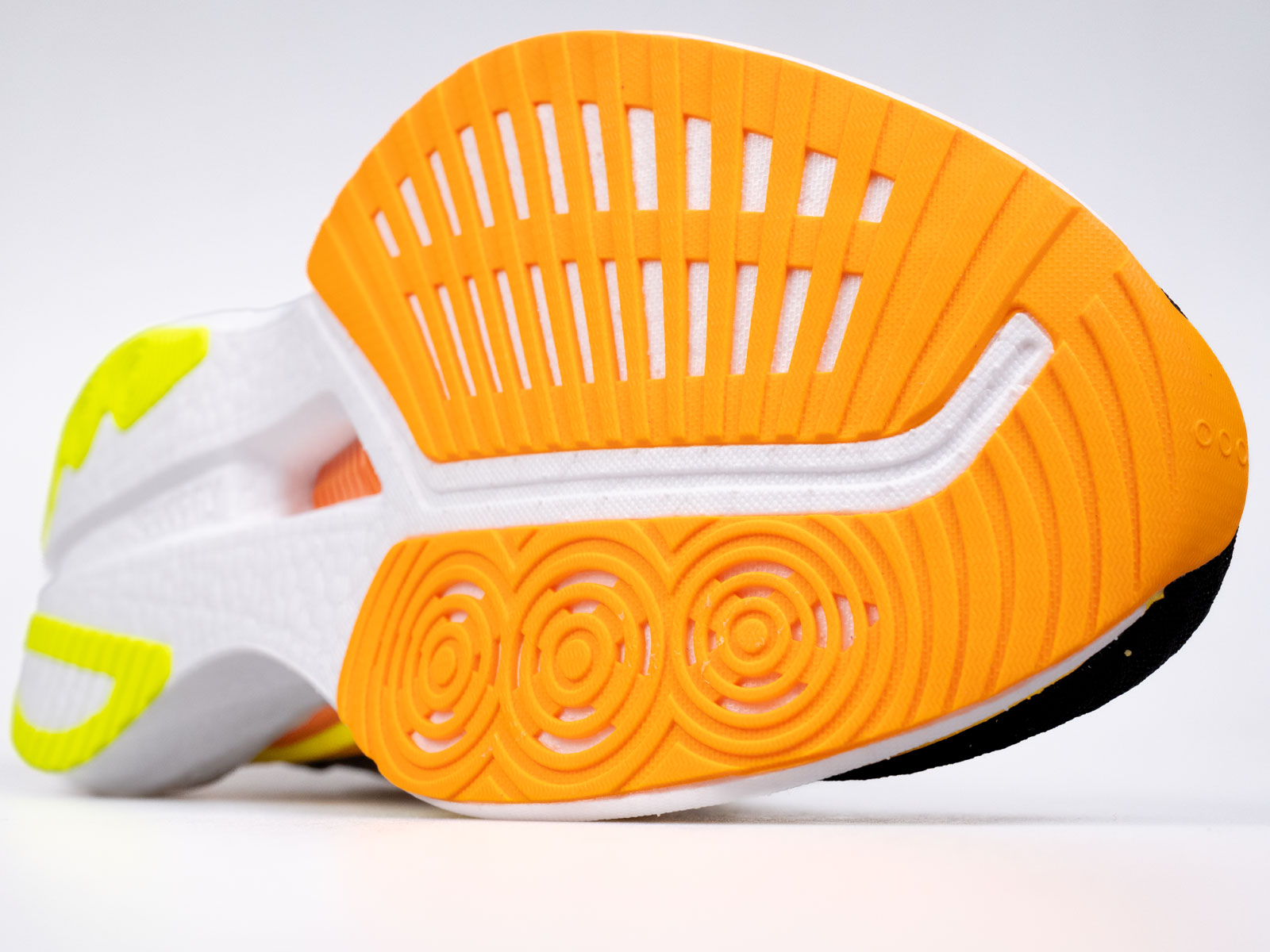
The 36 mm and 28 mm stack heights provide ample cushioning for up to a marathon. The crease-resistant Pwrrun PB is capable of taking more abuse than other high-performance foams, making daily training feasible. The flat outsole is almost flush with the midsole, spreading the wear and tear evenly. As a side note, the larger forefoot outsole and its ribbed texture of the Endorphin Speed 4 delivered slightly better traction.
RECOMMENDED ROTATION
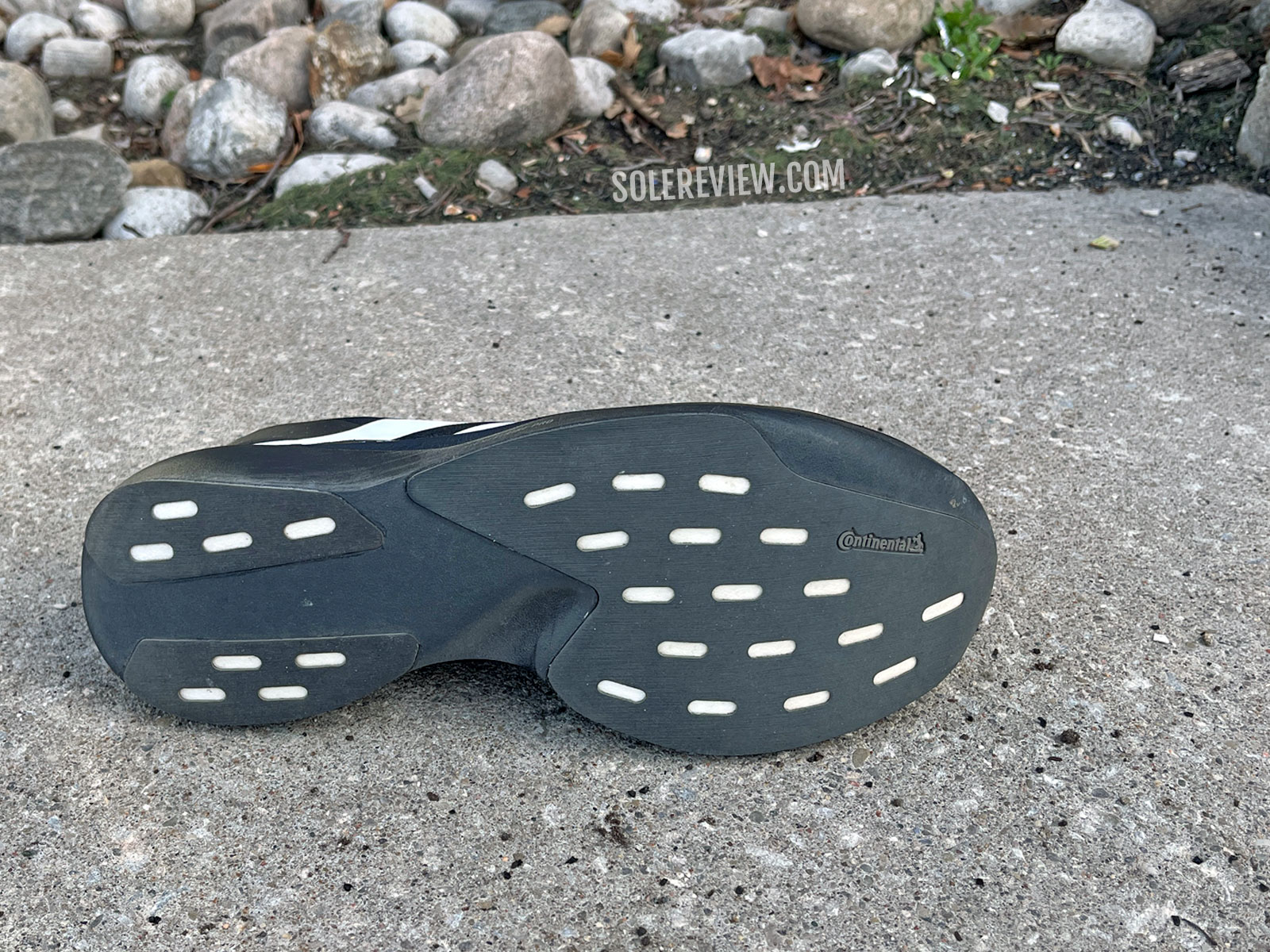
- Use the Saucony Endorphin Speed 5 for tempo runs, marathons
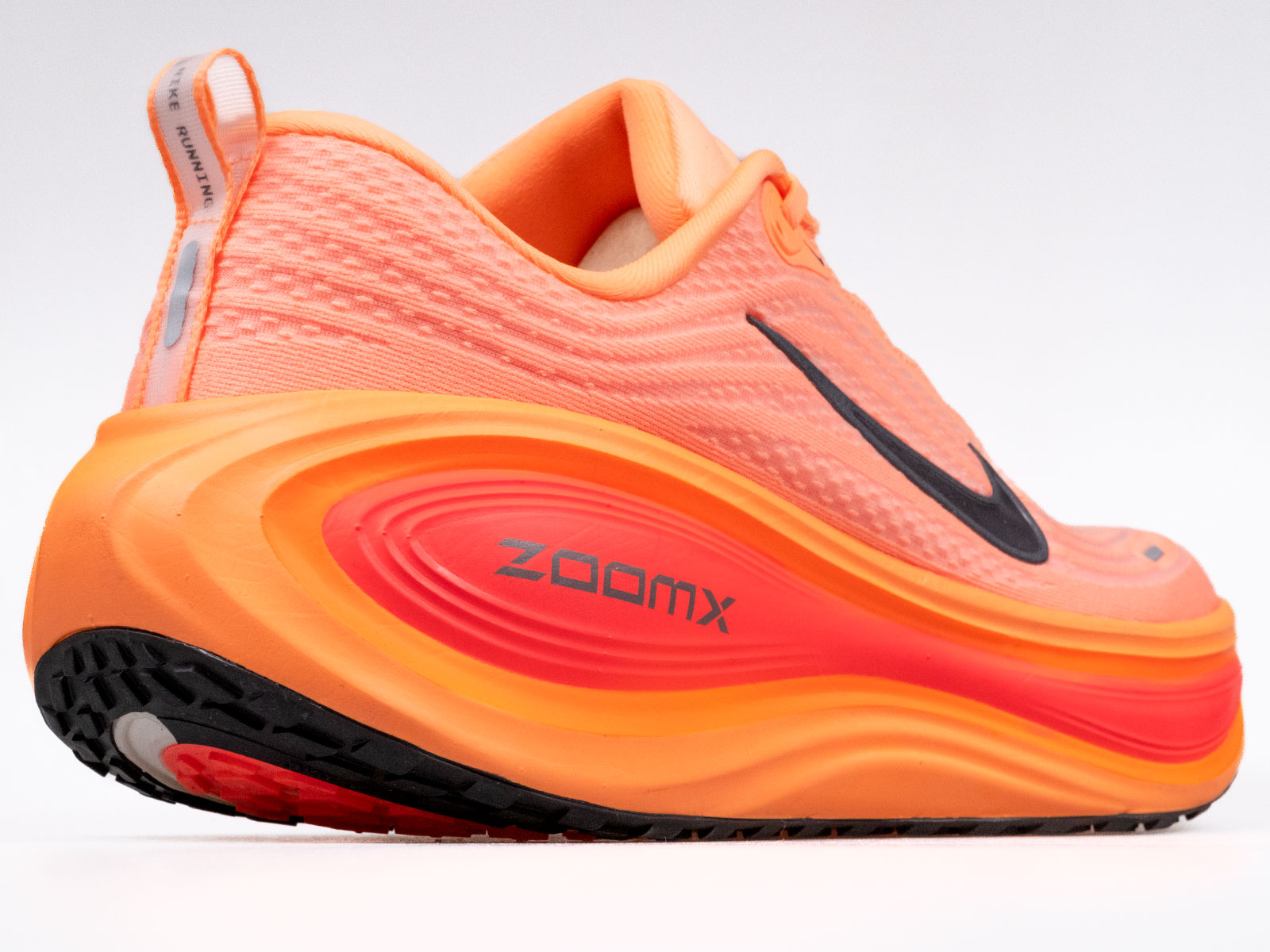
- Use the Nike Vomero Plus for recovery runs
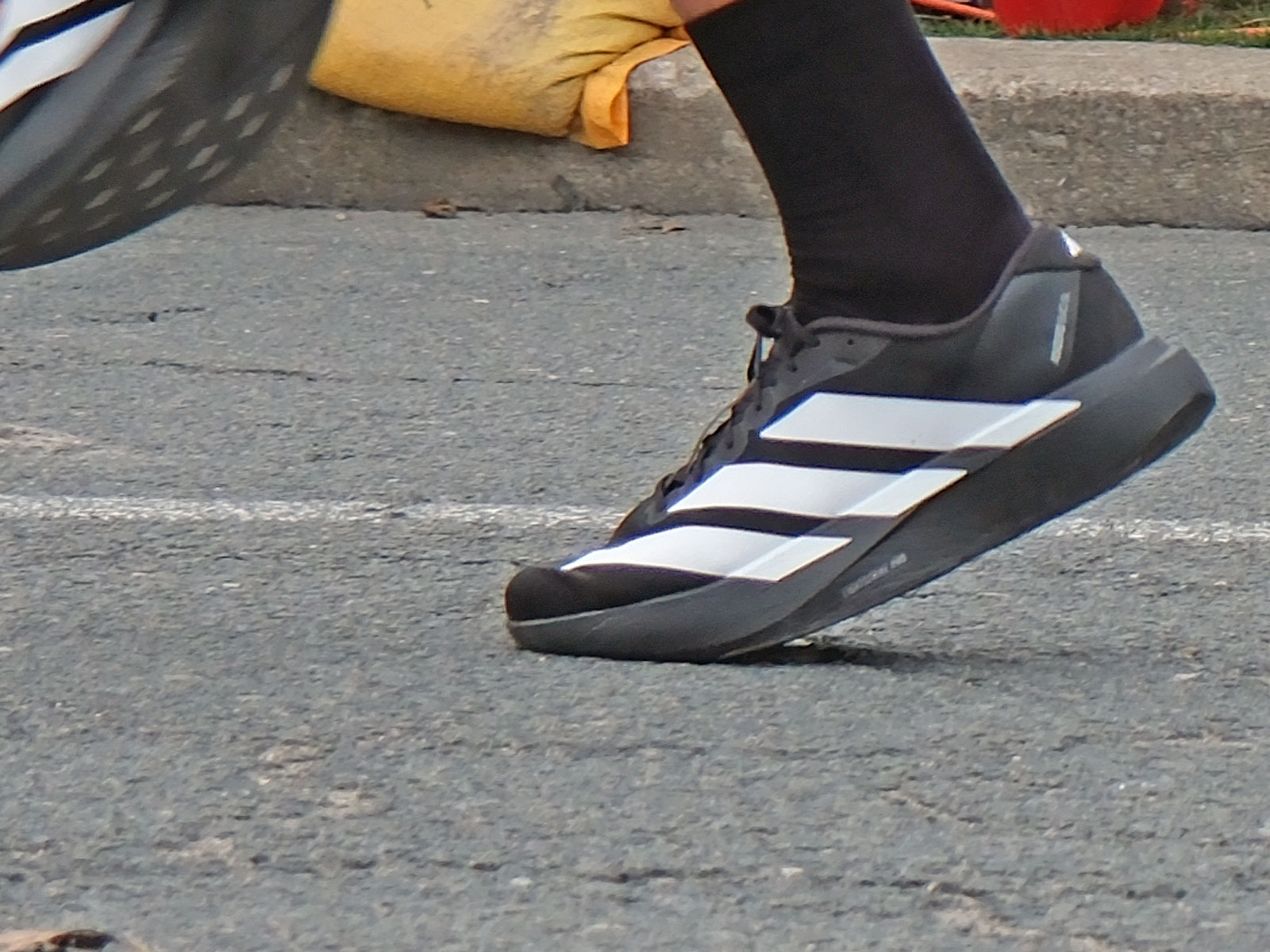
- Use the Adidas EVO SL for daily training, 5K, 10K races
THE UPPER DESIGN AND FIT
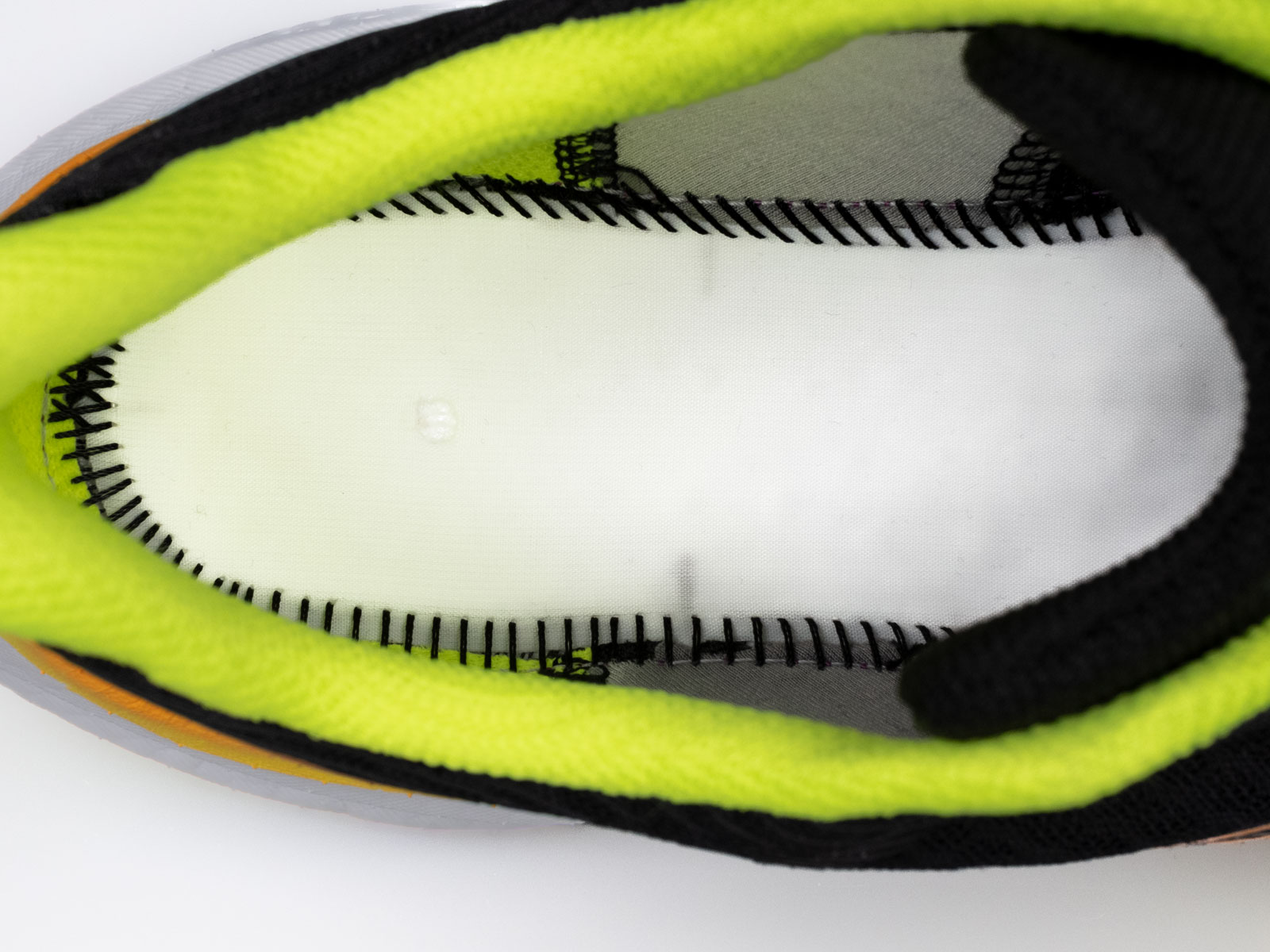
The updated collar seats the foot closer to the heel, giving the Endorphin Speed 5 a less tight and longer fit than before. The Endorphin Speed 5 uses the same soft lining as the Speed 4 for comfort. While the upper fit classifies as true-to-size, the toe box has more splay room and is less pointy. The pressure relief is particularly noticeable over the small toe. The forefoot grips well enough, but leaves the tightness of the previous model behind. The tongue gusset is less wide than before, relaxing the midfoot fit by a slight margin.
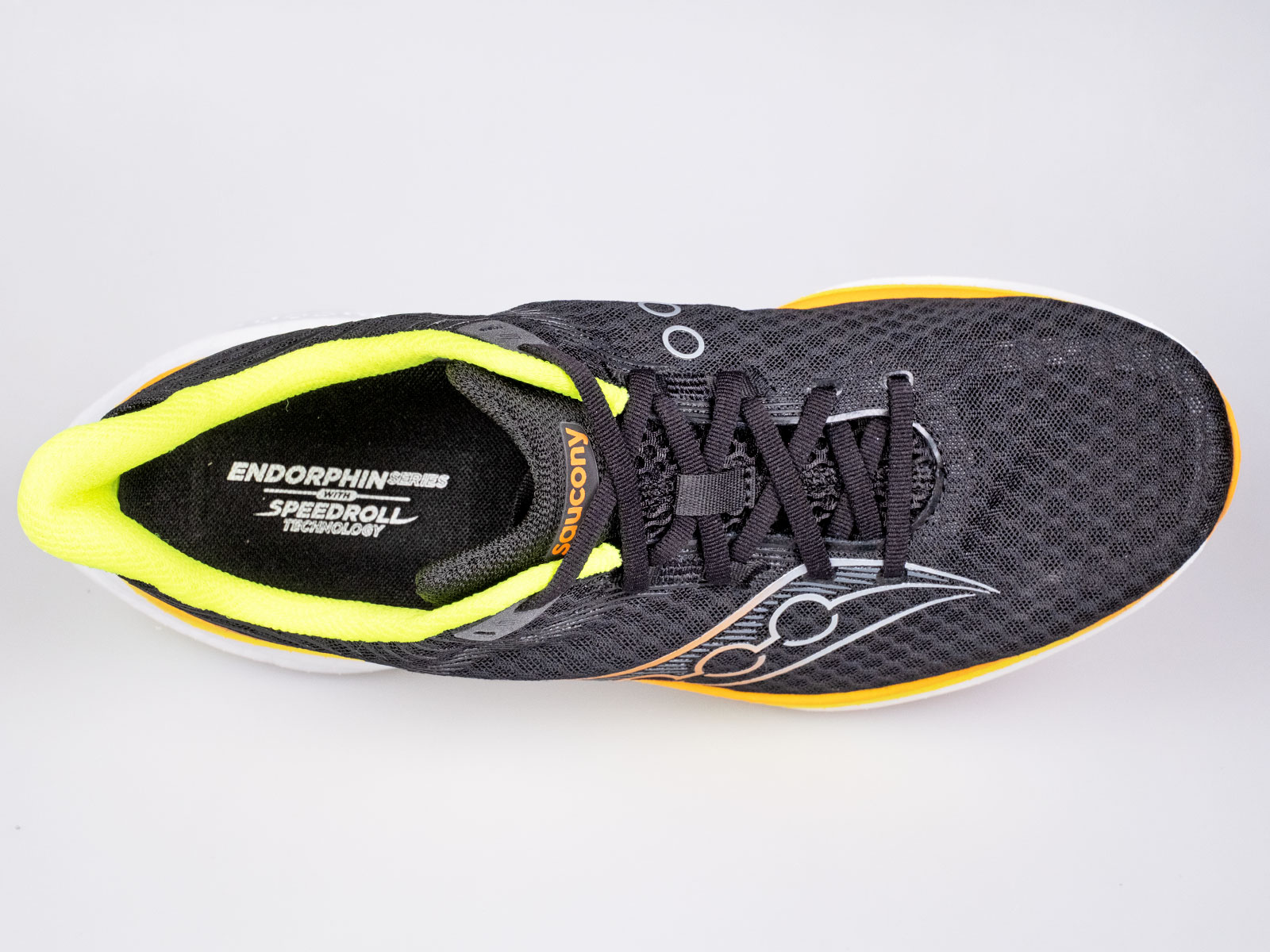
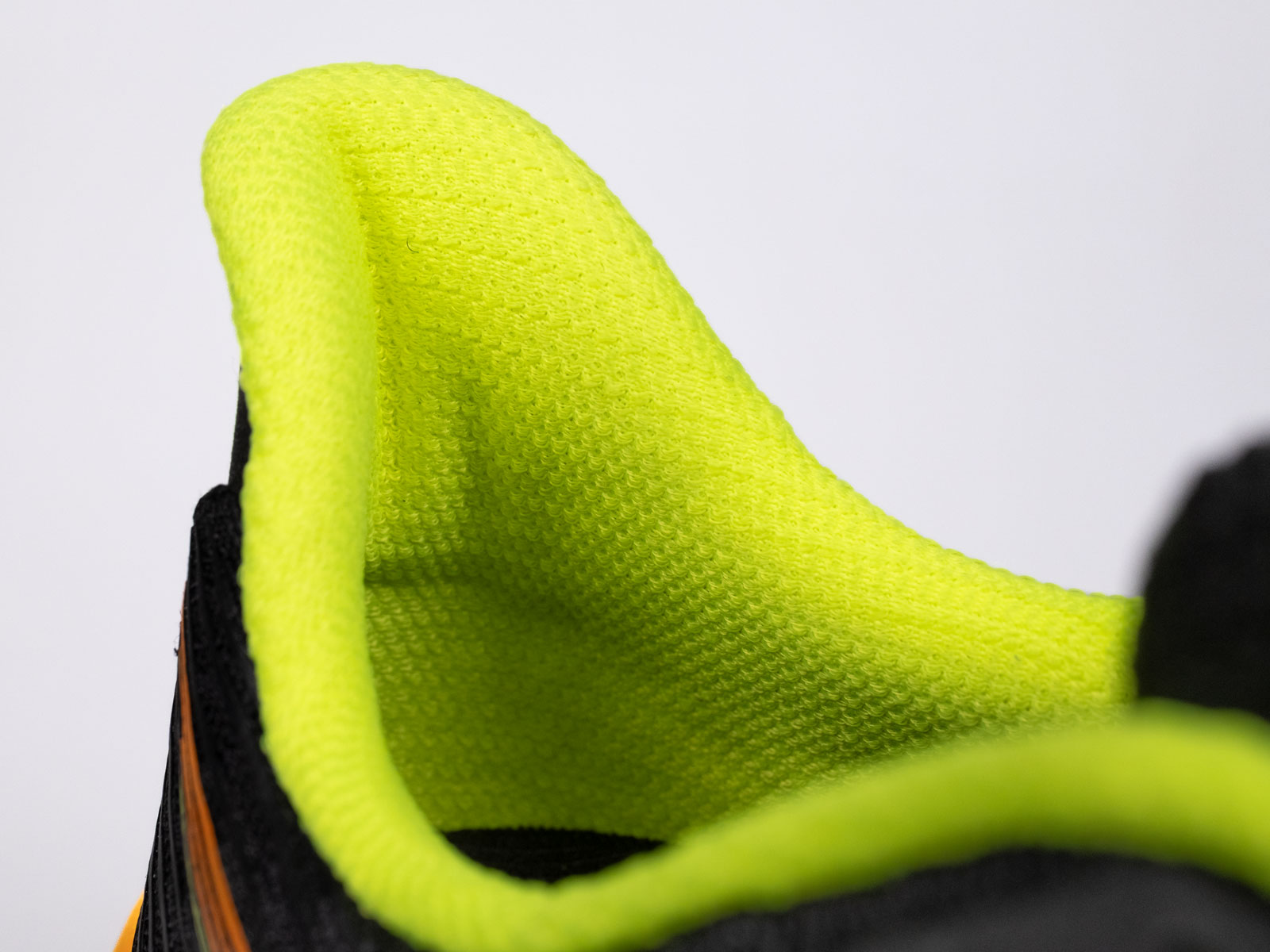
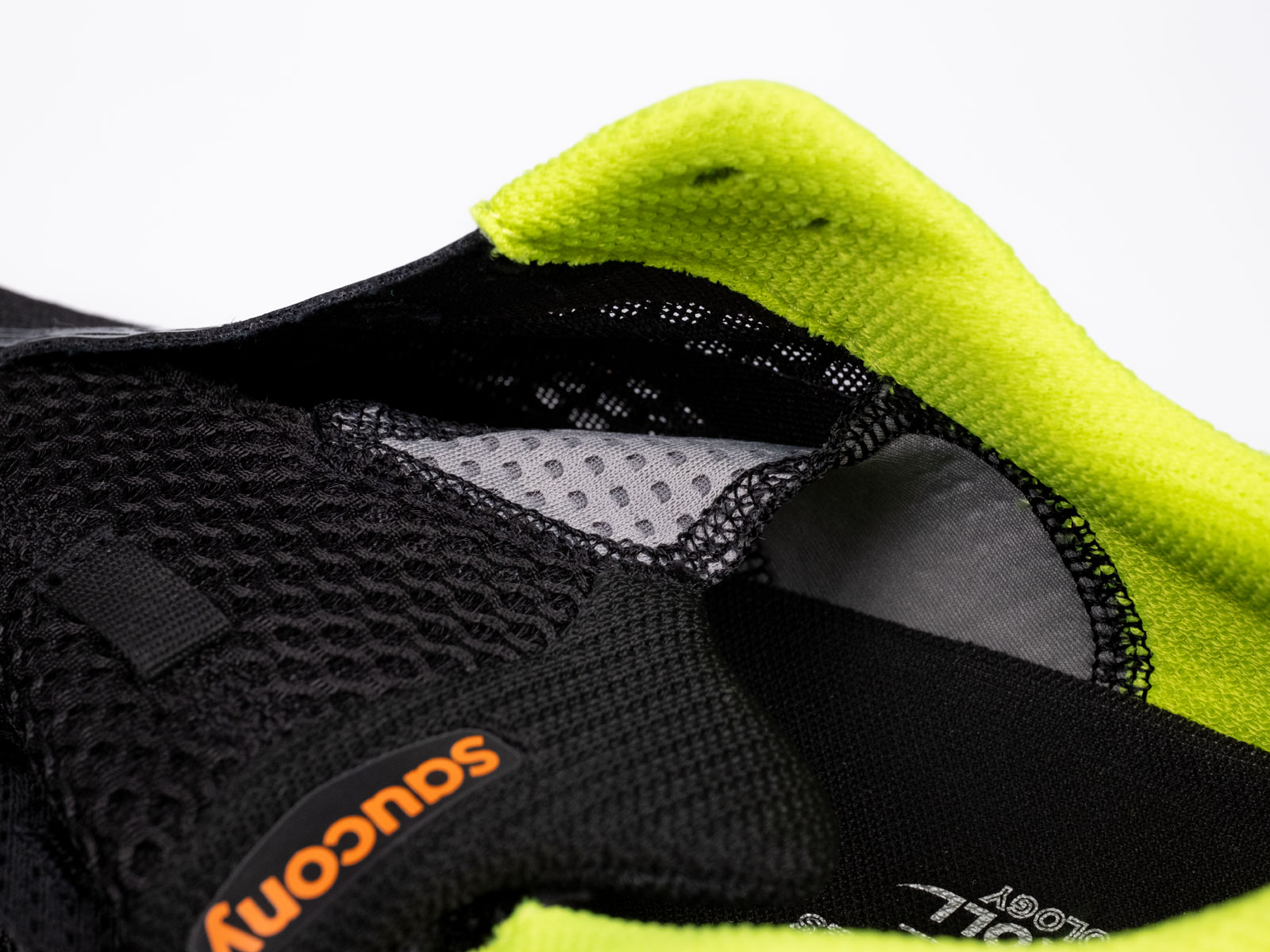
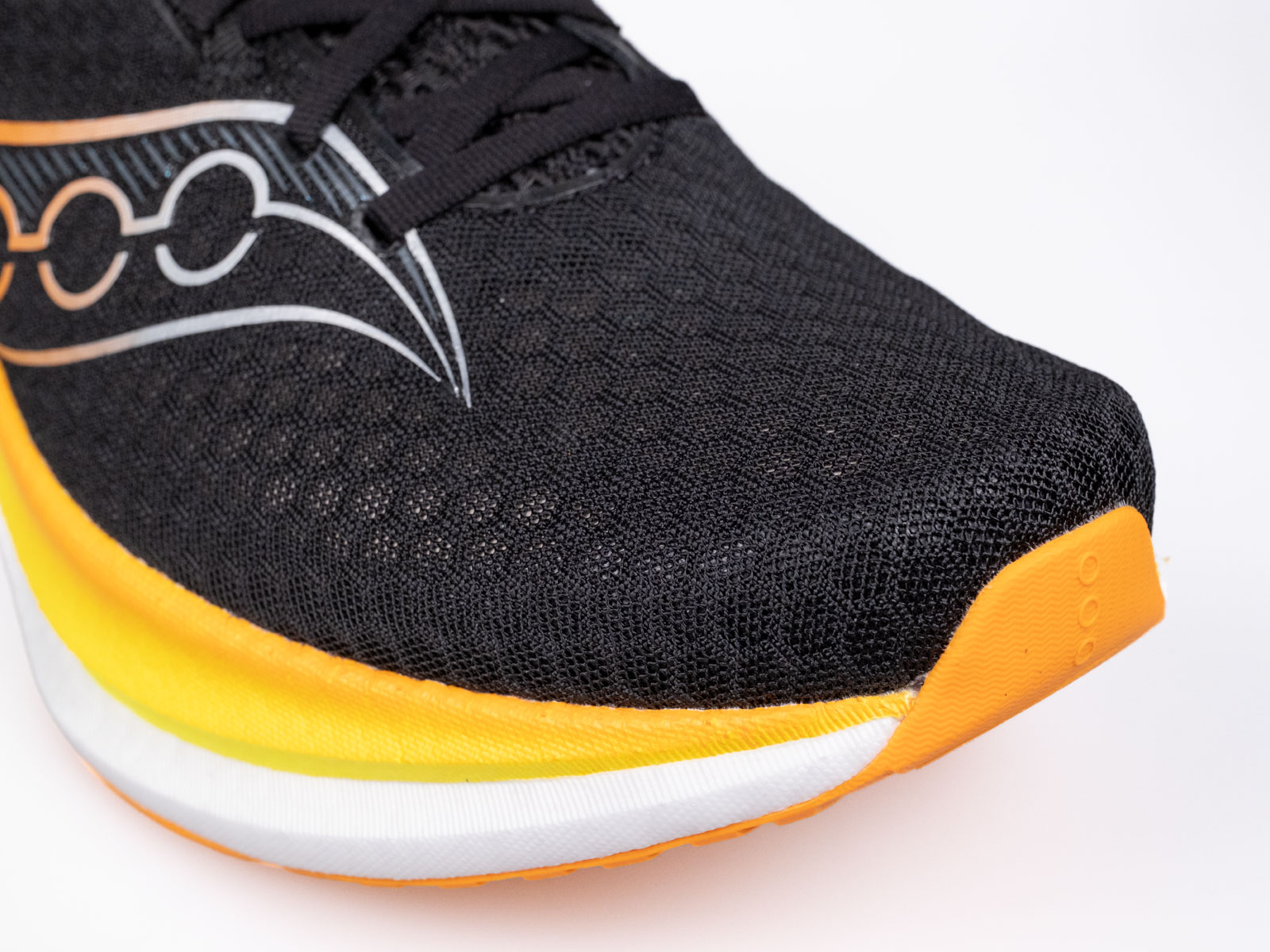
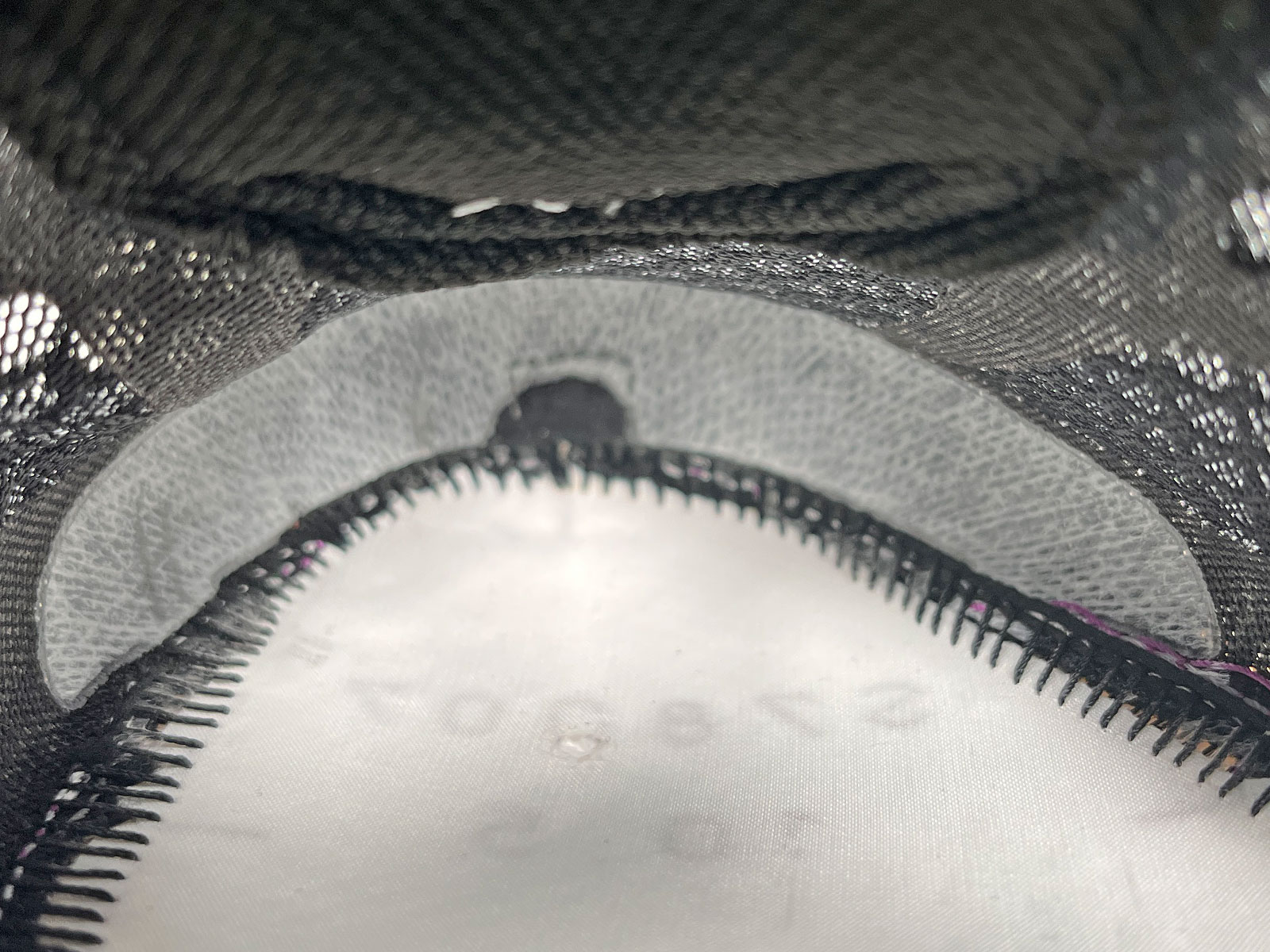
The Endorphin Speed 5’s tongue is short, lacking the length to span the entire lacing panel. The tongue flap doesn’t cover the last two lacing rows, making the shortness obvious. As mentioned earlier, there’s no discomfort involved due to the short tongue. Running into corners results in the firm collar (the lime-green mesh) pressing against the side, but no chafing takes place.
SHOES COMPARABLE TO THE SAUCONY ENDORPHIN SPEED 5

Also consider:
- Hoka Mach X3
- New Balance SC Trainer 3
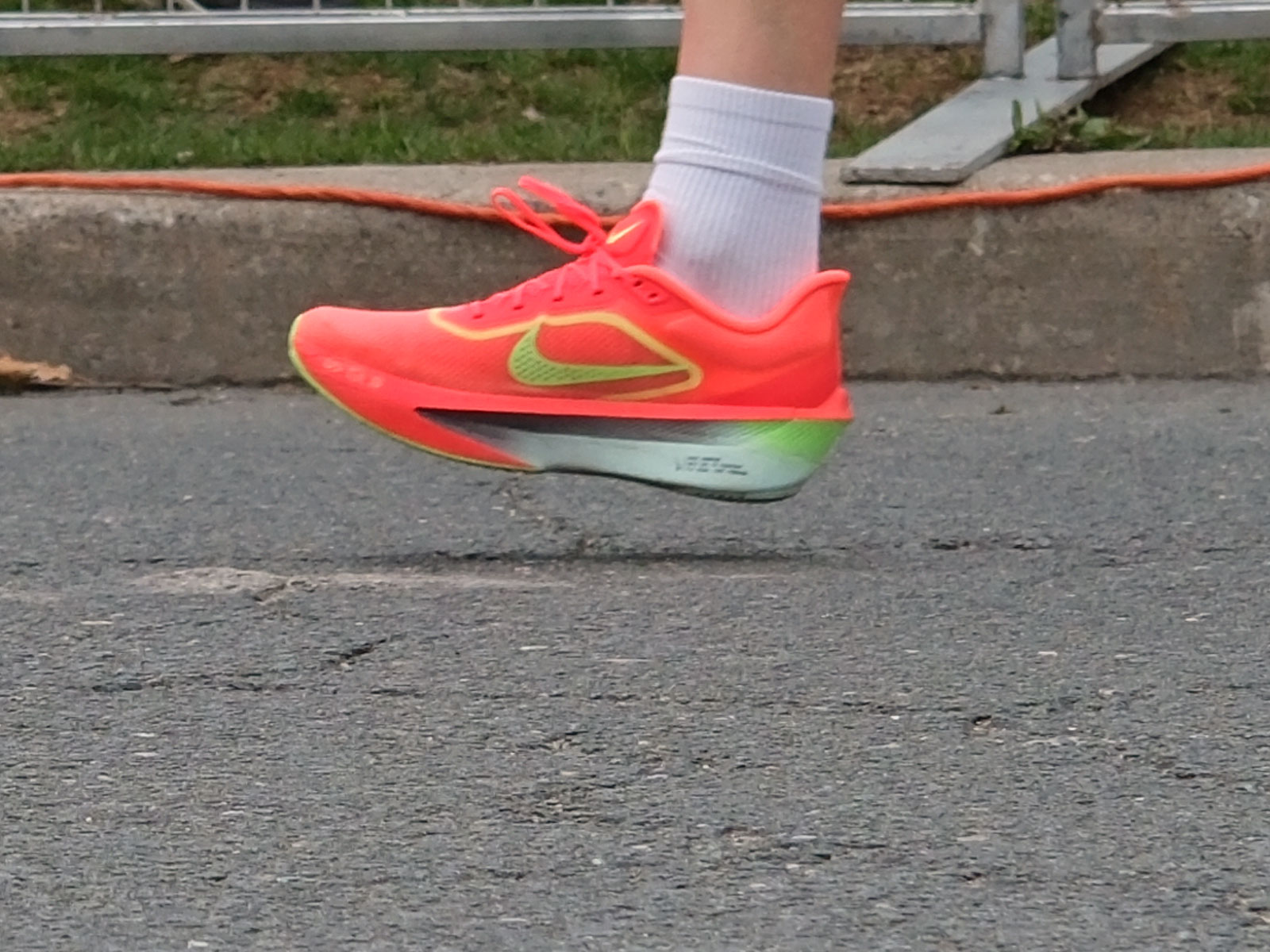
- Nike Zoom Fly 6
TECHNICAL SPECIFICATIONS
- Saucony’s marketing pitch: Built to go fast and feel smooth.
- Upper: Breathable honeycomb mesh with gusseted tongue.
- Sizing profile: True to size.
- Toe box fit: Spacious.
- Forefoot fit: Accommodating.
- Midfoot and heel fit: Secure.
- Midsole: Dual-layered Pwrrun PB (PEBA) foam, removable EVA footbed. 8 mm heel drop.
- Outsole: Carbon rubber in high-impact areas.
- Weight: 237 gms/ 8.3 Oz for a half pair of Men’s US 9/UK 8/EUR 42.5/CM 27.
- Stack heights: 36 mm (heel), 28 mm (forefoot).
- Available widths: Single – D (regular).
- Recommended use: Daily runs, tempo, marathons.
- Footstrike orientation: All types (heel/midfoot/forefoot).
- Median lifespan: 400 miles.
- Country of origin: Vietnam.
- Previous model: Saucony Endorphin Speed 4.
- Recommended paces: 4:00 min/km (6:30 min/mile) and slower.
- Recommended temperature range: Warmer than -5° C/23° F.