
Review Updates
(4 total)- 2026-07-23 — Activated changelog and trust badge module
- 2026-07-23 — Added star rating module
- 2026-07-23 — Added teardown module
- 2025-10-13 — Review published
CUT-IN-HALF: HOKA CLIFTON 10
Teardown Analysis
Tap the hotspots to reveal component specifications.
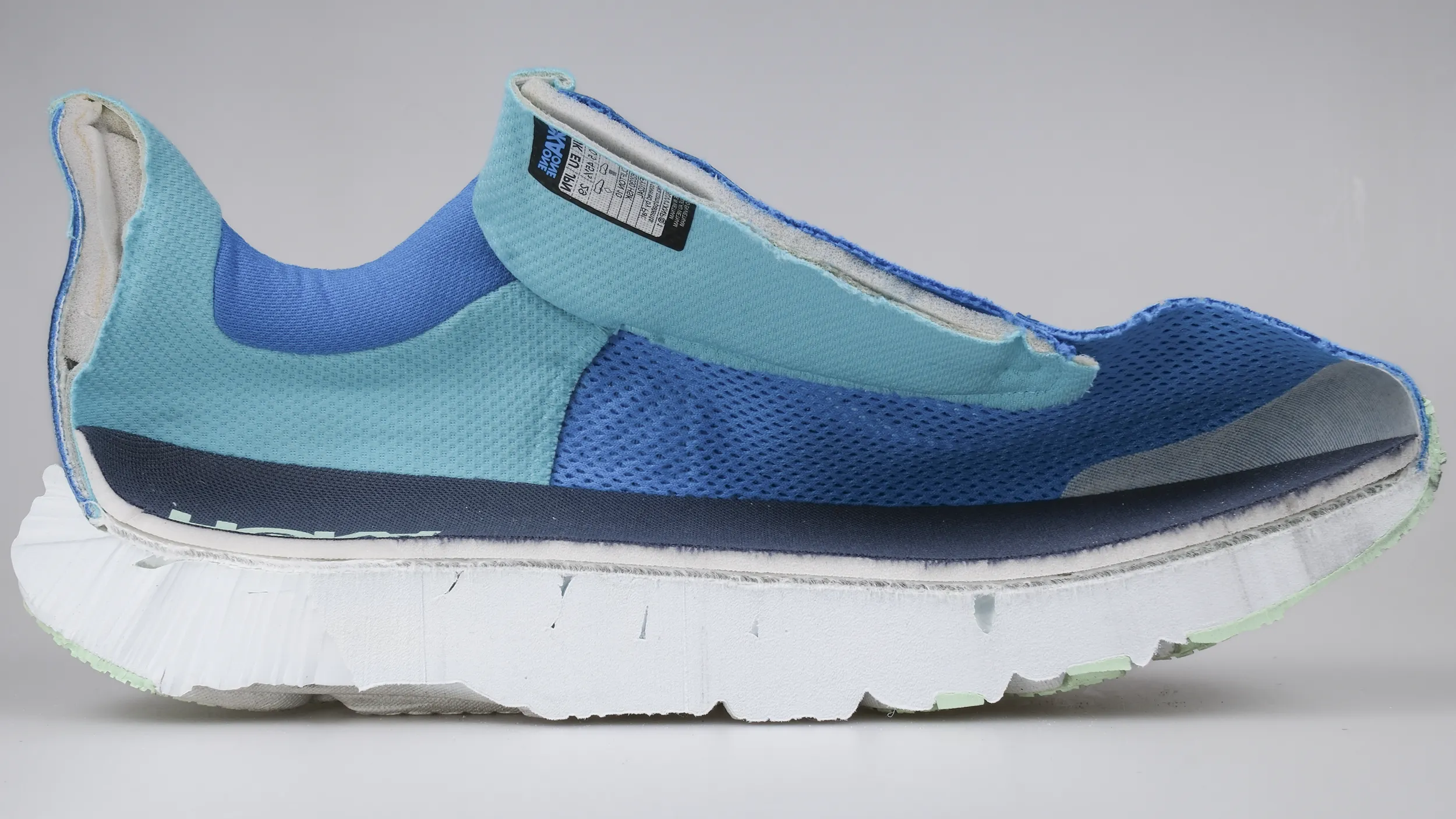
Select a component
Pros
- Generous ride comfort
- Supportive midsole
- Secure, true-to-size fit
- Reflective details
- Rocker assist
- Achilles-friendly 8 mm drop
- Optional wide and extra-wide
Cons
- Poor grip on wet roads
- Runs warm due to the thick mesh and tongue
In this review:
SUMMARY
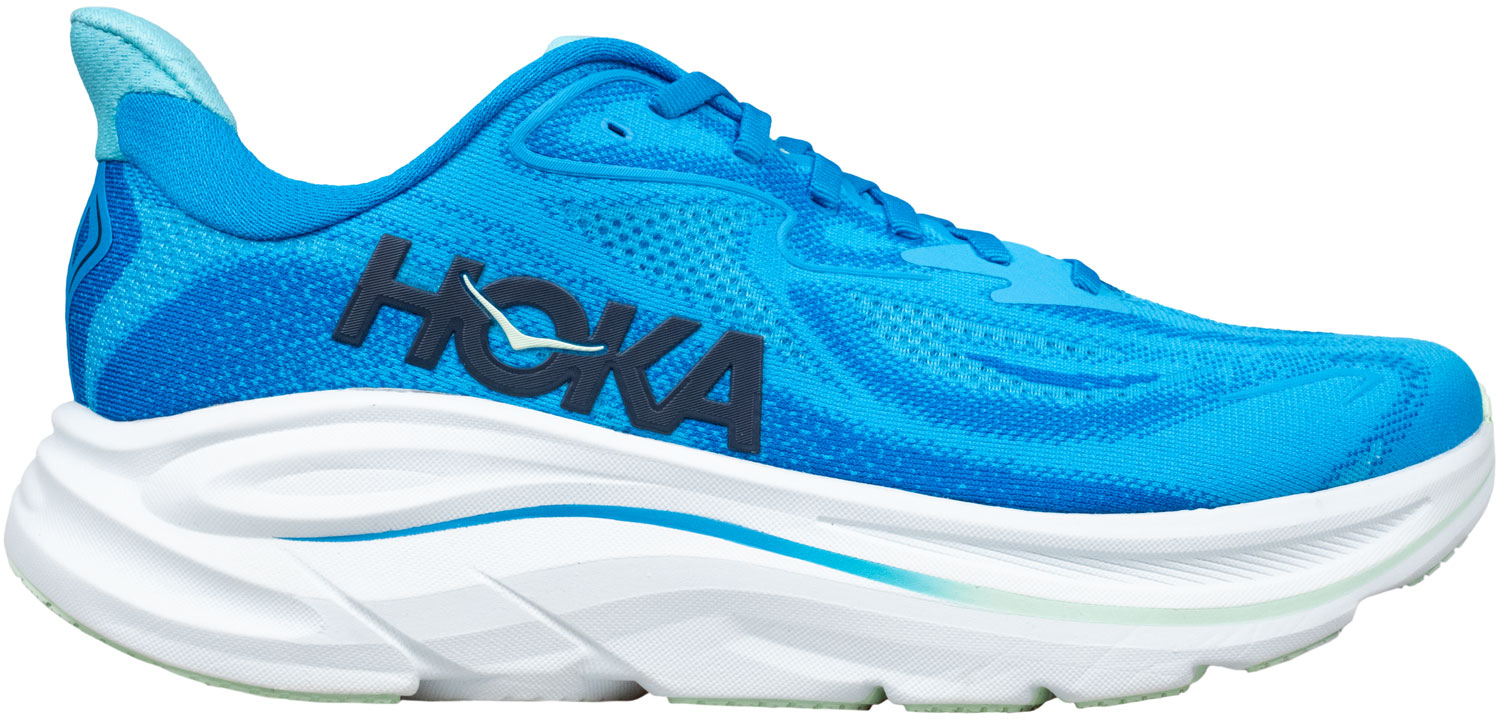
The Clifton 10, like the Bondi 9, is a successful running/casual-wear crossover that appeals to both segments due to its please-all ride quality. This year, the Clifton 10 tries a little harder to bring more casual consumers into its fold, as evident from its increased heel stack height and higher offset. The Clifton 9’s heel and forefoot stack heights were 40 mm and 35 mm; the Clifton 10 adds 3 mm to the heel. Not only is the Clifton 10 the softest version to date, but its 8 mm drop is also the highest since inception.
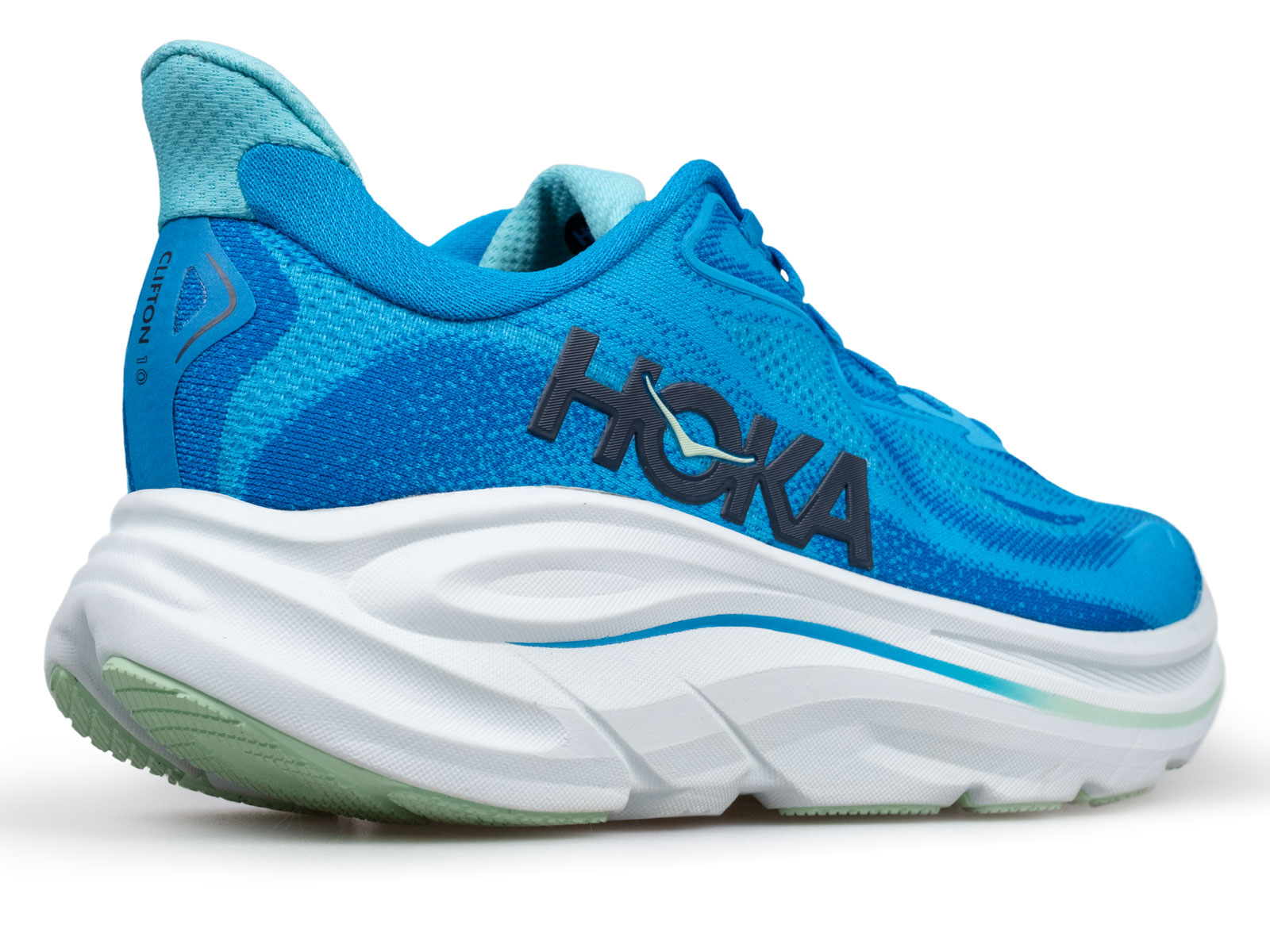
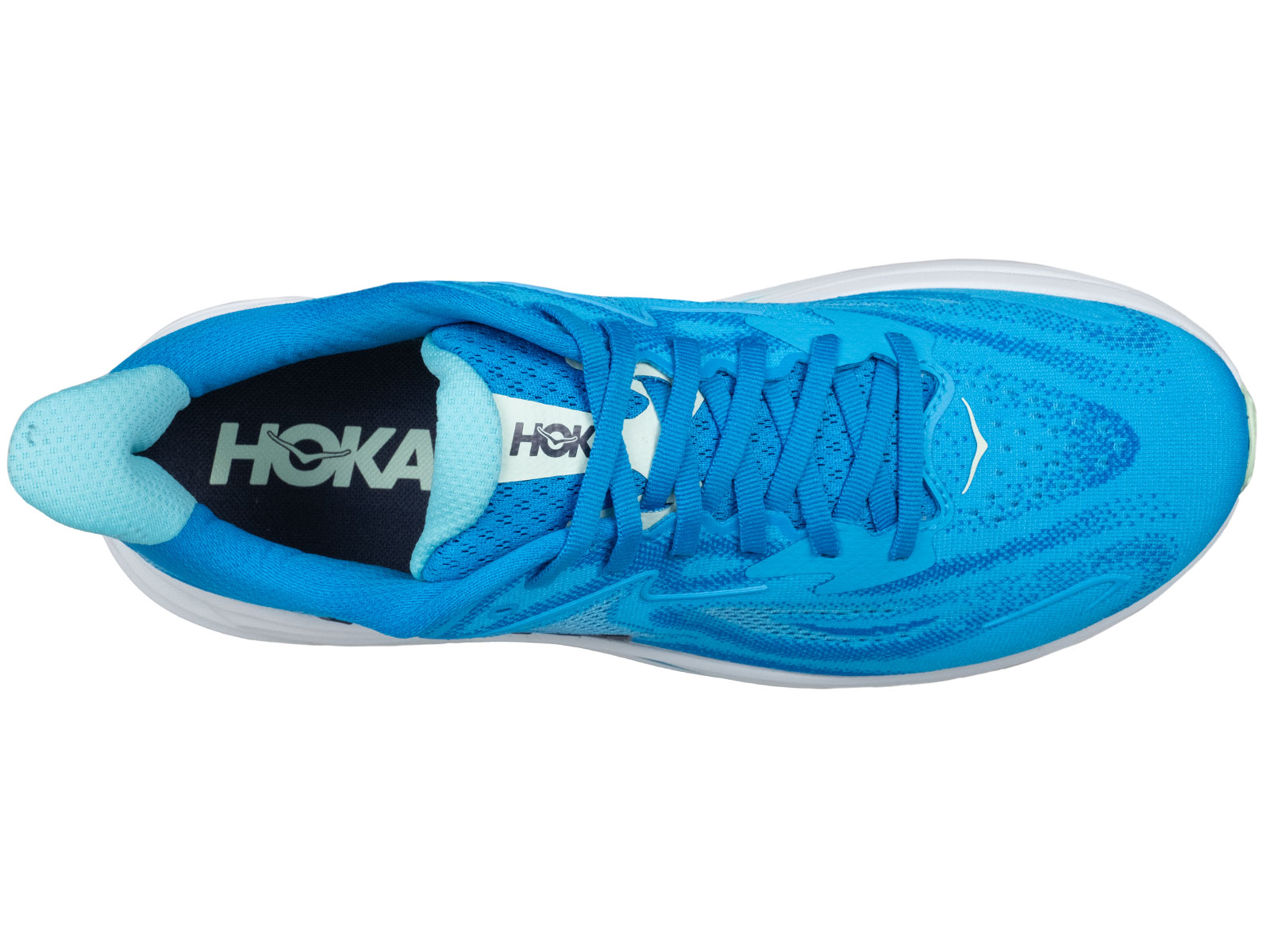
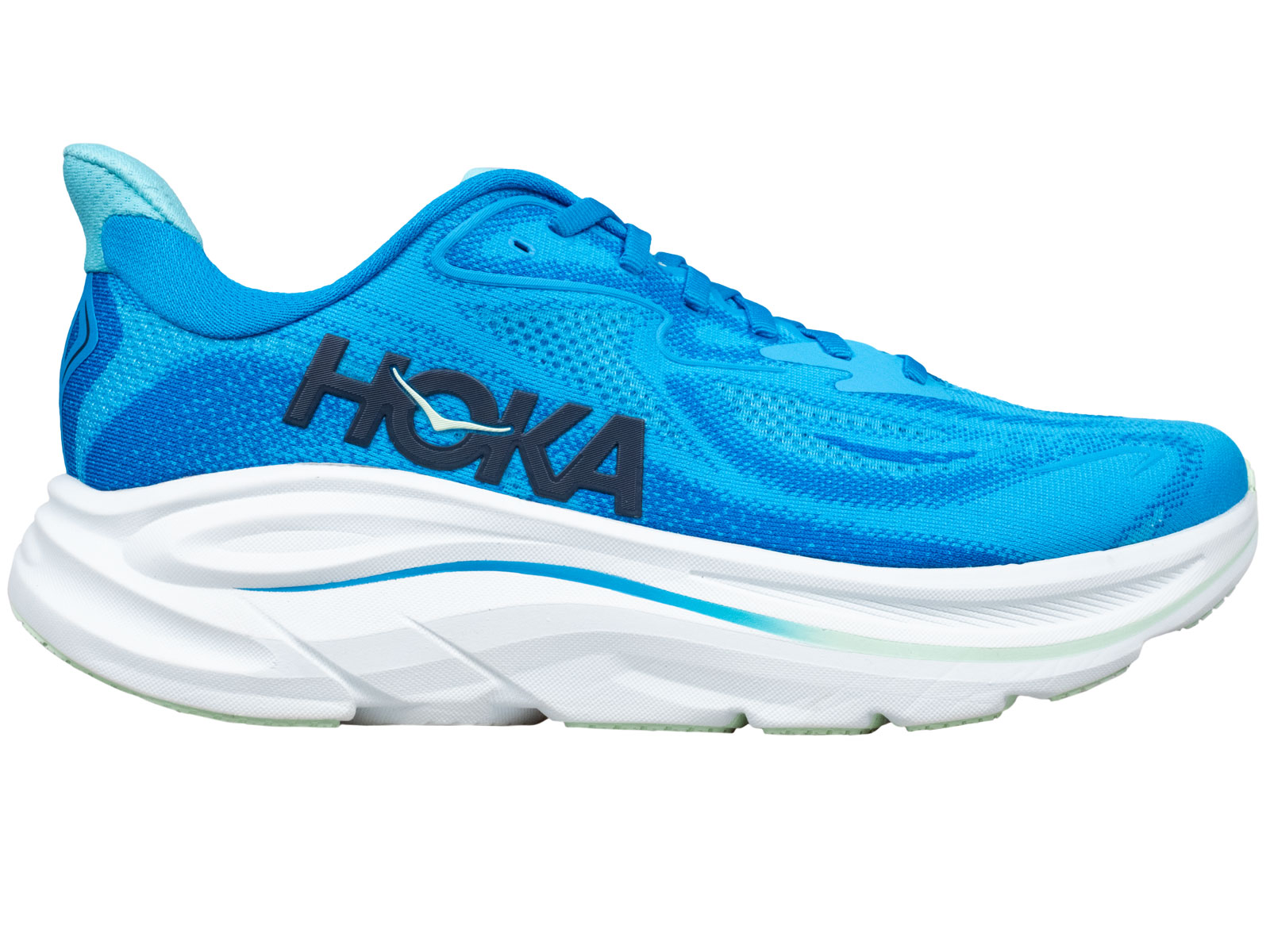
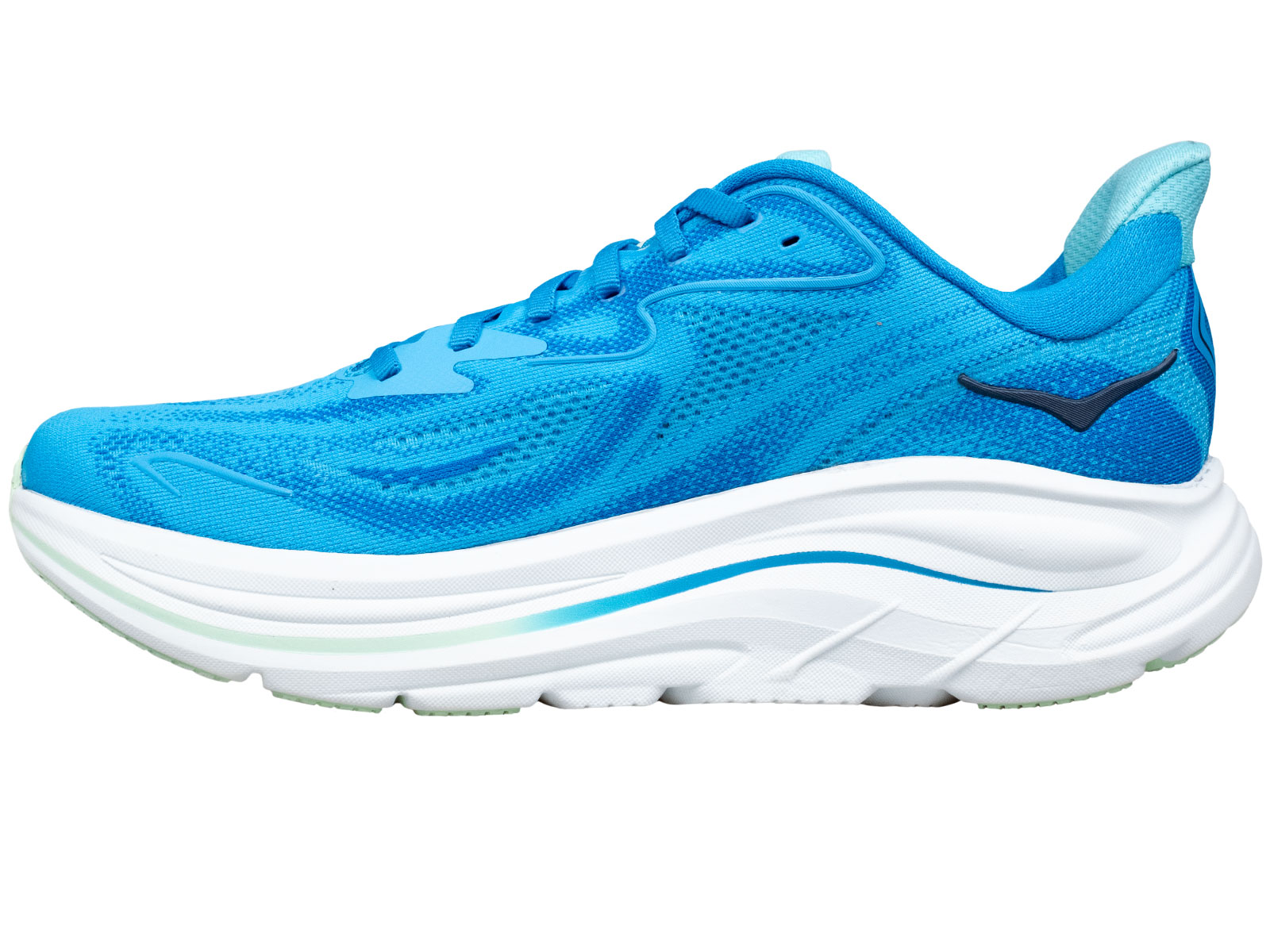
Even last year’s Clifton 9 was 3 mm taller than the Clifton 8. Cumulatively, the Clifton 10 features a 6 mm taller midsole than its predecessor from just two years ago. The Clifton’s future appears to be full of softer and taller midsoles.
As a running shoe, the Clifton 10 has lower versatility than the previous model, and even less so than the Clifton 8 and 7. The softer ride decreases versatility, limiting the Clifton 10 to slower speeds, which is over 5:00 min/km (8 min/mile). As long as the Clifton stays within those performance boundaries without indulging in high-speed workouts, runners will find the plush, rubbery-soft ride enjoyable.
WHAT THE CLIFTON 10 DOES WELL
– Daily training and recovery runs at 5:00 min/km (8:00 min/mile) or slower.
– Cushioning comfort for 4-hour marathons and 2-hour marathons finish times or slower.
– The 8 mm drop is beginner-friendly due to lower stress on the Achilles and calves.
– Provides copious amounts of forefoot and rearfoot cushioning.
– Offers planted heel and forefoot landings due to the wide footprint.
– The midsole rocker makes roll-forwards easier.
– Secures the foot in a comfortable interior environment.
– Offers optional widths for wider feet.
– Provides reflectivity for low-light conditions.
– No tongue slide because of the double lace loops.
WHAT THE CLIFTON 10 DOES POORLY
– High-intensity runs such as intervals, tempo, and sub-2-hour and sub-4-hour half and full marathons.
– Not ideal for warm weather because of the thick mesh.
– Doesn’t offer confidence-inspiring traction on wet roads.
– EVA-blend midsole lacks the energy return of super-foams.
POTENTIAL ISSUES
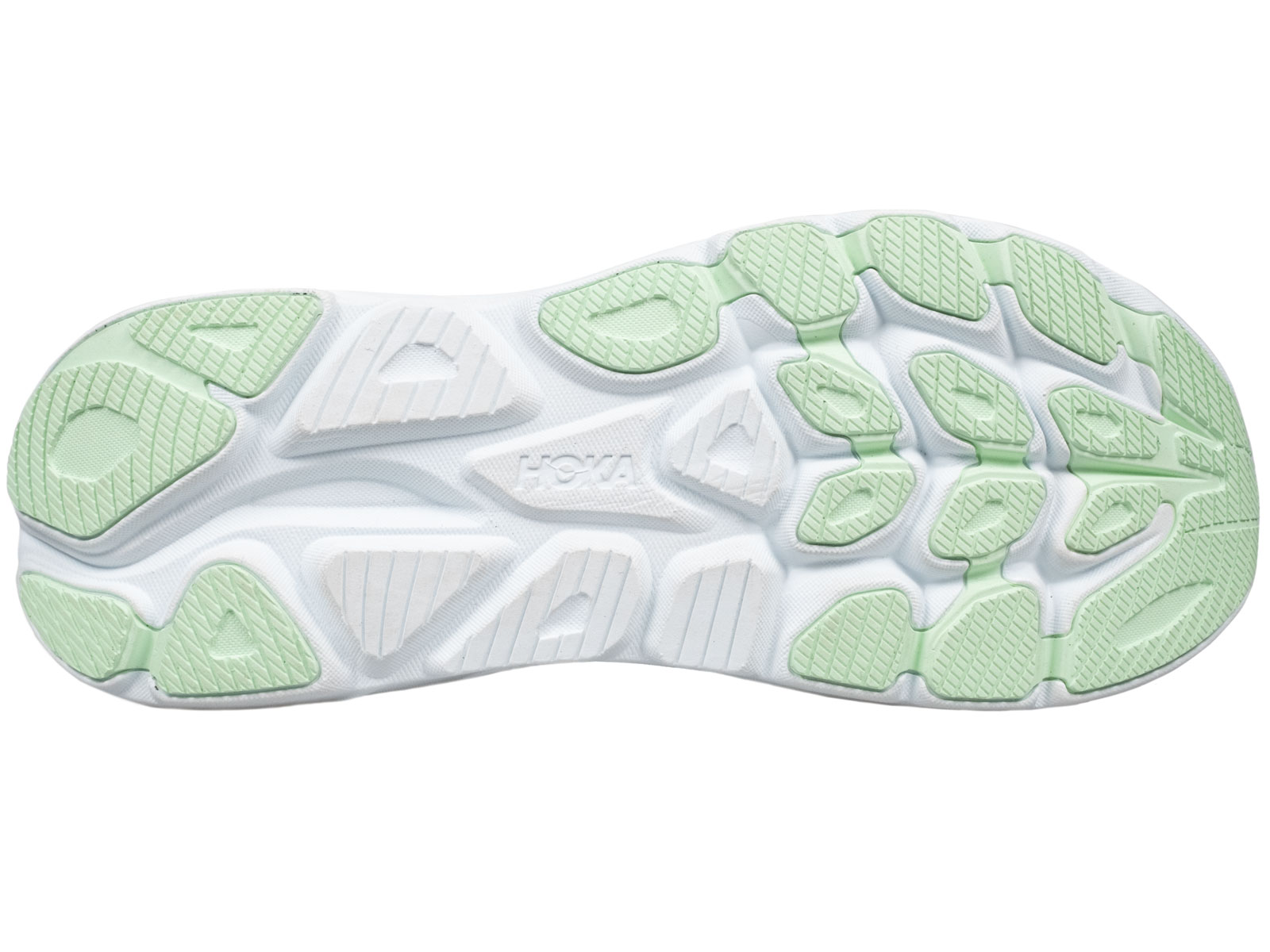
The outsole struggles to deliver traction on wet roads, so proceed with caution on slick surfaces. This issue isn’t new for the Clifton 10; the Clifton 9 also suffered from average wet-surface grip.
Even though the upper doesn’t feel stuffy, the thick mesh and padded tongue limit ventilation on hot days. The Clifton 10 isn’t ideal if you’re racing or training on a warm day.
WHAT HAS CHANGED
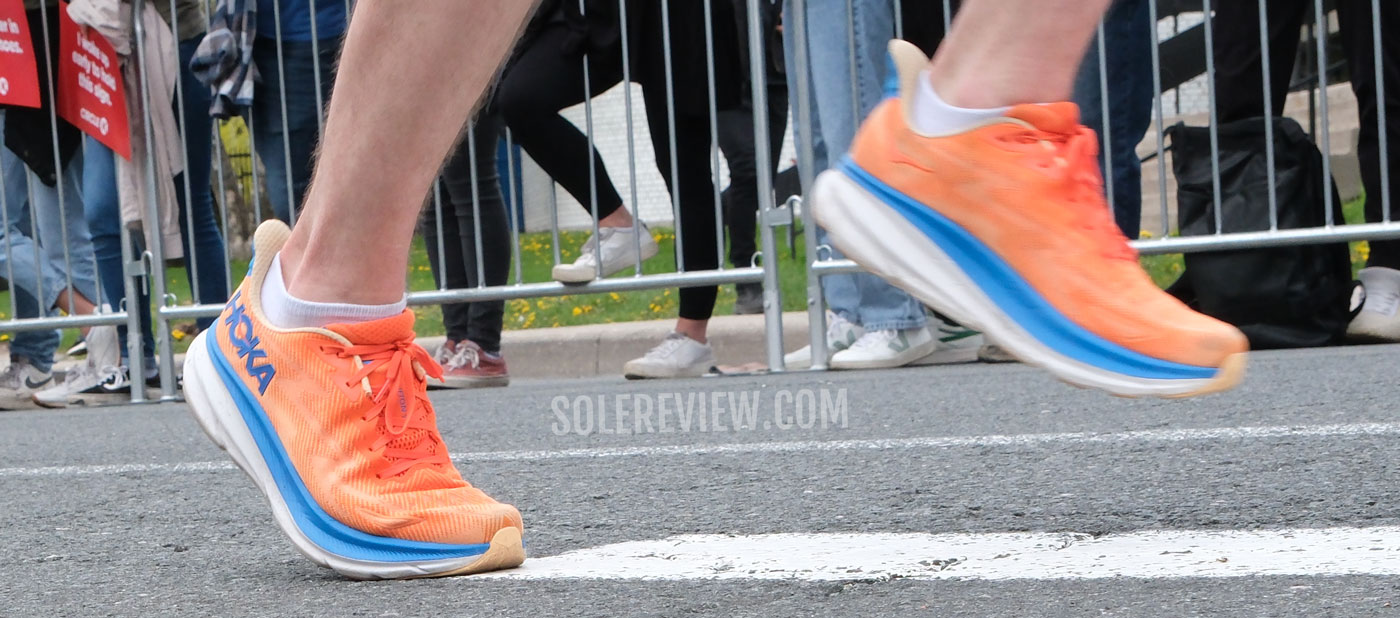
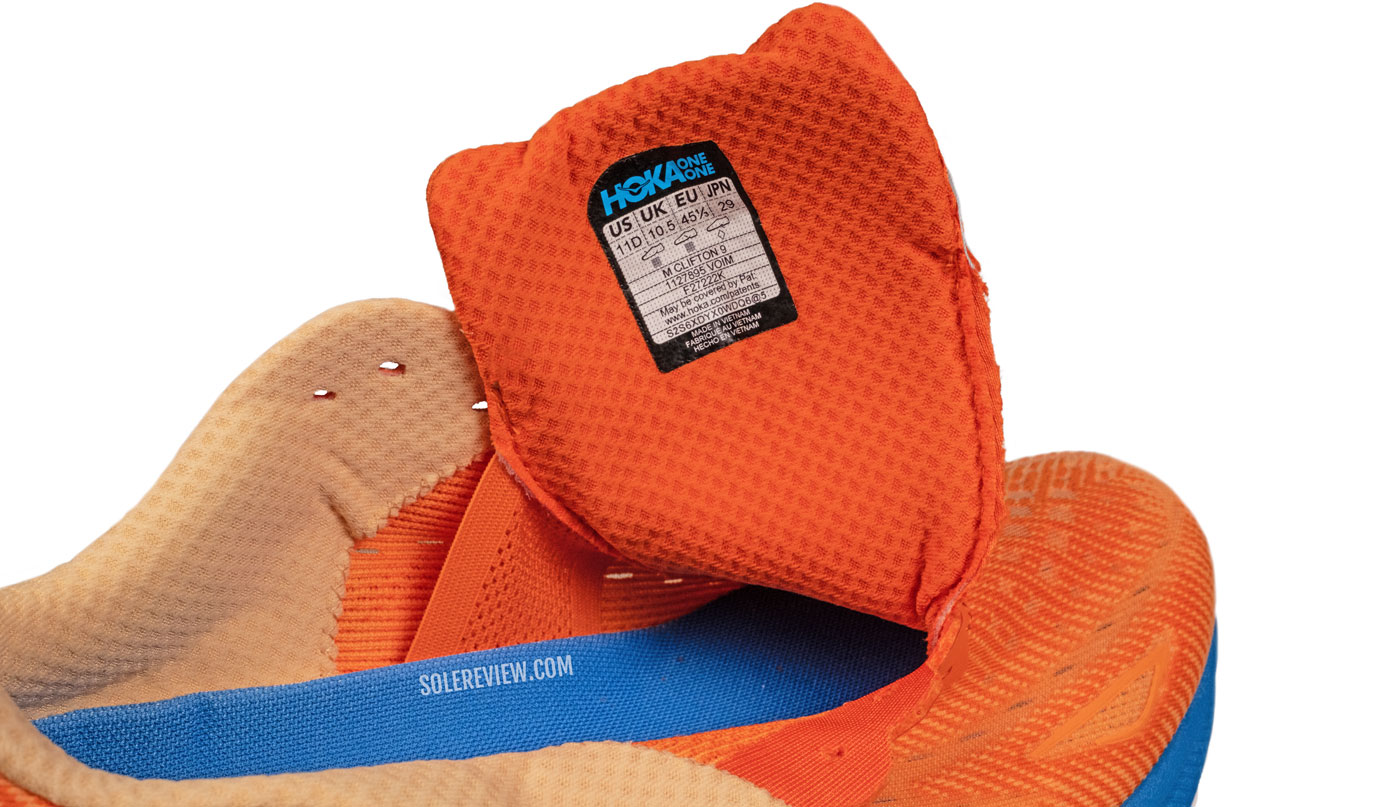
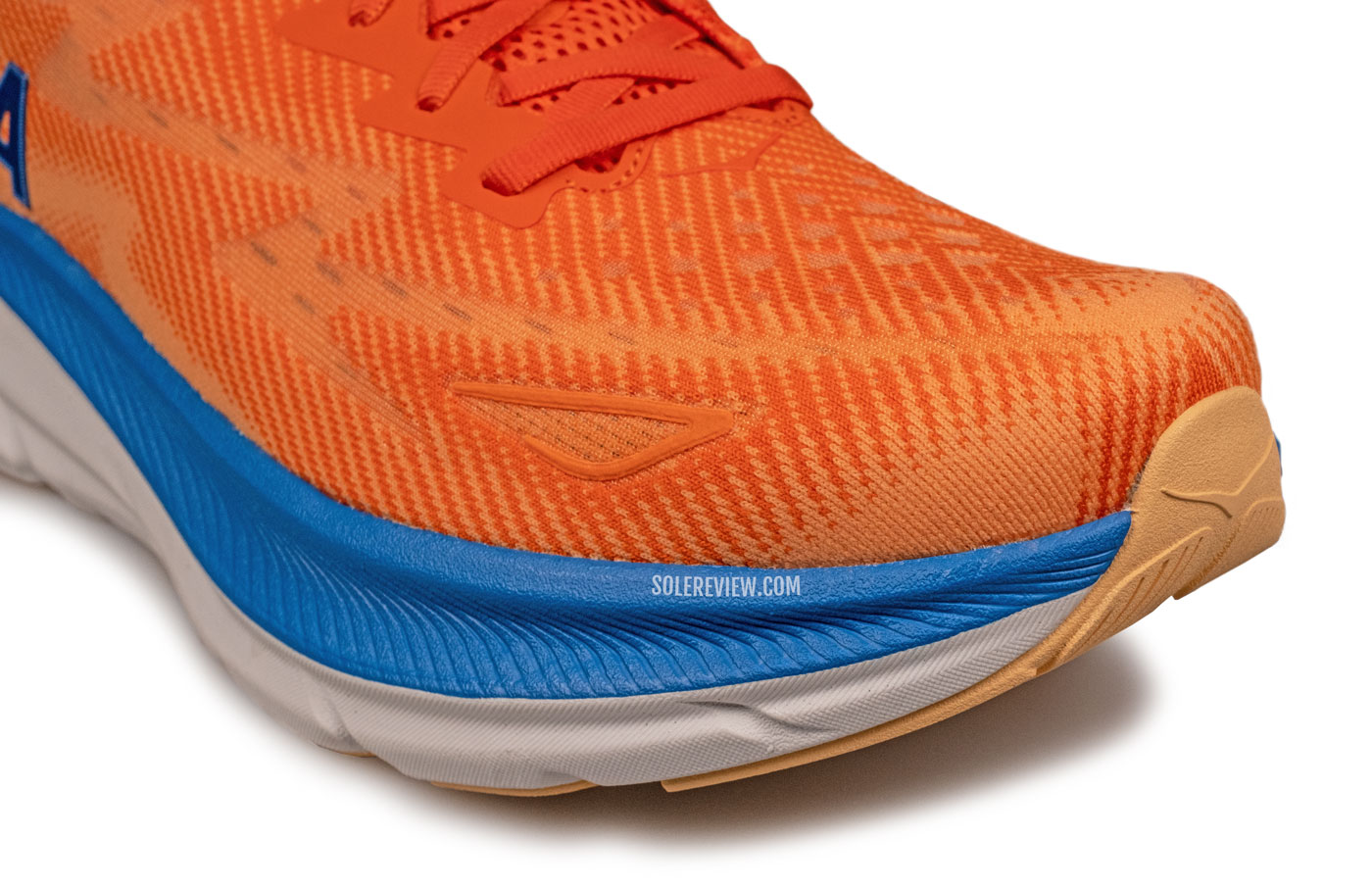
– Softer ride, 3 mm taller heel stack than the Clifton 9.
– Heel drop increased to 8 mm from 5 mm.
– Weight increased to 9.8 ounces (278 grams) from 8.7 ounces (247 grams).
– Decreased versatility due to the softer ride.
– Updated outsole layout.
– The insole no longer has high sidewalls.
– Decreased ventilation due to the thicker mesh.
– Half gusset removed, replaced by a double tongue loop to prevent tongue slide.
– Price increased by $10.
PERFORMANCE SCENARIOS
This section assesses the shoe’s performance and compatibility with different use-case scenarios. Here, we examine the combined behavior of the midsole, outsole, and upper fit under various running conditions. For the Clifton 10, we considered two performance scenarios – heel and midfoot striking at speeds between 5:00 min/km (8 min/mile) pace. High-speed scenarios are excluded, since those lie outside the Clifton 10’s comfort zone. This scenario-based review approach replaces the legacy ‘ride experience’ and ‘upper fit’ breakouts. The review may be updated with other scenarios (bodyweight, gait orientation, foot-strikes, etc.) as more data becomes available. Scenarios highlighted with a green box indicate ideal use cases; red boxes indicate lower use-case compatibility.
SCENARIO 1: HEEL STRIKING AT 5:00 MIN/KM, 8 MIN/MILE
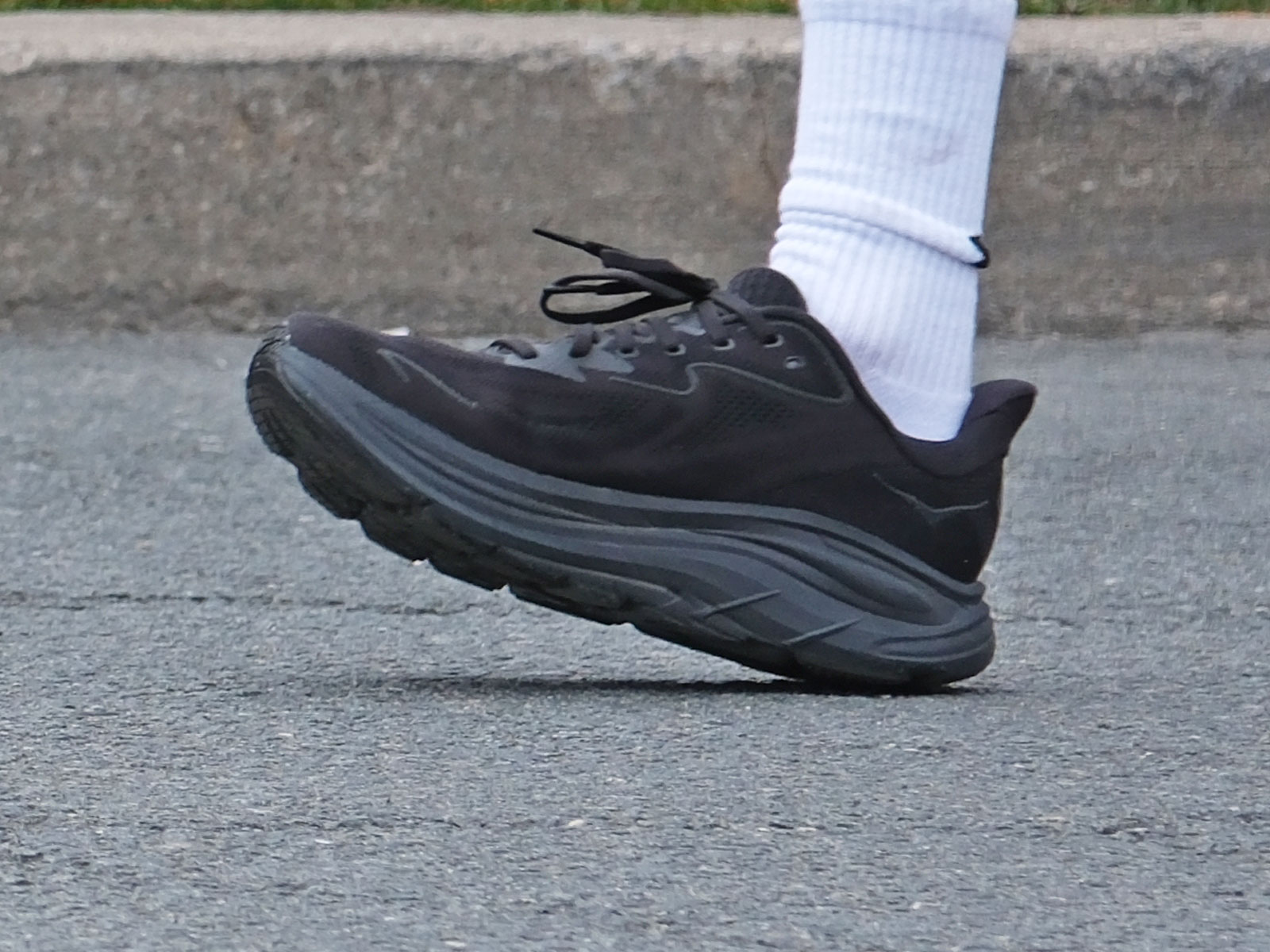
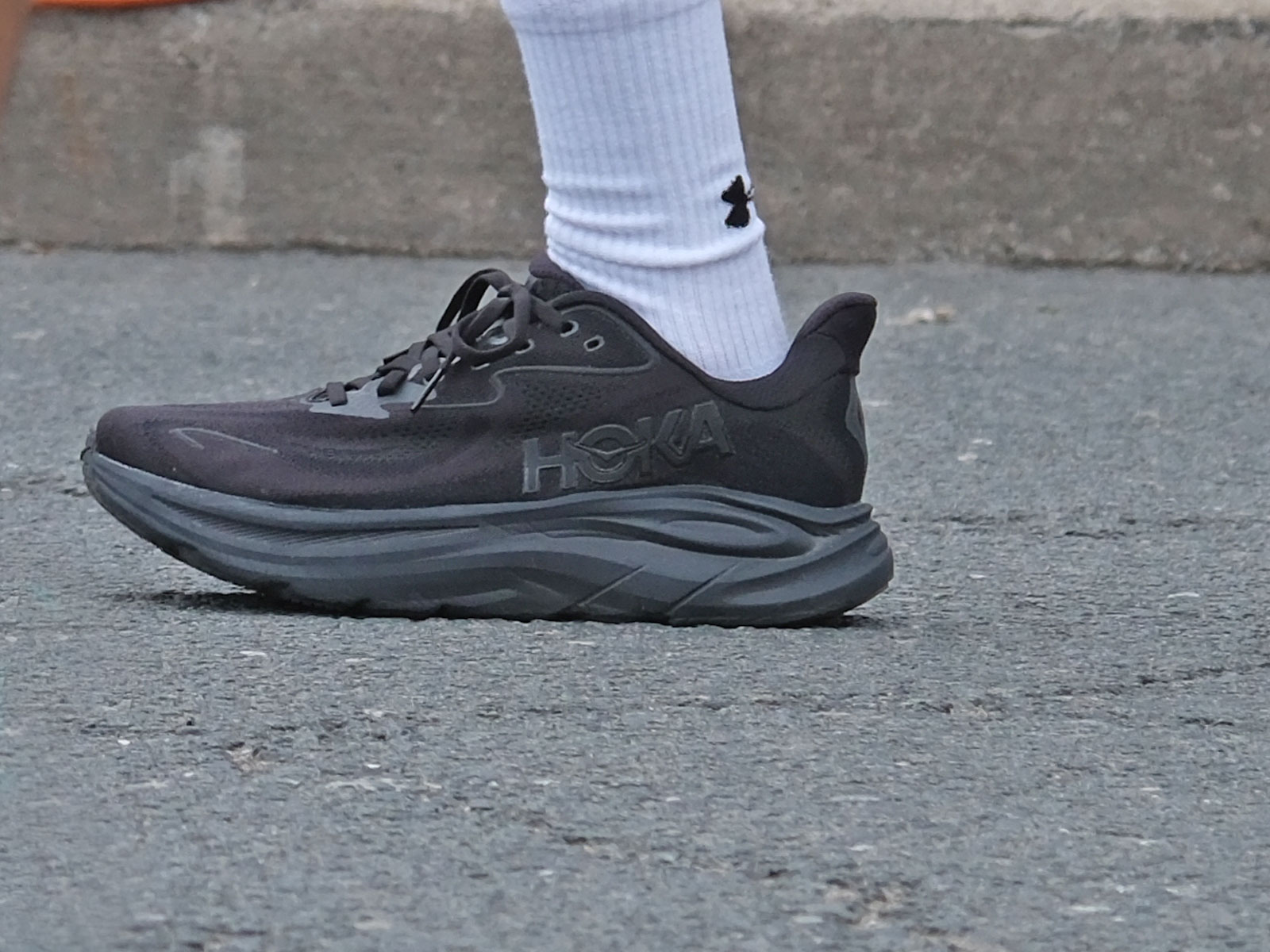
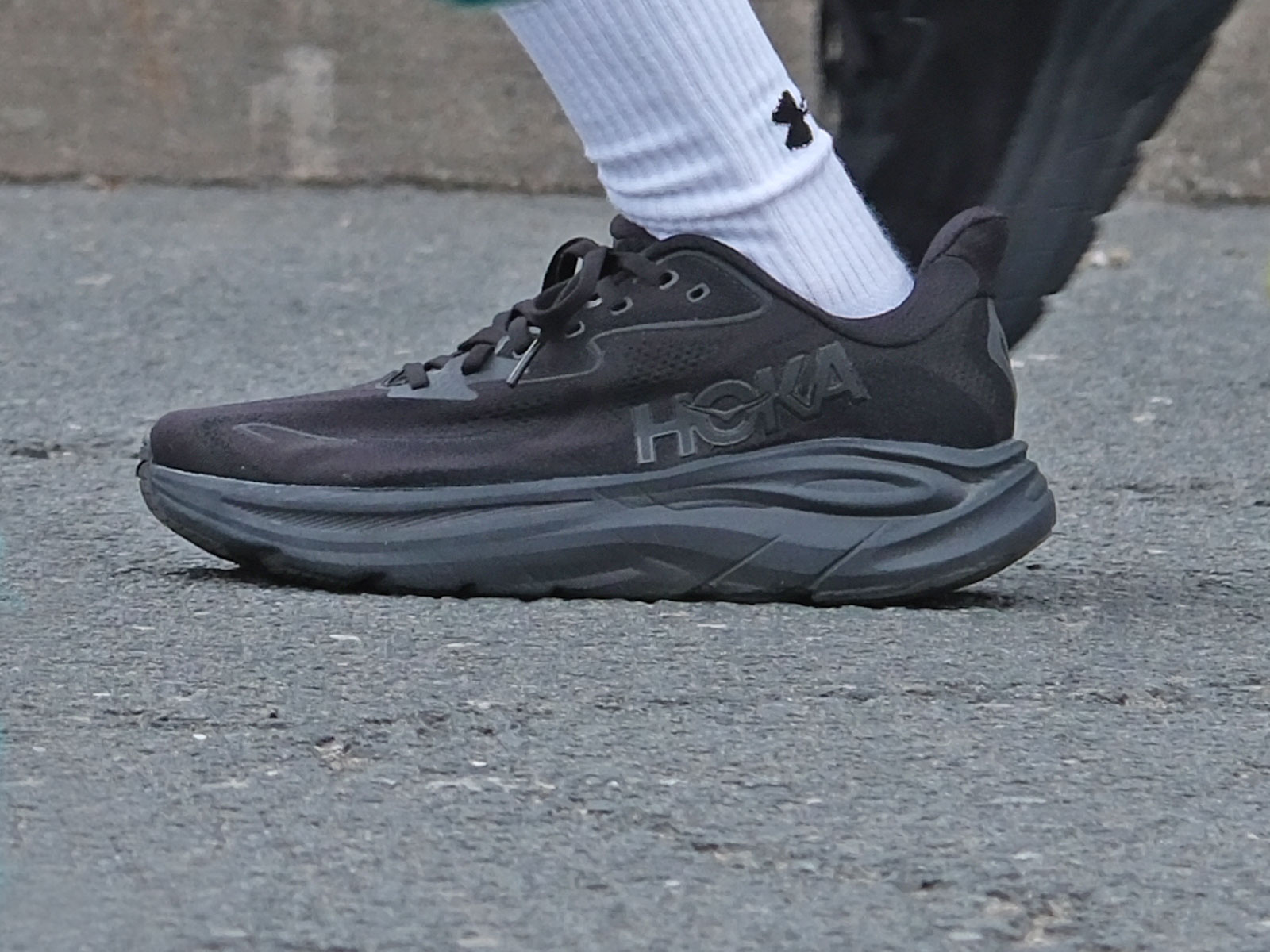

Heel strikers will experience the full extent of the Clifton 10’s rubbery-soft cushioning, all 43 mm of it. The cushioning is noticeably softer than the last version, and slightly bouncier. Considering the midsole is made of EVA foam, it doesn’t have the springy cushioning of super-foams. Even the Mach 6 feels bouncier. That said, the midsole foam feels lively and very smooth, avoiding the ‘flat’ feel historically associated with EVA foams. The landing zone is covered with rubber to withstand wear and tear, and the heel is beveled for smoother landings. The tall stack and lack of a stiff component make faster transitions a slog, so the heel-to-toe loading takes more work than a midfoot strike.
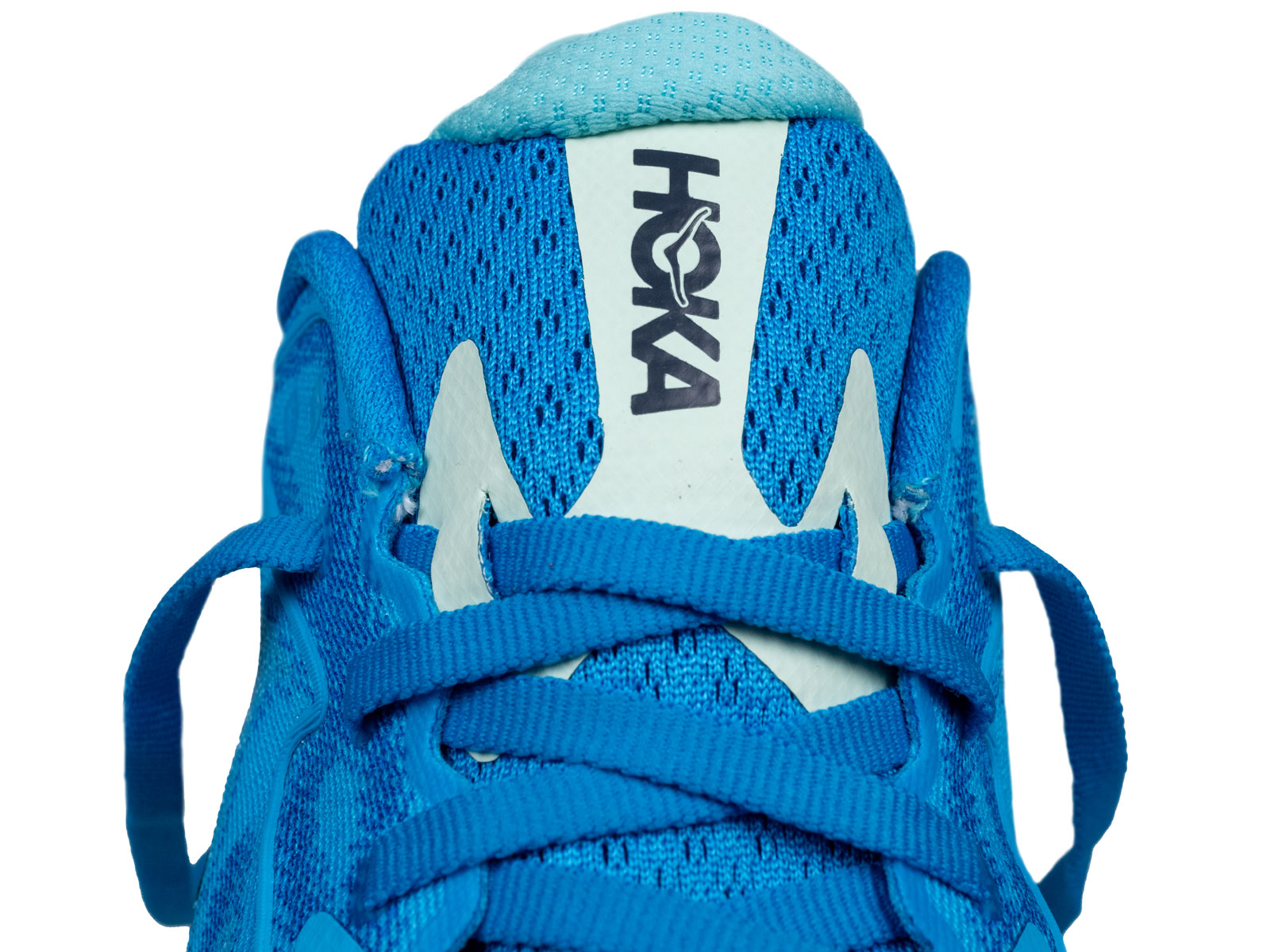
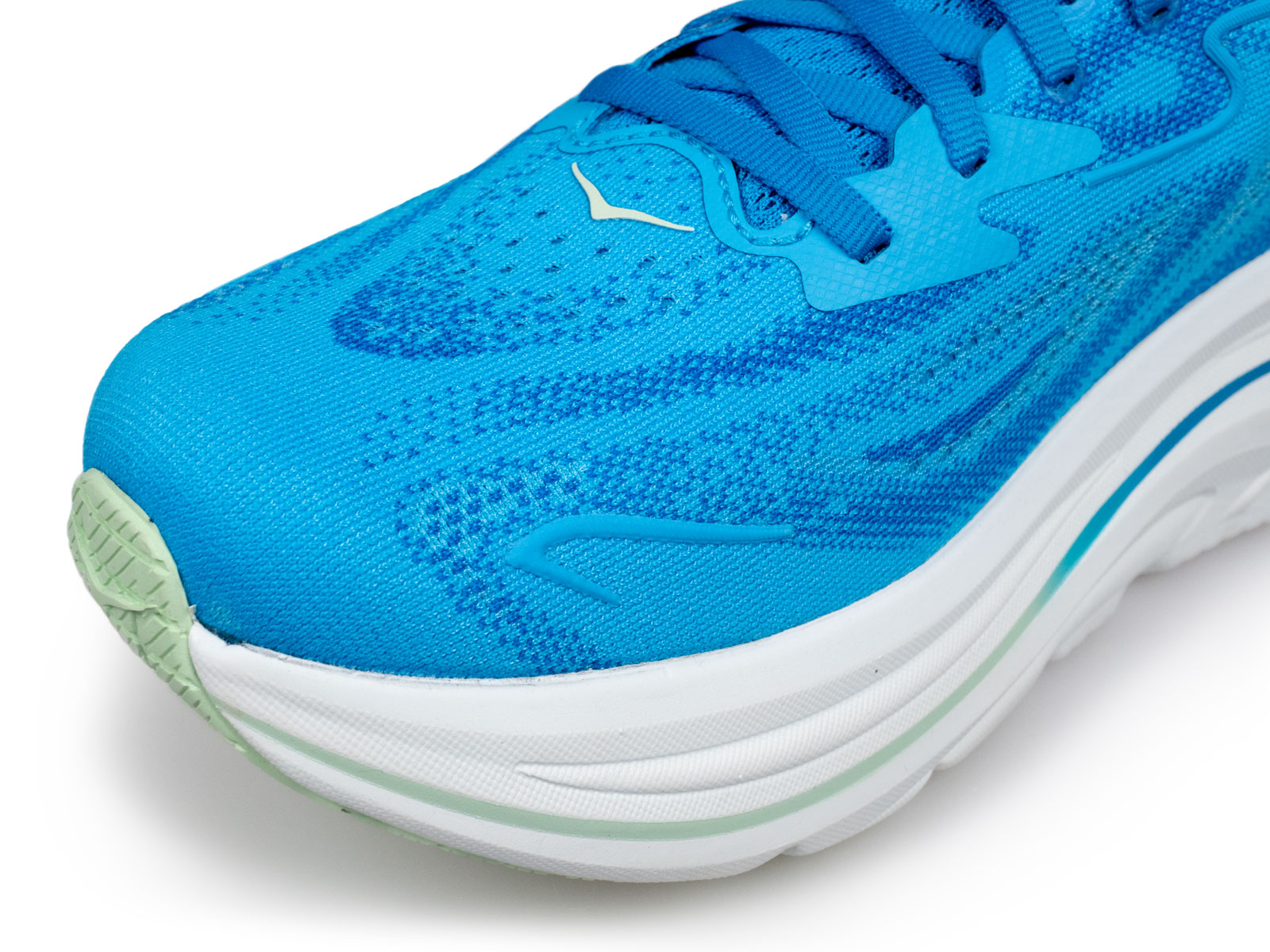
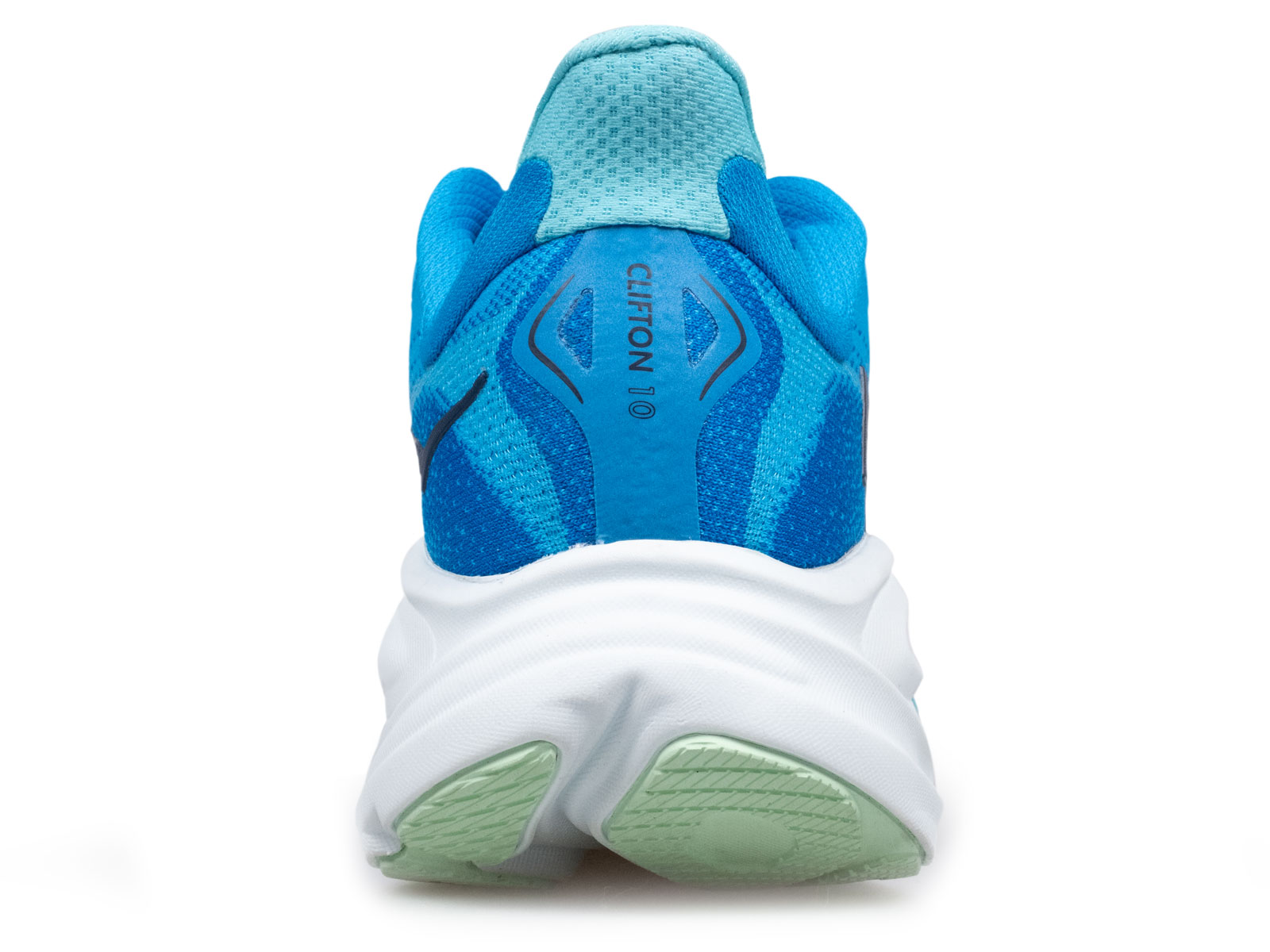
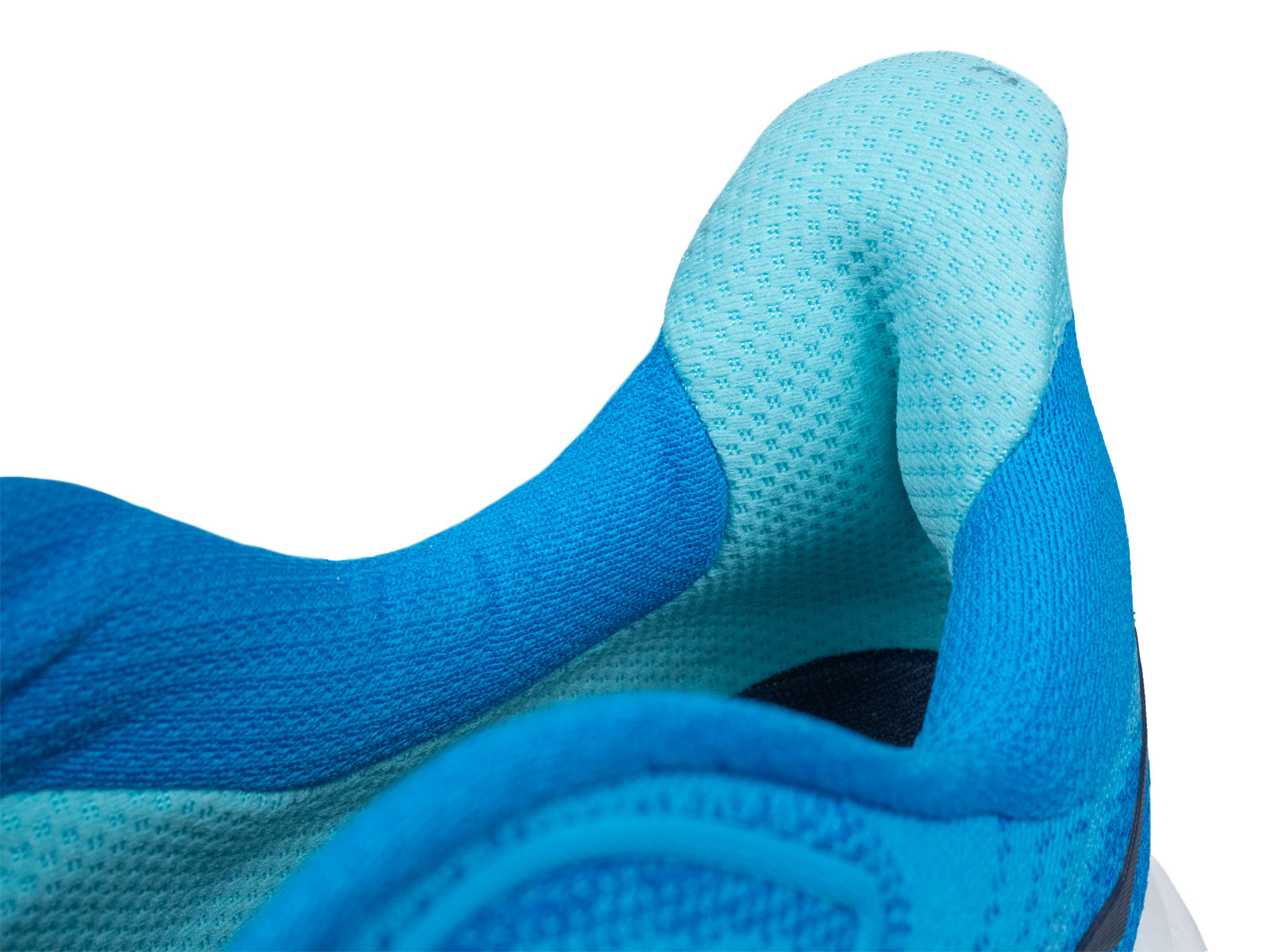
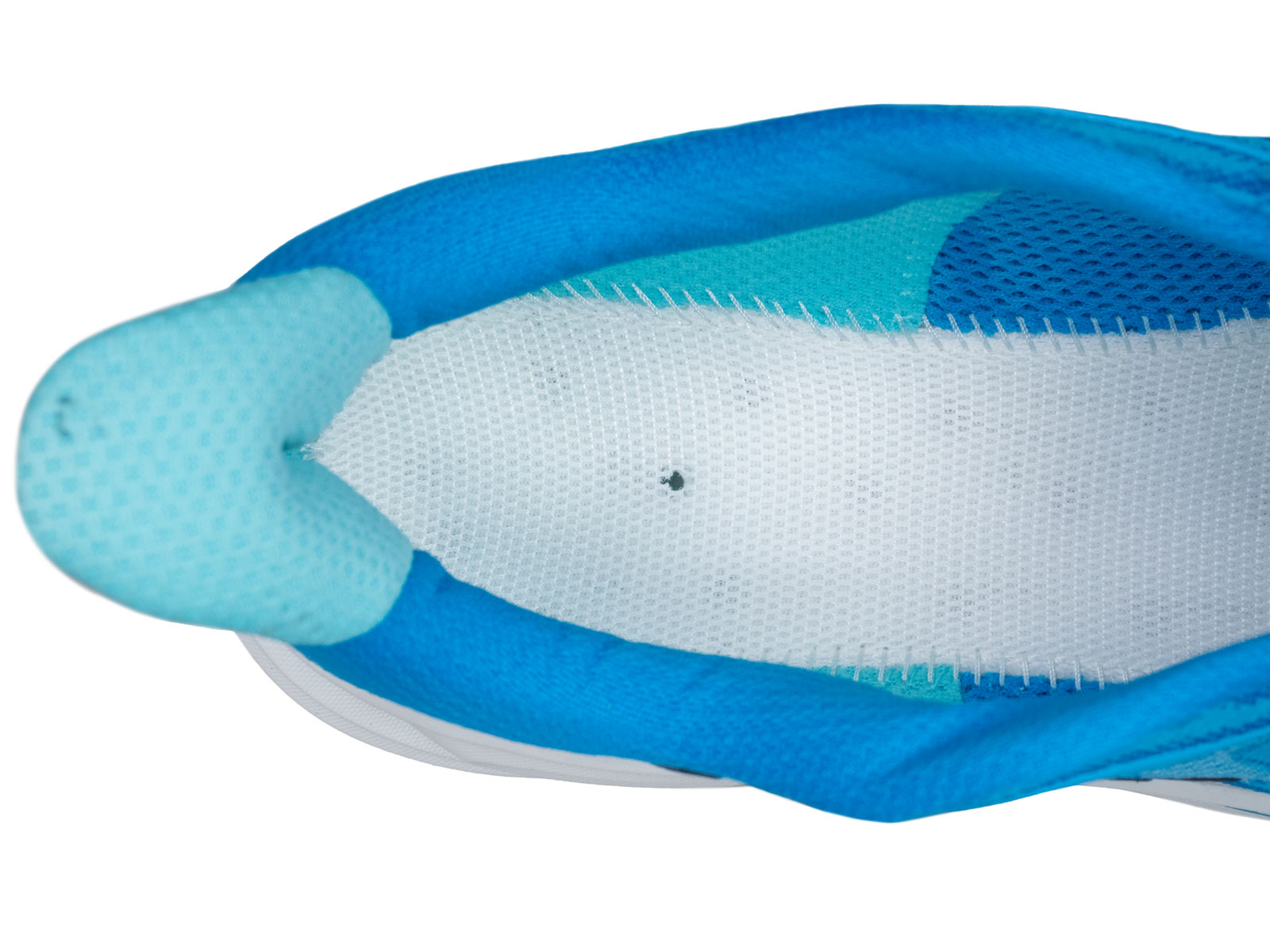
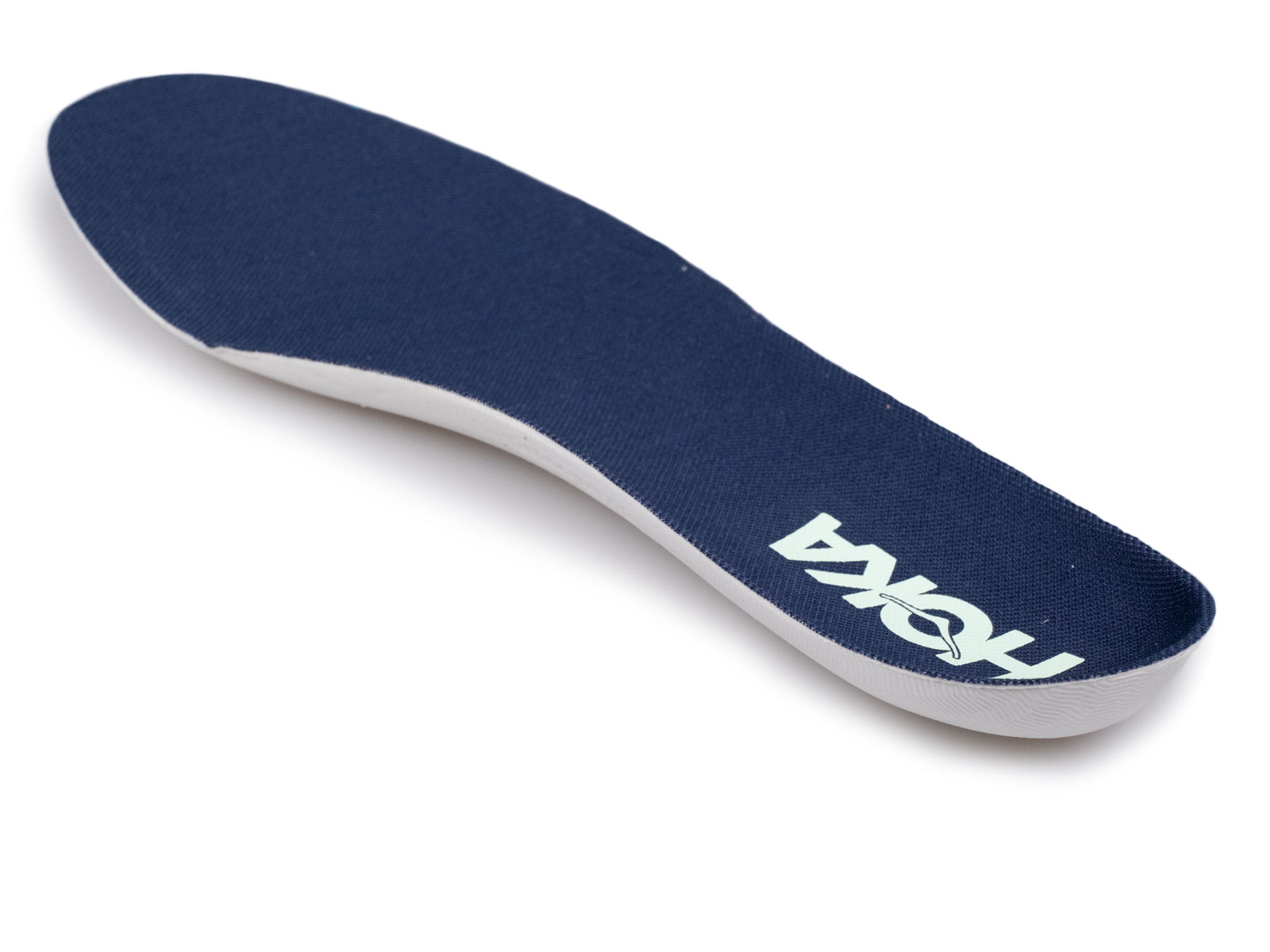
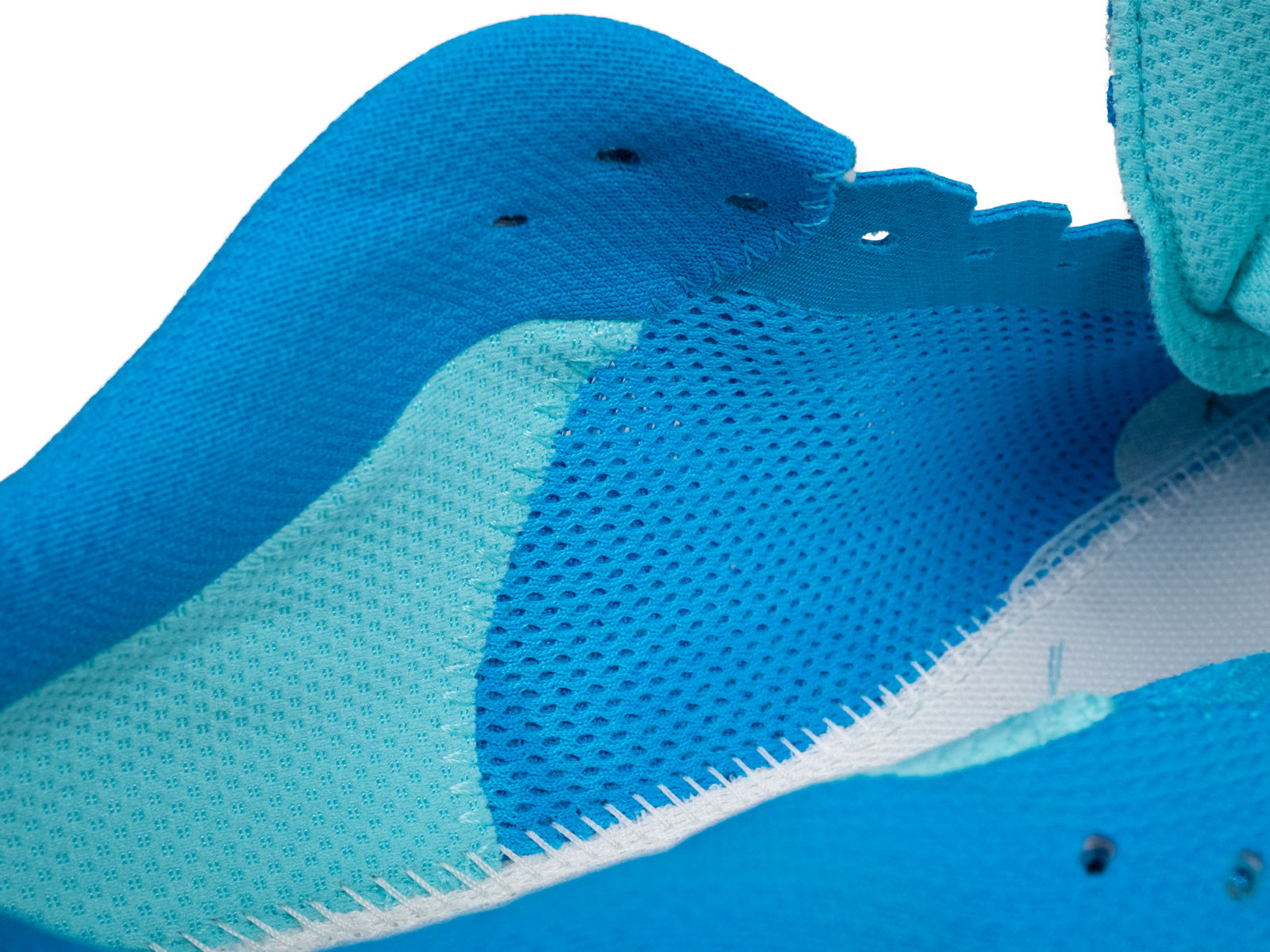
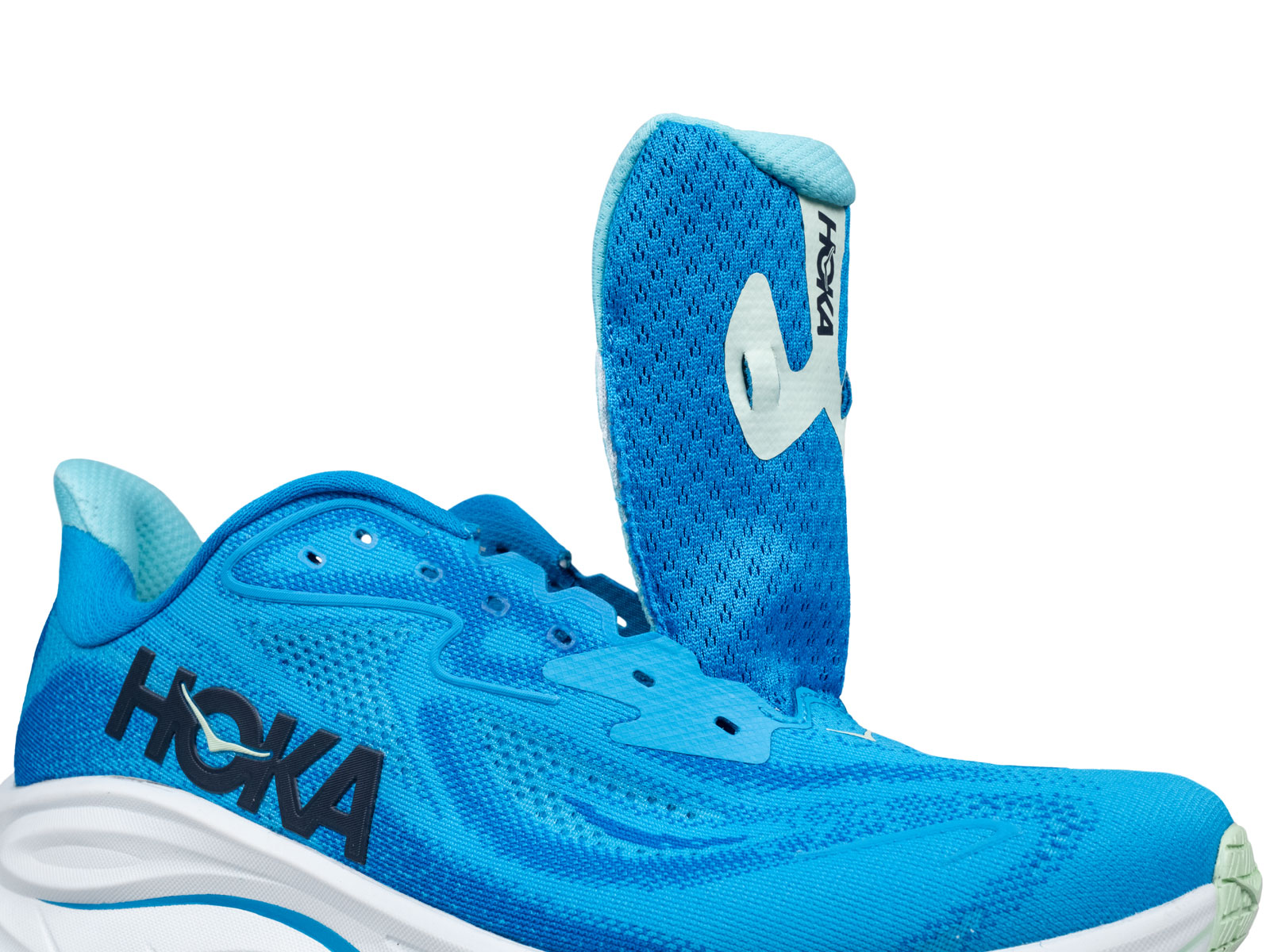
Despite the softness, the heel landings don’t feel unstable. The outsole has a wide footprint, and the shallow void keeps the loading centered. The raised midsole walls cup the foot to prevent sliding. On top, the padded heel collar and tongue provide a secure fit. There’s no half gusset like the Clifton 9; in its place is a set of twin tongue loops to arrest tongue migration. The true-to-size upper has an accommodating yet secure fit that highlights the step-in softness of the footbed. The upper doesn’t breathe as well as the Clifton 9 due to the thick mesh.
SCENARIO 2: MIDFOOT STRIKING AT 5:00 MIN/KM, 8 MIN/MILE
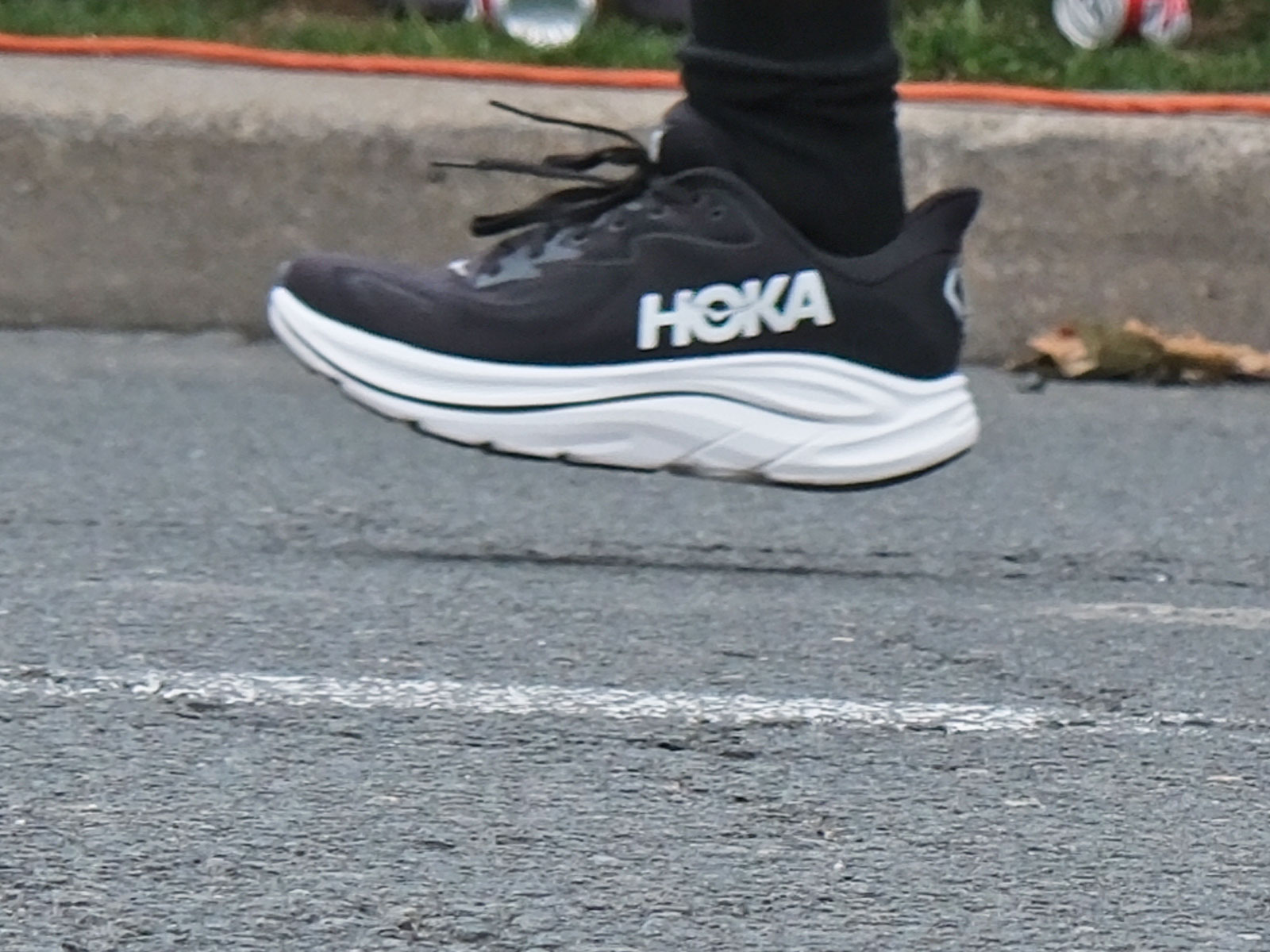
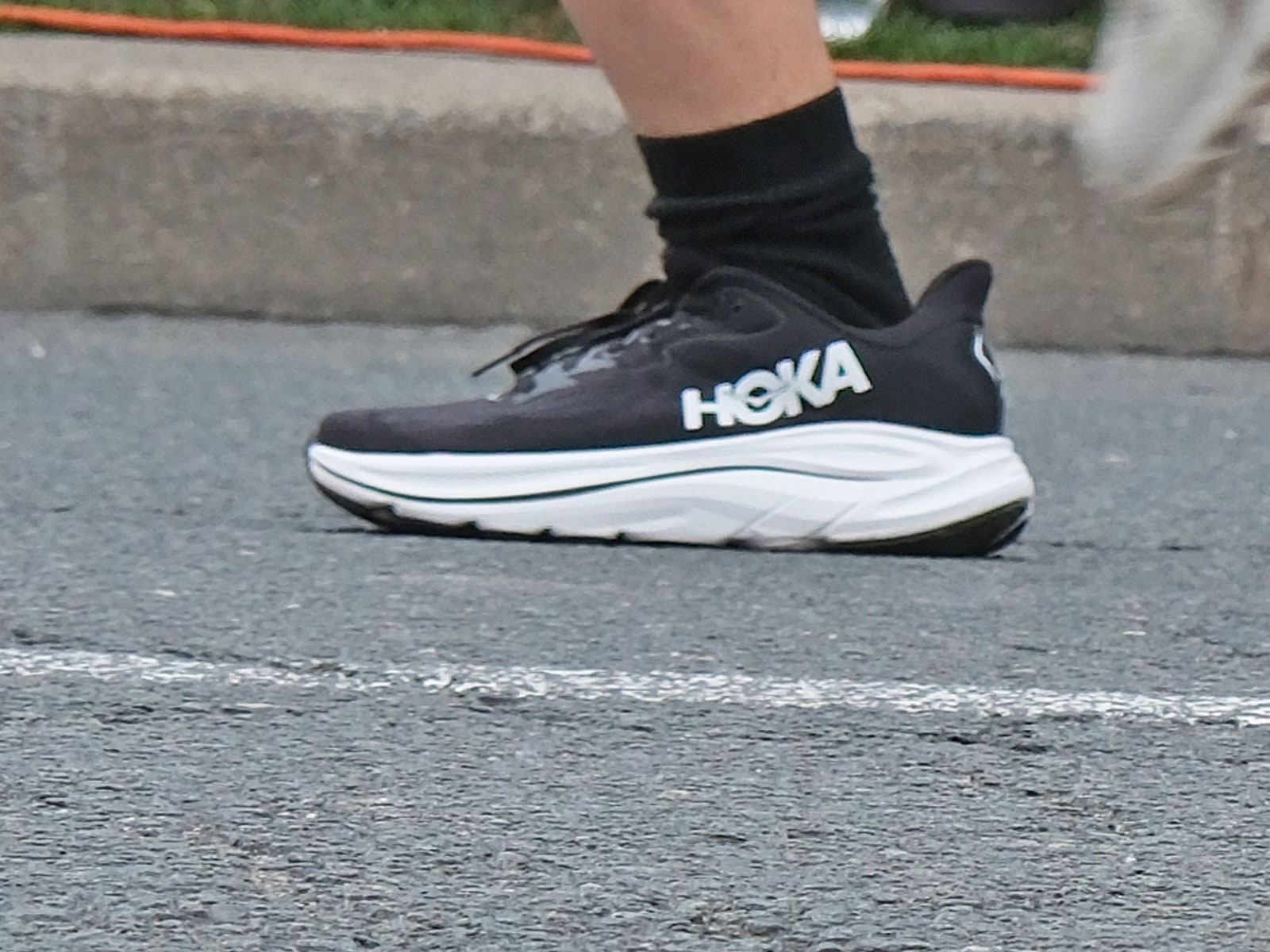
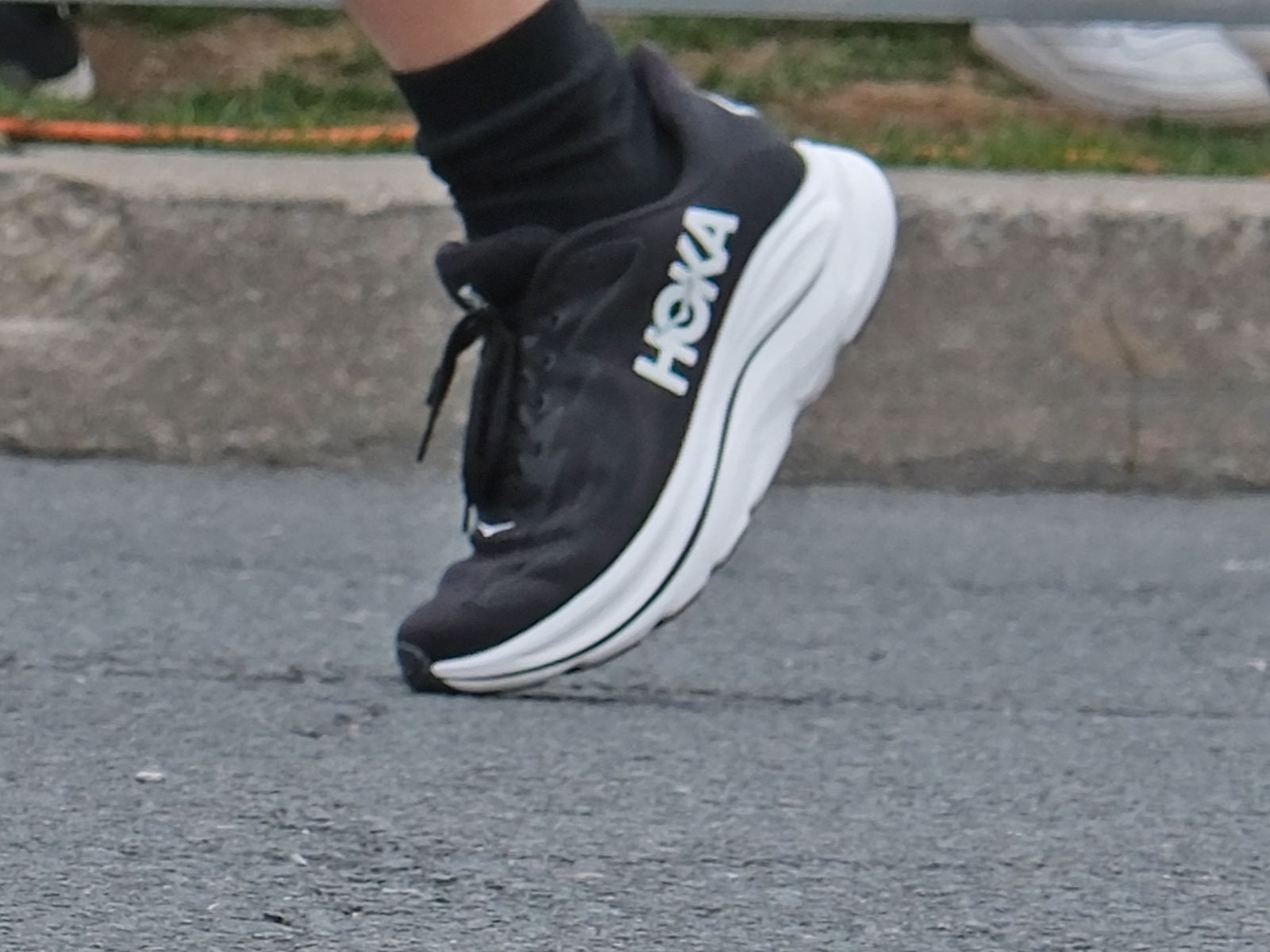
Midfoot or center-contact striking is preferable on the Clifton 10. That way, runners don’t have to work their way through the entire stack. While midfoot strikers won’t get the full plushness of the 43 mm stack as heel strikers do, cushioning is abundant under the midfoot. The center outsole has exposed foam instead of rubber lugs, creating a padded feel. The stability is excellent with a strong neutral character, so it’s safe even for overpronating midfoot strikers.

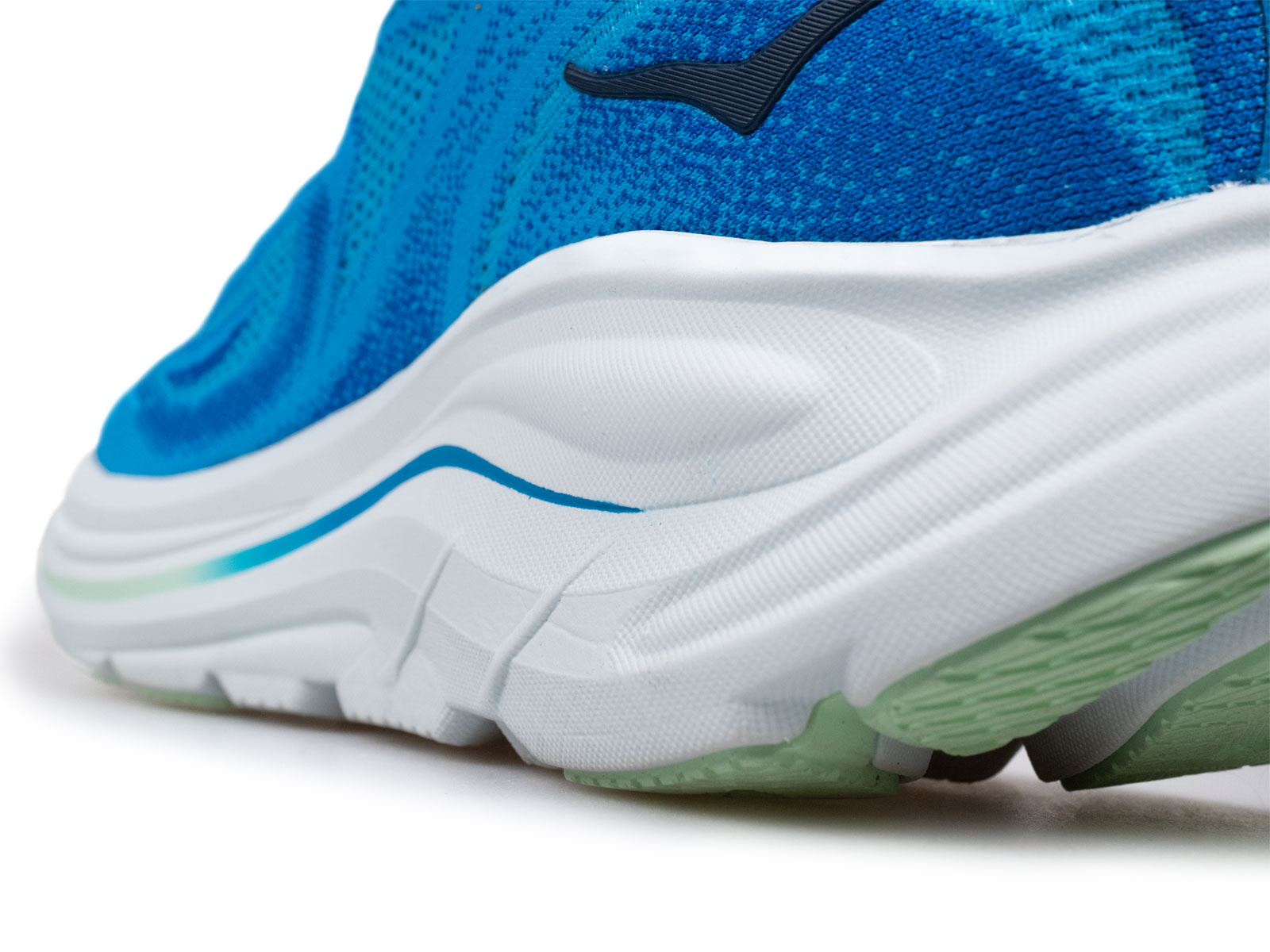
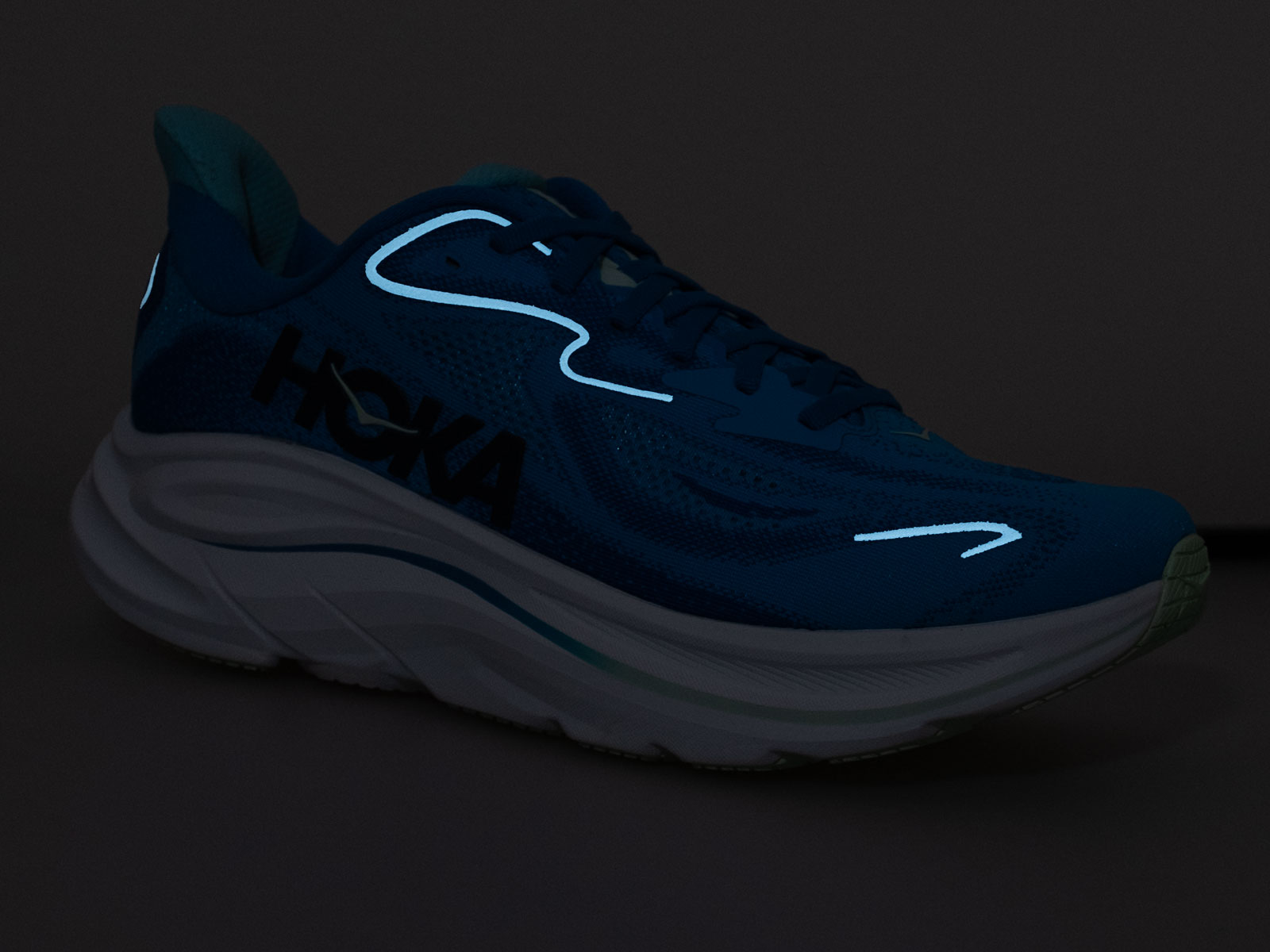
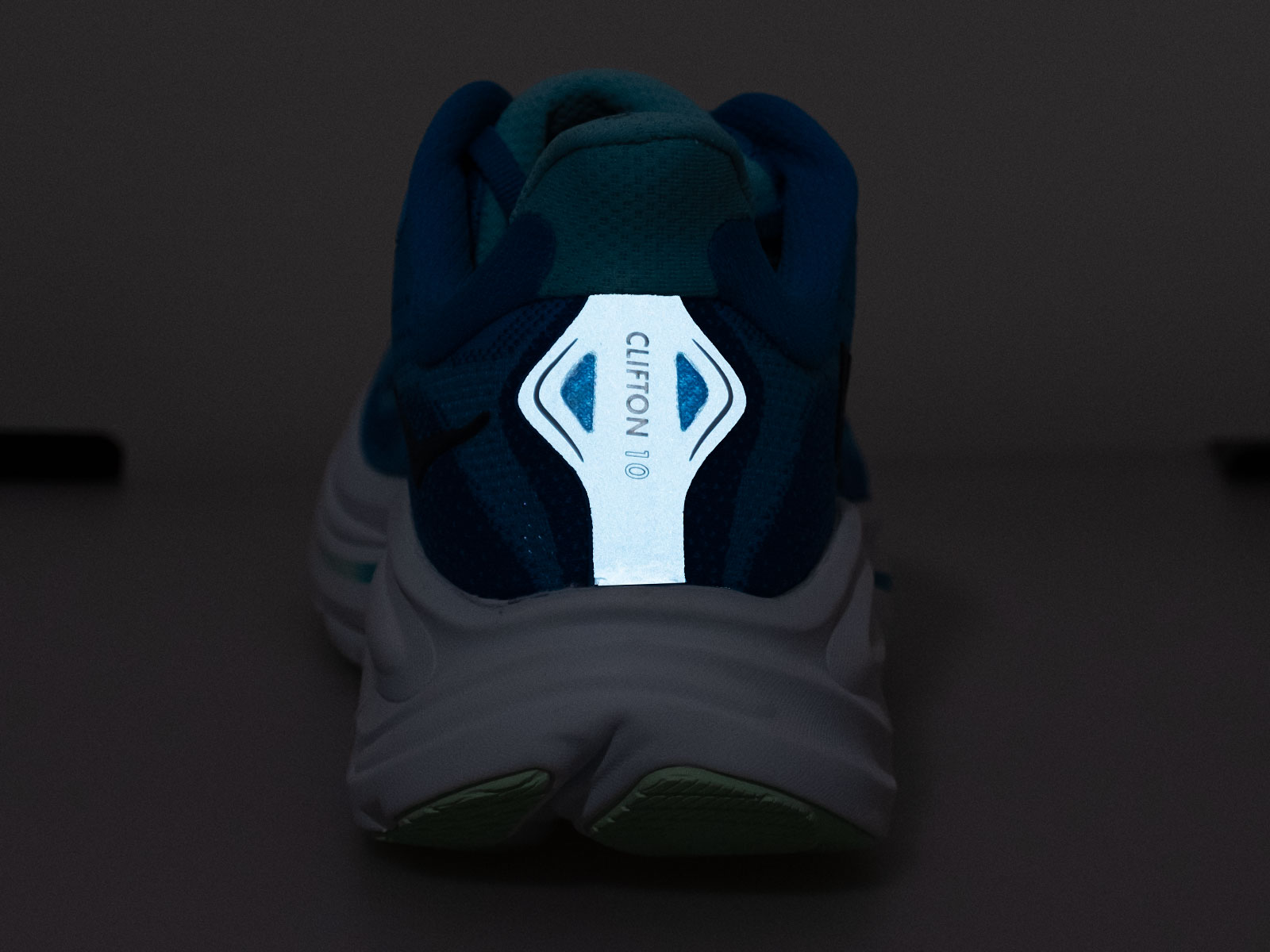
The Clifton 10’s midsole rocker isn’t very strong, but helpful nonetheless. Once the gait cycle progresses to the forefoot, the roll-offs come naturally. The outsole traction disappoints during inclement weather, as the rubber has insufficient grip on rained-on roads. The Clifton 10 continues to feature reflective trims on the heel and toe box for visibility in the dark.
RECOMMENDED ROTATION
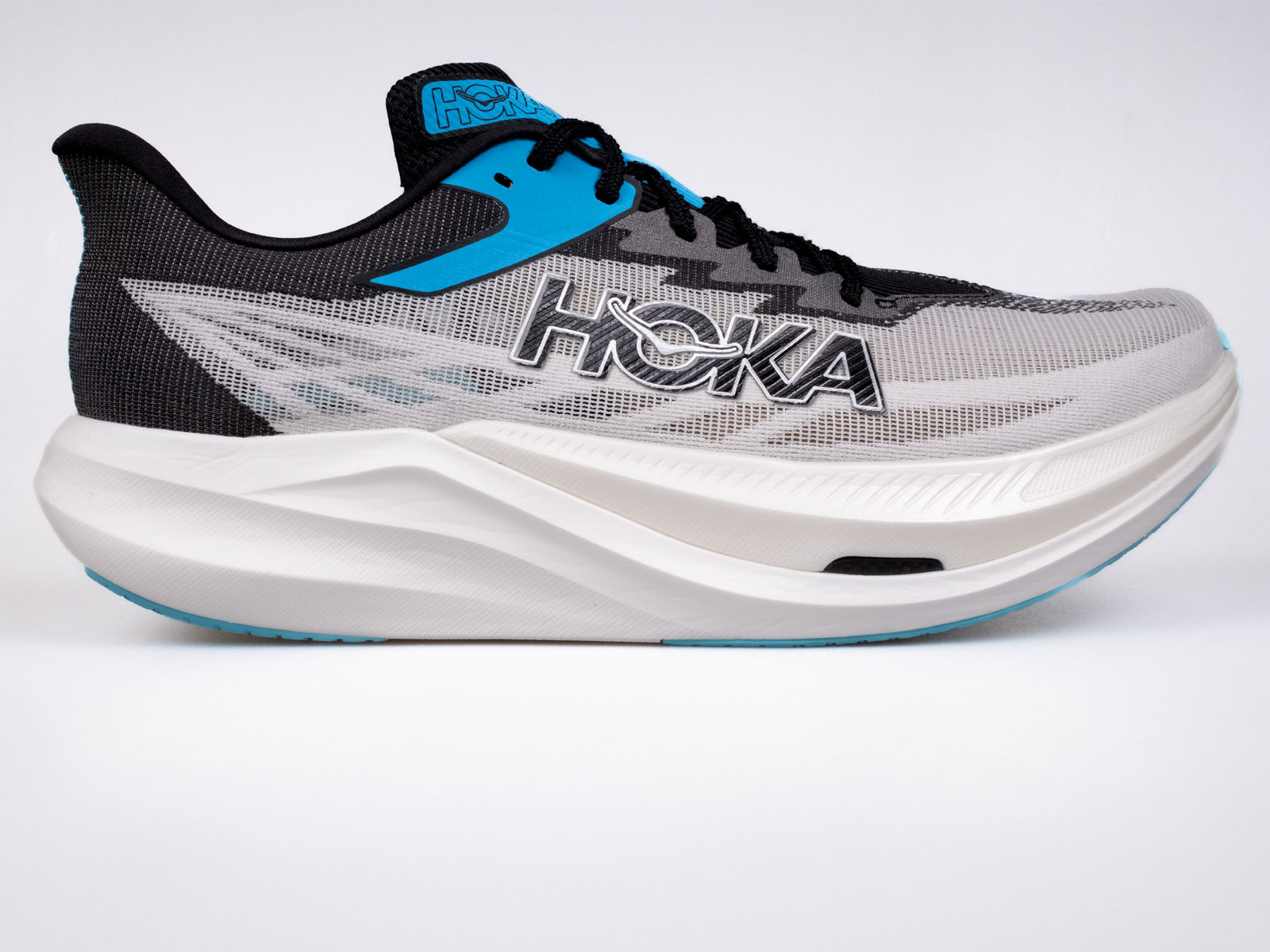
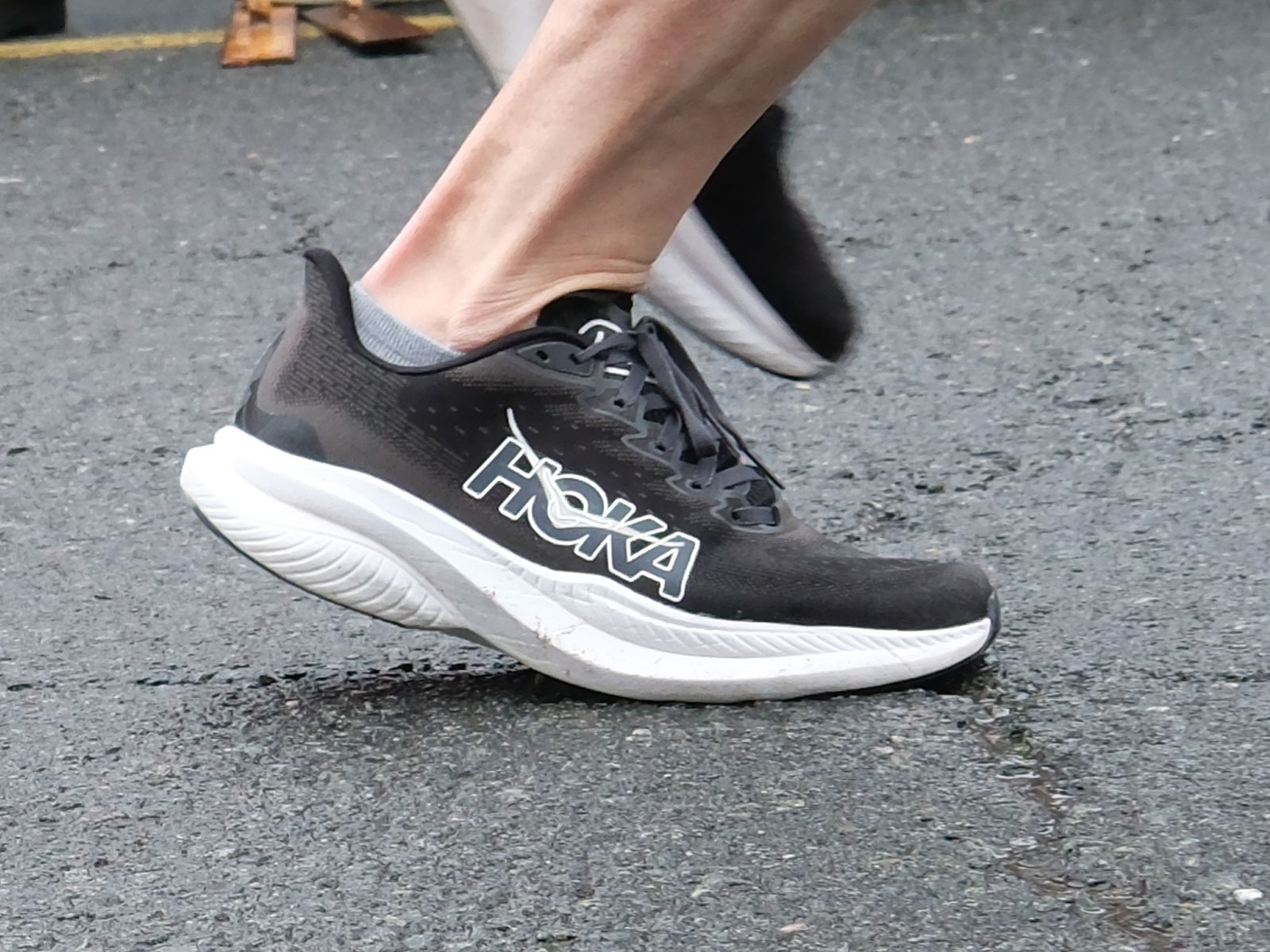
- Use the Hoka Rocket X 3 for 10k, marathons
- Use the Hoka Mach 6 for tempo and long runs
- Use the Hoka Clifton 10 for everyday training, recovery runs, 4-hour+ marathons
SHOES COMPARABLE TO THE HOKA CLIFTON 10
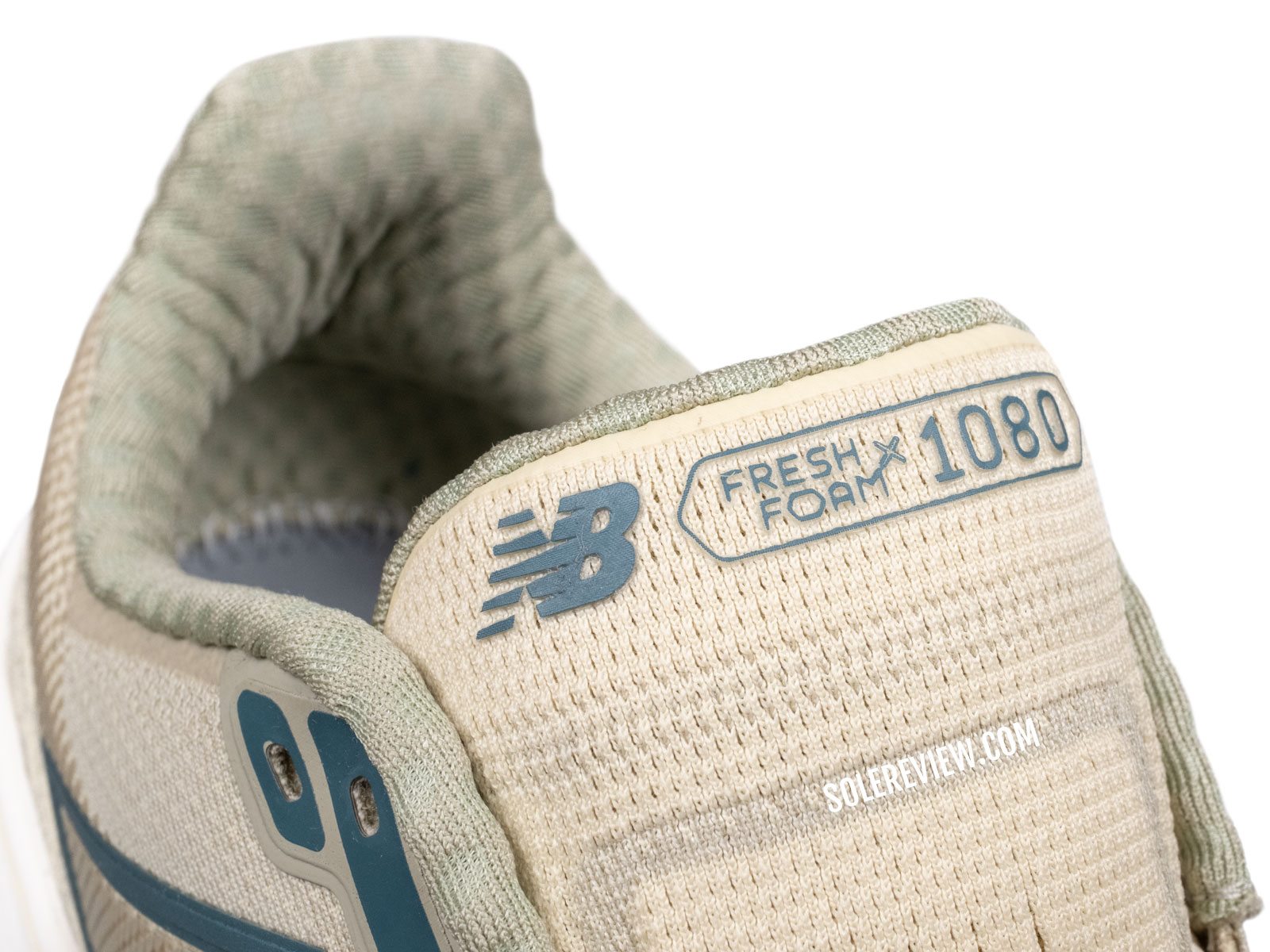
Also consider:
- New Balance 1080 V14
- Asics Nimbus 27
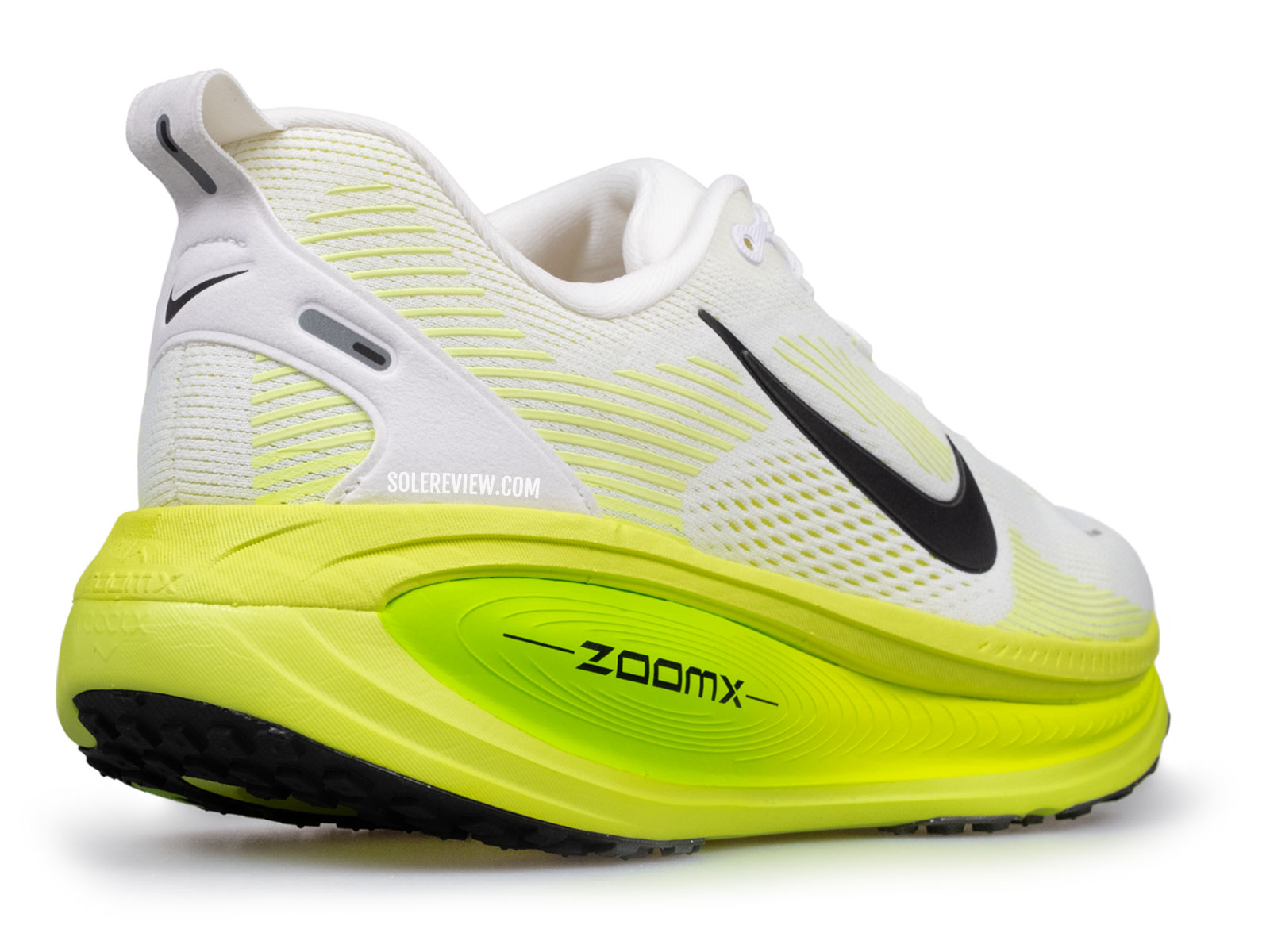
- Nike Vomero 18
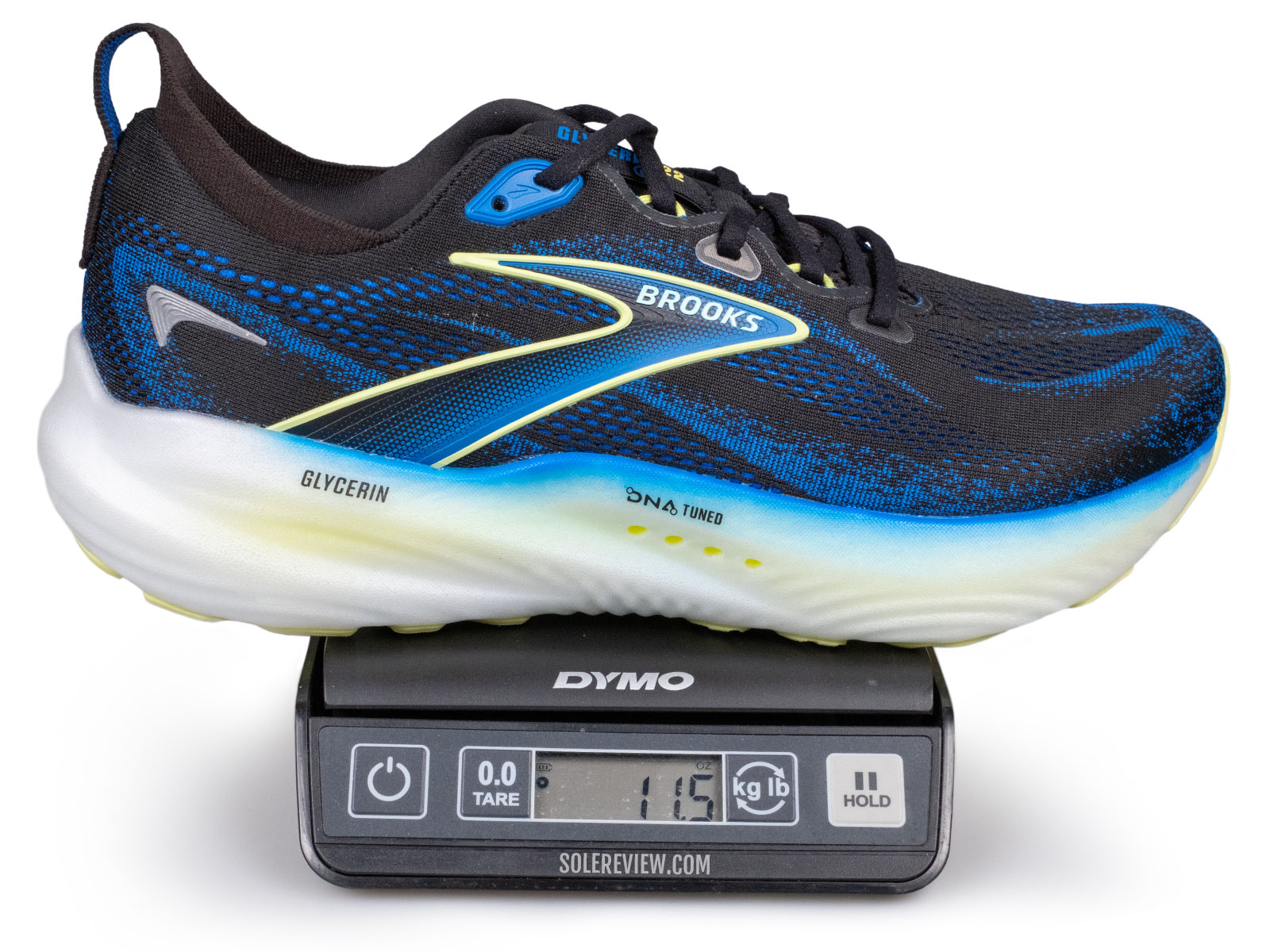
- Brooks Glycerin 22
- Saucony Triumph 23
- Puma Magnify Nitro 3
TECHNICAL SPECIFICATIONS
- Hoka’s marketing pitch: Light and plush for everyday miles.
- Upper: Textured mesh with reflective detail. No sleeve.
- Sizing profile: True to size.
- Toe box fit: Spacious.
- Forefoot fit: Secure yet accomodating.
- Midfoot and heel fit: Secure.
- Midsole: EVA blend foam, removable insole. 8 mm heel drop.
- Outsole: Carbon rubber in high-wear areas.
- Weight: 278 gms/ 9.8 Oz for a half pair of Men’s US 9/UK 8.5/EUR 42.5/CM 27.
- Stack heights: 43 mm (heel), 35 mm (forefoot).
- Available widths: Regular, wide, extra-wide.
- Recommended use: Daily training, recovery runs, walking.
- Footstrike orientation: All types (heel/midfoot/forefoot).
- Median lifespan: 450 miles.
- Previous model: Hoka Clifton 9.
- Country of origin: Vietnam.
- Recommended paces: 5:00 min/km (8:00 min/mile) and slower.
- Recommended temperature range: Warmer than -5° C/23° F.