
Review Updates
(3 total)- 2026-07-16 — Added 'cut in half' module
- 2026-07-16 — Converted % score into star rating
- 2025-09-08 — Review published
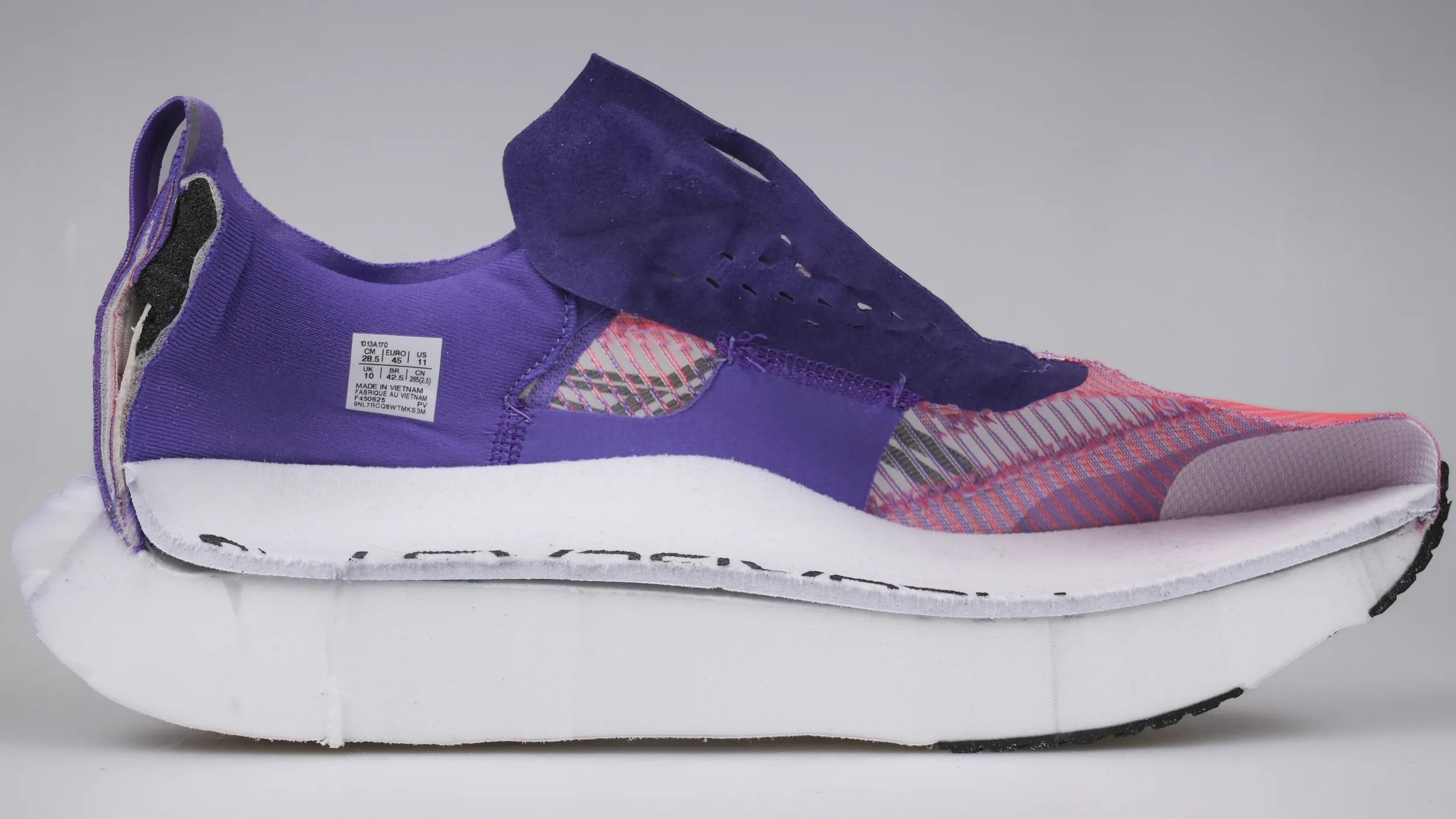
CUT-IN-HALF: ASICS MEGABLAST
Teardown Analysis
Tap the hotspots to reveal component specifications.
Select a component
Pros
- Speed friendly max-cushioning
- Propulsive rocker
- Lightweight
- Secure fit
- Midsole stability
- Outsole grip
Cons
- Pressure hot spot over small toe
- No widths
In this review:
SUMMARY
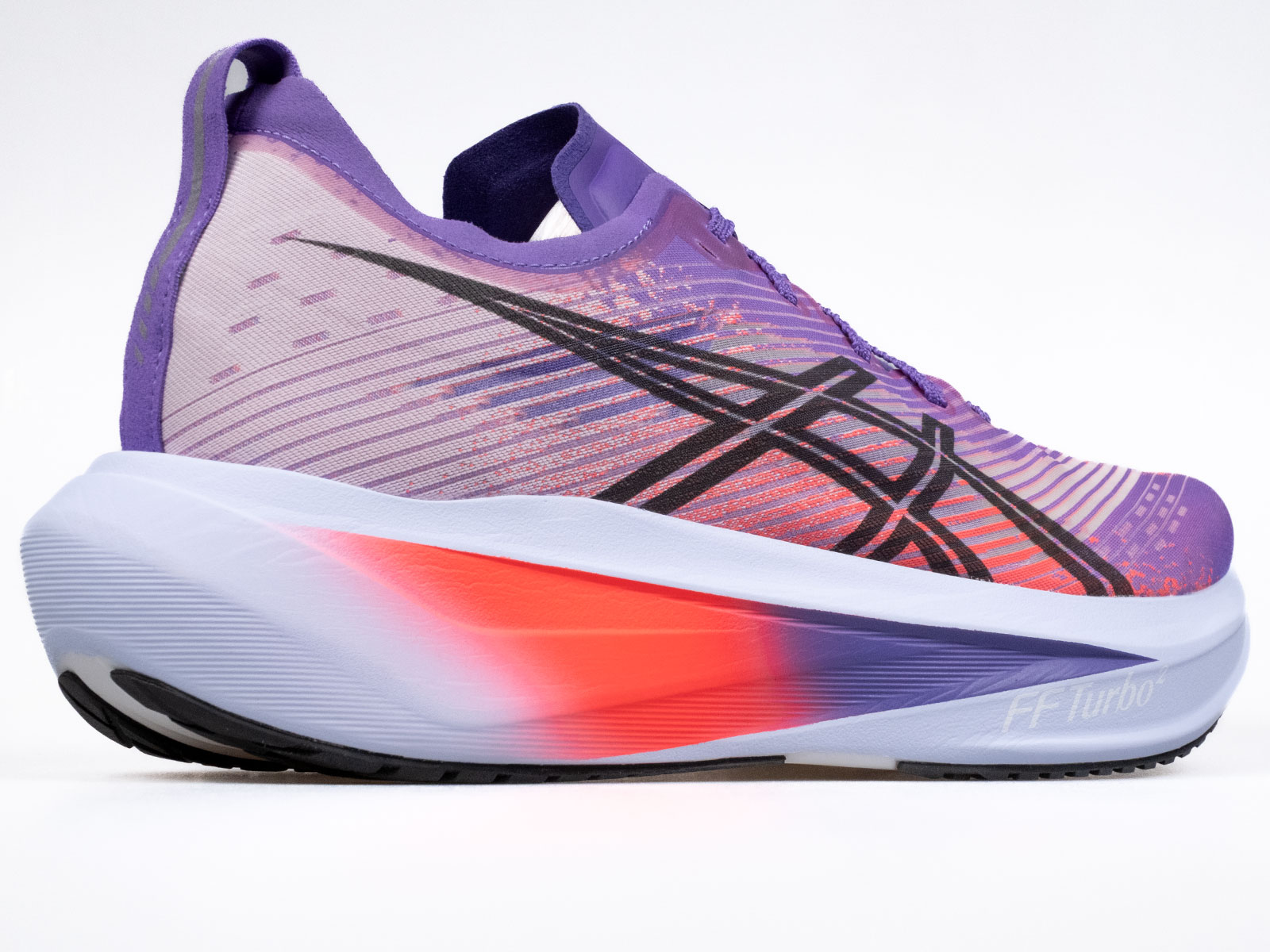
Asics describes the Megablast as ‘a bouncy trainer that’s functional for various speeds and distances’. While that description is a good approximation, it’s missing some details. For example, in what ways is the Megablast different from the Superblast? What kind of bounciness does the new FF Turbo² foam deliver? More importantly, is the Megablast worth buying for existing Superblast owners?
The Megablast is a tuned-up version of the Superblast 2 with a firmer ride (read the next paragraph for details) and tighter upper. The FF Turbo² foam is bouncier, but not in an adidas EVO SL or Nike Vomero Plus kind of way. The rubbery bounce feels like a blend of FF Turbo foam (from the Superblast 2) and FF Blast Max (from the Novablast 5). The new foam makes the Megablast 0.7 oz (20 grams) lighter than the Superblast while maintaining almost identical stack heights and heel drop. The upper fit is where the Megablast differs the most. The forefoot is considerably narrower, particularly over the small (pinky) toe.
You’d have noticed that we described the Megablast as firmer and bouncier than the Superblast 2. Isn’t that an oxymoron? How can a midsole be both firmer and bouncier? Isn’t the right word ‘softer’? We use the word ‘firm’ to refer to the foam density. In its static state, the FF Turbo² is higher density, and therefore firmer, than the Superblast’s FF Turbo foam. So why does the Megablast feel springier and softer closer to the foot than the Superblast? There are two reasons why that happens.
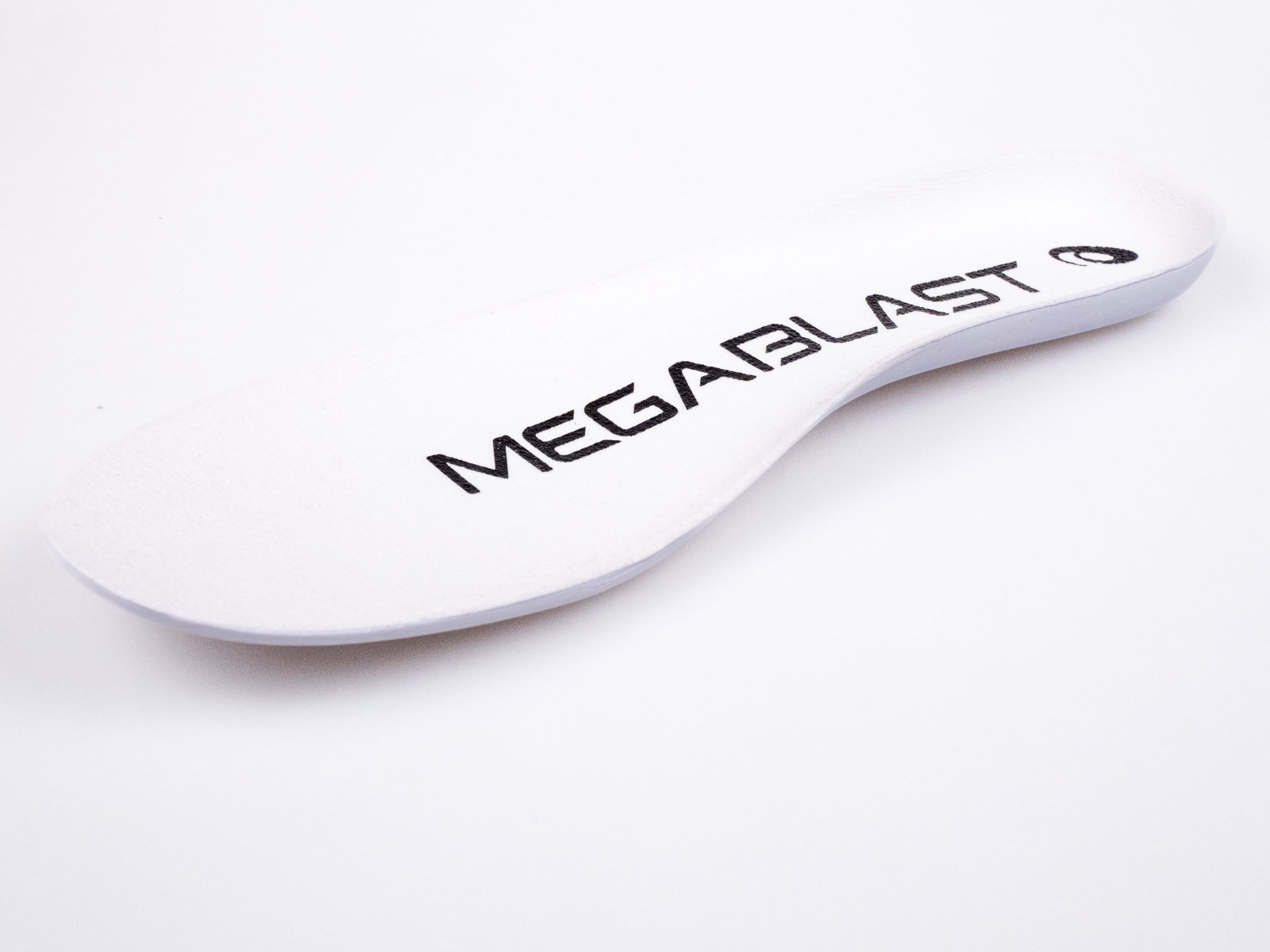
The first reason is the Megablast’s noticeably narrower upper. By pressing the foot securely over the footbed, the tighter upper does a much better job of extracting the step-in softness of the insole than the more spacious Superblast. So the Megablast’s snug upper rewards the wearer with a plusher underfoot feel. The second reason is the inherent bounciness of the FF Turbo² foam. It has a springier response to loading than the Superblast’s FF Turbo midsole. Going by the foam density alone, it’s relatively firmer. But it delivers a bouncier ride with higher levels of step-in softness, particularly at lower speeds. However, once the speed picks up (4:30 min/km, 7:00 min/mile, and faster), the Megablast settles into a predictable, cadence-friendly ride. The FF Turbo² is faster at springing back from its compressed state to its original state than the Superblast’s FF Turbo. A good analogy would be a car suspension that’s 25% firmer in its inert state, but during motion, delivers a higher level of springiness than a foam that’s 25% softer.
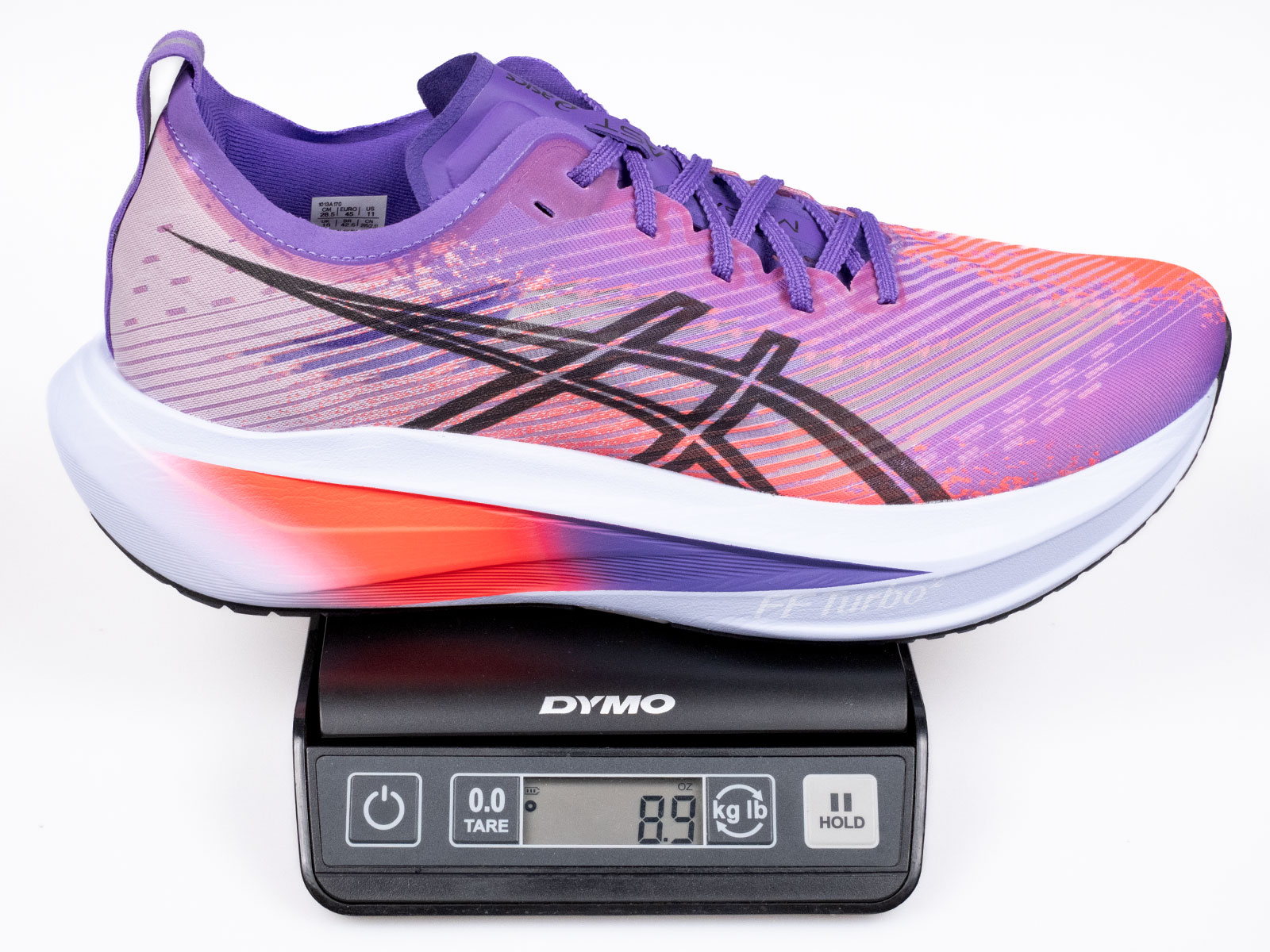
Like the Superblast, the Megablast is a versatile trainer that’s durable enough for everyday mileage, cushioned enough for a marathon, and propulsive enough for 3:30 min/km (5:30 min/mile) paces. The lightweight foam has one of the highest cushioning-to-weight ratios in this segment. If given a choice between the Superblast 2 and Megablast, we’d vote for the Superblast 1 or 2. While the Megablast’s narrow upper and firm ride are better for higher speeds, the isolated tightness over the small (pinky) toe is noticeable. In the absence of widths, the Superblast 2 is the safer choice over long distances.
WHAT THE MEGABLAST DOES WELL
– Versatility for daily runs, tempos, intervals, and marathons at 3:30 min/km (5:30 min/mile) or slower.
– Has the stability and lockdown for fast cornering.
– Delivers maximum cushioning with a propulsive rocker effect.
– Works equally well for heel and midfoot/forefoot strikers.
– No performance penalty for slow speeds.
– Narrow upper efficiently drives power to the midsole.
– Stable enough for heavier runners.
– Delivers reliable traction on wet and dry roads.
WHAT THE MEGABLAST DOES POORLY
– The toe box lacks enough splay room.
– The tightness over the small toe makes it unsuitable for wide feet.
– The firm ride and narrow upper is not ideal for recovery runs.
POTENTIAL ISSUES
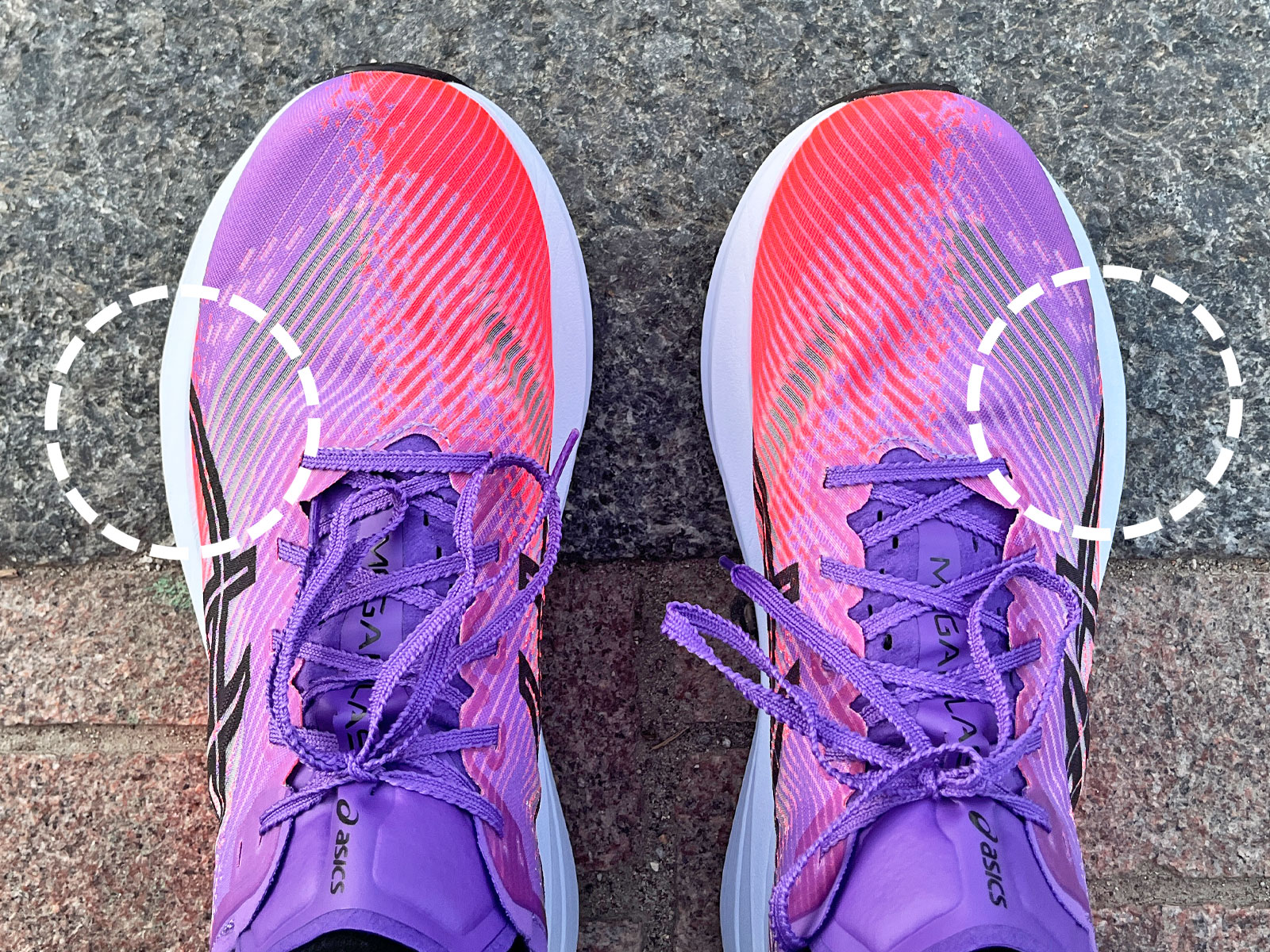
The narrowness of the upper has an uneven distribution. The pressure is mostly over the small toe, and the lack of stretch makes the fit less accommodating. The fit will be fine for narrow-footed runners, but others need to be mindful when long-distance running is involved. Runs up to a 15K should be okay, but if you’re planning on running a half or full marathon, there’s a potential risk of the mesh chafing the pink toe as the foot expands in volume.
THE RIDE EXPERIENCE
Currently, there are three different kinds of bouncy foams in Asics’ lineup. The first is the soft bounciness of the ultra-lightweight FF Leap foam featured on the Metaspeed Ray. Its soft springiness comes at the cost of lower midsole stability. The second kind of bounciness is what the Metaspeed Sky Edge had. The FF Turbo Plus delivers typical super-shoe levels of bounciness with average stability.
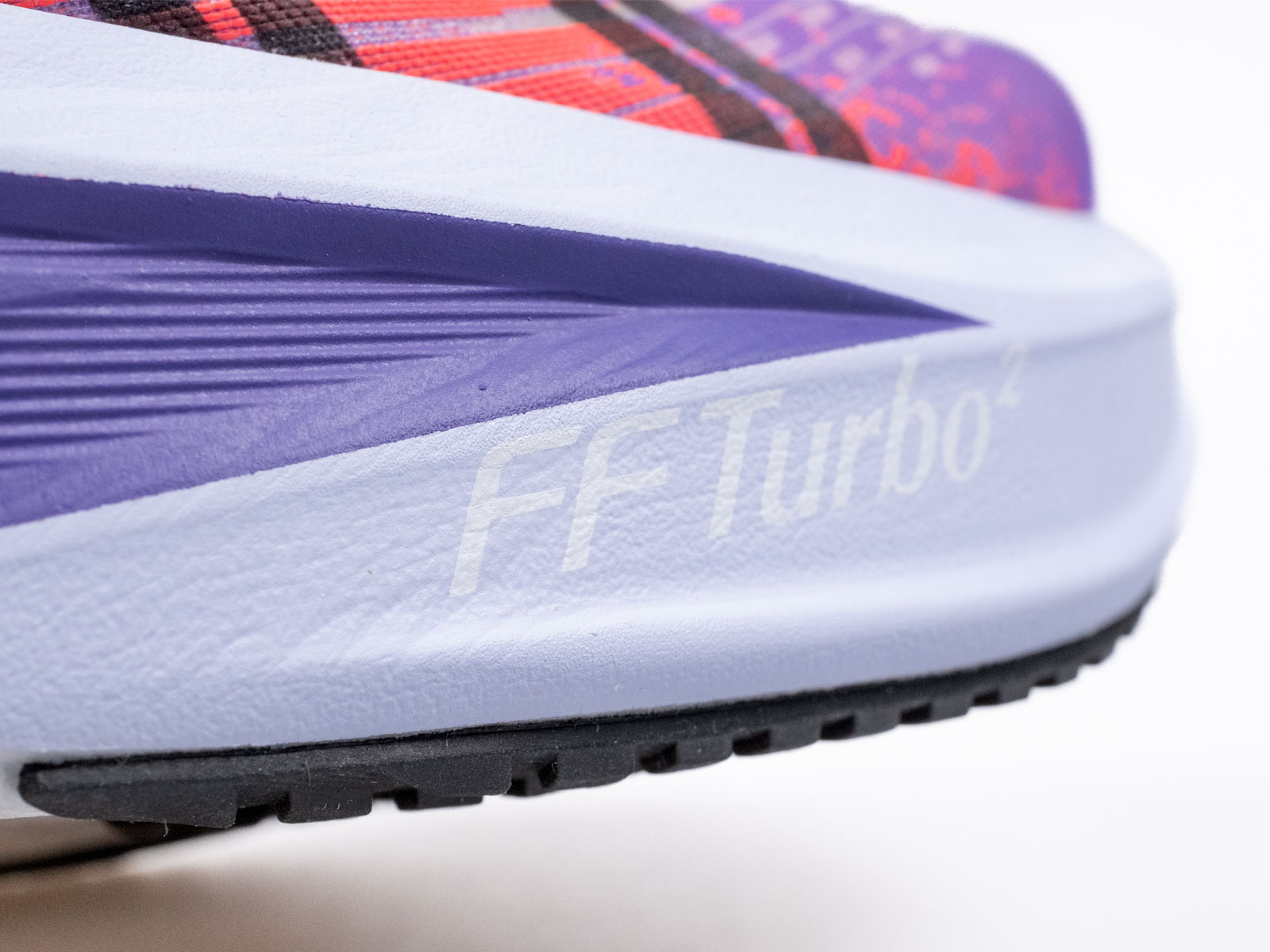
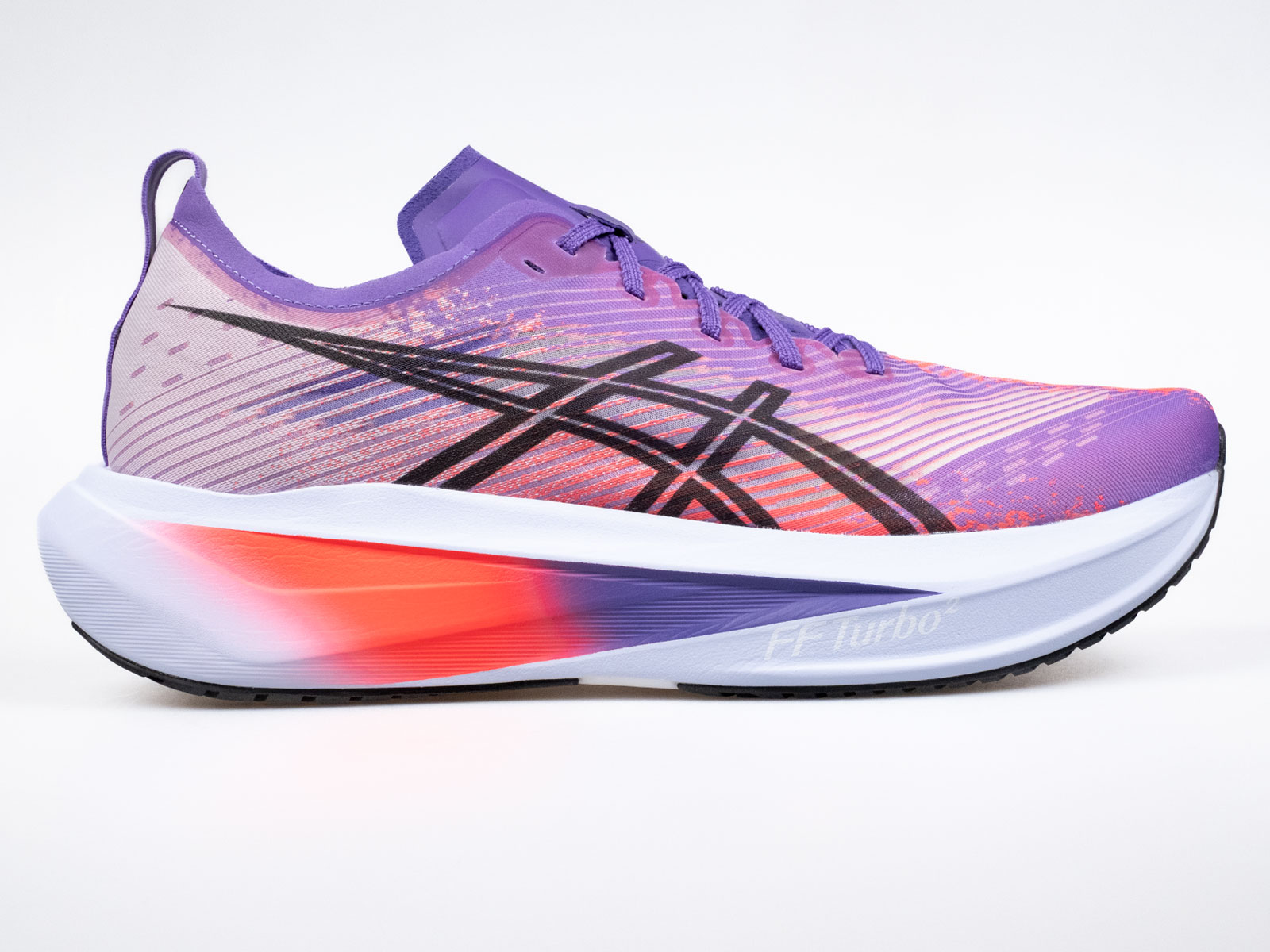
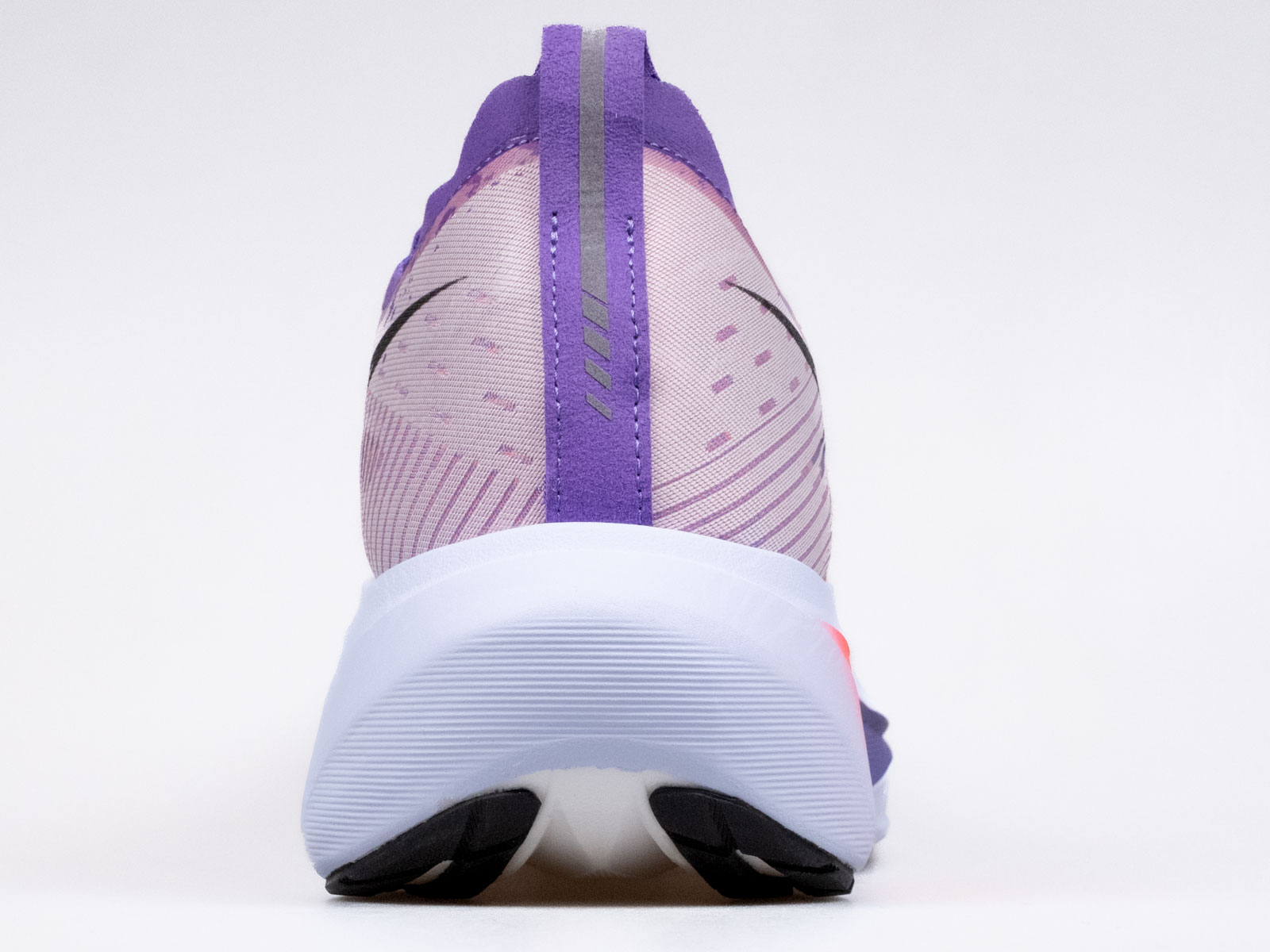
The third kind of bounciness is the rubbery-soft kind found on the Novablast 5. The Megablast has a hint of that rubbery bounciness mixed with firmness. Of all the premium FlyteFoam variants, the FF Turbo² is the firmest. It’s worth mentioning that while the new Sonicblast uses the same foam, it’s noticeably firmer. Asics’ inconsistency with FF Turbo² is already on full display here.
A firm midsole delivers tangible performance benefits. The first benefit is excellent midsole stability; the Megablast has a supportive heel with a planted forefoot. The wide forefoot flare and the lack of negative space under the heel provide structural support. By far, the Megablast has the most stable midsole for a non-plated, max-cushioned trainer with a 45 mm heel stack height. The supportive midsole and Achilles-friendly 8 mm heel-to-toe offset make the Megablast user-friendly for both heel and forefoot strikers.
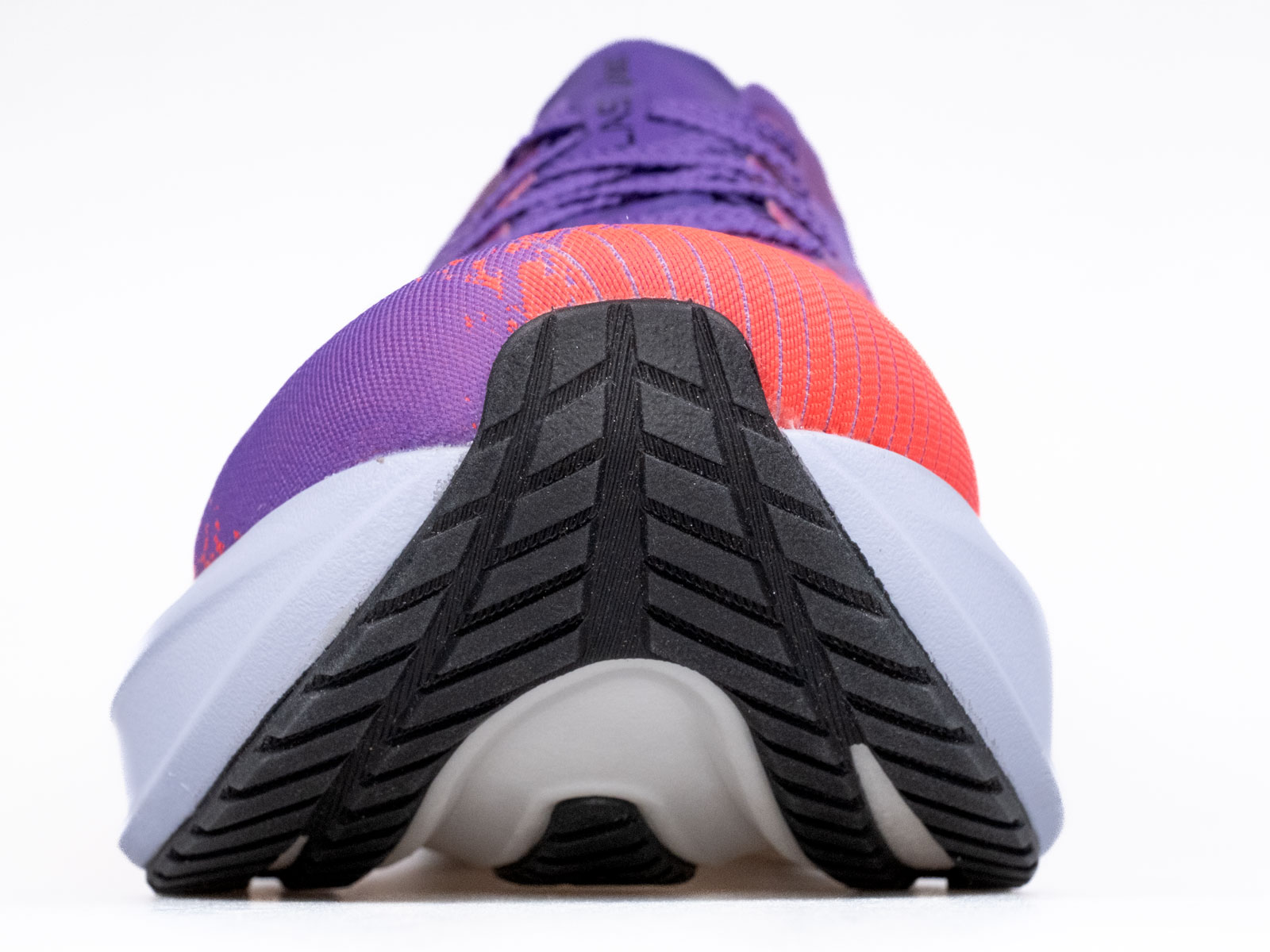
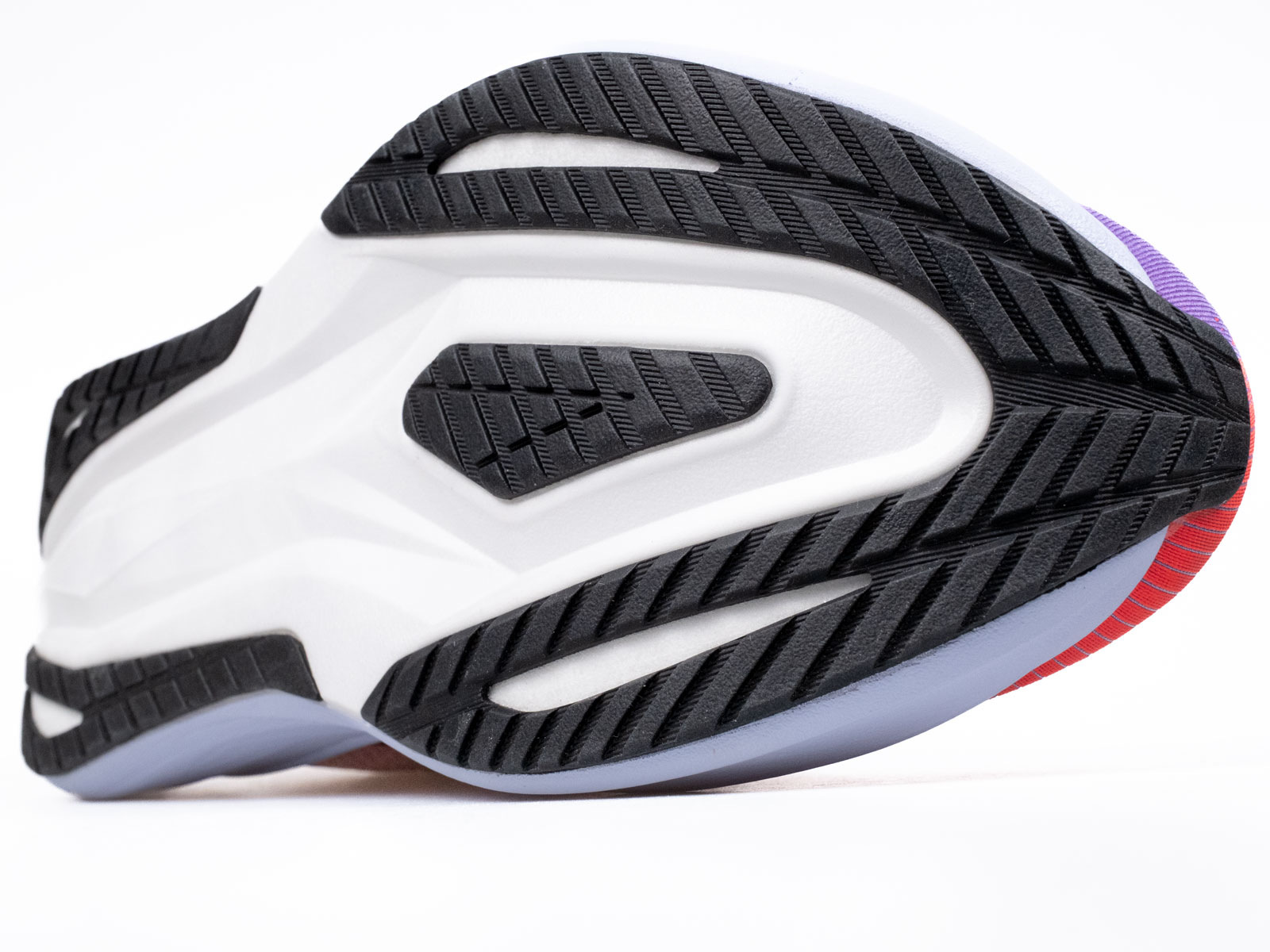
A shoe’s speed-friendly capabilities also improve with a firm midsole. The Megablast doesn’t have a plate, so the inherent firmness is the only tool it has at its disposal. The transitions are smooth and efficient, as the foot doesn’t waste energy as it would on a soft midsole. The firm FF Turbo² foam adds stiffness to the forefoot rocker, thereby increasing its efficacy. Forward roll-offs come without any struggle, thanks to the stiff midsole and tight upper. If the narrow upper fit isn’t a concern for you, the Megablast is an excellent alternative to a plated racer for speeds as high as 3:30 min/km (5:30 min/mile). There’s more than enough cushioning in the tank for a marathon and then some. Between the Superblast 2 and Megablast, the latter is the better speed shoe with superior cornering abilities.
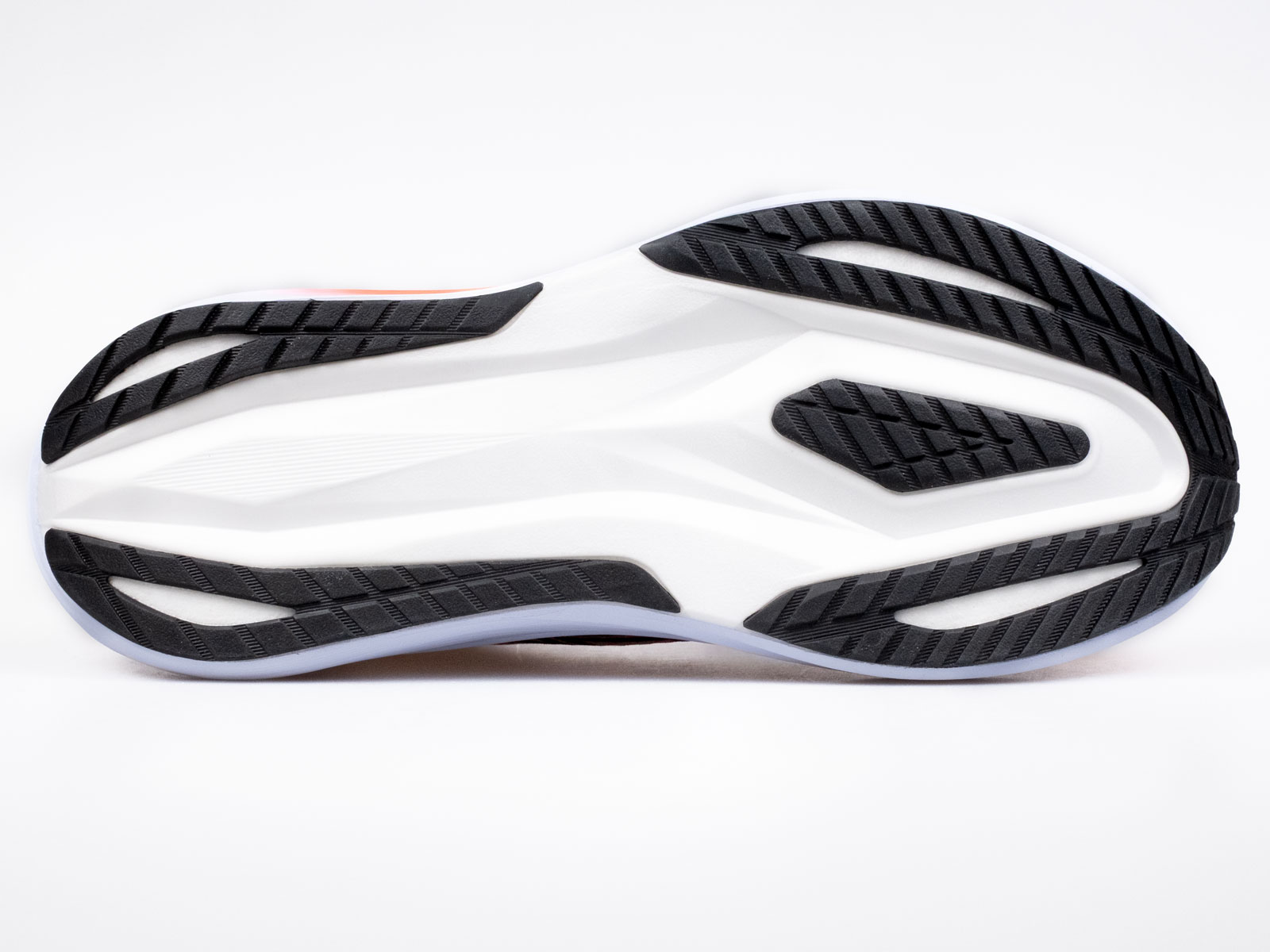
The responsive FF Turbo² doesn’t fully manifest itself until 4:30 min/km (7:00 min/mile) speeds and faster. The lightweight foam quickly compresses and rebounds at those speeds. It’s only at slower speeds that the rubbery softness is more noticeable. The outsole functions in the background without adding stiffness, as the forefoot outsole pod works independently and telescopes into the midsole upon loading. The Asicsgrip rubber has excellent traction, even in inclement weather.
The durability seems fine so far in our brief ownership period, so using the Megablast as a daily trainer should not be a problem. It’s also great for tempo runs, intervals, mile repeats, and long-distance marathon training.
RECOMMENDED ROTATION
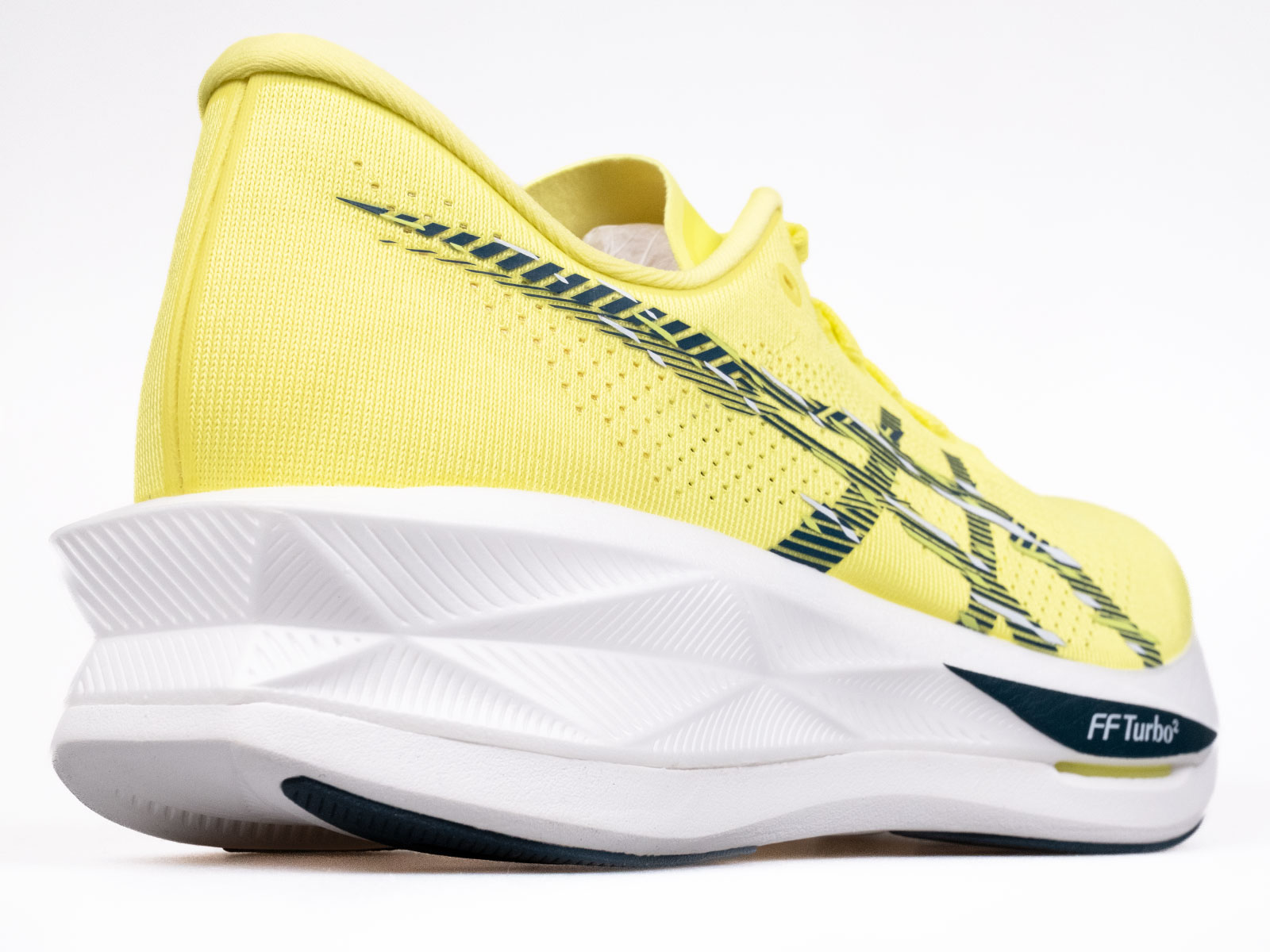
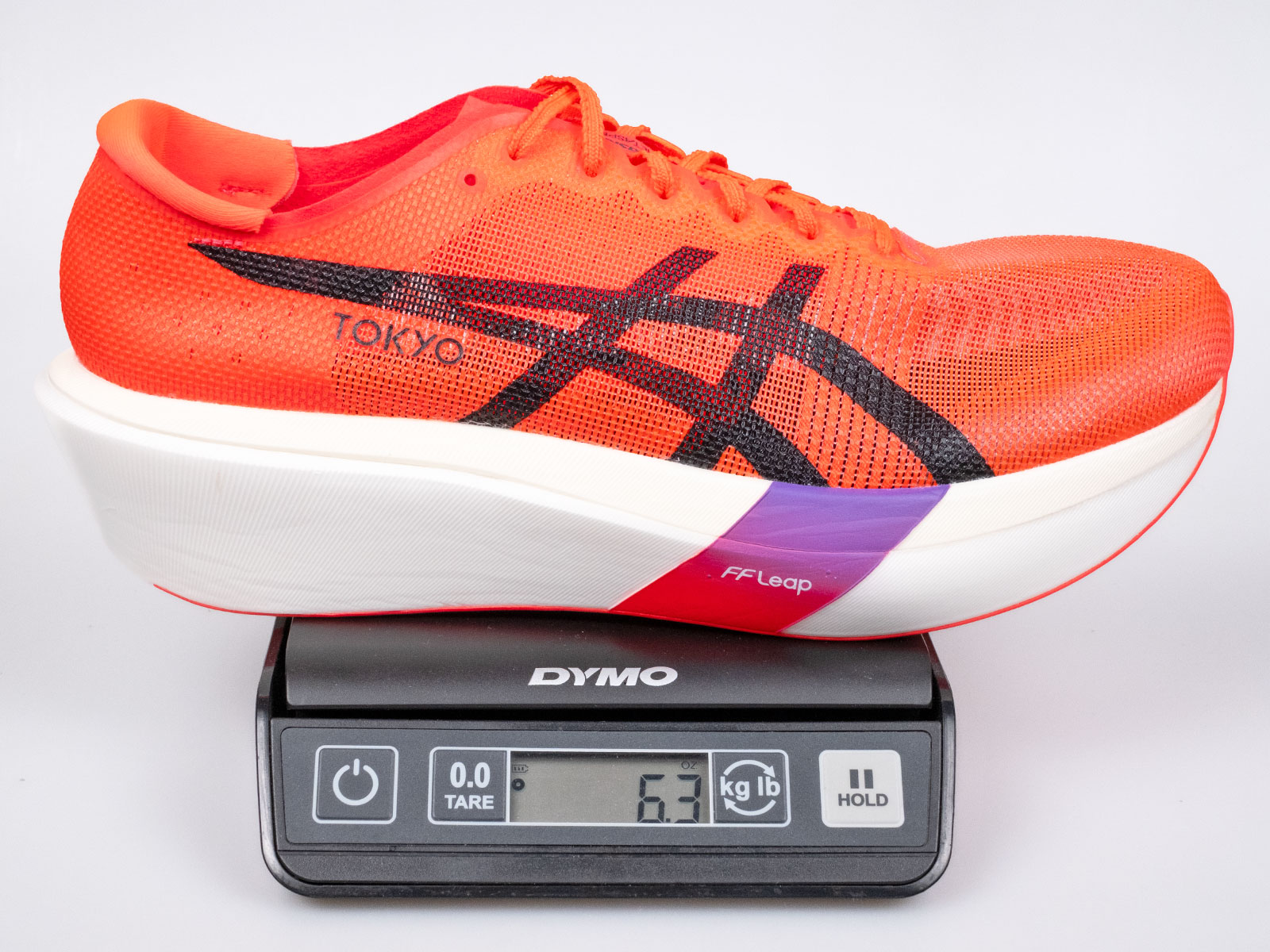
- Use the Asics Megablast for daily runs, marathons
- Use the Asics Sonicblast for tempo runs, intervals
- Use the Asics Metaspeed Sky or Edge Tokyo for 10K, marathons
THE UPPER DESIGN AND FIT
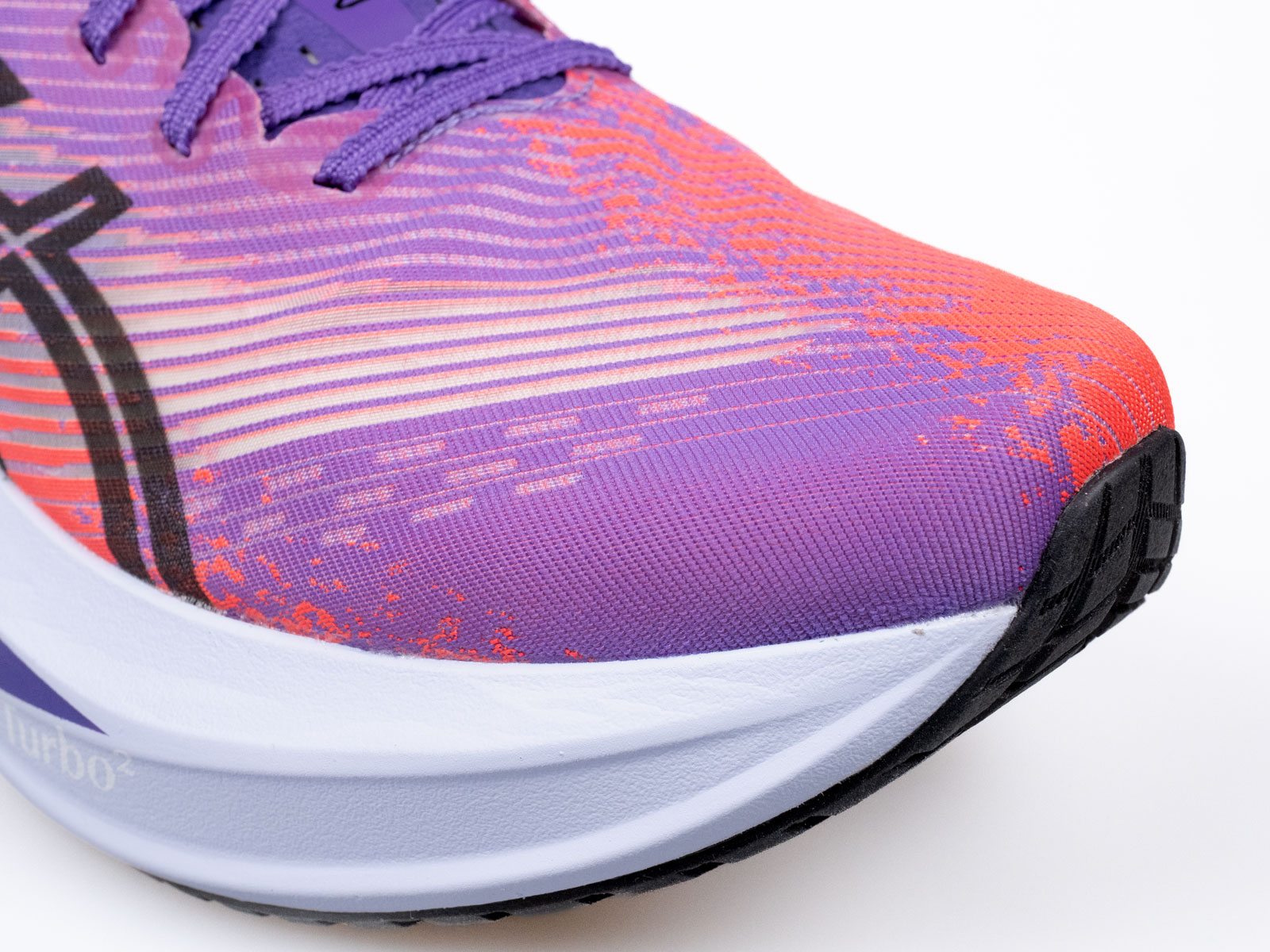
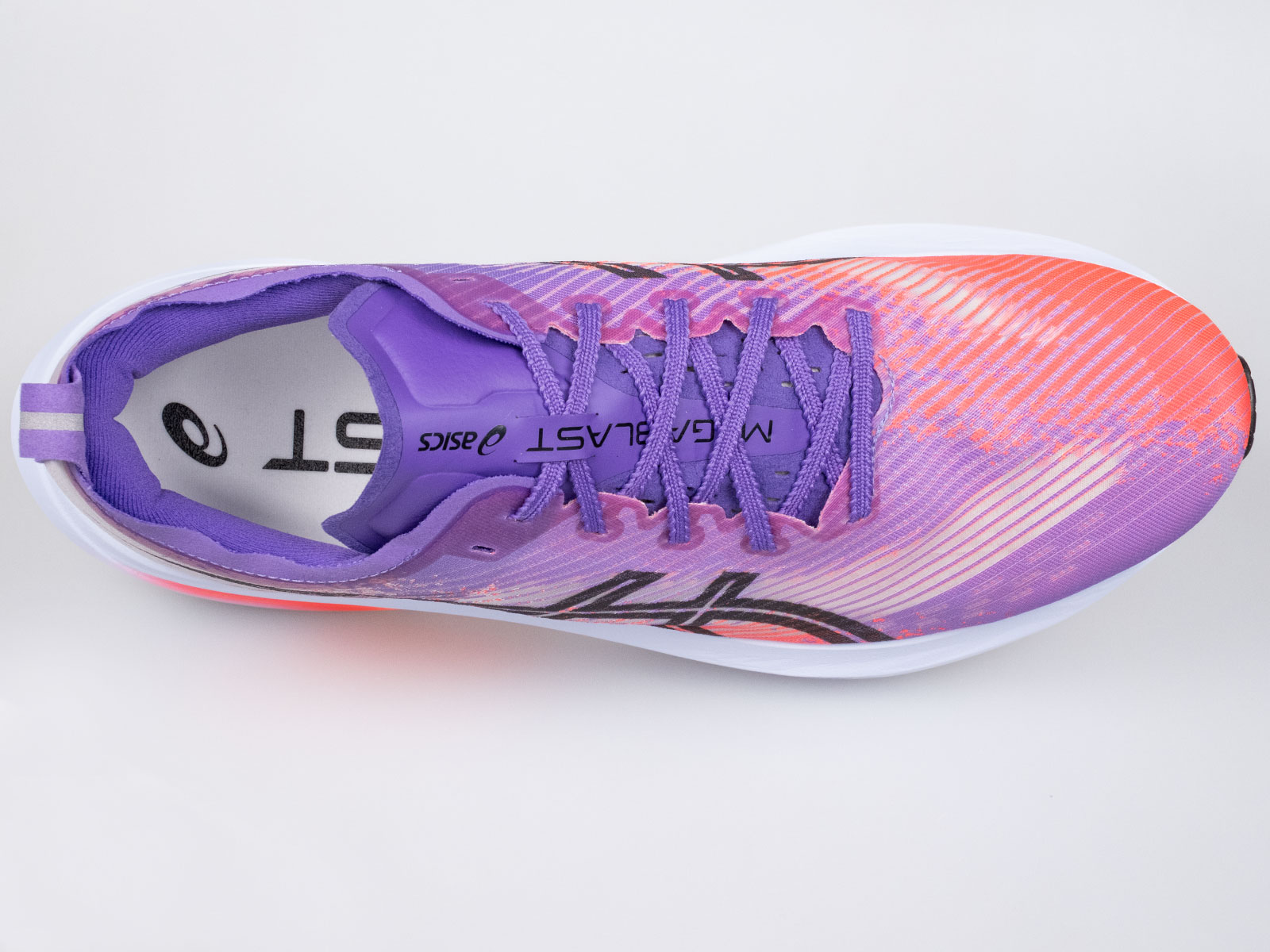
The Megablast fits true to size, but is a bit long. It also has a narrow forefoot with the small (pinky) toe hemmed in. The midfoot and heel fit great, no issues there. This kind of fit isn’t new for Asics at all. The 2021 Asics Metaracer and Hyper Speed had the same fit, except that their mesh choices made the forefoot a little accommodating. The Megablast’s non-stretchy mesh leaves no splay room for the small (pinky) toe. The tightness over the lateral forefoot is noticeable and can be an issue for runners with wide feet. There are no optional widths to the rescue here, so consider buying the Superblast 2 if you need a wide forefoot and toe box.
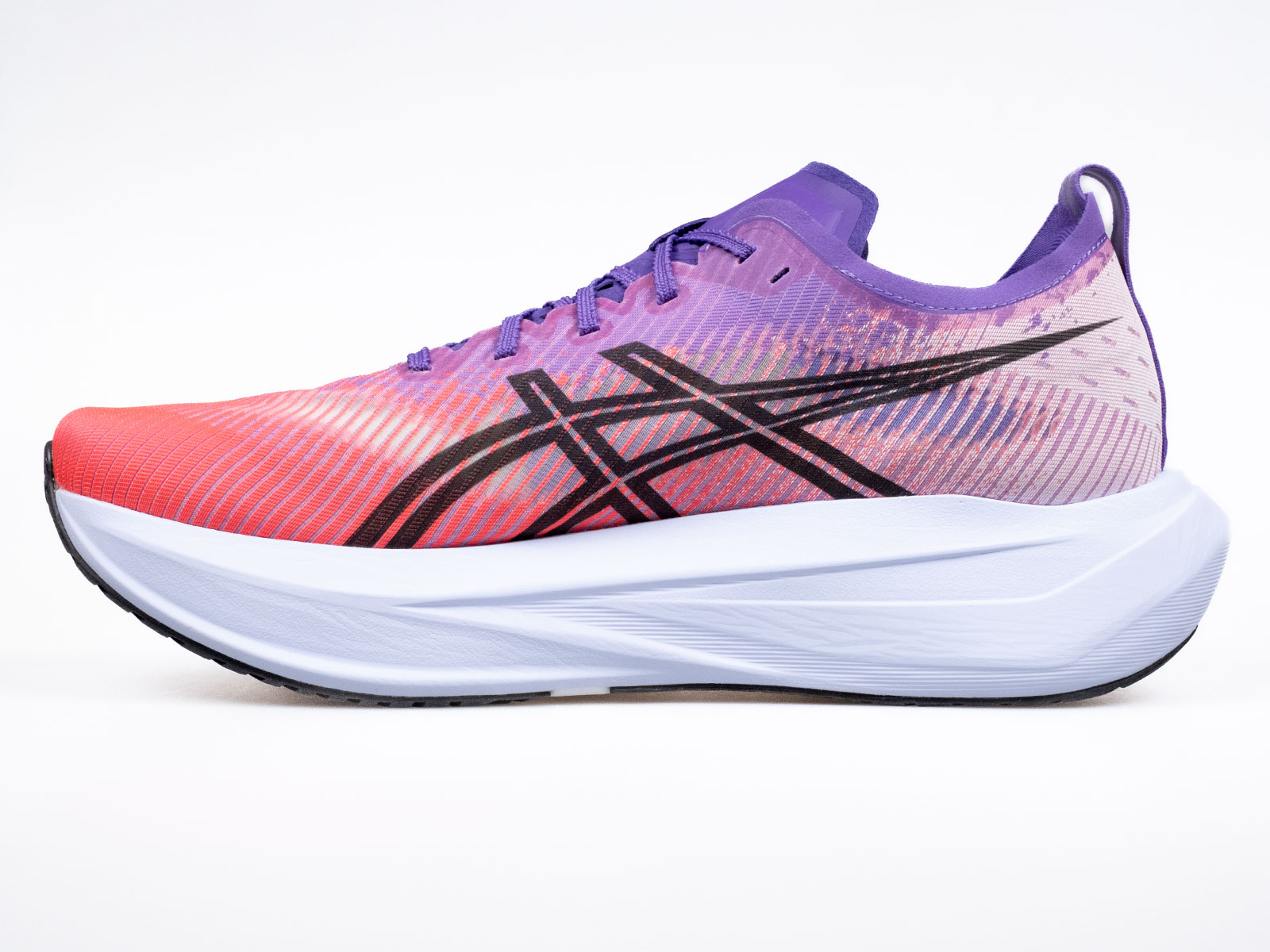
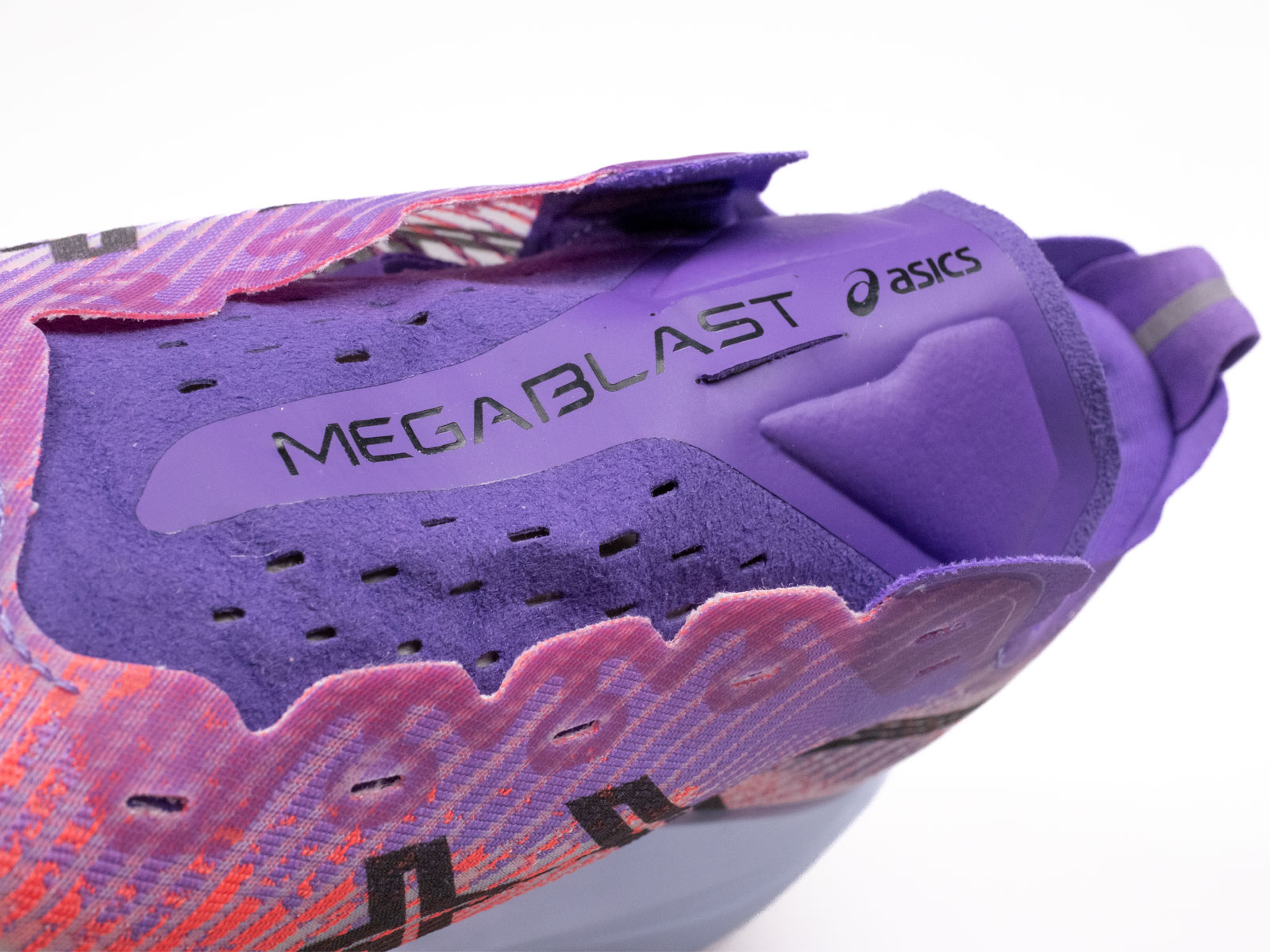
It may be time for Asics to reassess the last dimensions (the form/profile on which the upper is based). A tight racing fit is actually ideal for speed trainers, but the tightness needs to have a uniform quality. The Brooks Hyperion Elite 5 is an excellent example of how to achieve a snug racer fit. On the Megablast, the tightness is isolated over the small toe. Sure, the choice of mesh makes a significant difference (as evident in the Superblast 2), but that’s hardly a permanent solution to a flawed last profile.
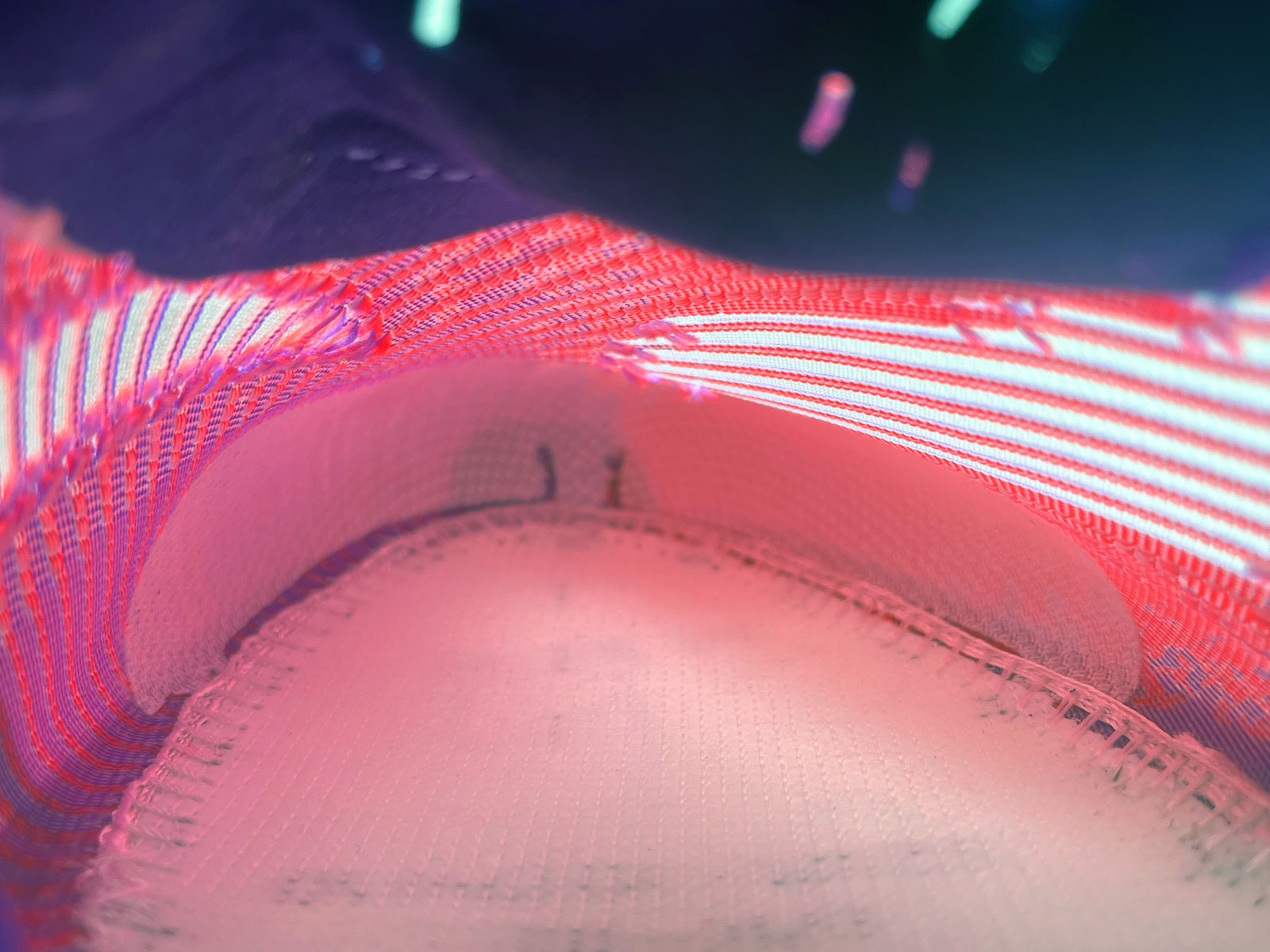
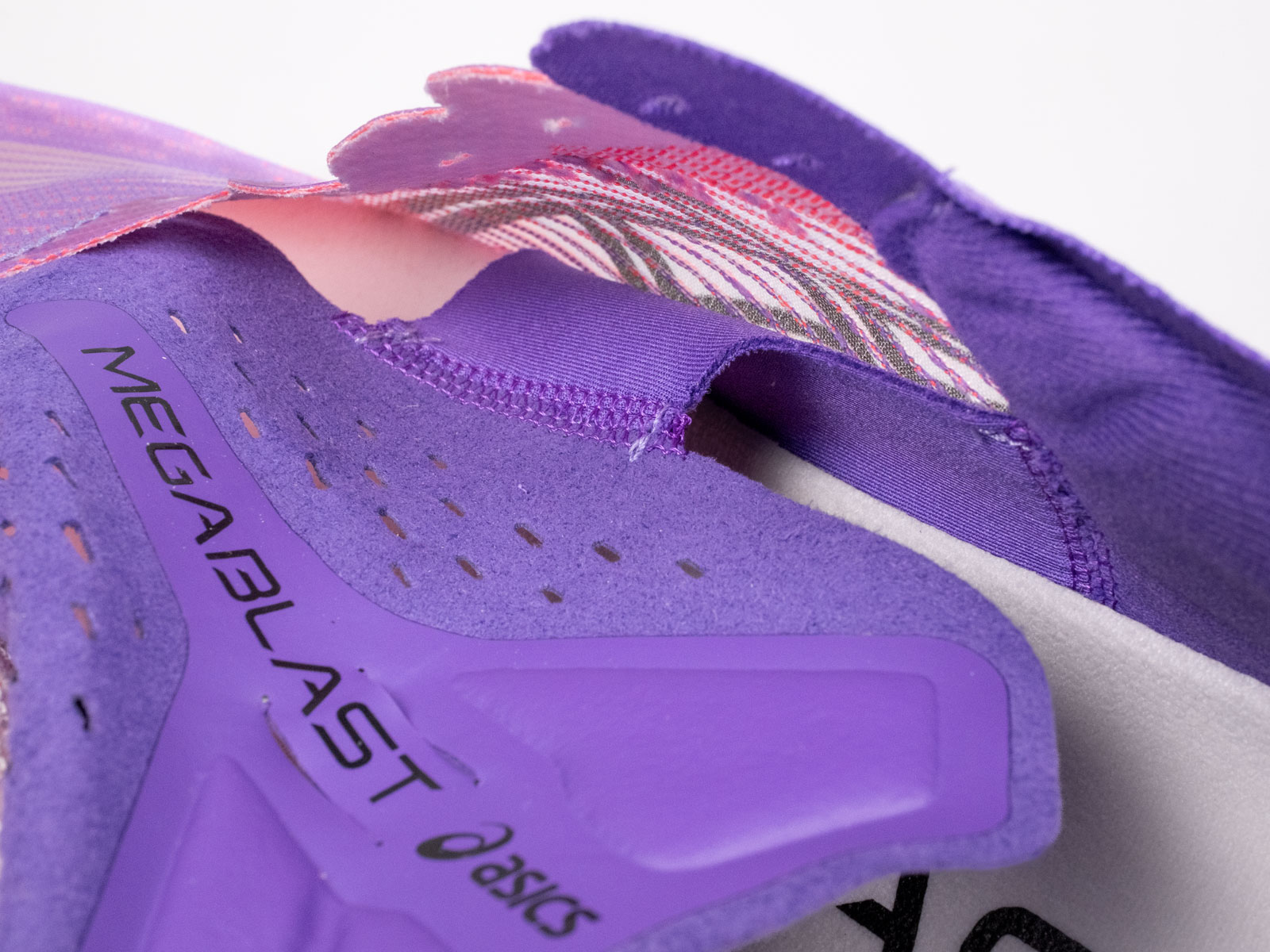
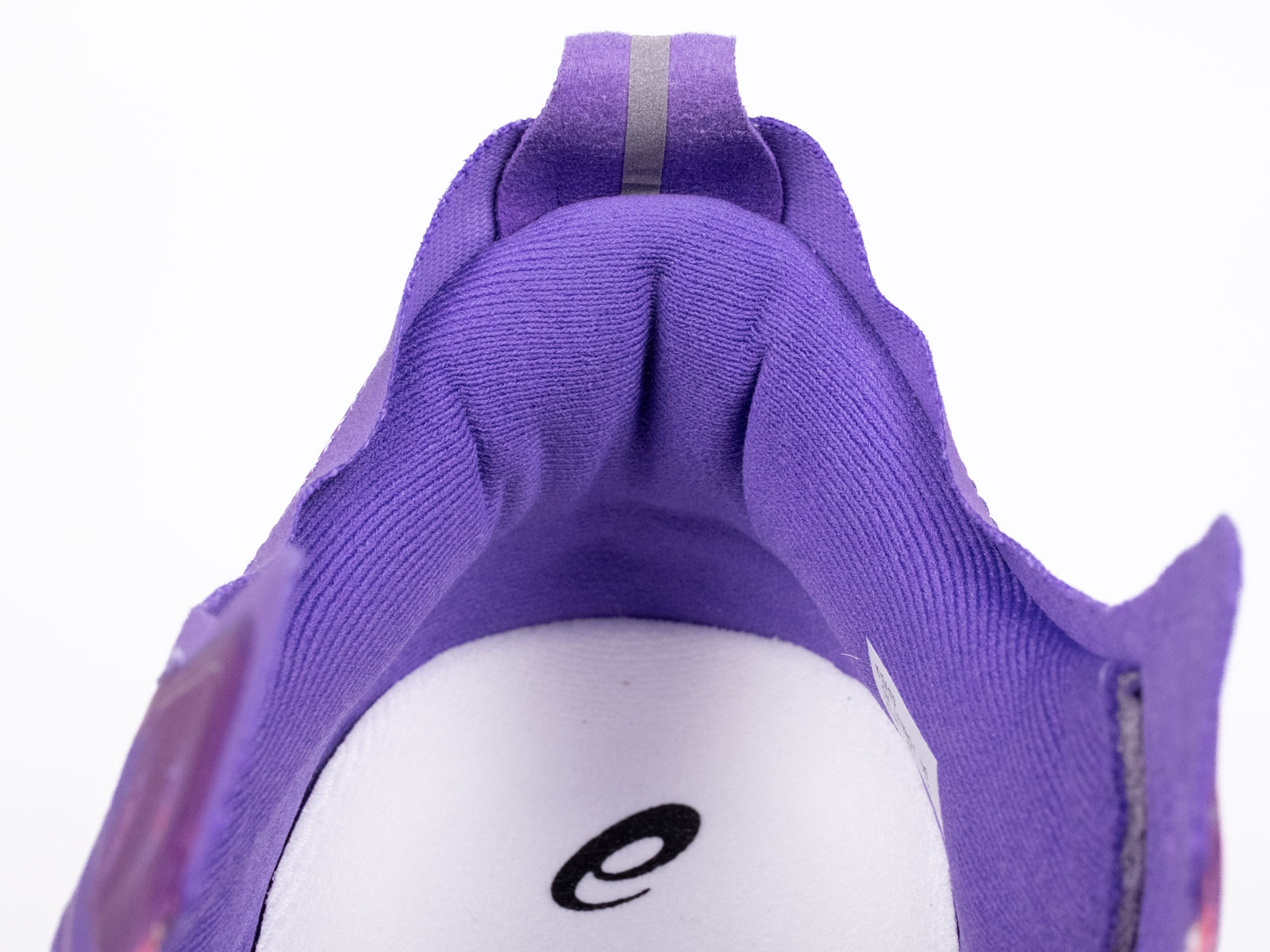
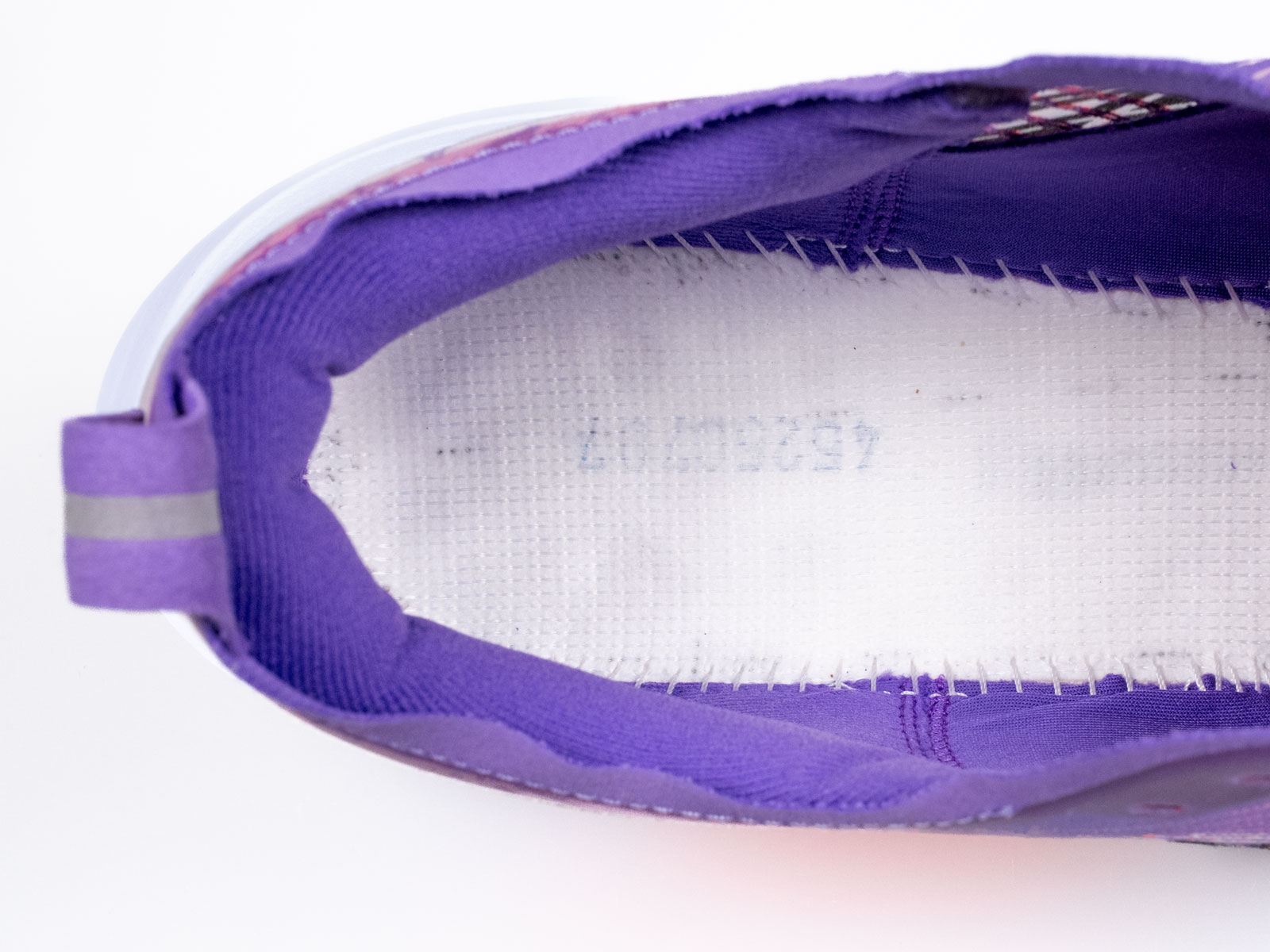
Barring the potential pressure hot spot, the Megablast’s upper gets many things right. The tight upper efficiently transfers the power from the foot to the midsole for smooth and fast turnovers while highlighting the bounciness. The serrated/ribbed racing laces stay tied during a run. The gusseted tongue makes the midfoot fit distraction-free and secure, with the counter-backed heel locking the foot in. There’s some low-light visibility on the helpful heel pull loop. For ventilation, the lightweight mesh has thinner translucent zones over the forefoot and midfoot.
SHOES COMPARABLE TO THE ASICS MEGABLAST


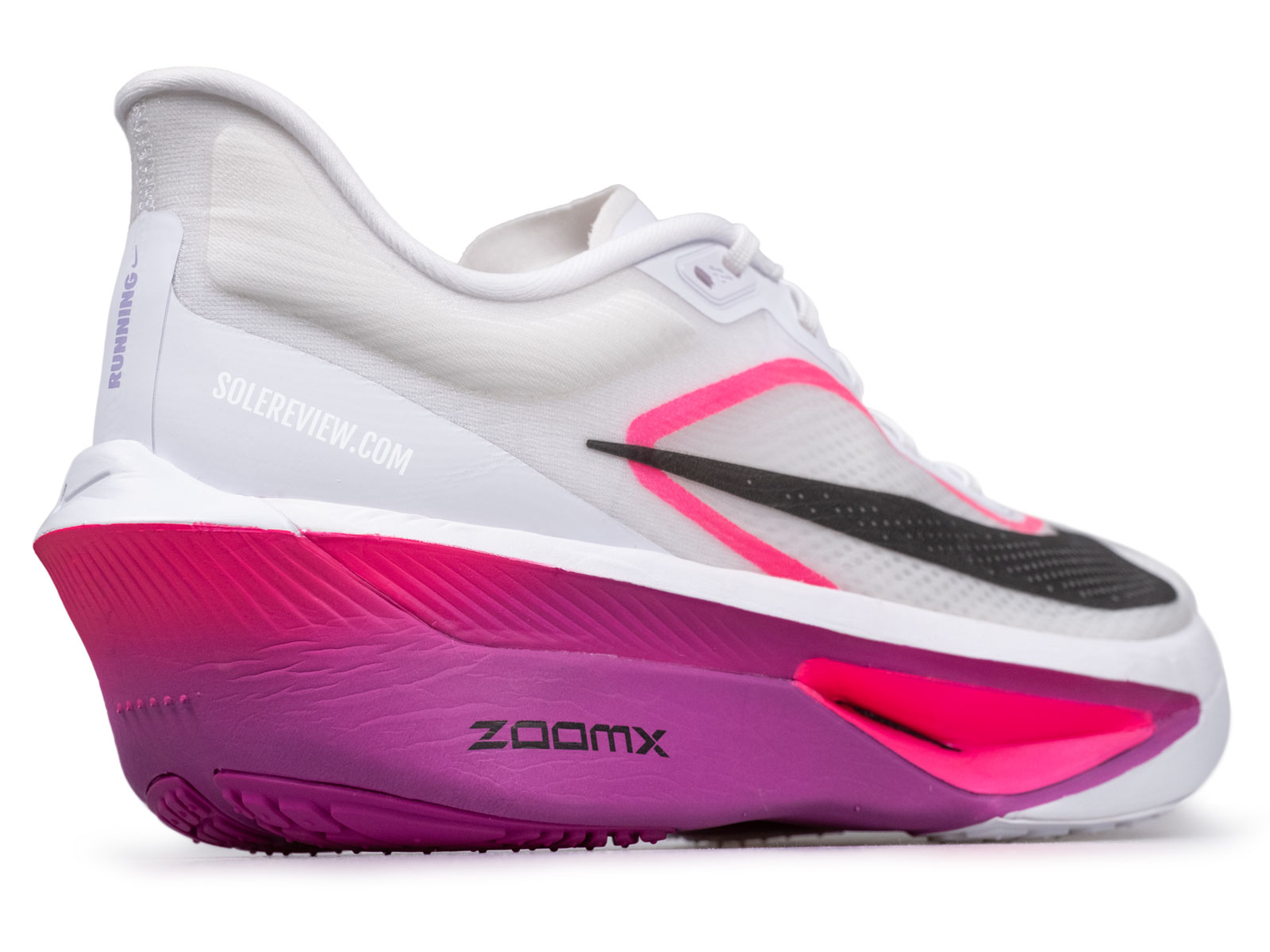
Also consider:
- Asics Superblast 2
- New Balance SC Trainer 3
- Nike Zoom Fly 6
TECHNICAL SPECIFICATIONS
- Asics’s marketing pitch: Energized rebound for various speeds and distances.
- Upper: Lightweight, non-stretchy mesh. Gusseted tongue.
- Sizing profile: True to size.
- Toe box fit: Tight over the small toe.
- Forefoot fit: Narrow.
- Midfoot and heel fit: Secure.
- Midsole: 100% FF Turbo² foam, EVA insole. 8 mm heel drop.
- Outsole: Asicsgrip rubber.
- Weight: 230 gms/ 8.1 Oz for a half pair of Men’s US 9/UK 8/EUR 42.5/CM 27.
- Stack heights: 45 mm (heel), 37 mm (forefoot).
- Available widths: Single – D (regular).
- Recommended use: Daily runs, tempo, marathons.
- Footstrike orientation: All types (heel/midfoot/forefoot).
- Median lifespan: 450 miles.
- Country of origin: Vietnam.
- Recommended paces: 3:30 min/km (5:30 min/mile) and slower.
- Recommended temperature range: Warmer than -5° C/23° F.