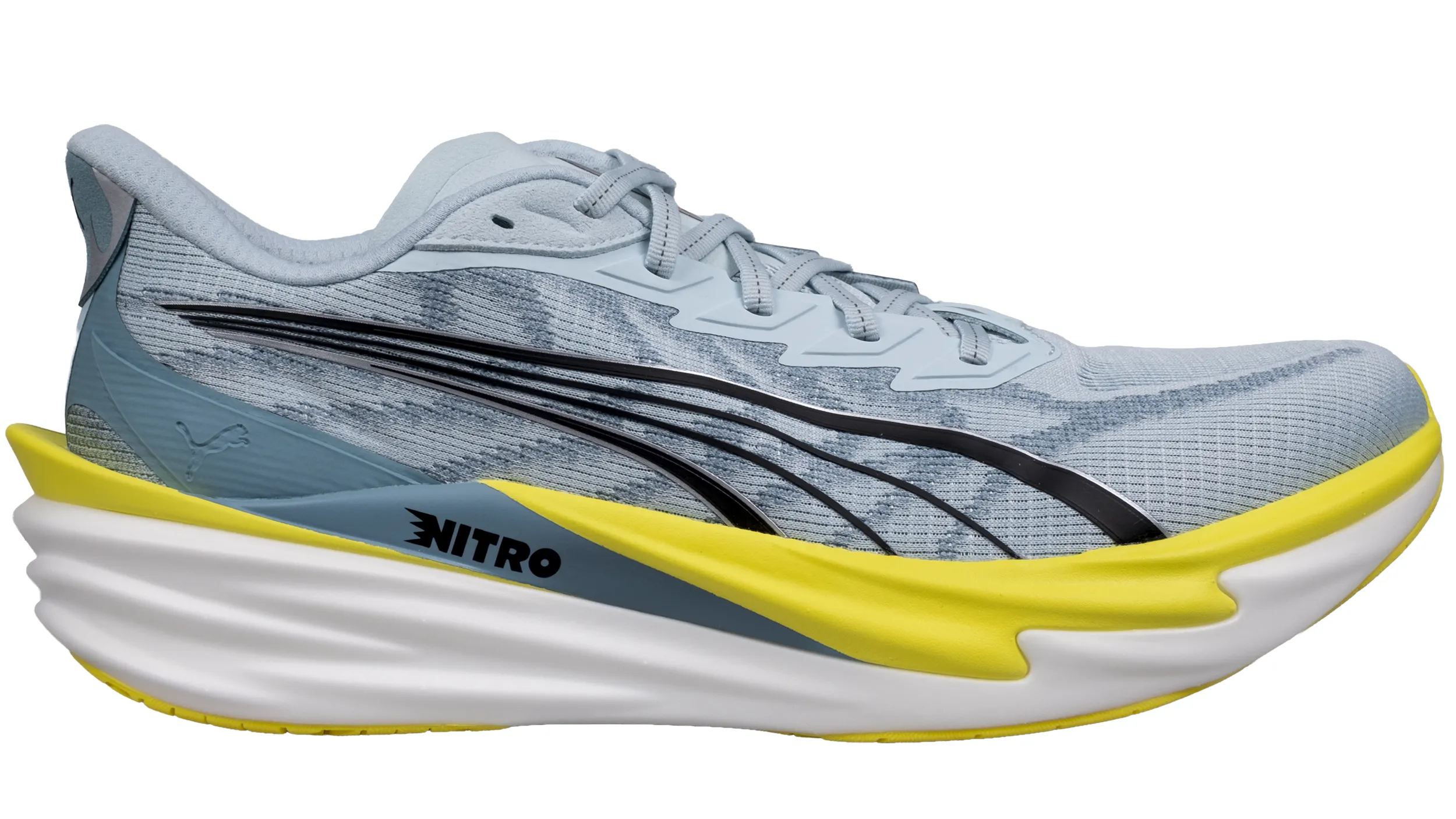
Review Updates
(1 total)- 2026-08-04 — Review published
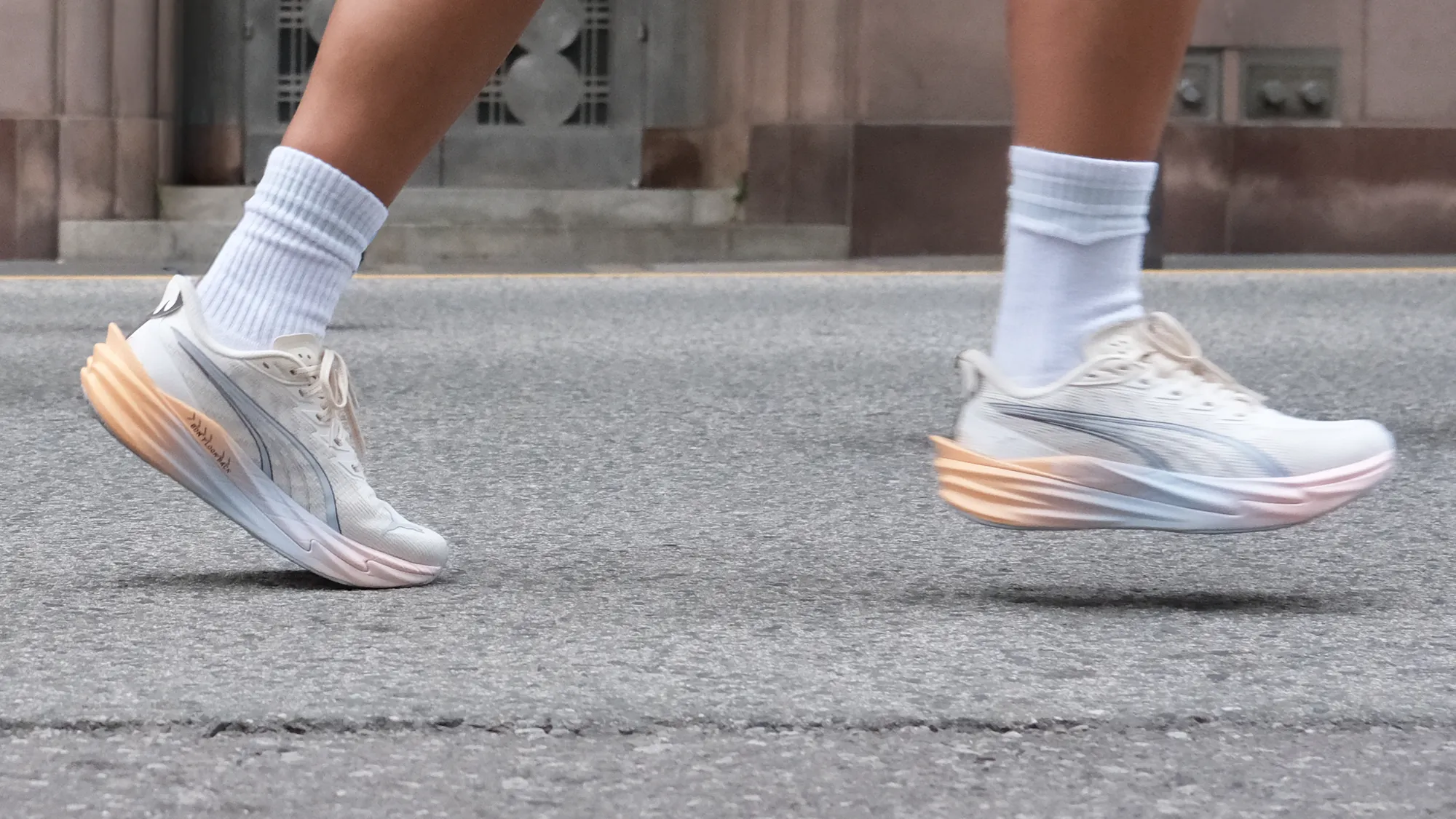
PUMA DEVIATE NITRO 4 IS BEST FOR
BEST FOR
SWEET SPOT
SPEED COMPATIBILITY
BIOMECHANICS: THE PUMA DEVIATE NITRO 4
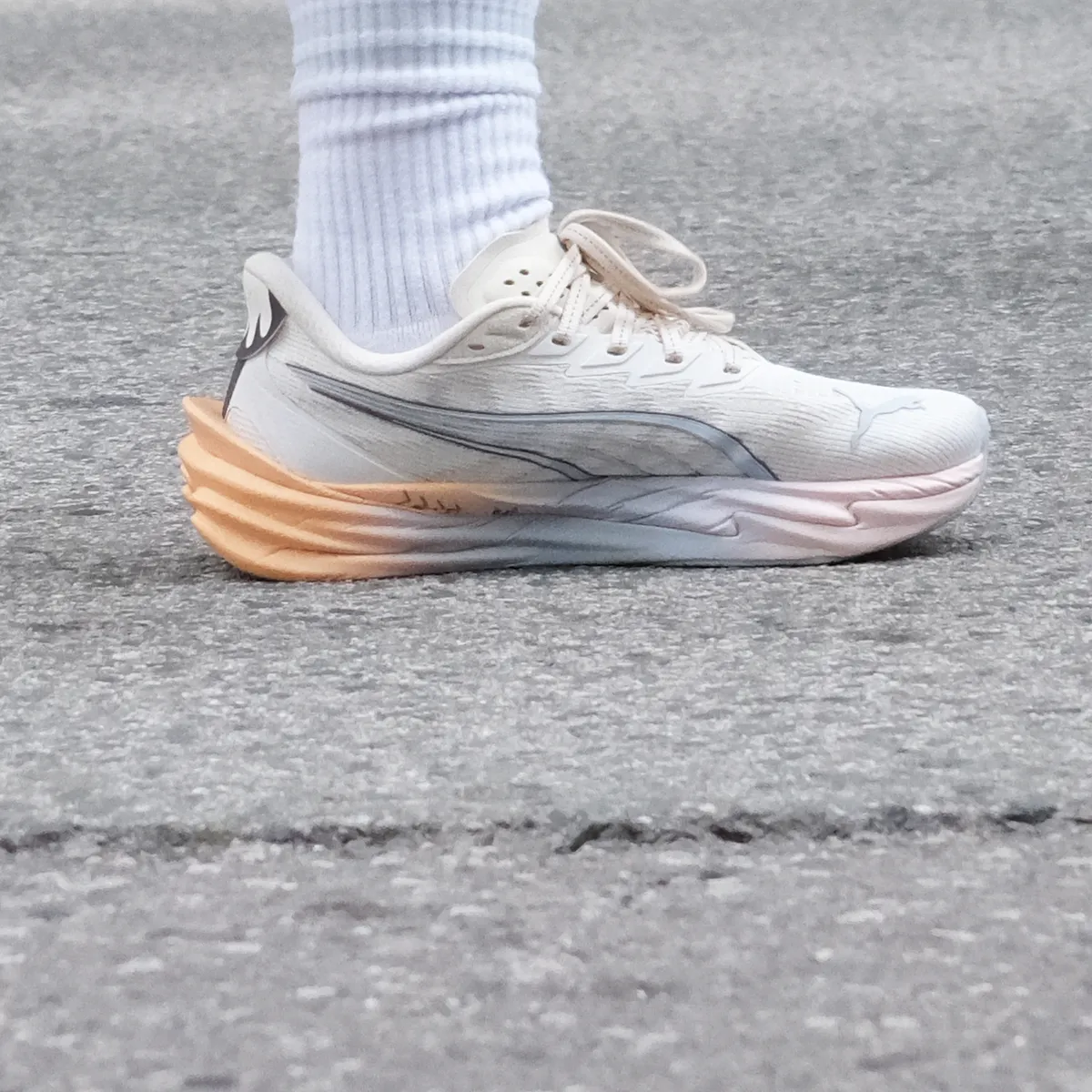
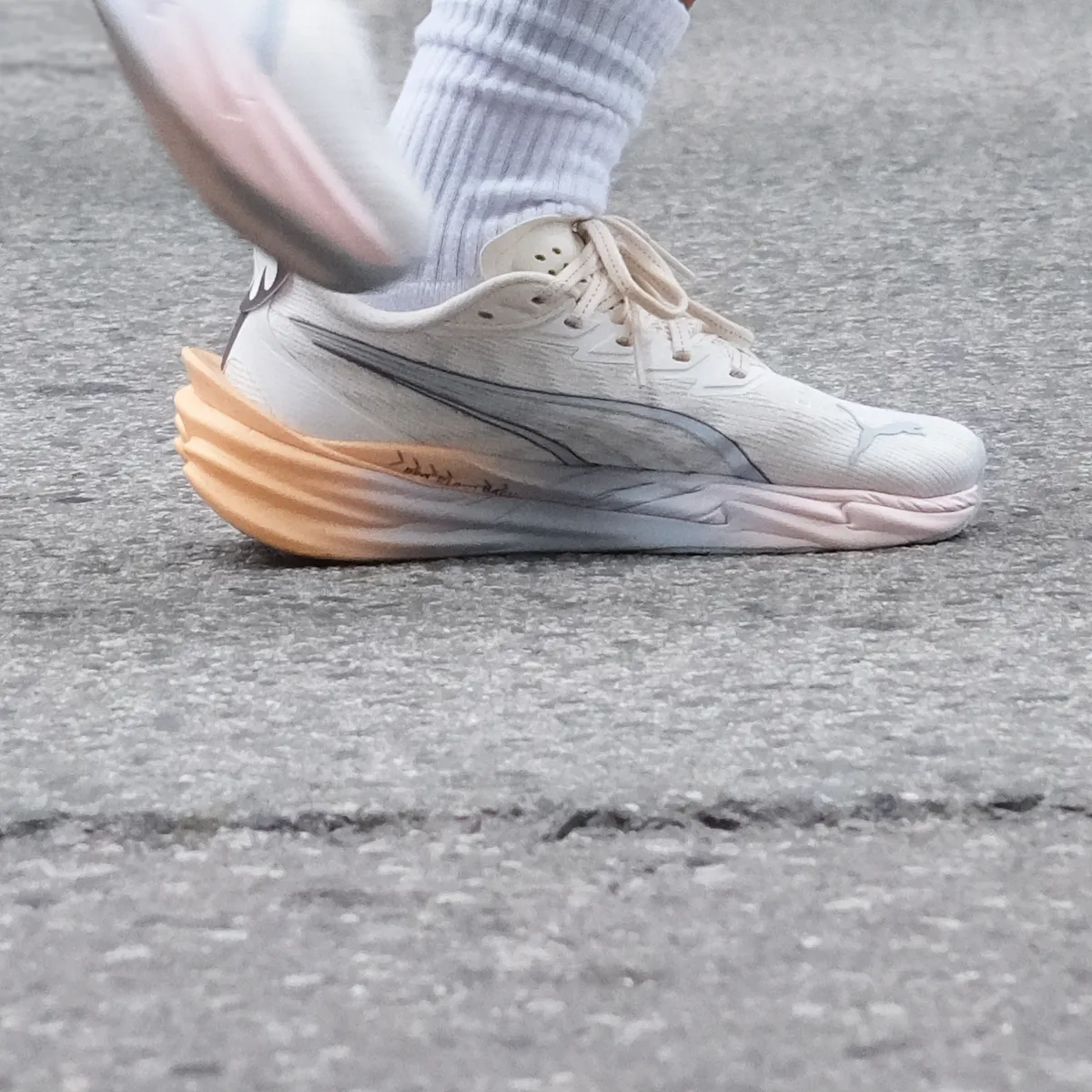
The dual-density midsole does not penalize slow speeds and heel strikes. The firm base helps the midsole maintain its structural integrity when loaded. There’s no negative space directly under the heel, making the midsole more resistant to compression than shoes with a hollow cavity. The softer Nitro foam layer on top compresses when loaded, producing a soft cushioning feel.
See The Puma Deviate Nitro 4 in action
(Click to pause/play)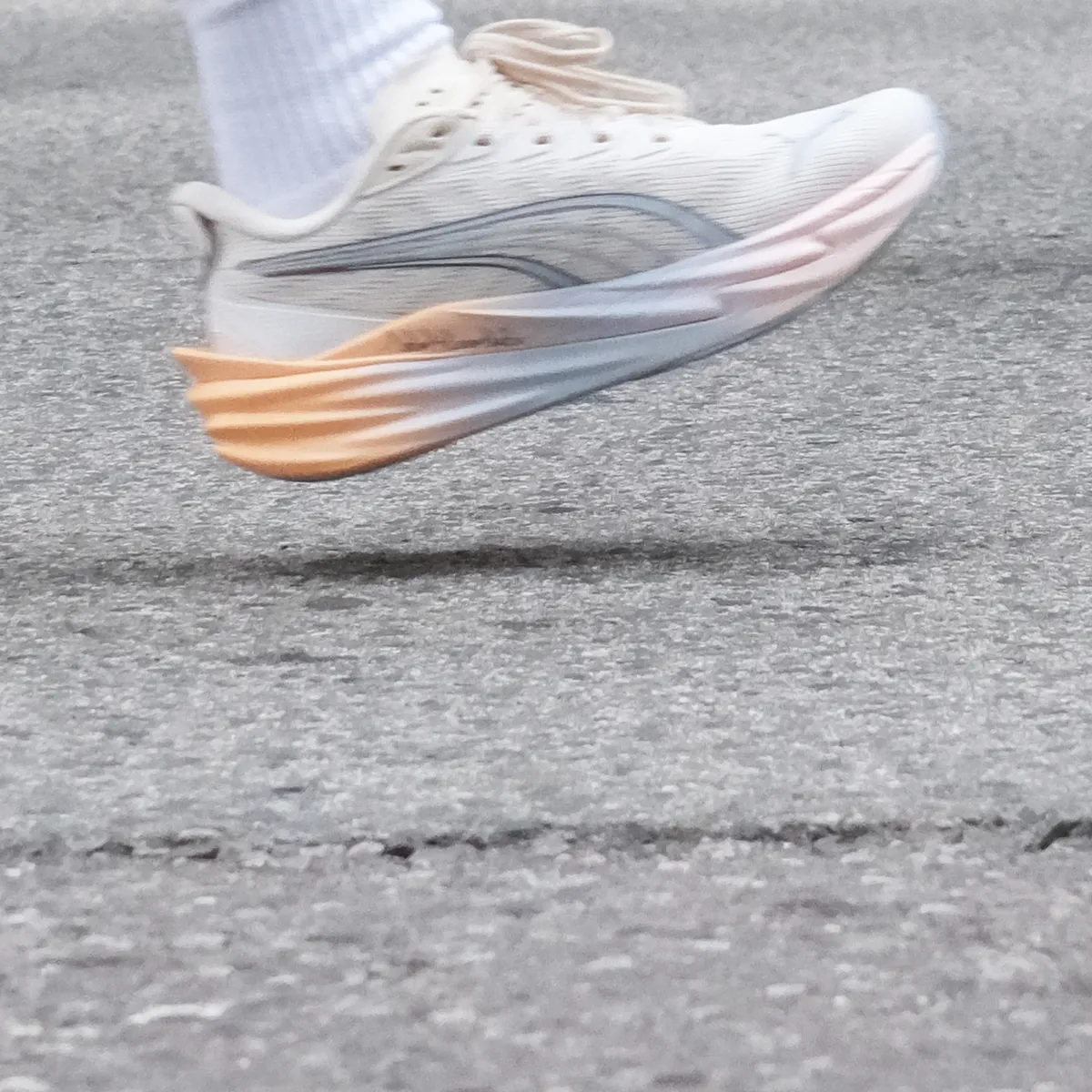
Mechanics at Work
- Firm Nitro foam base → accommodates slow speeds, heel strikes
- Full-length carbon PWRPLATE → adds propulsive stiffness
- Soft Nitro foam top layer → delivers ride comfort
- Snug upper → prevents excessive foot movement
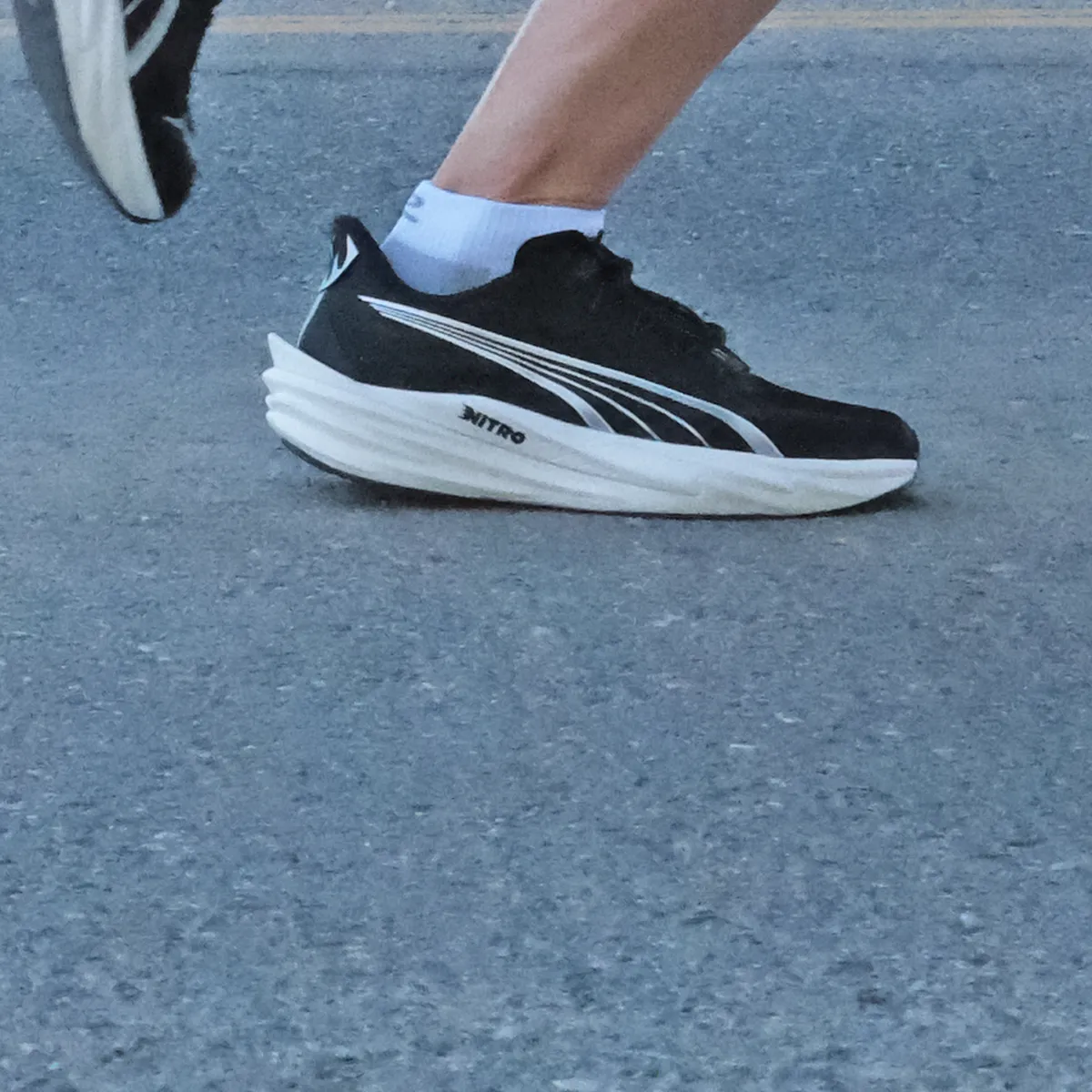
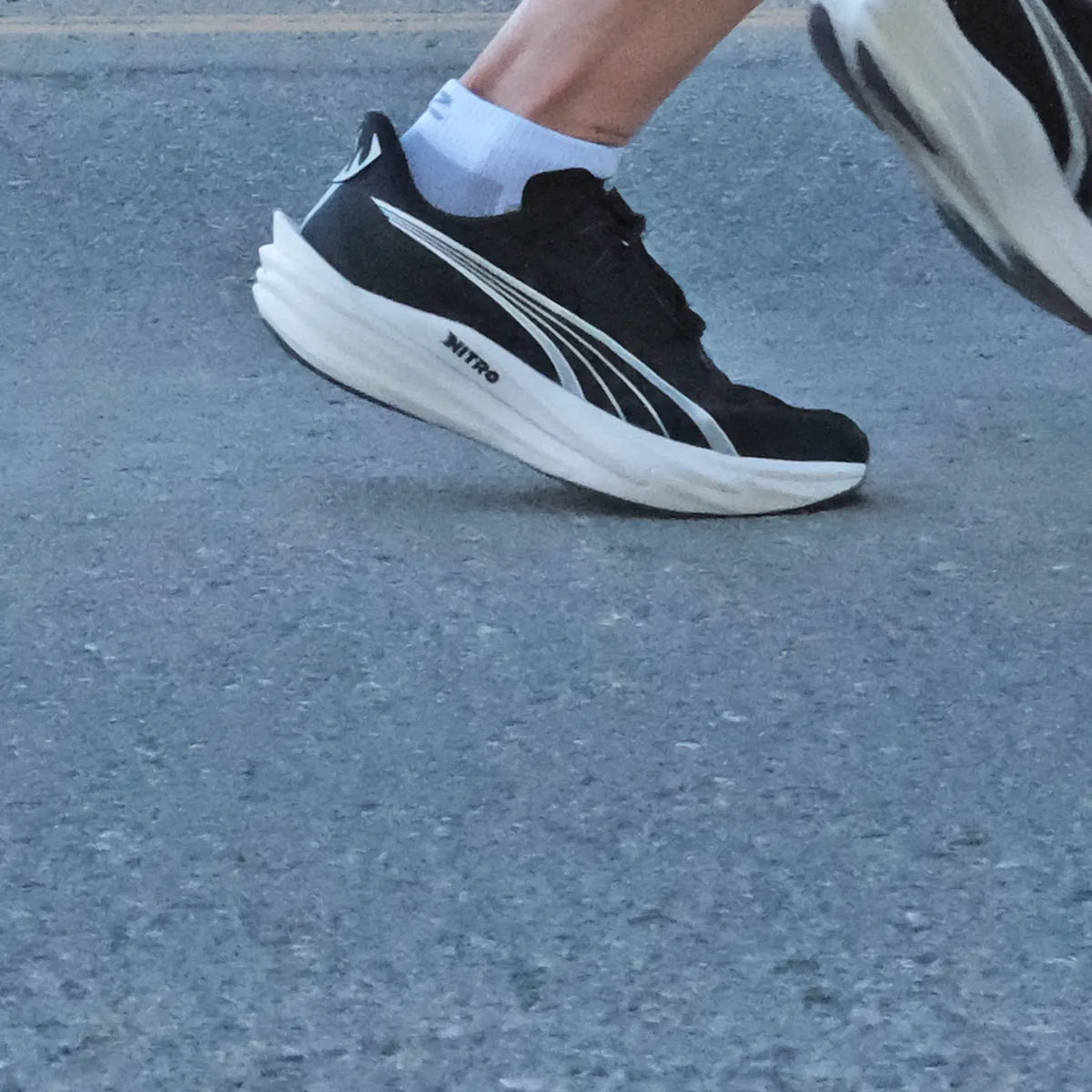
This shoe is ideal for mid-pack runners who prefer a more forgiving version of a premium super-racer but want something more than a cushioned daily trainer. Running at higher speeds than a recreational pace greatly minimizes stability-related issues that may sometimes surface at slow speeds. Here, the soft and firm foam densities work in sync to deliver supportive comfort. The carbon plate and PUMAGRIP outsole add speed and traction.
See The Puma Deviate Nitro 4 in action
(Click to pause/play)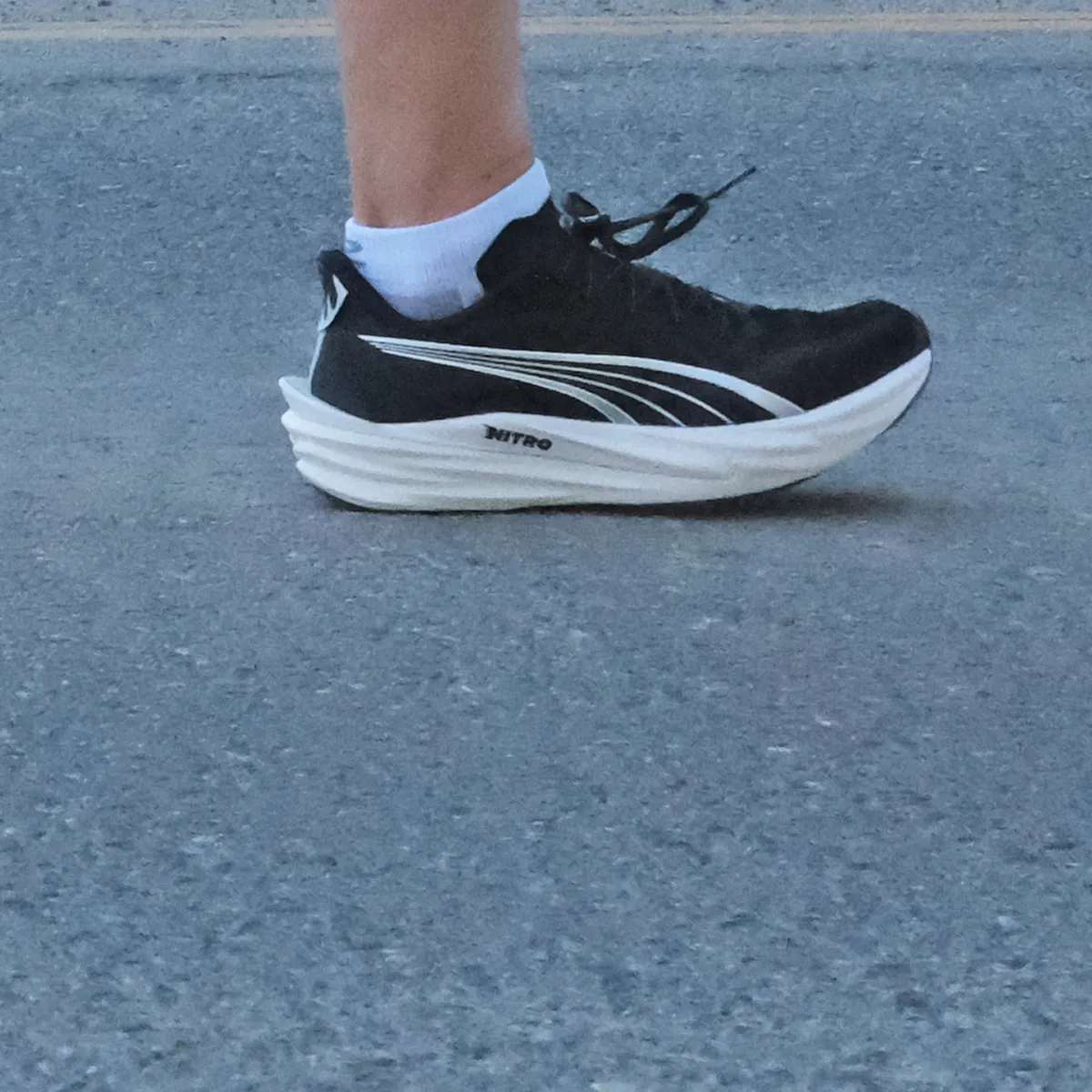
Mechanics at Work
- Dual-density Nitro foam → creates energetic response
- Carbon PWRPLATE → accelerates transitions
- Stiff forefoot → helps during quick roll-offs
- 36 mm, 28 mm stack → provides high-mileage comfort
The Puma Fast-R Nitro Elite 3 and Deviate Nitro Elite 4 may be the preferred choices of most elite and sub-elite runners, but the Deviate Nitro 4 is no slouch either. The secure fit is good at transferring power from the foot to the midsole, and the carbon plate helps connect the front and the rear. The outsole traction is excellent under sub-4:00 min/km speeds. Elite and sub-elite runners should buy a half-size smaller (eg. US 10 instead of US 10.5) for better lockdown and a stronger rocker effect.
See The Puma Deviate Nitro 4 in action
Mechanics at Work
- Carbon PWRPLATE → makes midsole propulsive
- Dual-density Nitro foam → adds speed-friendly cushioning
- Pumagrip outsole → for quick touch-and-go
- Buying half-size smaller → improves power delivery, rocker effect
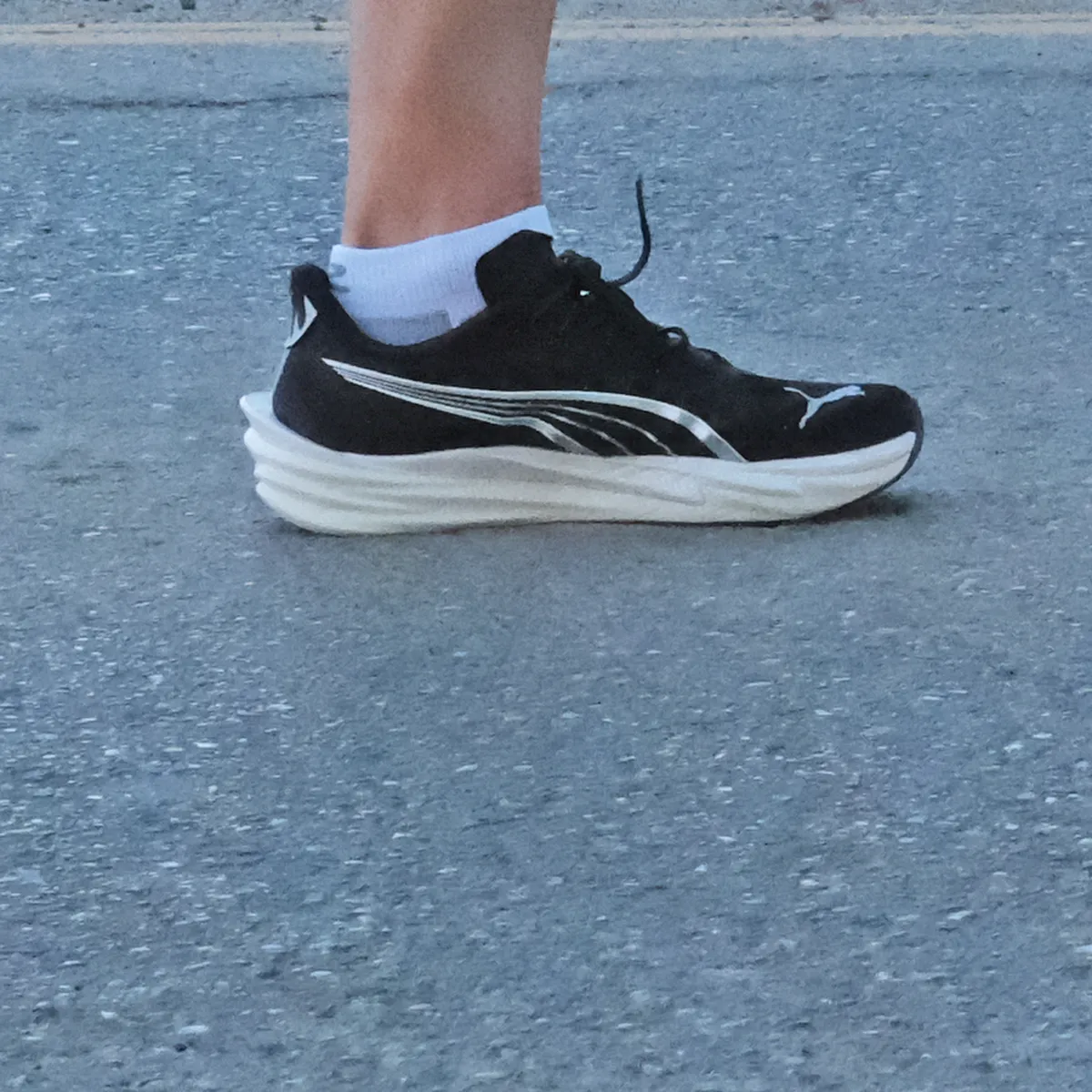
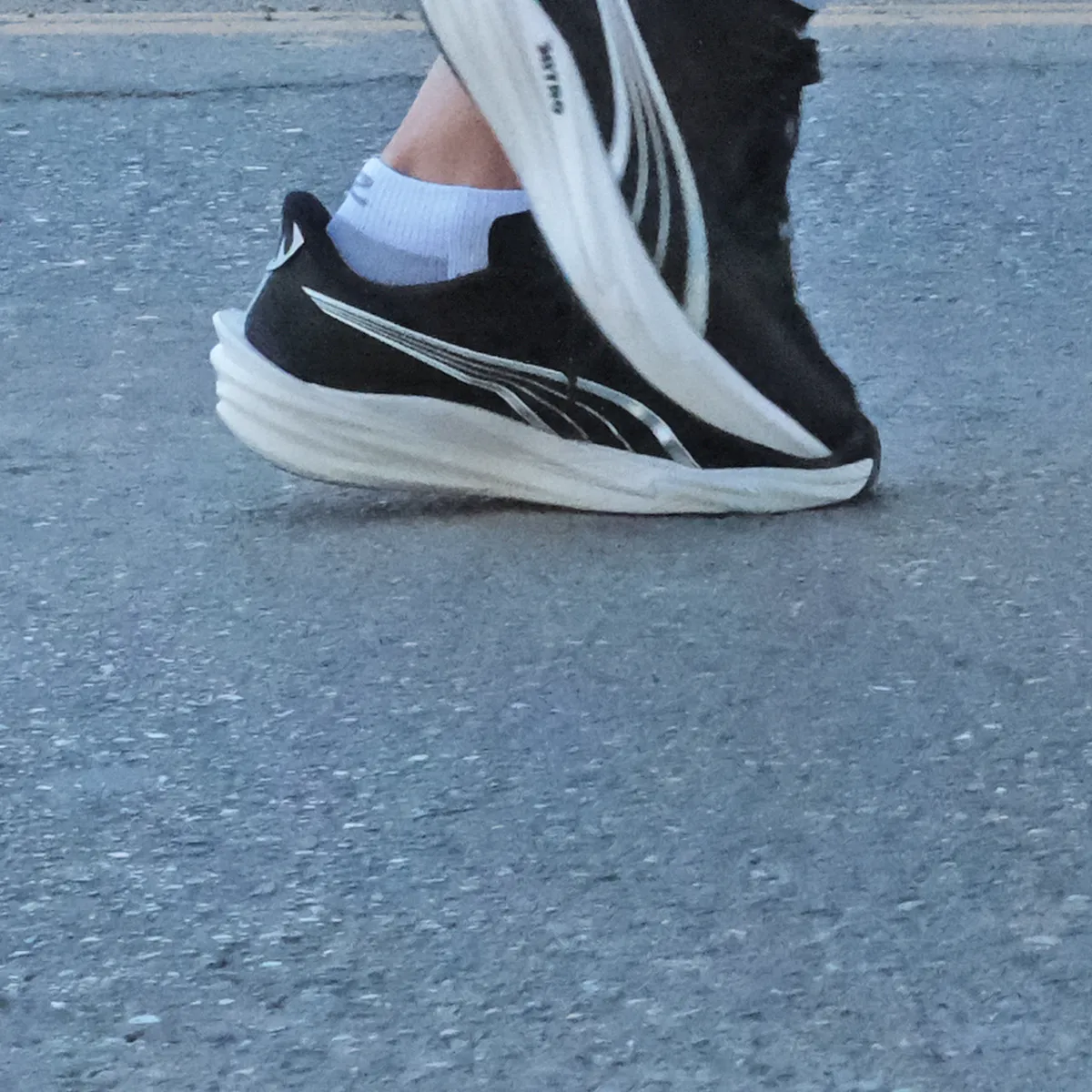
With a filled-up midsole heel core and firm base, the Deviate Nitro 4 performs well under heel landings. The midsole is not as stable, as say, the ultra-firm Hoka Mach X3, but it does a fairly good job at resisting negative drop and excessive compression. Heel strikers will experience soft underfoot landings, thanks to the thick insole and softer Nitro foam layer closer to the foot. Two lugs of PUMAGRIP rubber provide durable traction upon impact.
See The Puma Deviate Nitro 4 in action
(Click to pause/play)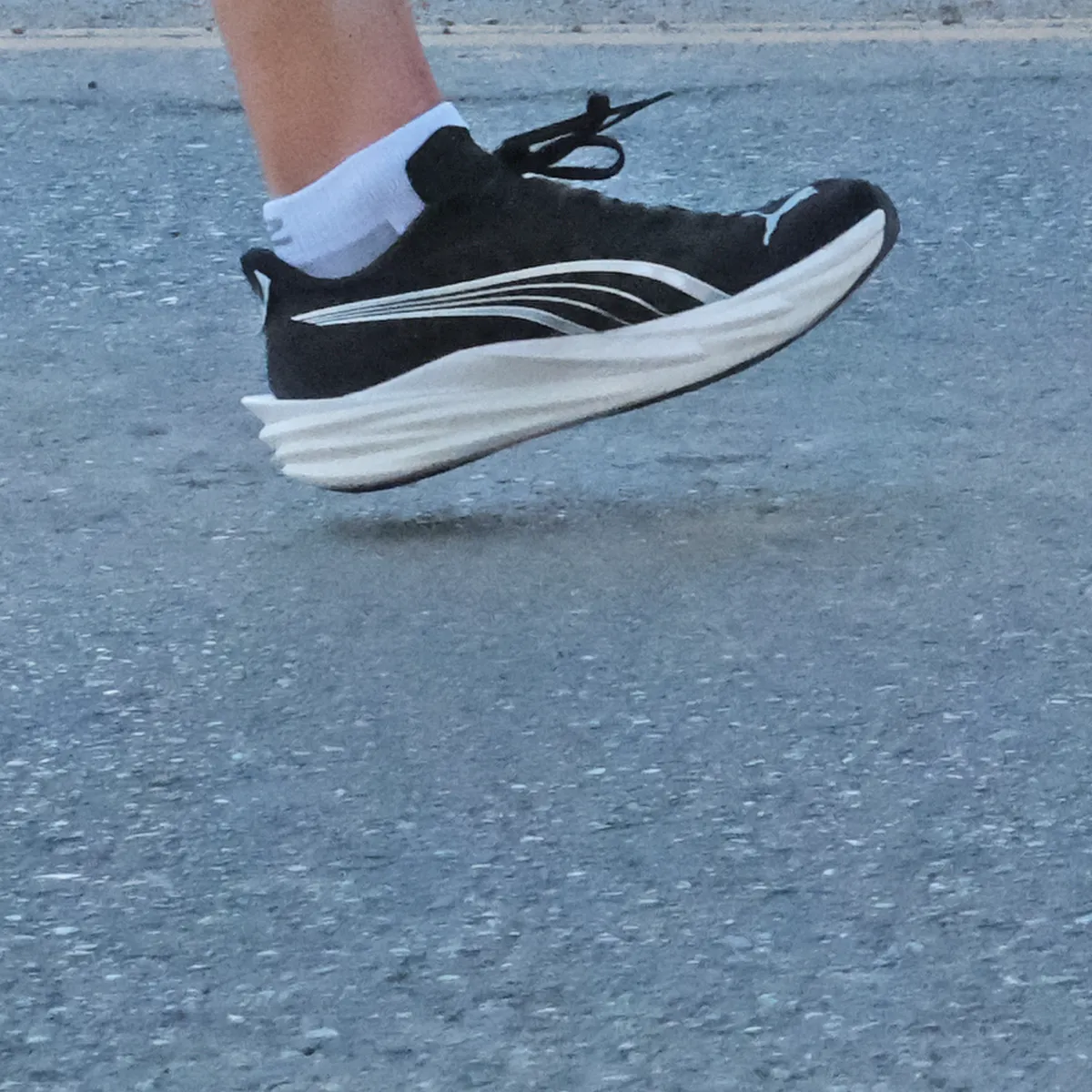
Mechanics at Work
- Filled-up heel core, firm Nitro foam base → resists deformation
- Blend of comfort and support → minimizes chances of negative drop
- Dual outsole lugs → provide grip and durability
- Rigid heel counter → grips foot during landings
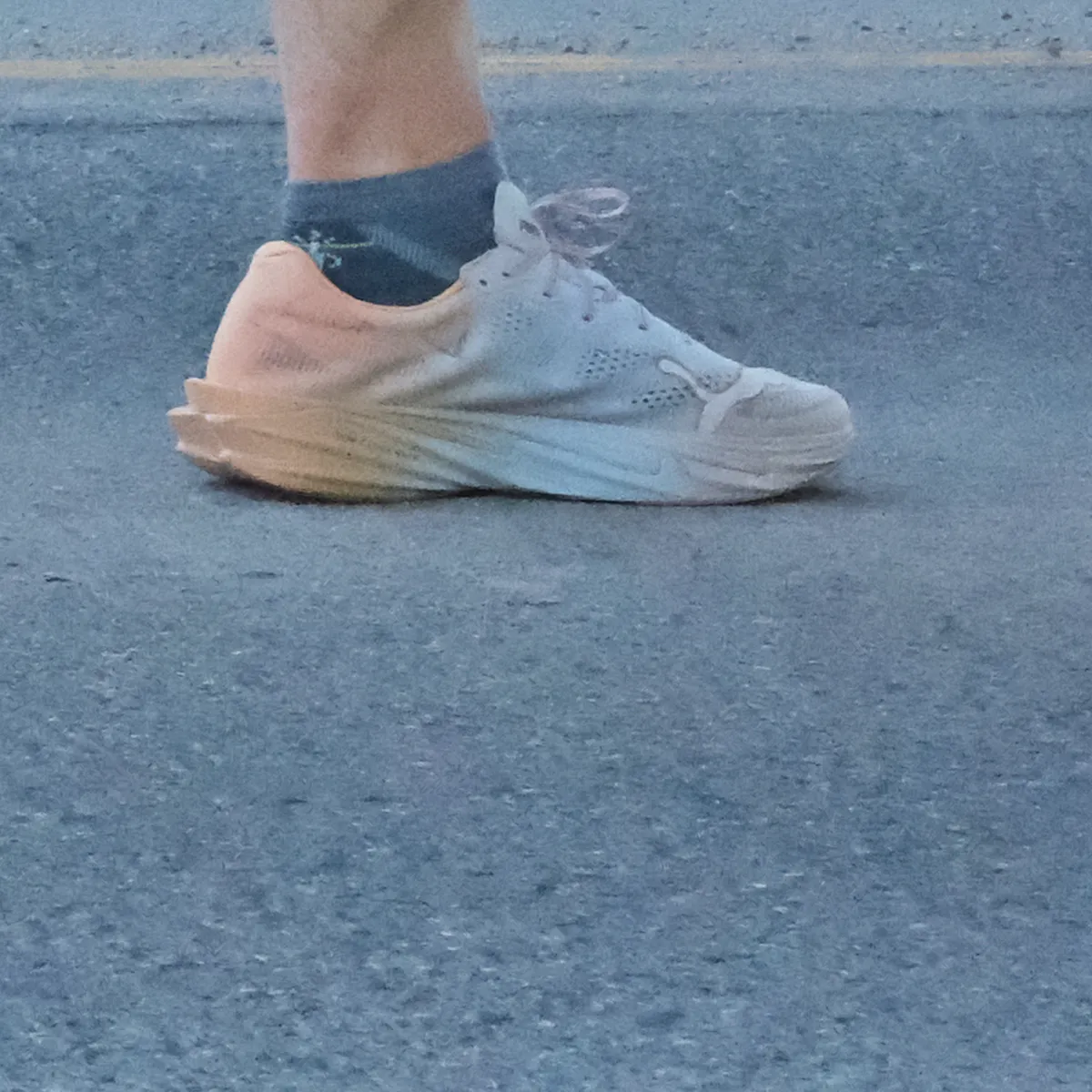
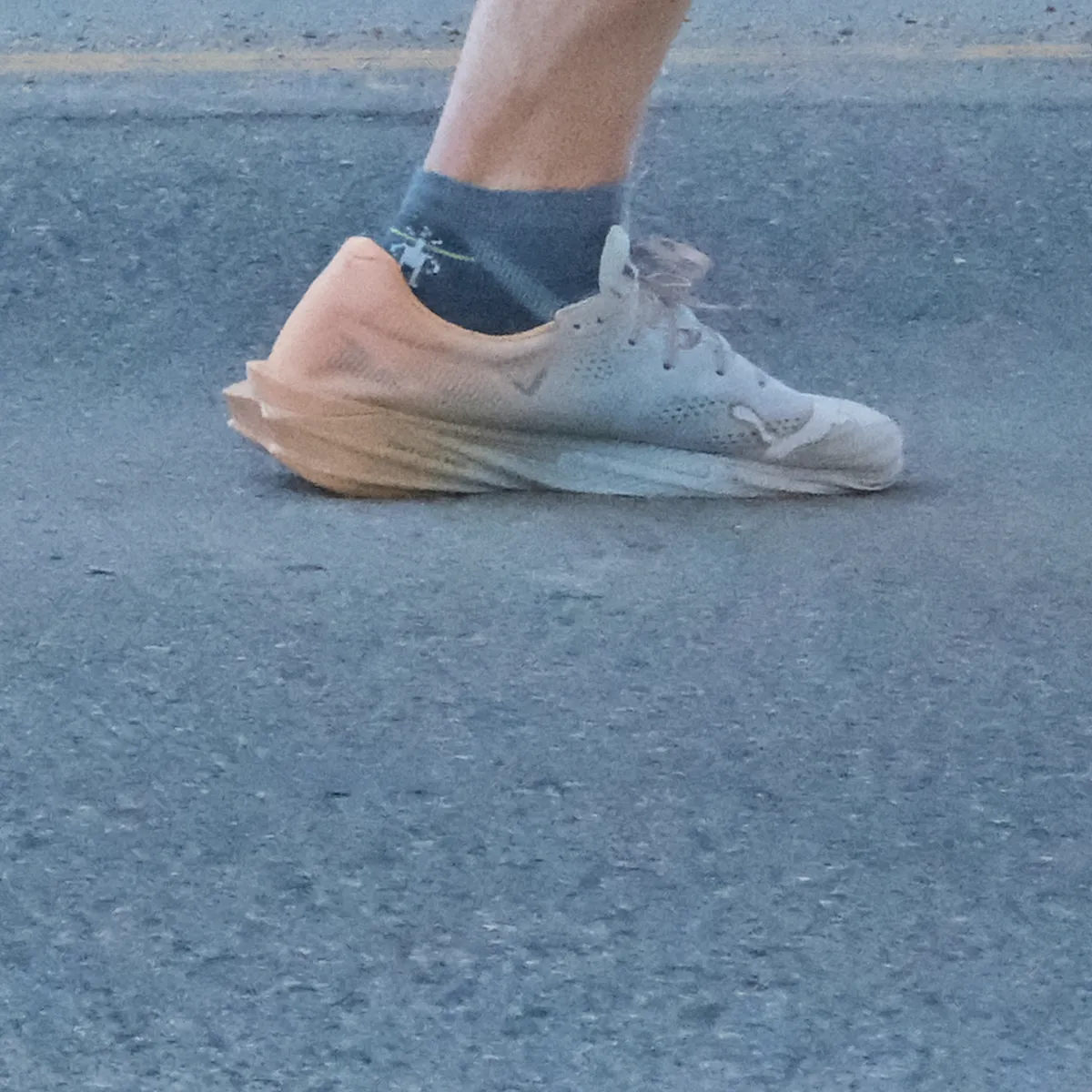
This shoe is not ideal for an overpronated gait, but it is not terrible. In the sense that the midsole doesn’t collapse, nor does the upper get pulled in. However, the Deviate Nitro 4 isn’t designed to resist medial-side compression. As seen in most of our biomechanical frames, the softer Nitro foam layer on top is more prone to compressing than the relatively firm base. So when the arch loading applies inward pressure, the soft foam compresses quite easily as this layer is closest to the arch.
See The Puma Deviate Nitro 4 in action
(Click to pause/play)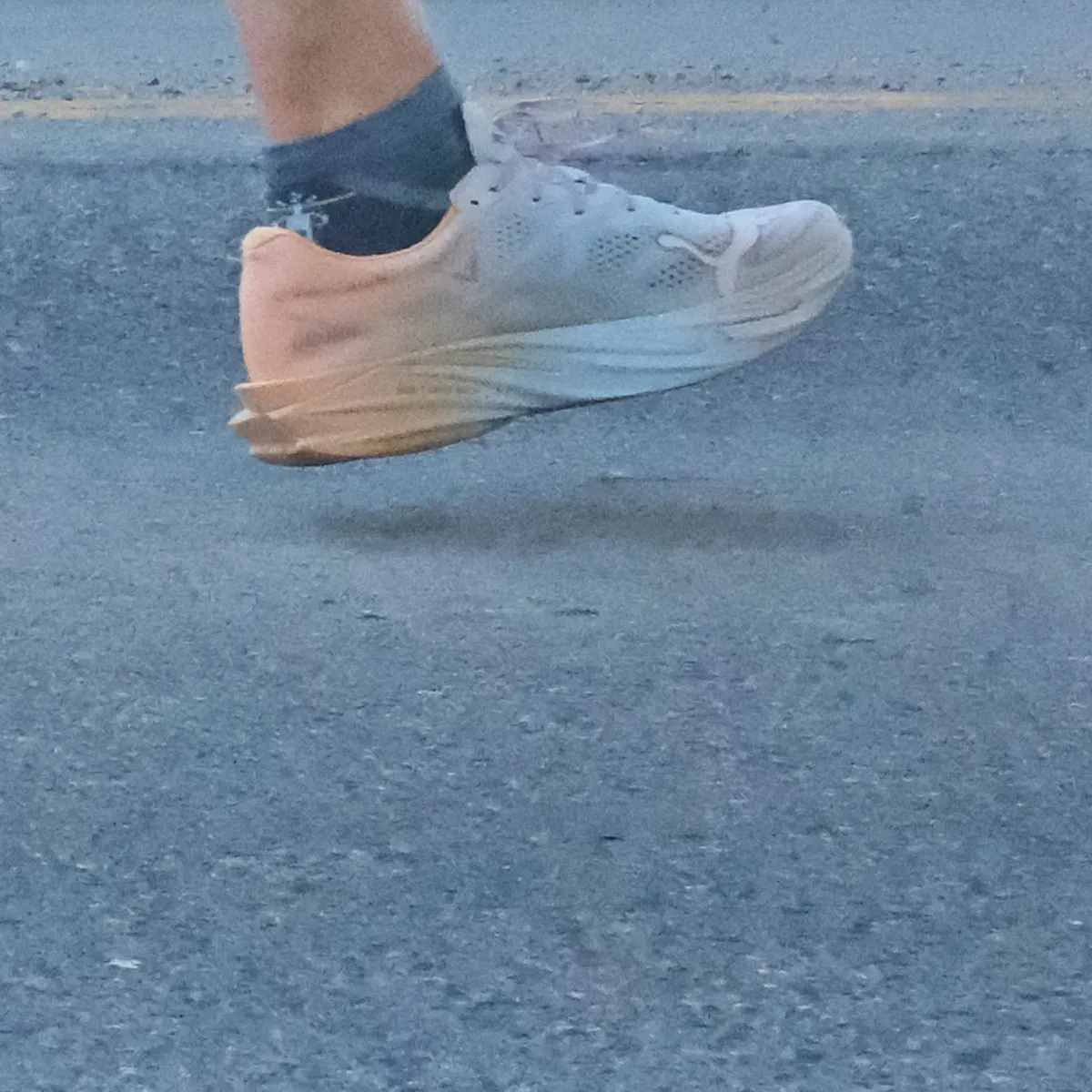
Mechanics at Work
- Soft Nitro foam layer → offers weak overpronation resistance
- Firm Nitro foam base → prevents midsole collapse
- Secure and structured upper → minimizes foot slippage
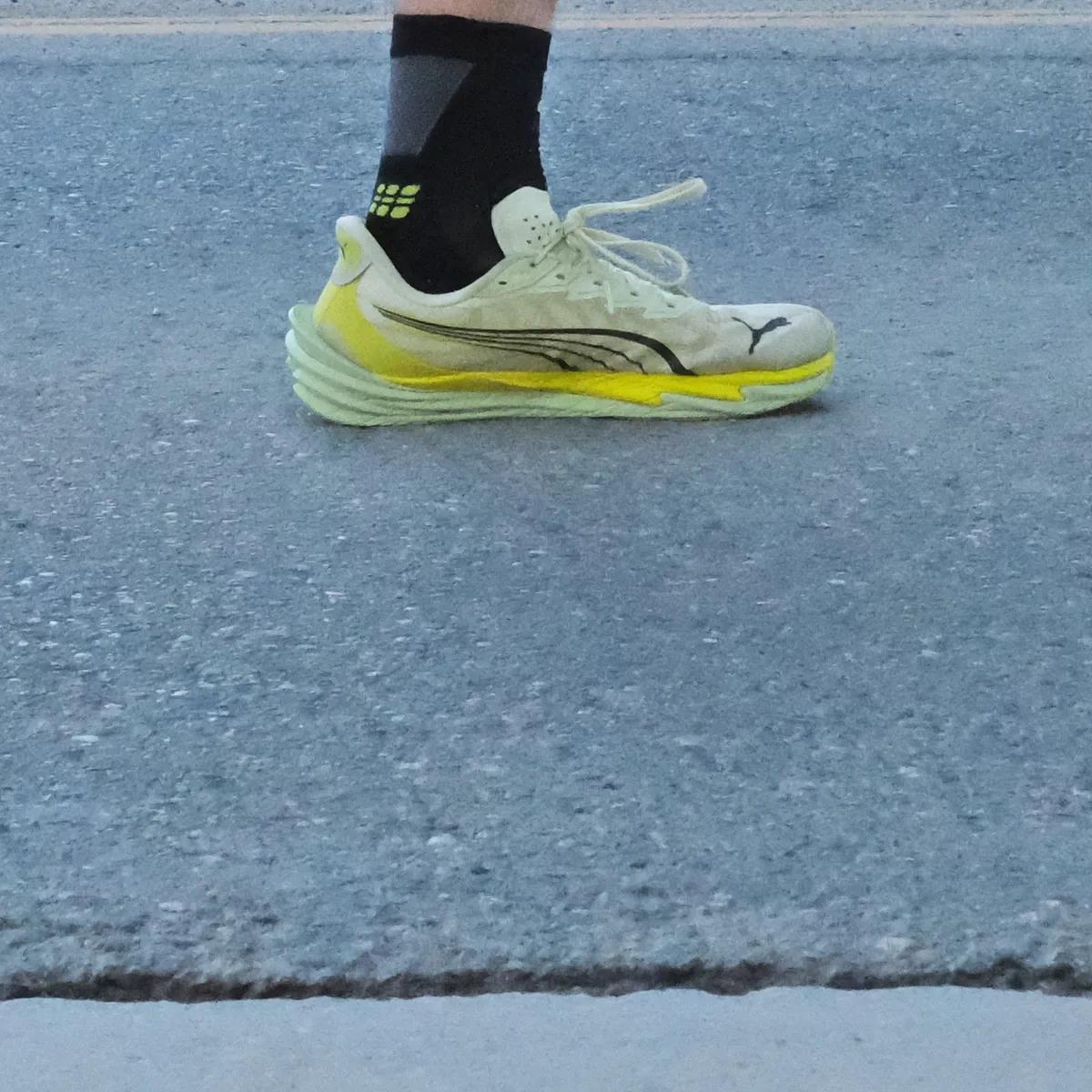
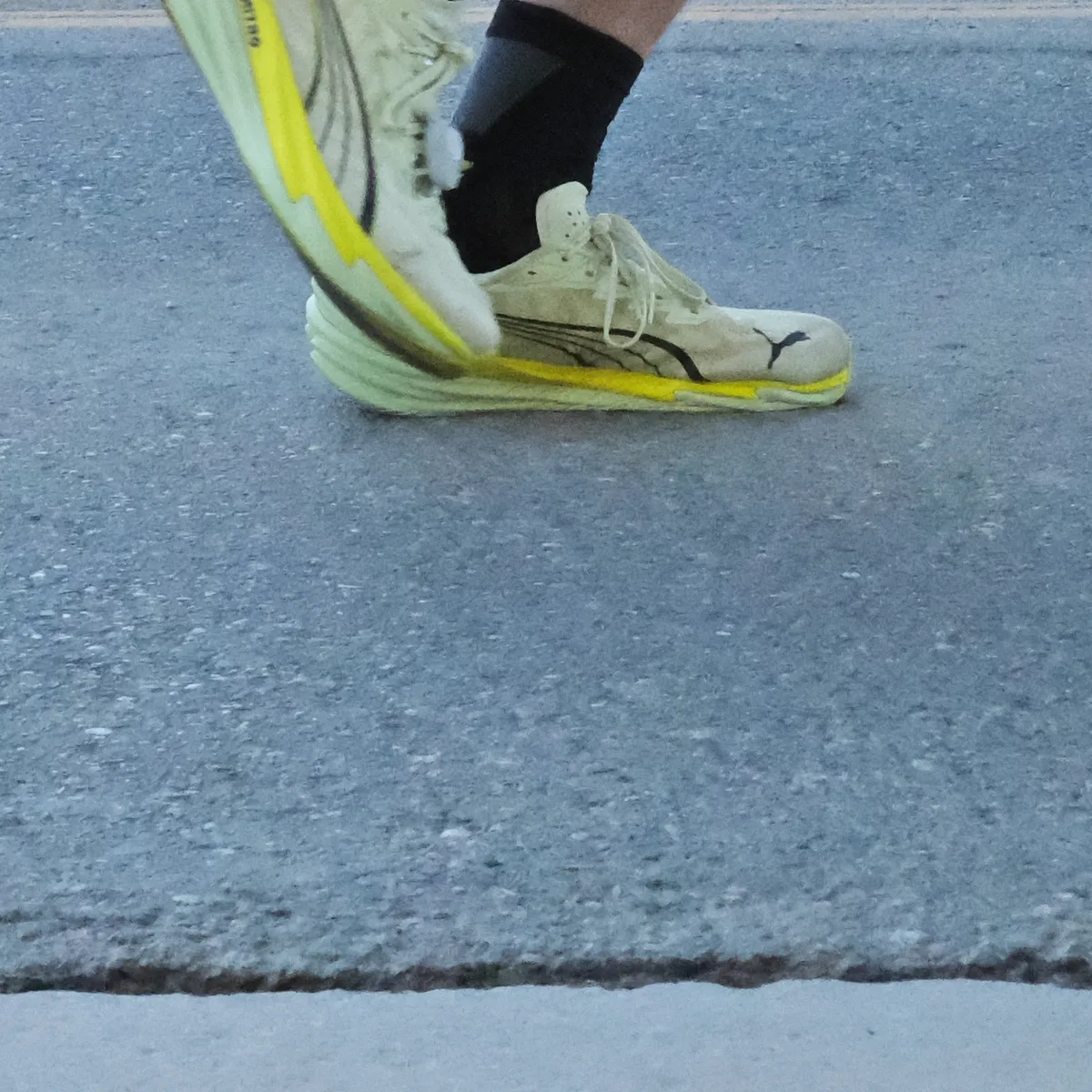
Runners with a bodyweight over 190 lbs (86 kg) run the risk of maxing out the forefoot cushioning. The soft Nitro foam layer is at its thickest under the forefoot, so heavy runners will expend most of the soft cushioning. In the rear, the carbon plate, firmer base, and outsole act as the line of defense against bottoming. The heel stack height has a greater proportion of the firmer density Nitro foam, so there’s less risk of maxing out the cushioning.
See The Puma Deviate Nitro 4 in action
(Click to pause/play)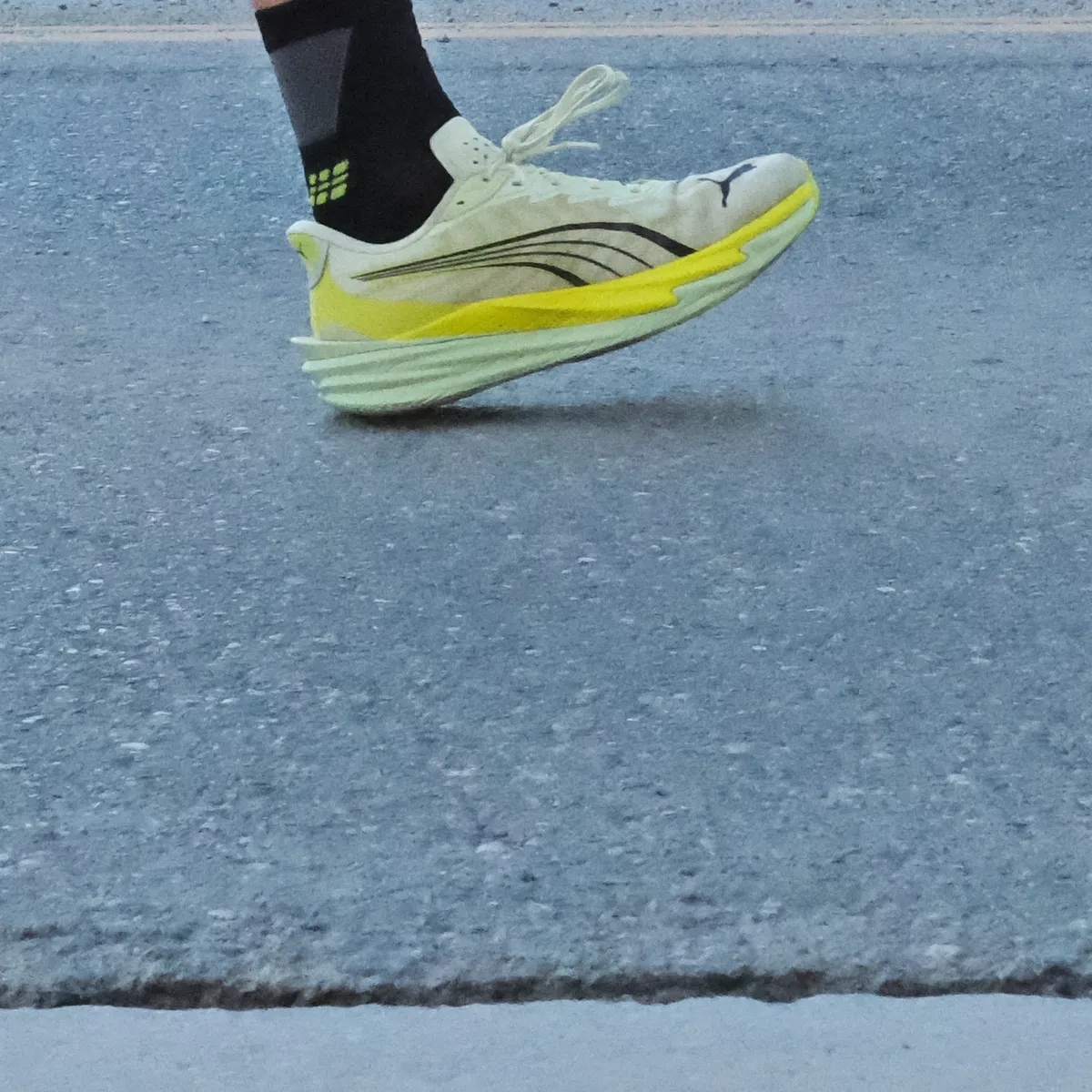
Mechanics at Work
- Soft forefoot Nitro foam → maxes out under heavy loading
- Firmer heel → resists bottoming
- Soft midsole → can potentially cause zero heel drop
- Zero heel drop → may cause temporary soreness
How we scored Puma Deviate Nitro 4
Select your profile for the score
Our scoring is weighted by intended use and biomechanics. A daily trainer is judged by different standards than a racing shoe. The central Global Score reflects how well this shoe fulfills its intended purpose; if a shoe is weak in foundational areas like stability or traction, our algorithm applies automatic penalty points.
Recreational Score Breakdown
Summary
- Buy If: You want a (more) usable, stable, and durable version of a high-end plated racer - a versatile, lightweight plated running shoe for tempo runs, intervals, and races - including marathons.
- Avoid If: You want a stable, roomy fit, or a compression-resistant midsole that supports an overpronated gait.
🔍 Deep Dive
The Deviate Nitro 4 bridges the tier between high-end super-shoes and everyday trainers. In the sense that it lacks the aggressive and unforgiving ride of lightweight plated racers, but uses materials that are a cut above everyday trainers. In this case, those ingredients would be the carbon PWRPLATE, a snug fit, and the dual-density midsole setup. These features add comfort for everyday mileage while allowing the shoe to go fast when required.
From a category point of view, the Deviate Nitro 4 compares to the Nike Zoom Fly 6, Saucony Endorphin Speed 5, Hoka Mach X3, and the Asics Magic Speed 5 – all shoes with a plate that are priced below their signature plated models. However, all these shoes bring something different to the table. In the Zoom Fly’s case, it’s an ultra-cushioned ride. In another example, the Mach X3’s firm ride makes it the most stable in its class.
The Deviate Nitro 4 is closer to its Elite variant than it is to an average daily trainer. The snug and shallow fit provides the necessary levels of lockdown required for race-day performance. At the same time, the dual-density midsole is set up to provide a blend of comfort and speed-friendliness. The softer Nitro foam is closer to the foot, while the firmer base provides support during the gait cycle. Unlike the Nitro Elite 4, the insole is thicker and removable. The carbon PWRPLATE and grippy PUMAGRIP rubber outsole complement the secure upper, helping with quicker turnovers. Our observation of high-speed images from road races showed the midsole delivering satisfactory levels of support for different biomechanical profiles.
A quick note on sizing. The Deviate Nitro 4 has a snug forefoot and midfoot, but fits long. There is more room ahead of the toes than is necessary, but we would still stay true to size. Buying a half-size smaller for better fit accuracy might make sense if you want to use the shoe just for short races under a 10K distance. In that case, you’ll get a stronger rocker effect. In its default sizing state, the foot sits slightly behind the rocker’s drop-off zone, making the rocker a late-stage kind. But if you go a half-size down, the foot moves closer to the front and in the sweet spot of the rocker’s drop-off zone. This vastly improves the rocker effect, giving it an early-stage effect. The trade-off is long-distance usability, as a tighter fit will be uncomfortable once the foot swells after a certain distance.
Pros
- Secure, breathable fit
- Blend of comfort and support
- Excellent outsole grip
- Doesn’t penalize heel strikes and slow speeds
- Daily run to race-day versatility
- Low-light visibility
Cons
- Sizing length needs improvement
- No optional widths
SHOE MAGNIFIER
Zoom In. Enhance.
Select a view, then use the slider to zoom in on the Puma Deviate Nitro 4.