
Review Updates
(3 total)- 2026-07-21 — 'Cut in half' module added
- 2026-07-21 — Added star rating module
- 2025-08-22 — Review published
CUT-IN-HALF: BROOKS HYPERION ELITE 5
Teardown Analysis
Tap the hotspots to reveal component specifications.
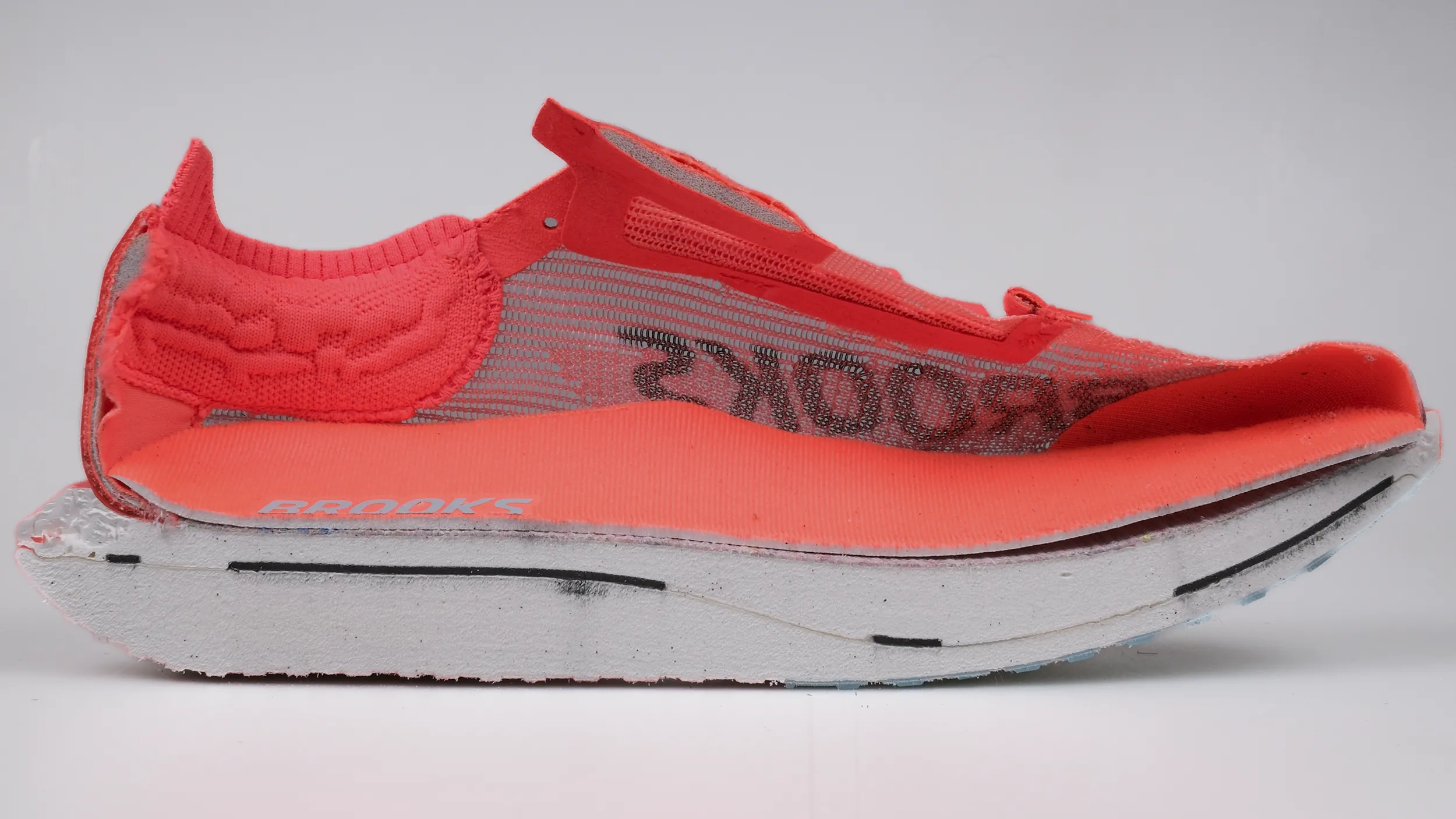
Select a component
Pros
- Perfect forefoot and midfoot fit
- Effective power transfer to the midsole
- Latticed carbon plate blends into the midsole
- Upper ventilation
- Soft and springy landings
- Outsole grip
Cons
- Poor stability for heel strikers
- Heel fit lacks the locked down feel
- Lack of optional widths
In this review:
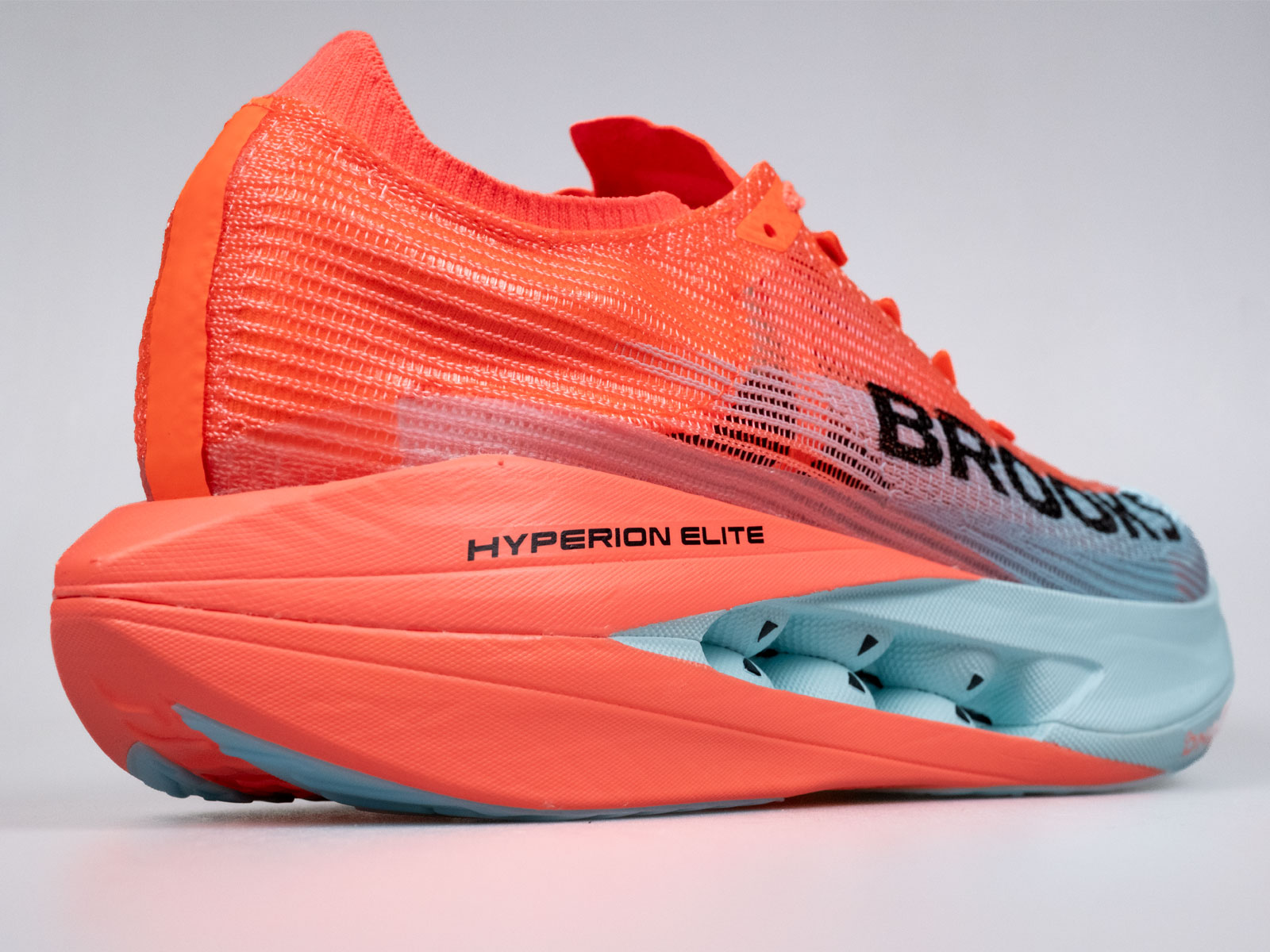
SUMMARY
Looking back, it’s fair to say that the reception for the first four editions of the Hyperion Elite was underwhelming. The shoes were actually quite good; the supportive DNA Flash midsole offered greater versatility as it did not penalize heel strikers, slow speeds, or poor form. The latticed Arris plate design was novel, too. But that’s not enough these days. Demanding runners want their carbon-plated shoes to put on a show, and the firm Hyperion Elite failed to deliver on theatrics. Heel strikers and slow runners be damned; the stable and predictable midsole was too boring when compared to adidas Lightstrike Pro and Nike ZoomX.
Brooks made a late-season retrofit to the Hyperion Elite 4 with a DNA Gold (PEBA) foam midsole upgrade. The Hyperion Elite 4 PB had a short life, as it was soon replaced by the Hyperion Elite 5. With this shoe, Brooks finally has a product that can go toe-to-toe with the likes of the Adidas Adios Pro 4, Hoka Rocket X3, and Nike Vaporfly 4. The lightweight DNA Gold foam is soft and bouncy, and the forefoot and midfoot have a perfect racer fit. The unique carbon plate blends into the midsole without being noticed.
Like most of its peers, the Brooks Hyperion Elite 5 targets forefoot strikers running at speeds faster than 4:30 min/km (7:00 min/mile). The soft midsole lacks the stability of the DNA Flash-based Hyperion Elite, making the latest version unstable for heel landings. The airy upper has a superlative race-day fit with a perfectly snug forefoot and midfoot. The heel fit needs improvement, as its collar padding isn’t as high as it needs to be.
WHAT THE HYPERION ELITE 5 DOES WELL
– A speed-friendly racer for 5K, 10K, and half-marathons.
– Shines at speeds faster than 4:30 min/km (7:00 min/mile).
– Connects the foot to the midsole for efficient transfer of power.
– Delivers a soft and springy ride for forefoot strikers.
– Excellent forefoot and toe-box fit; ultra-secure without discomfort.
– Seamlessly blends the carbon plate into the soft midsole.
– Excellent outsole traction under the forefoot.
– Best in class ventilation due to the sieve-like mesh.
– The stitched-on loops and ribbed laces deliver effective cinch and fit adjustment.
– Plush heel counter minimizes chances of irritation.
WHAT THE HYPERION ELITE 5 DOES POORLY
– Soft cushioning increases workload at speeds slower than 4:30 min/km (7:00 min/mile).
– Poor stability for heel strikers and heavy runners.
– The tight (and single-width) upper will not accommodate wide feet.
– The heel doesn’t fit as well as the forefoot and midfoot because of low heel padding placement.
POTENTIAL ISSUES
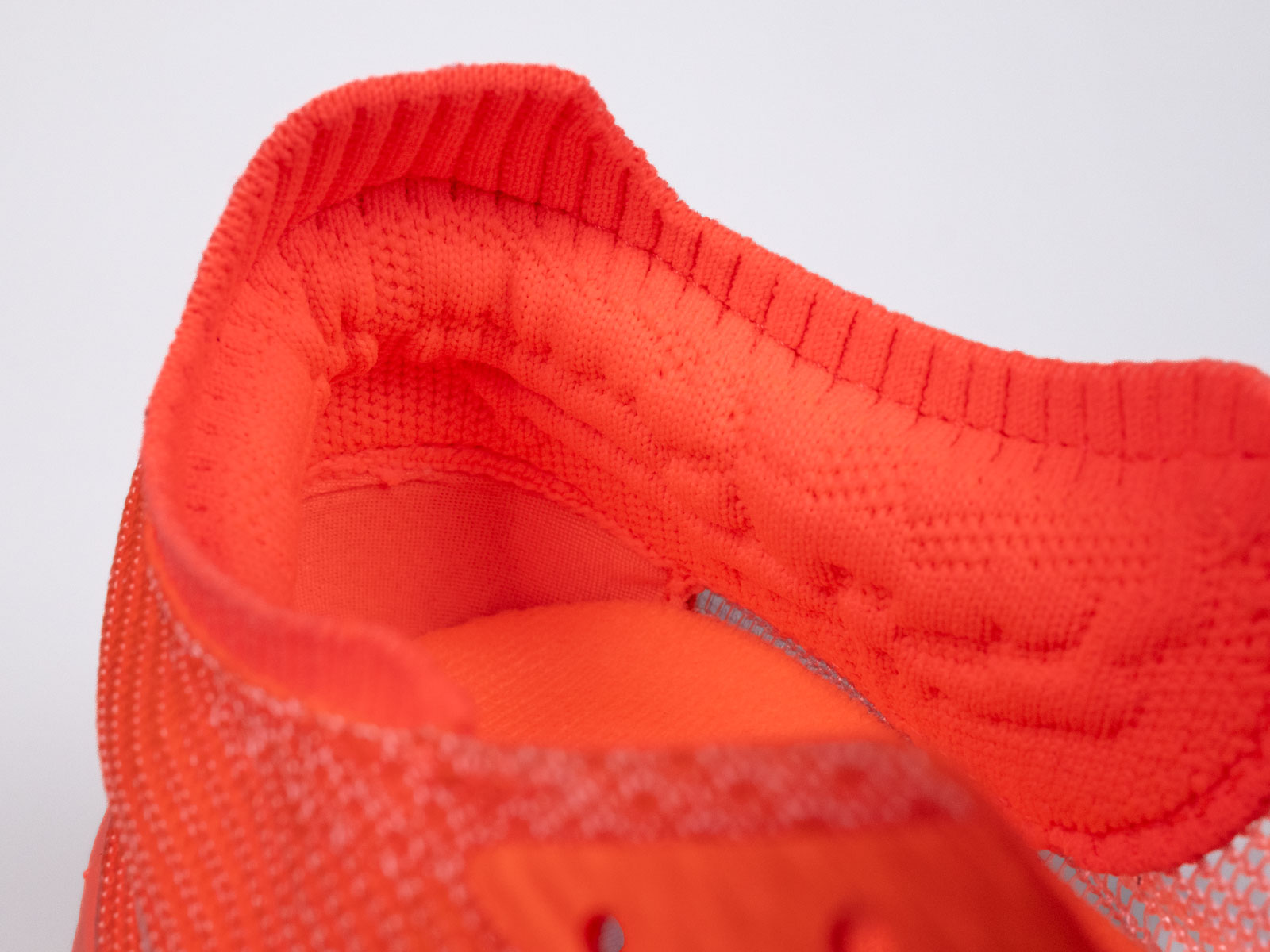
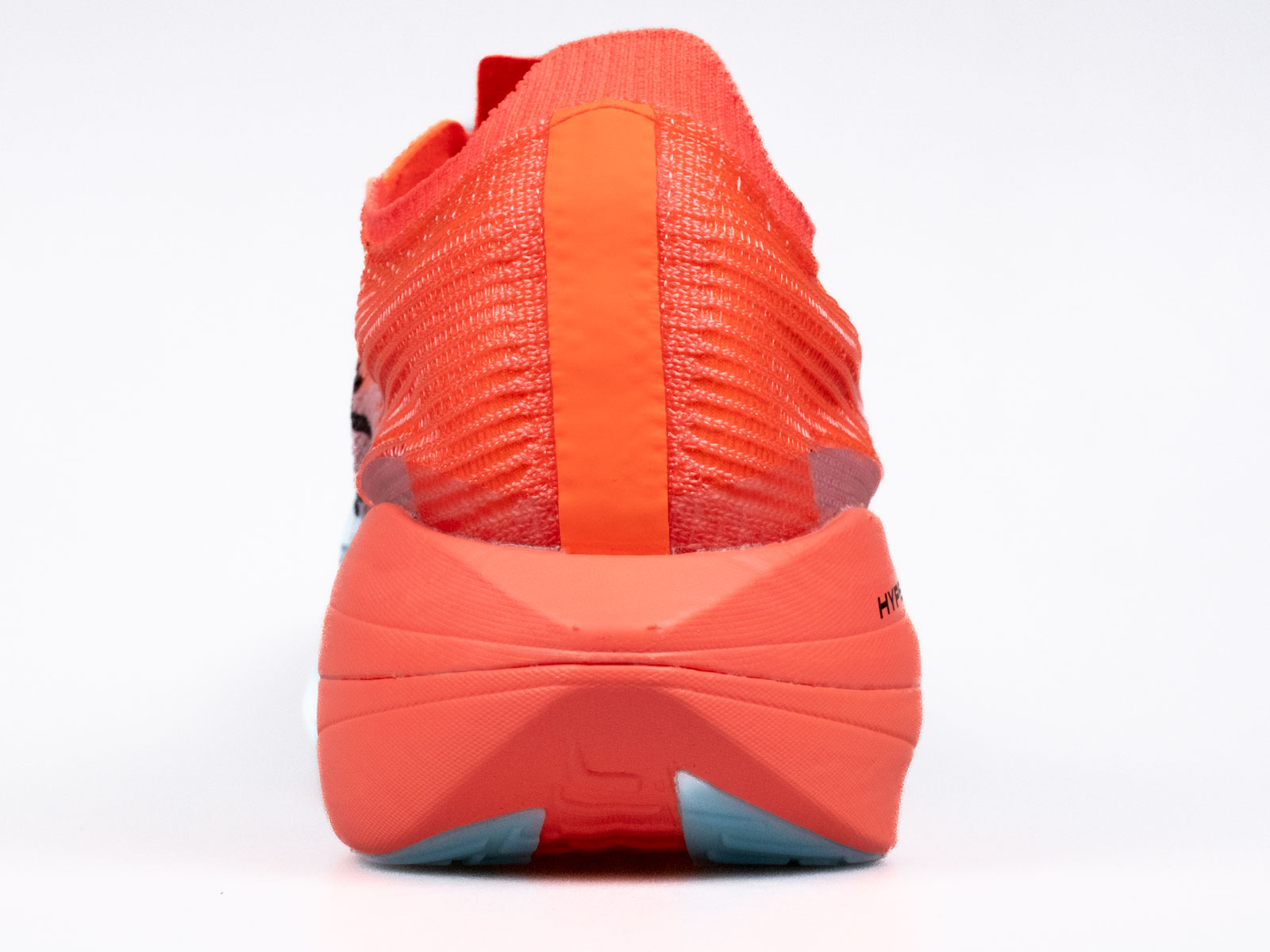
Ideally, the heel padding should sit on the recess or curve over the heel bone. Filling that gap improves the sense of being ‘locked in.’ The Hyperion Elite 5 (and even the Glycerin Max) strays from this best practice. The heel padding sits too low inside the upper, missing the sweet spot at the base of the Achilles tendon. The heel doesn’t come off when running, but the fit feels nowhere near as secure as the forefoot. While on topic, the forefoot has a narrow racer fit, so consider alternatives if you prefer a more spacious racing shoe.
The lack of rearfoot support makes the instability noticeable during heel strikes and slower paces.
WHAT HAS CHANGED
We’re comparing the Brooks Hyperion Elite 5 not with the Hyperion Elite 4 PB, but with the Hyperion Elite 4 and its DNA Flash midsole.
– Brand-new DNA Gold foam (PEBA-based) is much softer and bouncier than DNA Flash.
– Lower midsole stability due to the increased softness.
– Reduced compatibility for heel strikers and slower speeds.
– The outsole window that exposed the carbon plate is filled over.
– Tighter forefoot, but weaker heel fit.
– A $25 price increase.
– Weight reduction from 7.2 oz (204 gms) to 6.9 oz (196 gms).
– Removed asymmetrical lacing and the stiff lacing panels.
– New side midsole windows show the Speedvault plate.
– Softer and thinner outsole.
– Lower estimated outsole and midsole durability.
THE RIDE EXPERIENCE
‘A soft and bouncy ride’ is now a well-worn cliche for carbon-plated racers, so let’s kick off this section with something else – the unique carbon plate geometry. Unlike the plates used on the Asics Metaspeed Edge, Nike Vaporfly 4, or the Saucony Endorphin Pro 4, the ‘Arris’ Speedvault plate inside the Hyperion Elite doesn’t have a solid, continuous surface.
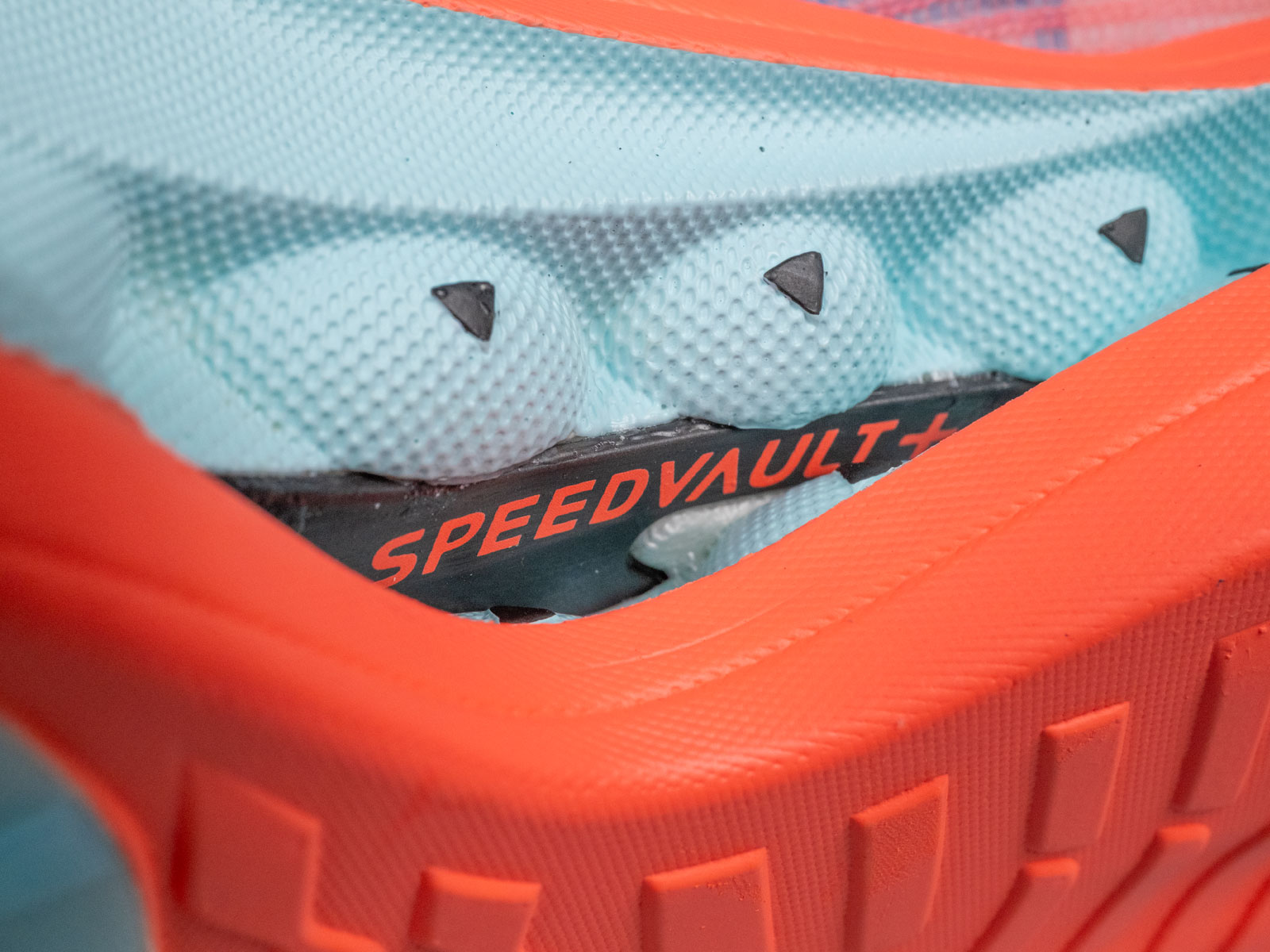
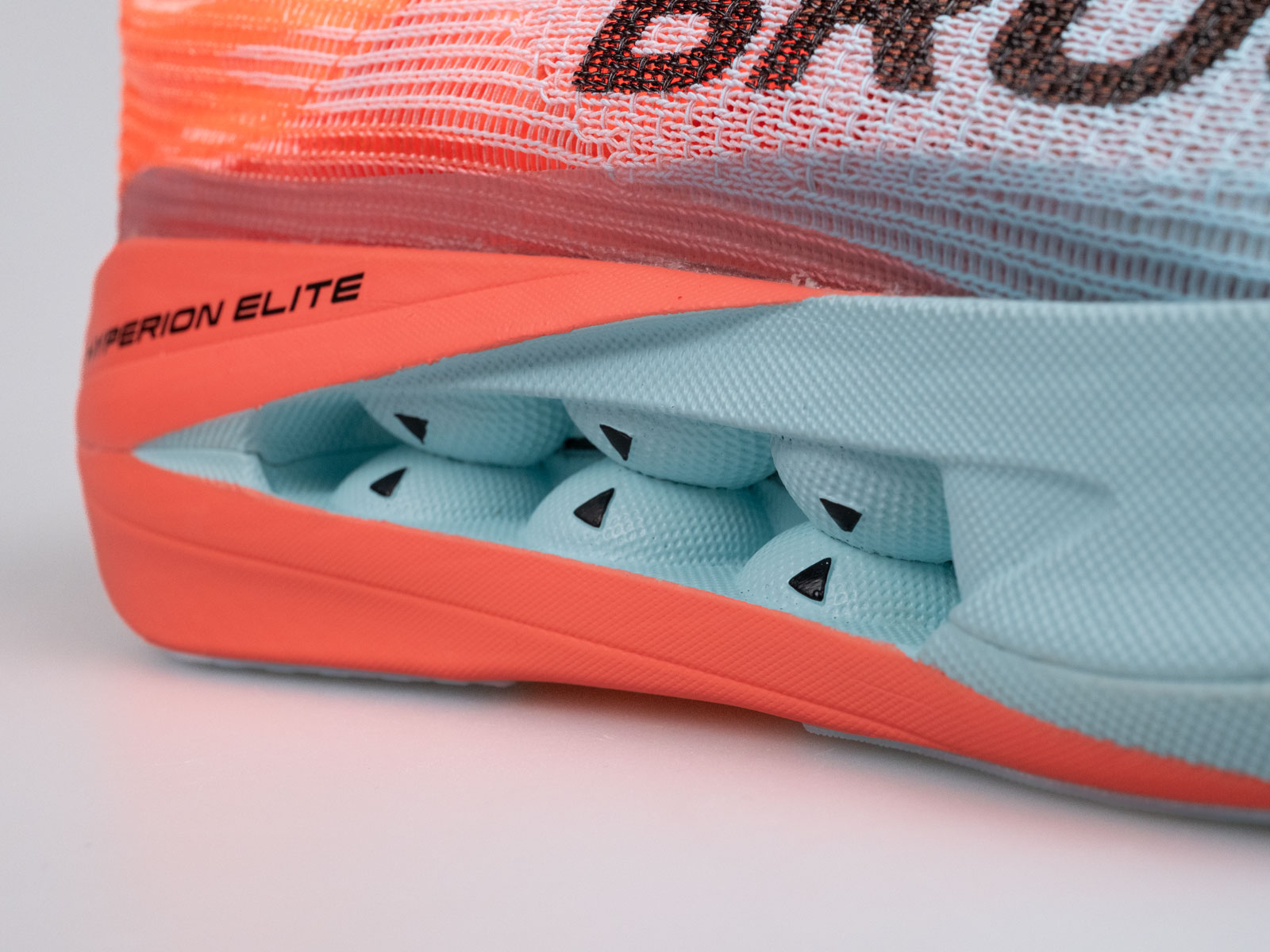
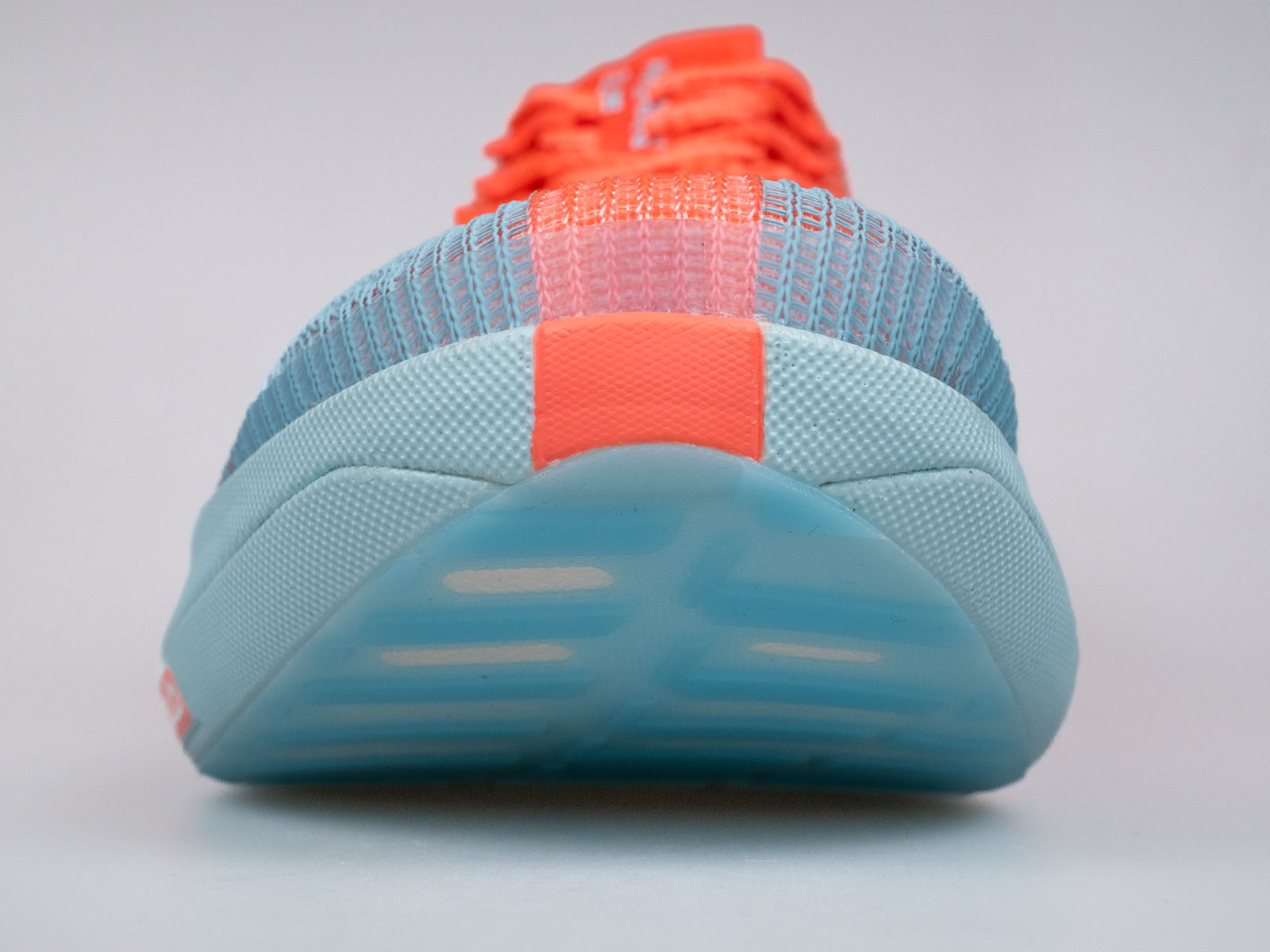
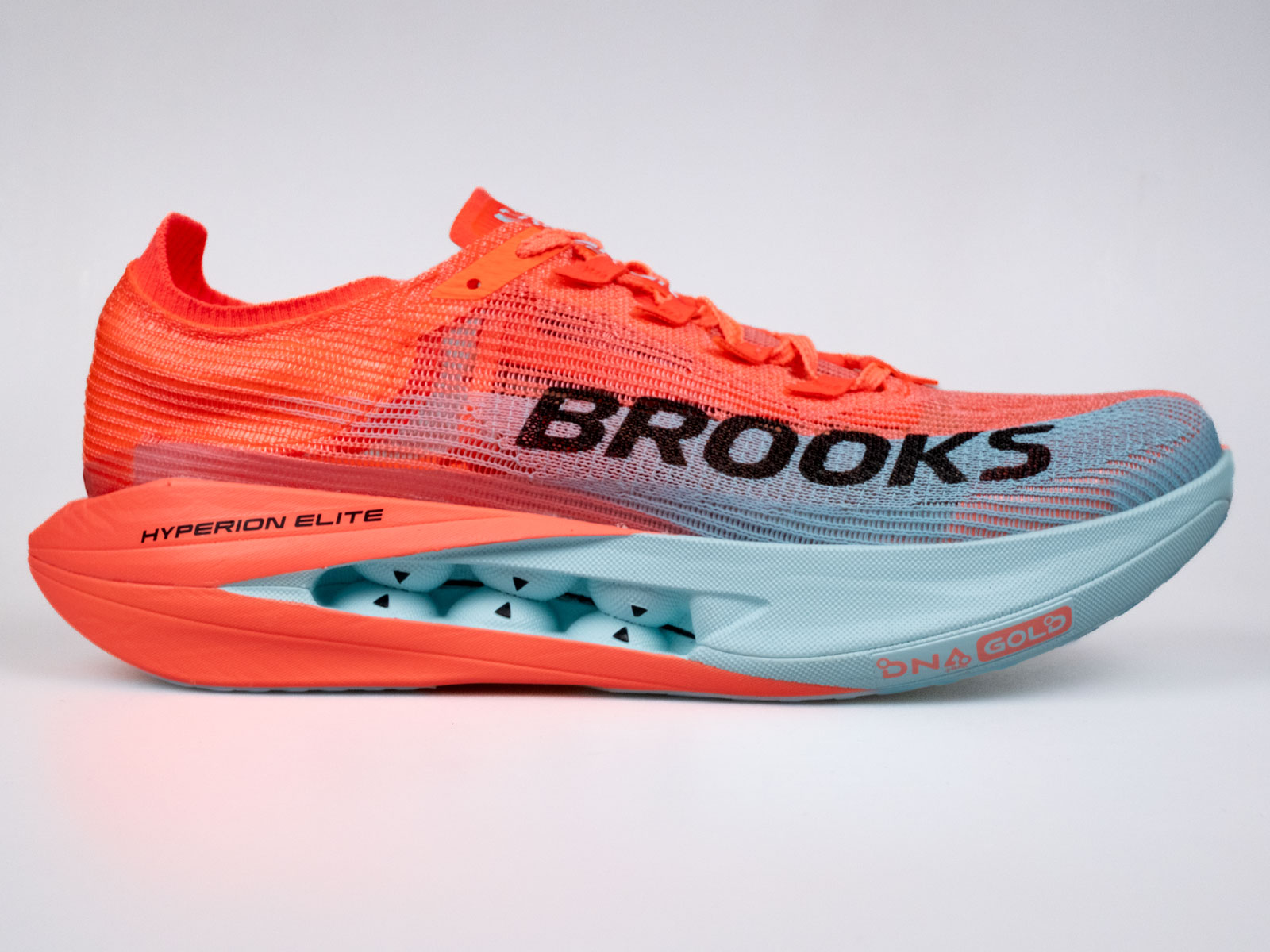
Supplied by a company called Arris Composites, the plate is a lattice-like structure with cut-outs. While the plate has the familiar curved profile, it does a far better job of blending into the foam midsole than a solid plate of a similar dimension. During a run, it’s hard to tell the plate apart from the foam. Besides the obvious benefit of reducing weight, the unique plate doesn’t attempt to be prescriptive by exerting control over the ride experience.
In a way, this composite layer is a plated equivalent of the adidas Energy Rods. The Arris plate works efficiently in the background, delivering the rocker effect and transition assistance without getting in the way or being noticed. In hindsight, the open structure of the plate works much better with the soft DNA Gold midsole than it did with the firm DNA Flash foam. The soft and springy character of the Hyperion Elite 5 helps the plate perform to its full potential.
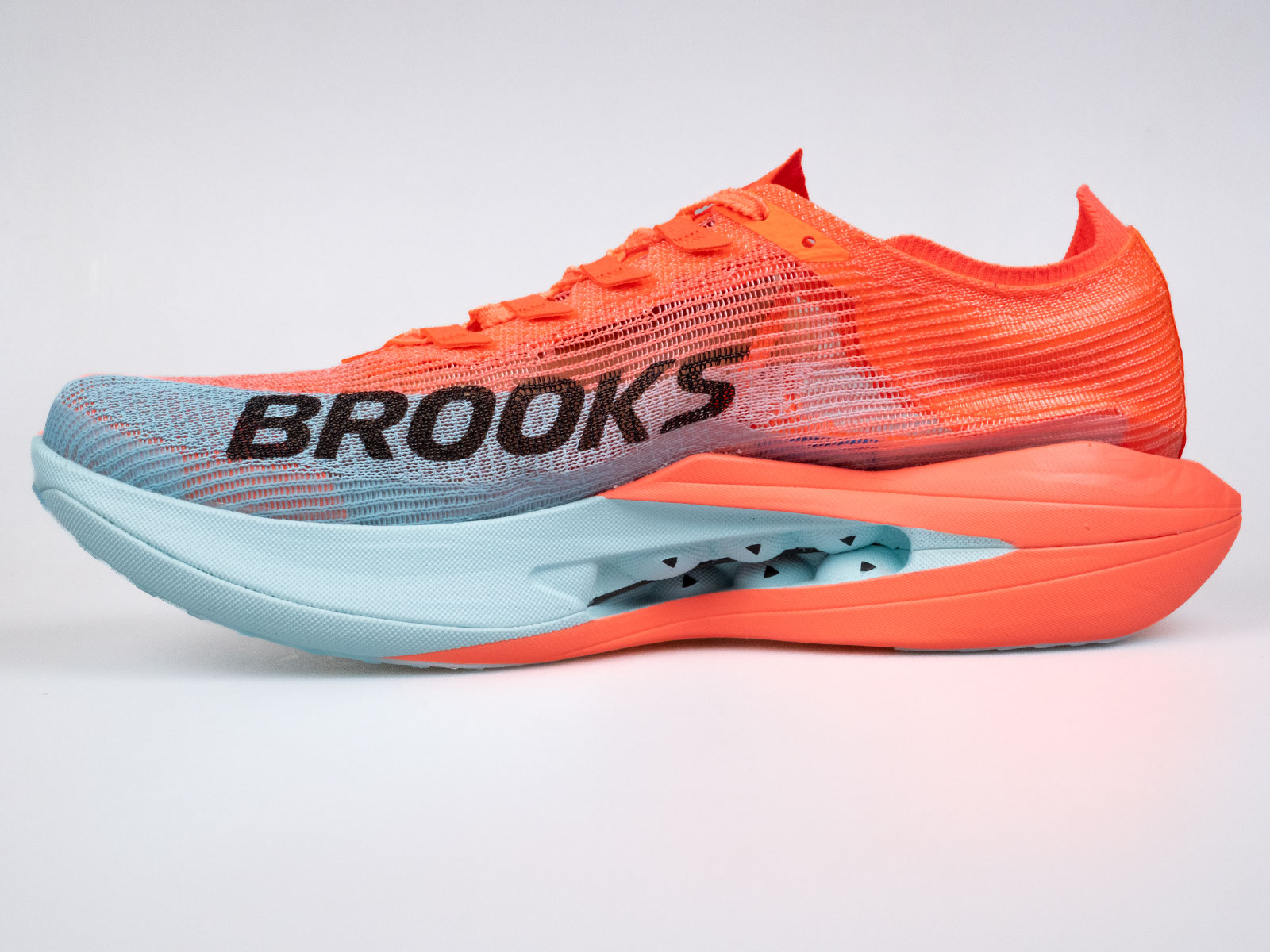
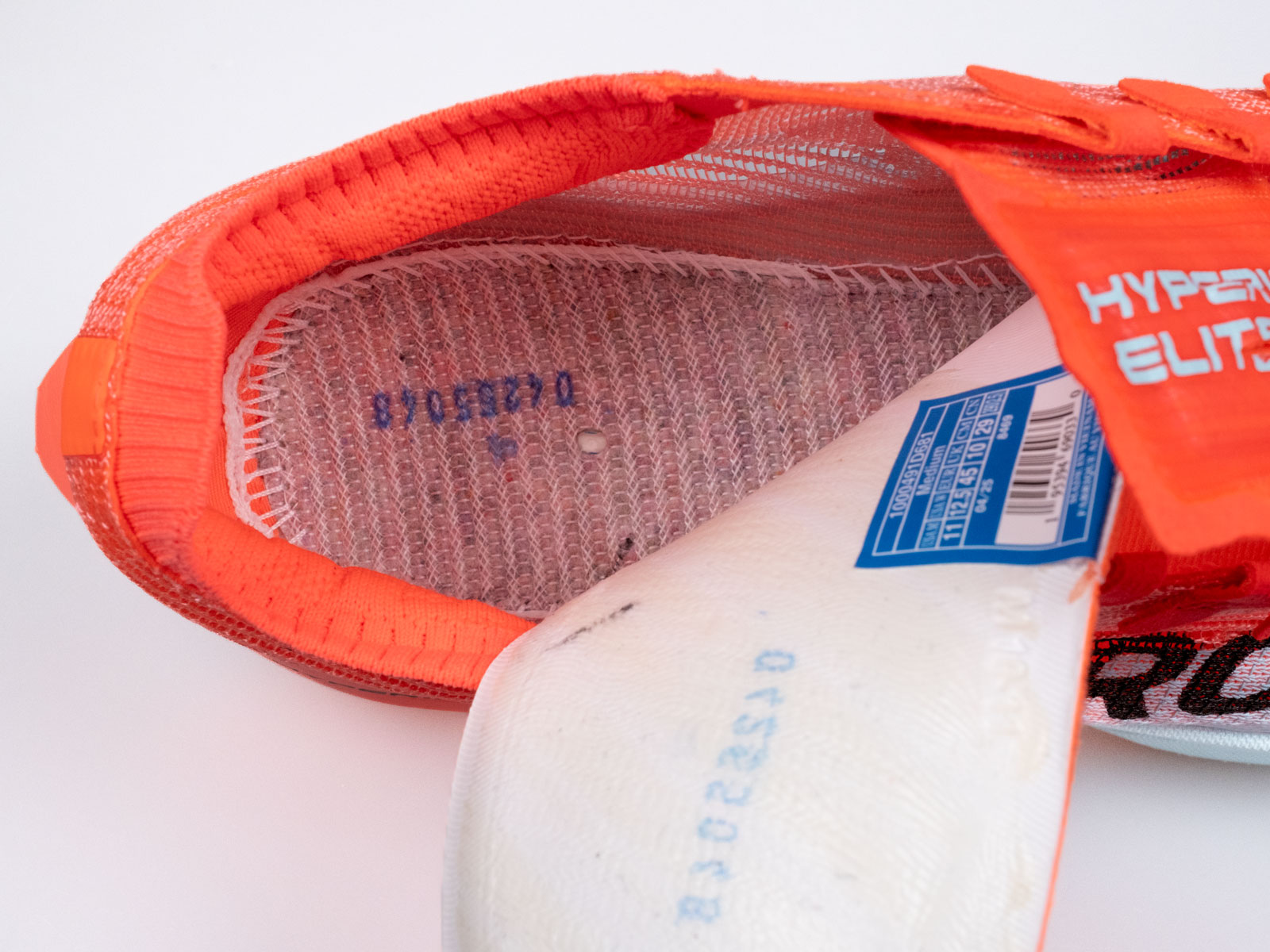
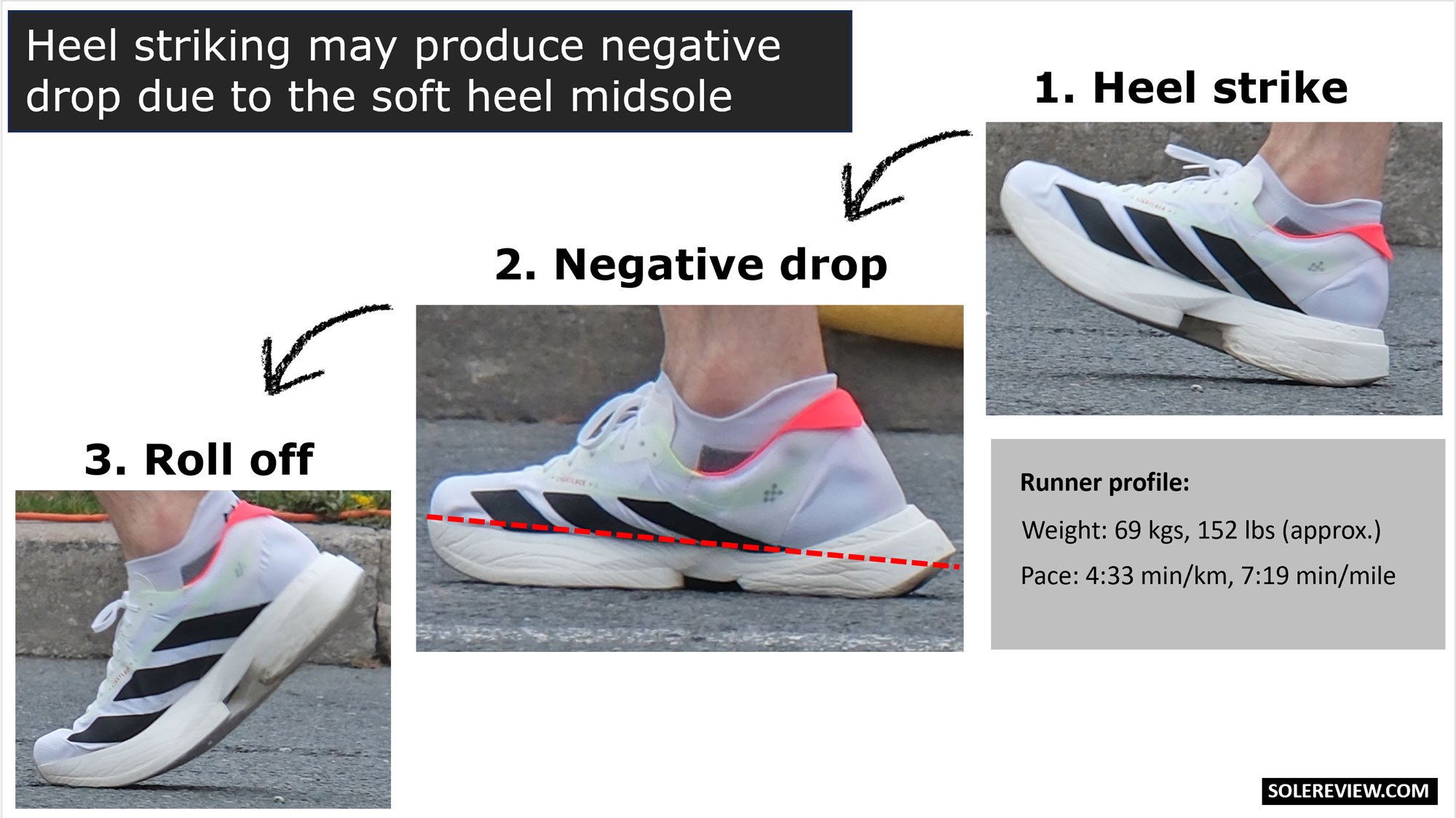
By plated shoe standards, the Hyperion Elite 5 has a low-profile forefoot. It’s 30 mm tall under the foot with a 38 mm tall heel. Considering how this shoe works better for forefoot strikers, it might have been a better idea to increase the forefoot stack. Most carbon-plated supershoes with a soft ride tend to strain the Achilles because of rear midsole compression. Some shoes, like the adidas Adios Pro 4, even negative drops during heel strikes.
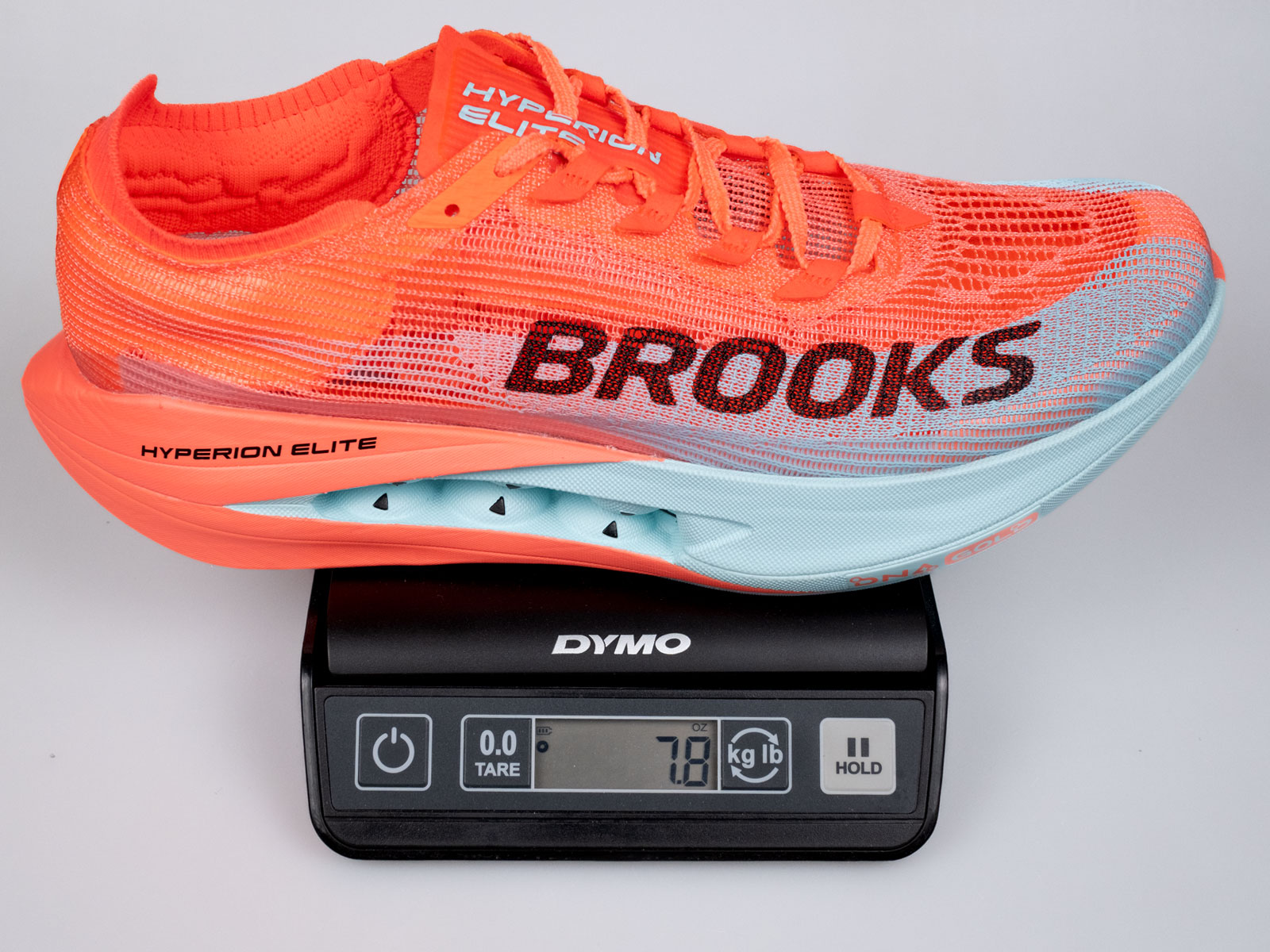
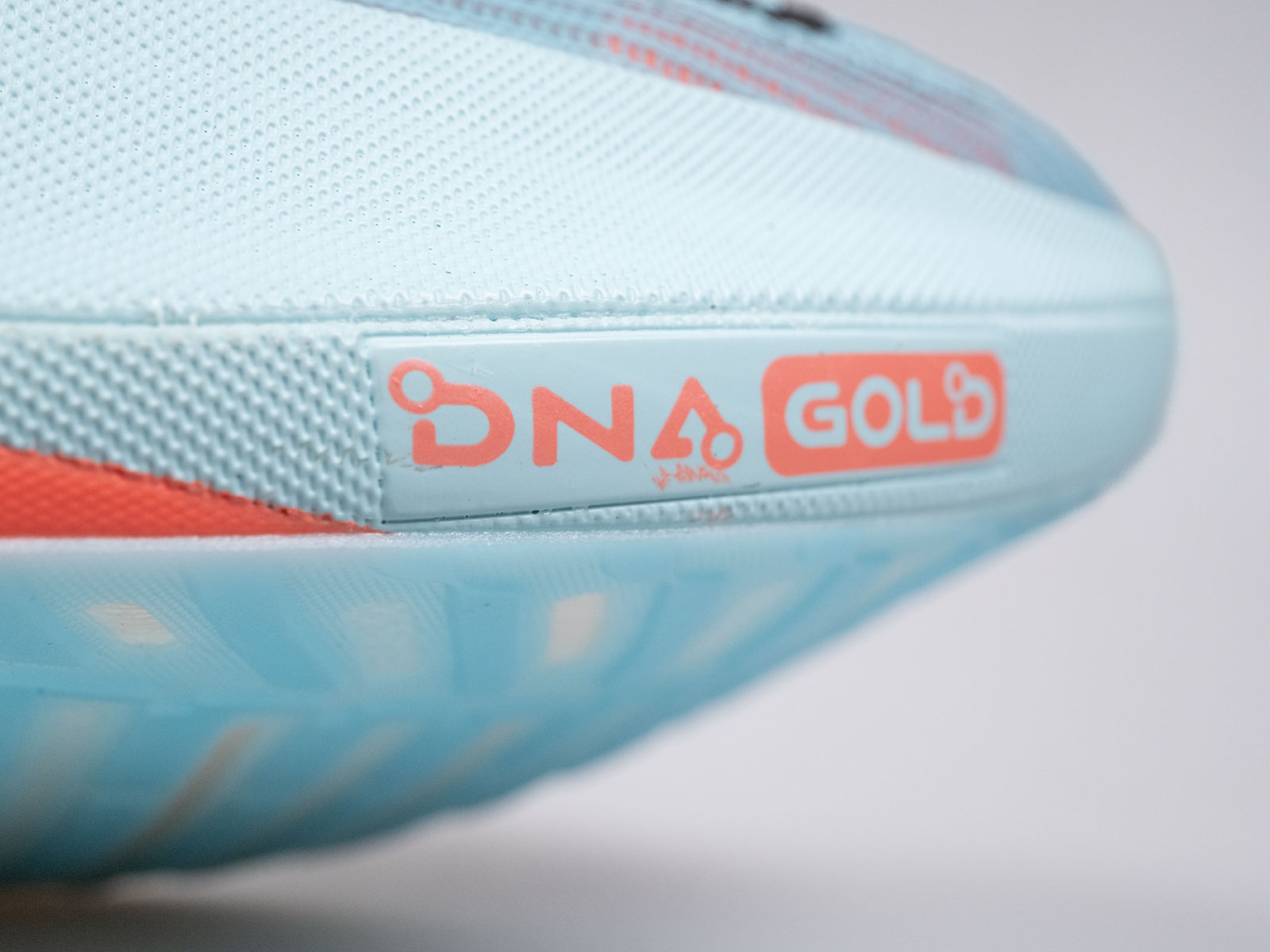
As for recommended uses, the lightweight Hyperion Elite 5 is ideal for short-distance races, up to a half-marathon. The DNA Gold foam has excellent rebound properties, as the midsole pushes back with springy softness after each landing. The ride quality is comparable to the soft adidas Adios Pro 4 and Hoka Rocket X3, where finding your footing takes a split second longer than the Saucony Endorphin Pro or Puma Deviate Nitro.
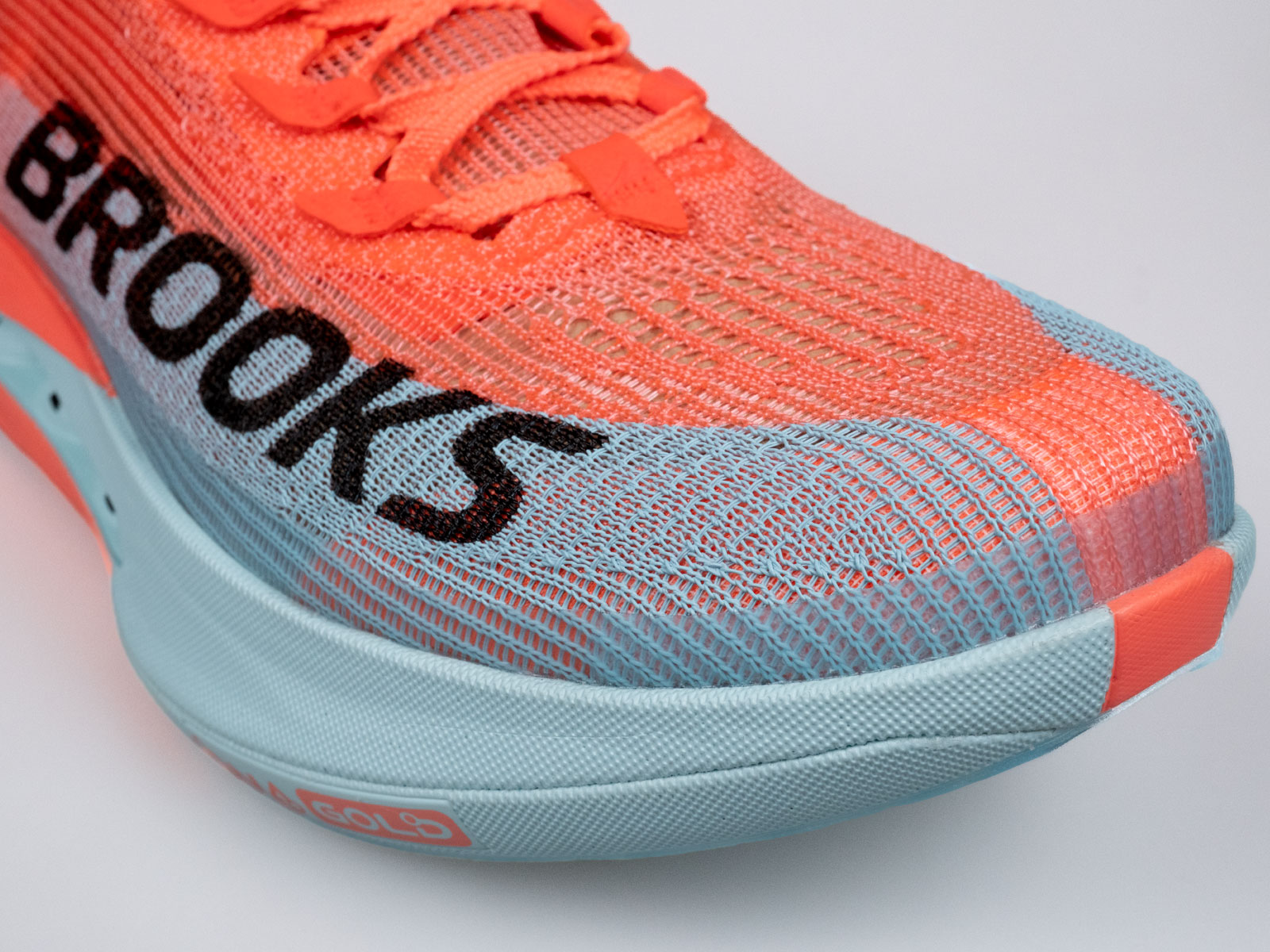
Also, the midsole behavior favors forefoot strikers, as there’s not enough stability for heel strikers. If you’re one of those runners who can maintain their form (forefoot or midfoot striking at speeds higher than 4:30 min/km) during a full marathon, then this can be a 26.2-mile racer. In most cases, a short-distance race is ideal for the Hyperion Elite 5. The tight forefoot also does a great job of connecting the foot with the midsole, while preventing the foot from sliding during cornering.
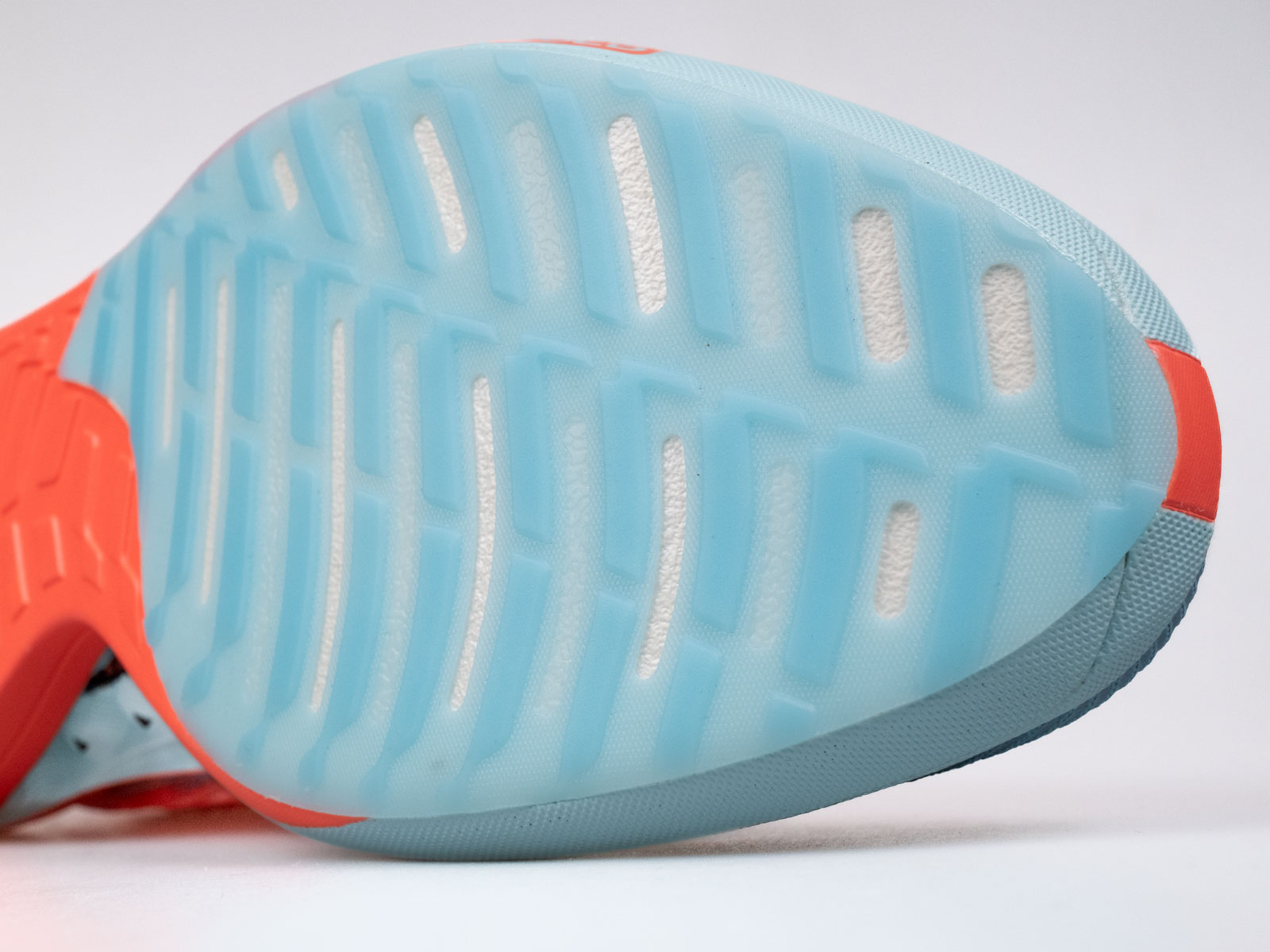
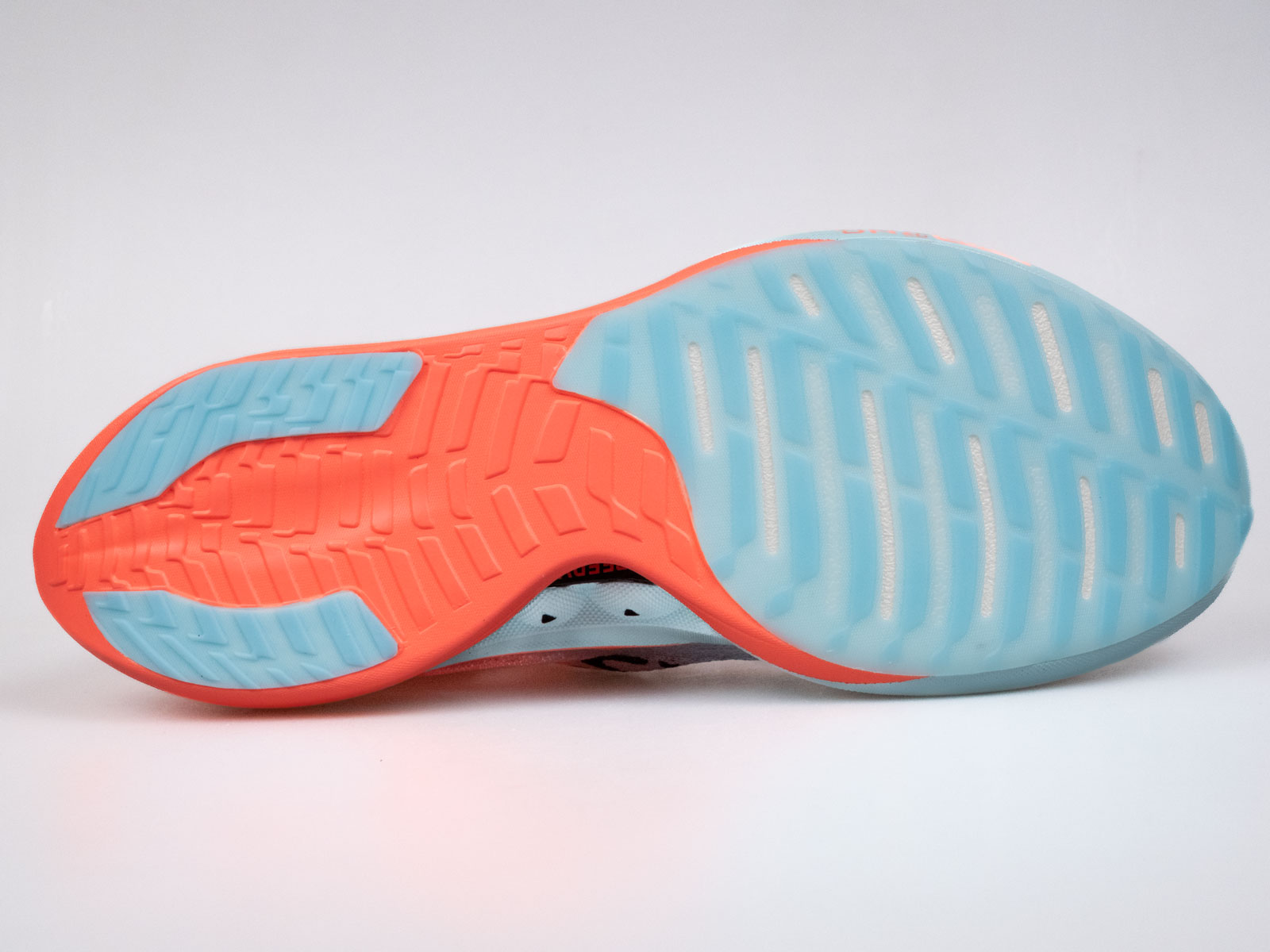
The soft and pliable outsole replaces the thick rubber lugs of the Hyperion Elite 4. While we’re uncertain of the long-term durability, the traction is excellent. The thin outsole blends into the soft DNA Gold midsole, delivering cohesive performance.
RECOMMENDED ROTATION


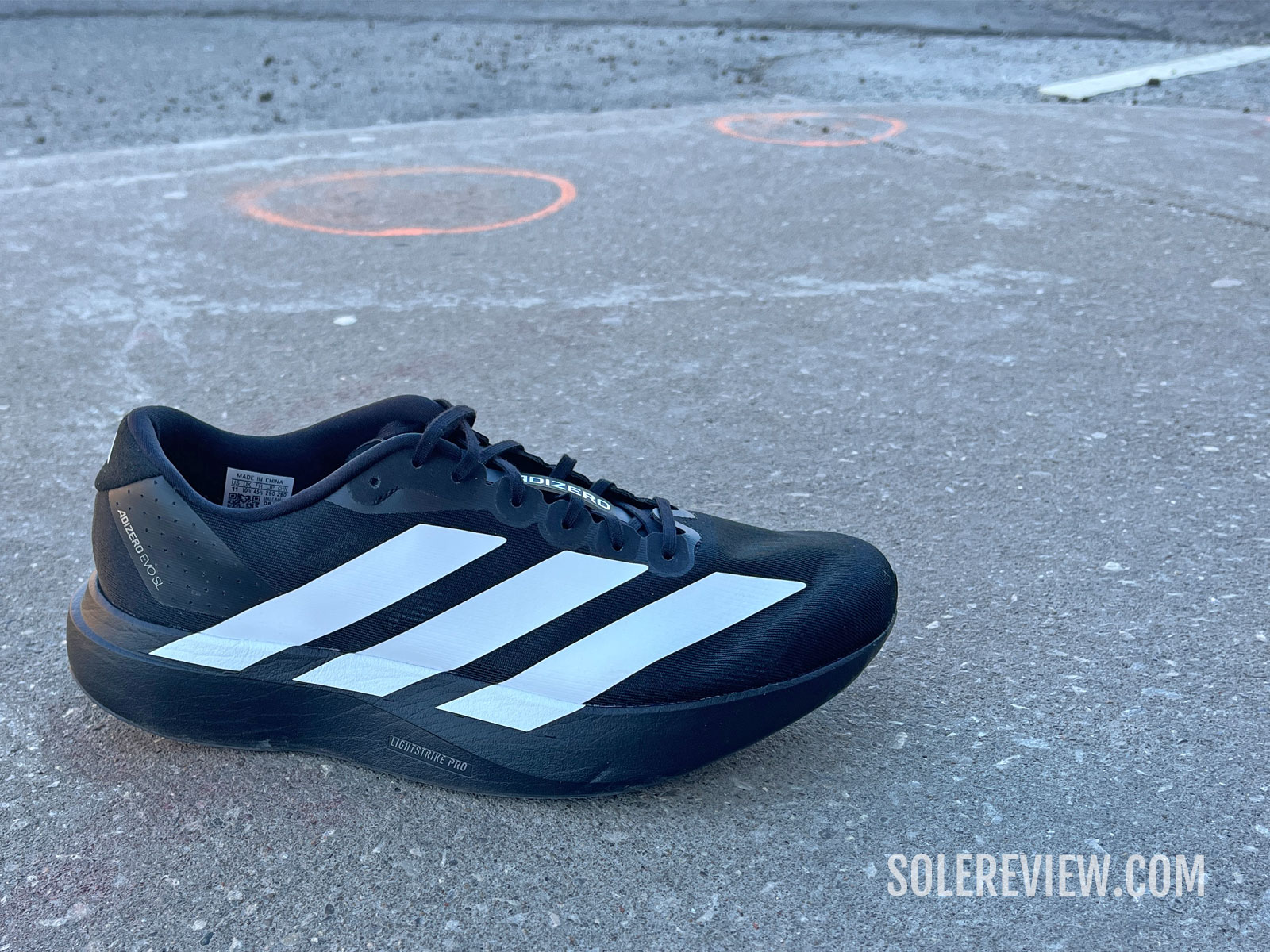
- Use the Brooks Hyperion Elite 5 for fast forefoot striking on race day
- Use the Brooks Hyperion Max 3 or Glycerin Max for recovery and long runs
- Use the adidas EVO SL for everyday training, tempo runs
THE UPPER DESIGN AND FIT
The Hyperion Elite 5 easily has the best forefoot and midfoot fit of all the carbon-plated racers. A great racing shoe fit goes beyond just a secure forefoot fit. The sense of fit security should feel uniform from the toe to heel. We’ll get to the heel fit momentarily, but let’s describe how the forward sections fit.
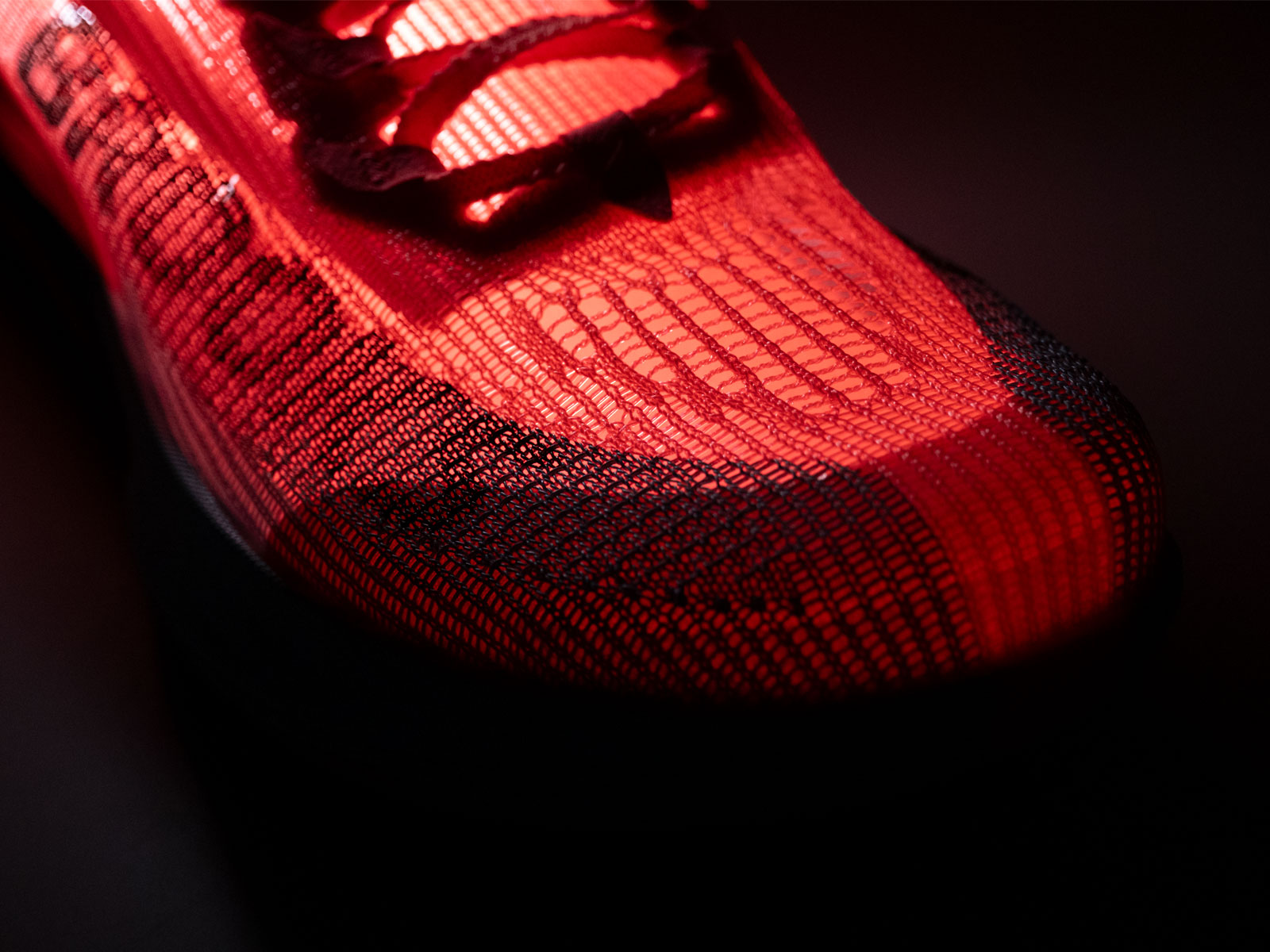
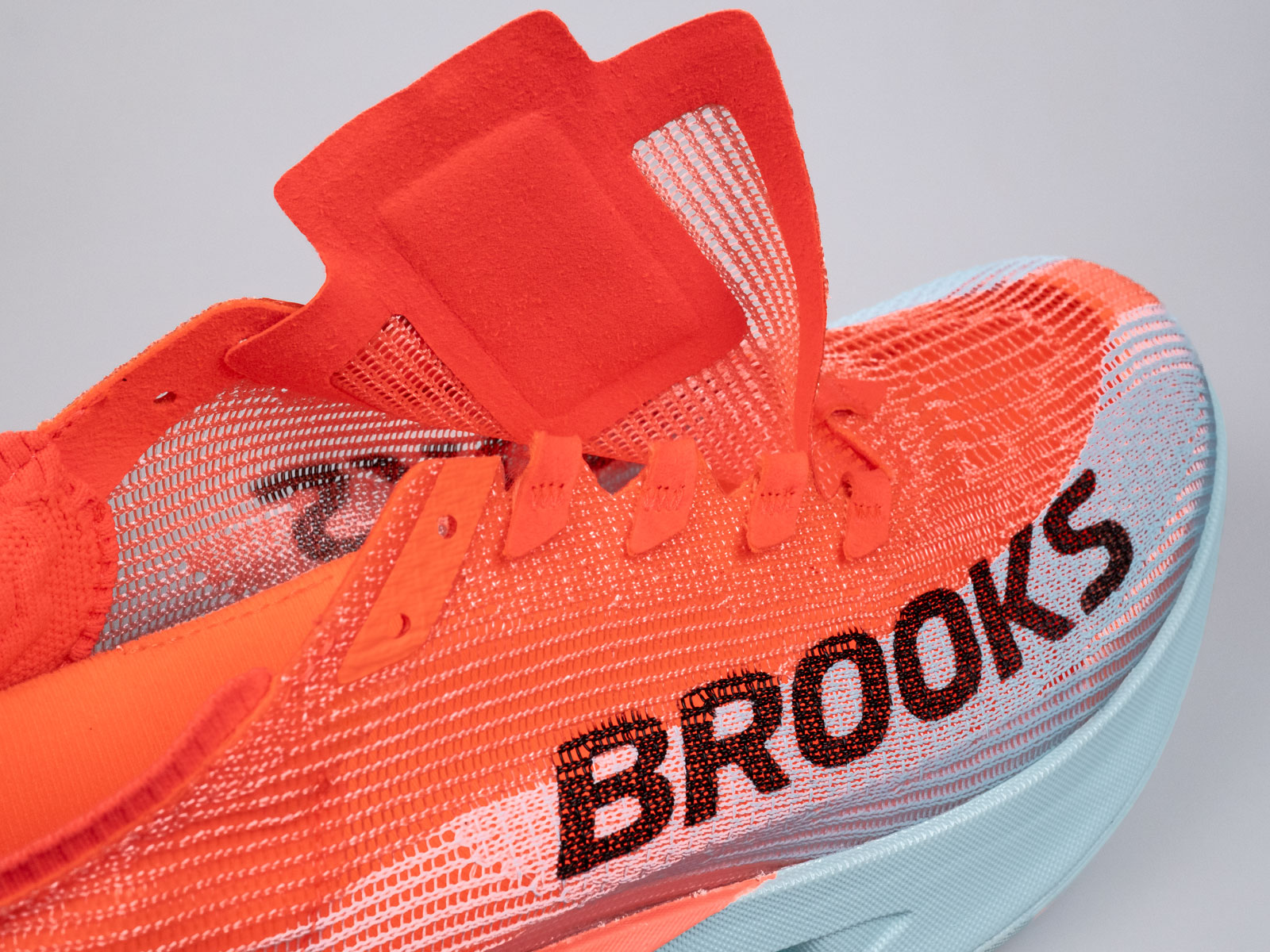
The shoe fits true to size, with a thumb’s width equivalent of space in the toe box. The forefoot ceiling is flush with the foot, but (remarkably) doesn’t feel shallow at all. The toe box is very secure, yet not pointy-feeling, thanks to the dedicated internal bumper. Though the forefoot and midfoot have a tight fit, the sense of narrowness is evenly distributed. There’s absolutely no sense of wasted space. Except for the margin that’s required for a true-to-size fit, every nook and cranny is filled in. The tongue doesn’t have a gusset, but it’s tacked on one end. The tongue’s underside and edges are lined with a soft suede-like material. This design prevents the tongue from sliding or folding over.
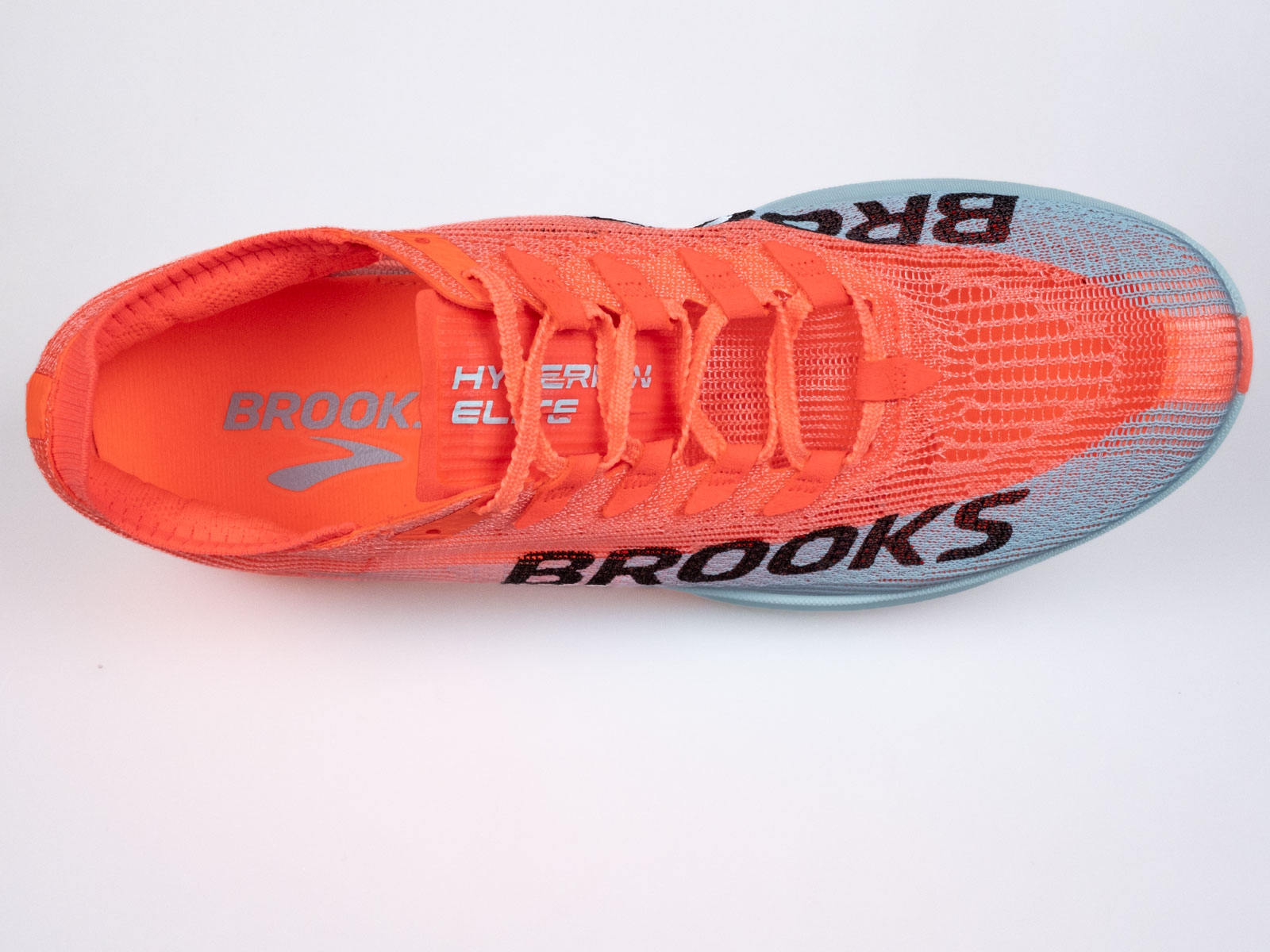
Tug on the laces, and the midfoot panels close in on the foot with purpose. The mesh itself is not elastic, but the filaments on the side panels respond with one-directional (vertical) stretch upon lacing. The ribbed laces and stitched-on loops help deliver a phenomenally secure midfoot fit. The upper aggressively pins the foot down over the midsole for a perfect glove-like fit.
Will this kind of fit work for everyone? The answer is no. Runners with wider feet may find the fit too aggressive. Runners who also prefer a more spacious racing shoe for marathons may have to look elsewhere.
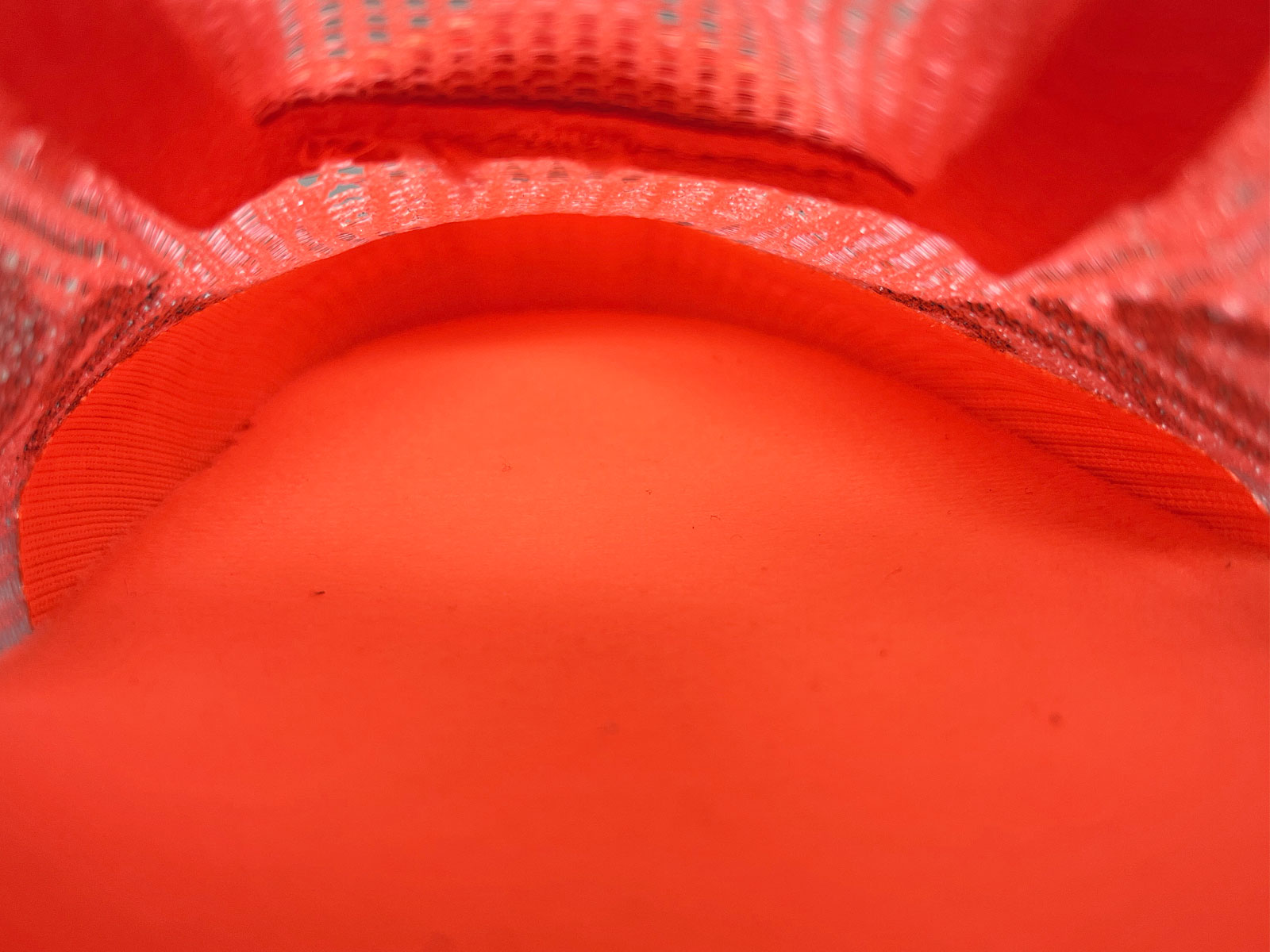
On the other hand, if you’re trying to set personal bests on a 5K and 10K course, you’ll find the ultra-secure fit very useful. The large vents on the mesh make the Hyperion Elite 5 one of the most breathable racers currently available. Closer to the midsole edge, the mesh is reinforced with pressed TPU for abrasion resistance.
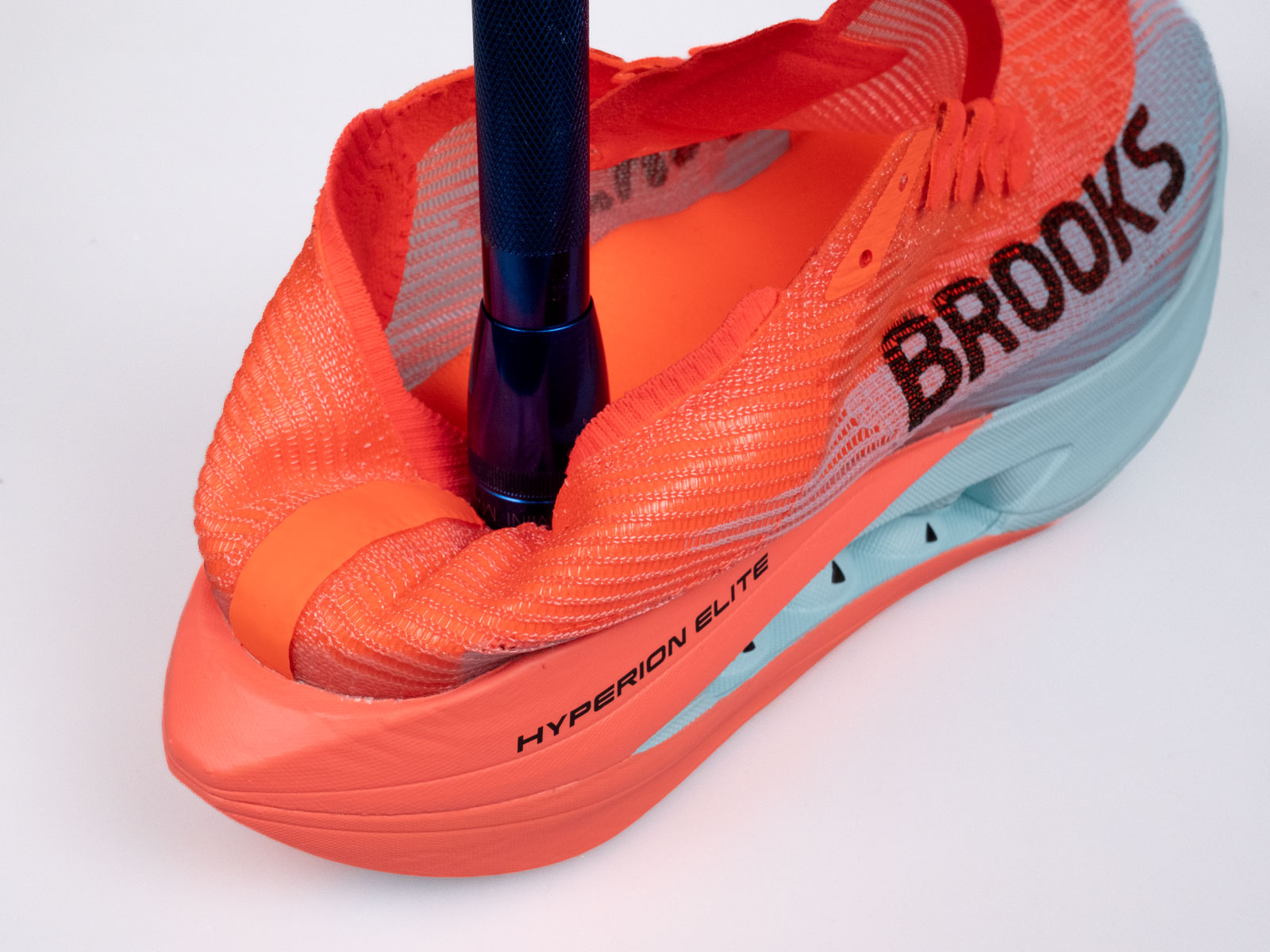
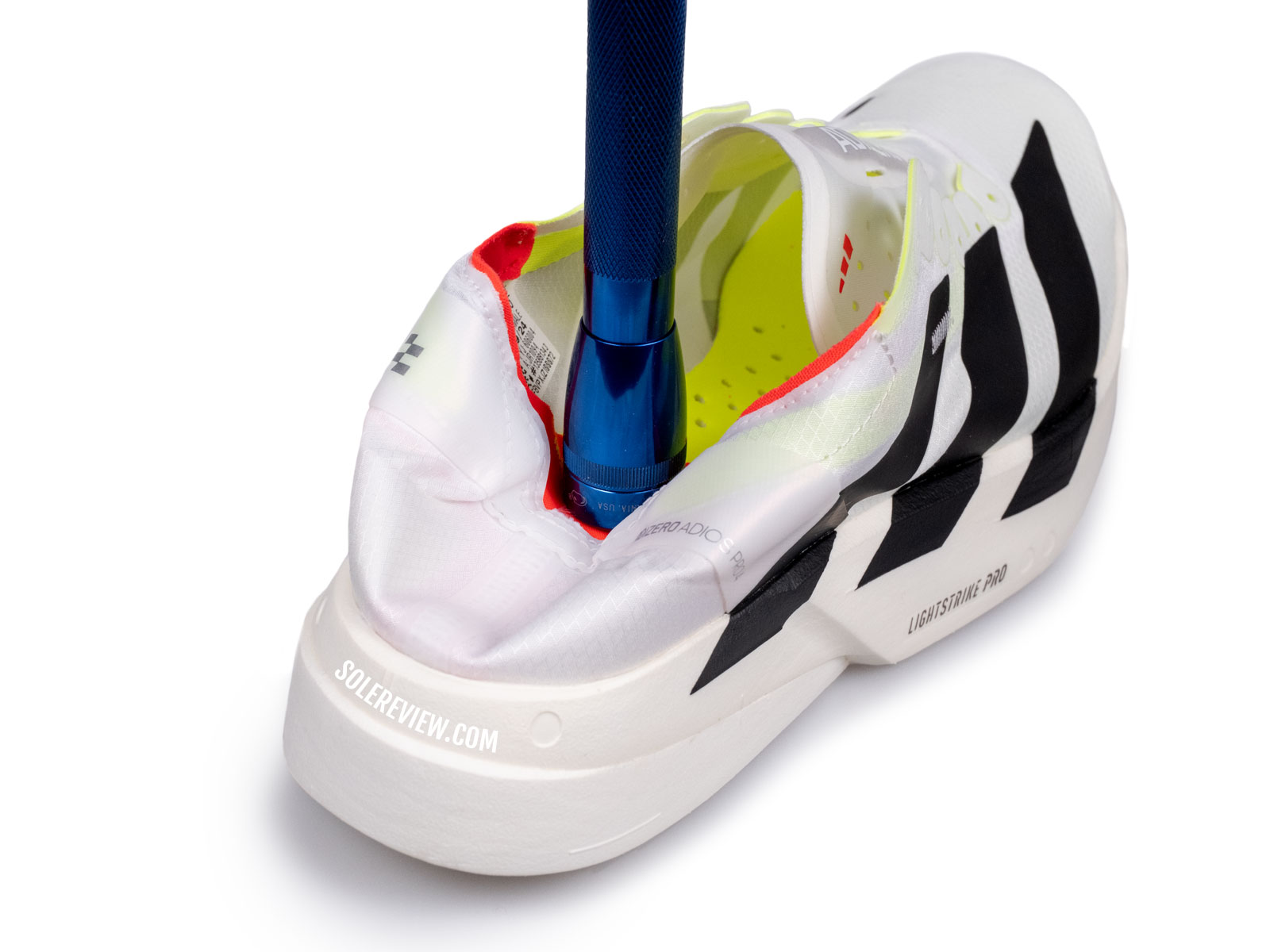
Brooks almost had it in the bag with the superlative forefoot and midfoot fit. The heel fit is a different story, however. The collar padding is set too low, missing the required level by 5-8 mm. If the heel doesn’t slip, that’s because the midfoot and forefoot keep everything together. No slippage happens during a run, but there’s this nagging sense of missed opportunity of how the heel could have fit. Otherwise, the soft heel is quite comfortable, as its semi-collapsible structure makes it easier to put the shoe on.
SHOES COMPARABLE TO THE BROOKS HYPERION ELITE 5
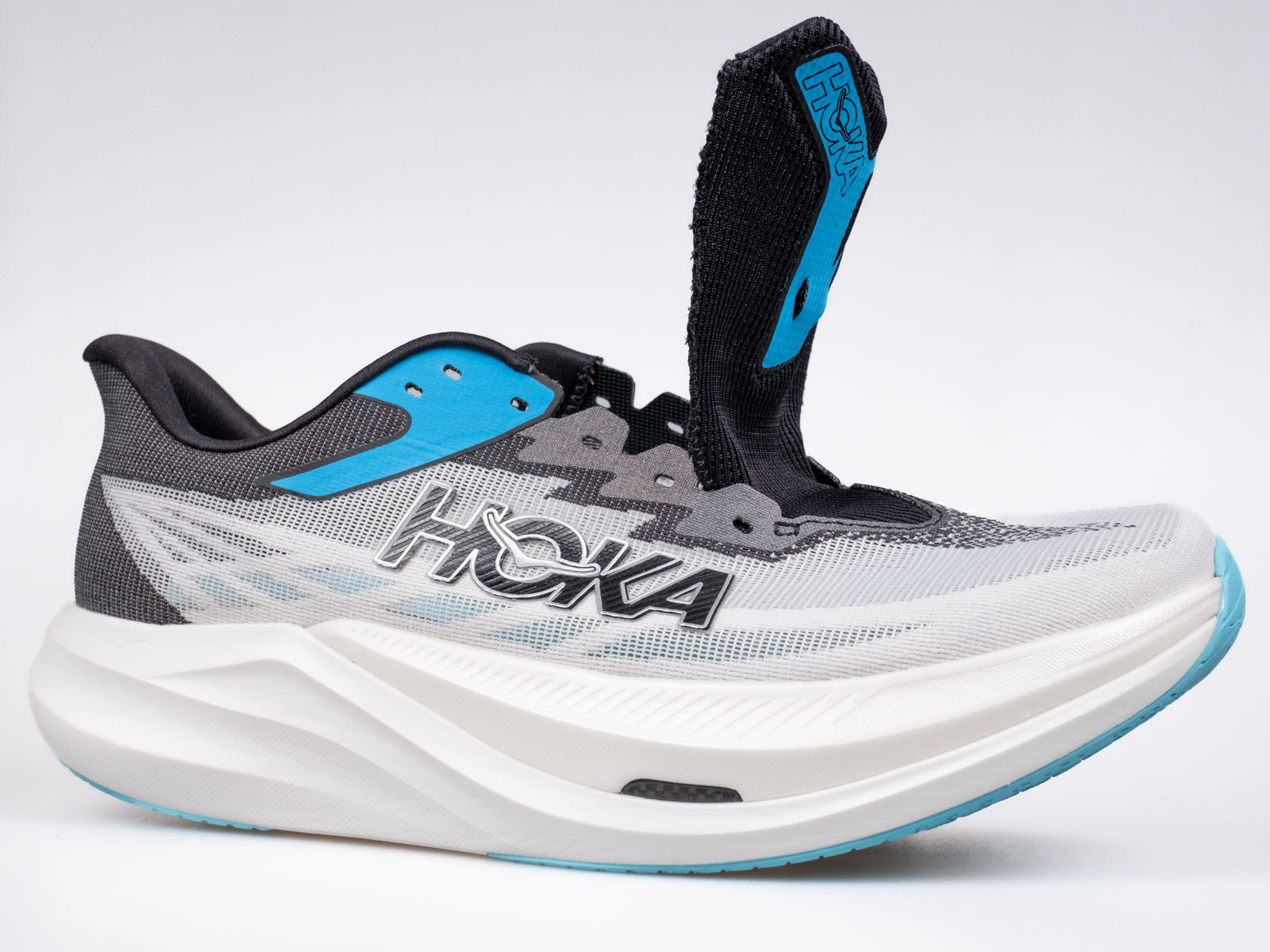


Also consider:
- adidas Adios Pro 4
- Hoka Rocket X3
- Nike Vaporfly 4
- Asics Metaspeed Edge Tokyo
TECHNICAL SPECIFICATIONS
- Brooks’s marketing pitch: Race-ready innovation, tested by the pros.
- Upper: Breathable Filament mesh with TPU reinforcements, tongue tacked on one side.
- Upper fit: True to size, narrow fit.
- Midsole: 100% DNA Gold (PEBA) foam, carbon Speedvault plate. 8 mm heel drop.
- Outsole: Soft, translucent rubber.
- Weight: 196 gms/ 6.9 Oz for a half pair of Men’s US 9/UK 8/EUR 42.5/CM 27.
- Stack heights: 38 mm (heel), 30 mm (forefoot).
- Available widths: Single – D (regular).
- Recommended use: 5K, 10K, half-marathons.
- Footstrike orientation: Forefoot and midfoot (full contact) only.
- Median lifespan: 300 miles.
- Previous model: Brooks Hyperion Elite 4.
- Country of origin: Vietnam.
- Recommended paces: 4:30 min/km (7:00 min/mile) and faster.
- Recommended temperature range: Warmer than -0° C/32° F.