
Review Updates
(3 total)- 2026-07-23 — Added star rating module
- 2026-07-23 — Added teardown module
- 2025-09-09 — Review published
CUT-IN-HALF: ASICS SONICBLAST
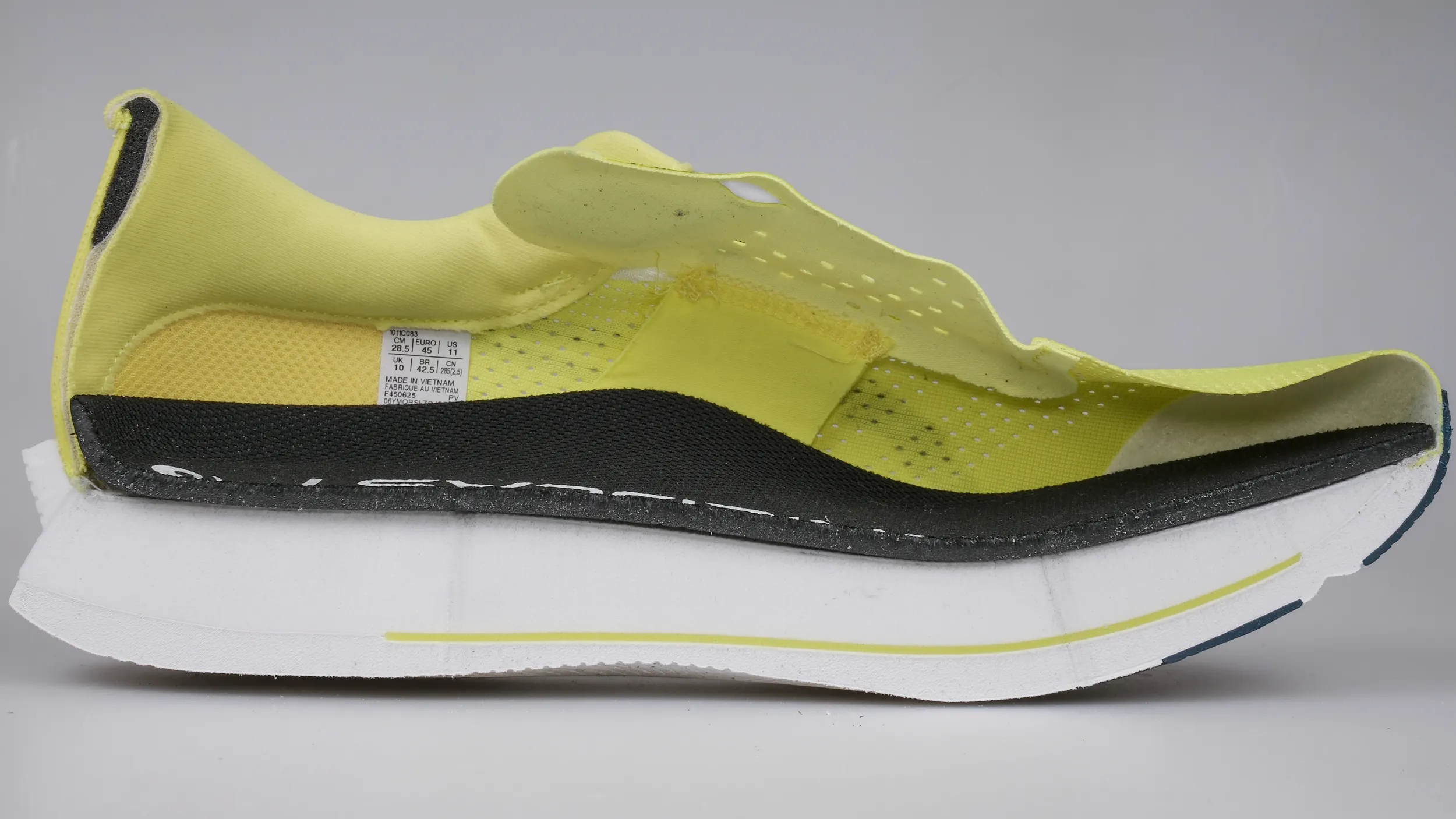
Teardown Analysis
Tap the hotspots to reveal component specifications.
Select a component
Pros
- Cushioned ride
- Smooth transitions
- Secure upper
- Ventilation
- Outsole grip on dry and wet
Cons
- No widths
- Risk of heel chafing
- No reflectivity
In this review:
SUMMARY
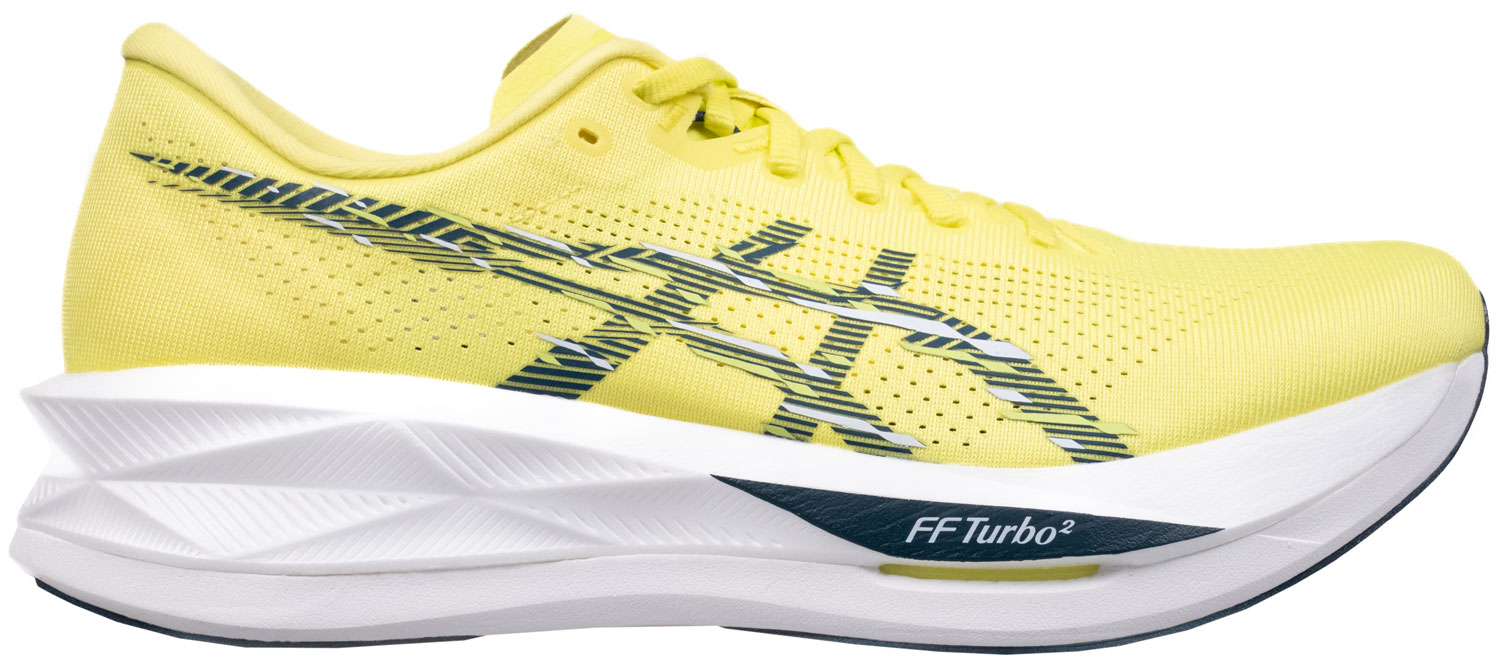
Just because the Asics Sonicblast features a full-length plate inside a midsole partially made with the FF Turbo² foam, it’s easy to mistake this shoe for something it is not. Someone could say, “Look! Asics finally has a super trainer with a plate. It must be comparable to the New Balance SC Trainer 3 and Hoka Mach X3.”
Once you look past the spec sheet, the Sonicblast is not like the SC Trainer, Mach X3, or Saucony Endorphin Speed 5. The plate orientation is almost flat from the forefoot to the heel, lacking the high curve that delivers the rearfoot pop. Also, Asics uses a variant of the FF Turbo² that’s firmer than what the Megablast features, so there’s only a mere hint of that rubbery bounce. Most of the cushioning softness is the result of the soft insole and FF Blast Max base. It’s fair to say that Asics’ signature foam feels underutilized on the Sonicblast.
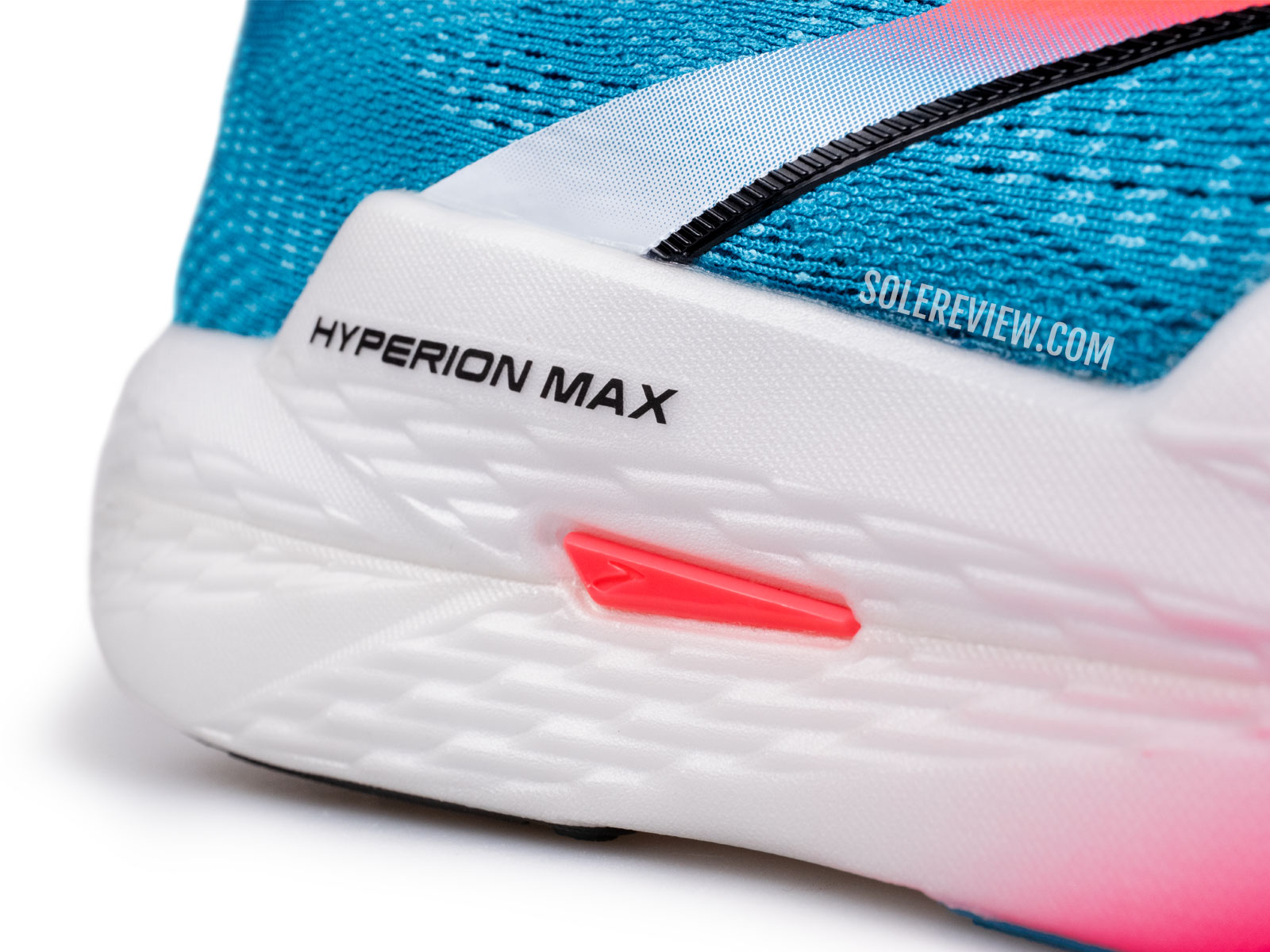
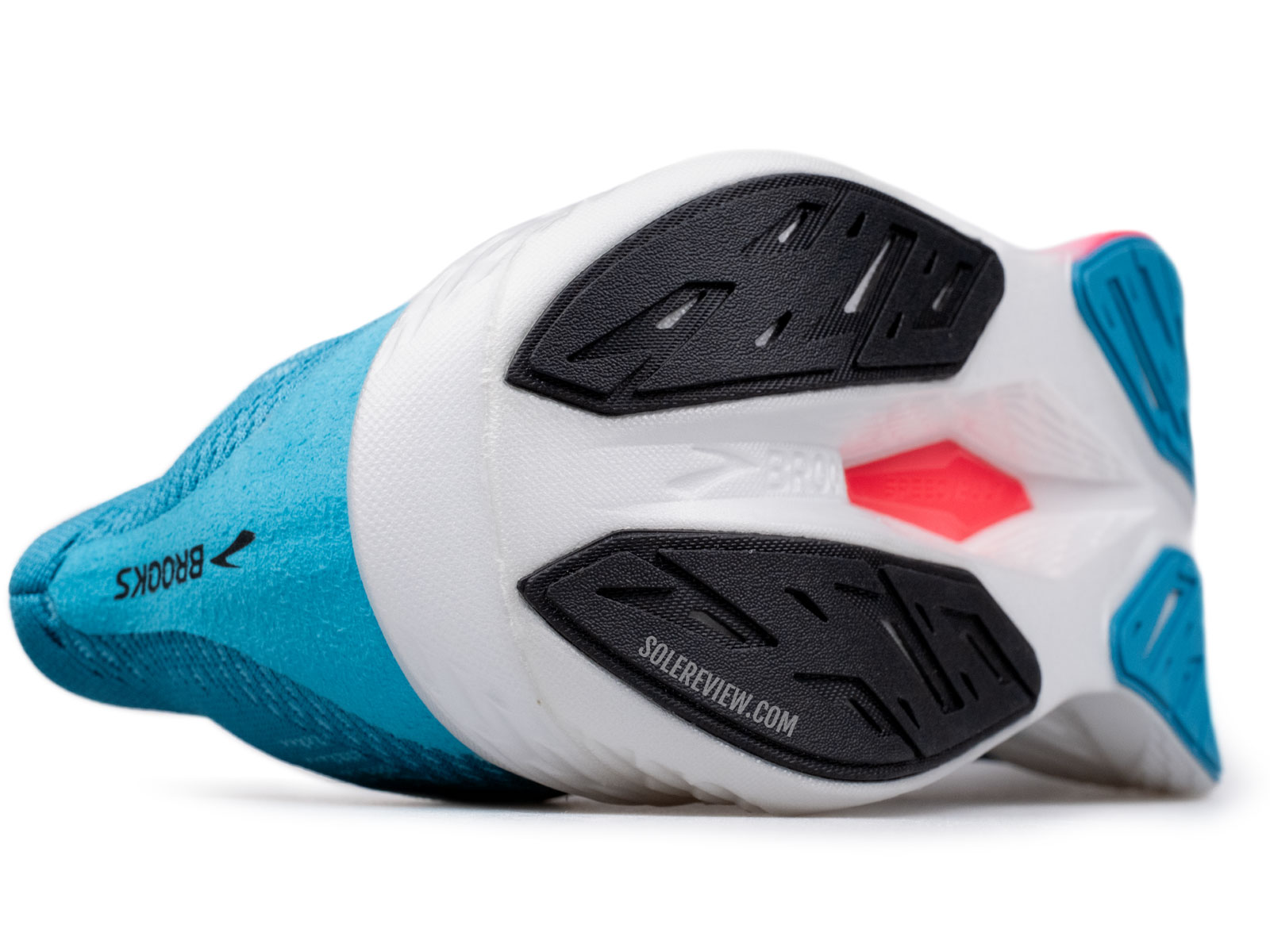
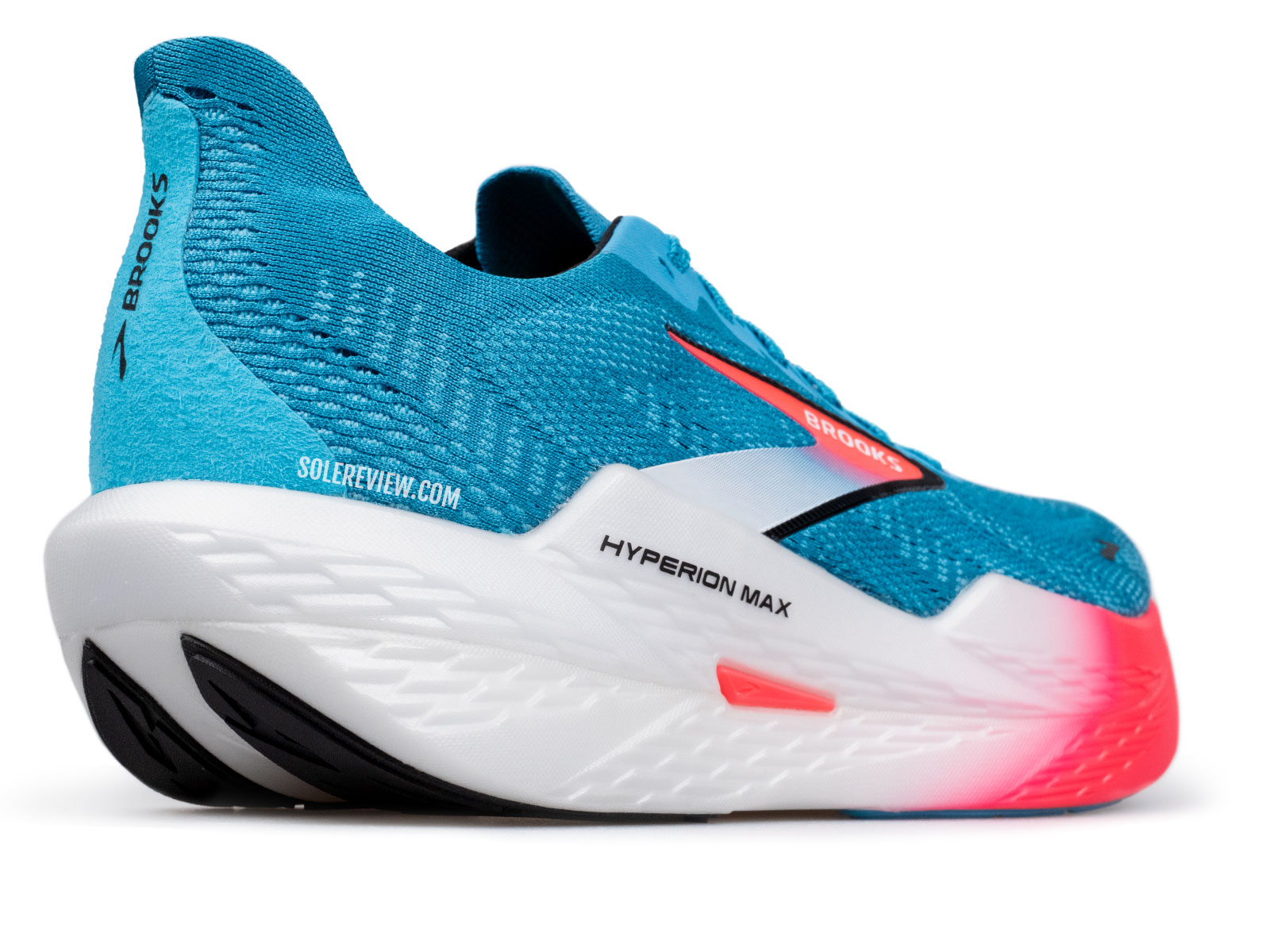
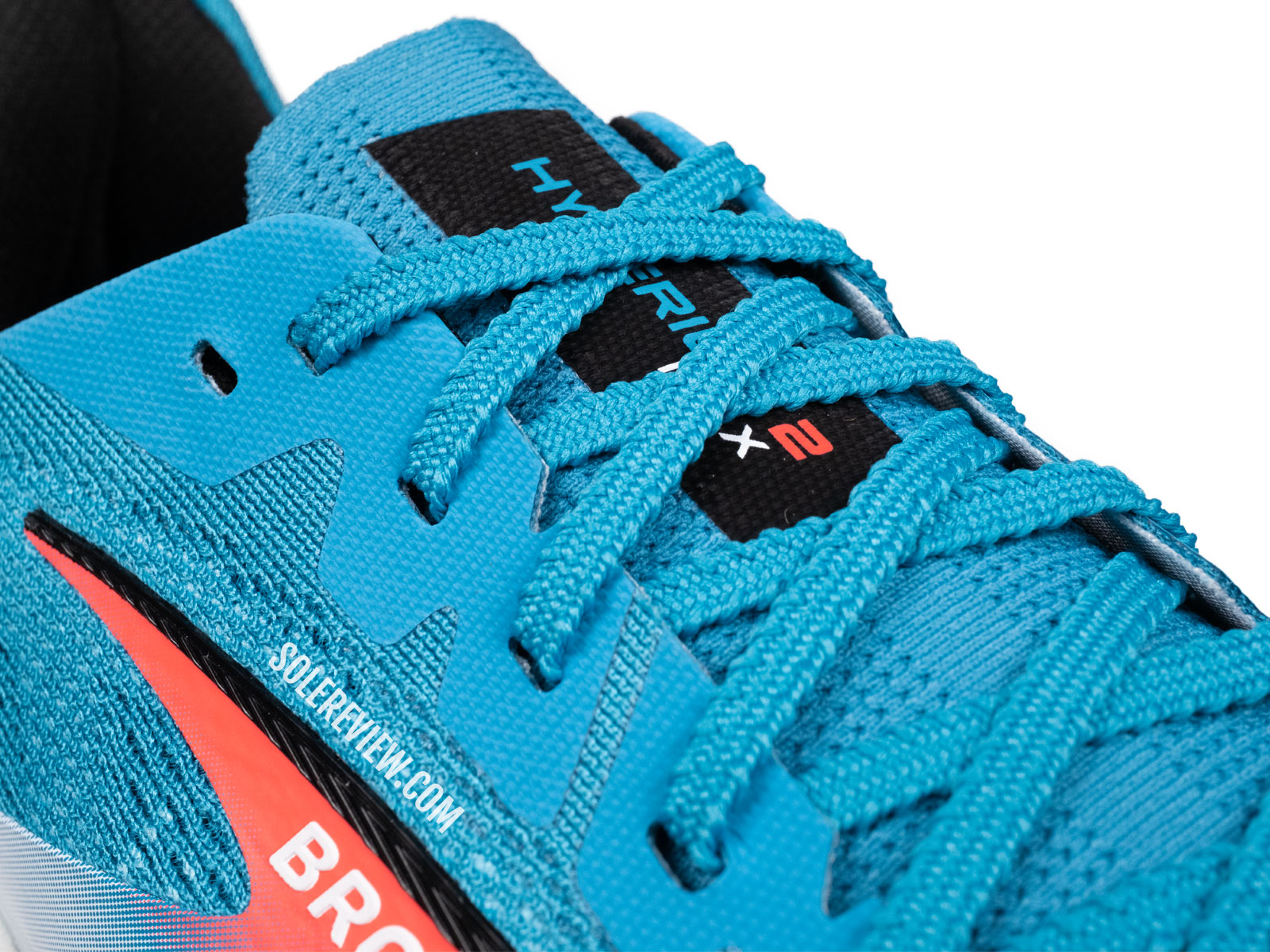
Last year’s Brooks Hyperion Max 2 (not the V3, that’s a completely different shoe) is a good reference for the Sonicblast. Like the latter, the Hyperion Max 2’s firm midsole housed a non-carbon plate with a flat plane. It was great for everyday training and tempo runs. The Sonicblast feels like a softer version of last year’s Hyperion Max, but suffers from a mild case of identity crisis. Asics sells this shoe as a tempo trainer that’s also capable of everyday miles, but we feel it’s the other way around. It’s a cushioned and supportive daily trainer that can go fast when needed, but doesn’t feel like the best shoe for speed runs. The 2024 Brooks Hyperion Max 2 was what the Sonicblast should have been. While on topic, the lower stack adidas Boston 13 is also a better tempo trainer.
Some running shoes clearly broadcast their intentions and performance goals. When that happens, people say, ‘Yeah, I get what this shoe is meant for.’ Sonicblast can wear many hats, but it sends out mixed messaging. The sense of purpose is lost in the tall stack heights, a softness that’s mostly delivered by the insole and FF Blast Max, a mild rocker effect, and a heel fit that can potentially chafe the foot.
WHAT THE SONICBLAST DOES WELL
– Delivers decent stability relative to its stack heights.
– Provides cushioned comfort for everyday training.
– The flat plate and firm midsole is great for steady-state runs.
– Outsole traction on both wet and dry surfaces.
– A secure forefoot and midfoot fit.
– Breathes well, courtesy of the perforated mesh and tongue.
WHAT THE SONICBLAST DOES POORLY
– The firm FF Turbo² variant lacks the signature rubbery bounce.
– Not ideal for recovery runs.
– The Astroplate geometry lacks the rearfoot snap of curved plates.
– The tall and inwardly-curved heel doesn’t provide secure comfort.
– The rocker is less effective due to the slightly long fit.
– Not suitable for wide feet because of the snug forefoot and no widths.
POTENTIAL ISSUES
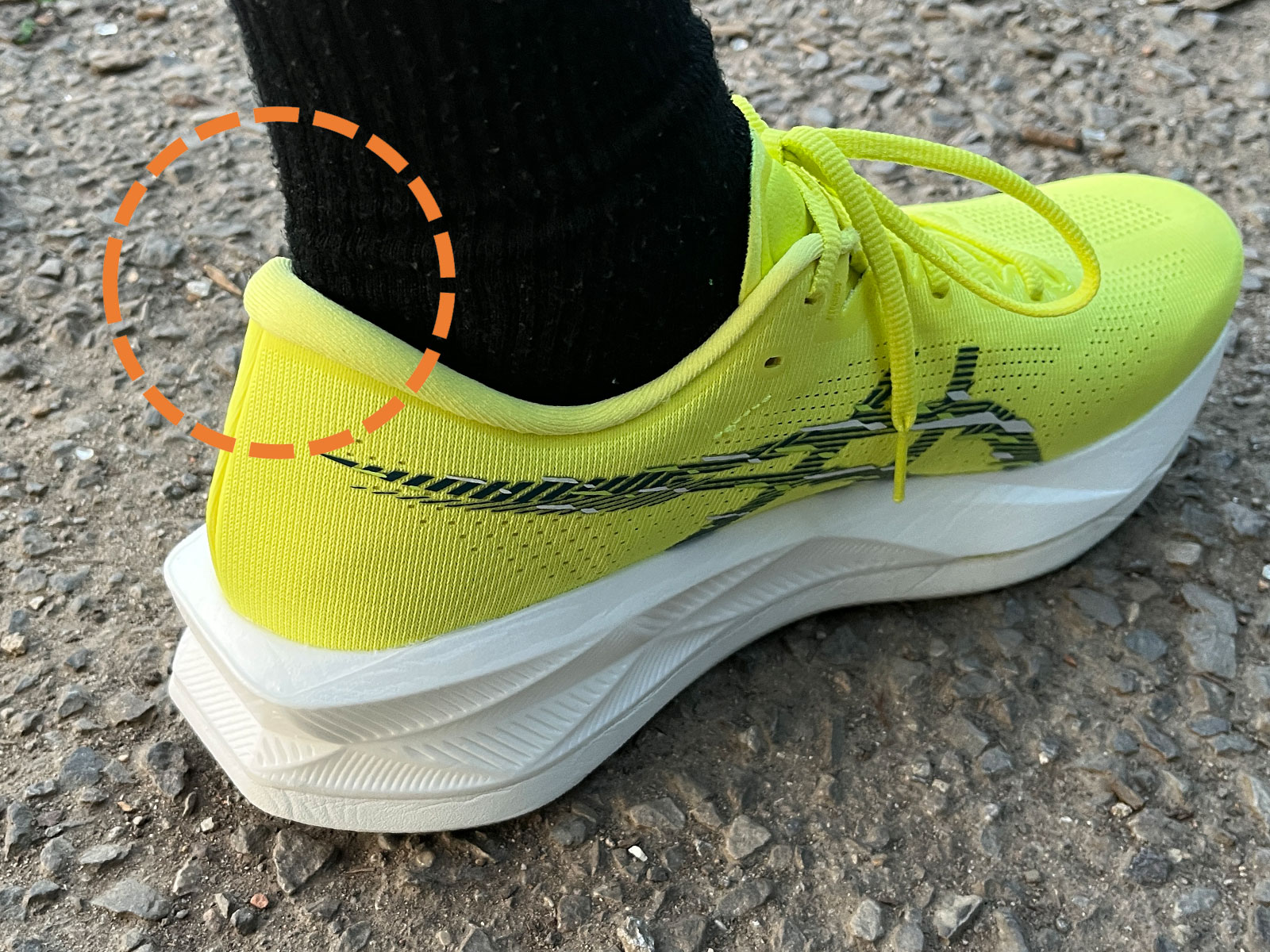
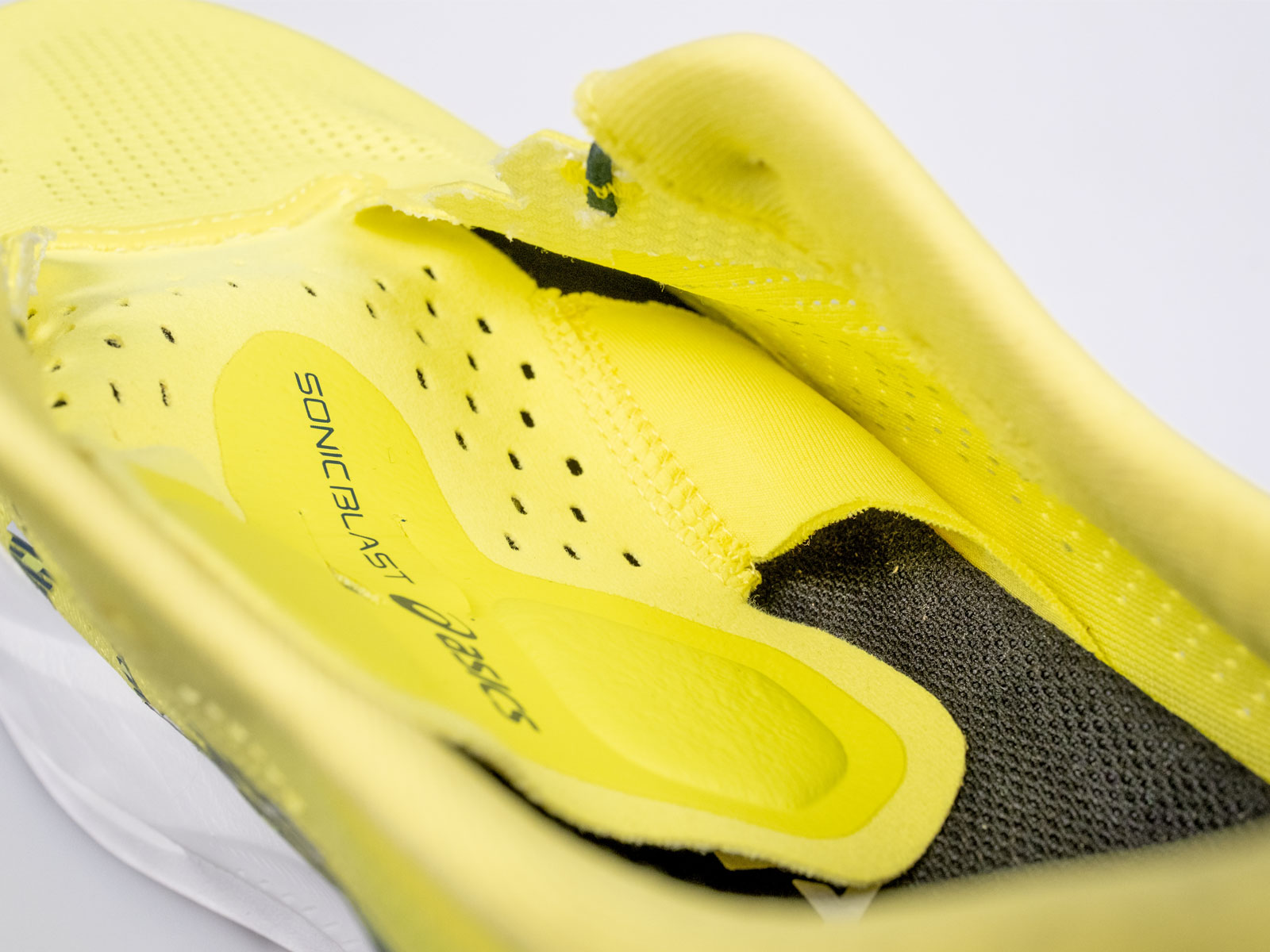
The Sonicblast’s upper doesn’t use a stiff heel counter. It also lacks the generous heel collar padding of the Megablast. The heel relies on the tall, inward-sloping collar for grip. This design can be an issue, as it uses a different strategy for grip. On a shoe like the Megablast, the foam padding locks over the area above the heel bone. The Sonicblast’s heel doesn’t do that. The sparsely padded collar sits slightly higher, pressing down on the base of the Achilles. This design assumes a higher risk of chafing than standard heel padding.
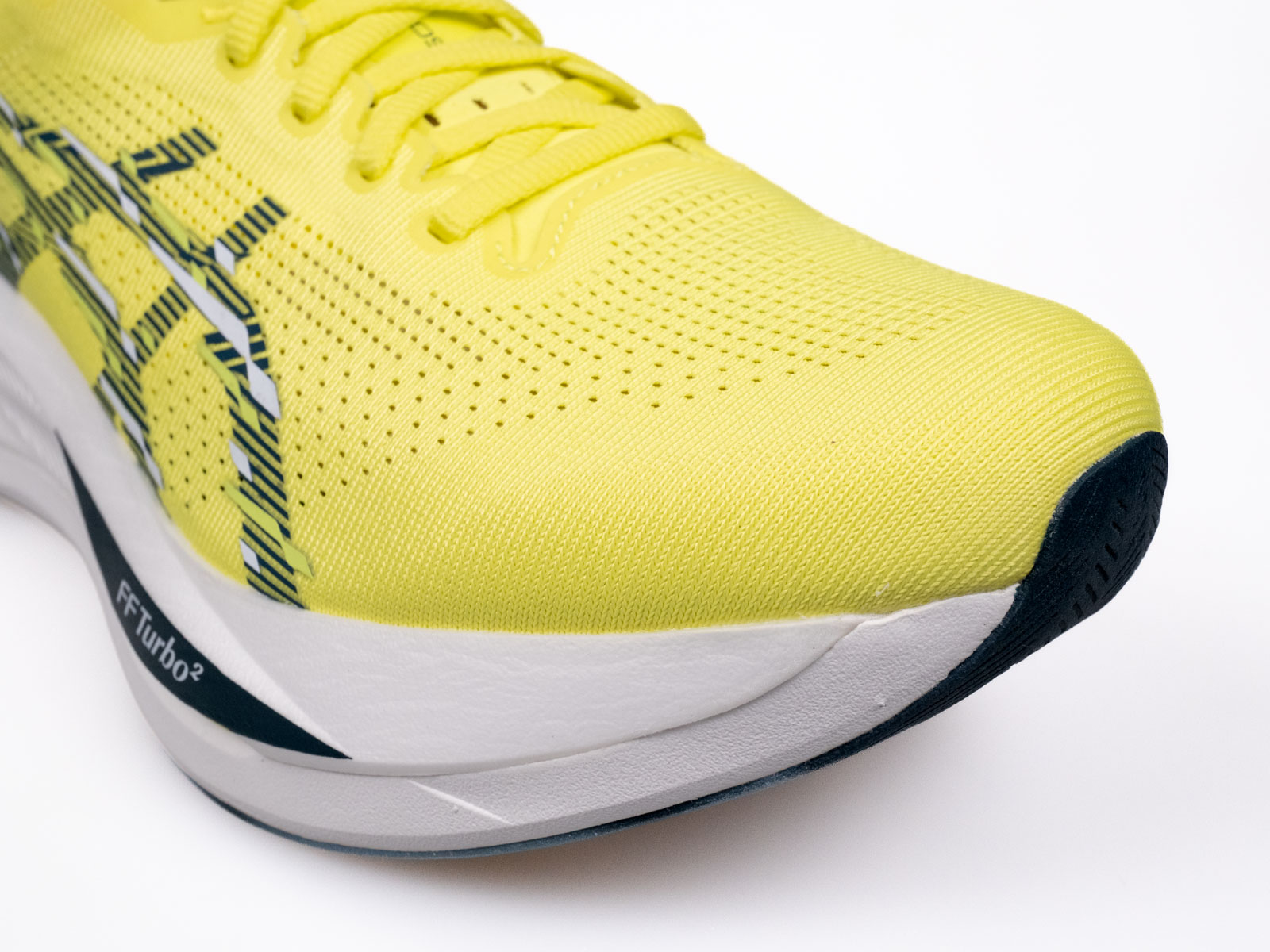
The Sonicblast fits slightly long, so the foot sits behind the sweet spot of the rocker’s drop-off zone. So if the rocker doesn’t live up to your expectations, you know why.
THE RIDE EXPERIENCE
Currently, only two Asics running shoes feature the FF Turbo² foam – the Megablast and Sonicblast. However, the foam density isn’t identical across both; the Sonicblast uses a firmer variant that behaves differently from the Megablast’s version. The FF Turbo² layer is sandwiched between the removable insole, the plastic (PEBA) plate, and the softer FF Blast Max base, so the softer layers compress first, followed by a hint of the FF Turbo² rubbery bounce. There’s a stark contrast in densities between the two midsole foams, so it takes more work for the FF Turbo² to get noticed. For reference, the Skechers Aero Spark’s midsole foam has comparable firmness. Given the layered architecture, the Sonicblast requires a break-in mileage of 20 miles for all the different layers to fully bed in.
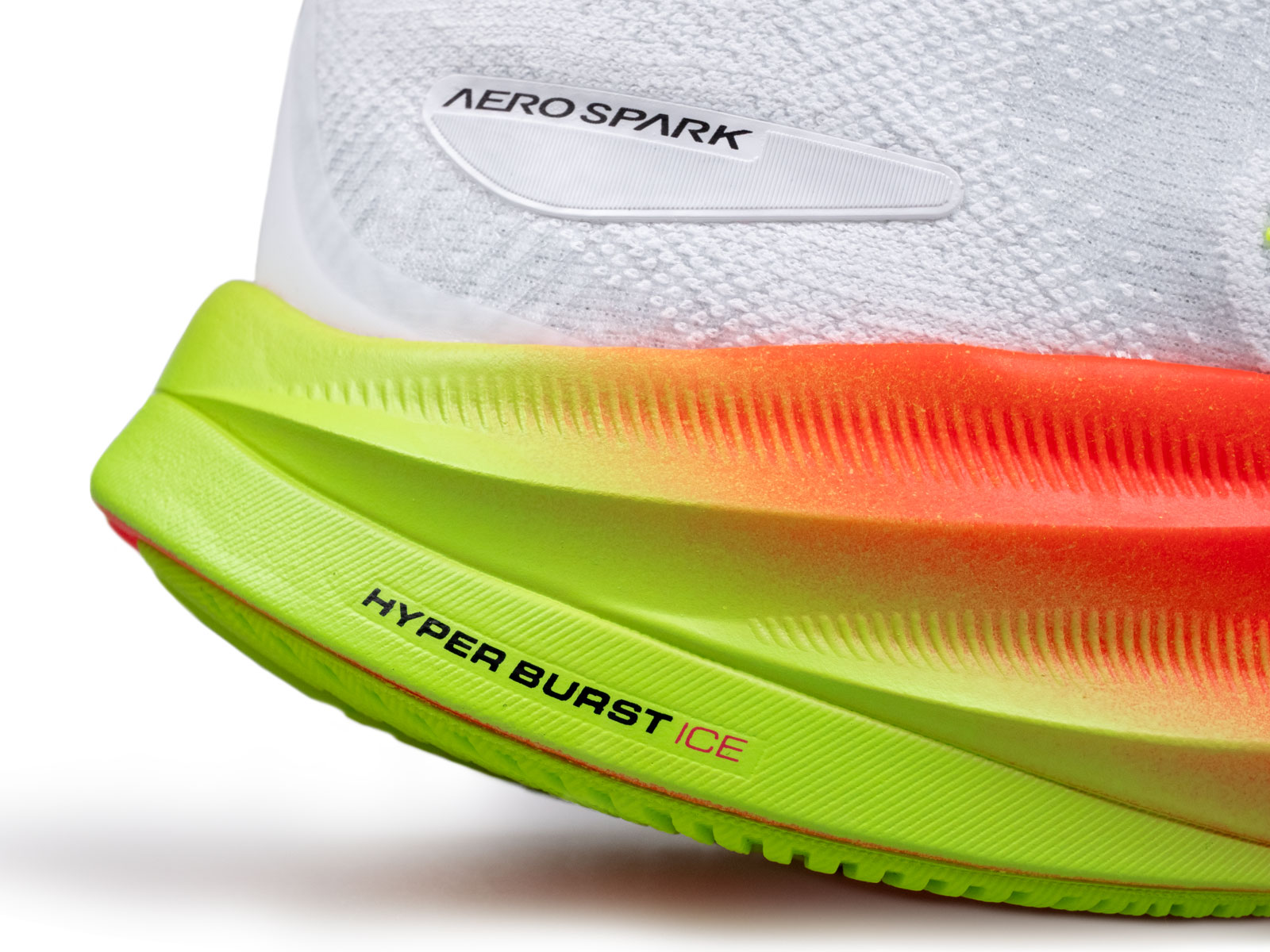
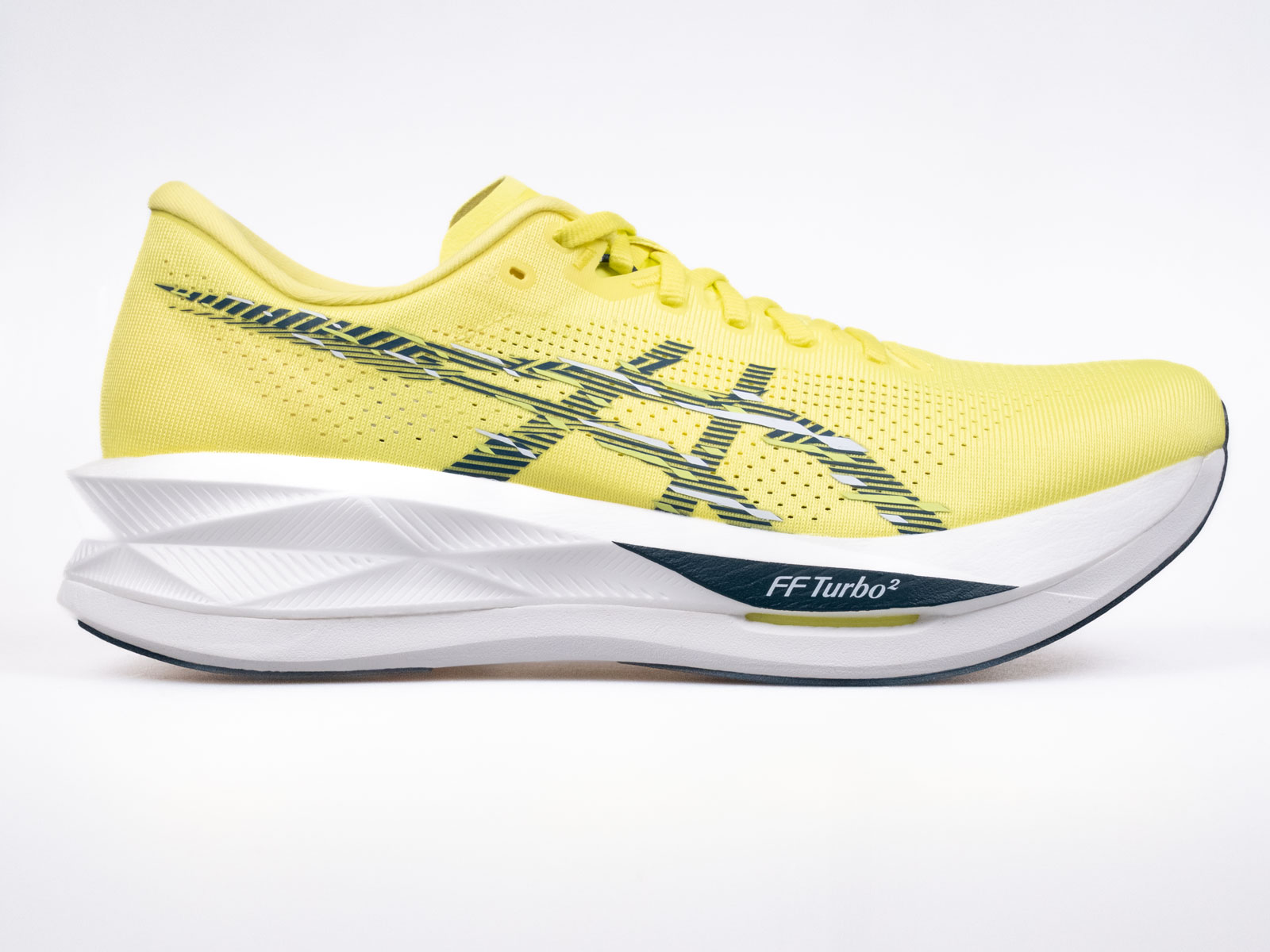
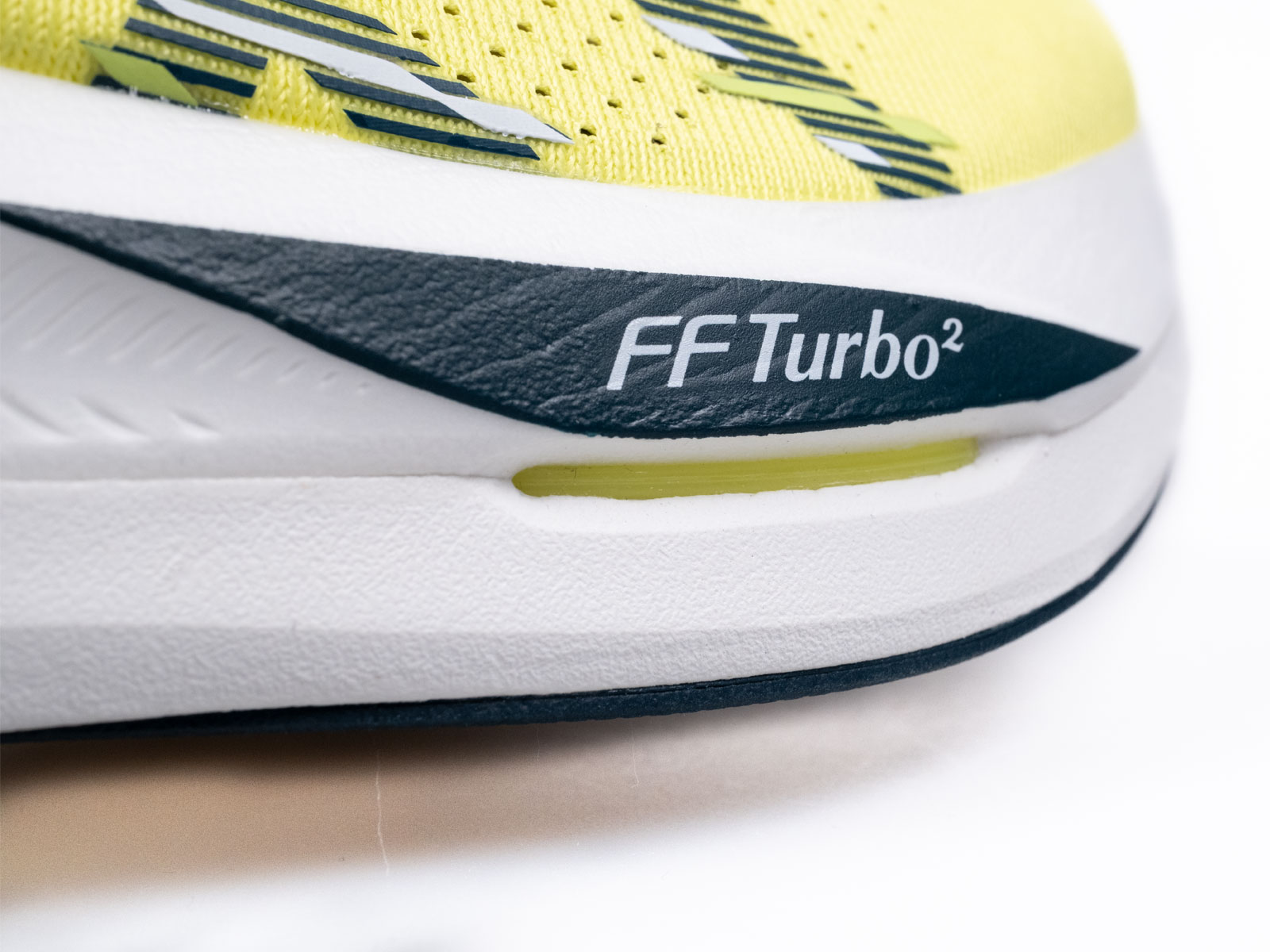
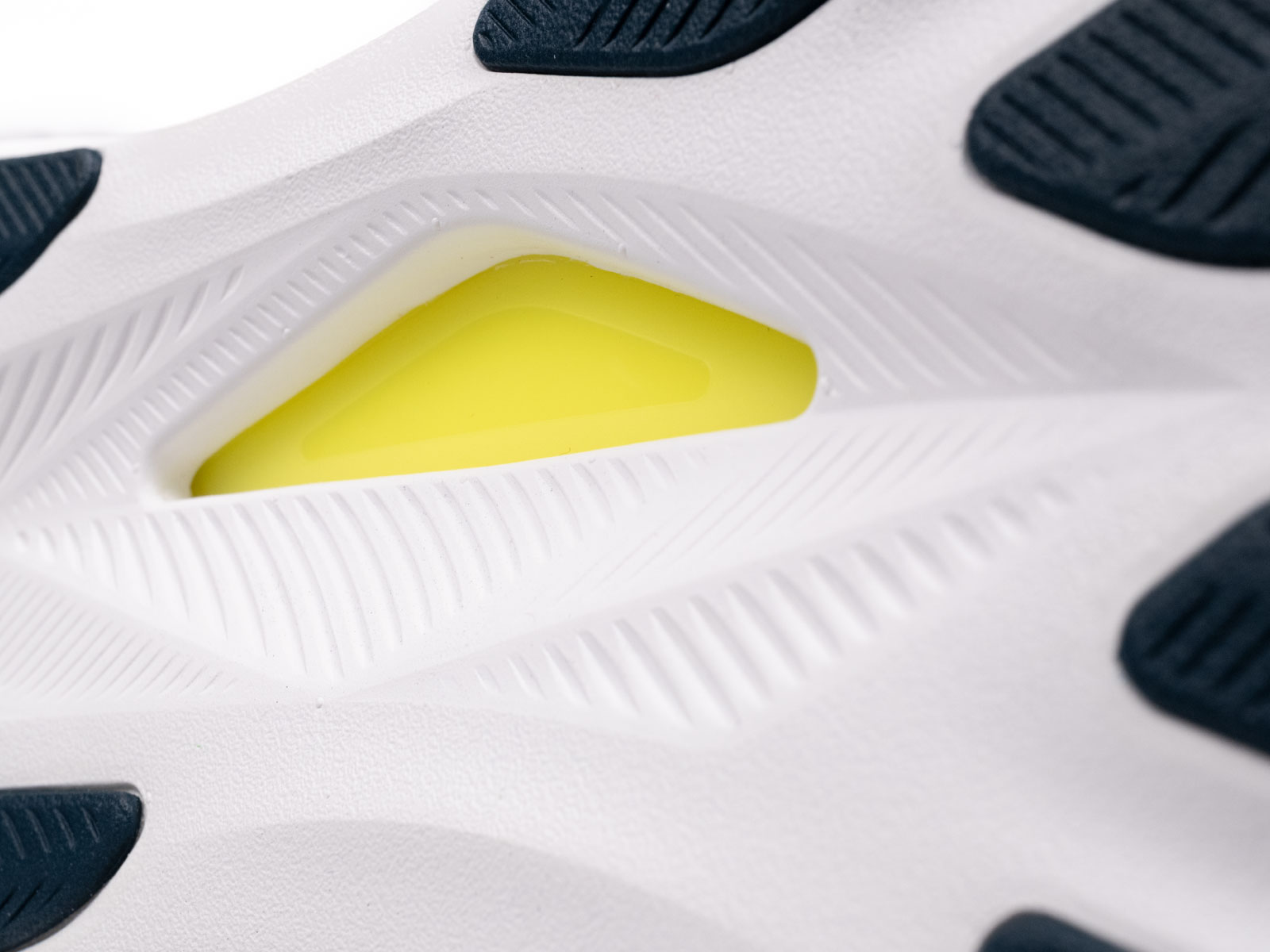
The midsole compression follows the path of least resistance, meaning the softest layers are the first to deform during the loading cycle. The foot presses down on the soft insole to compress it; next, the firm FF Turbo² and plate load the FF Blast Max base. This current setup wastes FF Turbo²’s potential, as it’s unable to deliver the full extent of its rubbery bounce.
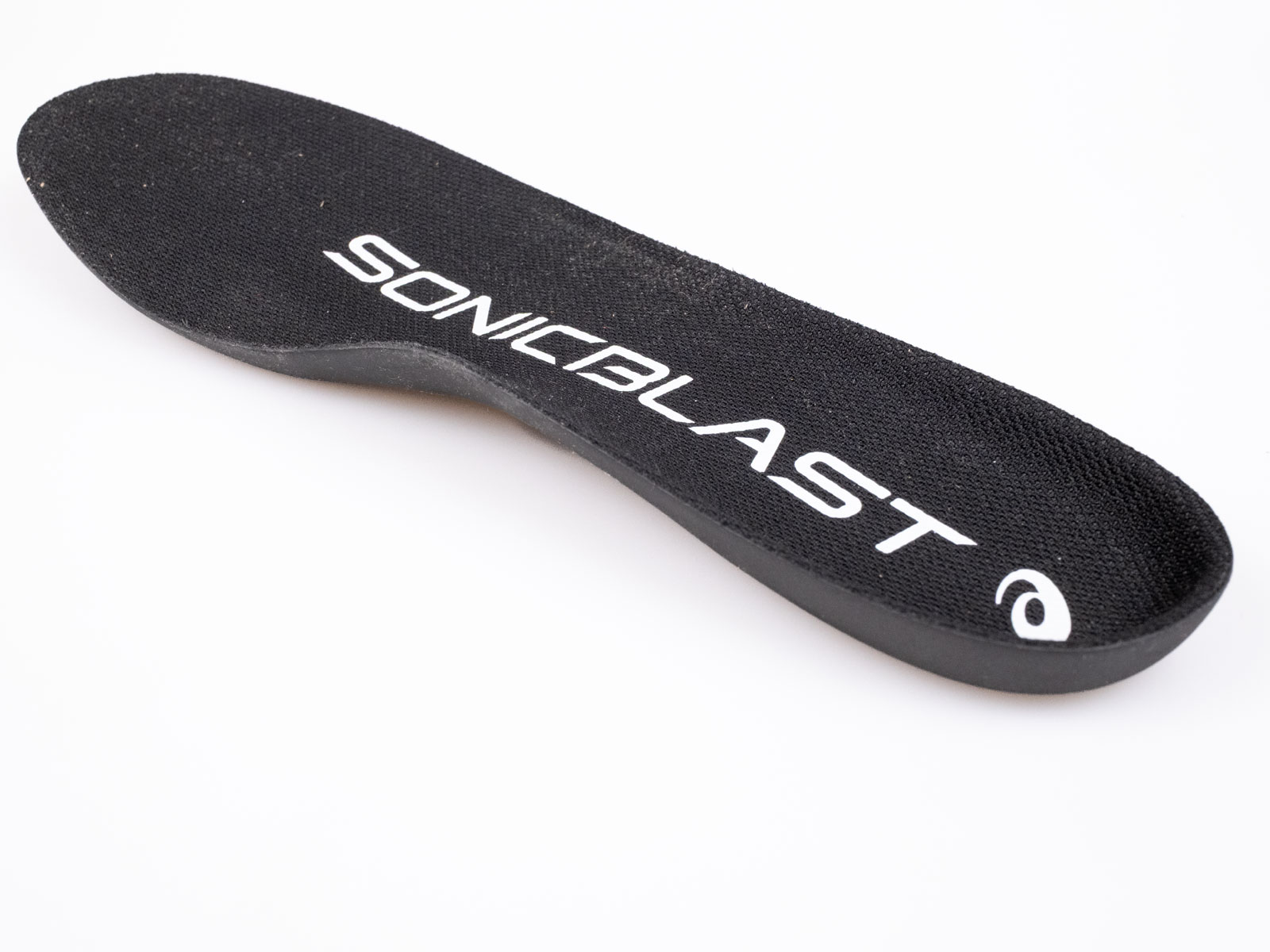
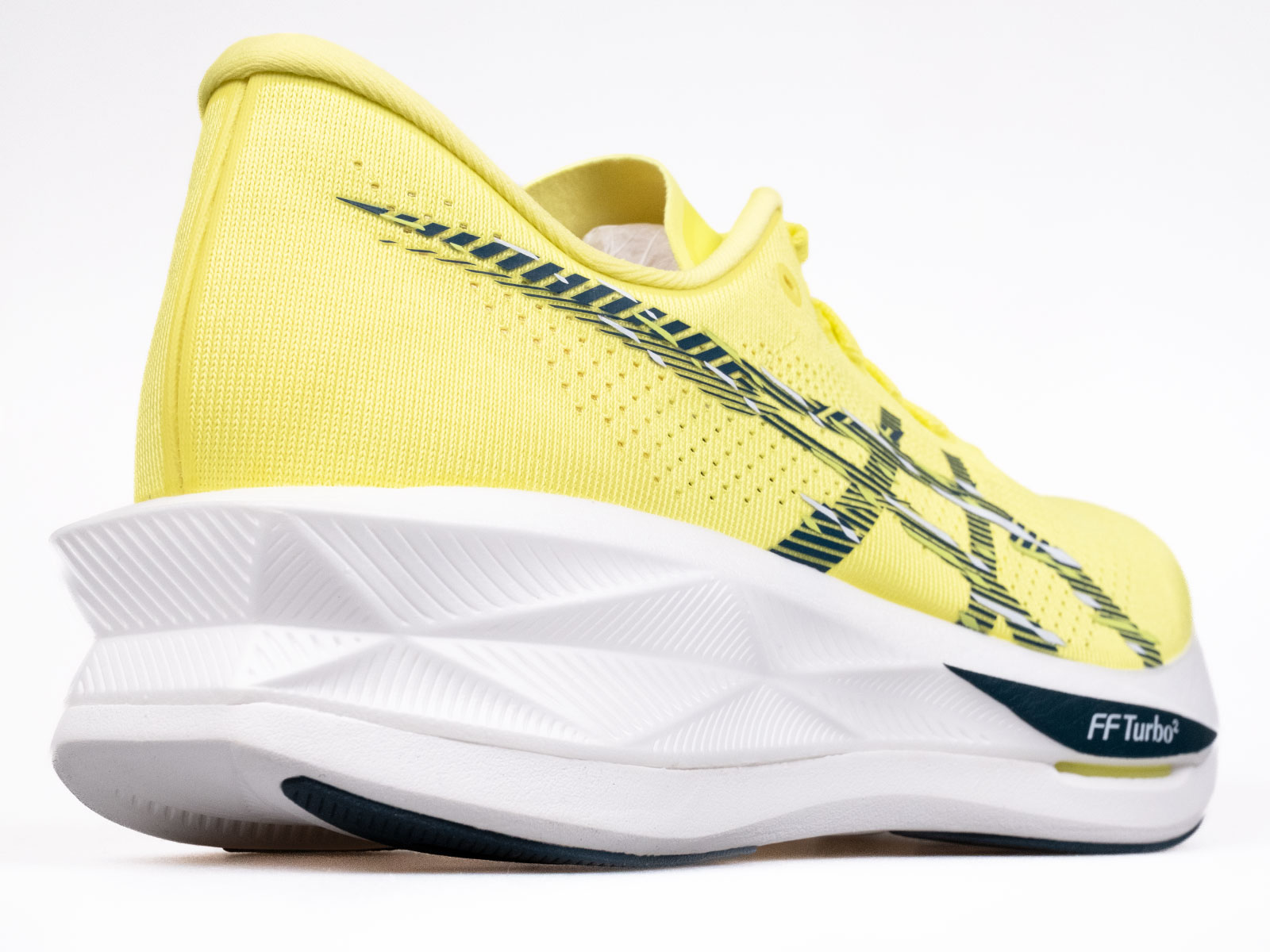
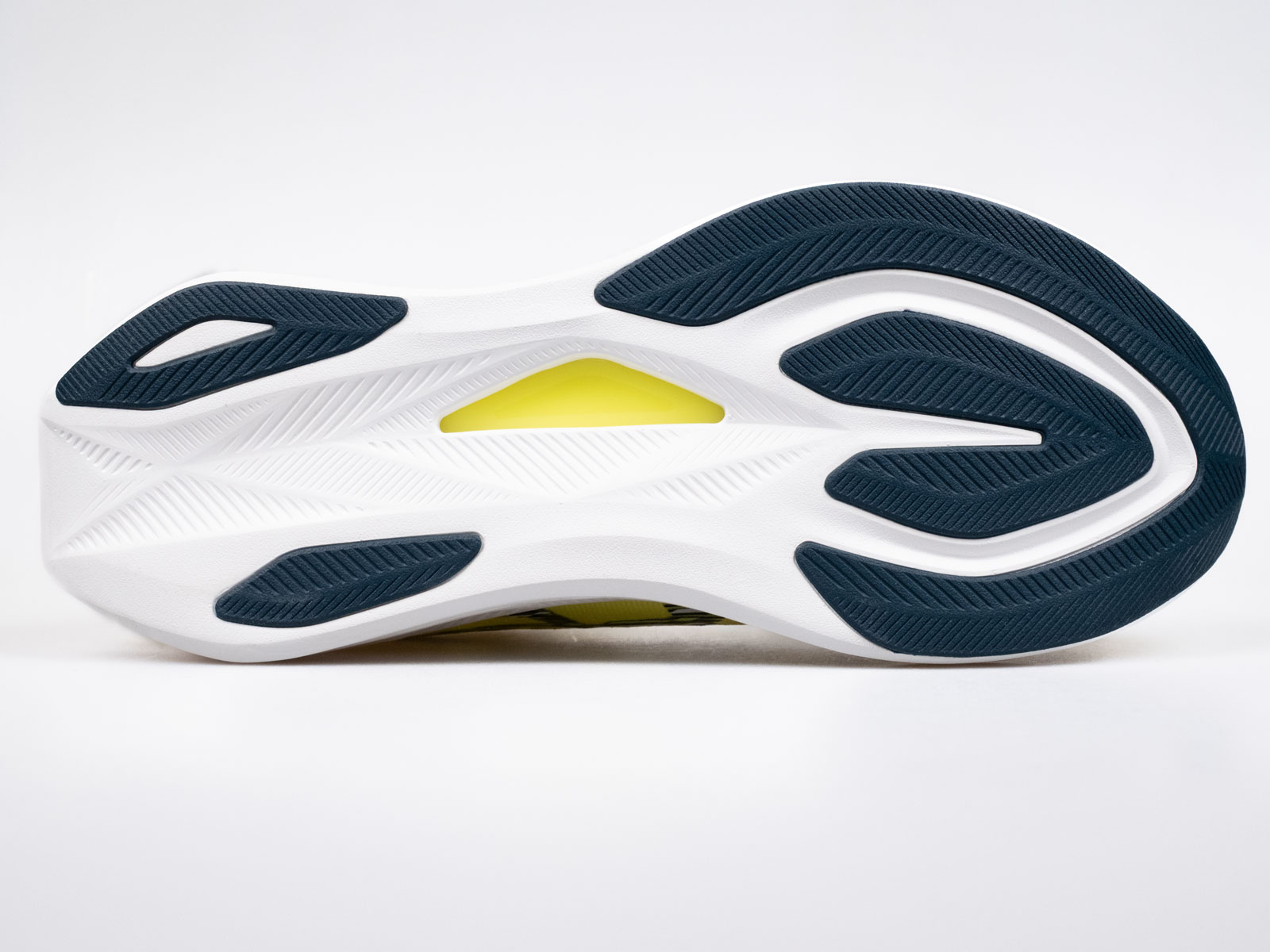
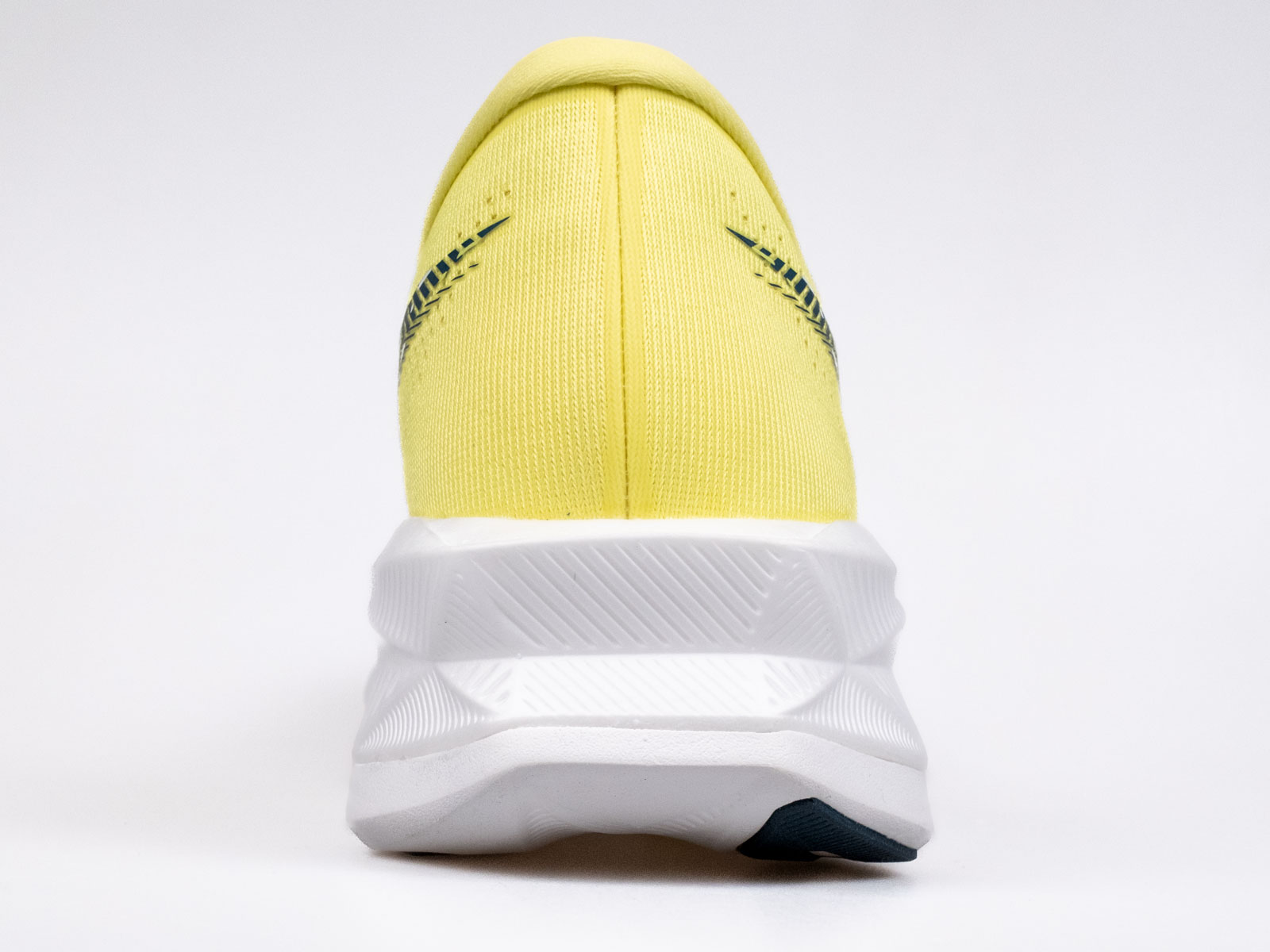
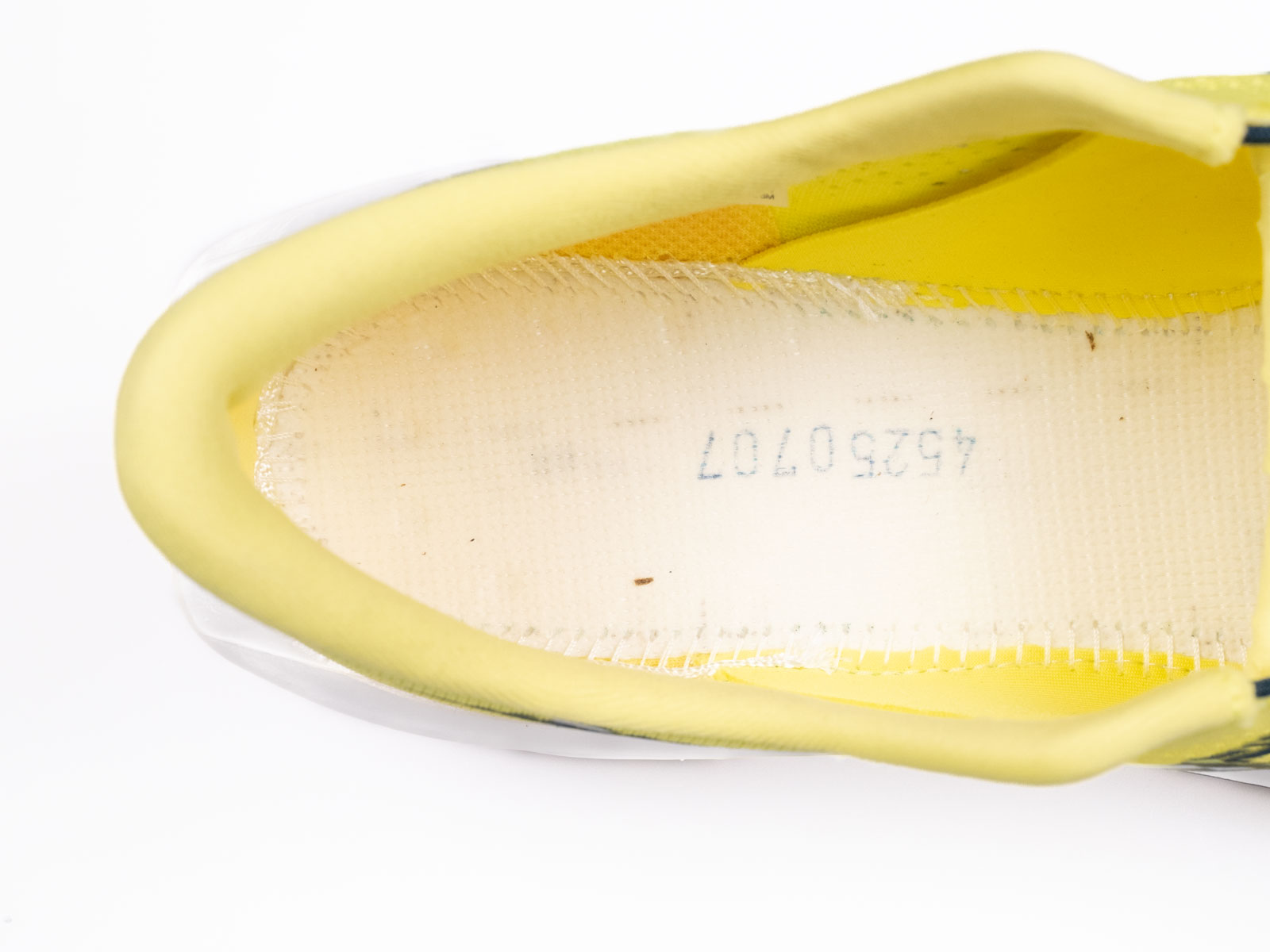
At slower speeds, the step-in softness of the EVA footbed is felt first, and then the FF Blast Max foam at the bottom. Running at faster speeds (under 4:30 min/km, 7:00 min/mile) brings out more of the FF Turbo²’s springiness, but it’s limited to the heel. The deep sidewall grooves under the rearfoot also help with compression. Forefoot landings feel cushioned, but the bounciness is conspicuous by its absence. The transitions are very smooth, thanks to the midsole architecture. The stiff plate creates a predictable transition pathway, and the firm FF Turbo² doesn’t waste energy. Despite the tall stack heights (45 mm and 37 mm), there’s negligible midsole sink due to the overall firmness and quick rebound. The stability is decent relative to the stack height, with supportive landings regardless of the footstrike pattern. As for the Asicsgrip outsole rubber, it delivers serious bite on even damp roads.
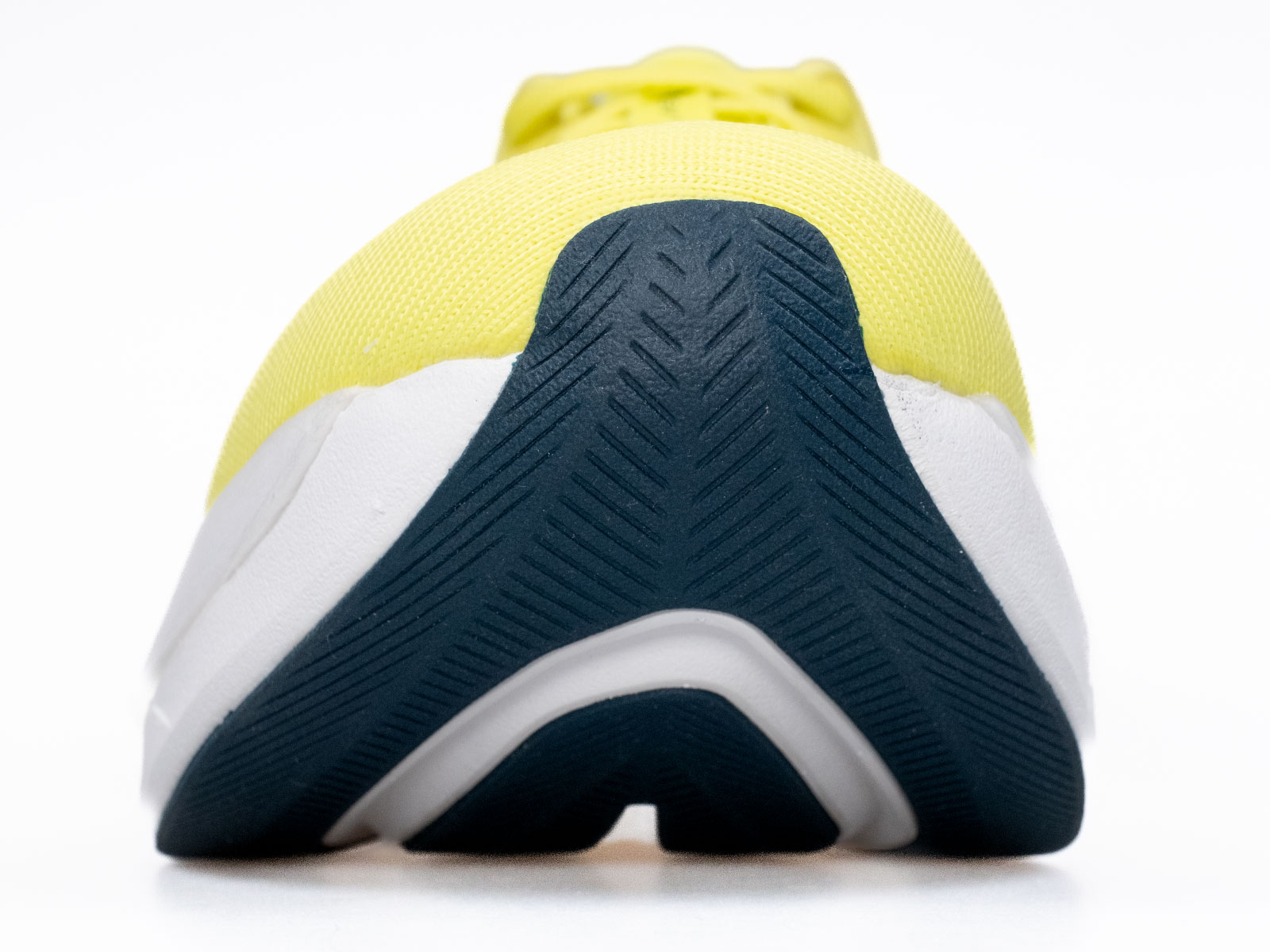
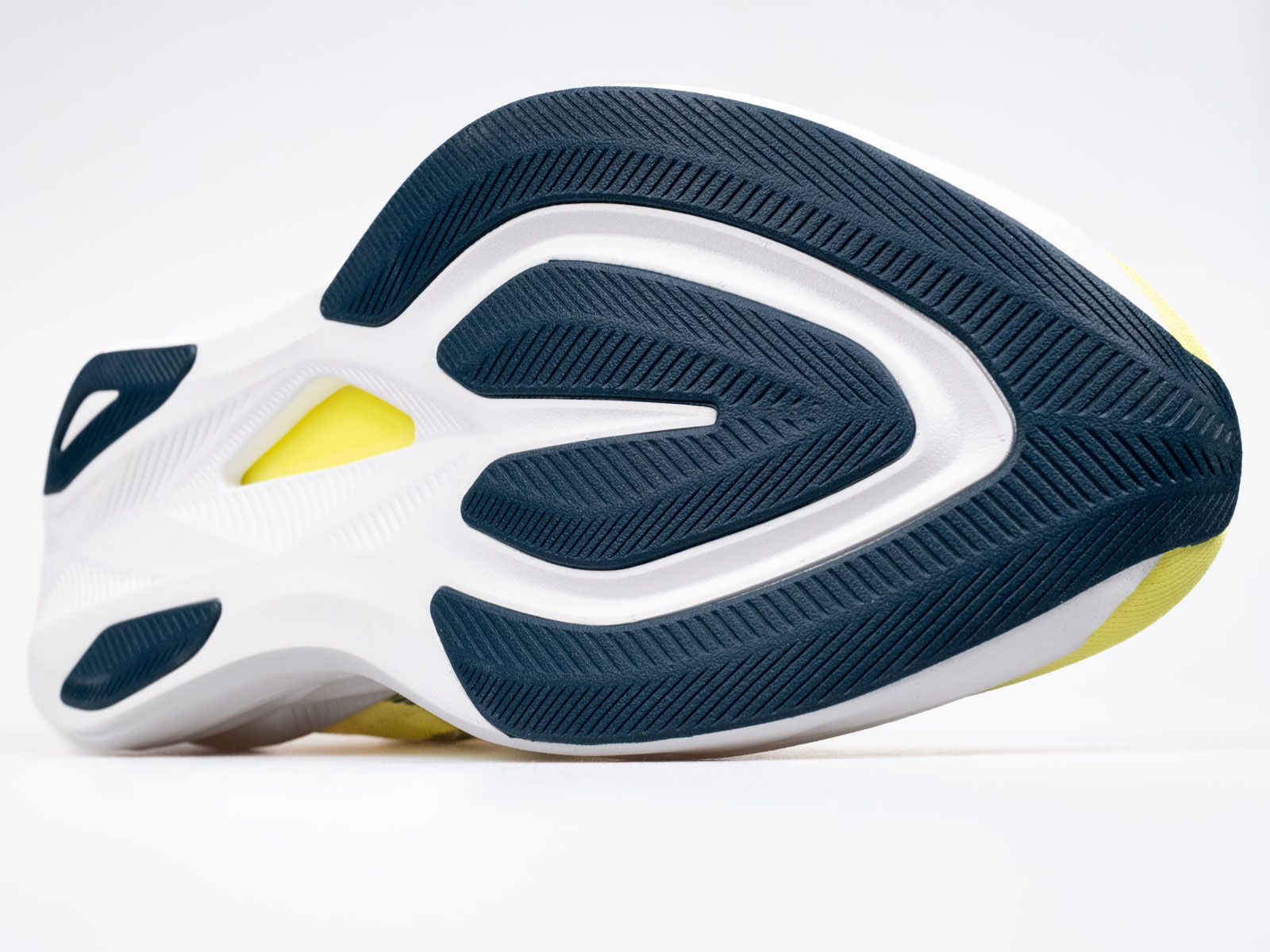
Though the full-length Pebax ‘Astroplate’ creates a rocker-shaped forefoot, not 100% of the rocker is accessible. The upper fits slightly longer than true to size, so the foot doesn’t sit squarely over the rocker’s roll-off zone, but slightly behind it. In other words, the upper fit turns the rocker into a late-late-stage kind. The plate isn’t raised under the heel, so runners will not experience the snap of other >plated trainers like the Nike Zoom Fly 6 and New Balance SC Trainer 3. The plate blends into the background while offering basic transition assistance and stability, but that’s the extent of its services.
The Sonicblast works well as a tempo trainer, but don’t expect a propulsive or ‘fun’ ride quality. The cushioned forefoot and grippy outsole are efficient during turnovers, but the foot does a lot of the work. The shoe behaves like a cushioned daily trainer, with the added benefit of a transition plate.
RECOMMENDED ROTATION
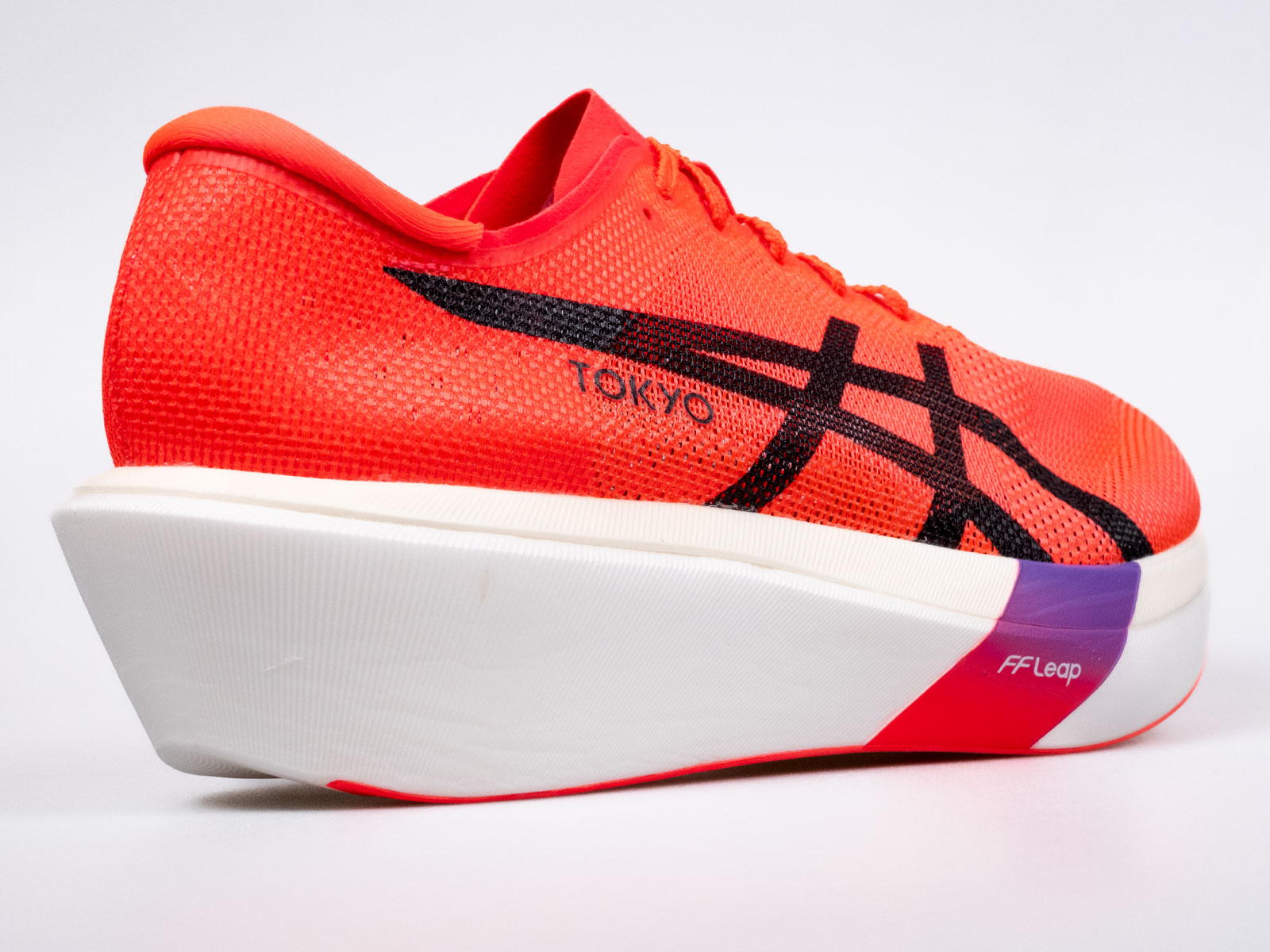

- Use the Asics Superblast 2 for recovery runs, marathons
- Use the Asics Sonicblast for daily runs, tempo runs
- Use the Asics Metaspeed Sky or Edge Tokyo for 10K, marathons
THE UPPER DESIGN AND FIT
The Sonicblast fits like most Asics shoes from the ‘Blast’ lineup. It’s snug in the forefoot and midfoot, while fitting longer than true to size. Like the Megablast, the upper fits flush over the small (pinky) toe, but the pressure can be alleviated with lacing adjustment. Though non-elastic, the perforated mesh has just enough give to prevent a pressure hot spot. Despite the extra space in the front of the large toe, we recommend buying true-to-size. A smaller size will only make the rest of the shoe tighter, with no optional widths to the rescue. The secure upper efficiently transfers power to the midsole, but the long sizing impacts the rocker efficacy. The foot sits several centimeters behind the rocker’s sweet spot, therefore missing the roll-off zone.
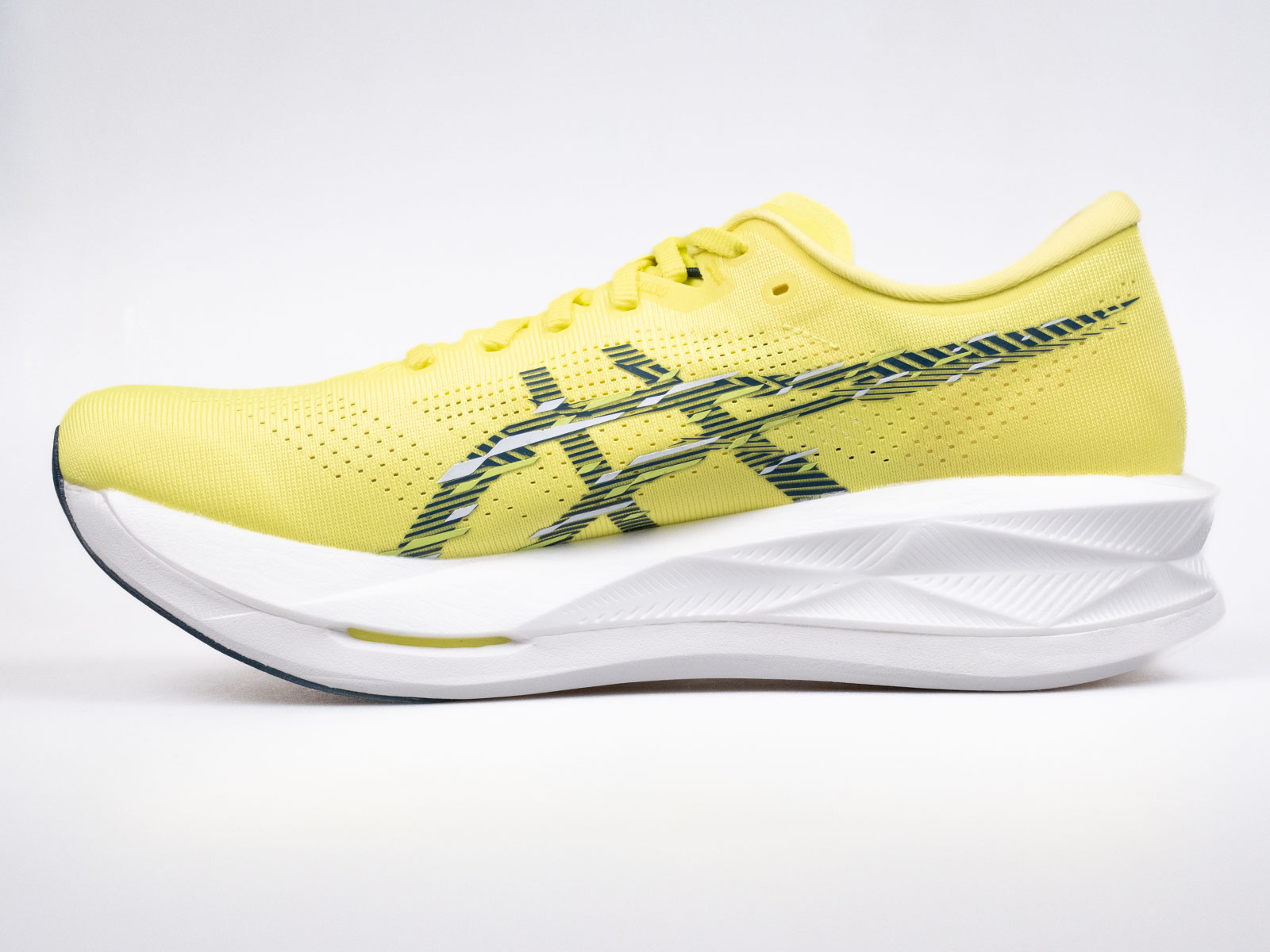
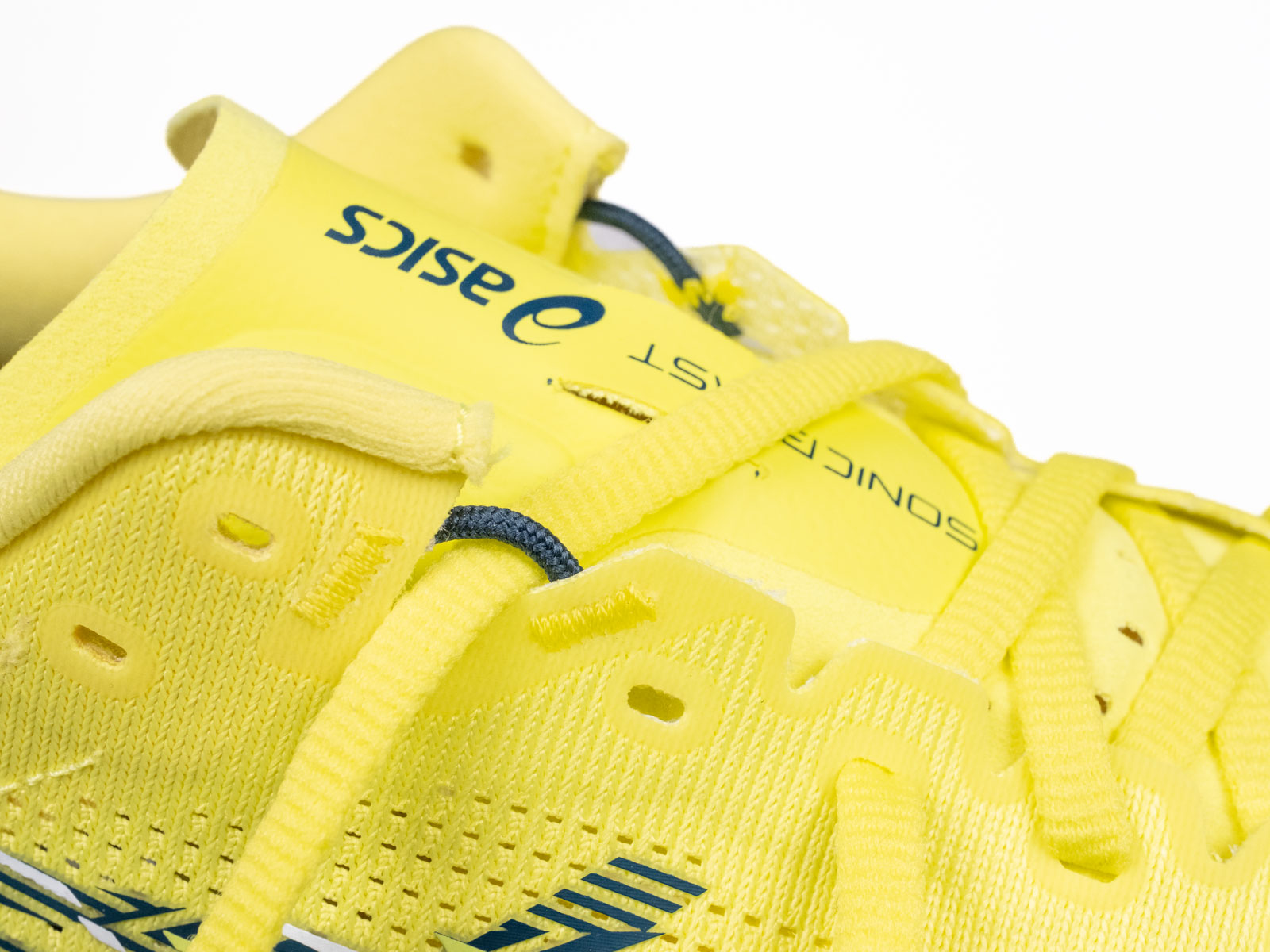
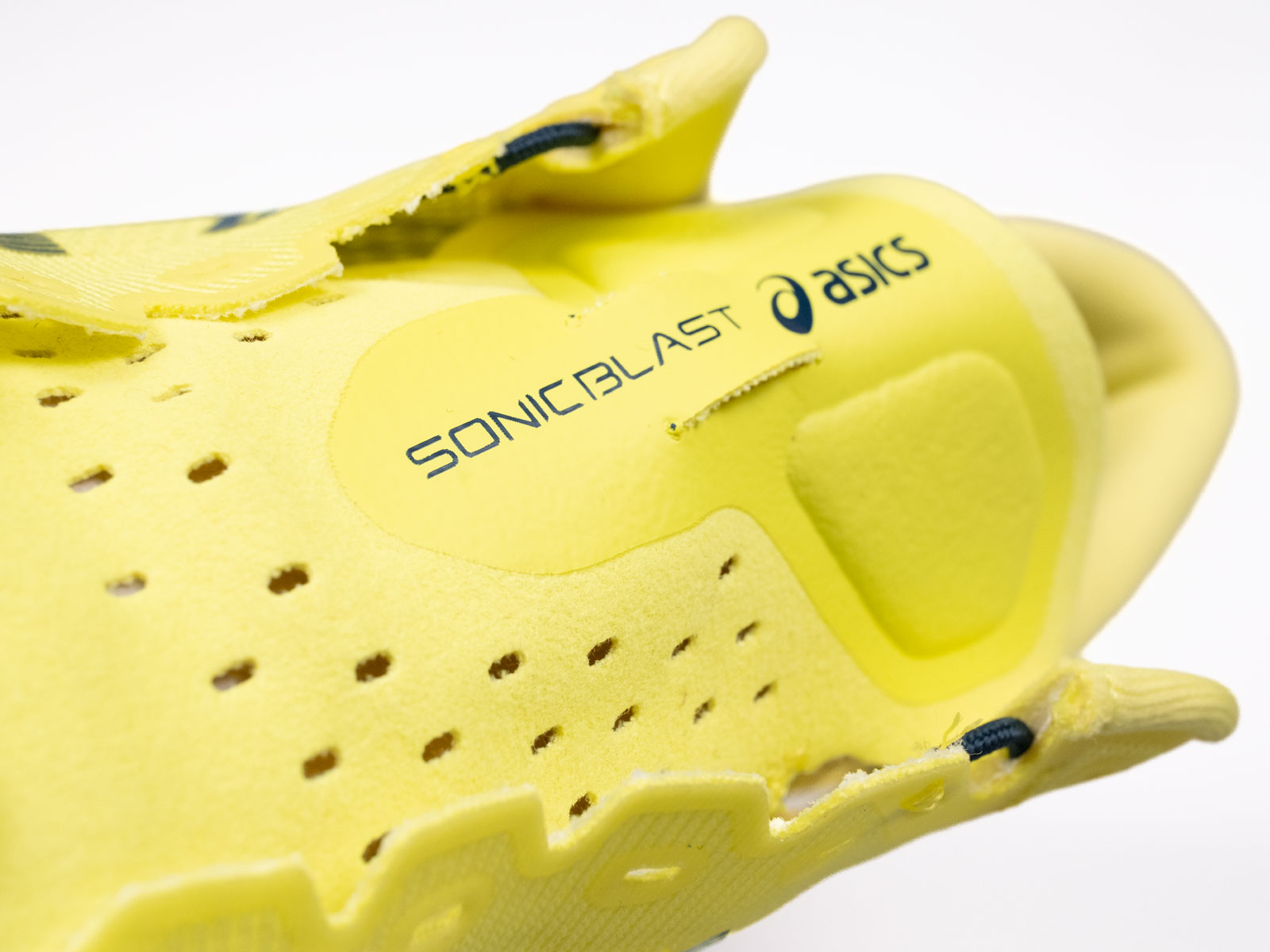
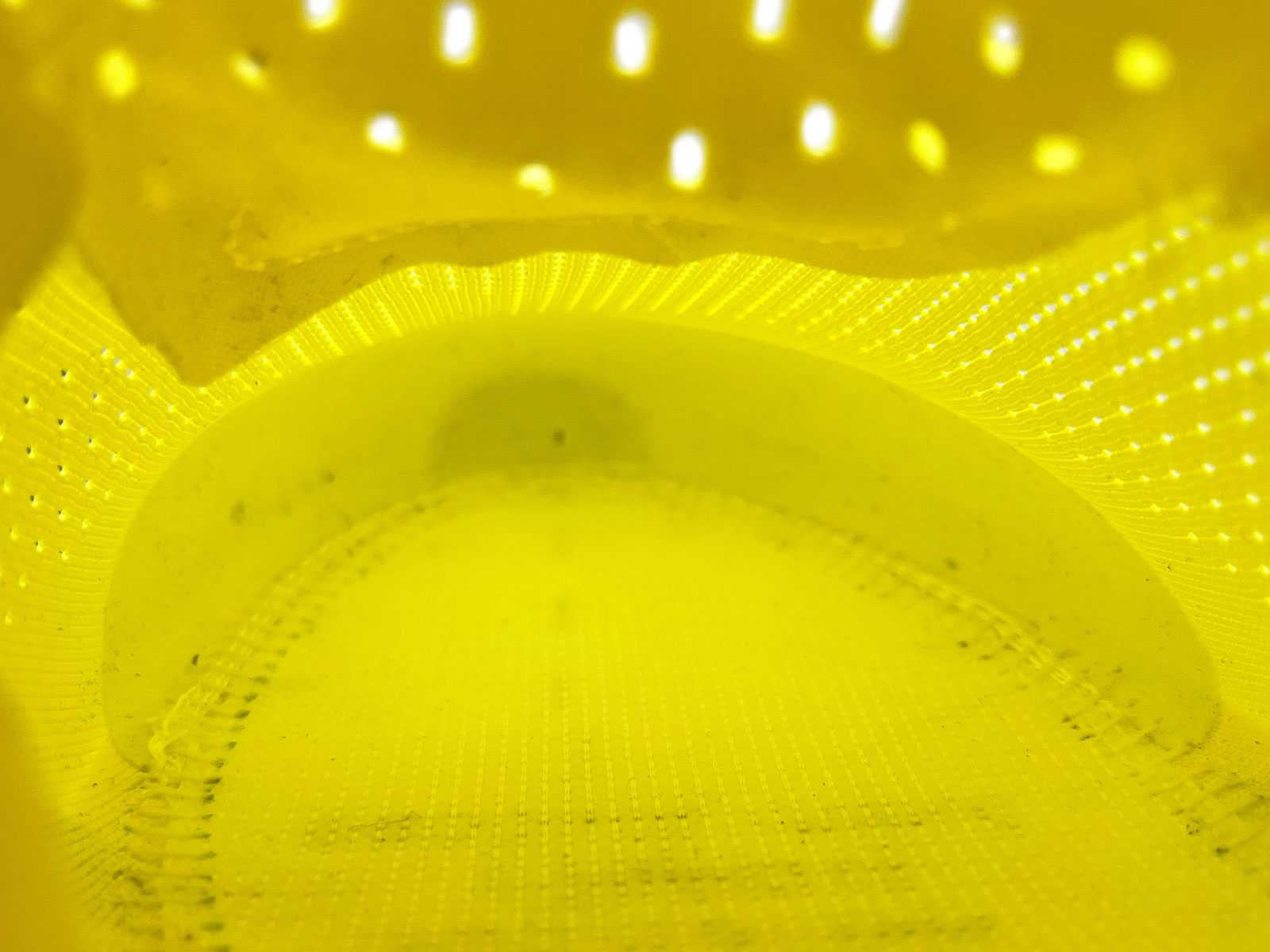
The midfoot lockdown is excellent. The gusseted tongue lies flush over the foot and is perforated for ventilation. The second-last row of lacing utilizes speed loops for effective fit adjustment. We would have loved to see serrated (ribbed) racing laces of the Megablast instead of the soft, semi-stretchy kind used here. It’s all the little details that separate a speed shoe from a daily trainer.
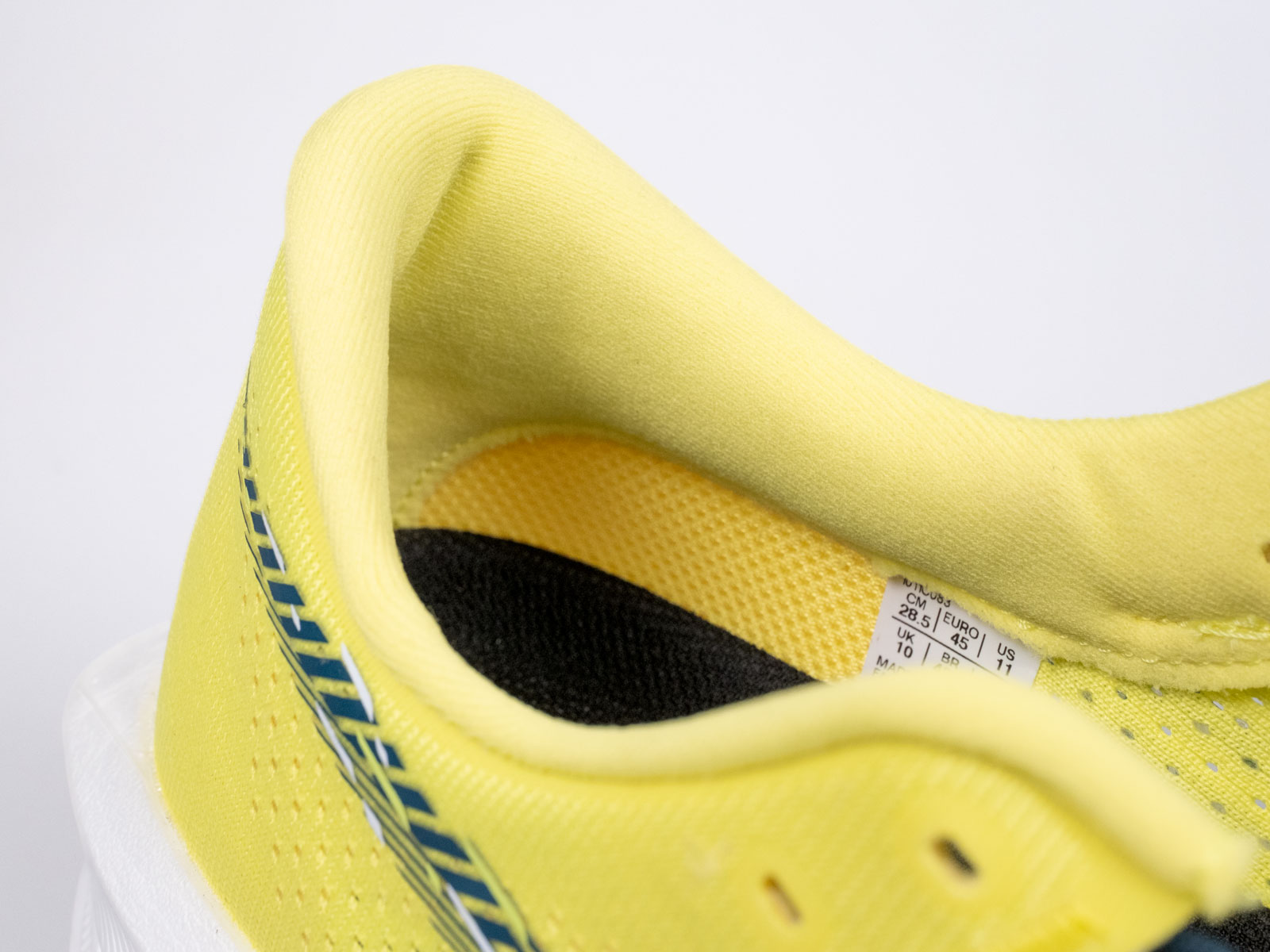
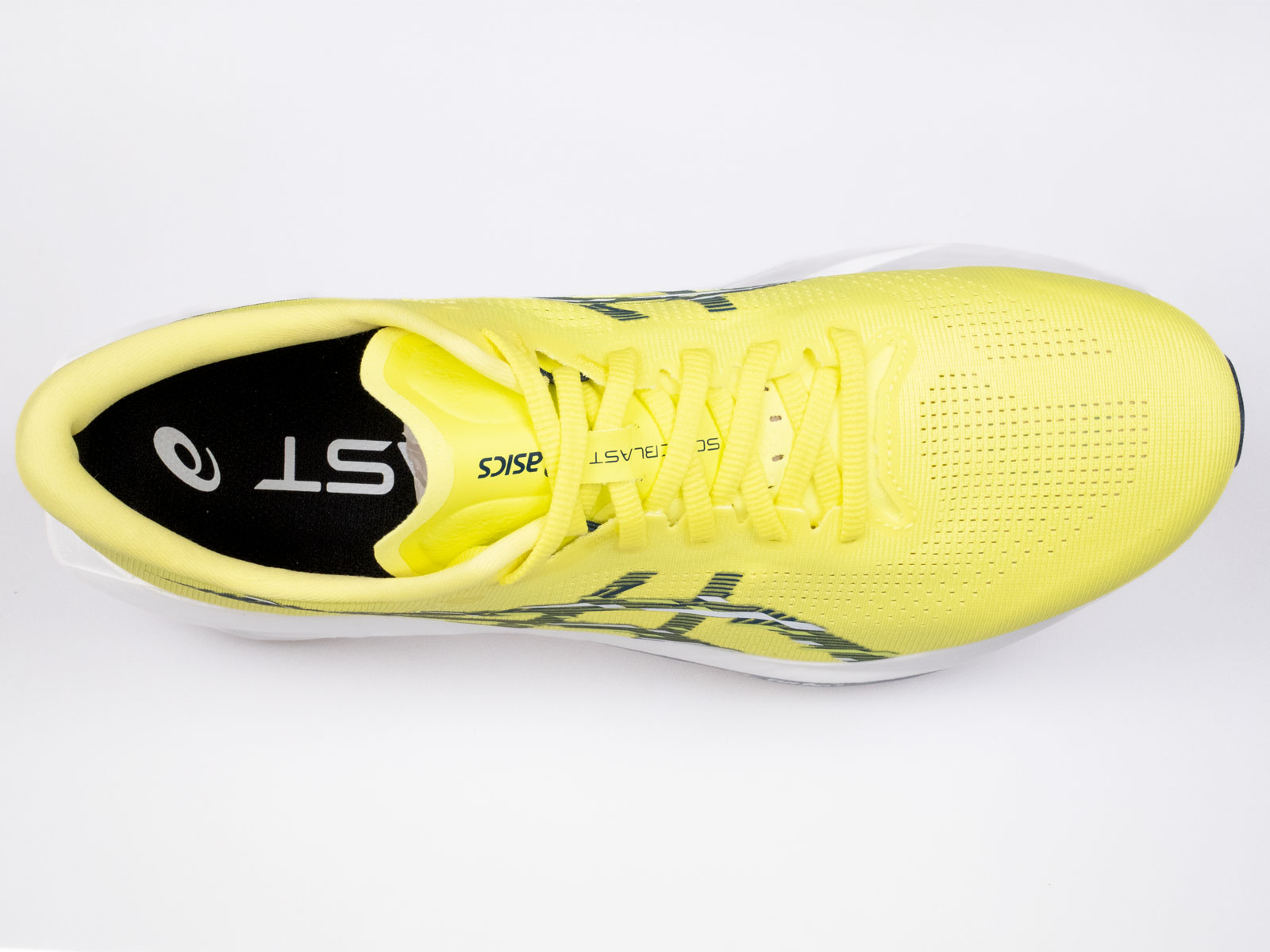
We have no idea why Asics chose this heel design over a traditional collar. The internal counter is semi-flexible, making it easier to slip on the shoe. But that’s of little solace when there’s a risk of chafing. The top of the heel curves inwards and does most of the gripping; this arrangement increases the risk of foot-fabric friction. The last time we saw Asics use this design was on the 33 series from 2015; the Asics 33-FA and 33-DFA used the same heel construction.
SHOES COMPARABLE TO THE ASICS SONICBLAST

Also consider:
- Skechers Aero Tempo
- Brooks Hyperion Max 2
- adidas Boston 13
TECHNICAL SPECIFICATIONS
- Asics’ marketing pitch: Functional ride for tempo runs and daily training.
- Upper: Breathable non-stretchy mesh, gusseted tongue.
- Sizing profile: True to size.
- Toe box fit: Secure, but not cramped.
- Forefoot fit: Secure, not ideal for wide feet.
- Midfoot and heel fit: Secure.
- Midsole: Soft FF Turbo² foam over a firm FF Blast Max base, three-quarters PEBA Astroplate. 8 mm heel drop.
- Outsole: Asicsgrip rubber.
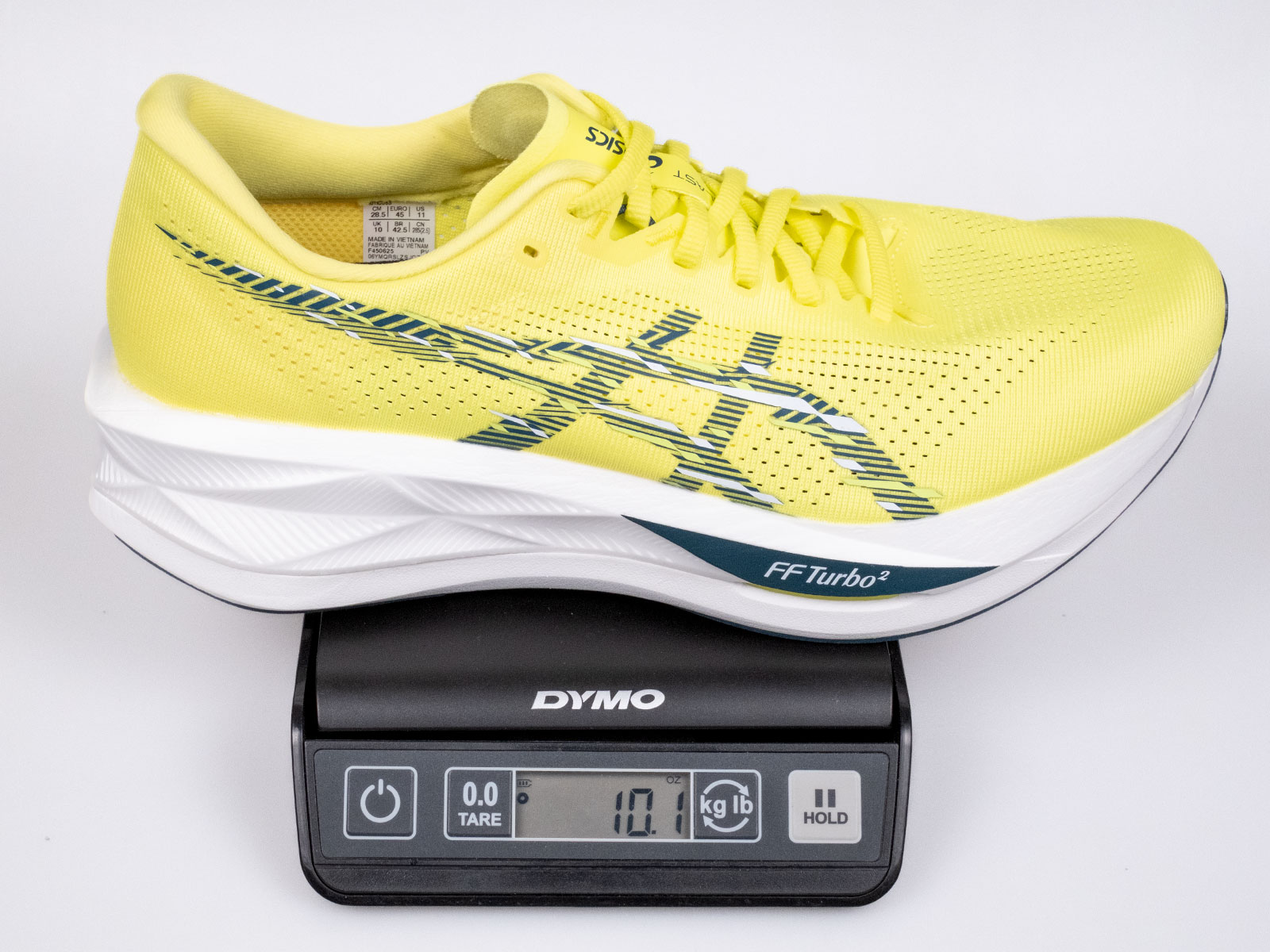
- Weight: 256 gms/ 9 Oz for a half pair of Men’s US 9/UK 8/EUR 42.5/CM 27.
- Stack heights: 45 mm (heel), 37 mm (forefoot).
- Available widths: Single – D (regular).
- Recommended use: Daily runs, tempo training.
- Footstrike orientation: All types (heel/midfoot/forefoot).
- Median lifespan: 450 miles.
- Country of origin: Vietnam.
- Recommended paces: 4:00 min/km (6:30 min/mile) and slower.
- Recommended temperature range: Warmer than -5° C/23° F.