Review Updates
(2 total)- 2026-07-23 — Added links to relevant reviews
- 2026-07-21 — Review published
NIKE VOMERO PREMIUM IS BEST FOR
BEST FOR
SWEET SPOT
SPEED COMPATIBILITY
BIOMECHANICS: THE NIKE VOMERO PREMIUM
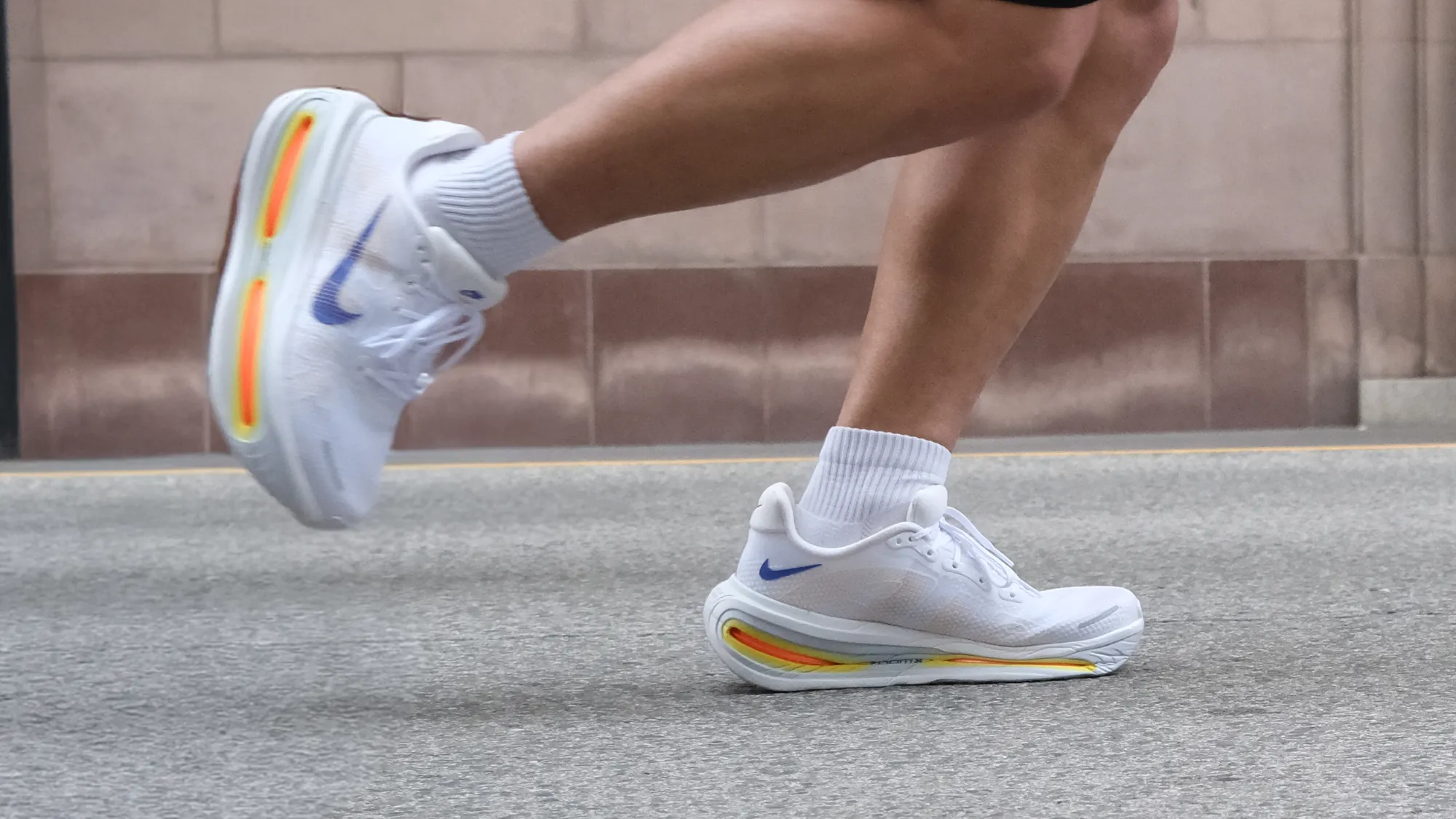
The Vomero Premium is best suited for lightweight runners who run slowly with a neutral gait, delivering an ultra-soft ride under a plush and secure fit. On the other hand, if you’re a recreational runner who is heavy, overpronates, or tends to land hard, then the midsole will be unstable and slow. Even for a lightweight runner, the soft midsole creates an almost zero-drop condition, where the entire 10 mm offset is consumed by the compression.
See The Nike Vomero Premium in action
(Click to pause/play)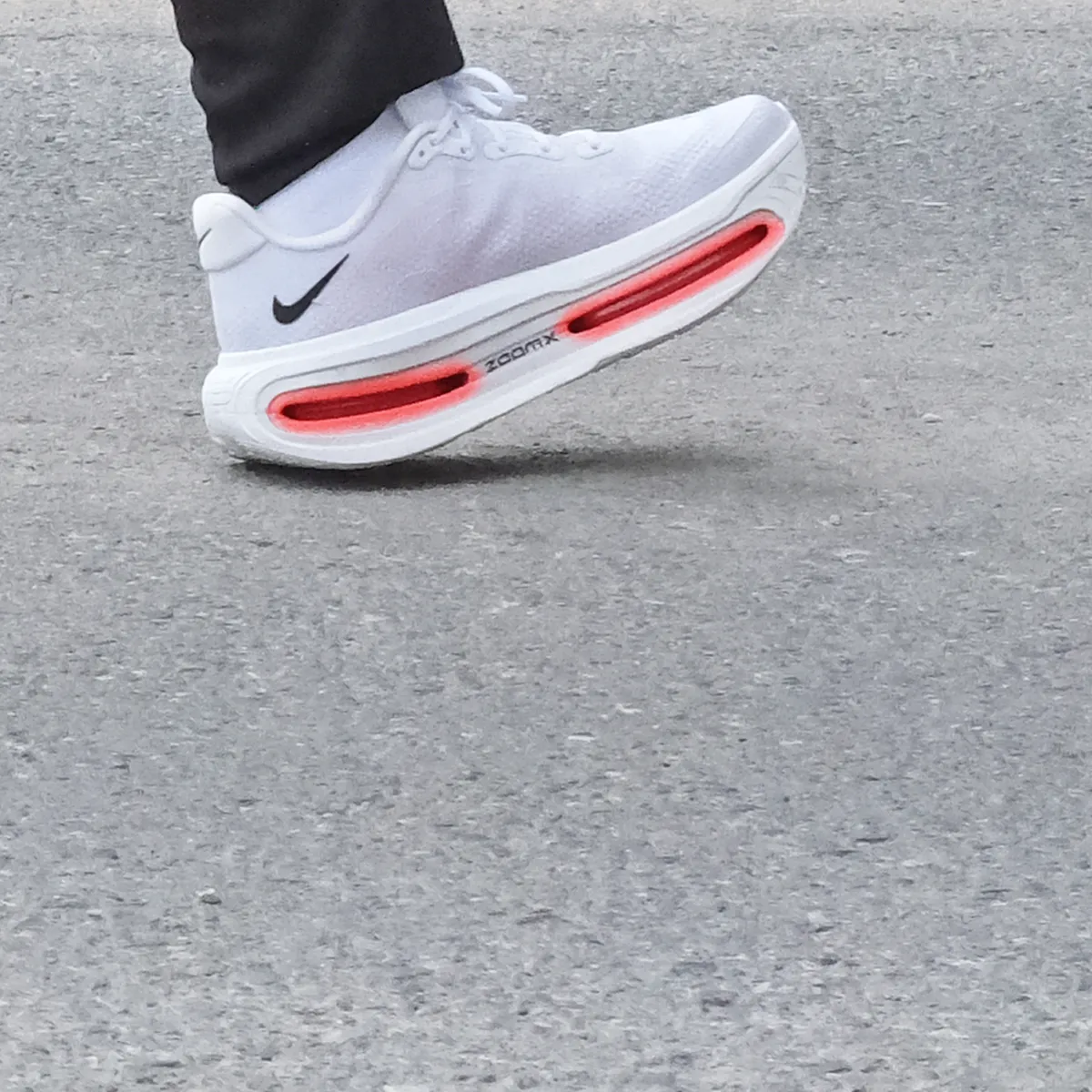
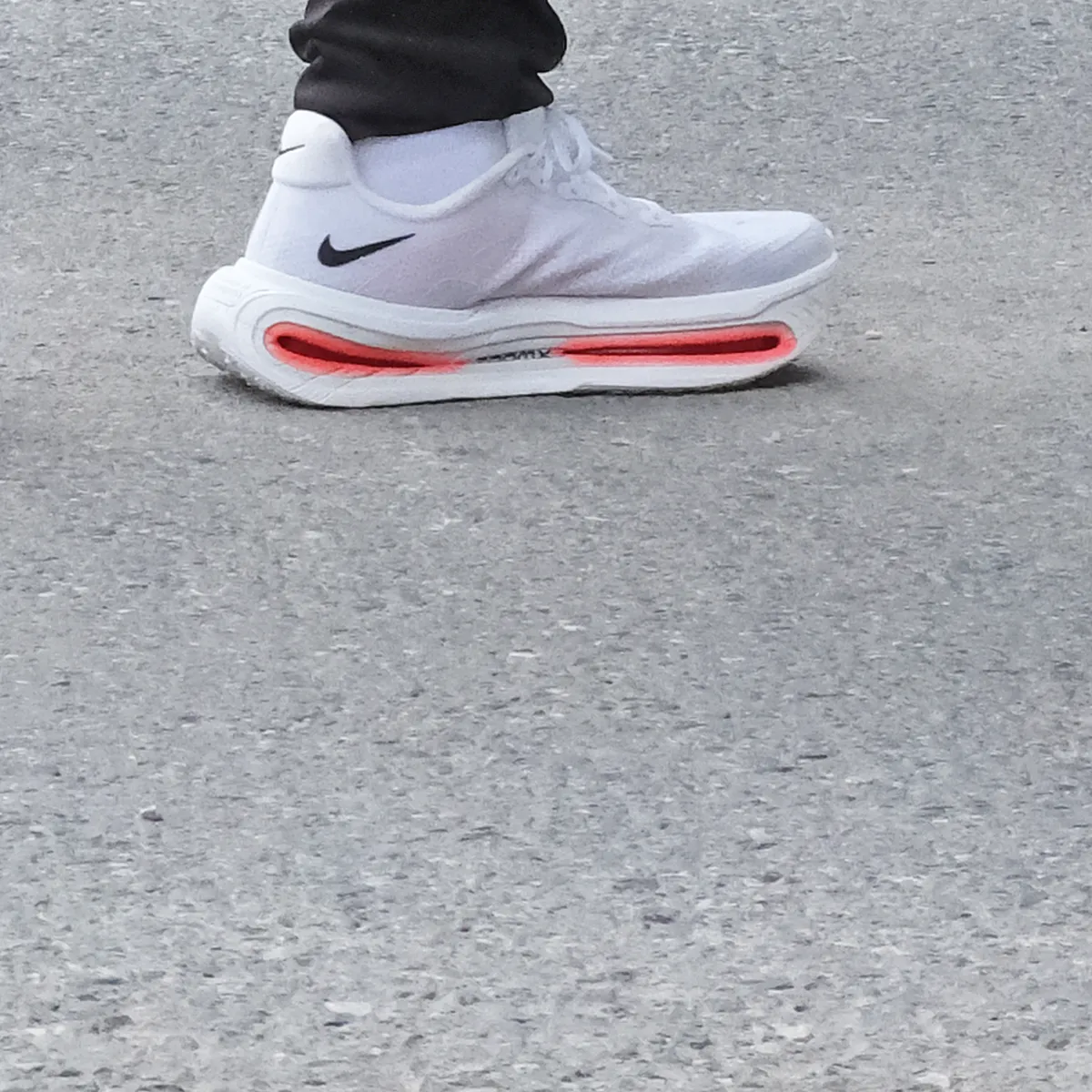
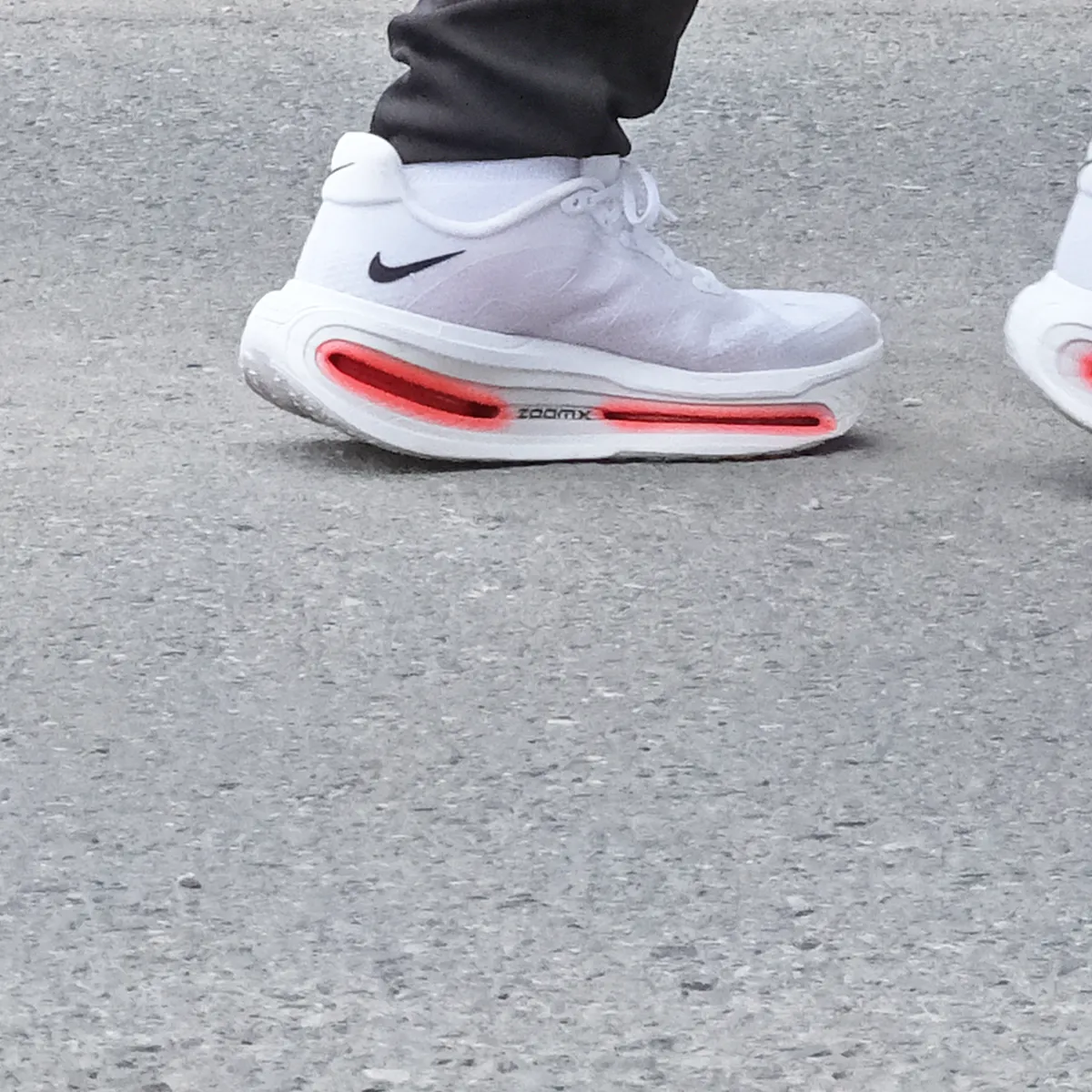
Mechanics at Work
- ZoomX and Zoom Air midsole → produce soft landings
- Excessive heel softness → may cause zero or low drop conditions
- Plush, true-to-size fit → secures the foot
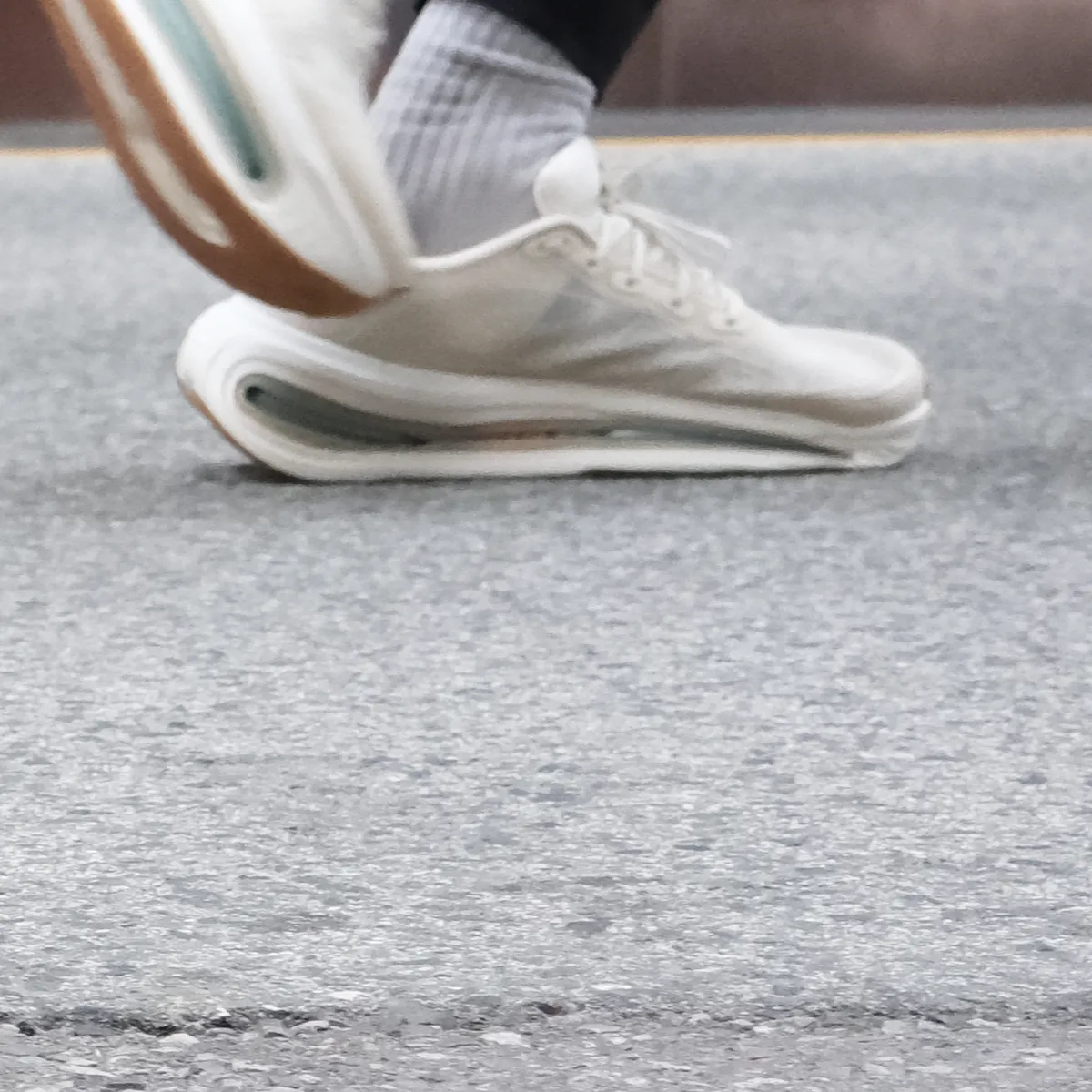
This shoe doesn’t like to go fast. Featured in our biomechanical animation is a heel-striking mid-pack runner. Landing causes the midsole to sink to a zero-drop condition where the heel stack is equal to the forefoot stack. As the foot progresses, the opposite happens. The weight causes excessive forefoot midsole sink, as the large toe briefly dips into the soft foam core before takeoffs.
See The Nike Vomero Premium in action
(Click to pause/play)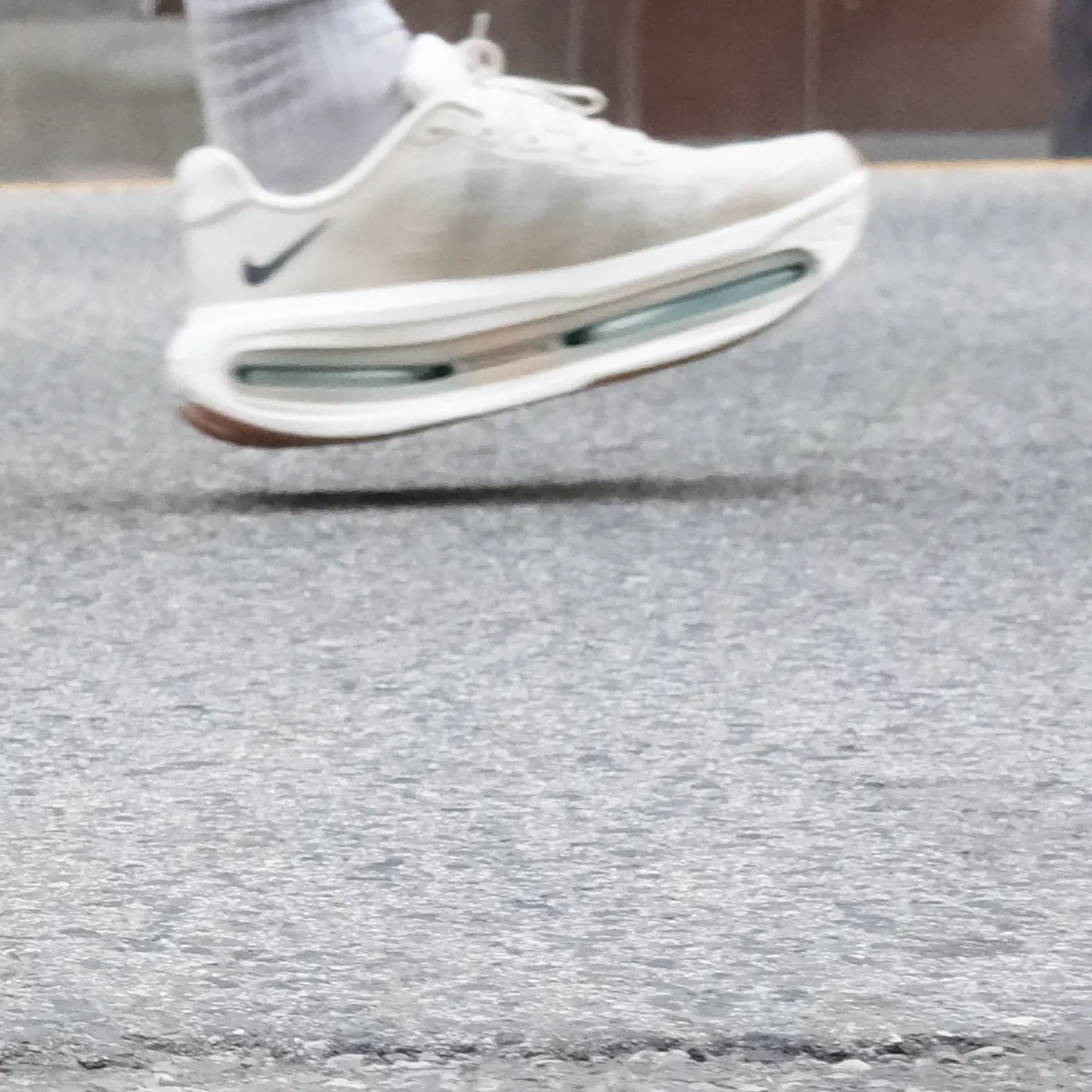
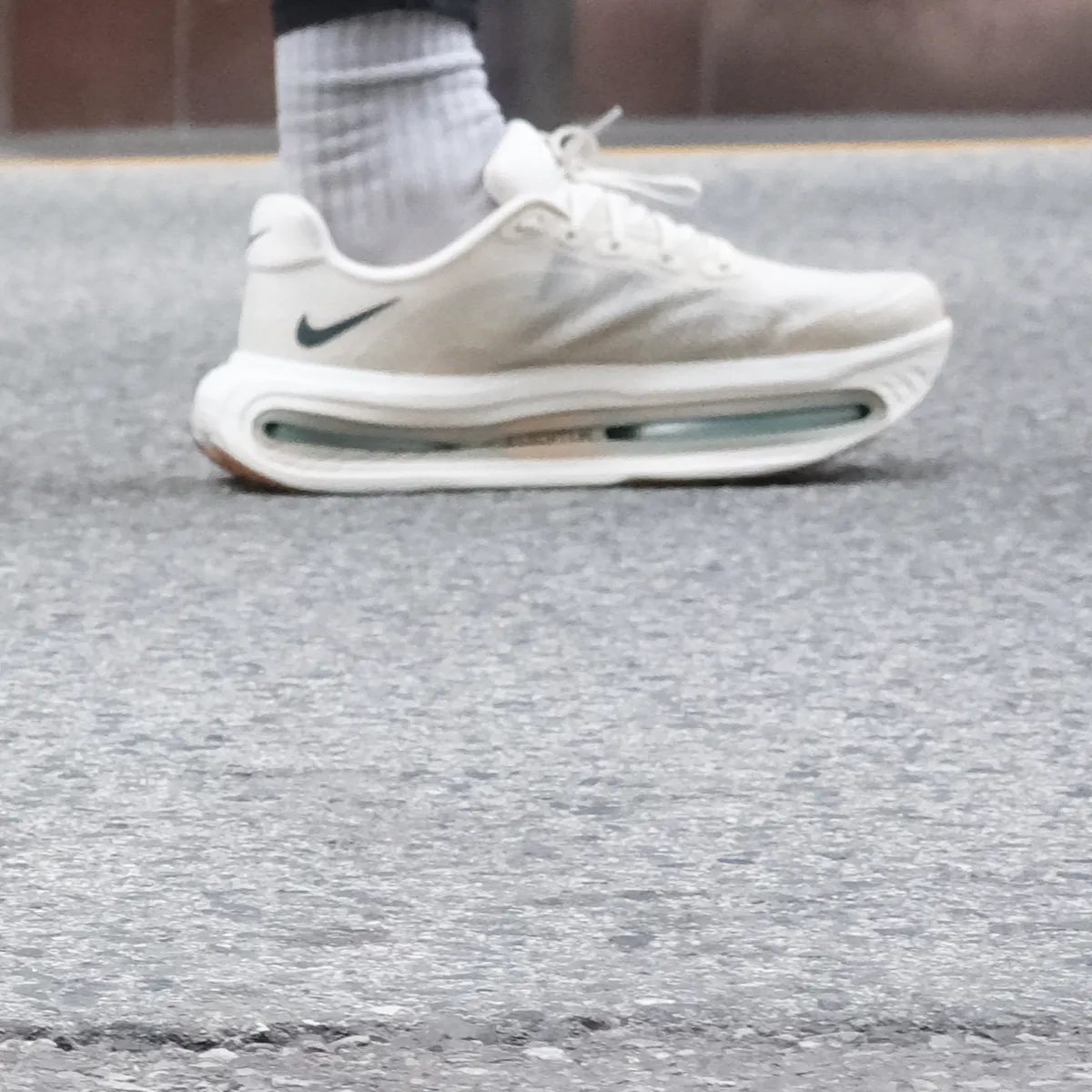
Mechanics at Work
- Soft heel midsole → can zero-drop when loaded
- Lack of stiff element → saps speed during transitions
- Forefoot midsole sink → negatives rocker effect
- Weak sidewall structure → throws the foot around
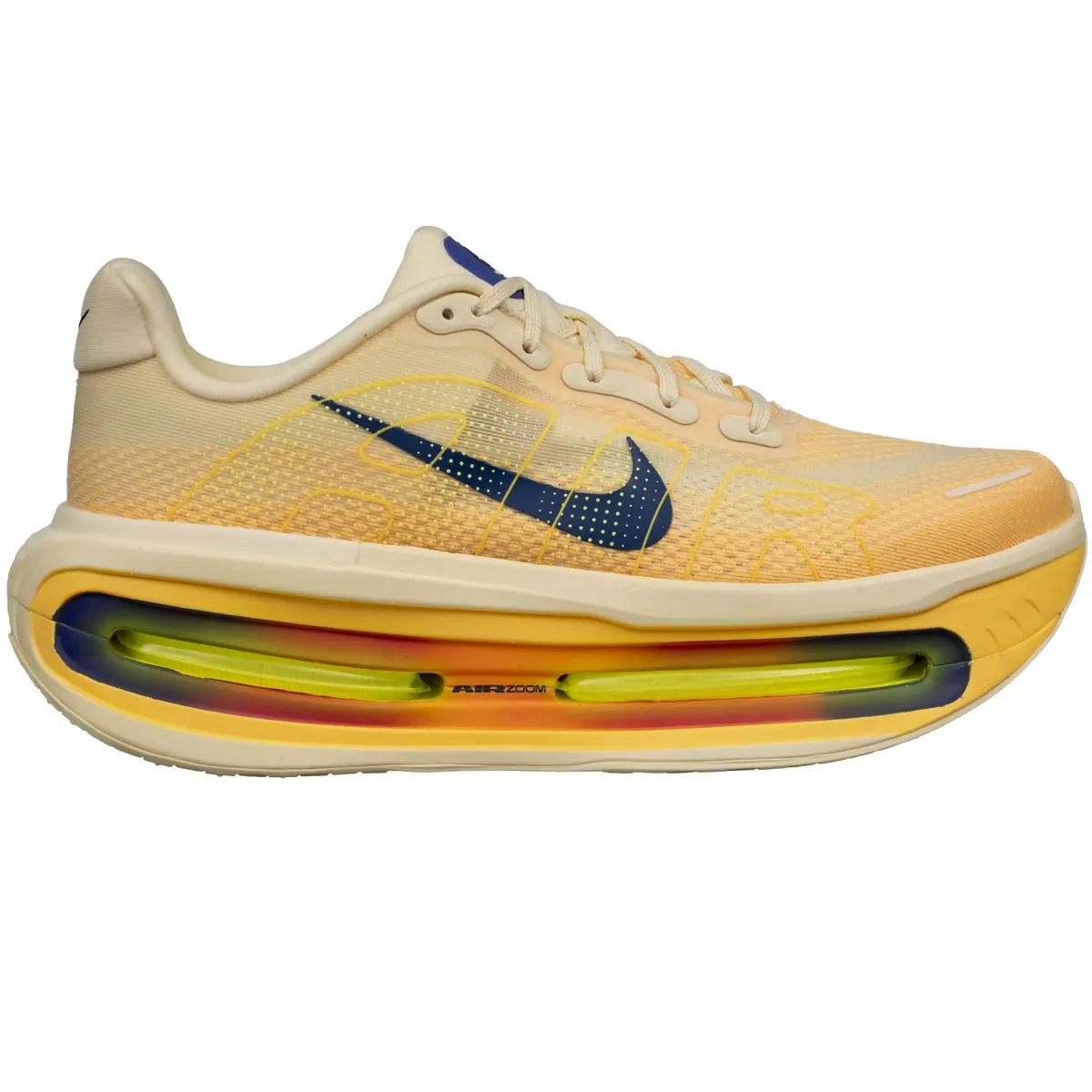
During our high-speed image capture exercise in the last few road races, we did not observe any elite or sub-elite runner in the Vomero Premium. Our 'Mechanics at work' section outlines the hypothetical cause-and-effect when worn by an elite runner.
See The Nike Vomero Premium in action
Mechanics at Work
- Massive stack heights → dilutes ground feel
- Lack of plate and rocker → weakens propulsion
- Low stability → increases energy expenditure
- 12.4 ounce weight → is too heavy for racing
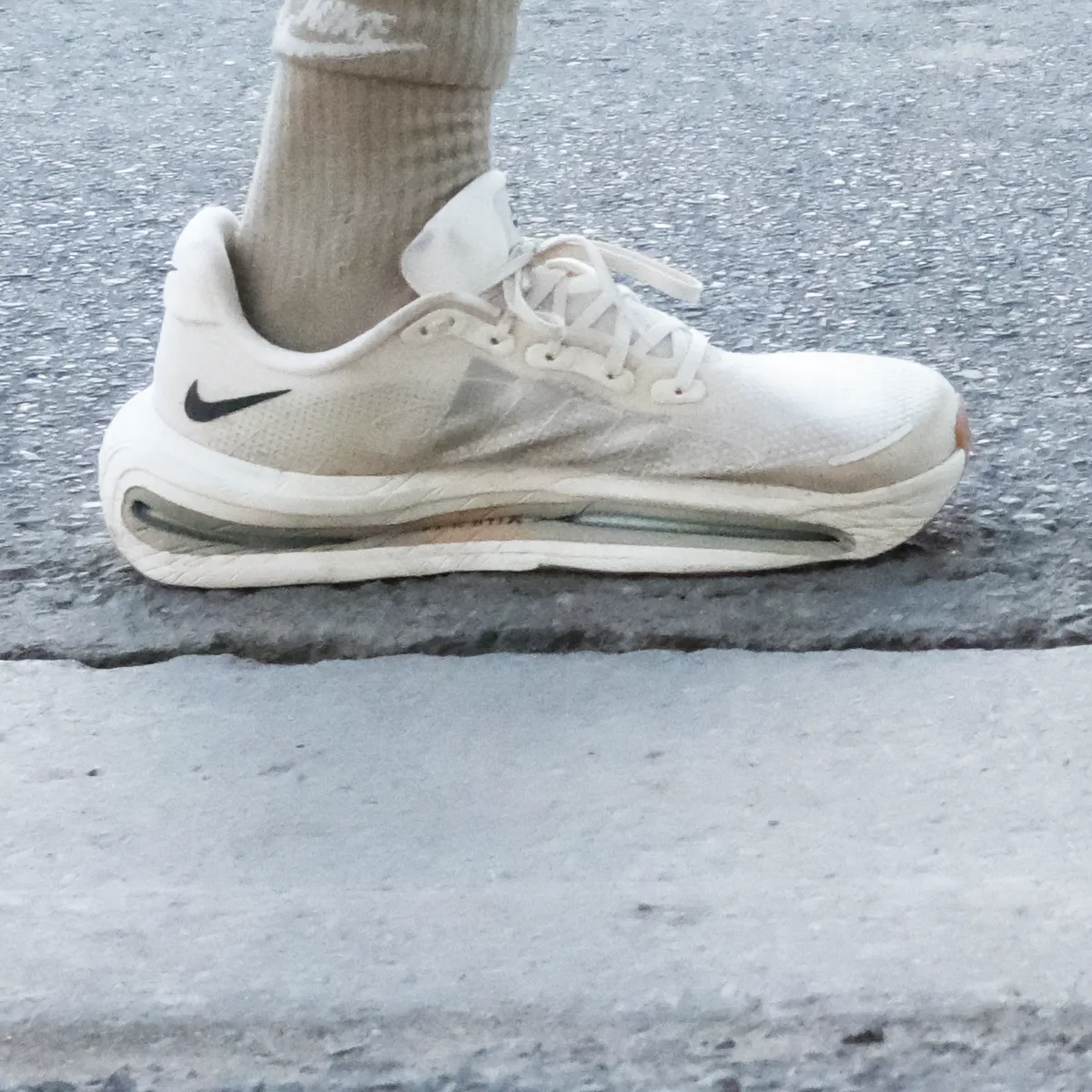
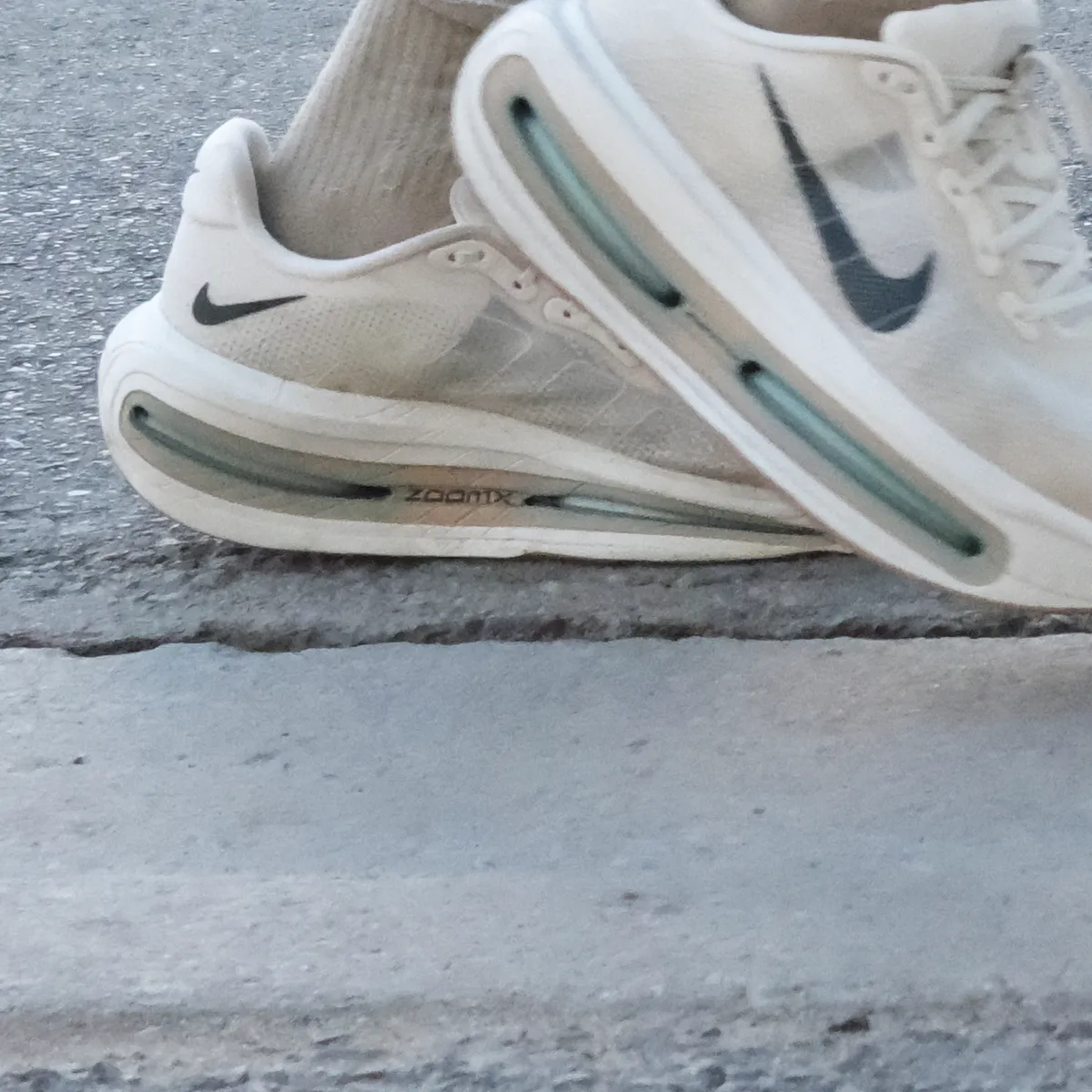
Since the ZoomX foam midsole lacks a midfoot shank or any other stiffening element bridging the heel and forefoot Zoom Air units, the foot sinks into the softest part of the midsole at midstance. That would be the midfoot gap between the Zoom Air bags. The Zoom Air bag here is the same as on the Maxfly 2; it has a groove splitting each Zoom Air bag into two separate chambers. This articulation decreases support by reducing the stiffness of the Zoom Air bag. Heel landings involve significant roll, followed by a mushy trek to the forefoot.
See The Nike Vomero Premium in action
(Click to pause/play)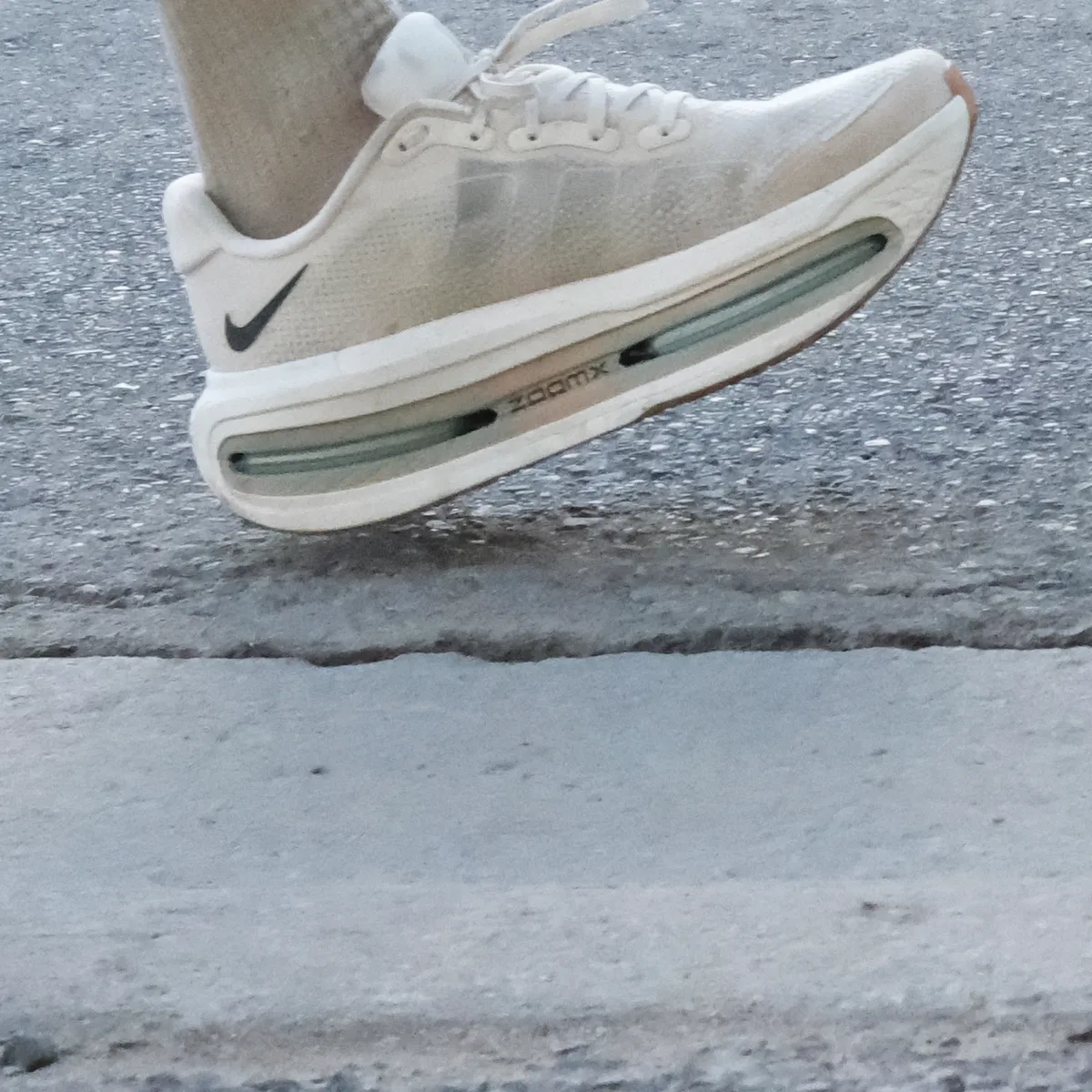
Mechanics at Work
- Deep negative space → decreases midsole stability
- Lack of stiff bridge → causes midsole sink
- Forefoot cavity → dilutes rocker propulsion
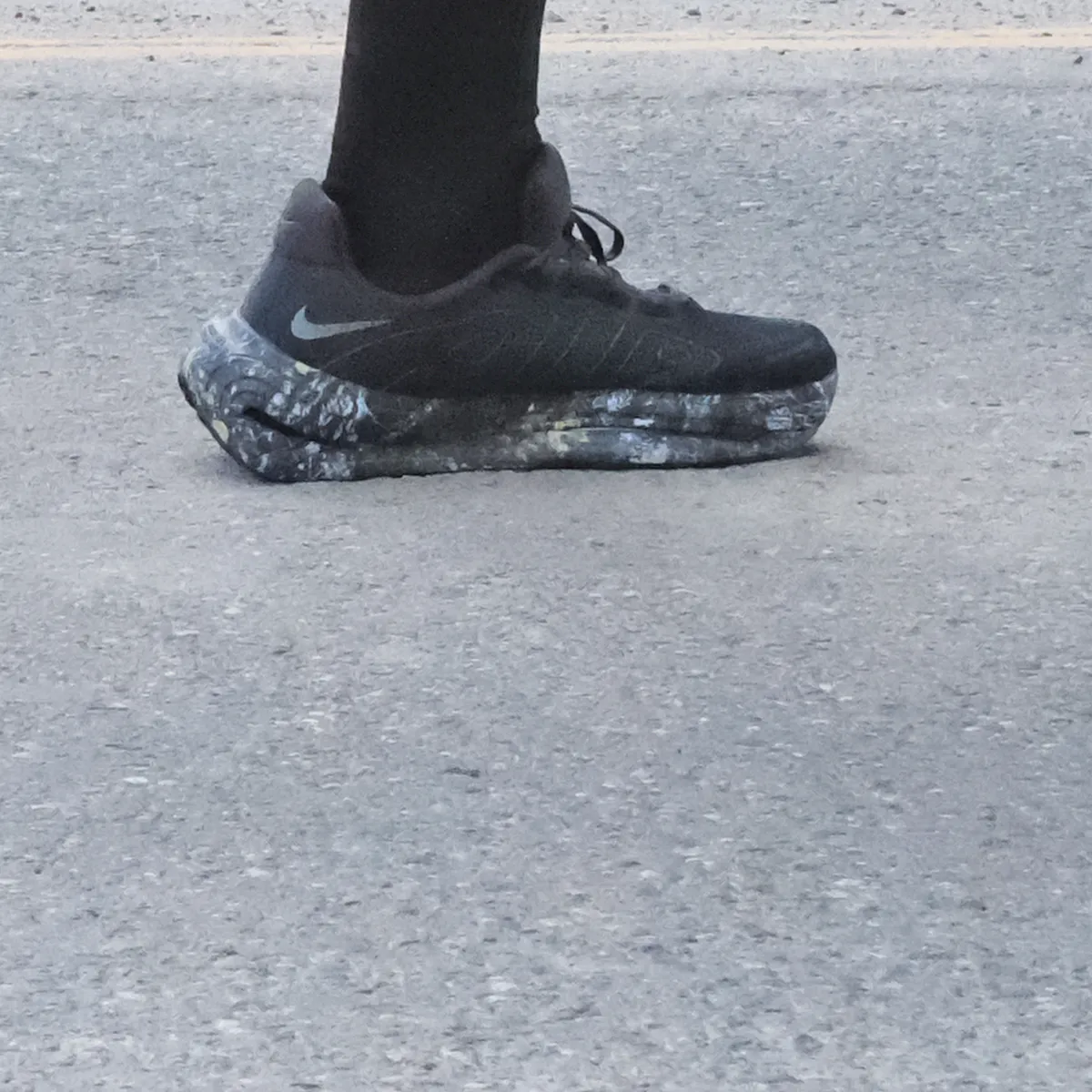
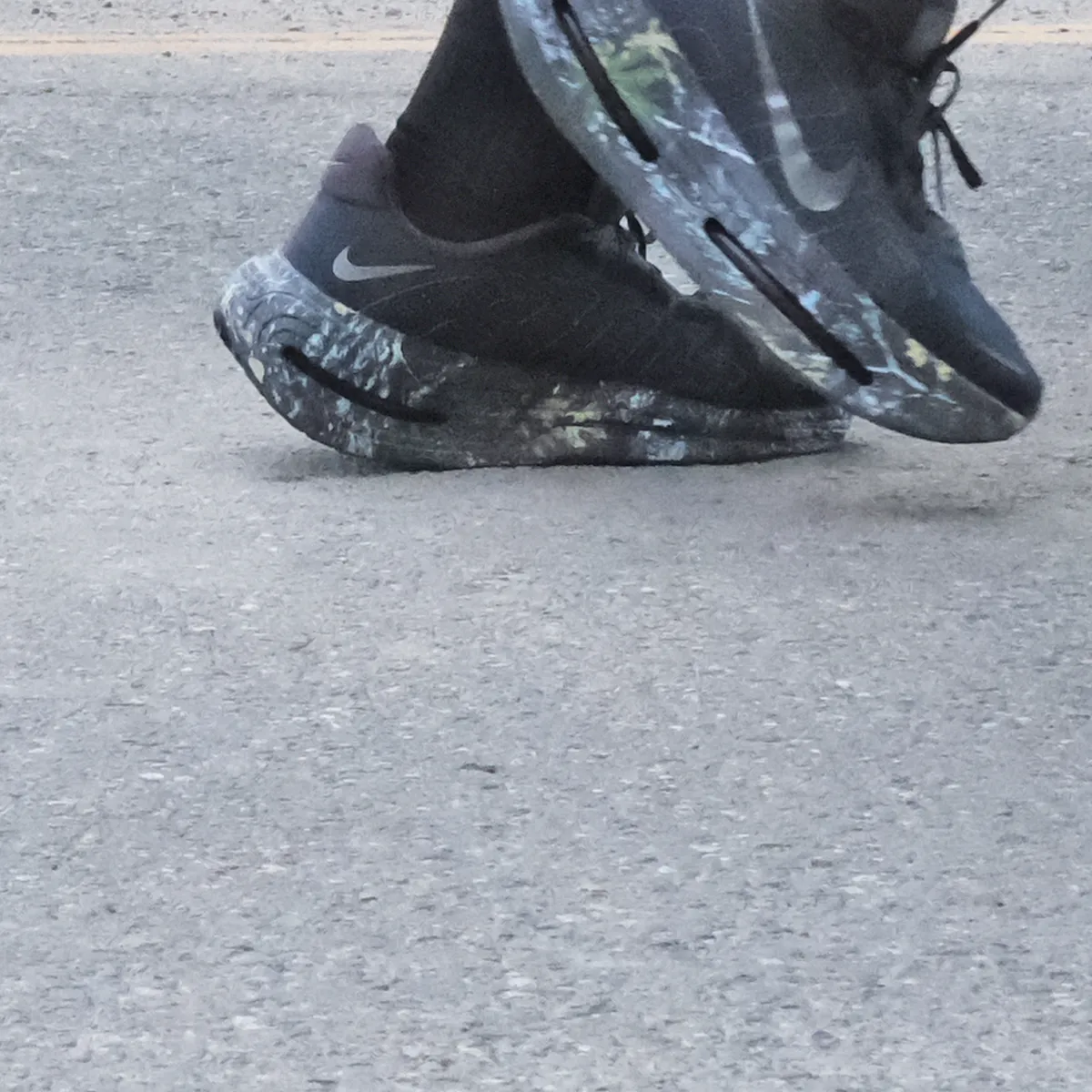
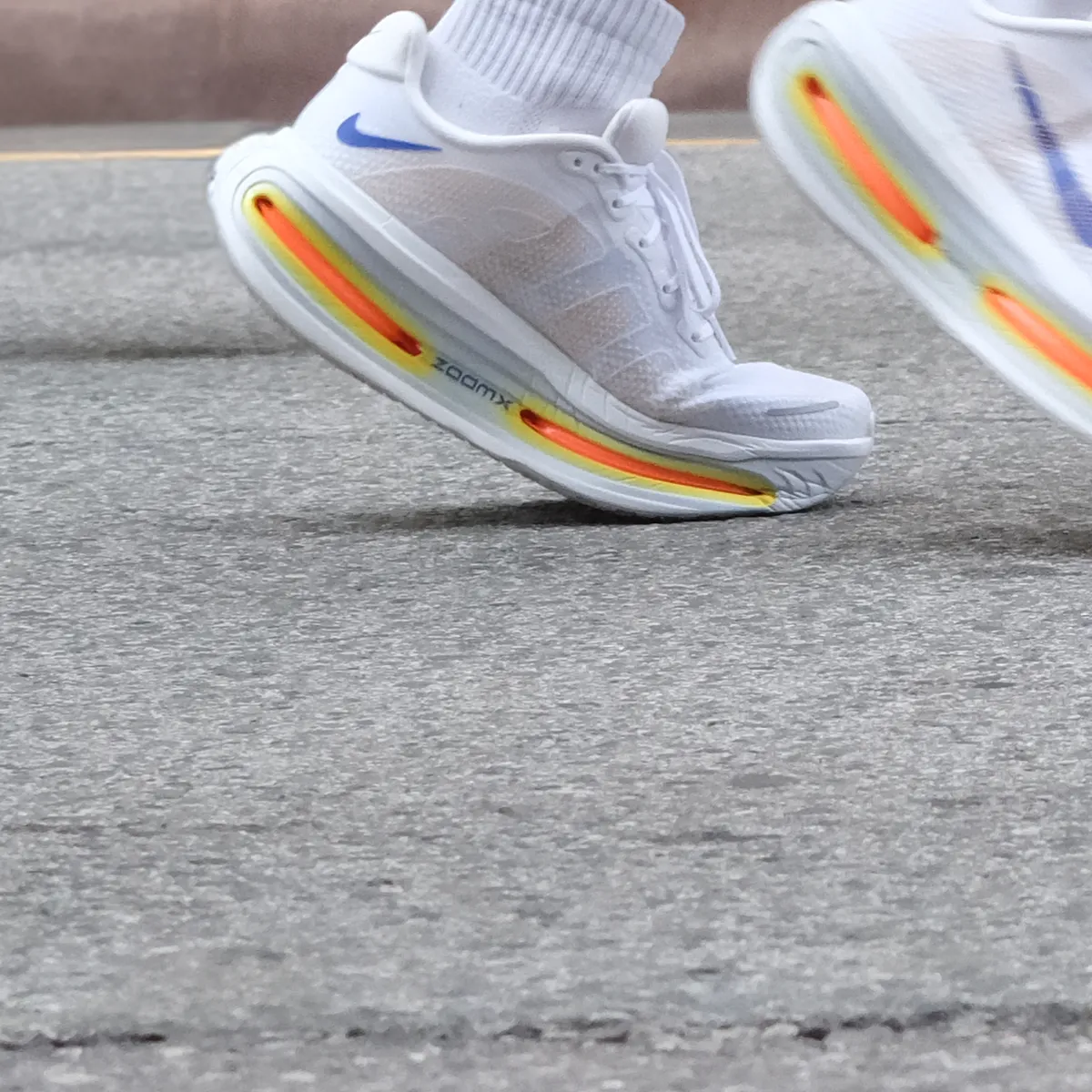
The Vomero Premium is the weakest where overpronators need support the most. Not only is the waist slim under the arch area because of the scooped sidewalls, but the midfoot is also the least supportive spot. Directly below the arch is where the soft ZoomX foam bridges the Air bags. Runners who tend to load their arch excessively inward will find weak compression resistance from the midsole. The arch sinks inward, twisting the soft midsole and pulling the upper in the process.
See The Nike Vomero Premium in action
(Click to pause/play)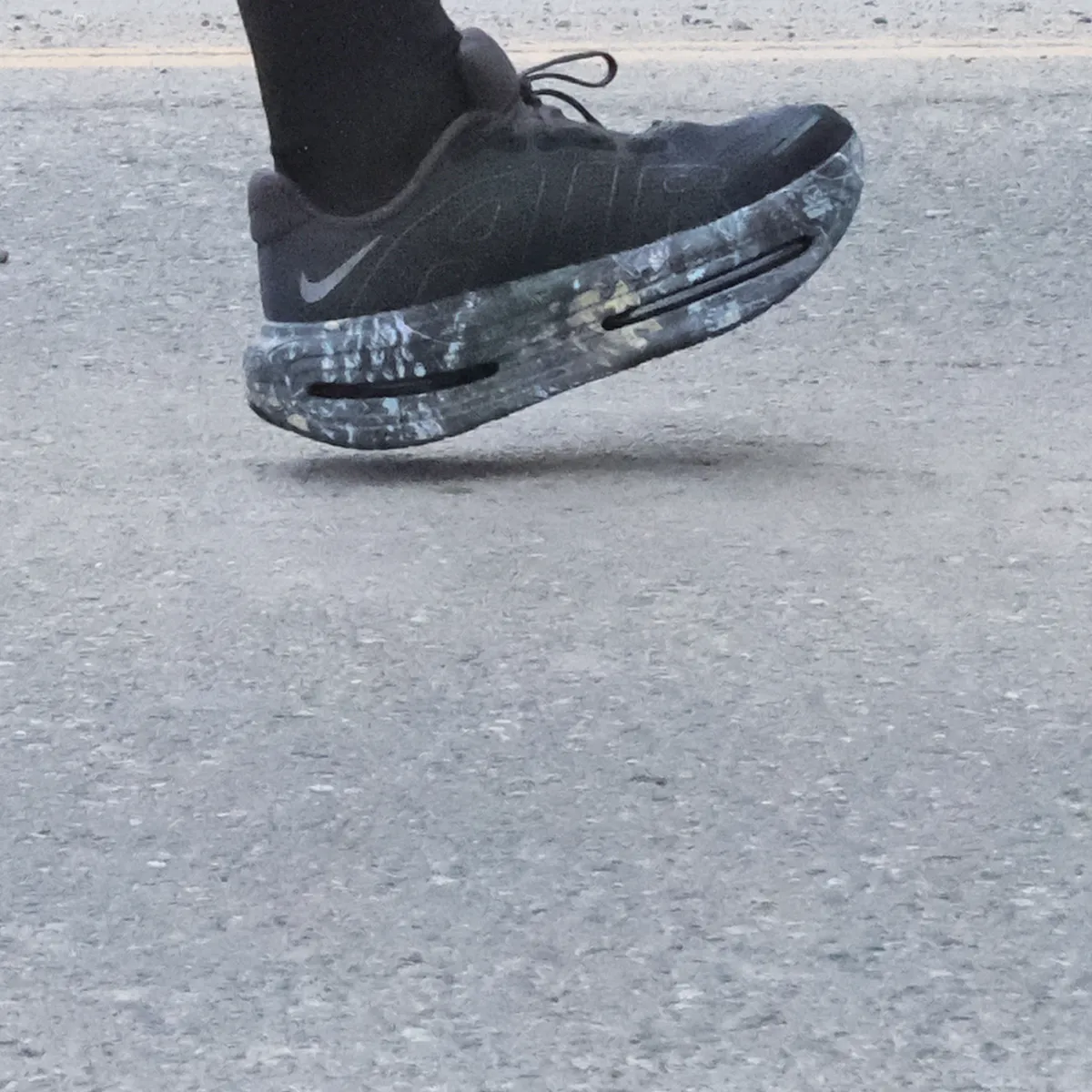
Mechanics at Work
- Slim midsole waist → lacks compression resistance
- Unsupported midfoot → causes midsole twisting
- Plush upper → keeps foot secure, but gets pulled in
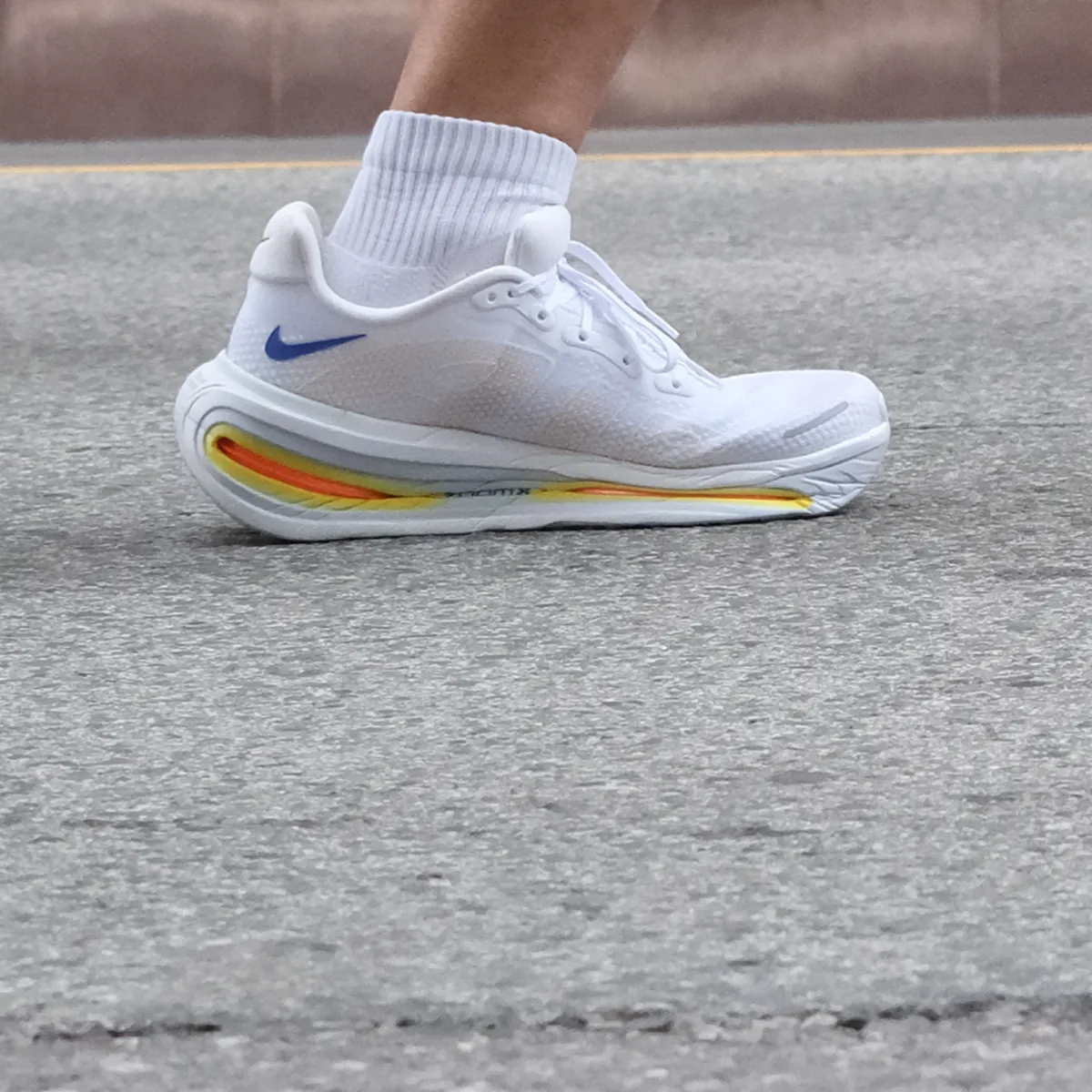
If you weigh over 190 lbs (86 kg), the Vomero Premium isn’t the kind of shoe you should be running in. There’s very little in the way of support, and the ultra-tall midsole delivers sluggish transitions. If you’re a heel striker, a negative offset condition is a given. Then the foot has to work through the soft, unsupported midfoot before progressing to the forefoot, where the high body weight will compact the soft midsole. So if loading the heel produced a negative drop, loading the forefoot produces a positive drop that far exceeds the advertised 10 mm drop. If you see the ‘forefoot loading’ phase of our biomechanical animation, you’ll notice how the heel briefly appears to be twice the forefoot stack height.
See The Nike Vomero Premium in action
(Click to pause/play)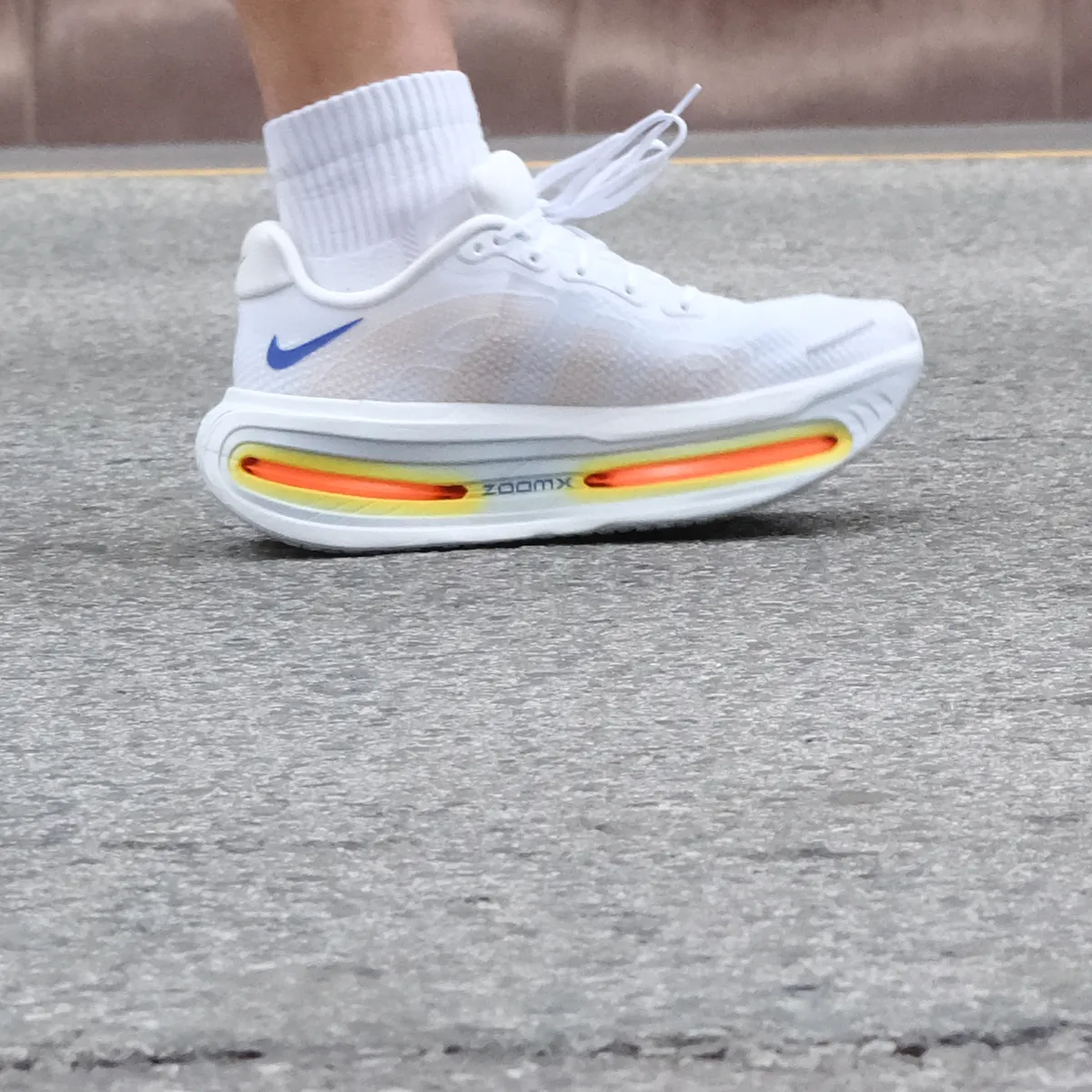
Mechanics at Work
- Ultra-soft heel → is unstable under heavy loads
- Midsole compression → causes zero to negative drop
- Mushy forefoot → leads to midsole sink, excess positive drop
- Lack of internal stabilizer → leads to sluggish transitions
How we scored Nike Vomero Premium
Select your profile for the score
Our scoring is weighted by intended use and biomechanics. A daily trainer is judged by different standards than a racing shoe. The central Global Score reflects how well this shoe fulfills its intended purpose; if a shoe is weak in foundational areas like stability or traction, our algorithm applies automatic penalty points.
Recreational Score Breakdown
Summary
- Buy If: You want a soft fashion sneaker for low-mileage casual wear. The Vomero Premium is too soft and unstable for most runs.
- Avoid If: You plan to do anything that resembles running in the Vomero Premium. We’d go as far as to say even walking is dangerous in this unstable shoe.
🔍 Deep Dive
In no uncertain terms, the Nike Vomero Premium is a bad running shoe. It’s even worse than the Pegasus Premium; the taller and softer midsole is extremely unstable, making it unsuitable for most recreational runners (the target consumer group), heavy runners, heel strikers, and overpronators. The only exception would be lightweight neutral runners who run slow, in which case the shoe does just ok. And if you plan to run fast in these shoes, the midsole sink, complete absence of proprioceptive feedback, instability, and weight will slow you down. The other two variants – the Vomero 18 and Vomero Plus – are absolutely fine. We strongly recommend that you buy the Vomero 18 for versatile everyday comfort, or the Vomero Plus if you prefer extreme plushness, but without the boat-like dynamics of the Vomero Premium.
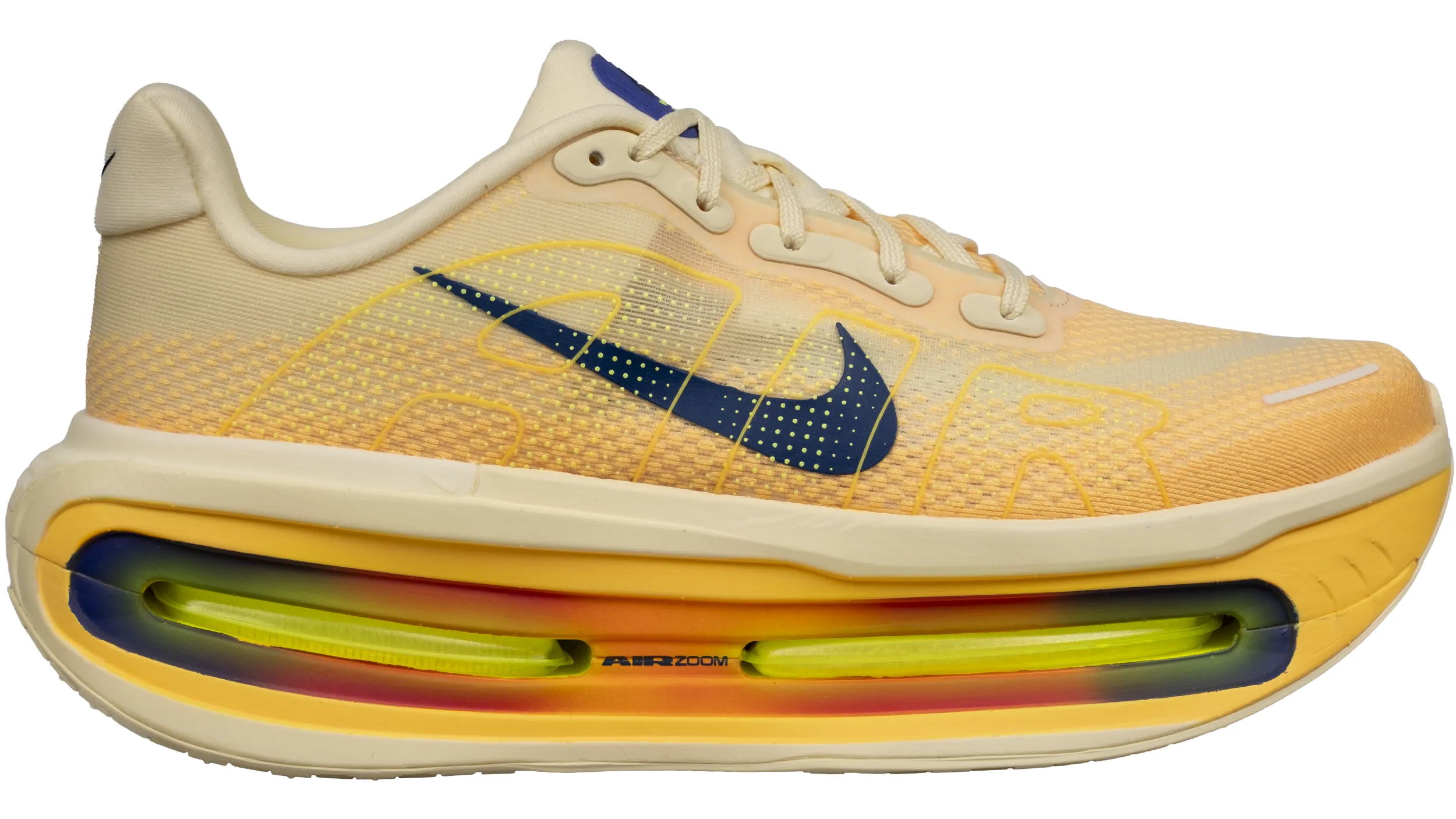
So what makes the Vomero Premium such a terrible running shoe? The answer lies in Nike’s marketing materials that claim to combine dual Zoom Air units and ZoomX foam to produce 55 mm of ‘supernatural stack heights’. With a claimed 10 mm heel-to-toe drop, the forefoot is 45 mm tall, dwarfing other max-cushioned trainers. But the issue isn’t just with the absurd 55 mm stack. The midsole looks and behaves like a concept design that looks great on media, but too impractical to be released into the real world. Our biomechanical animation based on our high-speed image data explains what happens under different scenarios (refer to the ‘mechanics at work’ breakouts), but let’s unpack some of what’s going on here.
The biggest flaw is the lack of midsole sidewall support. Nike claims that the shoe has ‘wide nets and rockered shape for stability and transitions.’ Sure, the outsole footprint is very wide indeed, but that alone does not make the shoe stable. Unlike the Vomero Plus (which has similar stack heights, by the way) that has filled-up sidewalls, the Vomero Premium takes out much of the sidewall foam to expose the Zoom Air bags. Sure, while that makes the shoe look very cool, the ride stability is severely compromised.
Nike has prioritized form over function, so the forefoot and heel outsole have large windows to expose the large ‘Zoom Air’ branding. These large cavities further decrease midsole stability by reducing the material that can support landings and transitions. The Vomero Plus has a solid core with a full-length rubber outsole, so it’s easy to see why its on-road experience is well behaved and remarkably different.
The midsole’s weak structure causes it to compress excessively. Our biomechanics animation for the heel striker profile shows the extent of compression at midstance. Significant compression happens, both vertically and sideways. It’s worth pointing out that the Vomero Premium uses the same Zoom Air unit as the Nike Maxfly 2 track spike, but the latter’s midsole setup is nothing like the Vomero Premium. The Maxfly 2 relies on just the Zoom Air for its forefoot cushioning, while the full-length carbon Flyplate and base plate (with the spike receptacle) add stiffness above and underneath the Zoom Air unit.
This particular Zoom Air unit is actually split down the midsole, meaning two independent chambers – less stable than a traditional Zoom Air bag, seen in models like the Pegasus 40. The split nature aggravates the sideways roll. Unlike the Maxfly 2 spike, there’s no stiff plate on top and bottom – it’s soft foam all around. So if the weak sidewalls cause the foot to roll medially or laterally, the split construction of the Zoom Air aggravates the roll.
As for the so-called rocker, that also doesn’t work as intended. The forefoot Zoom Air bag isn’t curved, but straight, and doesn’t extend to the toe box. Our mid-pack biomechanical animation shows what happens during the forefoot loading phase. As the large toe prepares for push off, it struggles to find a firm base where to launch from. So the large toe sinks into the soft ZoomX core past the Zoom Air runway. And just like the heel, the forefoot also has a cavity, thus reducing the contact patch during the roll-off phase.
The mushy and unstable ride greatly increases the workload for the lower limbs, as the foot struggles to stabilize the body during landing, transitions, and takeoff. Avoid this shoe, even if you get a pair for free. The Vomero Premium is as much a running shoe as the Nike Joyride and VaporMax were.
Pros
- Secure upper fit
- Reflective details
Cons
- Highly unstable midsole
- Low versatility
- Runs warm due to full sleeve
SHOE MAGNIFIER
Zoom In. Enhance.
Select a view, then use the slider to zoom in on the Nike Vomero Premium.