
Product guide updates
(5 total)- 2026-09-19 — Added 'Top recommendations summary' module
- 2026-09-02 — Updated with minor edits
- 2026-09-01 — Created FAQ with relevant question and answer pairs
- 2026-09-01 — Migrated product guide to new editorial format
- 2026-09-01 — Updated all primary and secondary recommendations
In this product guide:
How we selected
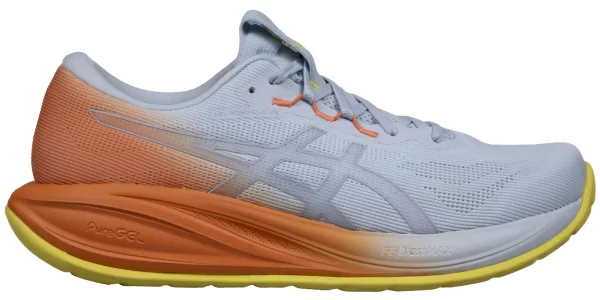
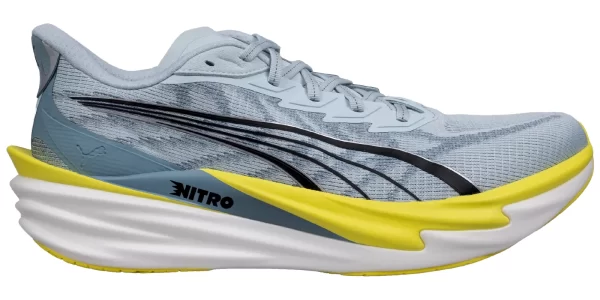
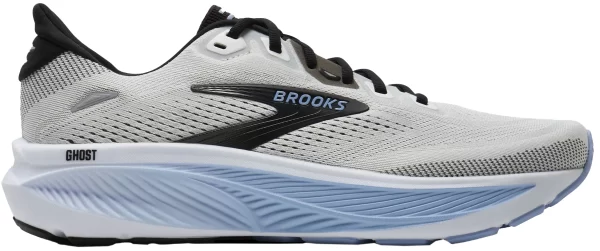
Our recommended shoes for beginners are grouped by use cases – daily training, 10Ks and marathons, overpronators, and trail. By connecting each feature with its respective function, the “Why it works” section explains why a particular shoe (in its respective class) is suitable for its recommended use case. Alternatives are suggested under each recommended category. For example, the alternatives to the Nike Vomero 18 (our daily trainer pick) are the Asics Cumulus 28 (for greater support), the Brooks Ghost 18 (for a softer ride for slower runs), and the Puma Deviate Nitro 4 (for a fast, plate-assisted ride). When combined, this product guide contains 17 different running shoe recommendations for beginners. Here’s a quick, one-line summary of our recommended categories:
- Best for daily runs: Shoes that blend comfort, support, and usability.
- Best for 10Ks and marathons: Cushioned, supportive shoes that don’t feel slow.
- Best for overpronators: Stable shoes with compression-resistant midsoles.
- Best for trail: Shoes designed for varying off-road surfaces.
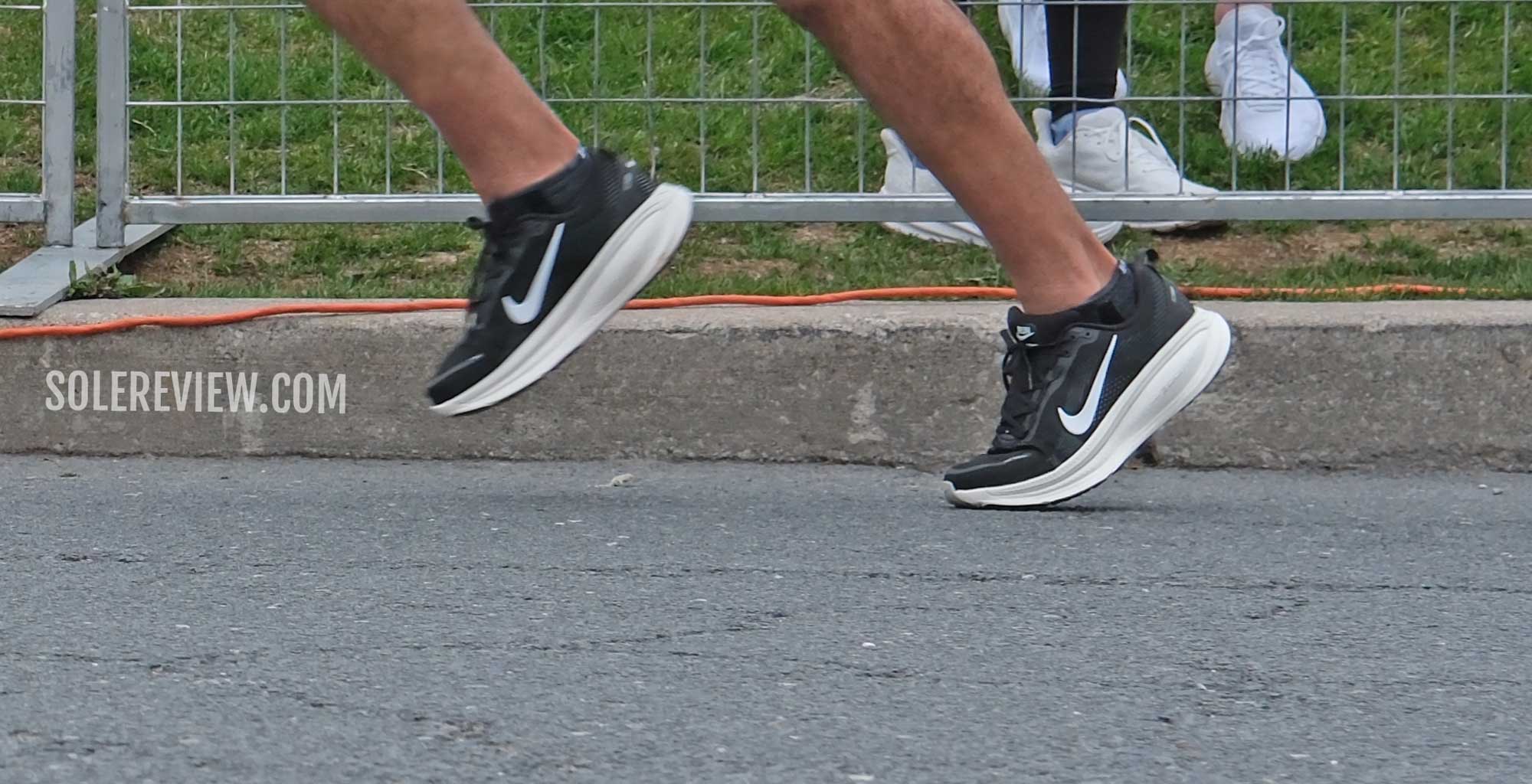
Our recommendations combine our influence-free, expert-led wear-testing with biomechanical data for recreational runner profiles sourced from over 33,000 high-speed images captured during actual road races. We combined our wear-test observations with an evidence-based screening of design features that make a shoe ideal for beginners and new runners. Visit our FAQ section at the bottom to learn more about what makes a particular running shoe beginner-friendly. We also tell you which shoes are the worst for new runners, and why we’ve left out many carbon-plated racers from this guide.
The research behind our picks
I’m new to road running. What’s a good ‘starter’ shoe for me?
People become road runners for many reasons. For example, we’ve given footwear advice to readers who ran only cross-country or track and wanted to transition to road running. At times, road running under certain external conditions such as unsuitable climate (extreme cold or heat) or infrastructure (lack of roads) may not be possible. So once a person relocates to an area with conducive conditions, road running becomes an accessible luxury. A lot of things that many runners take for granted – like paved sidewalks for example – may be a luxury elsewhere. For many first-timers, running complements their preferred athletic activity like biking or swimming.
In the large majority of cases, keeping fit is a powerful motivation to take up running. Running is a gift; it doesn’t take an expensive gym membership or fancy equipment. All you need is some apparel and a pair of reliable running shoes. This is where it gets a bit tricky. With no footwear history to guide you, the task of buying your first pair of running shoes seems daunting. Some people get a super-expensive running shoe, led by the reasoning that a higher price equates to a better product. Don’t do that. Once the $150 (retail price) barrier is breached, the law of diminishing returns kicks in. Instead of getting the most expensive product, focus on a shoe that’s a good starting point.
The first running shoe should be about finding the middle ground first and then building on that foundational experience. Your footwear taste will evolve after a few hundred miles. The stamina, pace, and distance capabilities get better over time, and so does the shoe rotation. Experience will tell whether you need a soft or firm shoe, lighter or heavier, snug or relaxed, and other things – like the preference for a particular heel drop.
This guide (based on use cases, body weight, and gait profile) helps find that starter running shoe. You might not like 100% of what the shoe offers, but it’ll provide a clearer sense of what more (or less) you prefer in your future shoe. For this edition, we’ve also recommended shoes for first-time marathoners (half or full). These recommendations are for experienced runners who are going to run a marathon (or half) for the first time.
Which criteria did Solereview use to determine beginner-friendliness in running shoes?
Versatility: What if you had just one running shoe to do it all? For example, you can run on the road, track, treadmills, and even mild trails in shoes such as the Nike Vomero 18.
Neutral ride: Barring the New Balance 860 v15 that has a lateral cushioning tilt, this list only contains neutral shoes that do not interfere with the gait cycle. Our definition of neutral also includes a supportive ride. Running shoes that are too soft create excessive workload for body and should be avoided by beginners.
Heel-to-toe offset: The heel drop is the difference in height between the thickest part of the heel and forefoot. The suggested shoes have a 6–10 mm offset; we have not included lower-drop models as they may cause initial soreness.
Cushioning: None of these models are overly unstable nor hard. This allows a safe assessment of the comfort level while building the experience required for a high-performance shoe.
Stock availability: Most shoes in our guide are available across different geographies. That’s why we have stuck to the popular brands and not the esoteric ones.
As with all running shoes, buy a size that leaves a thumb’s width of margin in the front. And gradually build up your road running mileage; do not go from 0 – 30 miles in a single week!
Which are the worst possible running shoes for beginners?
We would stay away from soft carbon-plated racers and hyped sneaker-type running shoes. Specific examples include the adidas Adios Pro 4, Asics Metaspeed Sky and Edge, Brooks Hyperion Elite 6, and similar soft super-shoes. For a taste of what a plated shoe feels like, we have recommended the Puma Deviate Nitro 4 (under the daily trainer category) and On Cloudboom Max (for 10Ks and marathons). Also stay away from unstable shoes like the Nike Vomero Premium.
Why it works (the basics)
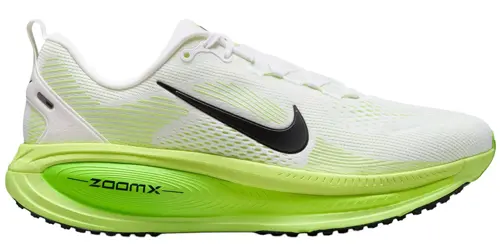
- ZoomX foam top layer → adds bouncy softness
- ReactX foam bottom layer → supports heel strikes and slow speeds
- Rocker midsole → creates a propulsive feel
- Plush, snug upper → offers secure lockdown
🔍 Deep Dive
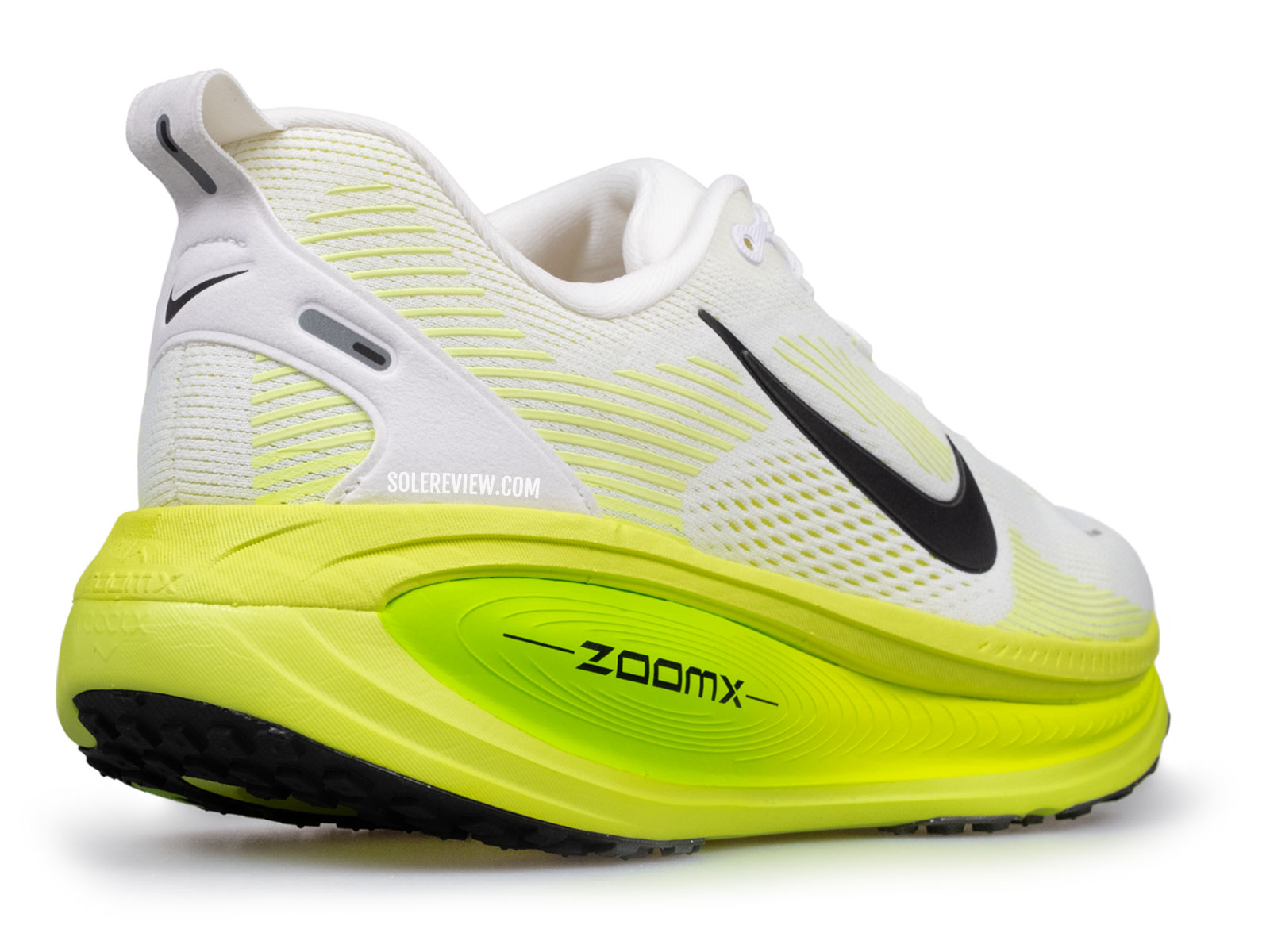
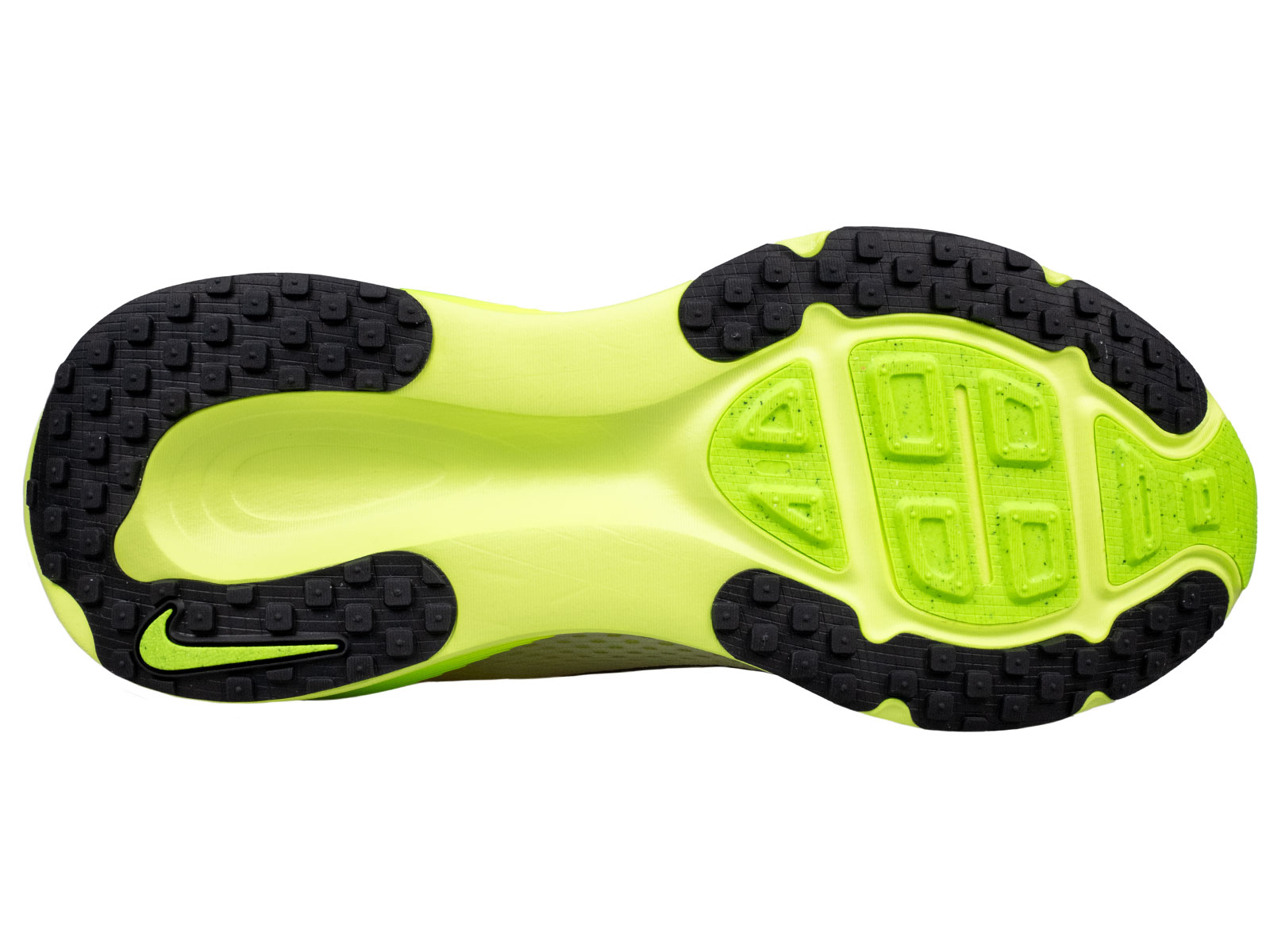
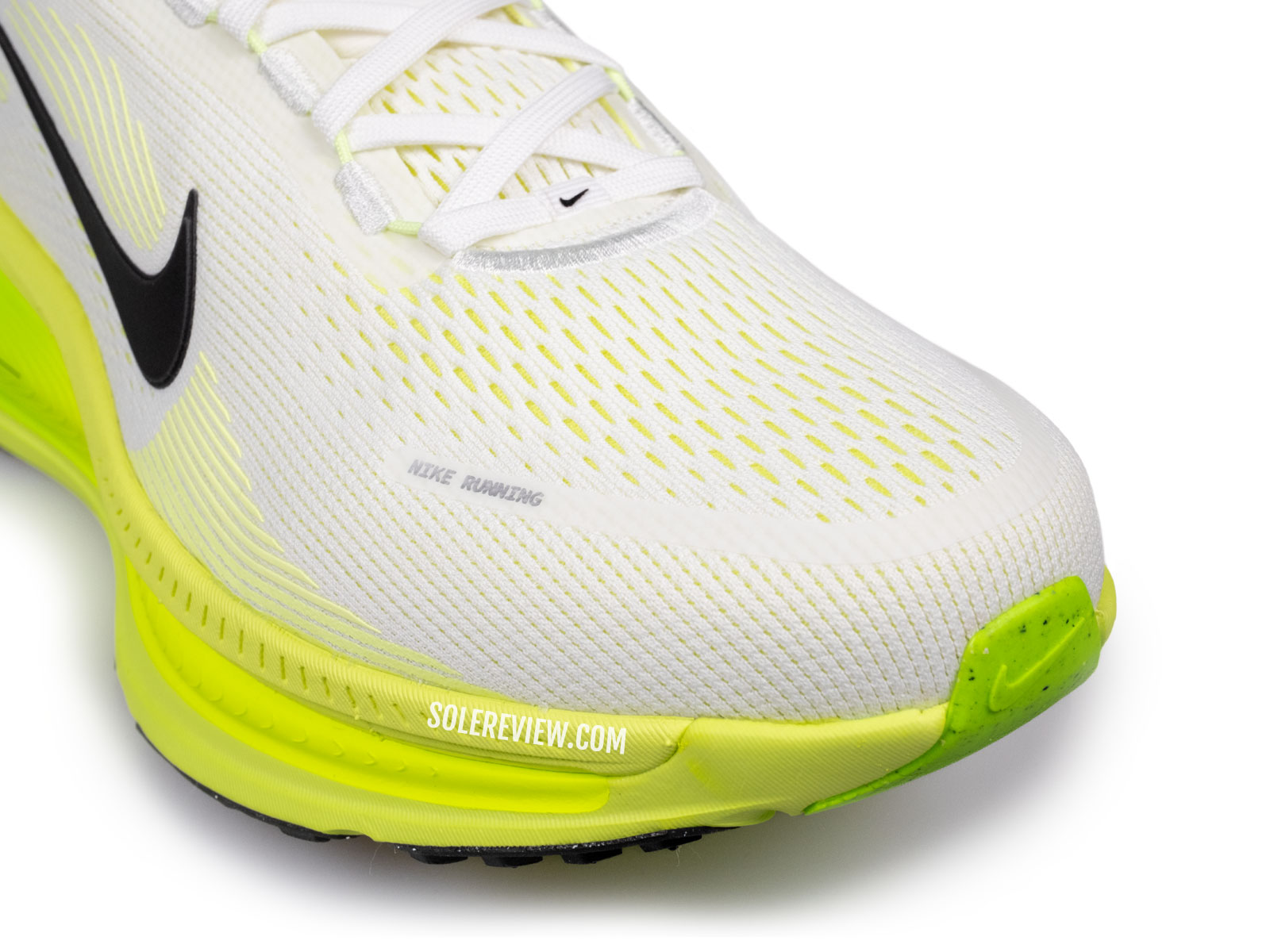
If someone had told us five years ago that the Vomero would end up being one of Nike’s most successful products, we would have scoffed at the mere idea. But here we are, with the Vomero 18 still going strong more than a year after its launch. The Nike Vomero 18 is for Nike what the EVO SL is for adidas – a versatile, do-everything running shoe that appeals to runners of all experience levels.
Like any running shoe with broad mainstream appeal, the Vomero 18 gets many things right. The dual-density midsole layers the soft and springy ZoomX foam over a firmer ReactX stack to produce an Achilles-friendly 10 mm drop. This makes the Vomero softer closer to the foot and more stable at the bottom. The supportive platform accommodates heel strikers, heavy runners, and even overpronators – to a certain degree, that is. Recreational runners and beginners with different physiological profiles will find a pleasing blend of ride comfort, support, and interior plushness. The snug upper locks the foot down over the rocker midsole for efficient power delivery during quicker runs.
Pros
- Blends comfort with stability
- Heel-strike-friendly
- Does not punish slow speeds
- Secure and plush fit
- Optional wide
- Low strain on calves and Achilles
Cons
- Average grip on wet
- Runs slightly warm due to sleeve
- Heavy
Other versatile daily trainers for beginners
Fit Notes
True to size with a snug forefoot and roomy toe box. The sleeved upper runs warm. Optional wide available.
Gallery
Specs
- Heel stack: 44 mm
- Forefoot stack: 34 mm
- Drop: 10 mm
- Weight: 11.5 oz / 325 gms
- Widths: Regular, wide
- Midsole: ReactX, ZoomX foam
- Insole: Molded, removable
Why it works (the basics)
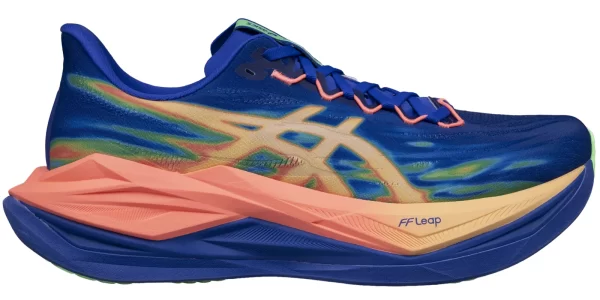
- 46 mm, 38 mm stack heights → makes races less punishing on the feet
- FF Leap, FF Blast+ stack → adds soft top layer over a supportive base
- Snug, true-to-size upper → prevents foot slippage during a race
- Wide outsole footprint → supports heel landings and slow speeds
🔍 Deep Dive
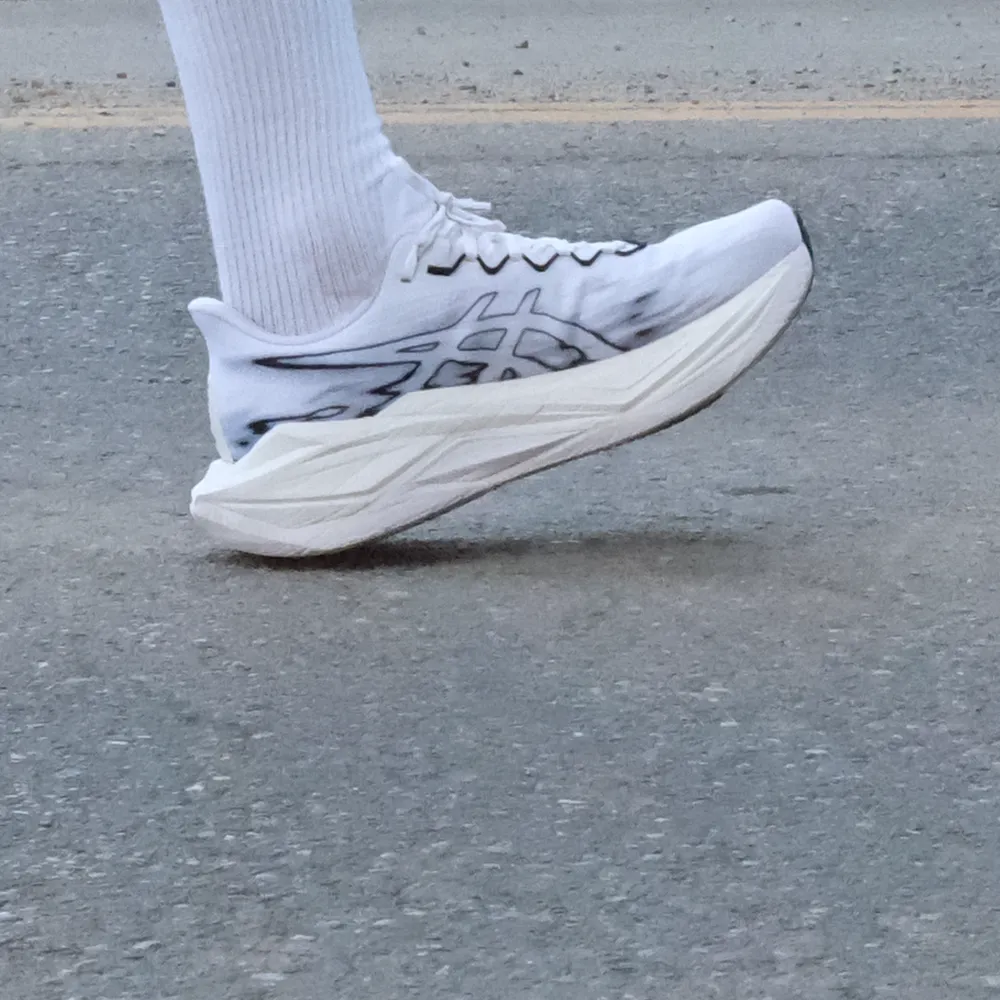
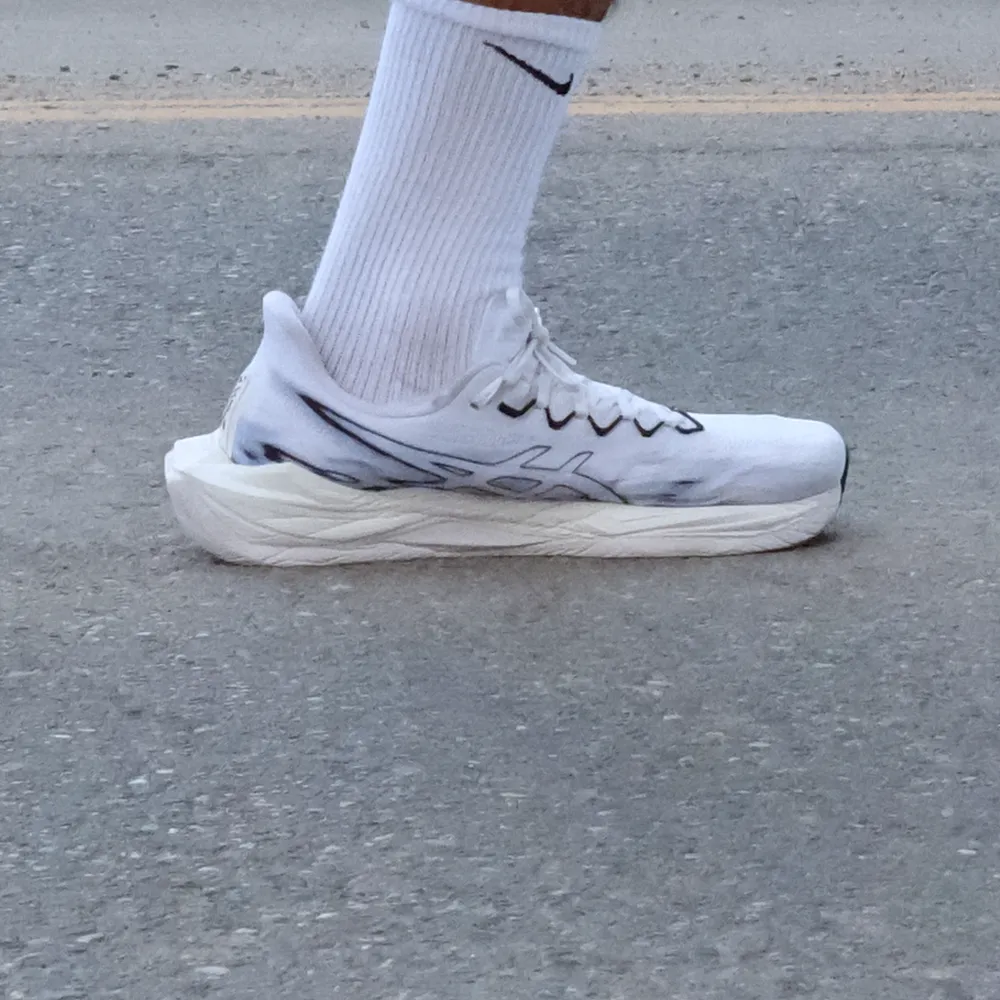
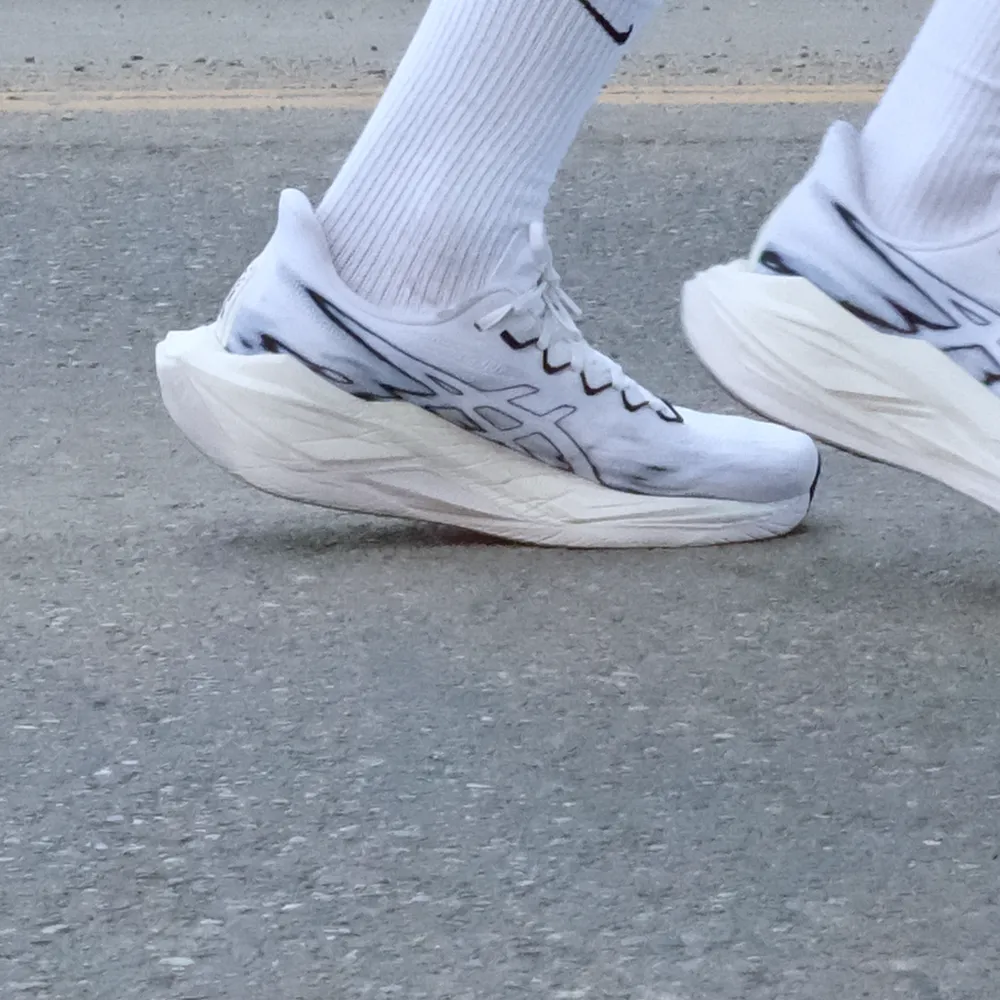
In our review, we awarded the Superblast 3 a measly 6.5/10. The noticeably softer midsole is less eager to pick up speed than the Superblast v1 and v2. However, in our score breakdown by biomechanical profiles, the recreational profile (which overlaps with beginners and new runners) scored the highest. Adding the FF Leap foam to the Superblast 3’s midsole softens the ride, making it less aggressive than the fine-tuned ride of the original Superblast. Like the previous model, the FF Blast+ base creates a supportive base closer to the outsole.
The Superblast 3’s soft and springy midsole goes easy on the feet of new runners during the race and the training runs that precede it. At just 8.4 ounces (239 grams), this shoe offers a superior cushioning-to-weight ratio, considering its 46 mm, 38 mm stack heights. The rocker midsole does the rest, adding a propulsive effect during the final push-off phase. The Superblast 3 isn’t ideal for all beginners, though. If you weigh over 190 lbs/86 kg or overpronate, we don’t recommend the Superblast 3, as the soft FF Leap layer lacks the required levels of compression resistance. If that’s you, consider one of the options from the alternatives below.
Pros
- Distance-friendly comfort
- Secure fit
- Propulsive rocker
- No performance penalty for heel strikes and slower speeds
Cons
- Softer midsole is less fast than the V1 and V2
- Low compatibility with overpronators and heavy runners
- Runs warmer than Superblast 2
- No optional widths
Other 10K and marathon shoes for beginners
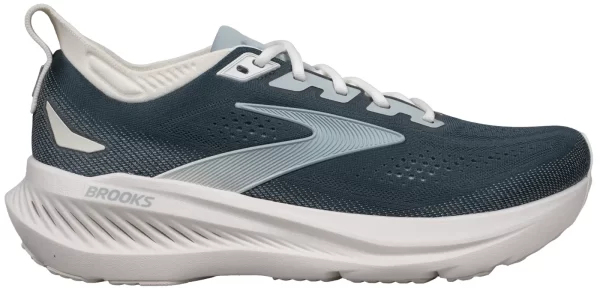
Brooks Glycerin 23
Doesn’t like to go fast, but plush and stable.
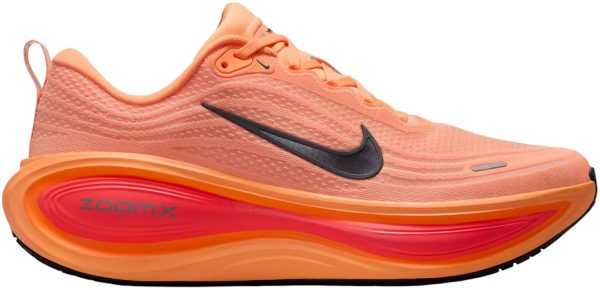
Nike Vomero Plus
Very plush, but feels slower than the Superblast.
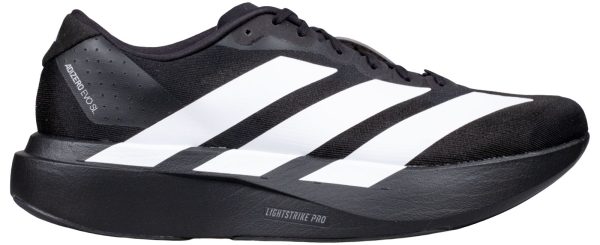
adidas EVO SL
Good for speed; derived from the Adios Pro 3.
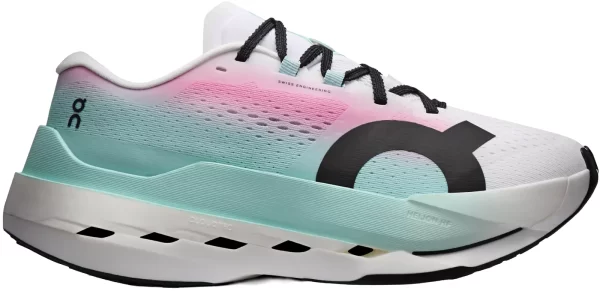
On Cloudboom Max
Supportive max-cushioning with a full-length plate.
Fit Notes
Fits true to size with a snug forefoot and roomy toe box. Runs warmer than the Superblast 2 due to the thick mesh. Single width only.
Gallery
Specs
- Heel stack: 46 mm
- Forefoot stack: 38 mm
- Drop: 8 mm
- Weight: 8.4 oz / 239 gms
- Widths: Regular (single)
- Midsole: FF Blast+, FF Leap foam
- Insole: Molded, removable.
Why it works (the basics)
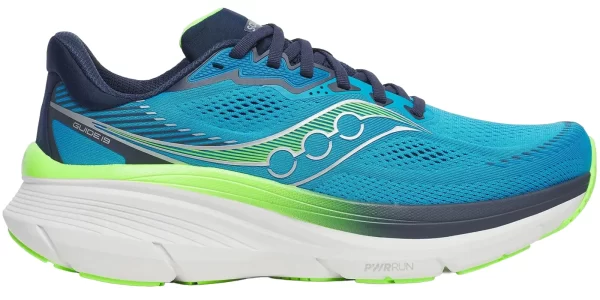
- Wide PWRRUN (EVA) midsole → delivers a safe and stable ride
- Firm foam density → provides structural integrity during overpronation
- Thick PWRRUN+ footbed → can be replaced with a supportive orthotic
- Optional wide and extra-wide widths → will accommodate broad feet
🔍 Deep Dive
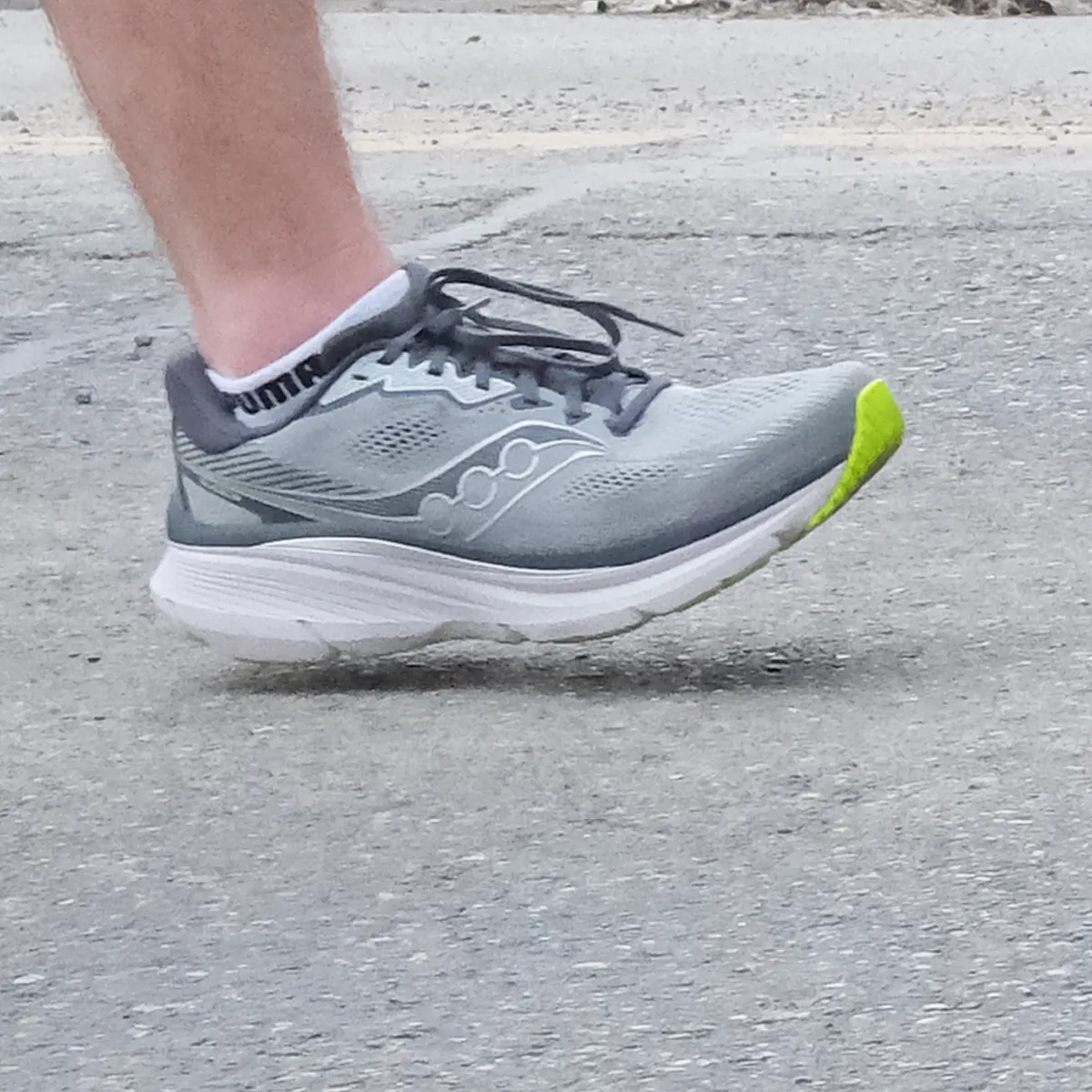
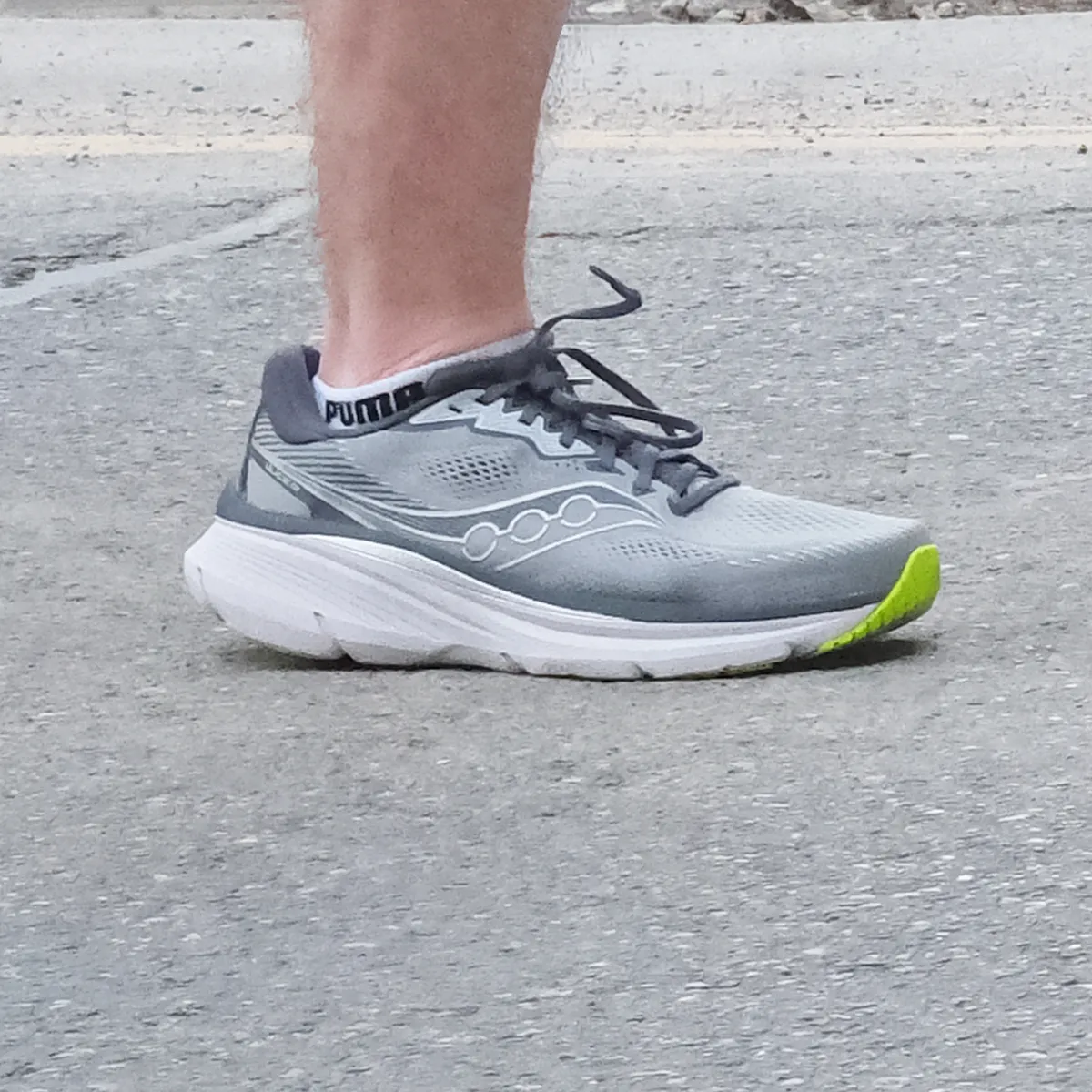
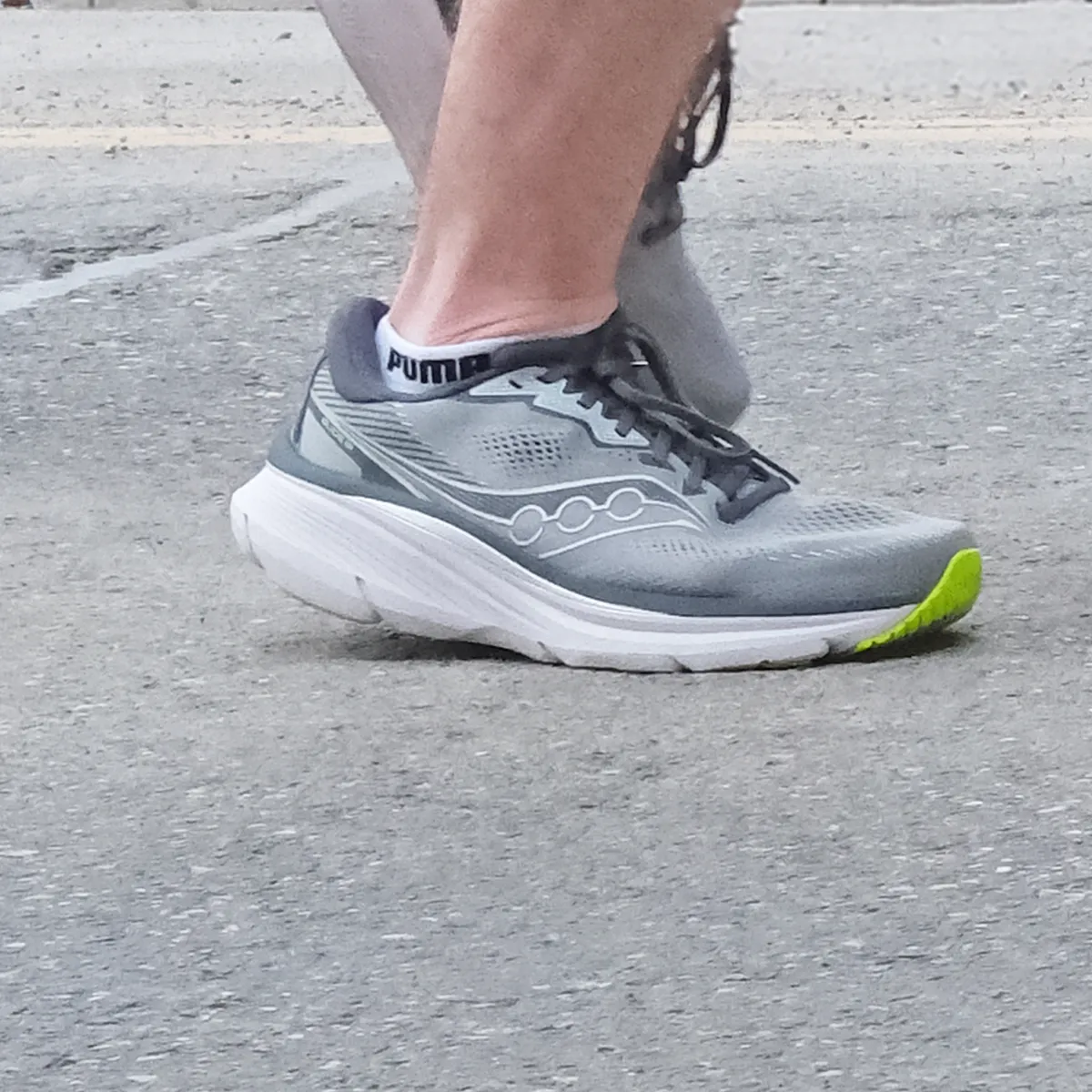
A safe and predictable ride is key for overpronators new to running. Predictability is what the Saucony Guide 19 does best, courtesy of its wide PWRRUN (an EVA-blend foam) midsole. Unlike soft super-foams, the EVA-blend midsole has high compression resistance, meaning the medial (inner) midsole will not collapse when the foot rolls excessively inward during an overpronated gait. The raised sidewalls keep the foot seated by creating a cupping effect. The 8-piece outsole provides ample contact points and traction without adding stiffness.
The Guide 19 may not be very soft, but that doesn’t translate into a lack of comfort. Directly under the foot is a chunky PWRRUN+ footbed (made of expanded polyurethane foam) that not only adds targeted comfort close to the foot, but can also be replaced with an aftermarket orthotic for better support. The firm midsole cushions impact without collapsing, and that’s what overpronators need. This stability shoe is ideal for daily training, 10Ks, and marathons at moderate paces (slower than 5:00 min/km, 8 min/mile). The partially elastic spacer mesh upper is extremely comfortable, accommodating most foot profiles.
Pros
- Ultra-stable ride
- Thick footbed for step-in comfort
- Articulated outsole maximizes contact
- Plush, spacer mesh upper
- Optional wide and extra-wide widths
Cons
- Struggles at faster paces
- Slightly heavy
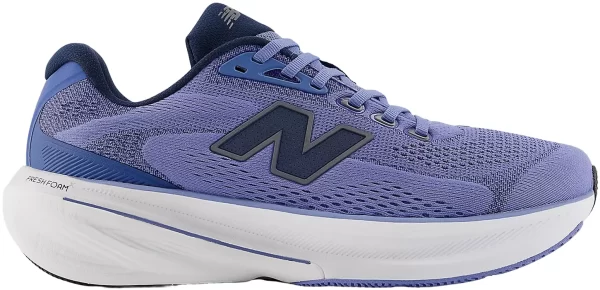
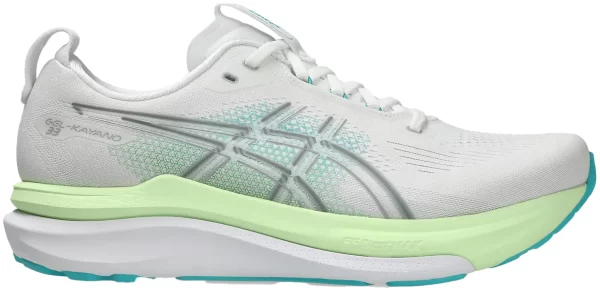
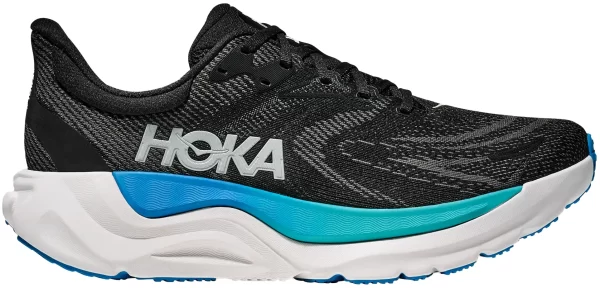
Other shoes for overpronating new runners
Fit Notes
True to size. Spacious toe box, accommodating forefoot, soft semi-stretchy spacer mesh. Gusseted tongue. Optional wide and extra-wide widths.
Gallery
Specs
- Heel stack: 39 mm
- Forefoot stack: 33 mm
- Drop: 6 mm
- Weight: 9.7 oz / 275 gms
- Widths: Regular, wide, extra-wide
- Midsole: EVA-blend PWRRUN foam
- Insole: Molded E-TPU, removable
Why it works (the basics)
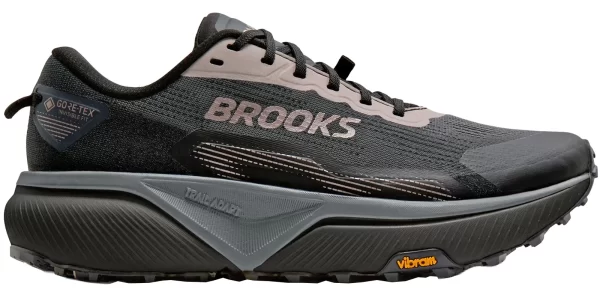
- Nitrogen-infused midsole → delivers off-road comfort
- Trail-Adapt frame → provides stability on uneven surfaces
- Articulated Vibram Megagrip outsole → offers grip and ground feel
- Reinforced toe bumper → adds abrasion resistance
🔍 Deep Dive
The Brooks Cascadia has been around for a long time, and most iterations were successful as they were feature-rich for trail use. The Cascadia 20 does the same. The nitrogen-infused midsole foam (DNA Flash) cushions the foot on the trail; that’s countered with the co-molded Trail-Adapt frame that prevents midsole roll on uneven terrain. The latest model gets a Vibram Megagrip outsole with 4 mm lugs and a split geometry. Splitting the outsole into separate sections is ideal on a trail running shoe, as it allows each section to grip independently and provide adaptive suspension while letting ground feedback through.
As you can already see, the Cascadia 20 isn’t just for beginners, but for most trail runners who want a comfortable, supportive, secure, and grippy shoe for most surfaces from gravel to packed trails to rocky terrain. Beginners will find everything they want in a trail shoe, and then some. The upper has Brooks Ghost-like comfort, except that it is reinforced in key areas (like the toe box) for protection and abrasion resistance.
Pros
- Off-road comfort and support
- Outsole traction and ground feel
- Secure, comfortable fit
- Optional GTX variant and width
- Multi-terrain capability
- Outsole articulation offers adaptive suspension
Cons
- Lacks a true rock plate
- Doesn’t have a gaiter loop or ring
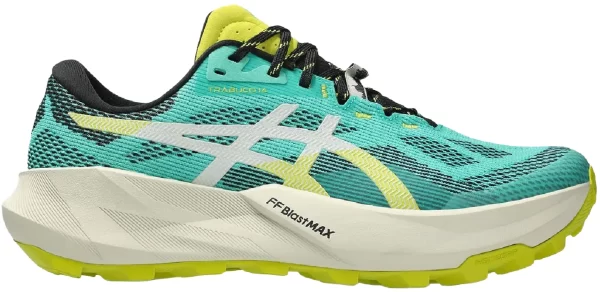
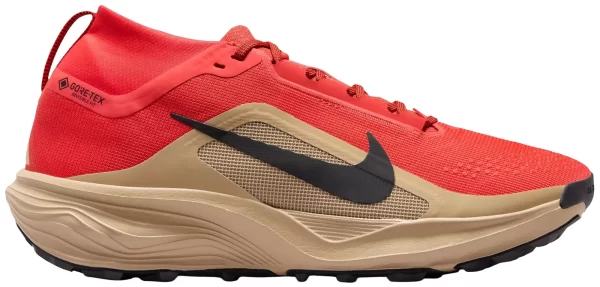
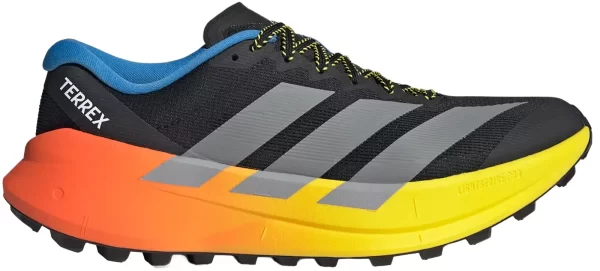
Other trail running shoes for beginners
Fit Notes
Fits true to size with a snug forefoot and roomy toe box. Also sells in a wide, as well as a waterproof (Gore-Tex) variant (for $30 extra).
Specs
- Heel stack: 38 mm
- Forefoot stack: 32 mm
- Drop: 6 mm
- Weight: 10.8 oz / 306 gms
- Widths: Regular
- Midsole: Nitrogen-infused DNA Flash V2
- Insole: Molded, removable