
Product guide updates
(5 total)- 2026-09-20 — Added 'Top recommendations summary' module
- 2026-08-20 — Updated with minor edits and corrections
- 2026-08-19 — Created FAQ with relevant question and answer pairs
- 2026-08-19 — Migrated product guide to new editorial format
- 2026-08-19 — Updated all recommendations
In this product guide:
How we selected
Our recommended plated running shoes for heel strikers are grouped by use cases – daily runs, 10Ks and marathons, heavy runners, and recovery runs. By connecting each feature with its respective function, the “Why it works” section explains why a particular shoe (in its respective class) is suitable for its recommended use case. Here’s a quick, one-line summary of our recommended categories:
- Best for daily runs: Versatile trainer with an internal plate.
- Best for 10Ks and marathons: Carbon-plated racer with excellent heel stability.
- Best for heavy runners: Plated shoes that do not compact under heavy loads.
- Best for recovery runs: Max-cushioned trainer with plate assist.
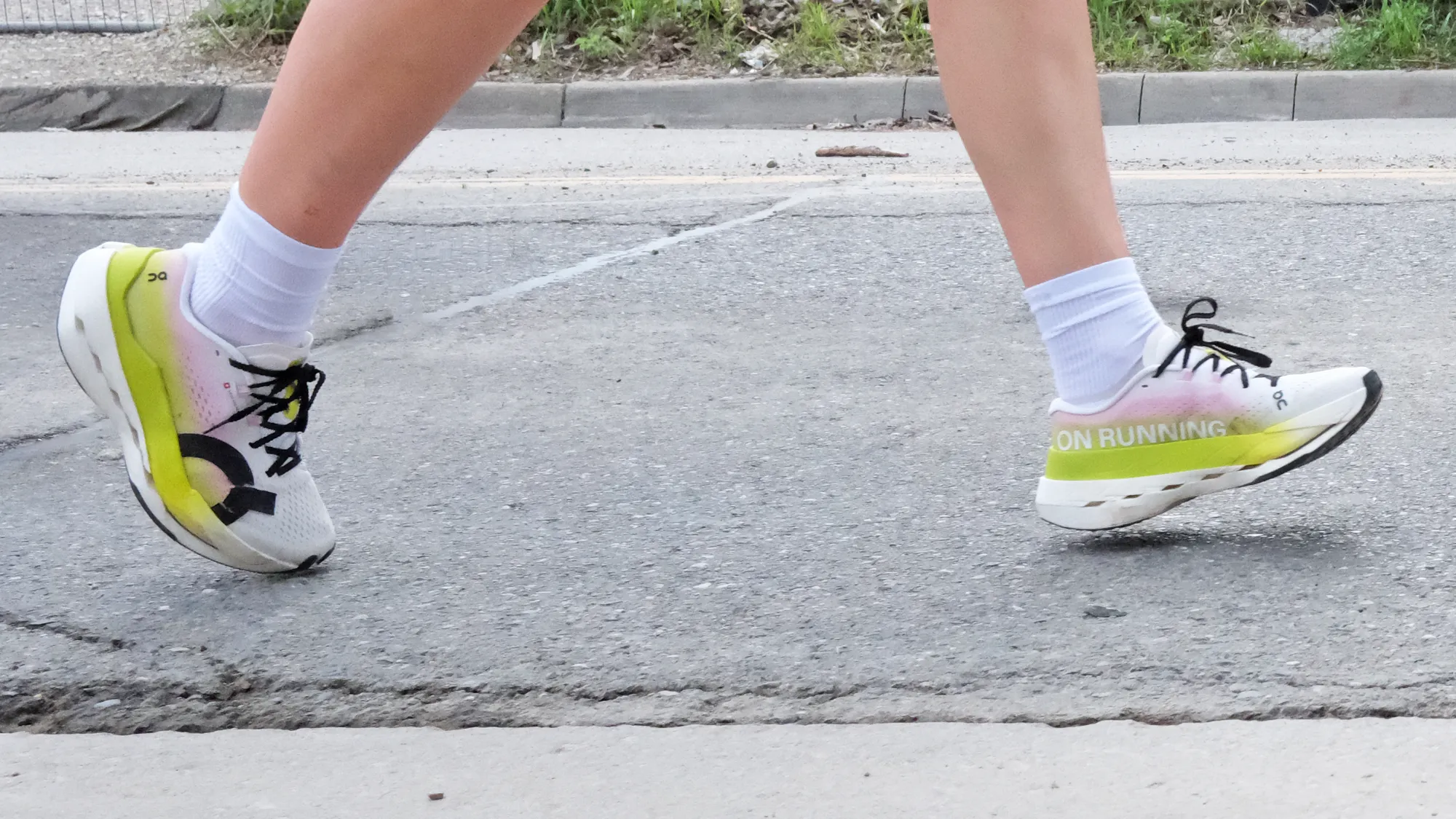
Our recommendations combine our influence-free, expert-led wear-testing with biomechanical data sourced from over 33,000 high-speed images captured during actual road races. We combined our wear-test observations with an evidence-based screening of design features that make a carbon-plated running shoe suitable for heel strikers. Visit our FAQ section at the bottom to learn more about specific design features that a heel-striker-friendly plated shoe should have, and specific shoe models to steer clear of.
Why it works (the basics)
- Dual-density Nitrogen-infused foam → resists bottoming out
- Solid under-heel midsole → stabilizes heel landings
- Carbon PWRPLATE → adds longitudinal stiffness
- Pumagrip outsole → provides traction for heel strikers
🔍 Deep Dive
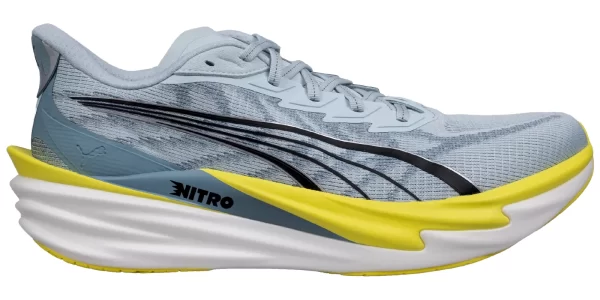
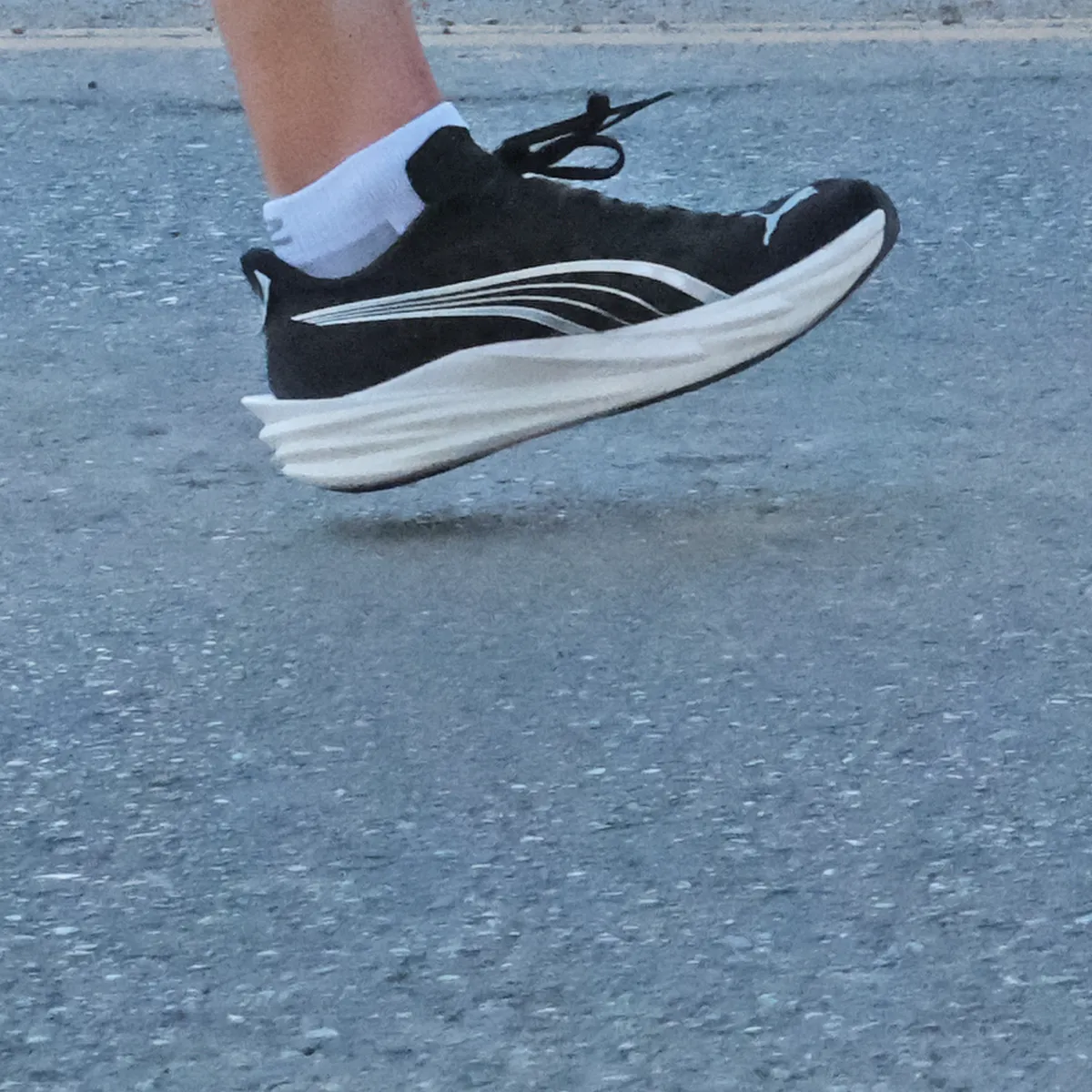
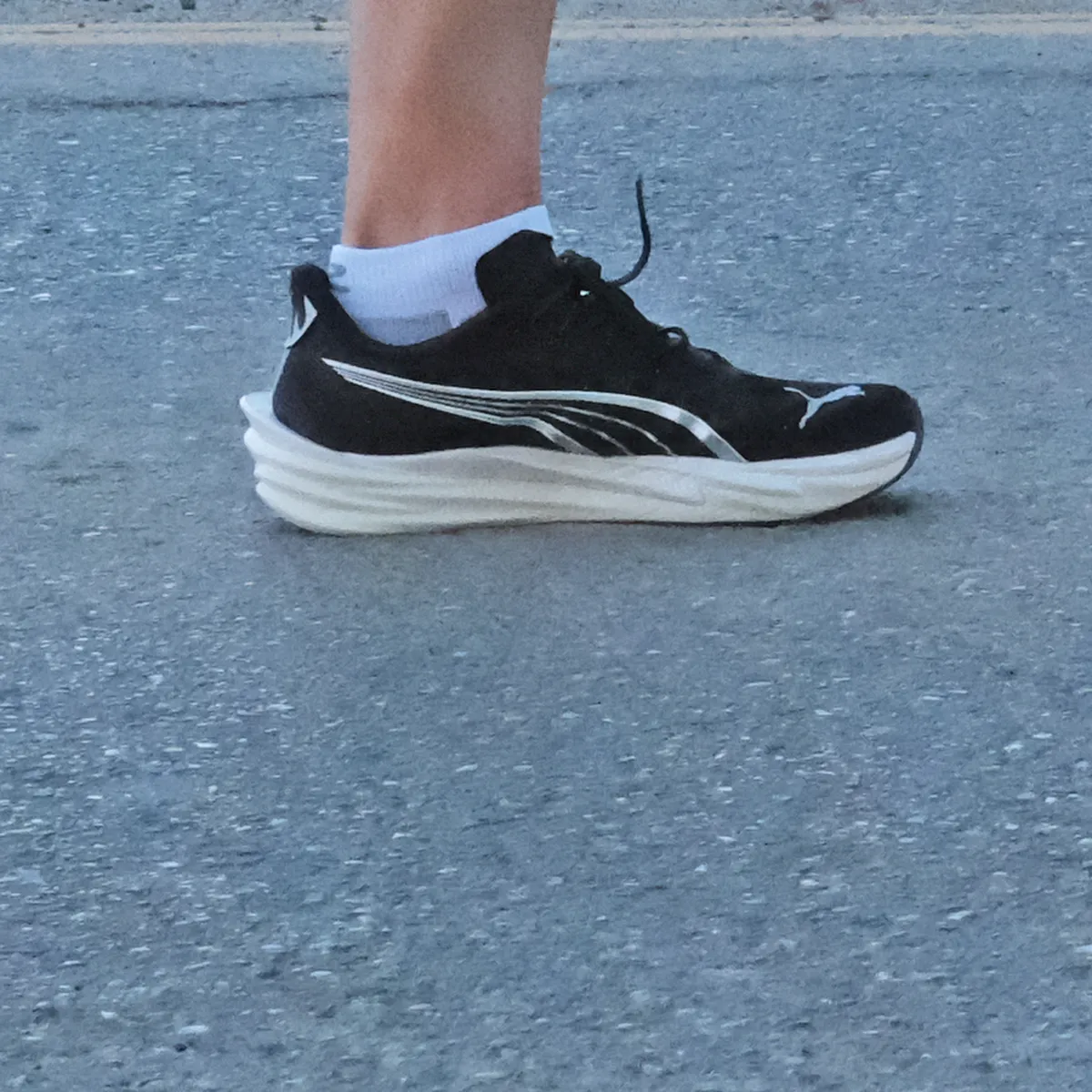
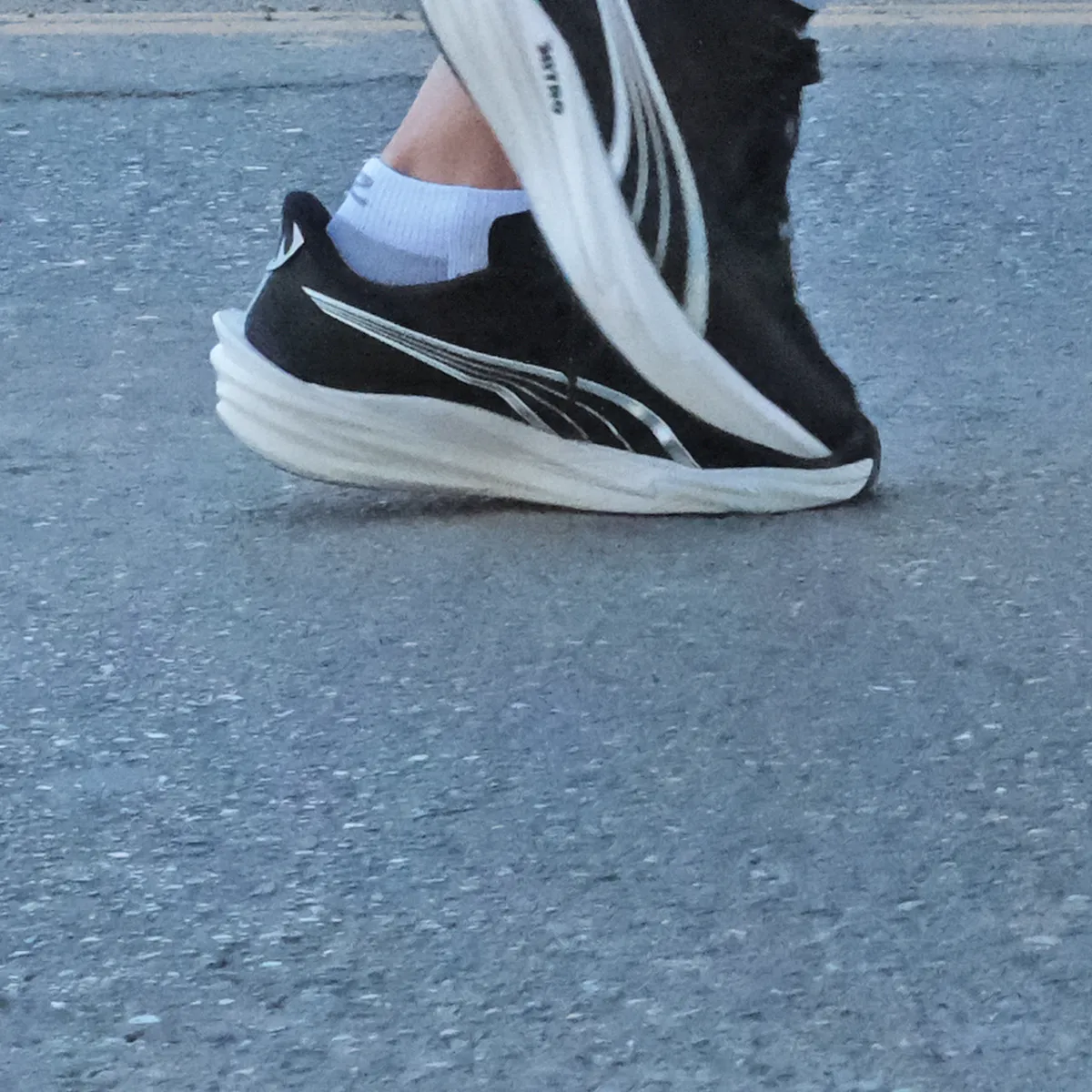
We rated the Puma Deviate Nitro 4 highly in our review, as it offers reliable performance across multiple biomechanical profiles. Except for heavy runners where the forefoot compression is significant, the Deviate Nitro 4’s dual-density midsole and carbon plate deliver a snappy ride without the unstable ride of typical carbon-plated racers. This shoe is versatile, meaning it’s perfectly capable of everyday training at easy paces as as well as speed-running through sub-4:00 min/km (6:30 min/mile) paces.
As regards its heel-strike compatibility, two specific features make that happen. The heel has a greater proportion of the firmer Nitro foam (the midsole is dual-density), and the stack height is a moderate 36 mm. Also, the midsole under the heel doesn’t have a deep channel or groove that usually weakens the structure on many plated shoes. During heel-first landings, the firm base and solid midsole core provide support during landings and prevent a zero or negative drop situation. Two Pumagrip rubber lugs on the crash pad provide traction during heel strikes.
Pros
- Supportive NitroFoam base
- Filled-up under heel area for stability
- Excellent outsole traction
- Goes fast without penalizing slow speeds
Cons
- Sizing needs improvement
- No optional widths
Fit Notes
A narrow and breathable upper that fits nearly a half-size long. We still recommend staying true to size because of the narrow fit and shallow toe box. Optional widths are unavailable.
Gallery
Specs
- Heel stack: 36 mm
- Forefoot stack: 28 mm
- Drop: 8 mm
- Weight: 8.8 oz / 249 gms
- Widths: Regular
- Midsole: NitroFoam
- Insole: Molded, removable
Why it works (the basics)
- Supportive PWRRUN PB base → delivers planted heel strikes
- Soft PWRRUN HG top layer → adds closer-to-the-foot comfort
- Compression-resistant foam → doesn’t bottom out during landings
- Carbon-plated rocker midsole → adds speed-friendly comfort
🔍 Deep Dive
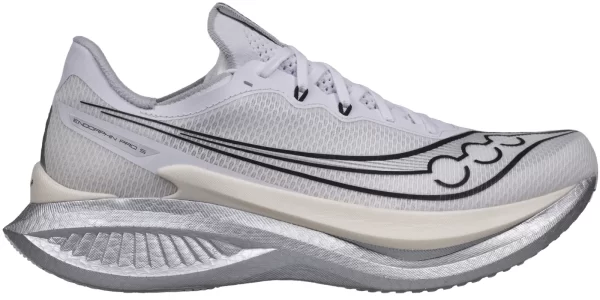
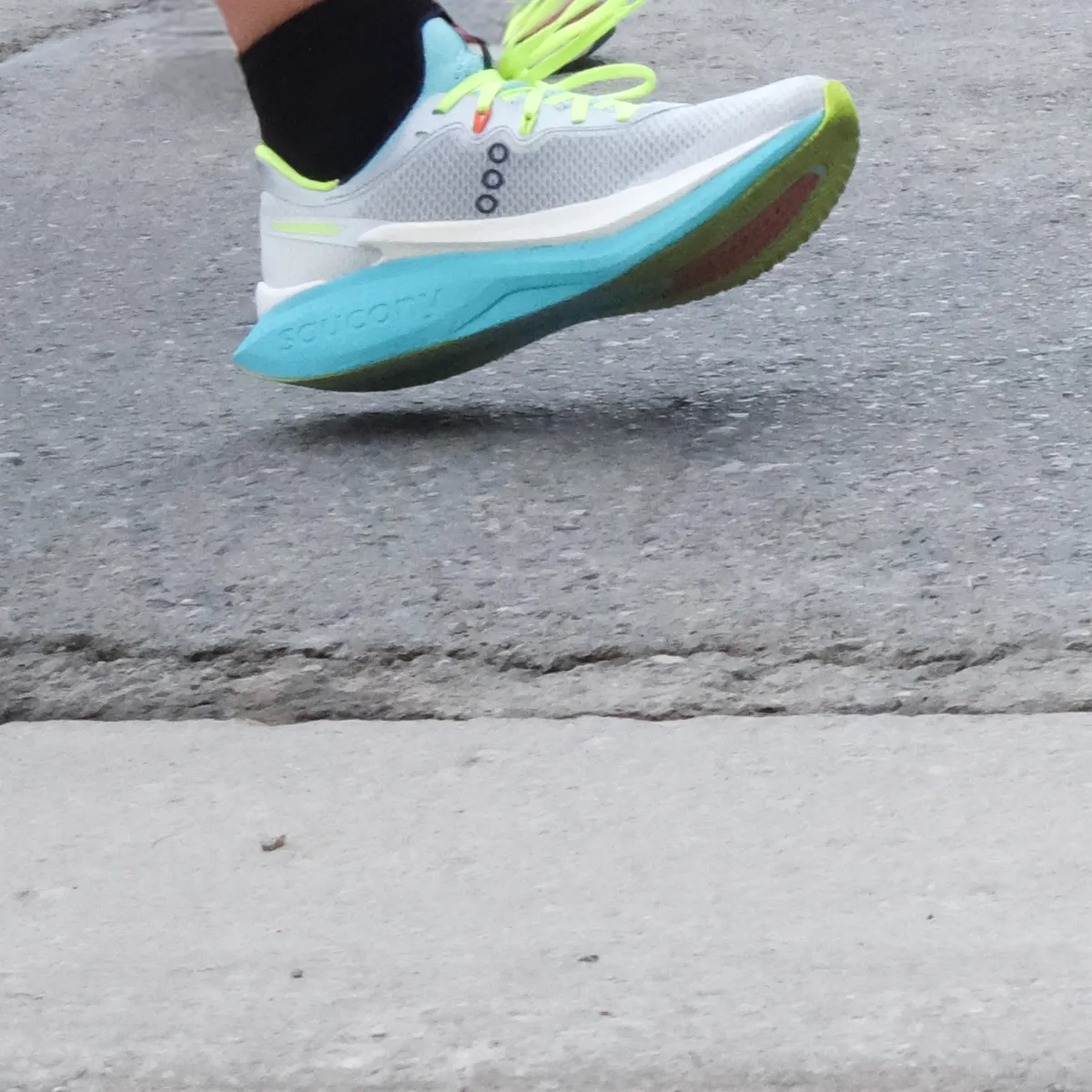
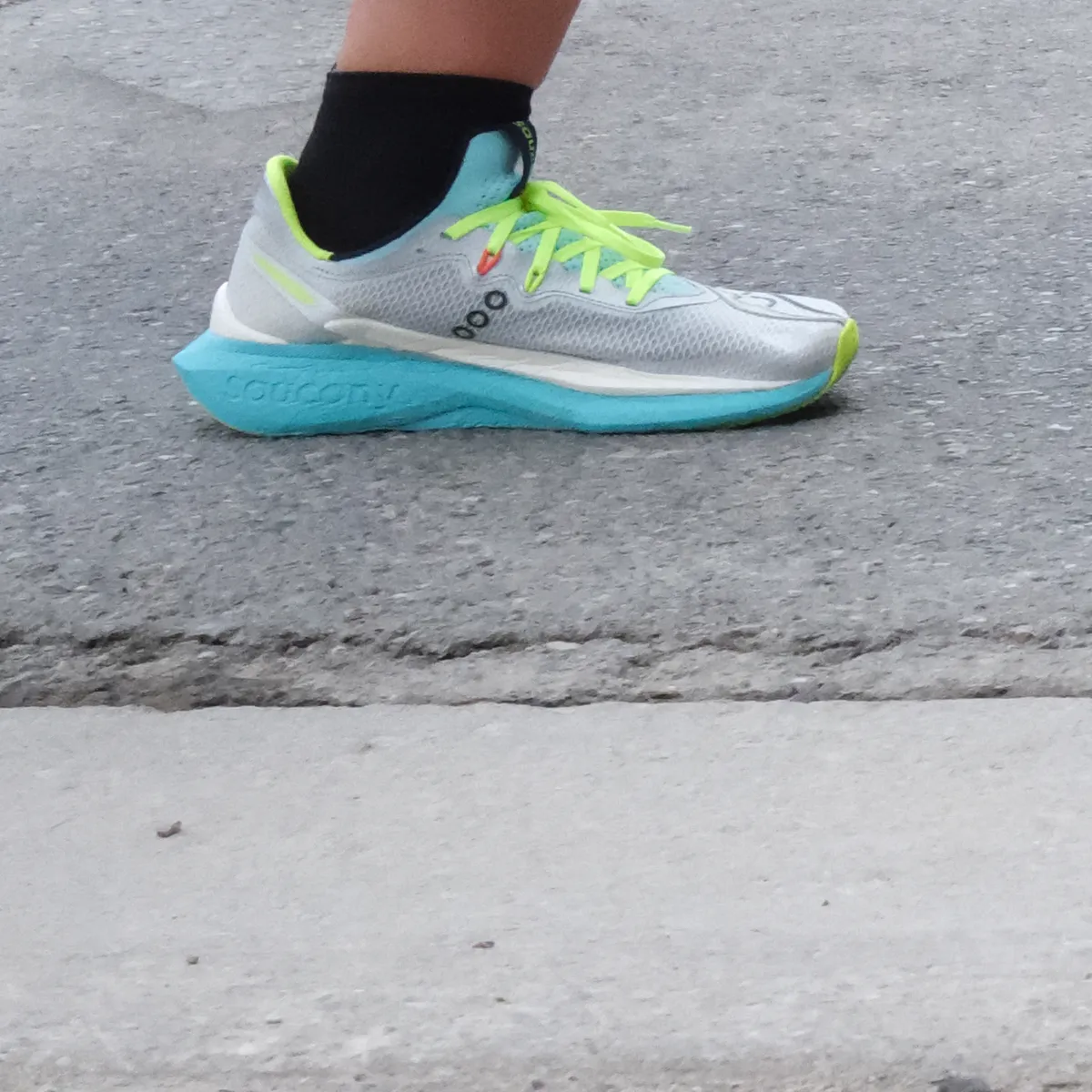
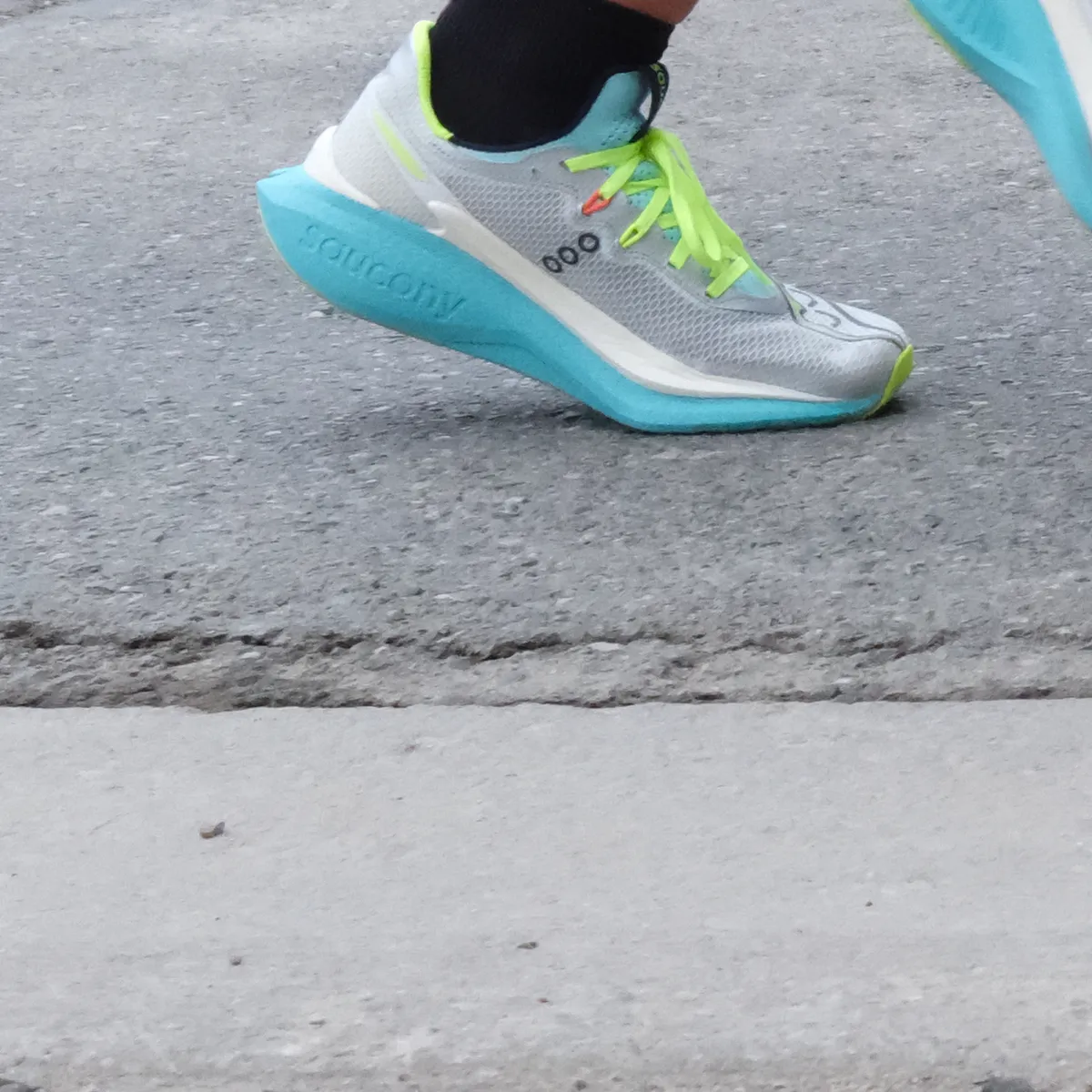
The Saucony Endorphin Pro’s heel-strike-friendly features differentiate it from other plated racers. Since PWRRUN PB foam is made by compressing thousands of foam globules, it isn’t as soft or bouncy as adidas Lightstrike Pro or Asics FlyteFoam Turbo. The outsole spread is among the most generous in its class, with thick rubber lugs across the forefoot and heel for grip and impact protection. The wide base, midsole groove, and supportive PWRRUN PB foam (the softer PWRRUN HG is just a thin layer) make the Endorphin Pro 5 an excellent option for heel strikers. The midsole rocker and plate create a propulsive yet user-friendly ride, regardless of experience level. While the shoe is built for high speeds, it handles slow runs and heel striking just as well.
The breathable, lightweight upper locks down the foot without uncomfortable tightness. A word of caution for runners with sensitive Achilles: the updated heel collar design isn’t as comfortable as the Endorphin Pro 4’s design. In some cases, the stiff collar may chafe the skin on the heel.
Pros
- Best heel stability in its class
- Doesn’t penalize slow speeds
- Resists bottoming out
- Cushioned and propulsive ride
- Breathable, accommodating fit
Cons
- Stiff heel collar may irritate skin
- Lack of widths
Fit Notes
True to size with an accommodating fit and roomy toe box. The stiff heel collar isn’t ideal for no-show running socks.
Gallery
Specs
- Heel stack: 39.5 mm
- Forefoot stack: 31.5 mm
- Drop: 8 mm
- Weight: 7.3 oz / 206 gms
- Widths: Regular (single)
- Midsole: PWRRUN PB, PWRRUN HG
- Insole: Non-removable
Why it works (the basics)
- Unique heel edge plate → supports heavy landings
- Horseshoe-shaped plate window → keeps weight centered
- Wide and supportive lower base → provides rearfoot stability
- 40 mm, 32 mm stack height → makes long runs comfortable
🔍 Deep Dive
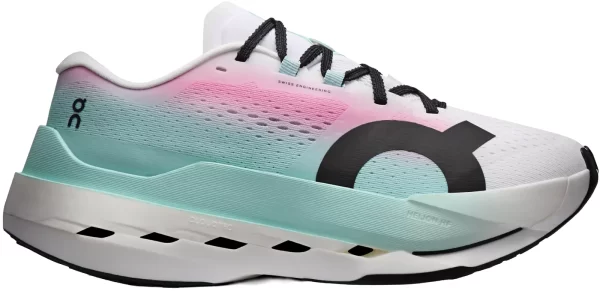
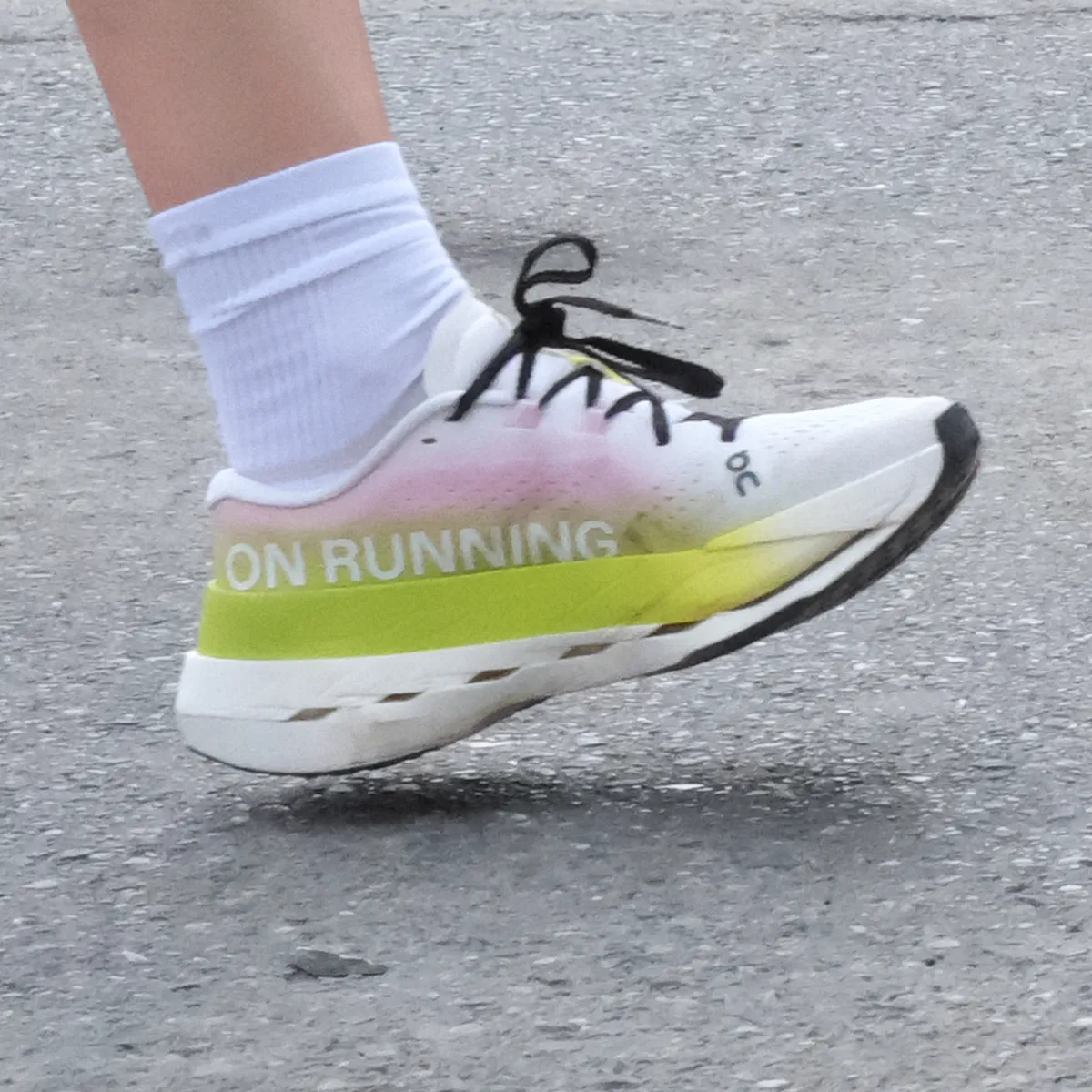
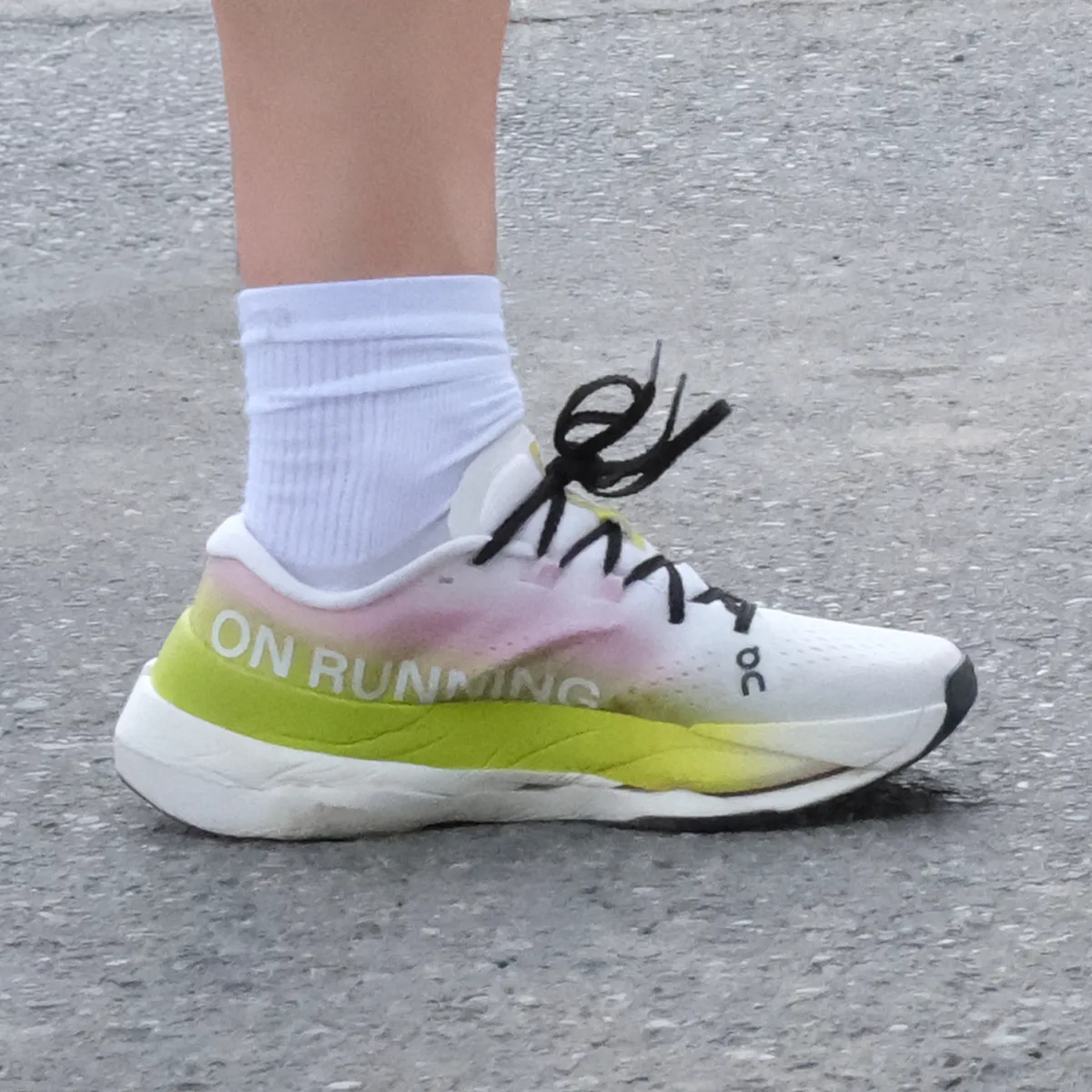
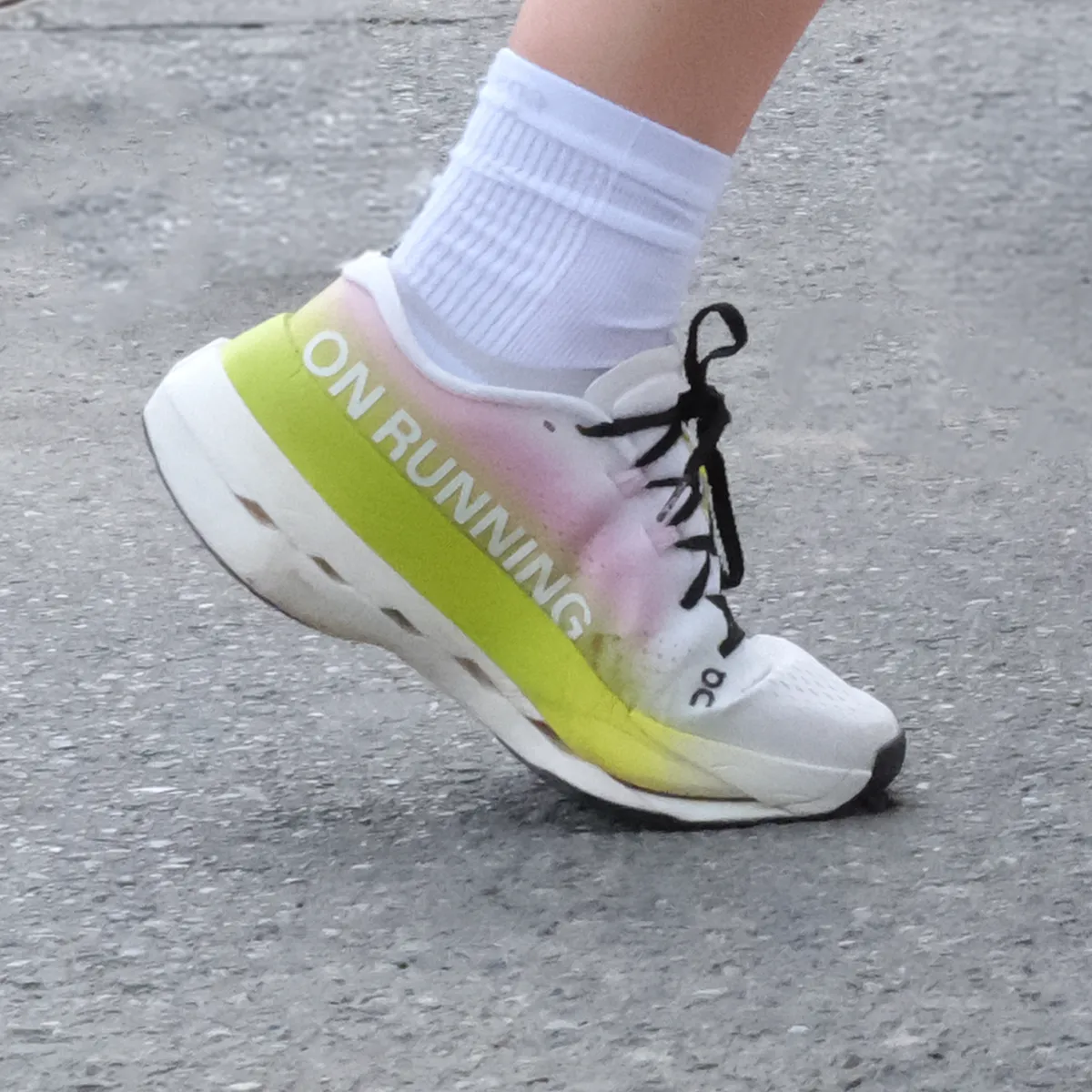
If you view the Cloudboom Max from its rear, you’ll notice a tiny black ‘tongue’ sticking out. What you see is the heel end of the unique glass-fiber-infused plate. The latter is one of the few true full-length plates in the business, but it’s not solid throughout. A horseshoe-shaped cutout under the heel makes landings softer by exposing the midsole foam. The forefoot has a ‘tabi’ type split-toe design for more control during toe-offs. The max-stack midsole (40 mm, 32 mm) delivers propulsive comfort to everyday runs, 10Ks, and marathons.
Several features work together to make the Cloudboom Max ideal for heavy heel strikers. The end-to-end glass fiber-infused plate prevents the foot from sinking into the midsole. Speaking of which, the lower half of the dual-density midsole acts as a wide and supportive base for heavy runners. Unlike many plated racers, the Cloudboom Max has a wide outsole footprint with unusually high midsole sidewalls to keep the foot seated. These enhancements greatly improve the overall stability while adding high levels of compression resistance – thanks to the rigid plate and firmer base. These extra features help, as does the generous outsole coverage. The Cloudboom Max weighs 10.4 ounces (296 grams), which is an understandable compromise given the additional benefits.
Pros
- True-full-length plate for load management
- Heel plate opening for softness
- Supportive midsole base
- Raised sidewalls for cupping action
- High durability for a shoe in its class
Cons
- No optional widths
- Heavy by super-shoe standards
Fit Notes
Fit true to size with soft interiors and an accommodating fit. Optional widths unavailable.
Gallery
Specs
- Heel stack: 40 mm
- Forefoot stack: 32 mm
- Drop: 8 mm
- Weight: 10.4 oz / 296 gms
- Widths: Regular (single)
- Midsole: Dual-density Helion HF Hyper
- Insole: Molded, removable
Why it works (the basics)
- 49 mm, 44 mm stack height → delivers maximum comfort
- Articulated carbon plate → adds stabilizing stiffness
- Wide crash pad → supports heel strikes
- Stiff heel counter → keeps heel locked in
🔍 Deep Dive
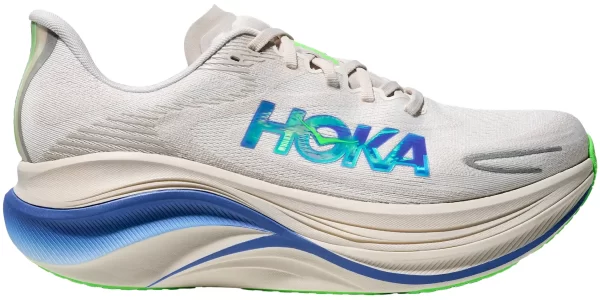
On paper, the Skyward X 2 is a ‘plated’ trainer. That said, the plate is not like what’s found inside a typical super-shoe, because the Skyward X 2 is not a racer. It’s an ultra-cushioned trainer with gigantic midsole stack heights (49 mm, 44 mm) that’s ideal for slower speeds – the runs could include everything from everyday training to long-distance recovery runs to 4-hour+ marathons. The carbon plate isn’t solid; it has multiple windows along its length for flexibility with a split-toe design that gives the foot more control than a solid plate design. A rigid plate is useful for a shoe this tall, as it prevents the foot from sinking inwards during transitions. The plate is curved under the forefoot, adding a propulsive effect through the rocker shape.
Heel strikers will experience the fullest extent of the PEBA midsole cushioning, as the heel stack is a ginormous 49 mm. The dual-density midsole has a slightly firmer lower half, thus supporting heel landings. Outsole rubber is present in key contact areas, including the heel crash pad. This version is an improvement over the original Skyward X, both in how it rides and how it fits. The softer cushioning has better feedback, and the pliable upper loses the stiff feel of the previous model.
Pros
- Maximum ride comfort
- Wide base for heel strikers
- Outsole coverage on crash pad
- Transition-assisting plate
- Soft, secure upper
Cons
- No optional widths
- Heavy
- Little utility outside slow runs
Fit Notes
Fits true to size with a snug fit. No tongue gusset. Is sold in a single width only.
Specs
- Heel stack: 49 mm
- Forefoot stack: 44 mm
- Drop: 5 mm
- Weight: 11.0 oz / 312 gms
- Widths: Standard (single)
- Midsole: PEBA-blend foam
- Insole: Molded, removable
The research behind our picks
Which design features make a plated running shoe suitable for heel strikers?
Navigating the crowded marketplace of plated running shoes can be tricky for a heel striker. Heel stability is an afterthought rather than being baked into the design. The usual ingredients of a plated shoe are a full-length plate (which can be made of carbon fiber, nylon, or Pebax) inside a soft PEBA or TPE foam core. The midsoles are slim to reduce weight, so there’s not enough runway for a heel striker to safely land on. While a soft PEBA foam feels great under the foot, it’s inherently unstable.
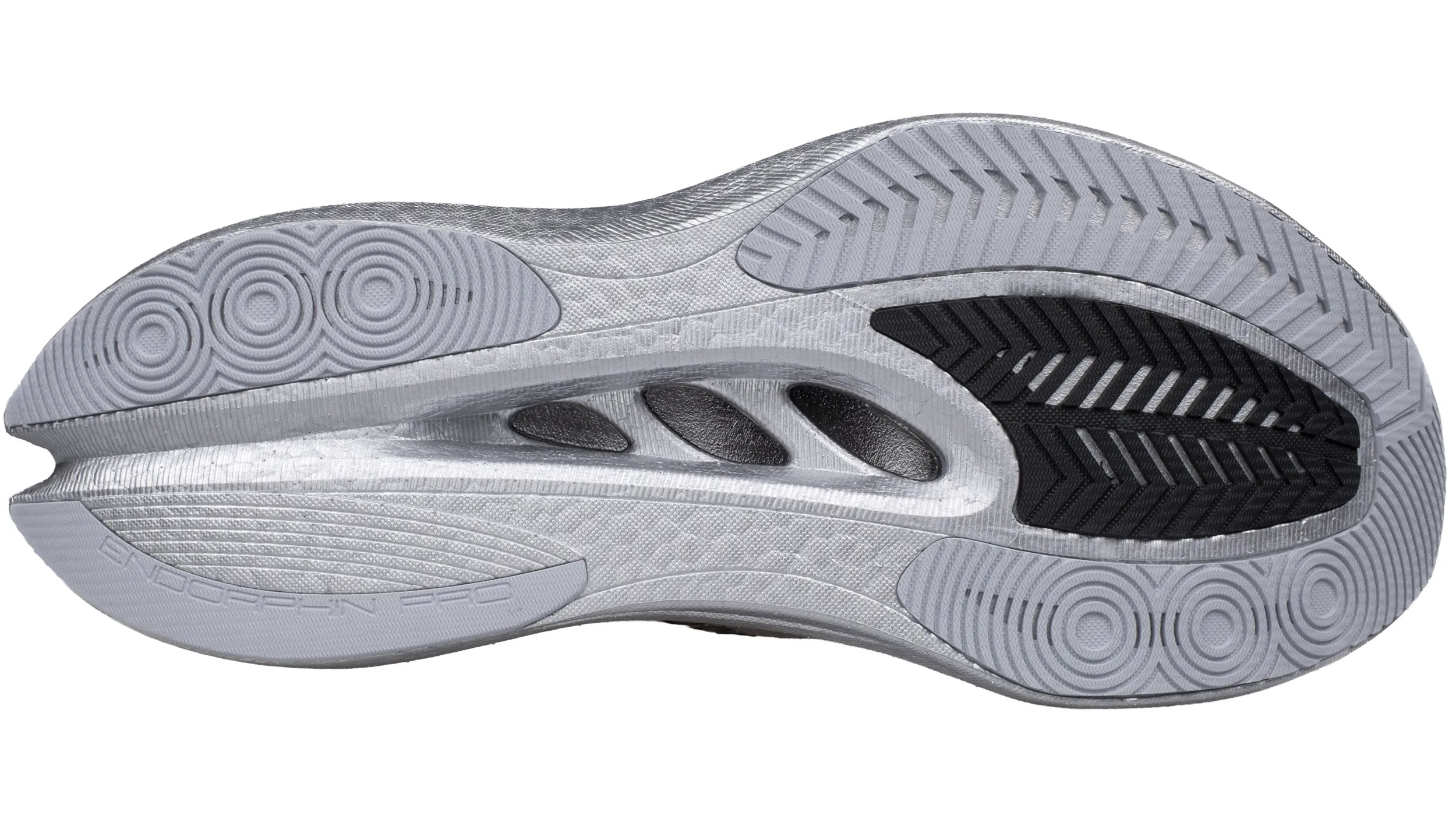
For a plated racer or trainer to be effective for heel strikers, it must meet two key requirements. The midsole should have a wider base than the average plated racer. But a wide base alone isn’t enough; the layer that’s closest to the ground should be made of a firm foam. The firmness is relative and not an absolute; Saucony’s PWRRUN PB foam is stiffer than the foam used on the Adidas Adios Pro 4, Asics Metaspeed Sky, and the Brooks Hyperion Elite 6.
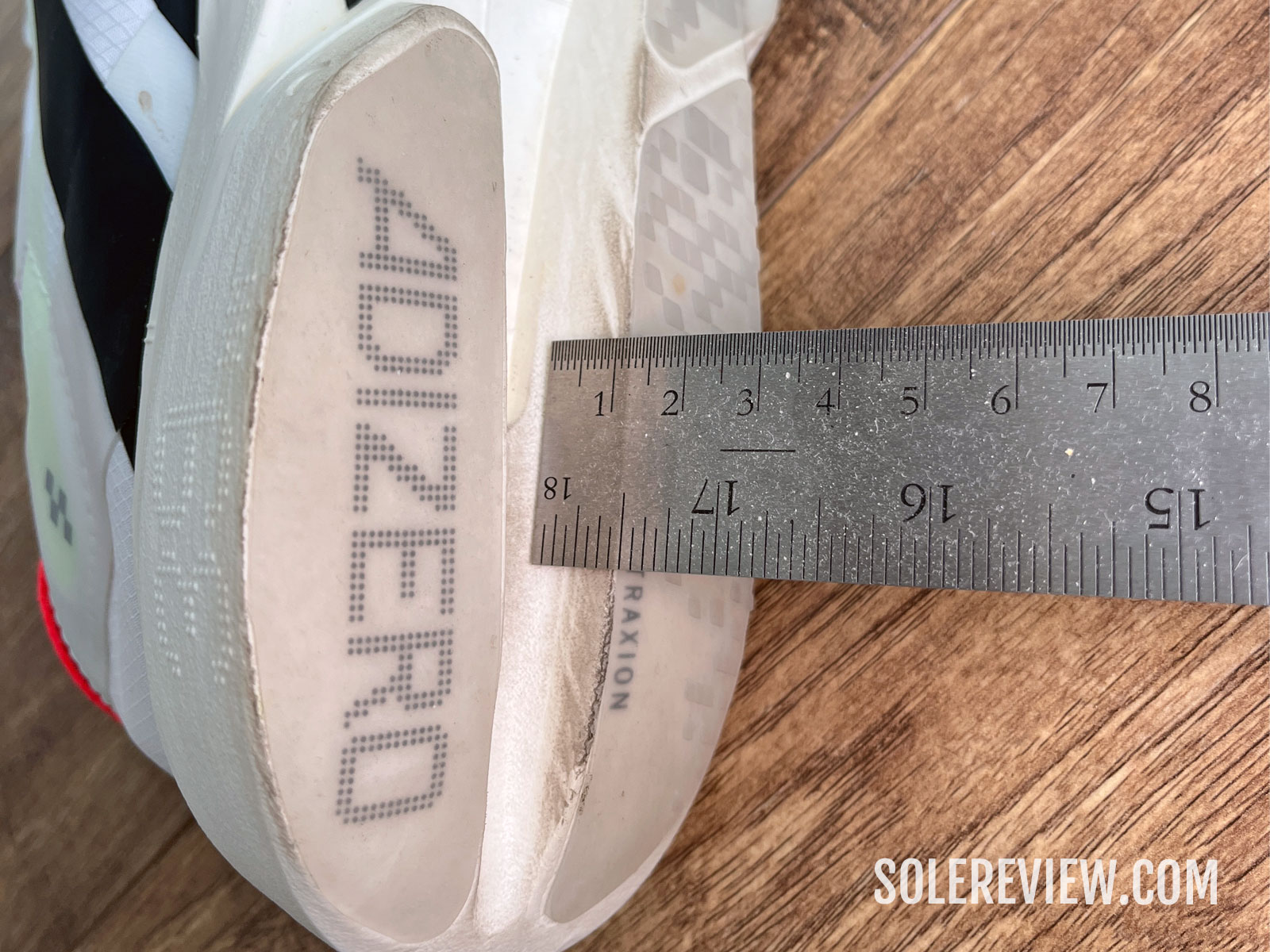
Beware the heel groove on soft racers; this feature has a negative effect on heel stability.
Shoes such as the Nike Vaporfly 4 and Saucony Endorphin Pro 5 have a groove or void under the heel. In theory, the cavity helps stabilize the foot by lowering the center of gravity. But a channel or groove only works well with a wide base and firm foam. For example, the adidas Adios Pro 4 has a groove, but its heel stability is terrible due to the slim and soft Lightstrike Pro midsole. A plated running shoe for rearfoot strikers should also have heel outsole coverage for traction and durability. This buyer’s guide considers all these factors while validating the midsole behavior from real-world tests and high-speed biomechanical analysis based on data captured from road races.
Which carbon-plated running shoes should heel strikers avoid?
If you want specific names, we’ll call out the current Asics Metaspeed series (Edge, Sky, and Ray variants), adidas Adios Pro 4, Saucony Endorphin Elite 3, Brooks Hyperion Elite 6, and the Hoka Rocket X3. The Nike Alphafly 3, Nike Vaporfly 4, and New Balance SC Elite V6 are decent, but not great.