
In this product guide:
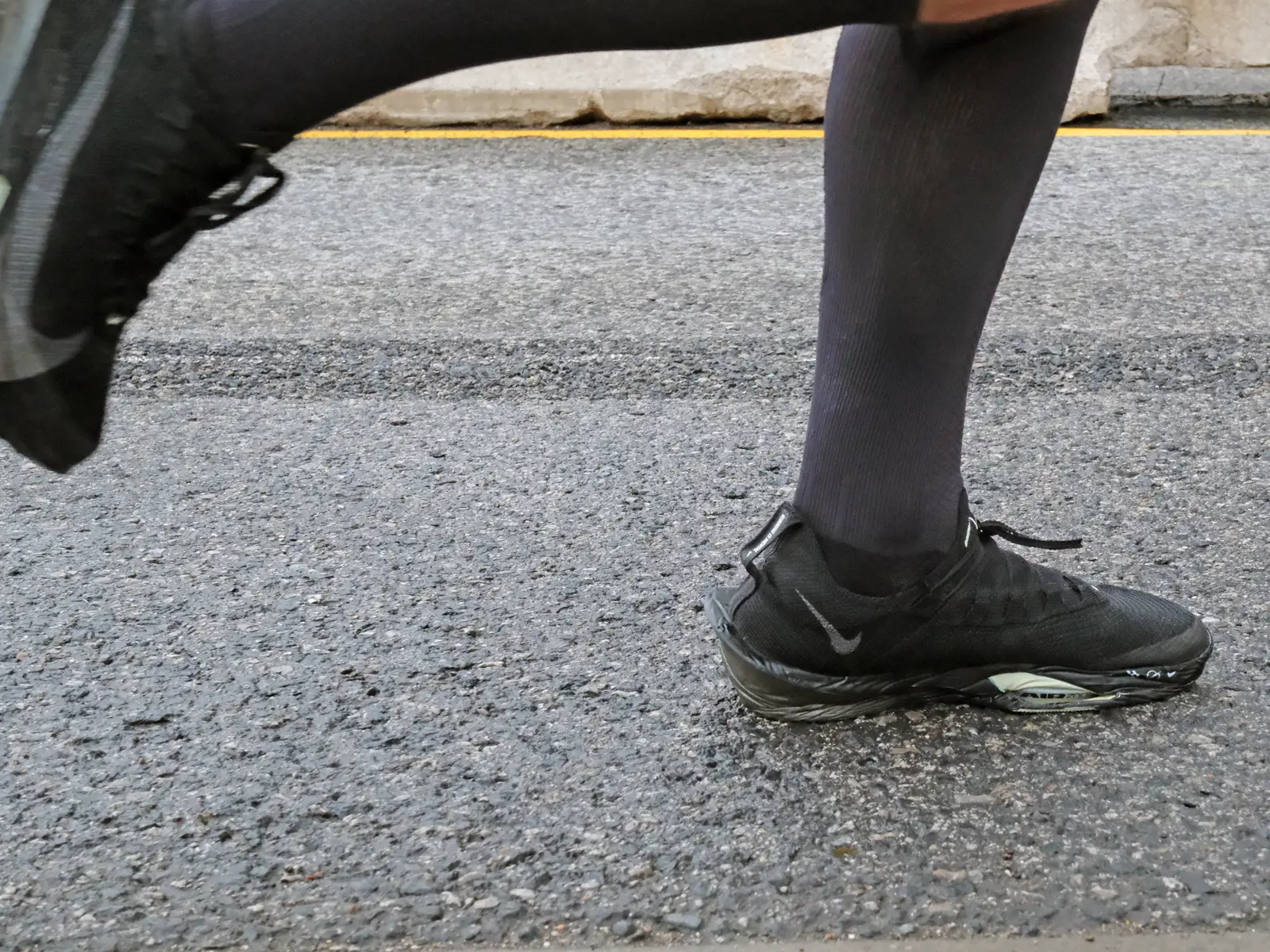
The comprehensive redesign of the Vomero makes it the best version to date. The Vomero was originally designed as a highly cushioned shoe with an engaging ride, so the V18 finally delivers.
The hero ingredient of this shoe’s comeback is the dual-compound midsole. A soft ZoomX layer is supported by a firmer ReactX base – the composite midsole blends soft cushioning with a rubbery bounce. This model is also the tallest ever – the Vomero 18’s heel and forefoot stack heights are 44 mm and 34 mm, respectively. The rocker-shaped forefoot ties everything together. The different components add value through their behavior. The ZoomX layer adds soft plushness, and the React X foam smoothens the transitions. Finally, the rocker propels the foot forward.
The secure upper fits like a standard Nike, but plusher. The tongue and heel are heavily padded; the insides are fully sleeved. The upper is also available in an all-black color combination.
- Nike’s marketing pitch: A comfortable ride for everyday runs.
- Upper: Engineered mesh with a full sleeve.
- Upper fit: True to size, just-right fit.
- Midsole: React X foam with ZoomX top layer. 10 mm heel drop.
- Outsole: Regrind rubber under the forefoot, Carbon rubber.
- Weight: 298 gms/ 10.5 Oz for a half pair of Men’s US 9/UK 8/EUR 42.5/CM 27.
- Stack heights: 44 mm (heel), 34 mm (forefoot).
- Available widths: Single – D (regular).
- Recommended use: Everyday runs, tempo runs, marathon training, walking.
- Footstrike orientation: All types (heel/midfoot/forefoot).
- Median lifespan: 450 miles.
- Country of origin: Vietnam.
- Recommended paces: 4:30 min/km (7:00 min/mile) and slower.
- Recommended temperature range: Warmer than -5° C/23° F.
Pros
- Versatile for different use cases
- Rocker assists with smooth roll offs
- Neutral and stable ride
- Goldilocks zone cushioning
- Just-right and plush fit
Cons
- No widths at this time
- Average grip on wet roads
- Runs warm due to full sleeve
- Low reflectivity
The Nike Pegasus feels somewhat dated, but at the heart of its success is a formula that’s still relevant – it’s a versatile running shoe with a repertoire of talents. Be it everyday runs or a 10K, the Pegasus 41 can do most things well. The React foam core adds cushioning comfort, and the Zoom Air bags add stability. This produces a ride character that works across varying mileage and pace levels. If you had to pick just one Nike shoe to do it all, it’s hard to go wrong with the Nike Pegasus 41.
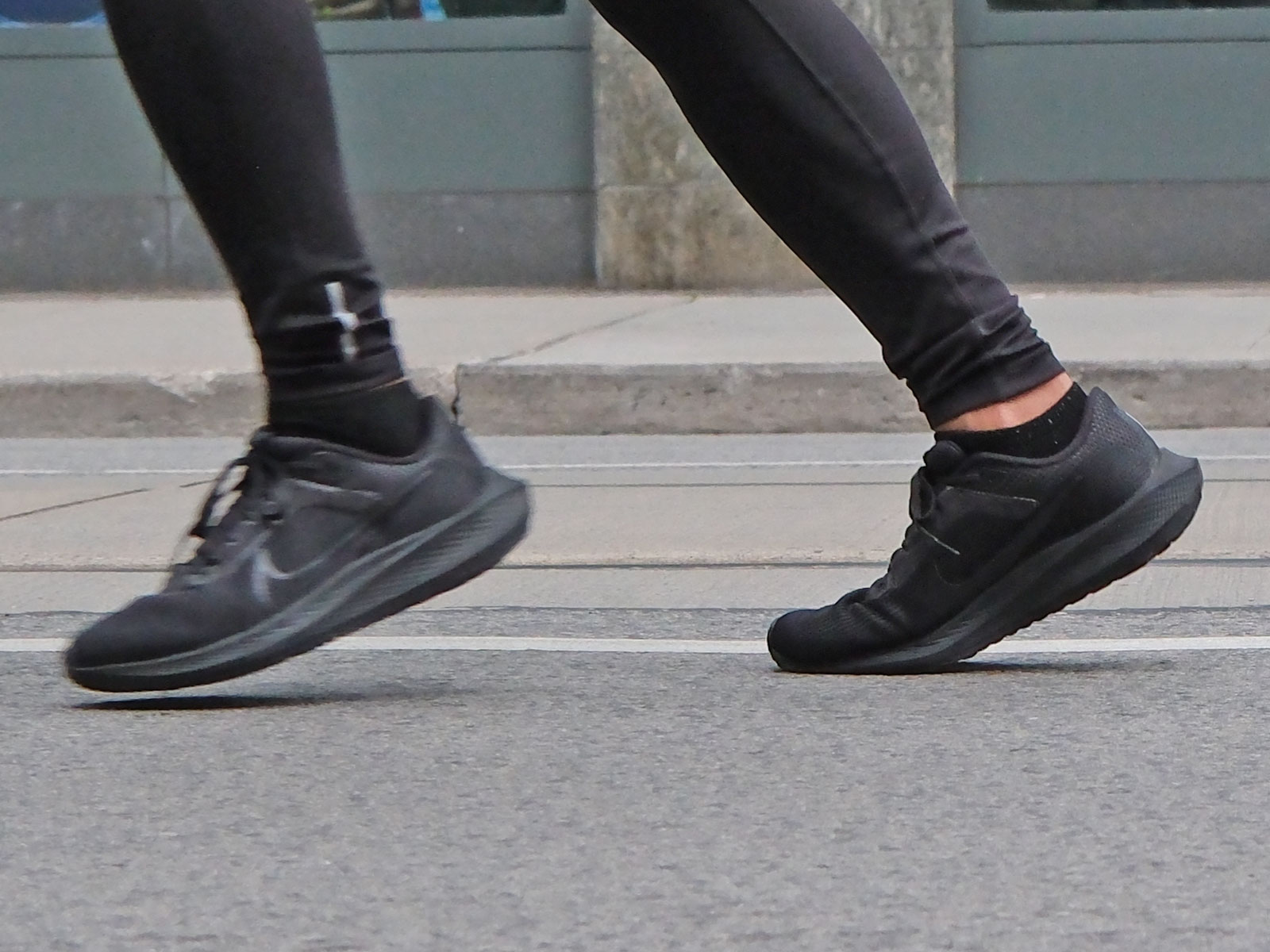
However, when compared to its peers (like the Saucony Ride 18 and Asics Cumulus), the Pegasus 41 feels behind the times. The forefoot cushioning feels thin and flat, so this is a trainer for heel strikers. The React foam, while comfortable, is temperature dependent – meaning it’s going to firm up during freezing winters. Nearly all the details on the sleeved upper disappear on the black-on-black Pegasus 41. The welded logo, lacing loops, and lining are all in black.
- Nike’s marketing pitch: An energized ride for everyday road running.
- Upper: Engineered mesh, sleeved upper.
- Midsole: Two Zoom Air bags inside ReactX foam, 10 mm heel drop.
- Outsole: Carbon rubber.
- Weight: 297 gms/ 10.4 Oz for a half pair of Men’s US 9/UK 8/EUR 42.5/CM 27.
- Stack heights: 37 mm (heel), 27 mm (forefoot).
- Available widths: D – regular (reviewed), 4E – extra wide.
- Previous model: Nike Pegasus 40.
- Country of origin: Vietnam.
- Recommended use: Daily training, tempo runs, half-marathons.
- Footstrike orientation: Heel, midfoot/forefoot (full contact).
- Median lifespan: 400 miles.
- Recommended paces: Slower than 4:00 min/km (6:30 min/mile).
- Recommended temperature range: Warmer than -5° C/23° F.
Pros
- Versatile comfort
- Supportive ride
- Secure fit
- Outsole grip
- Multiple widths
Cons
- React behavior is temperature dependent
- Better for heel strikers than forefoot strikers
- Boring ride when compared to peers
- Fewer/wider lacing rows add top-down pressure
- Scarce reflectivity
The max-cushioned Vomero Plus is ideal for recovery runs, long training runs at easy speeds, and marathons at paces of 6:00 min/km (9:40 min/mile) and slower. The Vomero Plus is the unofficial successor to the Invincible 3, Nike’s former max-cushioned offering. Like its predecessor, the midsole is made entirely of ZoomX foam. The heel and forefoot stack heights of 45 mm and 35 mm provide the cushioning with a bottomless feel, but without being mushy. The springy bounciness of the ZoomX midsole works perfectly well with the mild rocker. The outsole keeps it simple with a waffle geometry and some open areas for flexibility and better ground contact. The dry surface traction is great, but we can’t say the same for wet roads.
Also available in an all-black color, the plush upper fits securely. While buying a true-to-size fit is recommended, we must point out the sizing difference between the Vomero Plus and the Vomero 18. The Plus version doesn’t have a full sleeve (not even a gusset), so there’s more space ahead of the toes than the Vomero 18 and other Nike running shoes with a full inner sleeve.
- Nike’s marketing pitch: Full-stack, ultra-soft max cushioning.
- Upper: Textured mesh with reflective details and midfoot lining, no sleeve.
- Upper fit: True to size, just-right fit.
- Midsole: 100% ZoomX foam, Ortholite insole. 10 mm heel drop.
- Outsole: Single-piece carbon rubber.
- Weight: 292 gms/ 10.3 Oz for a half pair of Men’s US 10/UK 9/EUR 44/CM 27.1
- Stack heights: 45 mm (heel), 35 mm (forefoot).
- Available widths: Single – D (regular), 4E- (extra-wide).
- Recommended use: Recovery runs, long runs, walking.
- Footstrike orientation: All types (heel/midfoot/forefoot).
- Median lifespan: 450 miles.
- Country of origin: Vietnam.
- Recommended paces: 4:30 min/km (7:00 min/mile) and slower.
- Recommended temperature range: Warmer than -5° C/23° F.
Pros
- Max cushioning that doesn’t feel lethargic
- Mild rocker assistance
- Plush interiors
- Reflective details
- Secure fit
- Optional width
Cons
- Average grip on wet roads
- Runs warm because of thick mesh and tongue
Also consider:
- Hoka Bondi 9
- Brooks Glycerin Max
- New Balance More V6
- Puma Magmax Nitro
- Use the Nike Vomero Plus for long runs, recovery runs
- Use Nike Pegasus Plus for daily training and tempo runs
- Use the Nike Vaporfly 4 for 5K, 10K, and marathons
For cold and damp days, the Nike Vomero 18 Gore-Tex is our top pick. The all-black variant has a subdued aesthetic that doesn’t scream Nike. Most brands that offer a Gore-Tex version of a road shoe (e.g., the New Balance 880, Asics Cumulus, Hoka Clifton) don’t truly winterize the model; aside from the waterproof upper, the rest of the shoe is nearly identical to the standard version.
That’s not the case here. This version of the Vomero 18 pairs a waterproof GTX lining with several winter-ready features. The outsole uses a special Storm-Tread compound for superior grip on wet roads. And because it shares an identical midsole with the standard Vomero, runners get the same cushioned and peppy ride with satisfactory support levels.
The waterproof mesh and synthetic mudguard repel water and block wind, which also makes the shoe unsuitable for summer use. On the plus side, the Vomero 18 GTX is easy to maintain if the upper gets soiled.
Also consider: Nike Pegasus 41 GTX.
The Flex Experience Run 12 is just the shoe for mild-intensity runs, casual wear, and gym use. The Nike Free-inspired midsole cuts down on weight while producing a comfortable and flexible ride. Like the Flex Experience 11, the midsole heel lacks deep flex grooves. This makes the heel supportive, so the Flex Experience 12 is a good fit for the gym. It’s comfortable enough for treadmill runs with the stability needed for weight-training sessions.
The collapsible heel counter makes the Flex Experience 12 easy to wear, and also minimizes the chances of heel irritation. Runners with wide feet may want to consider the optional extra-wide sizing.
Nike advertises the Pegasus Trail 5 as a proper trail running shoe. Practically speaking, the Pegasus Trail 4 is a soft-roader – a running shoe that works equally well on road as well as mild trails. The soft React foam midsole adds all-day comfort on the road, but it’s not ideal for technical and challenging terrain. The soft midsole, shallow lugs, and the lack of a rock plate mean that the Peg Trail feels at home on gentle gradients and unpaved trails. Though this is a brand-new model, it’s similar to the last year’s model.
The waterproof version of the Pegasus Trail 5 is designed slightly differently than the non-waterproof model. It has a faux gaiter to prevent debris and moisture from entering. The Gore-Tex membrane is not foolproof, but does a good job of keeping the water out. Our past ownership experience with the Pegasus Trail indicates that the outsole is extremely durable, even with extensive use on paved surfaces.
How we selected
We don’t have the data to back this up, but black is the color of choice in athletic footwear. And we say black, we refer to the ‘triple black’ variants – not black shoes with a contrasting white logo. A lot of them also happen to be running shoes. Having said that, we suspect that most of the people who wear black trainers don’t use them for running. However, running footwear is the preferred silhouette for an everyday shoe. The qualities that make a running shoe good also make it an excellent everyday shoe. And mind you – we’re not talking about Carbon-plated running shoes, but of a traditional kind.
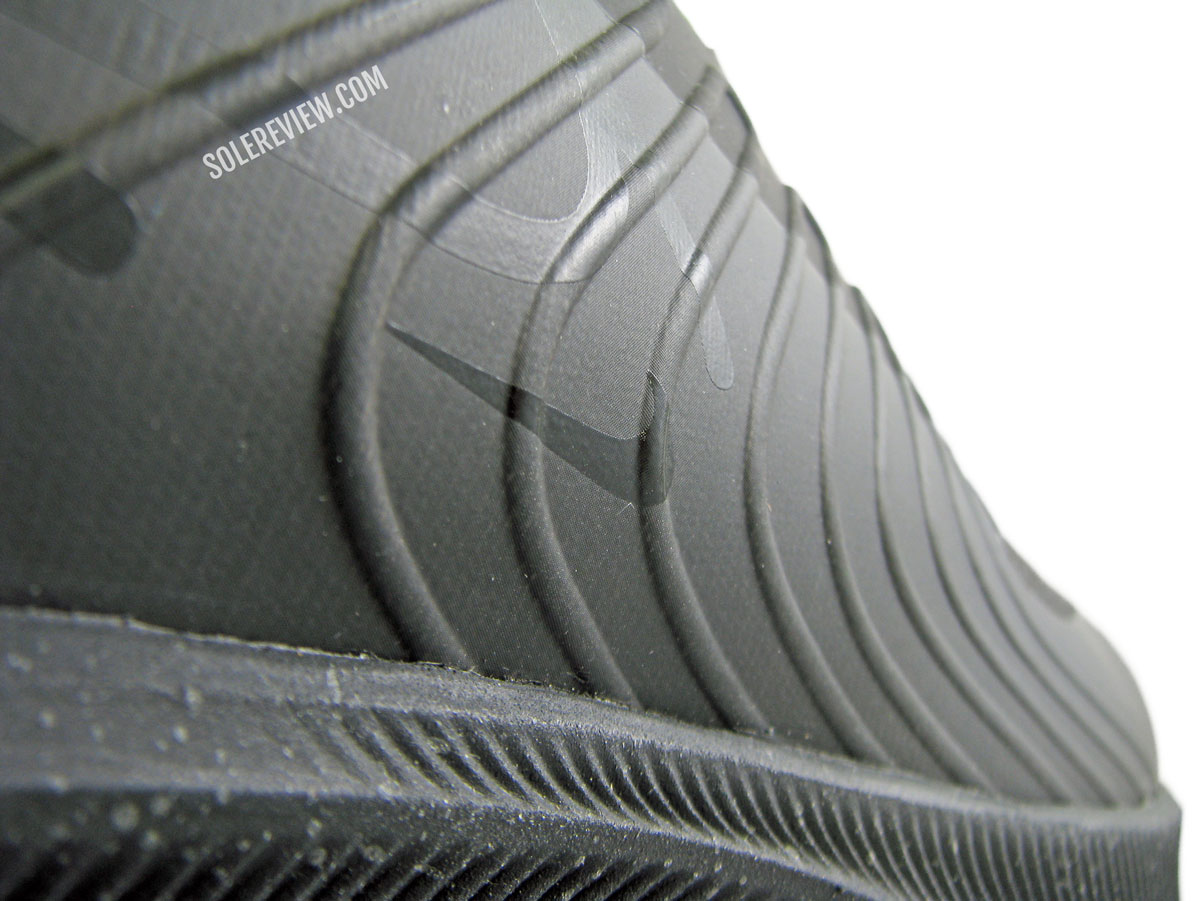
Since this is a Nike-specific product guide, let’s use the Pegasus 41 as an example. It’s a versatile neutral trainer with a cushioned midsole and an inoffensive upper design. The midsole is shod with an outsole that grips well on roads, sidewalks, and artificial floors. The ride comfort of a running shoe is higher than that of a fashion sneaker, so that’s very useful when walking to school or work. Many service industry and healthcare workers wear running shoes because they’re comfortable enough to stand on all day. And unlike Air Force 1’s and Air Jordans, the sleeker silhouettes of running shoes are a safe choice in toned-down colors. Besides being a workplace-safe color, black running shoes are very practical. We can think of many reasons why:
Style versatility
A black running shoe goes well with anything that you throw over it, as well as most skin tones. It blends in with grey sweatpants, black running tights, and even dark denim. And if your work or school uniform includes dark pants, then a black shoe is a near-perfect match.
Ease of maintenance
Taking care of light-colored running shoes is a tedious chore. On the other hand, black shoes are less demanding. The uppers are not easily soiled, and products like the Pegasus 41 GTX and Vomero 18 GTX even have liquid-resistant uppers. It’s not for nothing that our cold-weather choice is the Vomero 18 Gore-Tex.
Ideal for service industry professionals
Service and healthcare industry professionals are on their feet all day, and black pants are usually a part of their uniforms. A black running shoe solves two design needs – that of a comfortable shoe capable of withstanding all-day abuse, as well as being easy to clean. Luckily for us, there’s no dearth of Nike running shoes that sell in an all-black color scheme. For the sake of brevity, we have excluded black shoes with white midsoles or logos.