
In this product guide:
- 1. Everyday trainer till a size US 18: Nike Pegasus 41
- 2. Pronation control shoe till a size US 16: New Balance 860V14
- 3. Pronation control shoe till a size US 16: Saucony Guide 18
- 4. Max-cushioned trainer till a size US 16: New Balance 1080V14
- 5. Max-cushioned trainer till a size US 16: Hoka Bondi 9
- 6. Marathon racer till a size US 15: Nike Vaporfly 4
- 7. Lightweight tempo trainer till a size US 16: New Balance Fuelcell Rebel V5
- 8. Trail running shoe till a size US 17: New Balance Hierro V9
- 9. Affordable trainer till a size US 15: Nike Flex Experience 12
- How we selected
Most Pegasus colors stop at a size US 15 – unless you opt for the all-black version. When purchased in black-on-black, Nike’s popular neutral trainer is available till a US size 18. It makes sense though. Many black trainers are bought not by runners but people who work in sectors like the hospitality and logistics. Dirt and smudges are less visible on a dark color. If you’re buying the all-black Pegasus 41 for your runs, it has the same advantages and drawbacks as any other color. Runners will find the midsole to be cushioned and supportive – just the kind of ride that works for everyday runs.
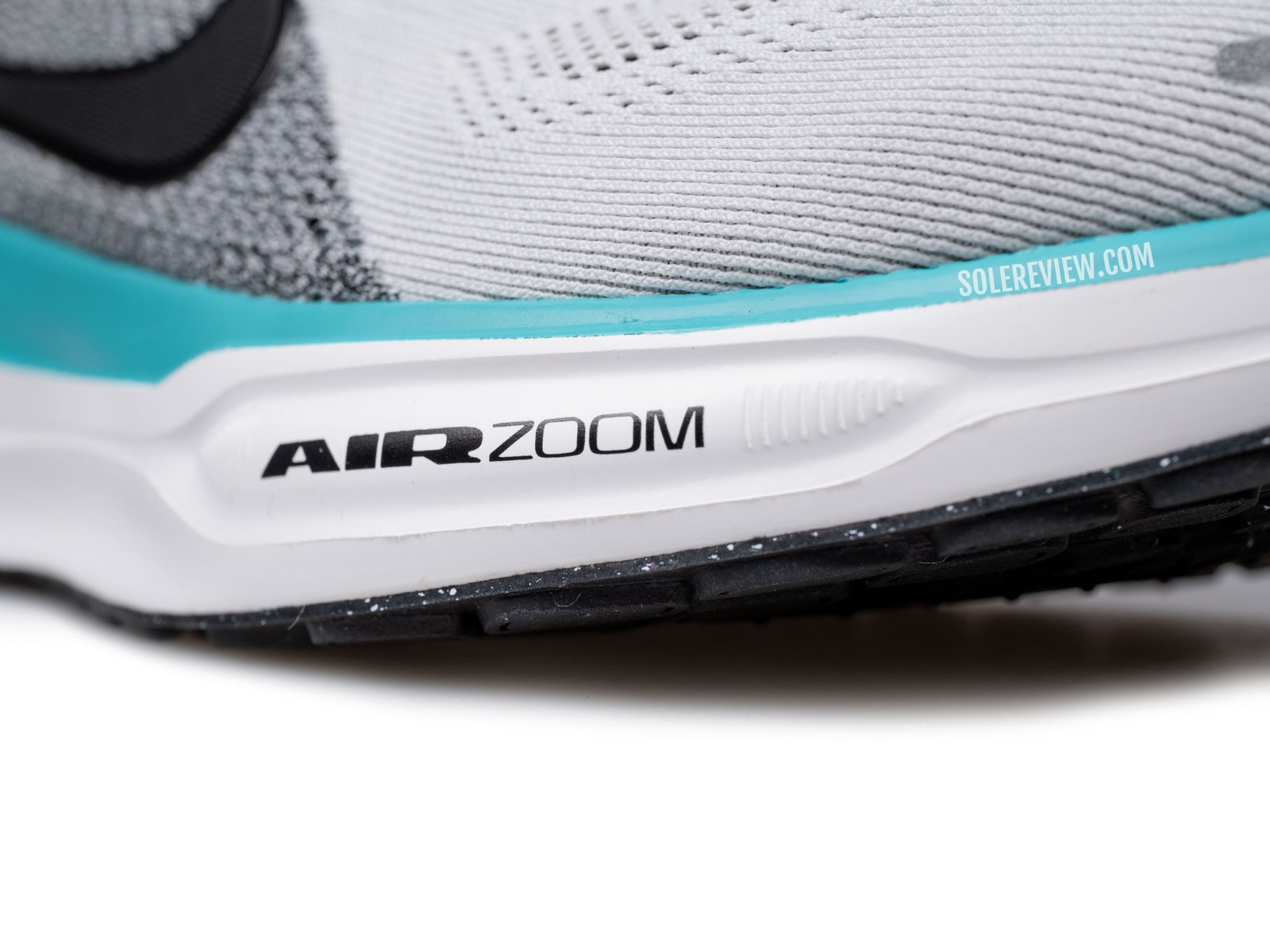
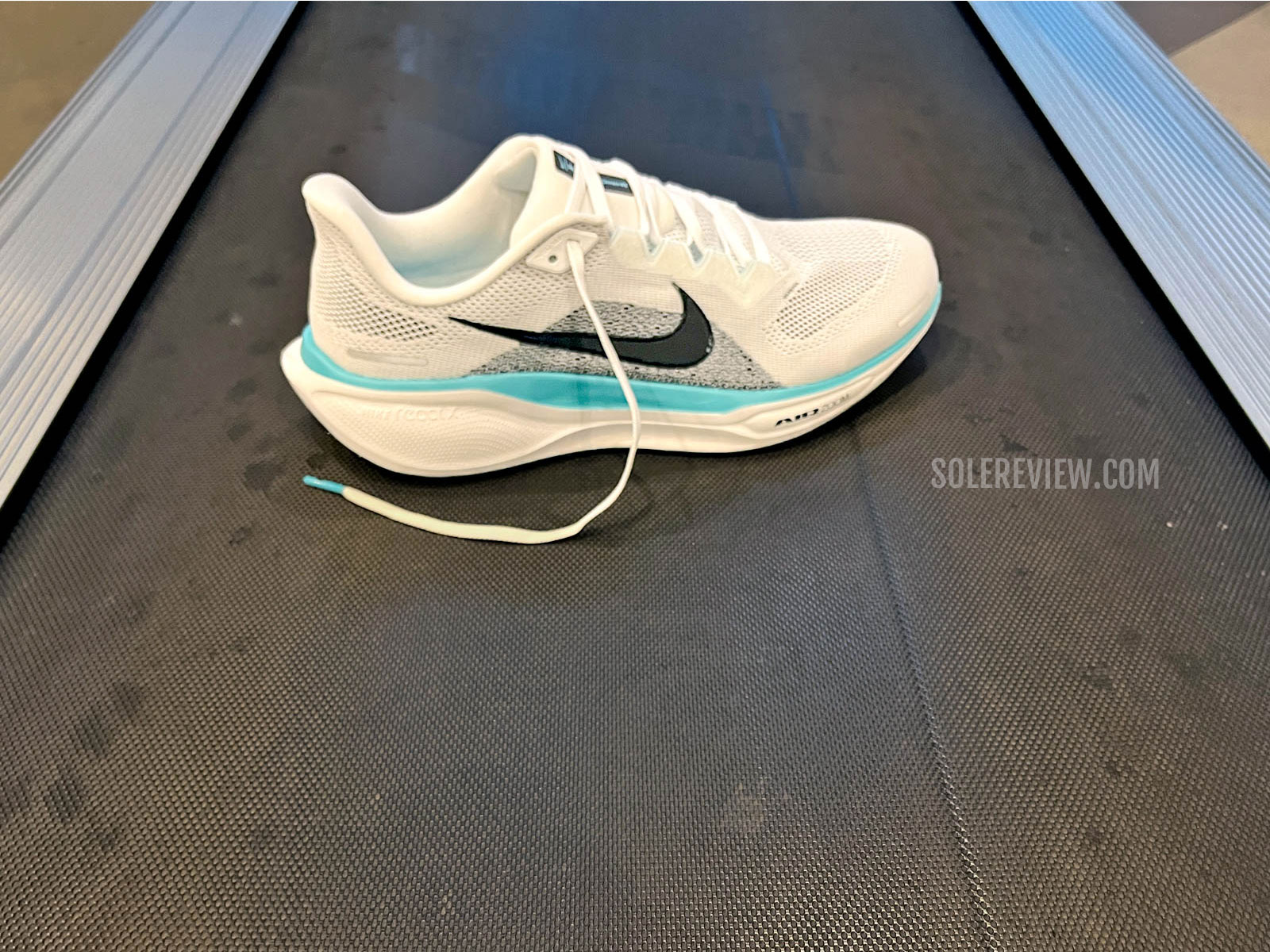
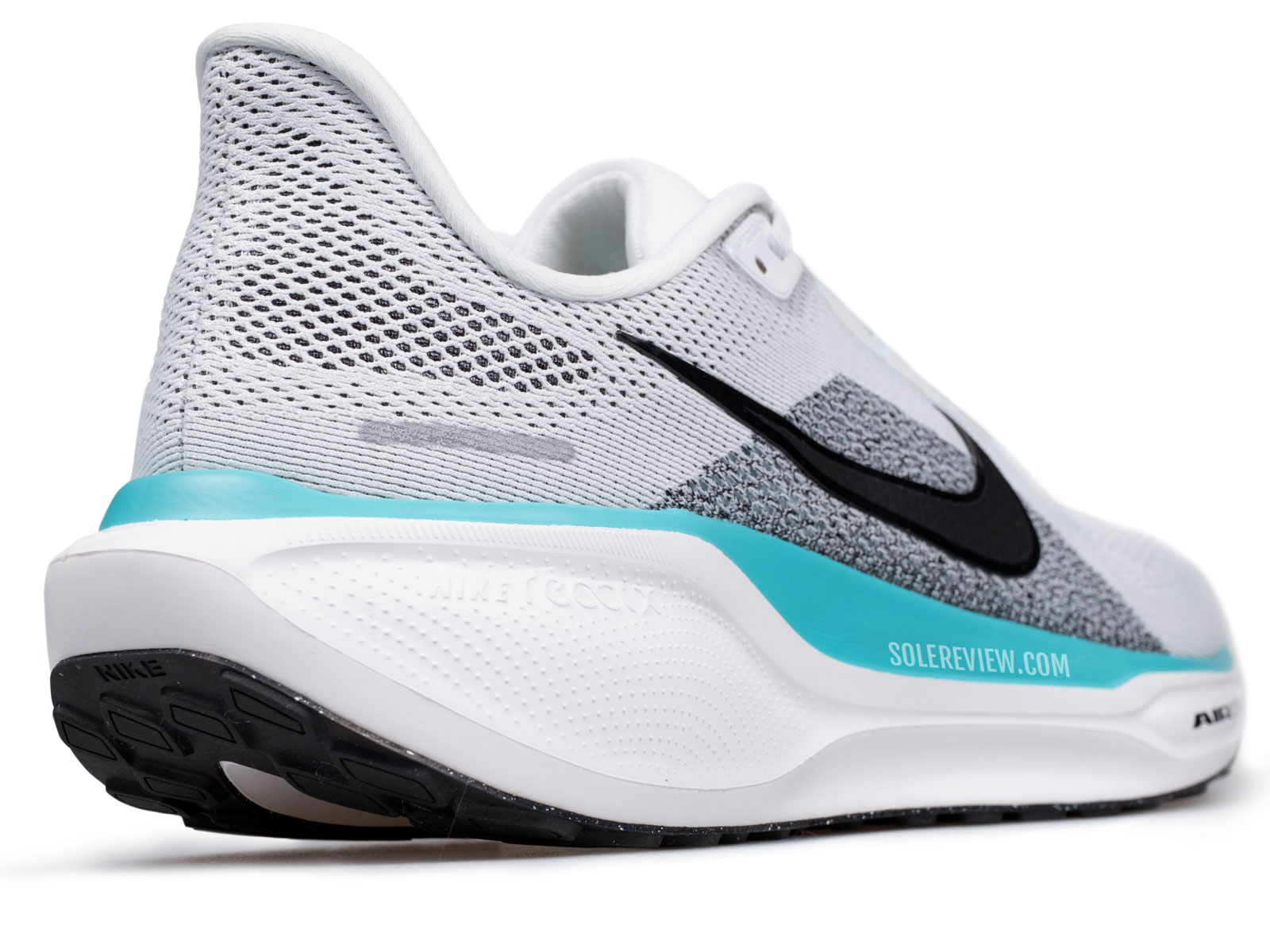
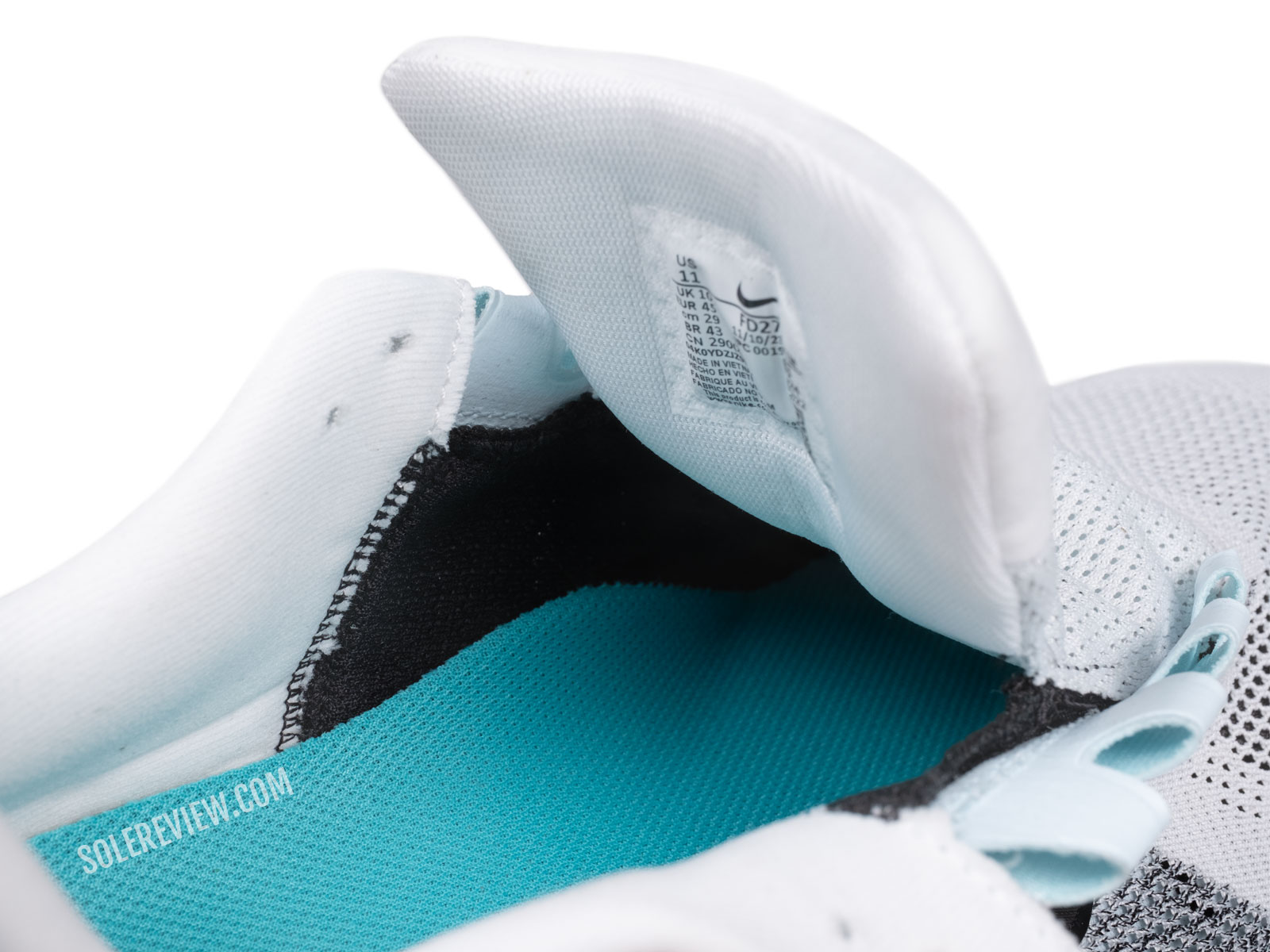
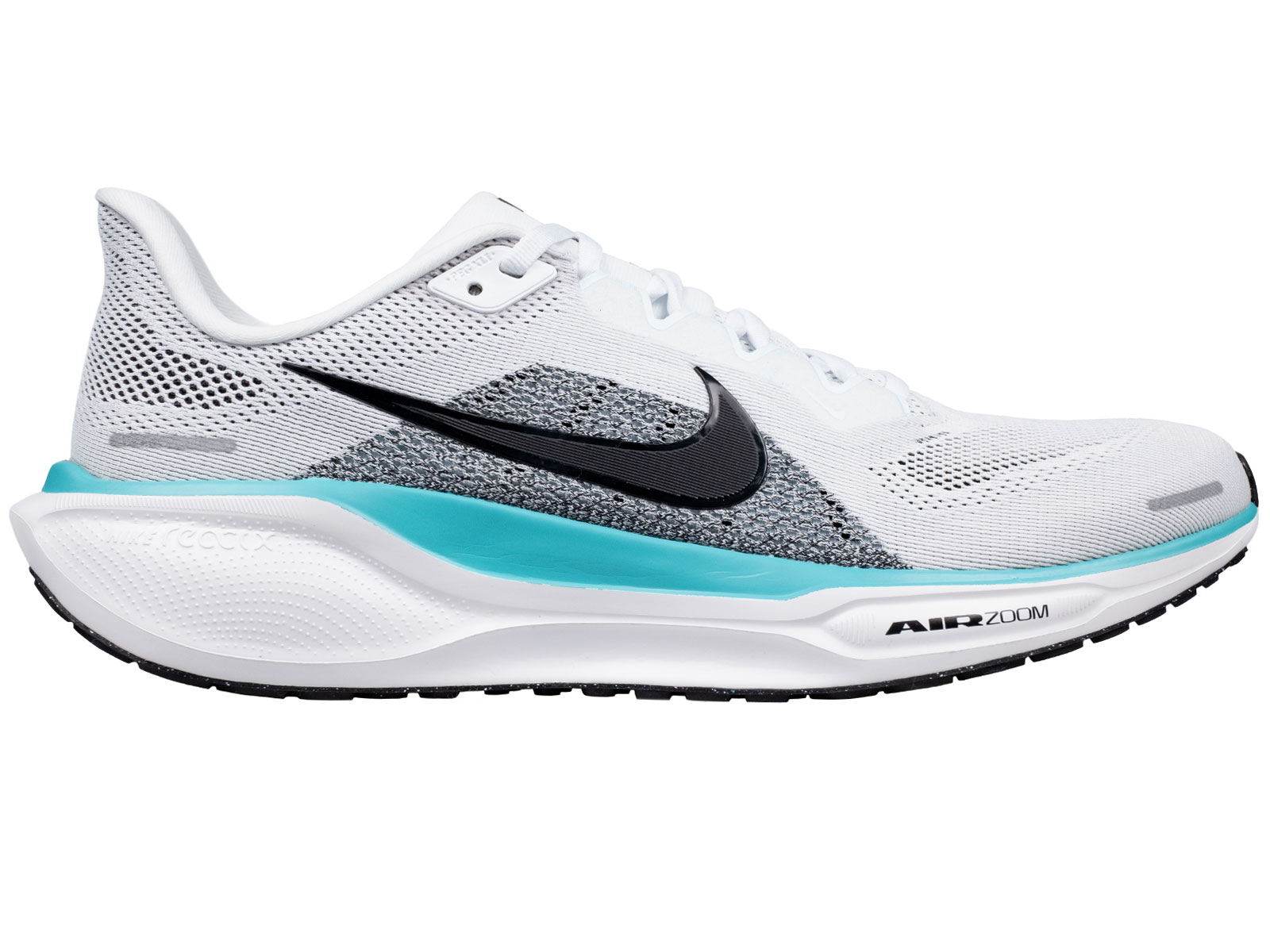
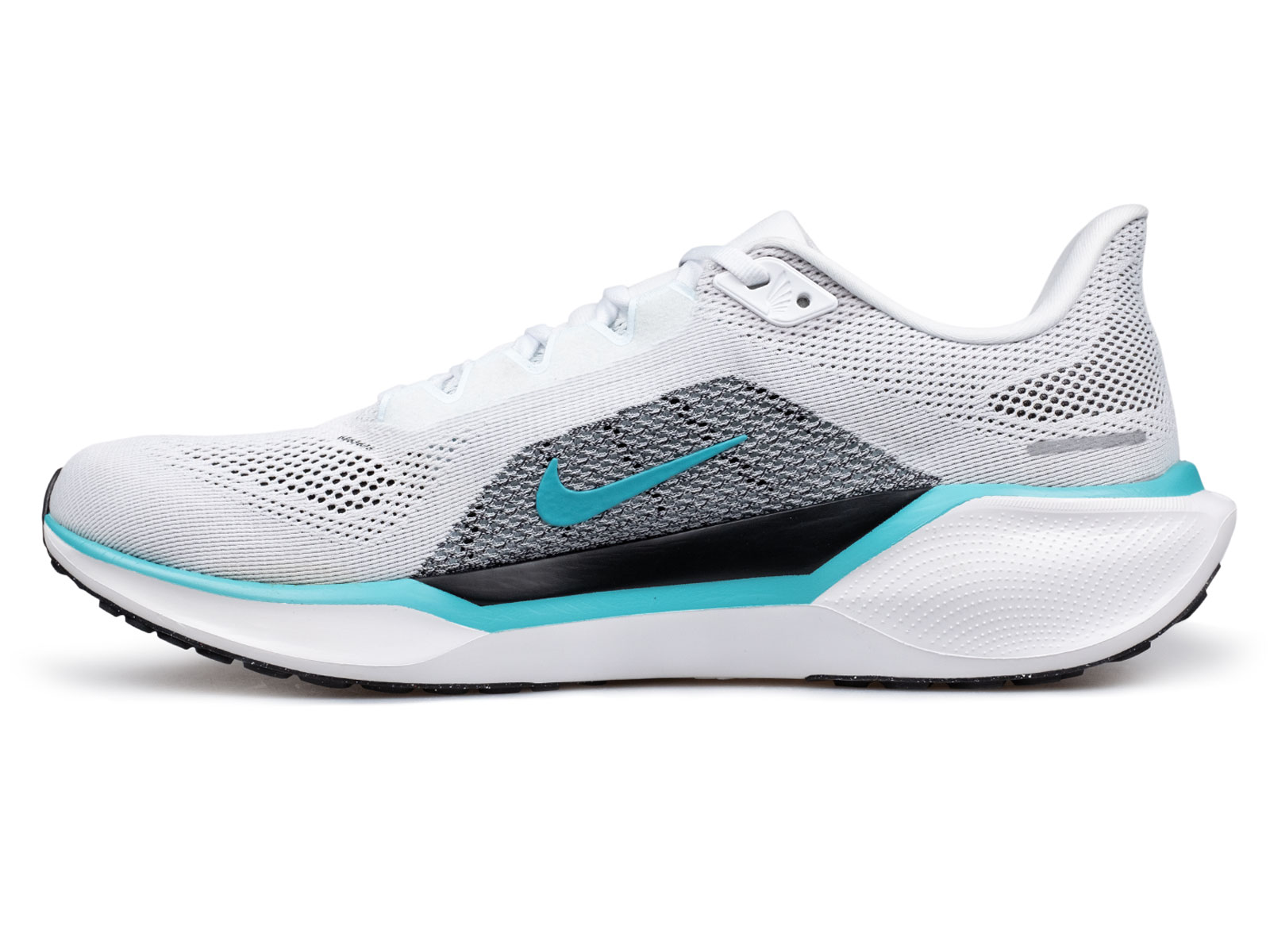
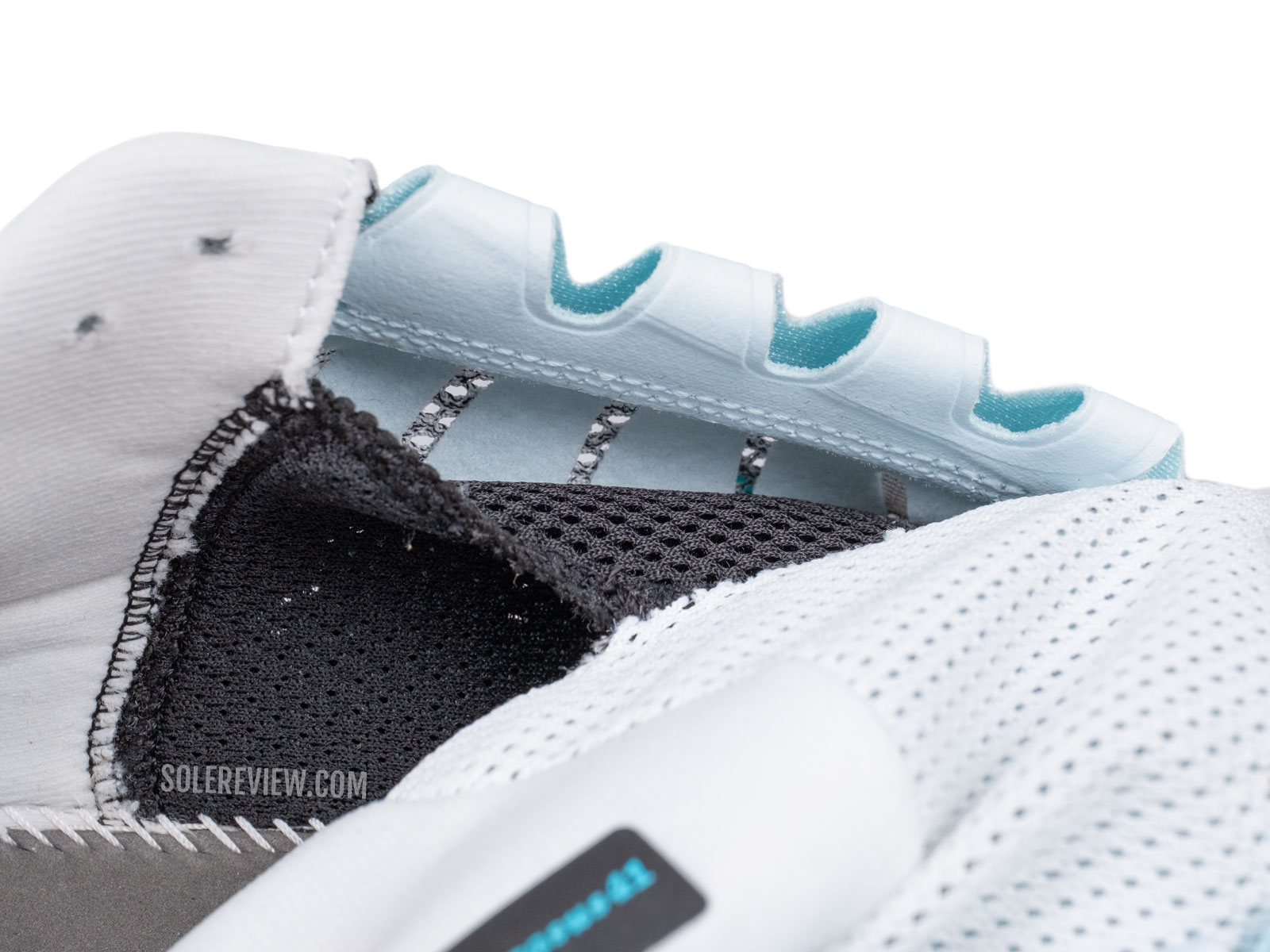
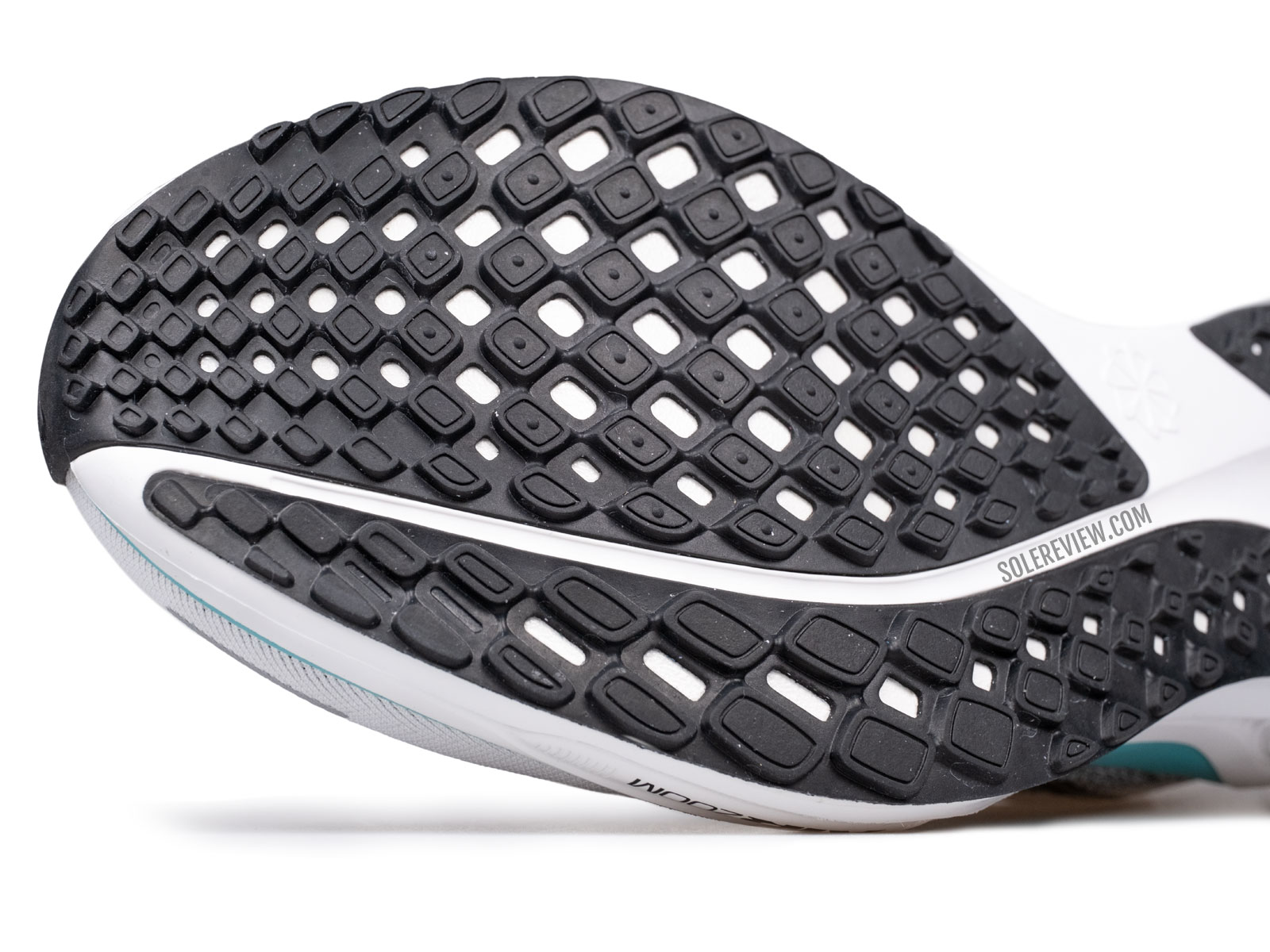
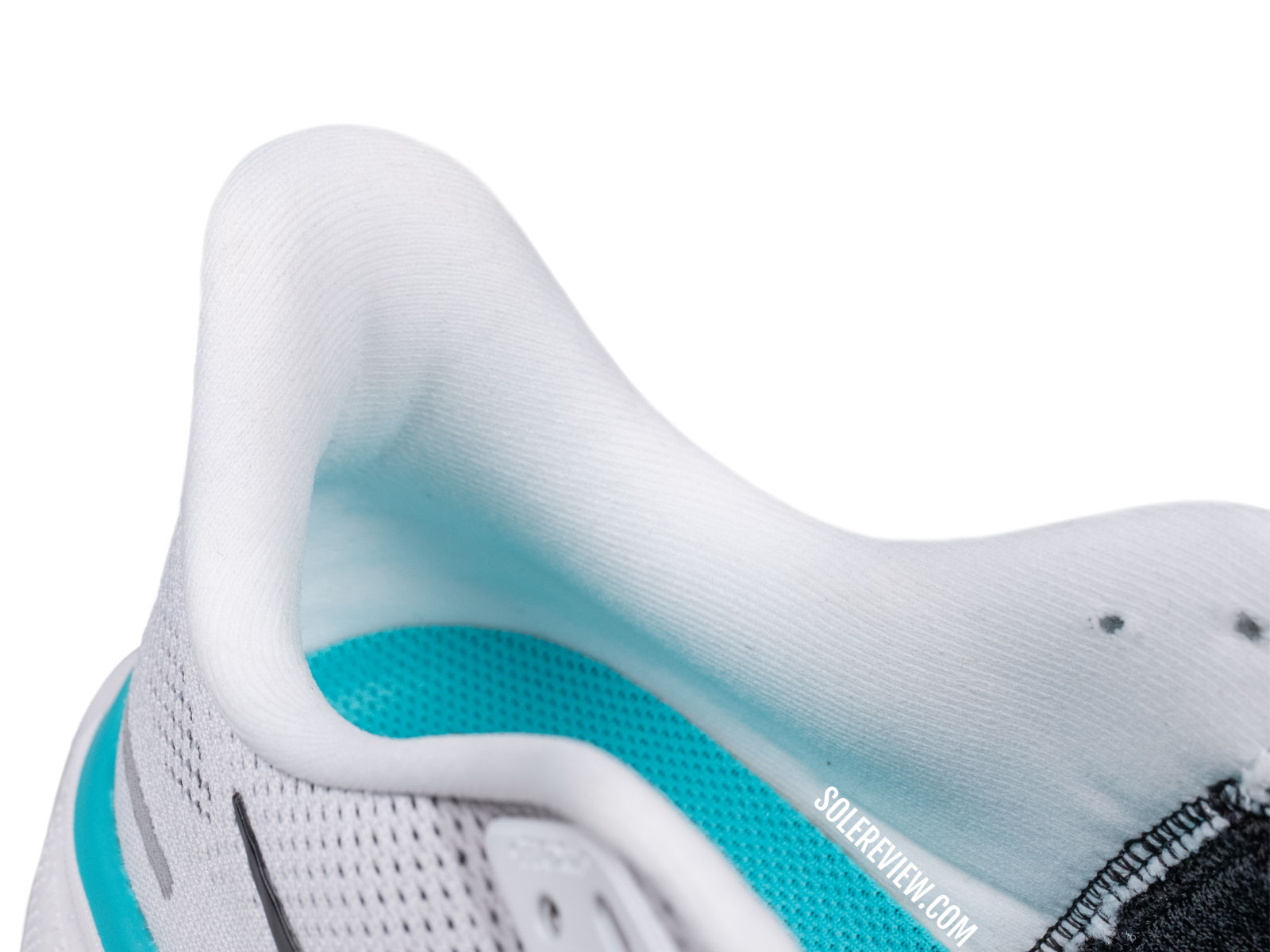
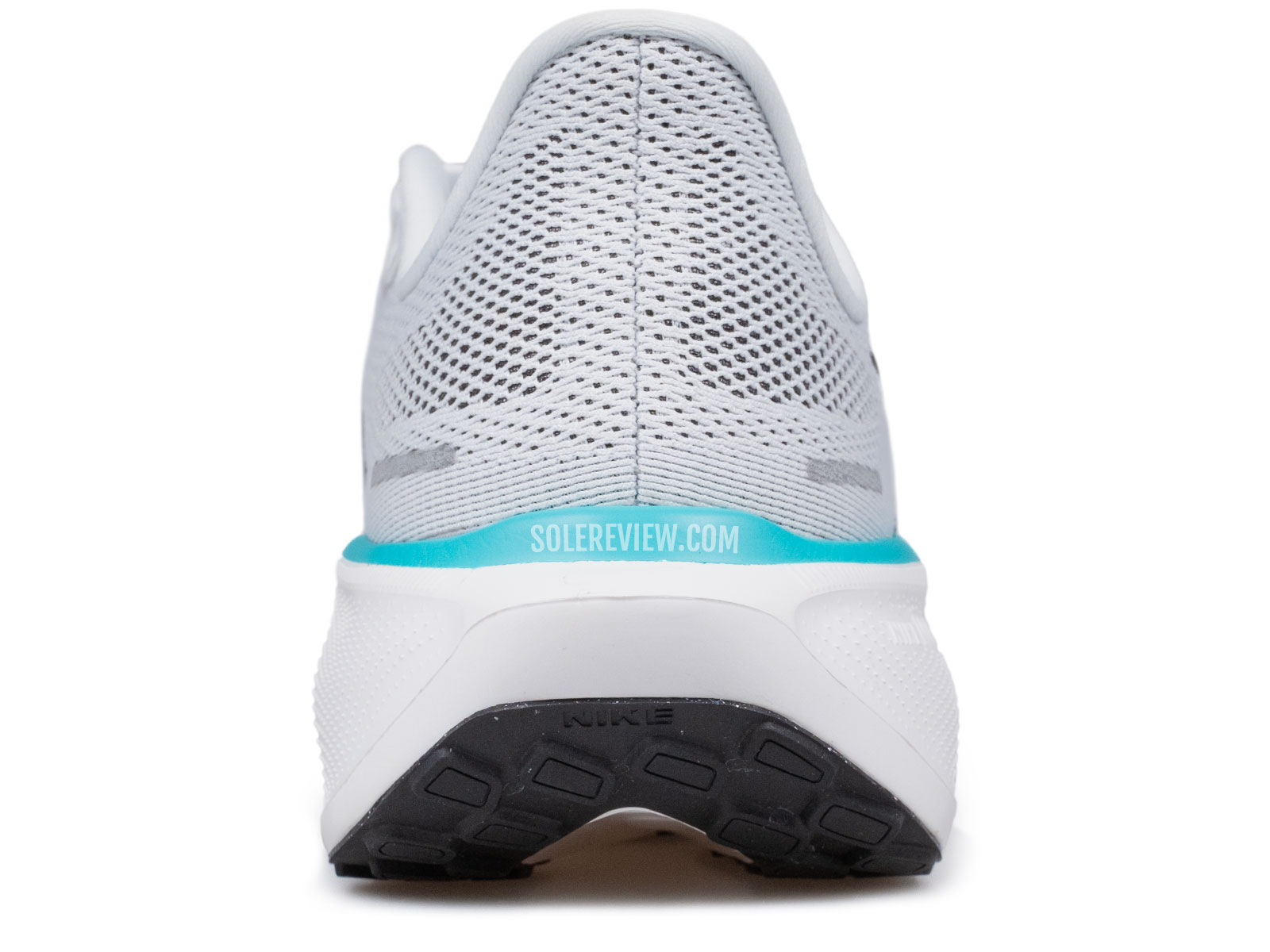
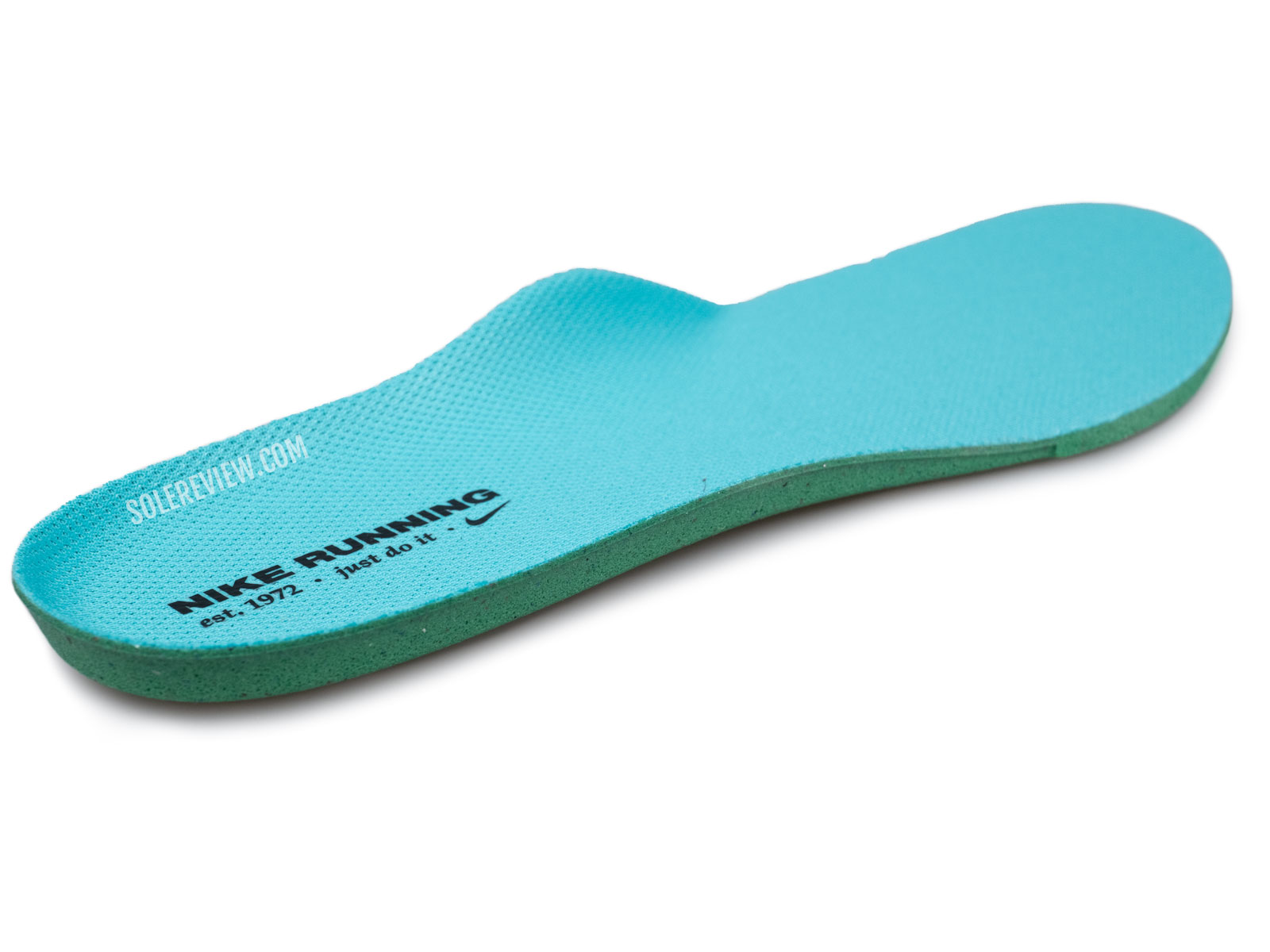
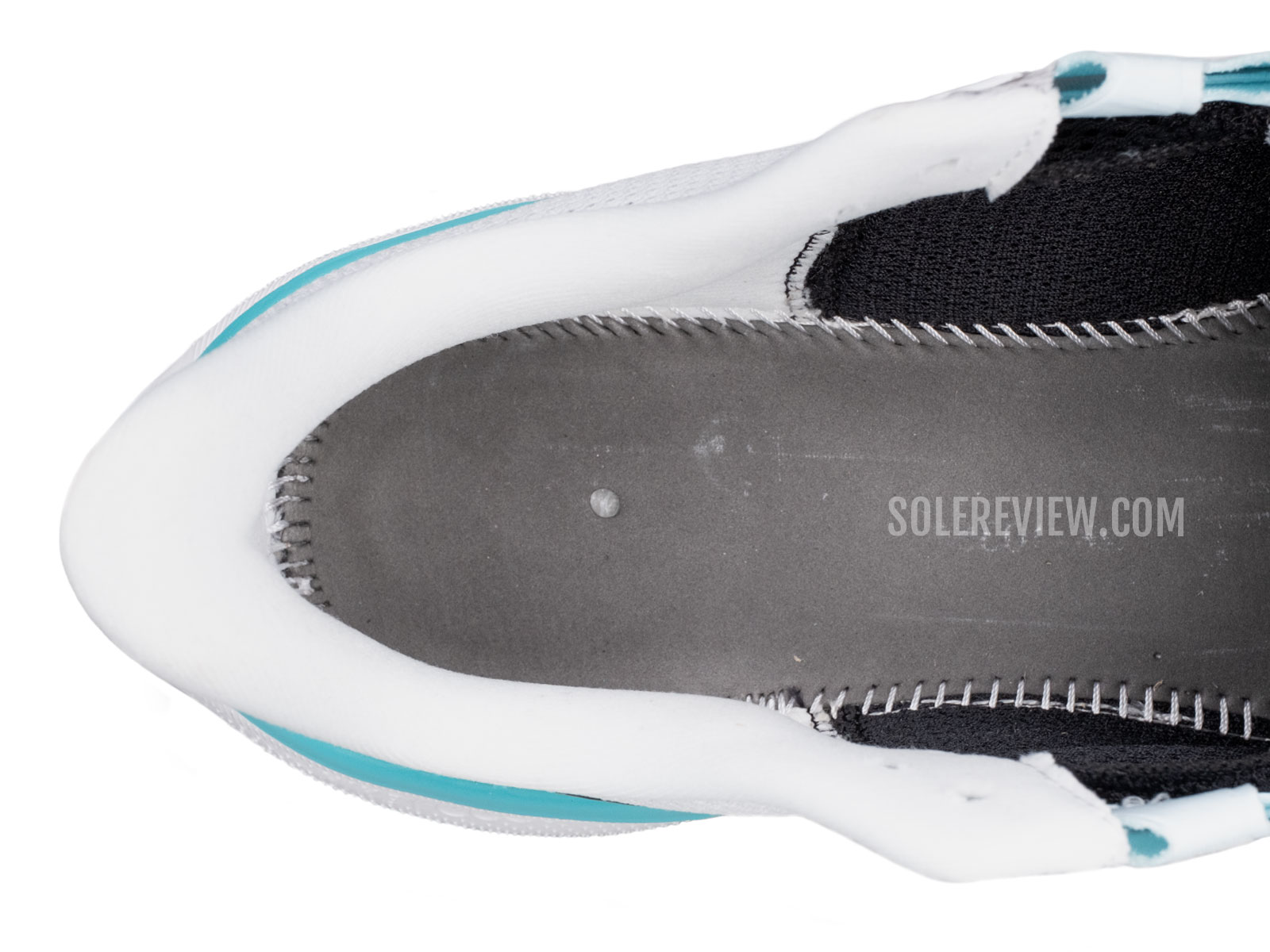
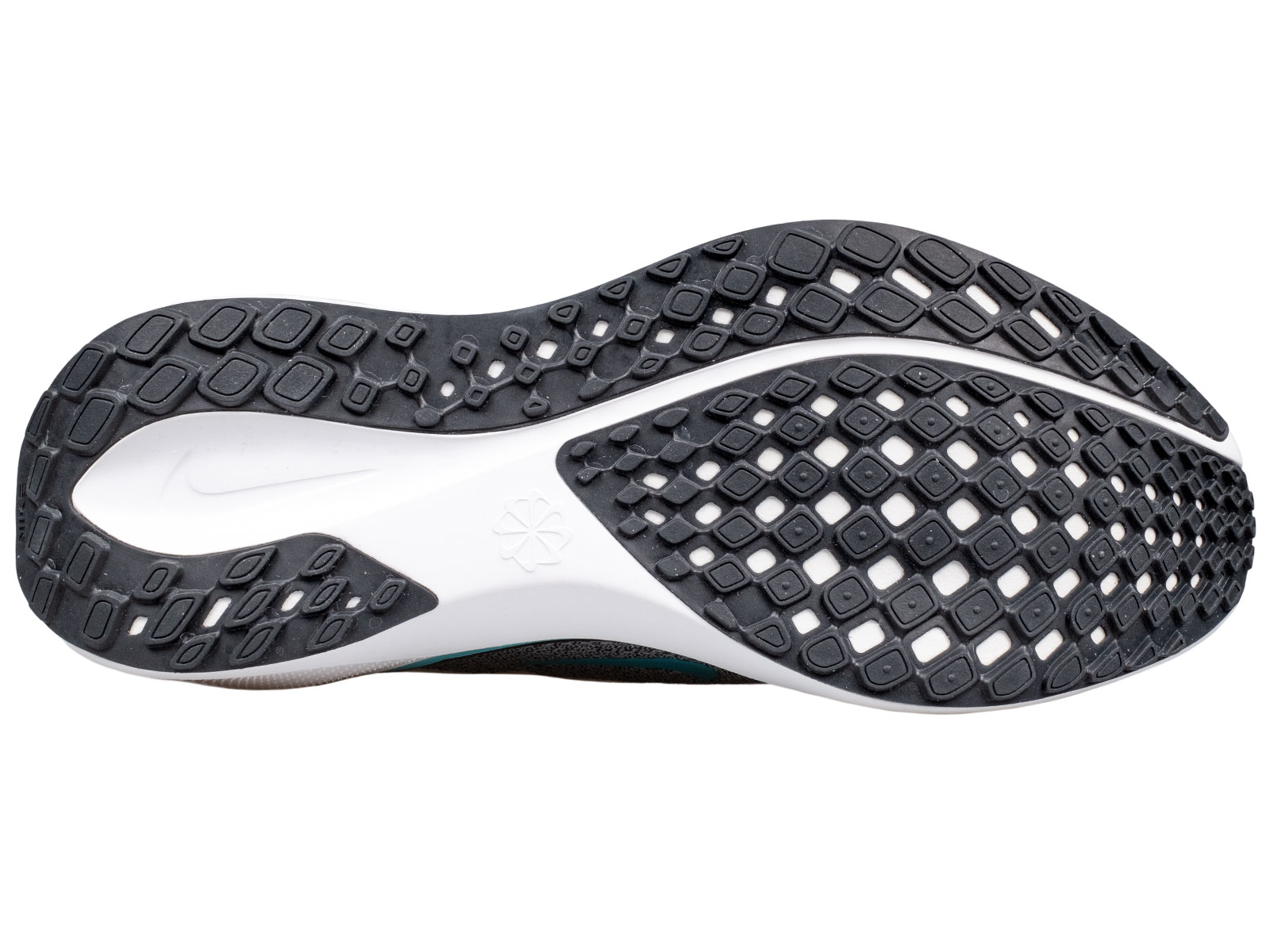
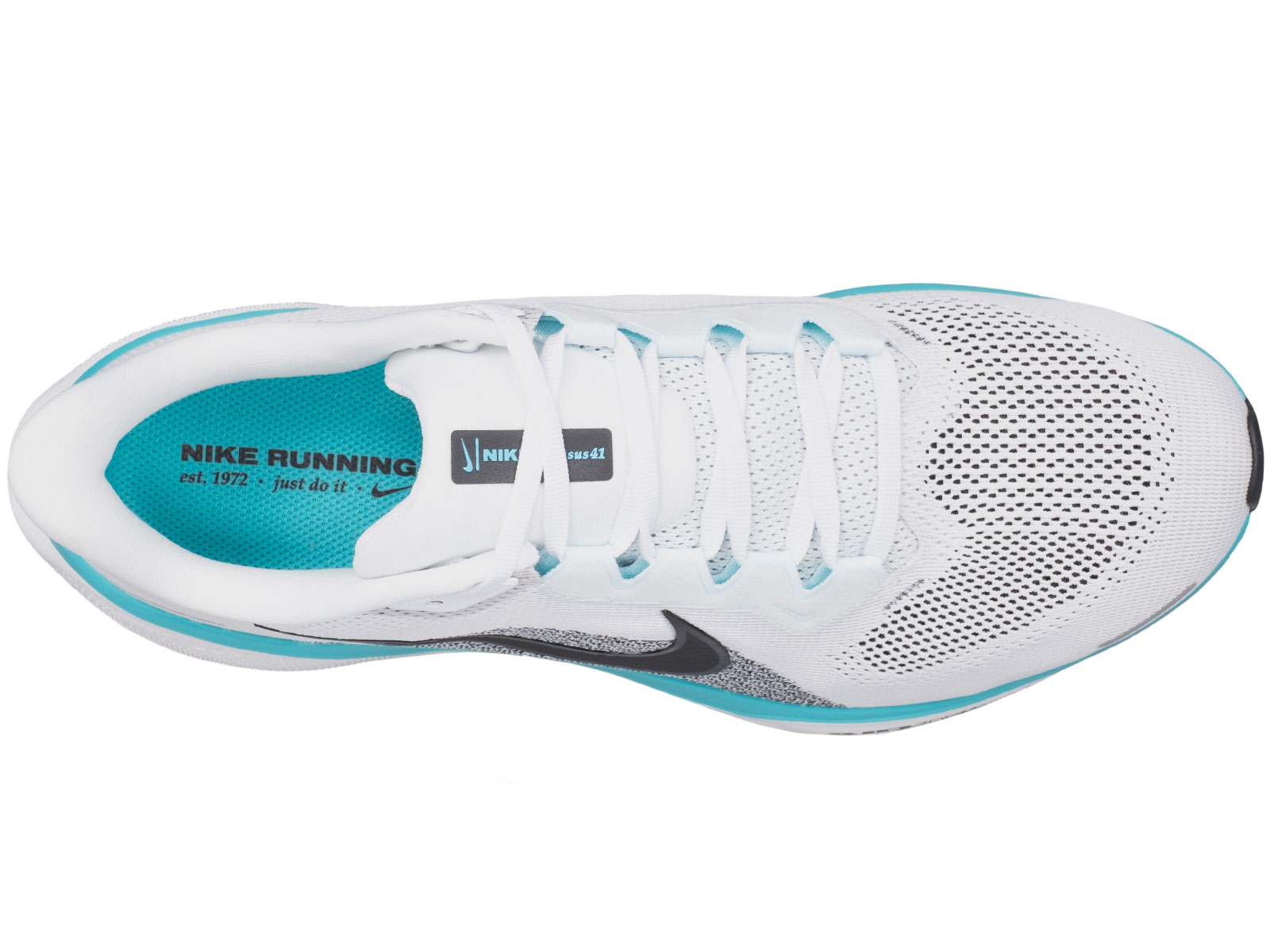
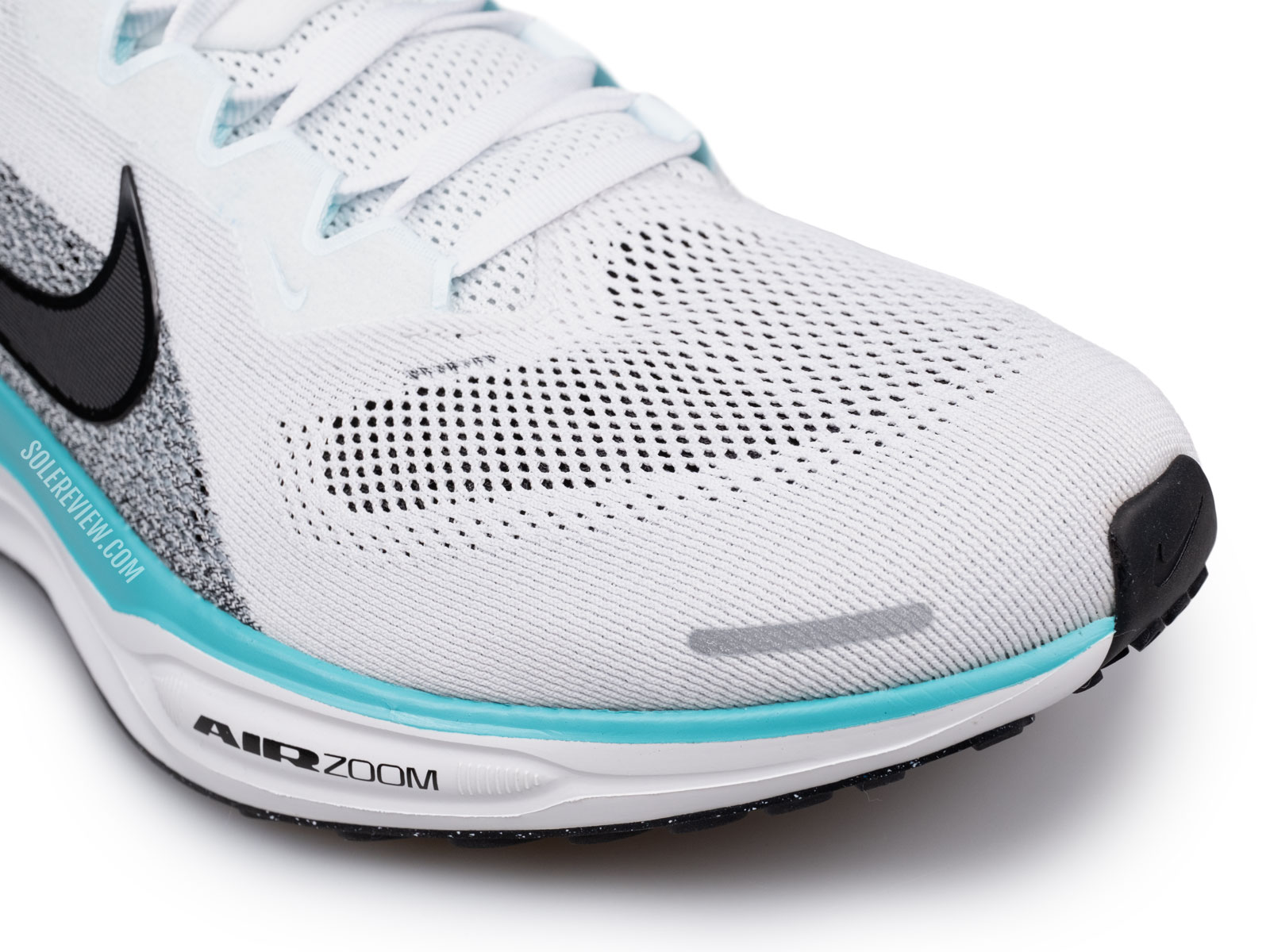
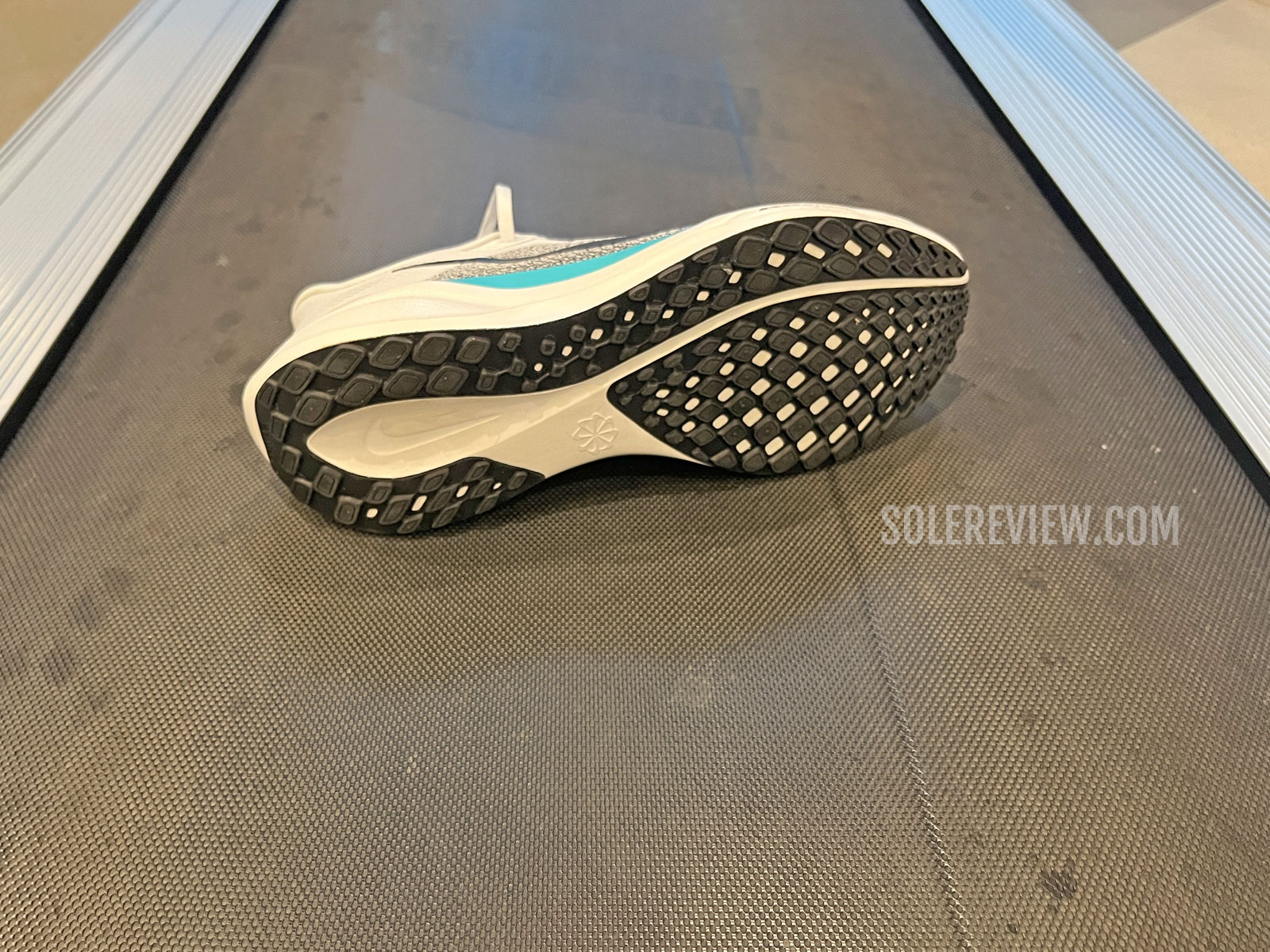
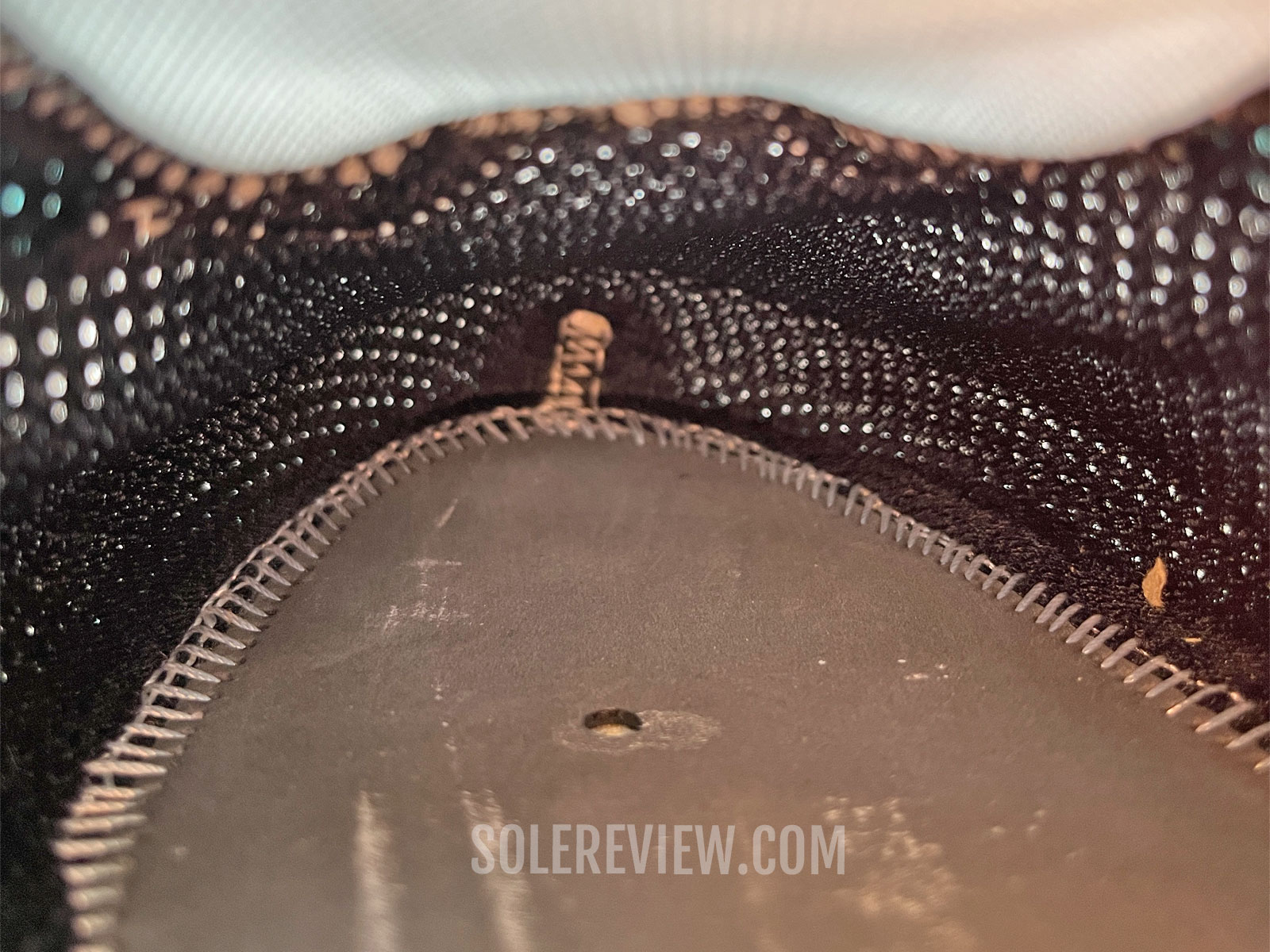
The Pegasus 41 utilizes the familiar Zoom Air bag and React foam setup, except that there’s improved heel cushioning. The forefoot has a low profile like before, so runners who land forefoot or midfoot first will have a different experience than heel strikers. Despite its heel-biased nature and somewhat boring ride, the Peg is a capable mileage hauler. It has the comfort for daily runs and up to a 10K. It’s also very durable because of the firm midsole, generous outsole rubber coverage, and sleeved upper.
Also consider: The Saucony Ride 18 – our favourite daily trainer pick that sells up to a size US 15.
- Nike’s marketing pitch: An energized ride for everyday road running.
- Upper: Engineered mesh, sleeved upper.
- Midsole: Two Zoom Air bags inside ReactX foam, 10 mm heel drop.
- Outsole: Carbon rubber.
- Weight: 297 gms/ 10.4 Oz for a half pair of Men’s US 9/UK 8/EUR 42.5/CM 27.
- Stack heights: 37 mm (heel), 27 mm (forefoot).
- Available widths: D – regular (reviewed), 4E – extra wide.
- Previous model: Nike Pegasus 40.
- Country of origin: Vietnam.
- Recommended use: Daily training, tempo runs, half-marathons.
- Footstrike orientation: Heel, midfoot/forefoot (full contact).
- Median lifespan: 400 miles.
- Recommended paces: Slower than 4:00 min/km (6:30 min/mile).
- Recommended temperature range: Warmer than -5° C/23° F.
Pros
- Versatile comfort
- Supportive ride
- Secure fit
- Outsole grip
- Multiple widths
Cons
- React behavior is temperature dependent
- Better for heel strikers than forefoot strikers
- Boring ride when compared to peers
- Fewer/wider lacing rows add top-down pressure
- Scarce reflectivity
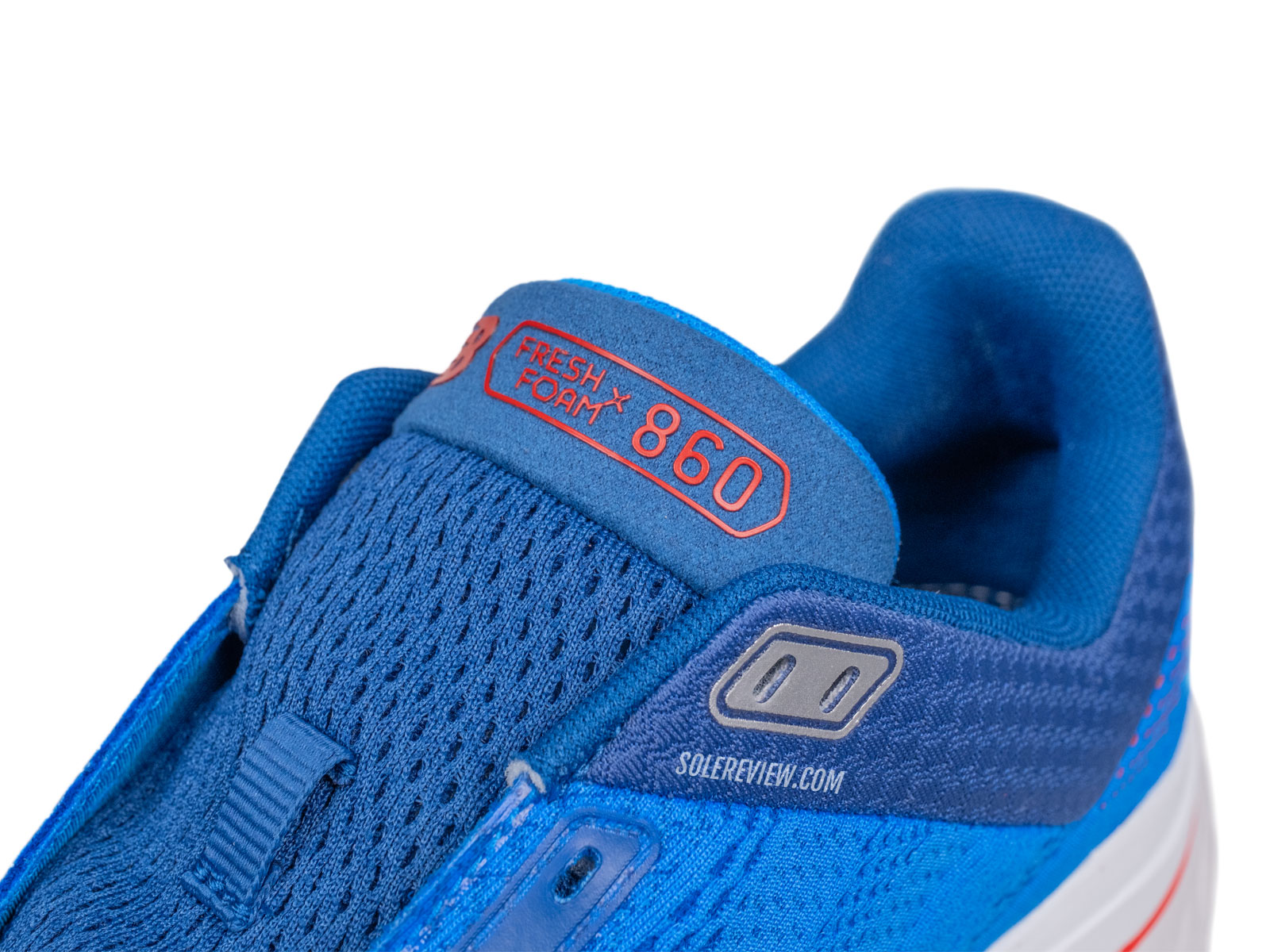
The New Balance 860V14 and Vongo V6 are two of the many pronation-management running shoes in the market. But what sets them apart is their unique gait-prescription formula. It also helps that both these shoes are sold till a US 16 and in multiple widths. Unlike most stability trainers that rely on a firmer foam wedge or raised midsole walls, the 860 and Vongo use a ‘stability plane’. This plate is solid on the arch side and perforated (has holes) on the outer side.
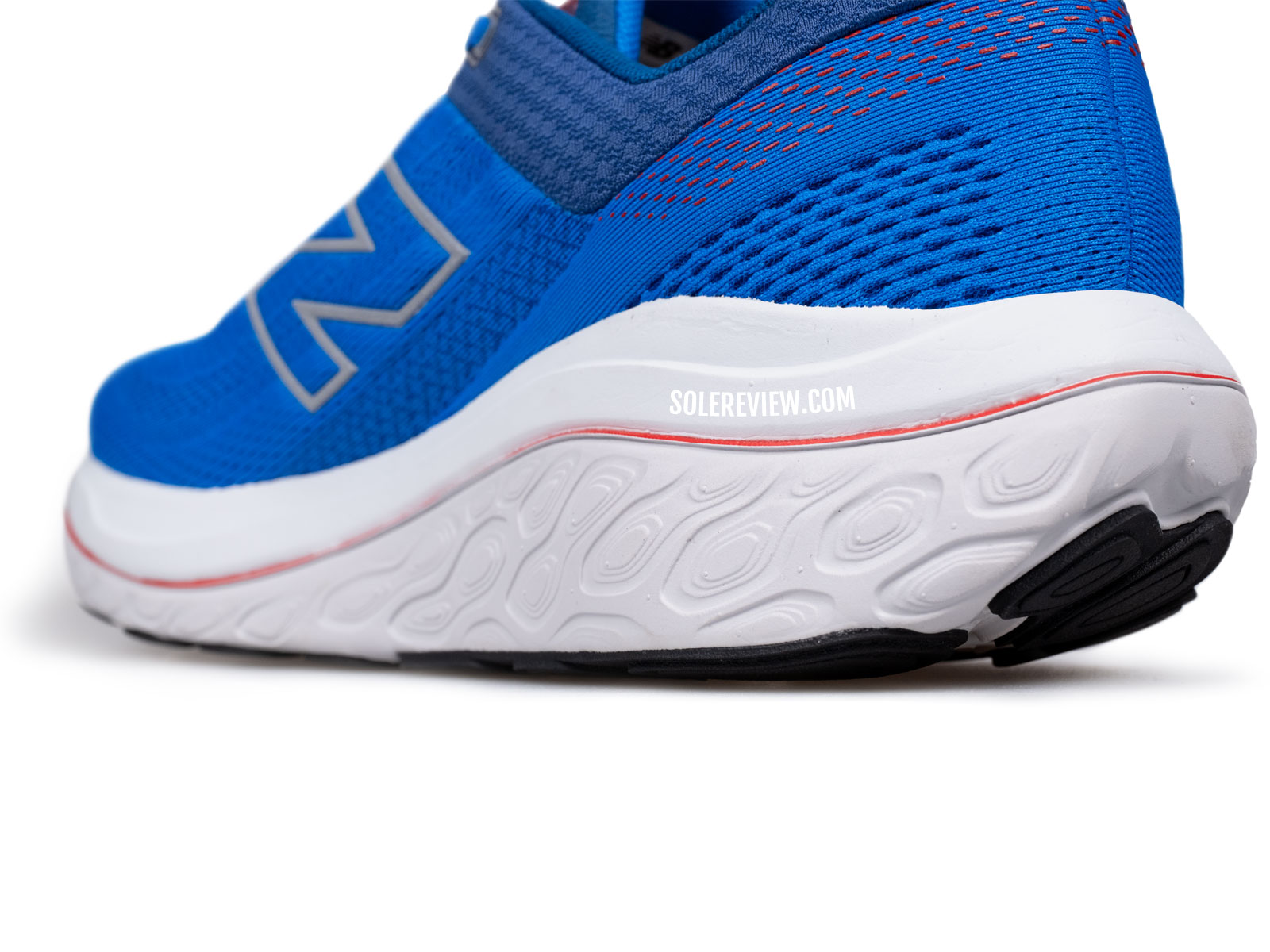
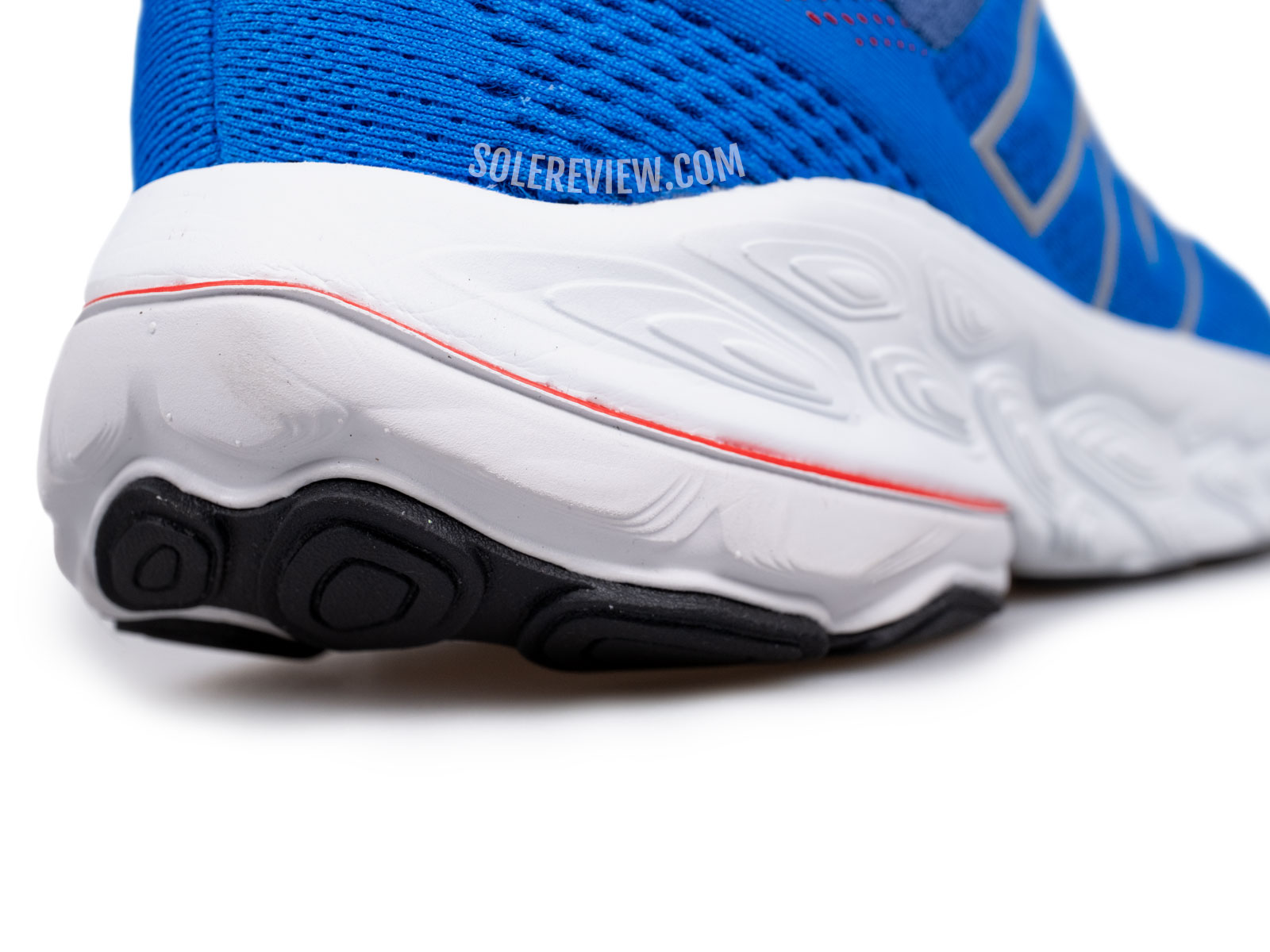
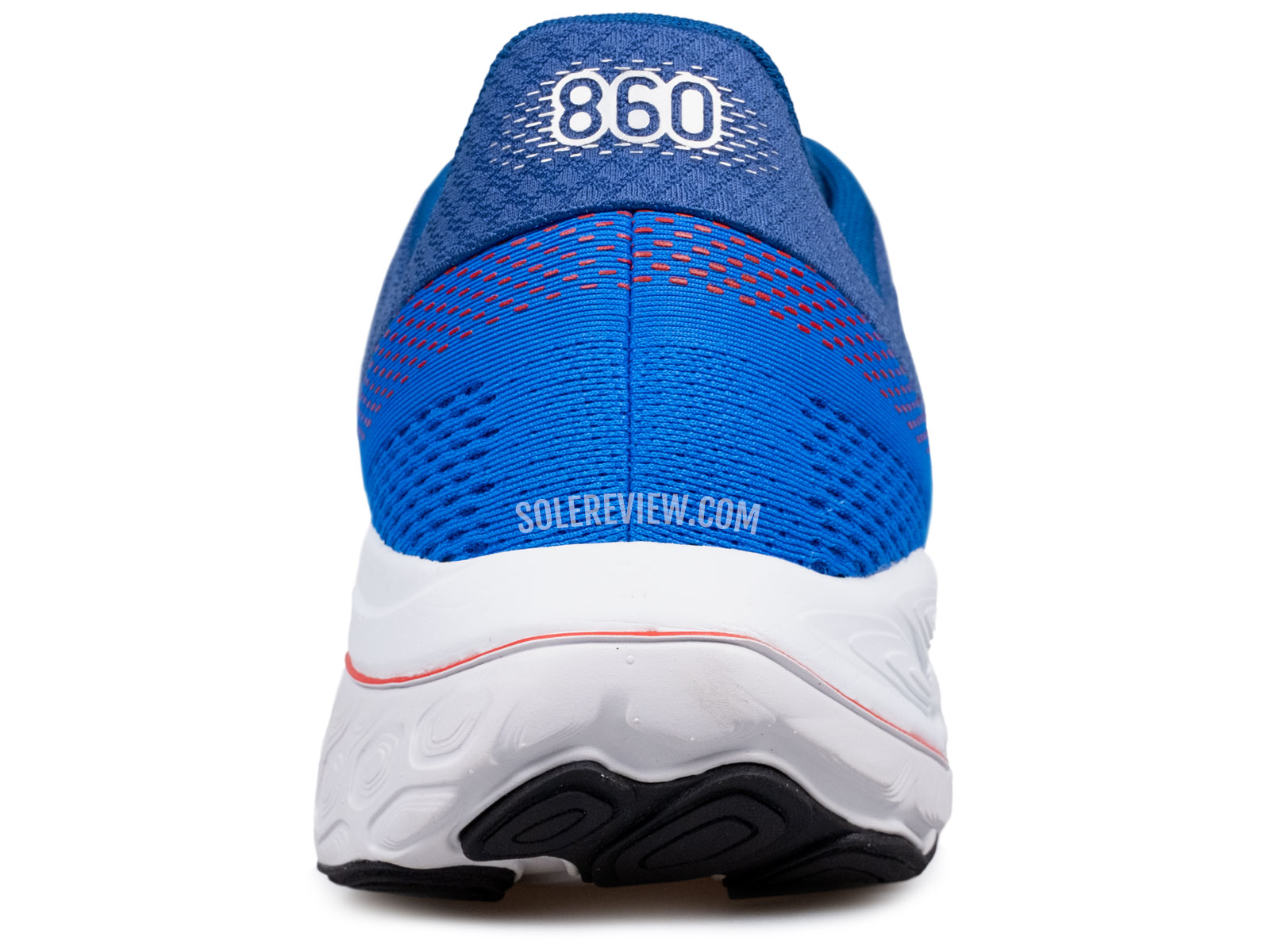
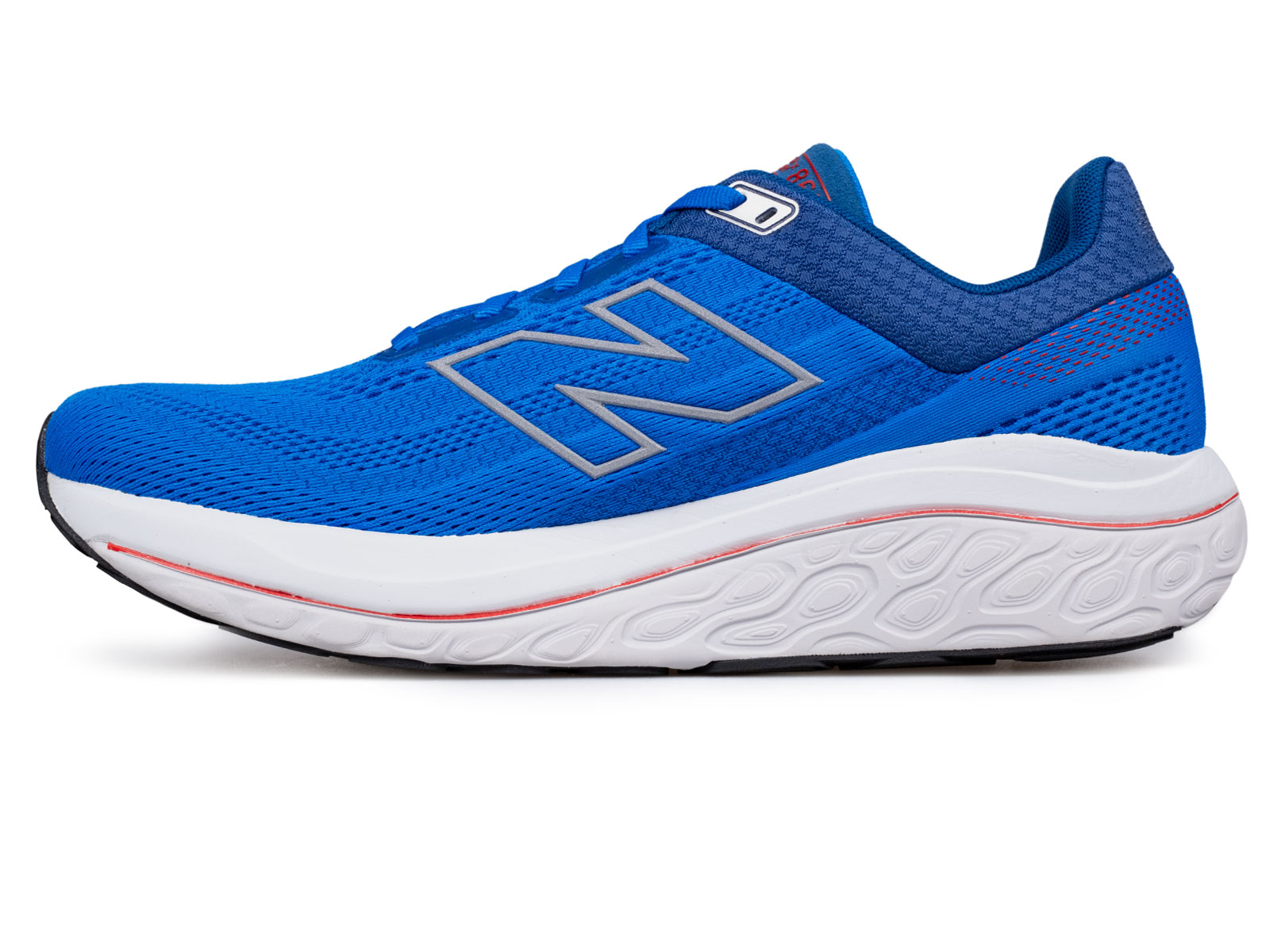
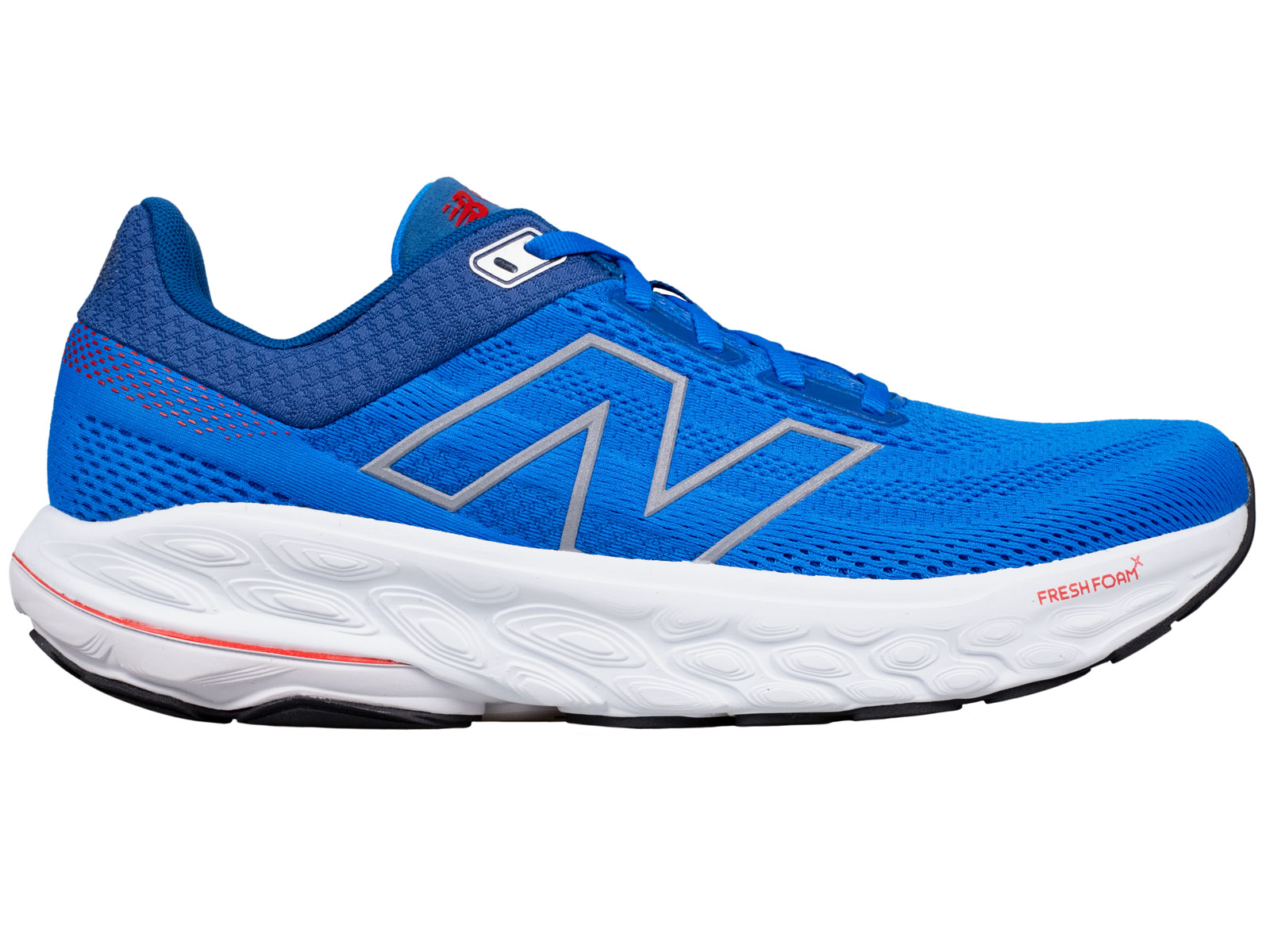
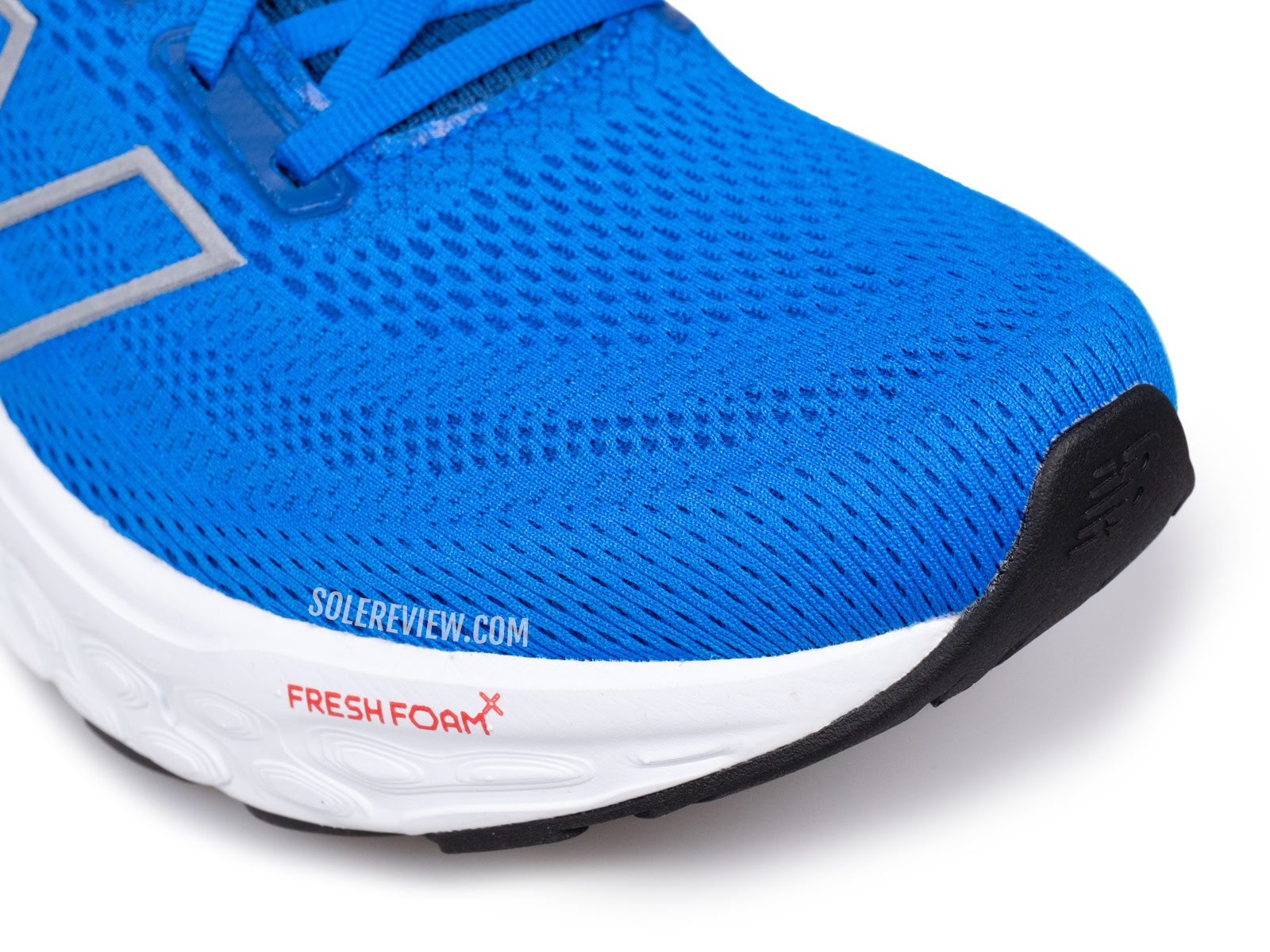
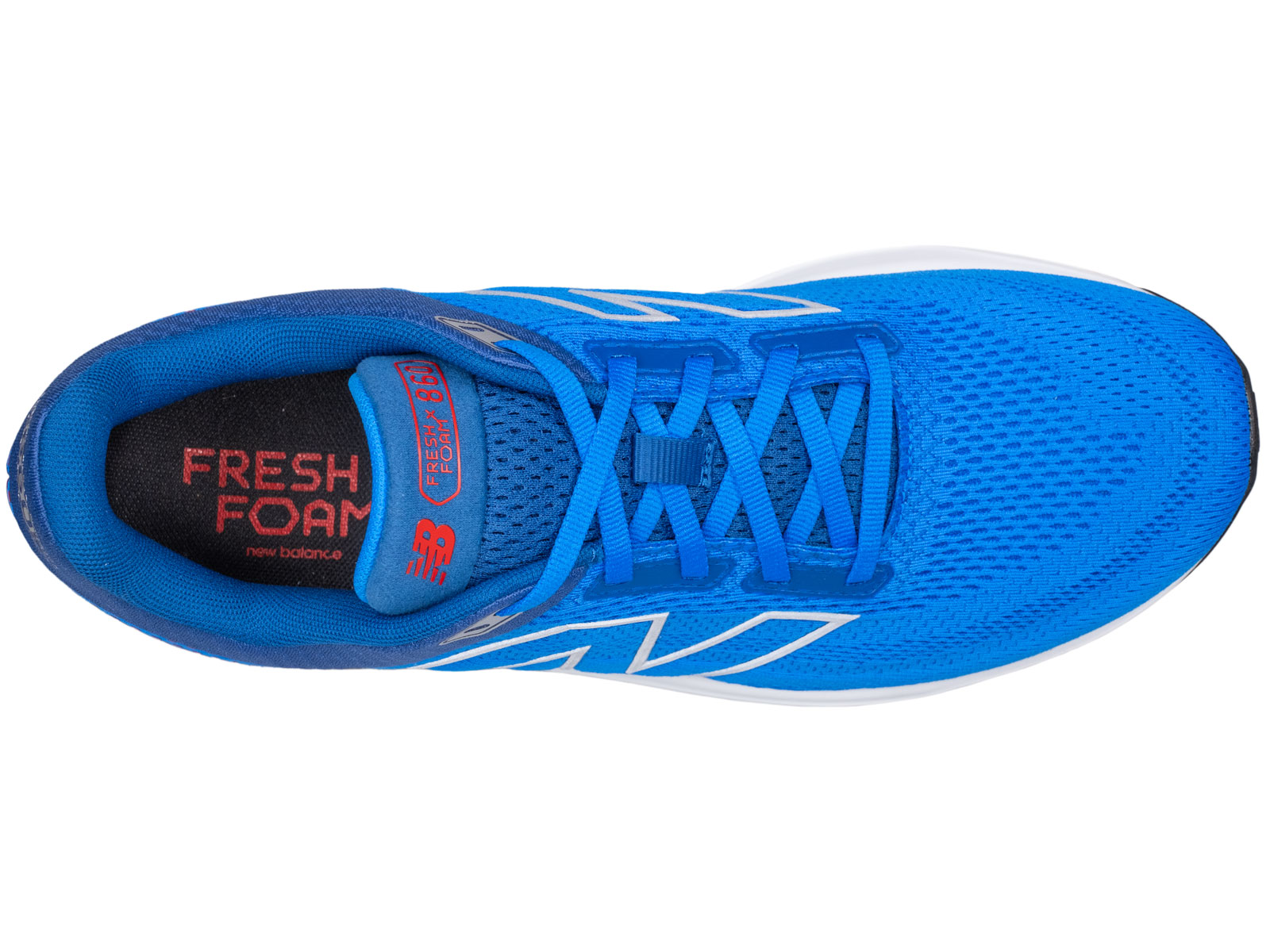
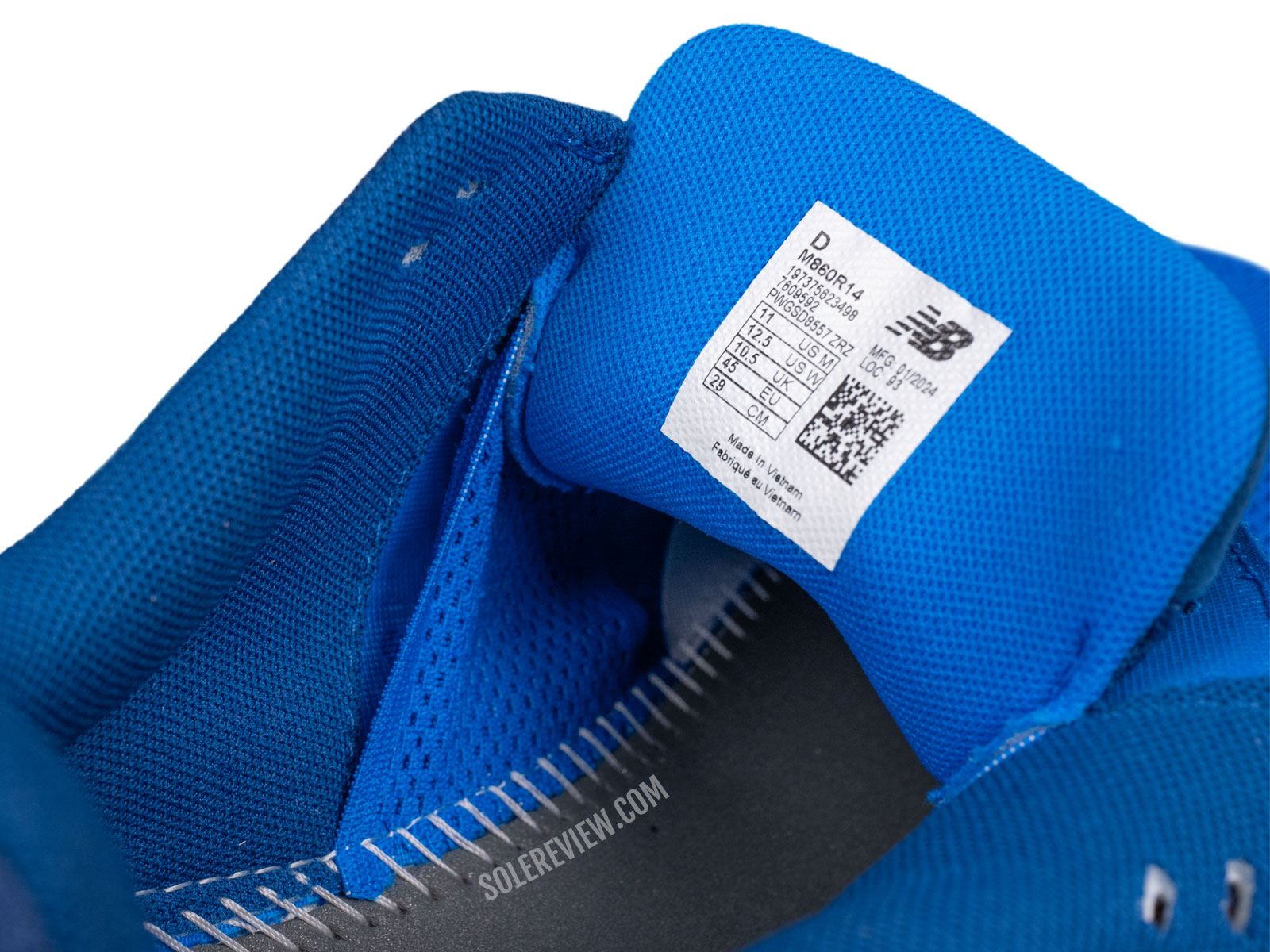
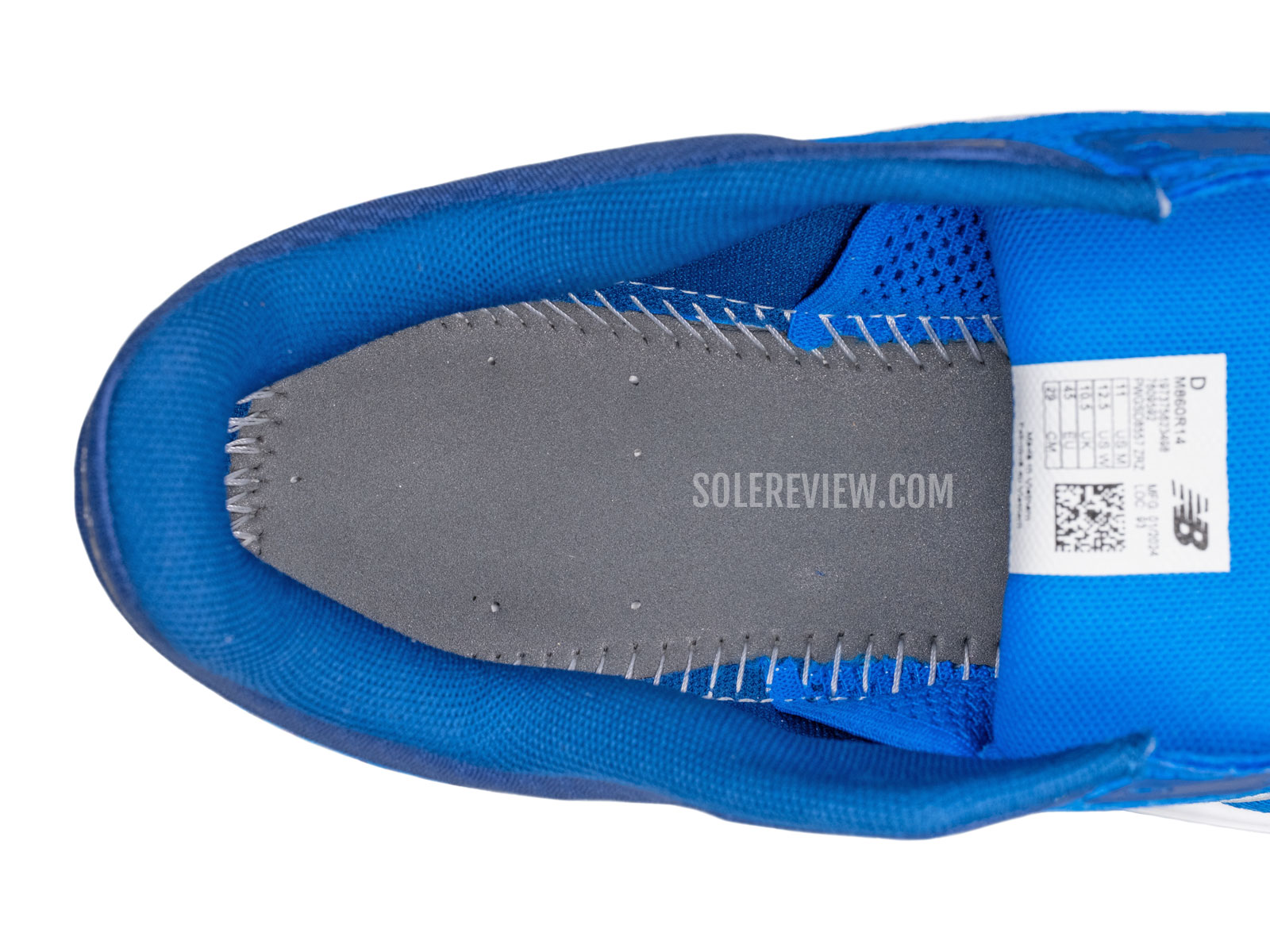
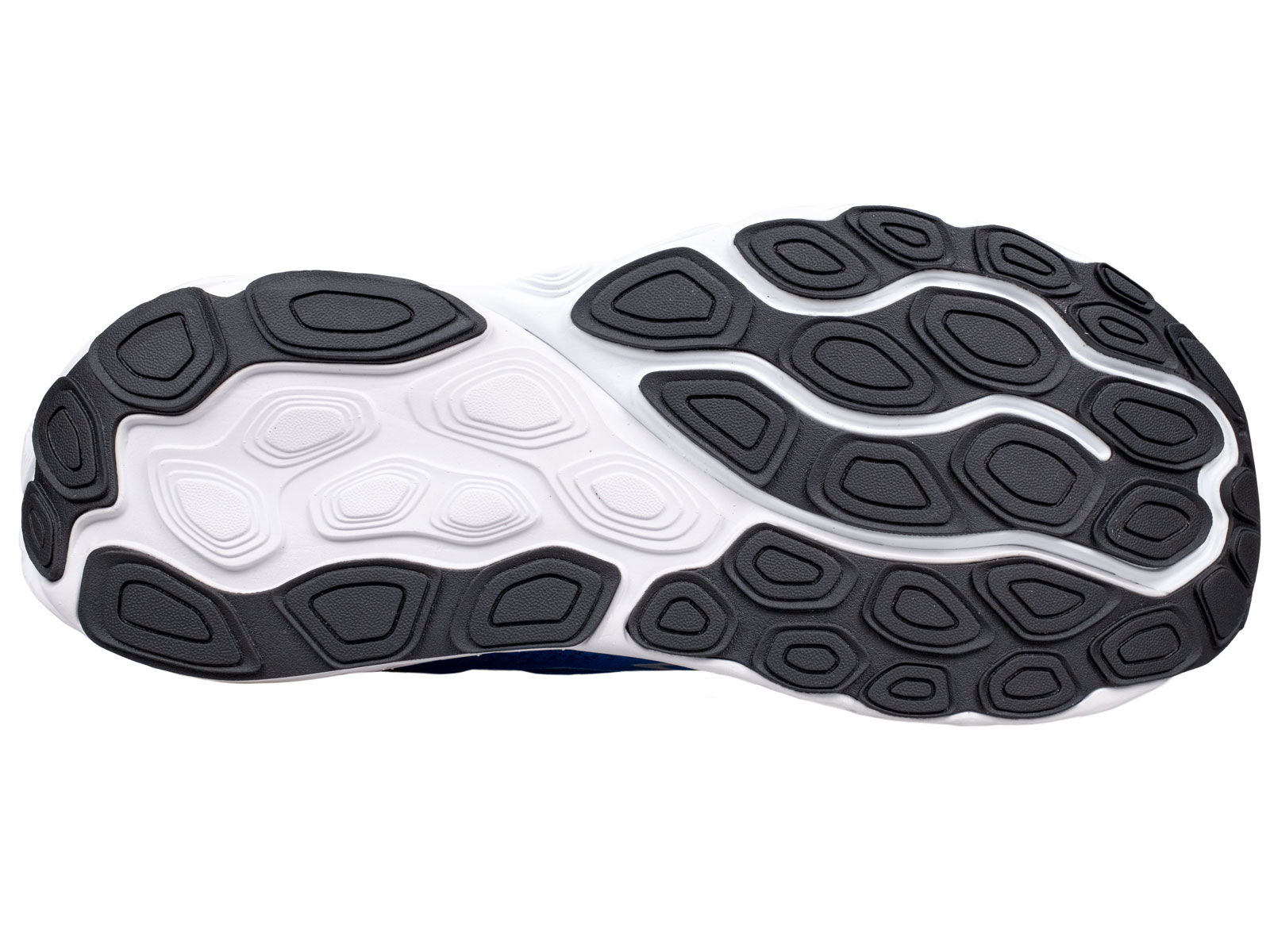
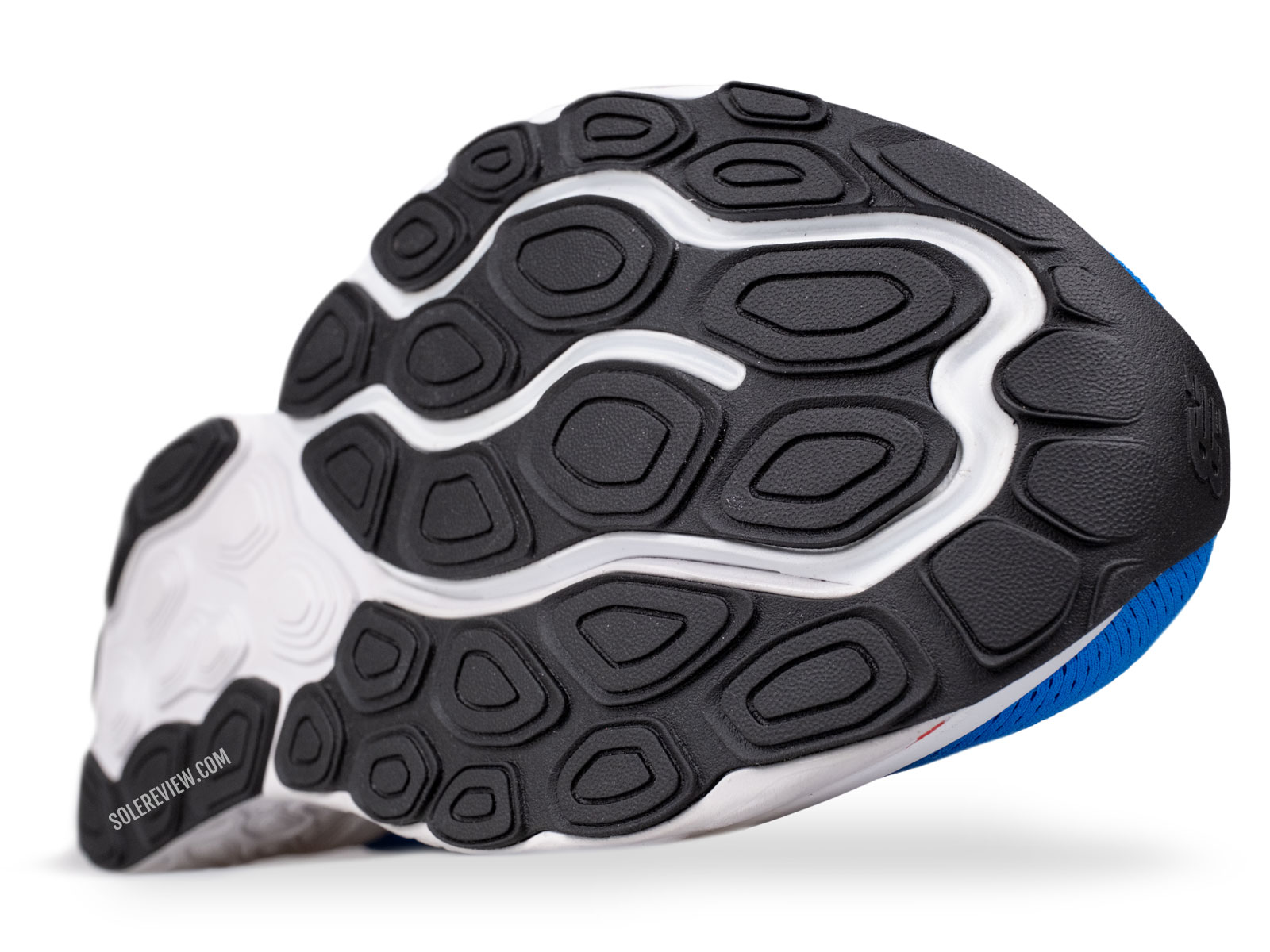
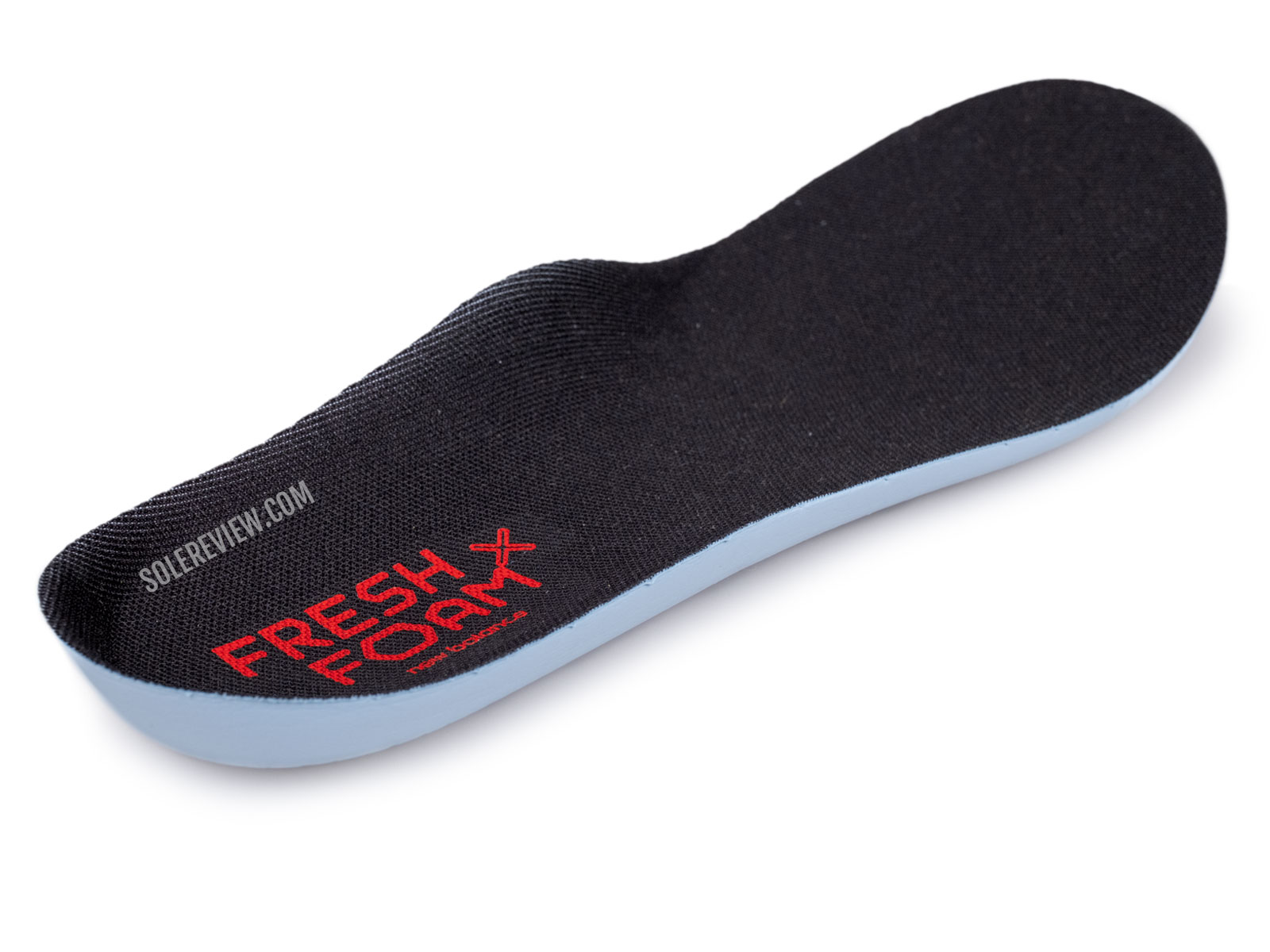
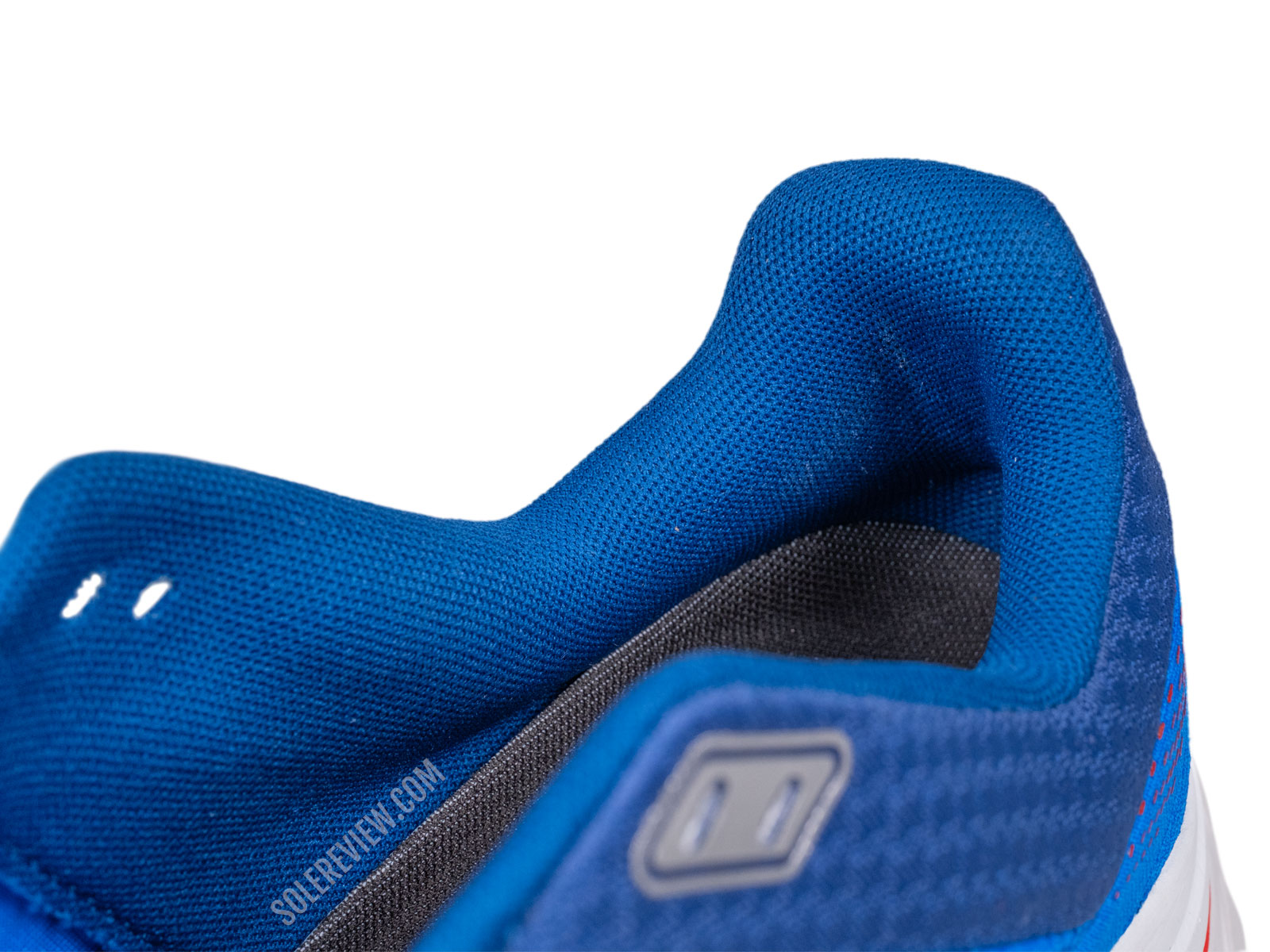
This plate design makes the outer half of the midsole softer, so the loading is directed away from the arch side. The 860V14’s stability plate only covers the lateral rearfoot, whereas the Vongo V6’s plate is a full-length kind. This version of the 860 is the softest it’s ever been. The Fresh Foam X midsole adds comfort for daily training, 10K, and half without feeling sluggish.
- New Balance’s marketing pitch: Built for reliability over the long haul.
- Upper: Engineered mesh, tongue gusset.
- Upper fit: True-to-size with loose forefoot.
- Midsole: Dual-density Fresh Foam, perforated ‘stability plane’ plate. 8 mm drop.
- Outsole: Harder rubber under the heel with softer forefoot blown foam.
- Weight: 306 gms/ 10.8 Oz for a half pair of Men’s US 9/UK 8.5/EUR 42.5/CM 27.
- Stack heights: 36 mm (rear), 28 mm (forefoot).
- Available widths: D – regular (reviewed), 2E – wide.
- Previous model: New Balance 860 v13.
- Country of origin: Vietnam.
- Recommended use: Everyday training, half-marathons.
- Footstrike orientation: Heel, midfoot/forefoot (full contact).
- Median lifespan: 400 miles.
- Recommended paces: 4:30 min/km (7:00 min/mile) and slower
- Recommended temperature range: Warmer than -0° C/32° F.
Pros
- Effective pronation control
- Ride comfort
- Outsole grip
- Plush and breathable upper
- Optional 2E width, reflectivity
Cons
- None worth mentioning
The Saucony Guide 18 doesn’t have a specific pronation control feature. That said, this is a ‘stability’ shoe in the literal sense – the ultra-wide midsole and raised sidewalls do an excellent job of seating the foot during runs. It’s also very cushioned; the midsole has stack heights of 35 mm and 29 mm for mileage-friendly comfort and daily runs. The midsole hasn’t changed since the Guide 17, so runners will get an identical ride quality.
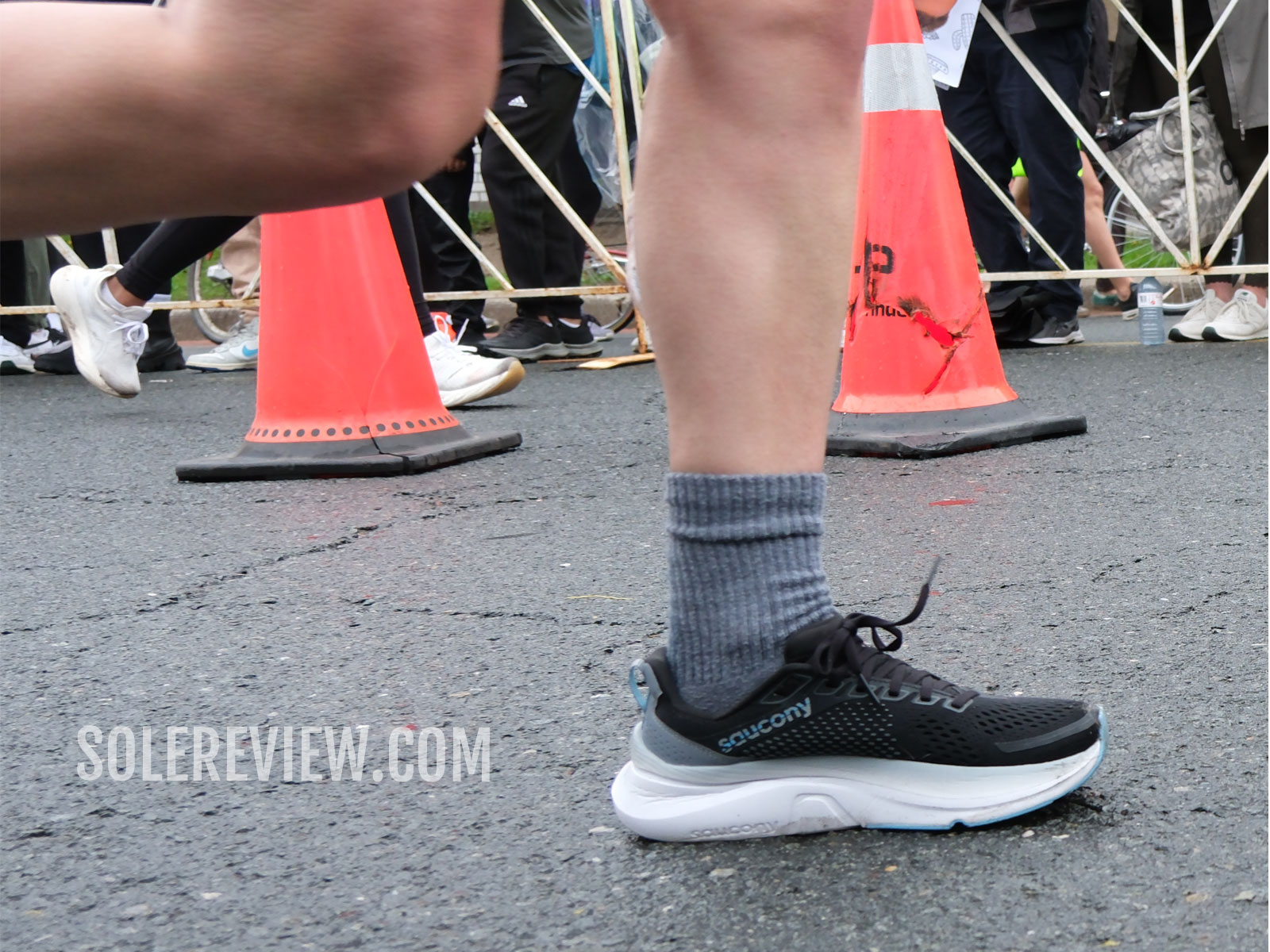
Unlike its neutral version (the Ride 18), the Guide doesn’t use a Pwrrun+ (expanded PU) midsole. Only the removable footbed is made of Pwrrun+; the rest of the midsole uses a EVA blend foam. The comfortable upper fits true to size and is sold up to a size US 16. The Guide also sells in a wide and extra-wide variants. The fit is slightly tighter and shorter than the previous Guide model because of the increased heel collar padding.
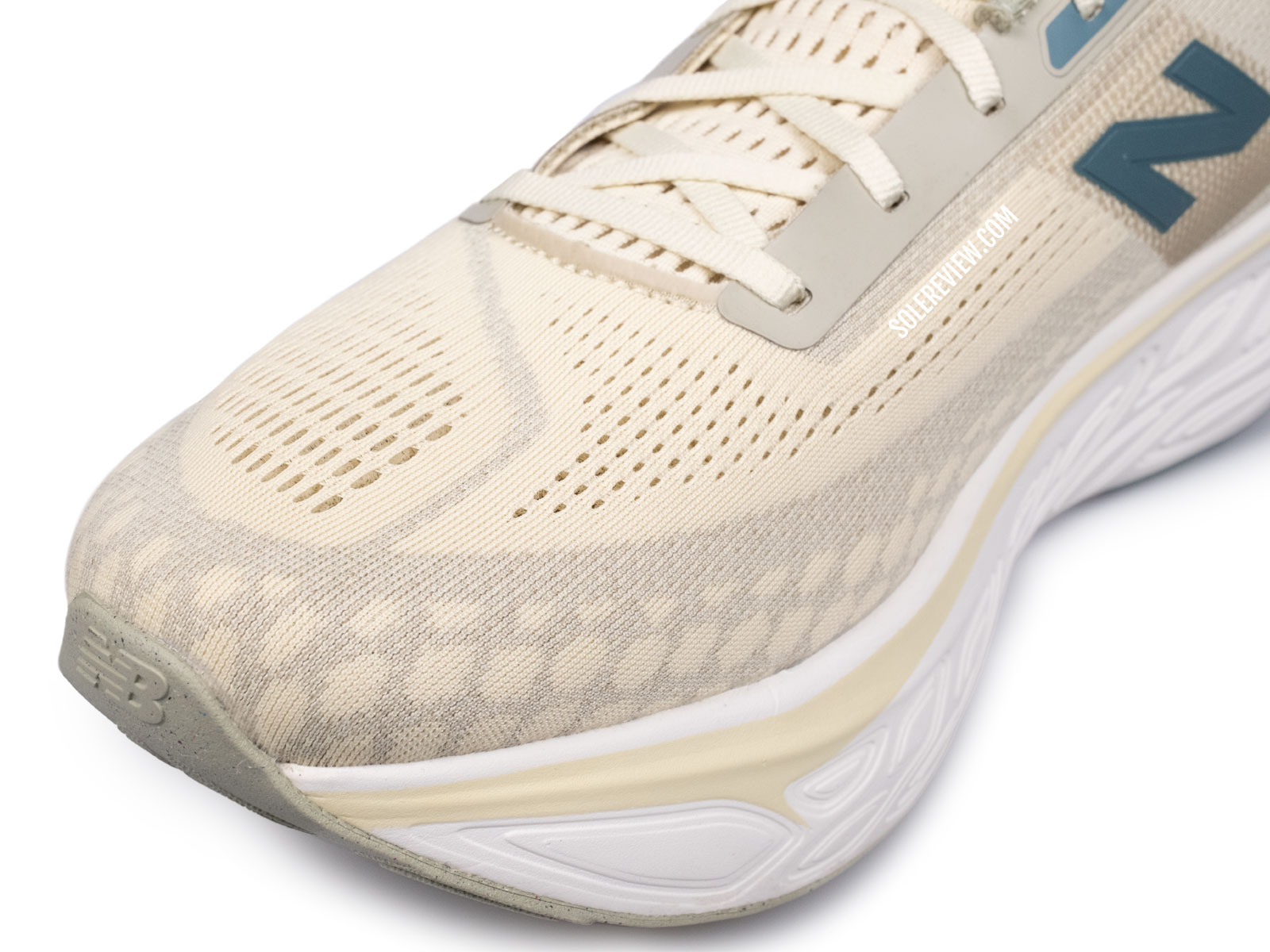
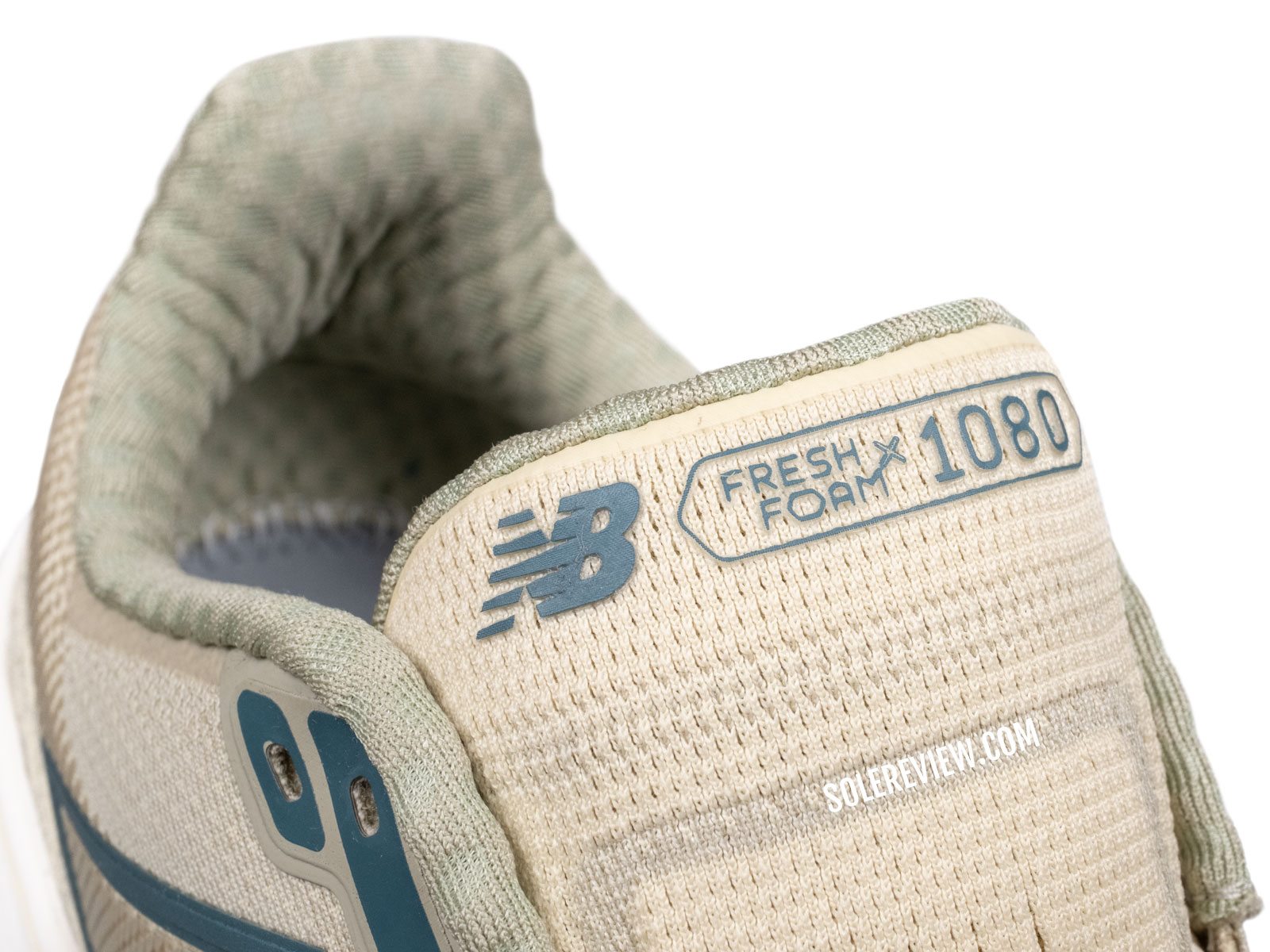
The New Balance 1080 is back for the 14th time and offers the same value proposition as before. This is a deeply-cushioned shoe for recovery runs and high-mileage efforts at less aggressive speeds. The Fresh Foam X midsole is soft enough to deliver distance-friendly cushioning without feeling mushy; the rocker-shaped midsole assists toe-offs. The 1080V14 is more stable than the V13, and that’s because of the upper and not the midsole. While the reformulated Fresh Foam midsole and updated outsole makes the cushioning bouncier, the tighter upper is more effective at keeping the foot seated.
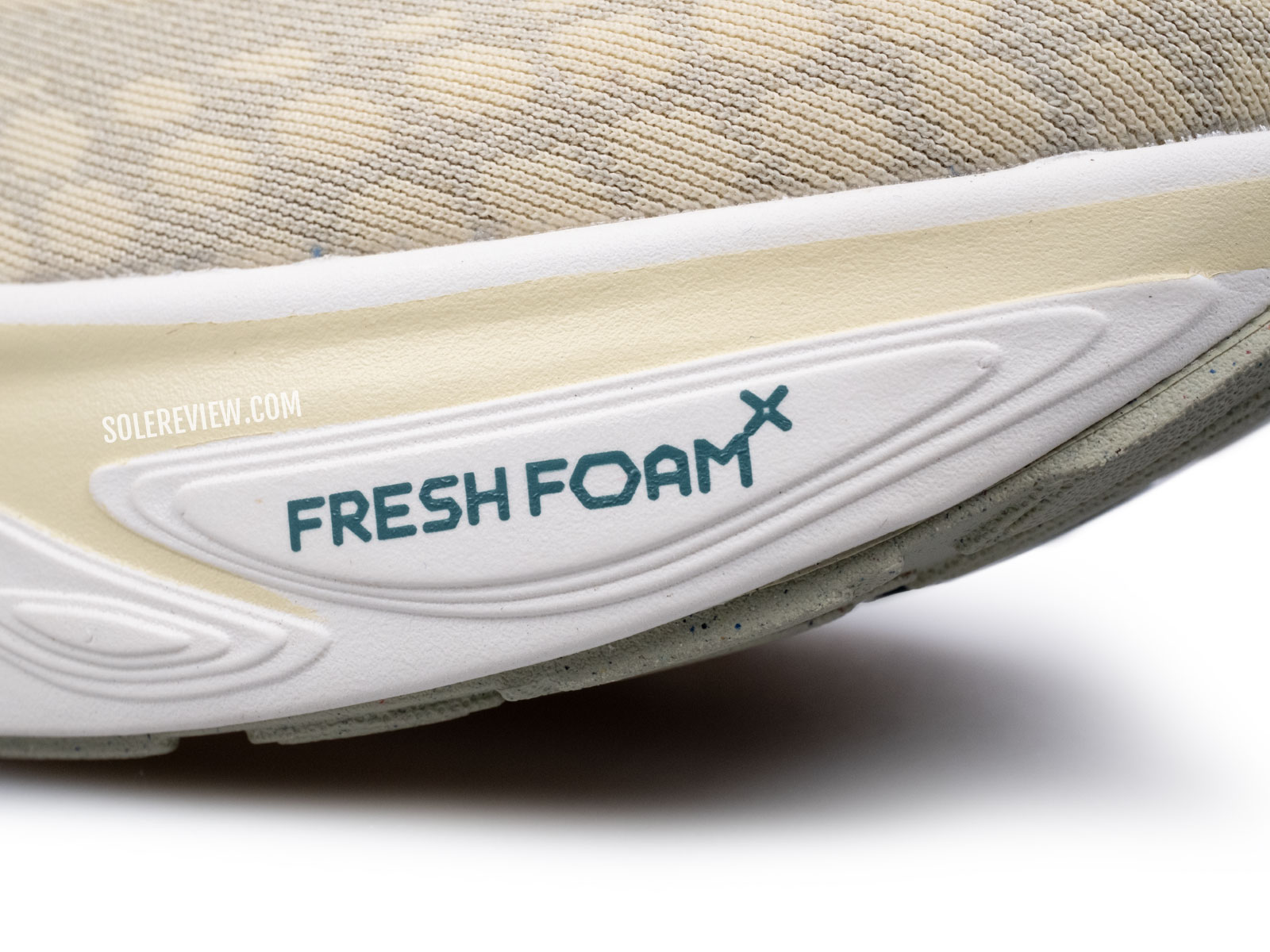
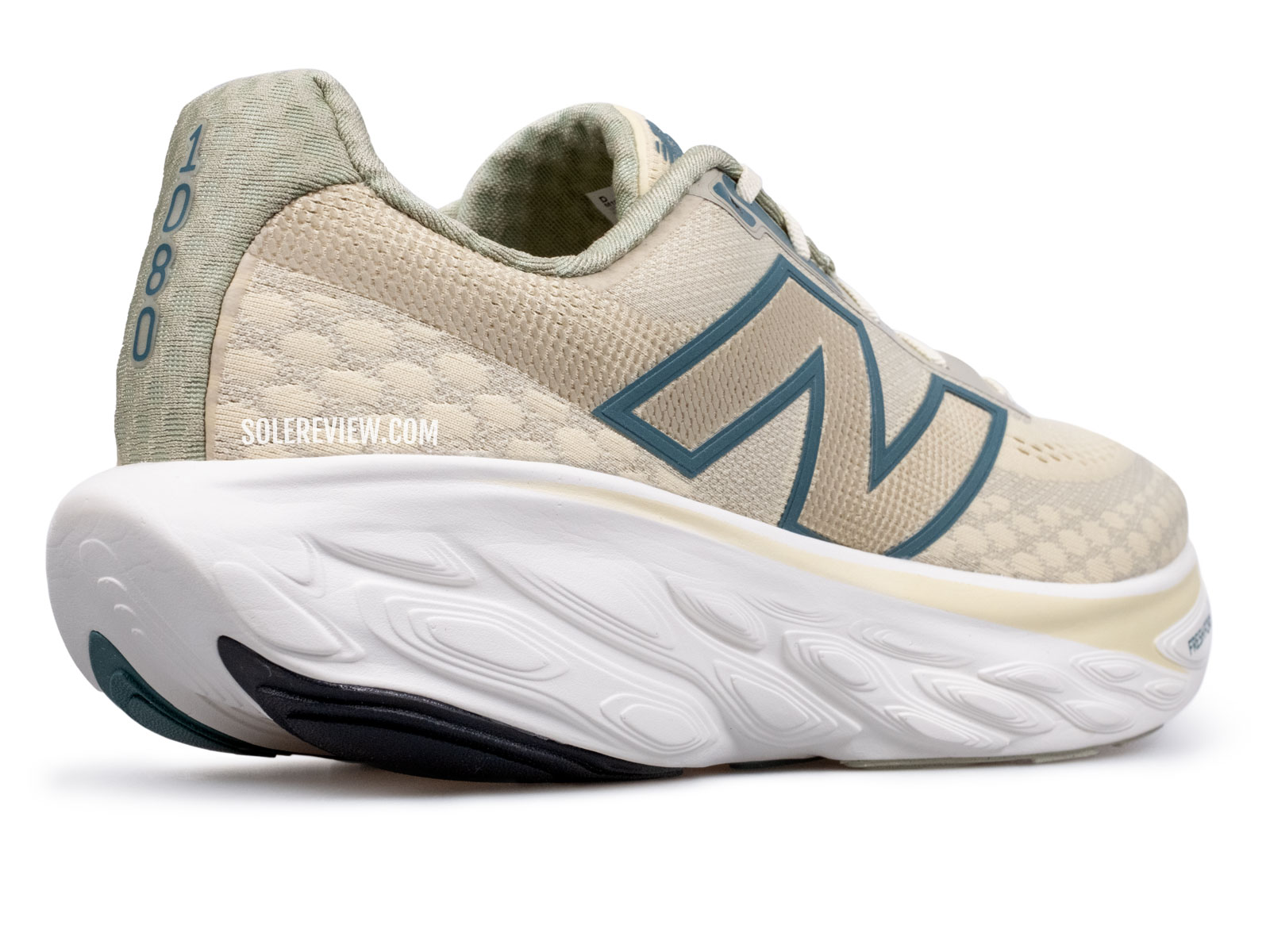
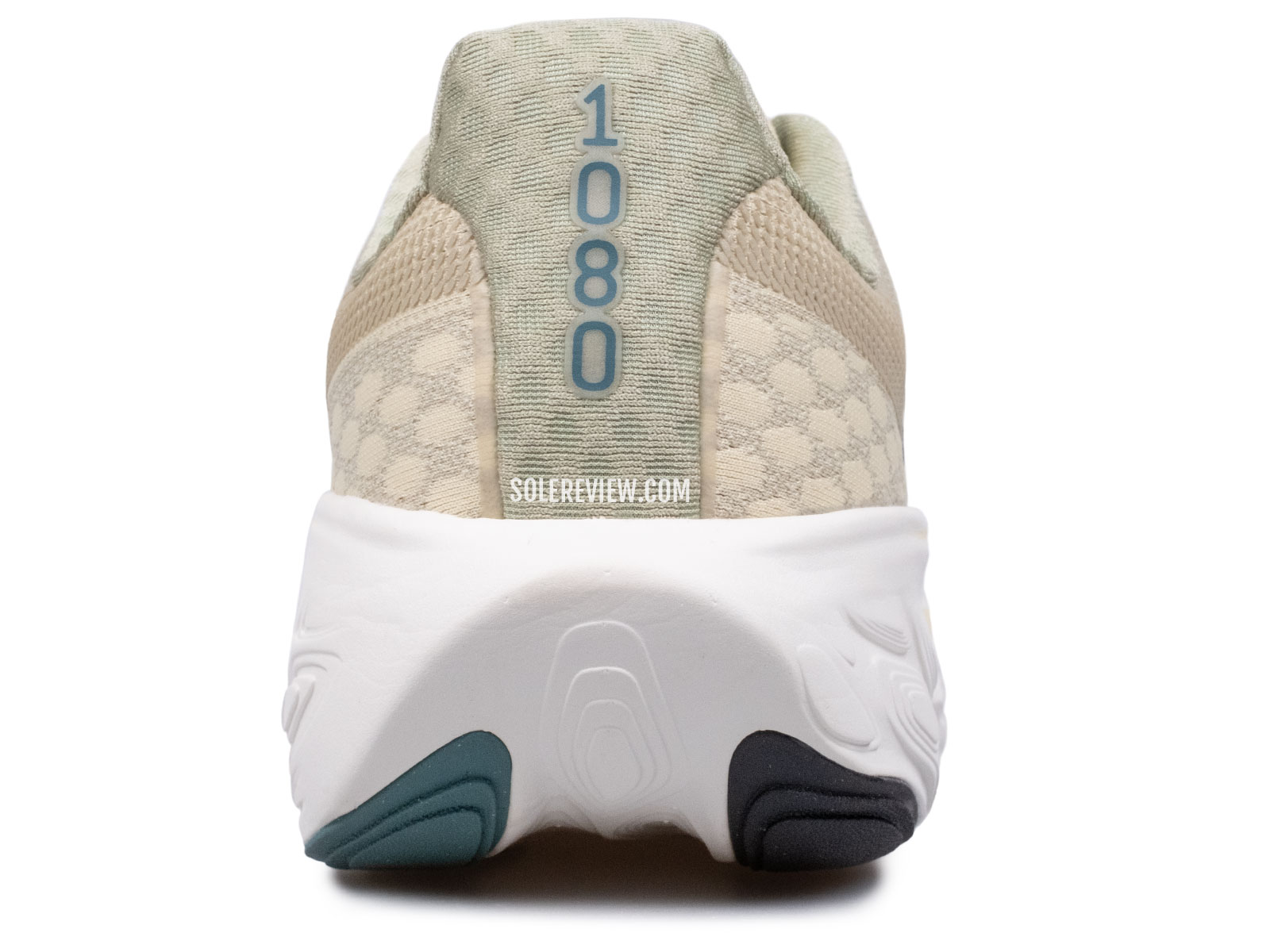
The v14's 'heel spring' or bevel is higher than the norm, so there's not enough real estate available during heel landings.
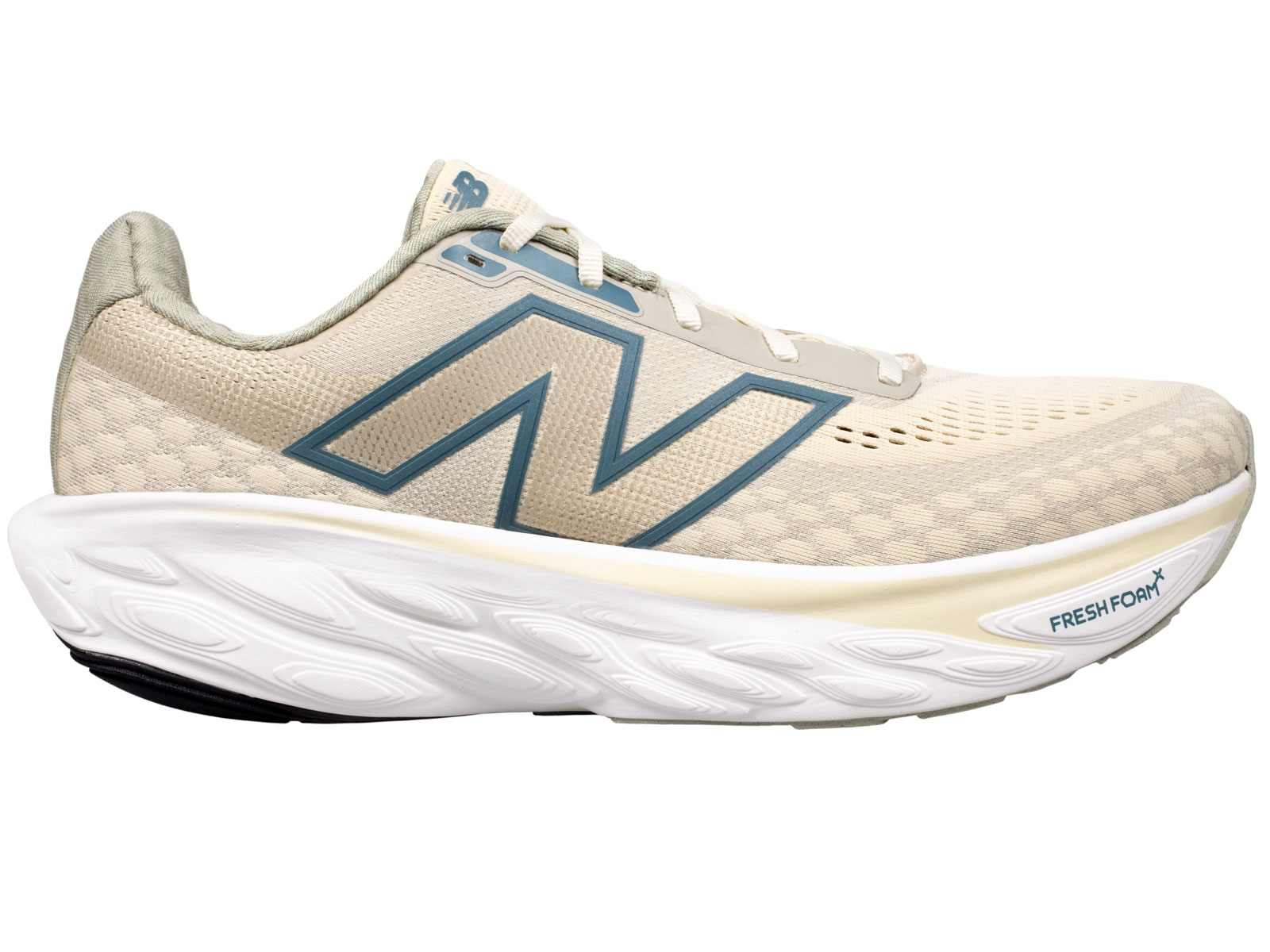
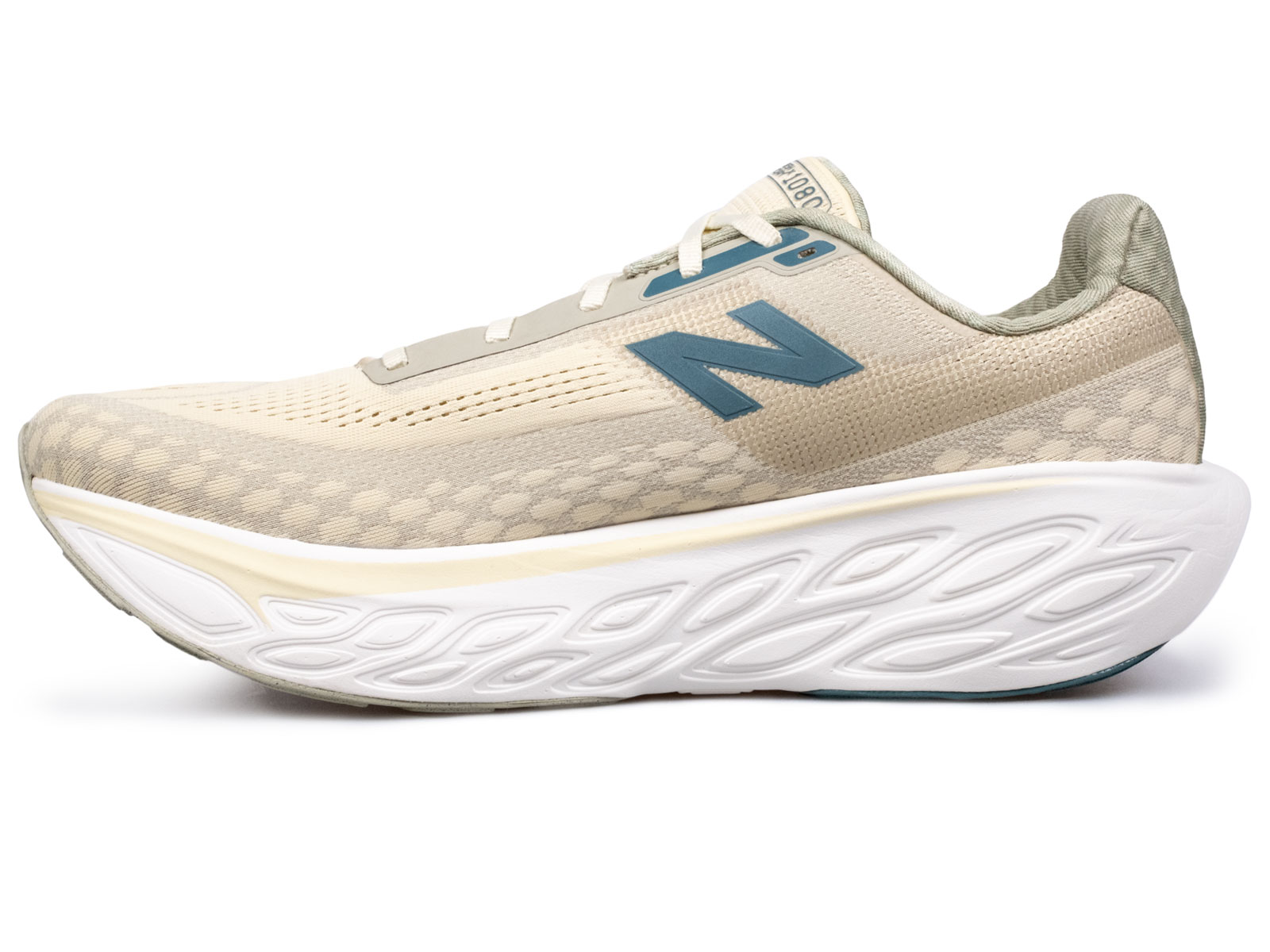
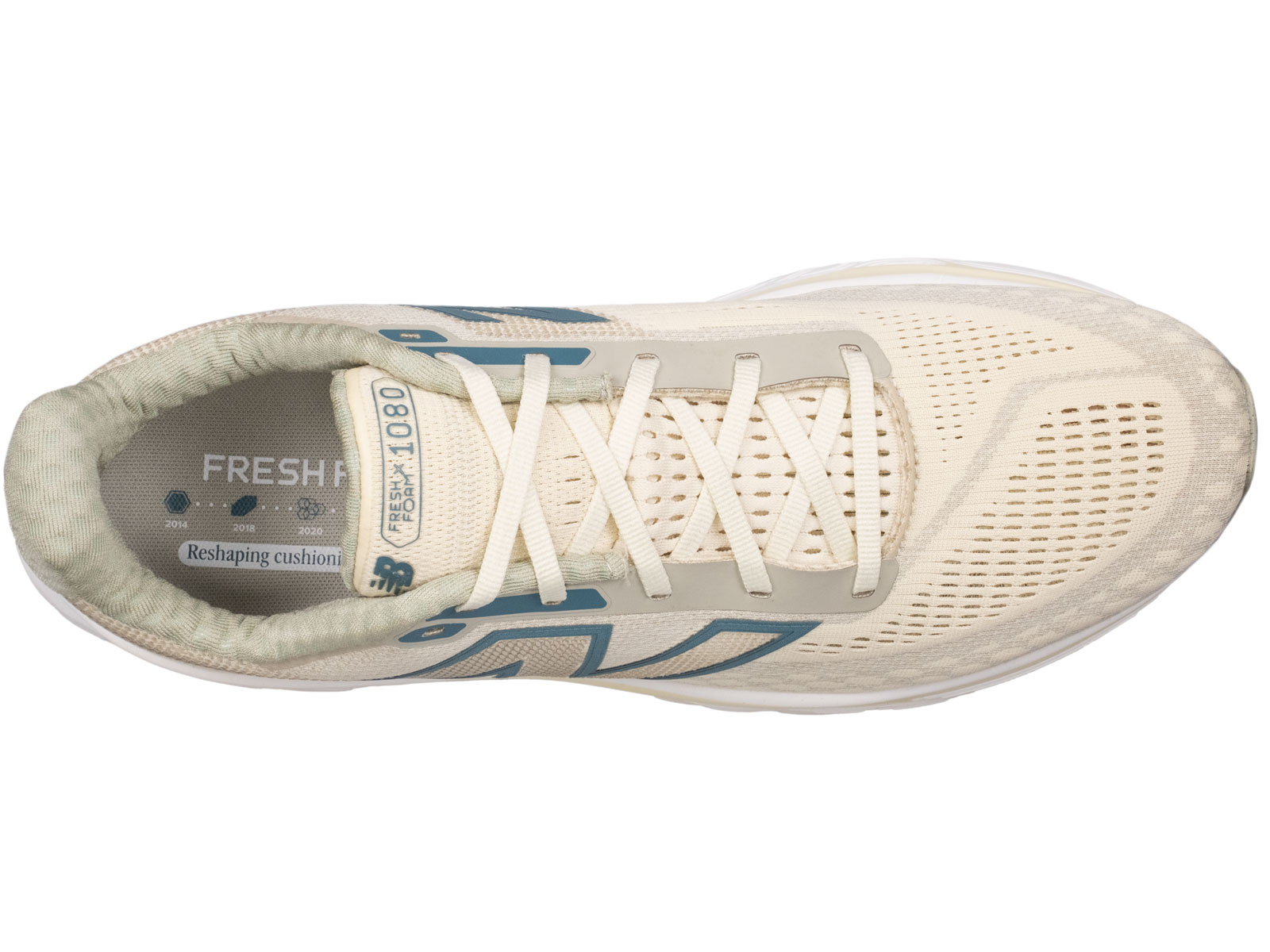
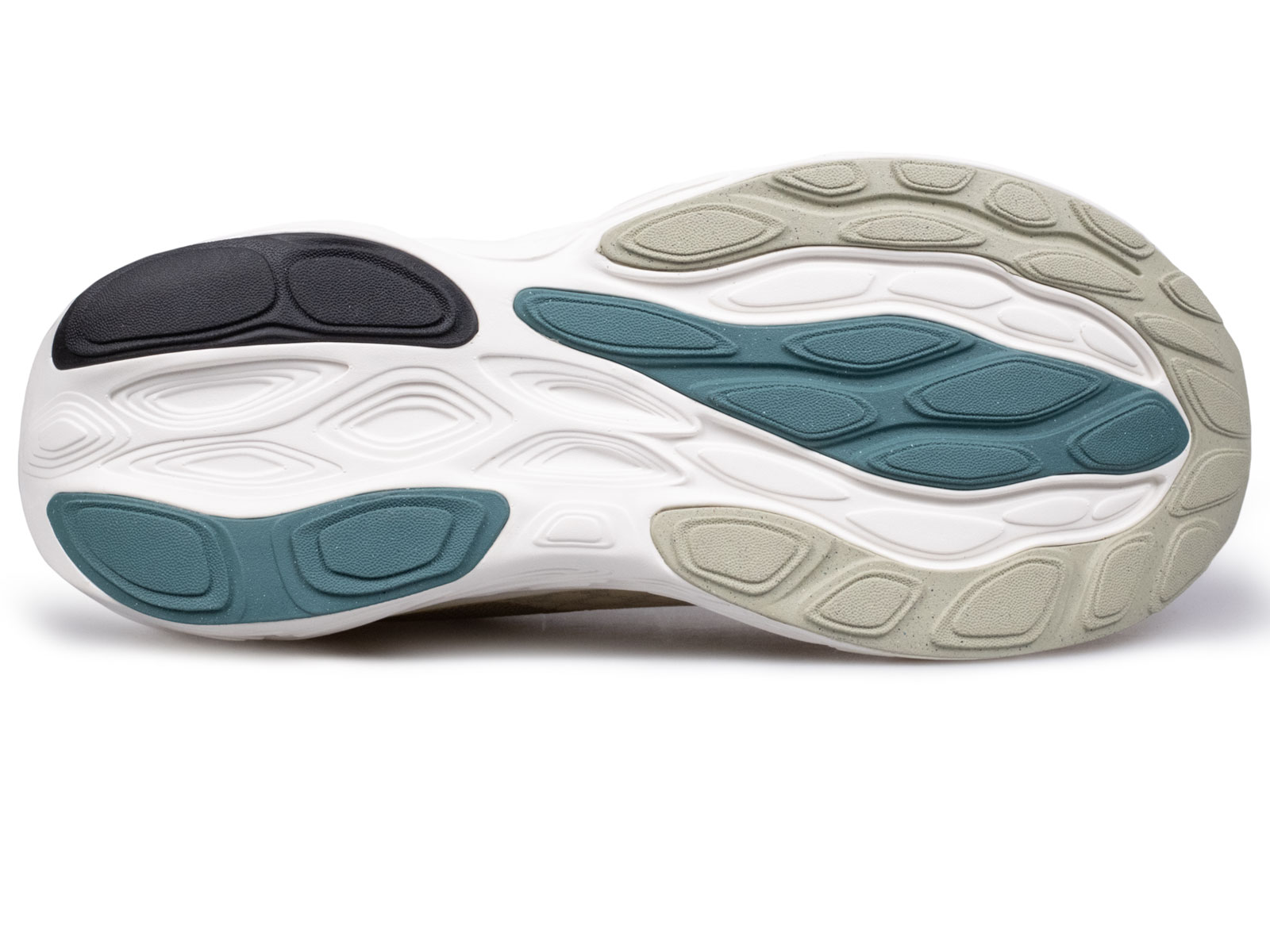
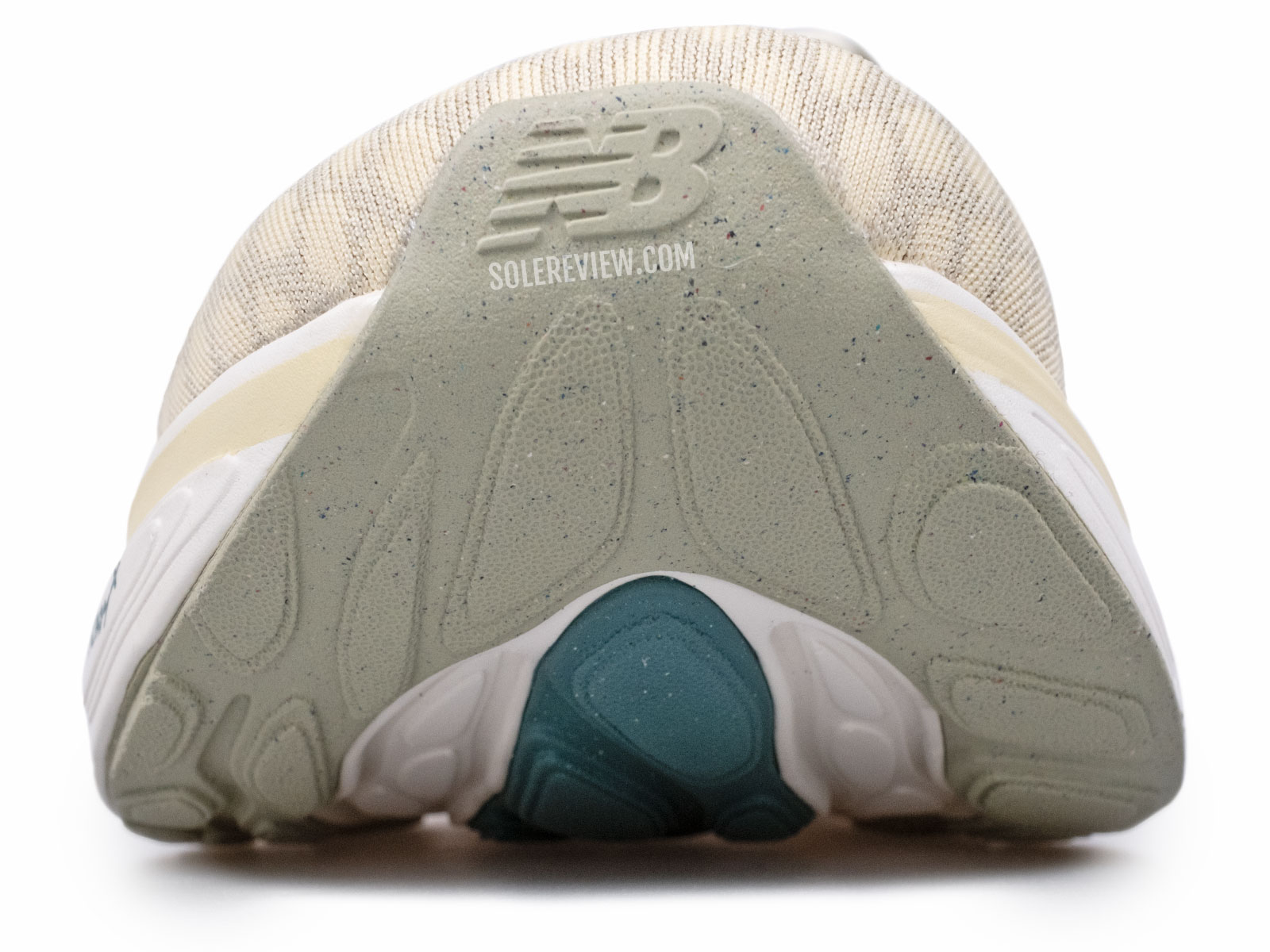
The 1080v14 has a stronger 'rocker' effect.
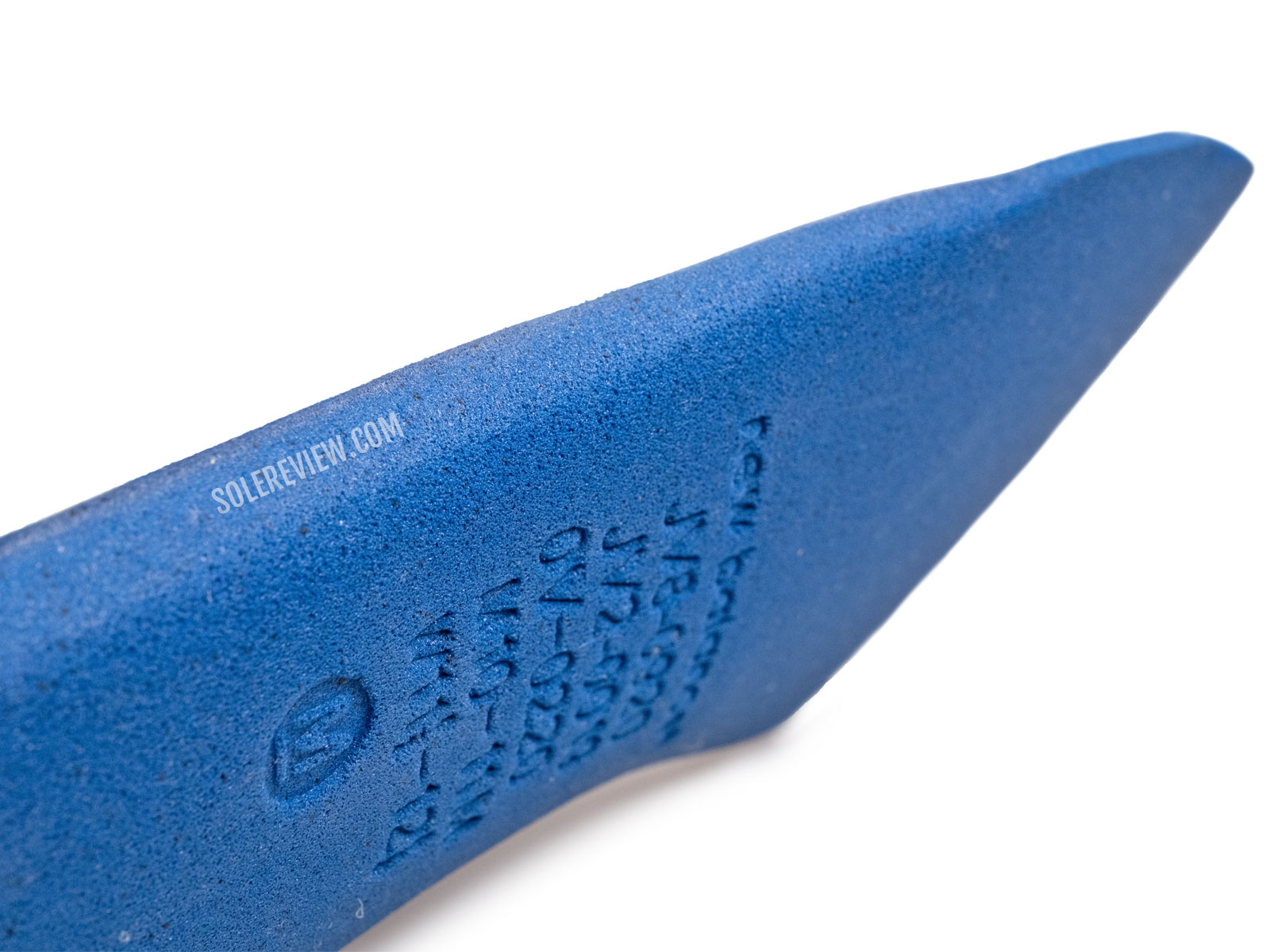
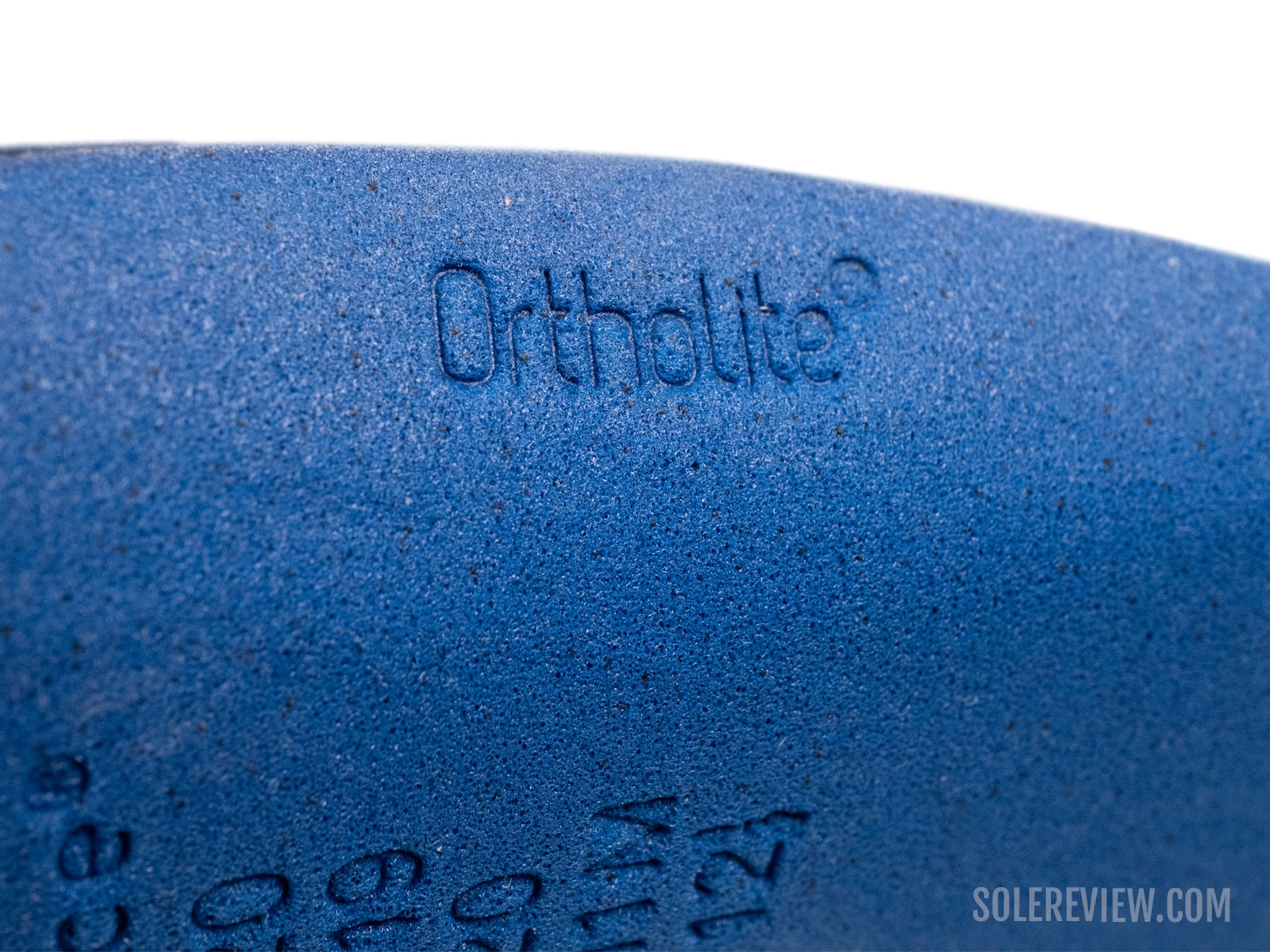
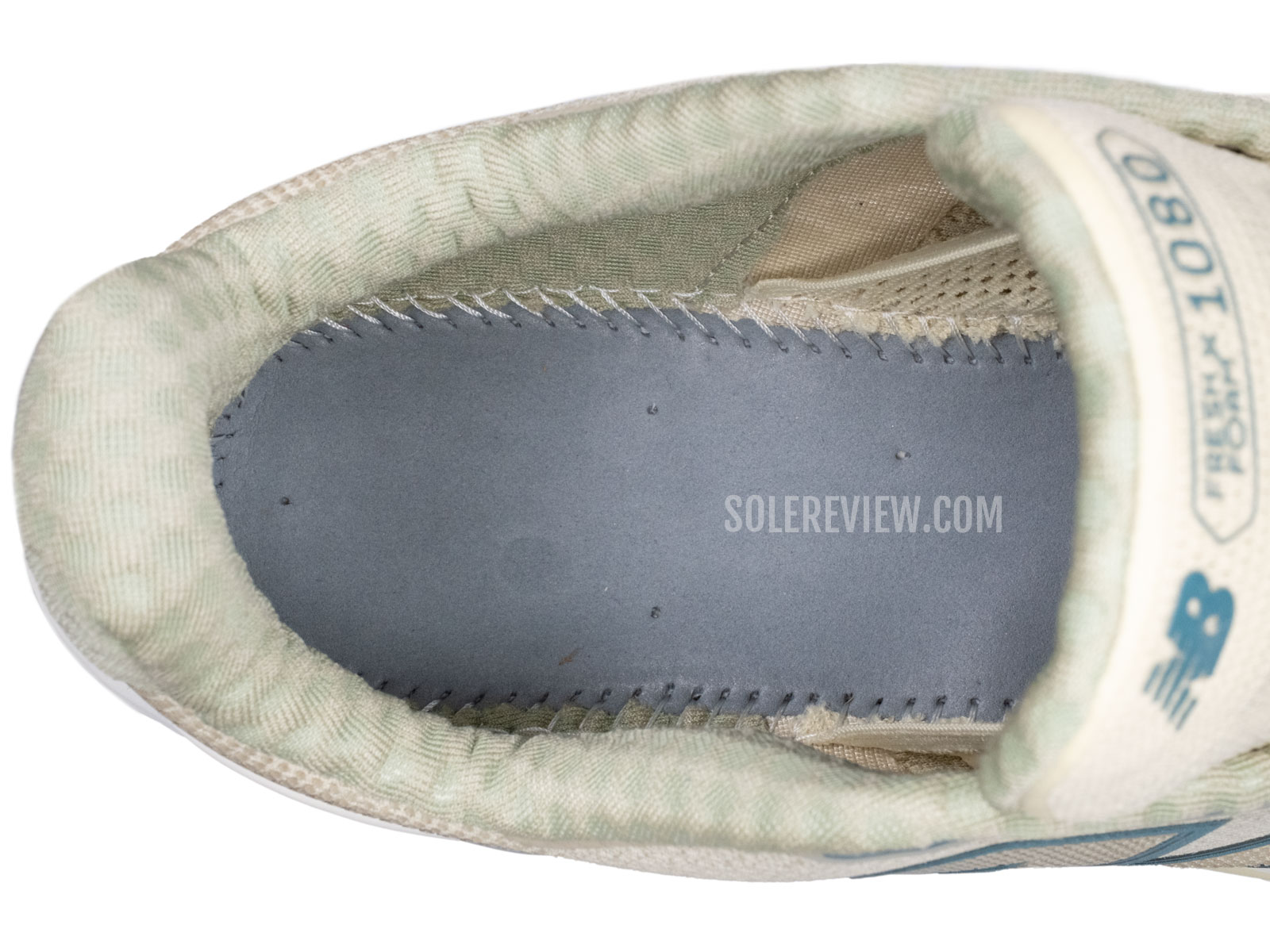
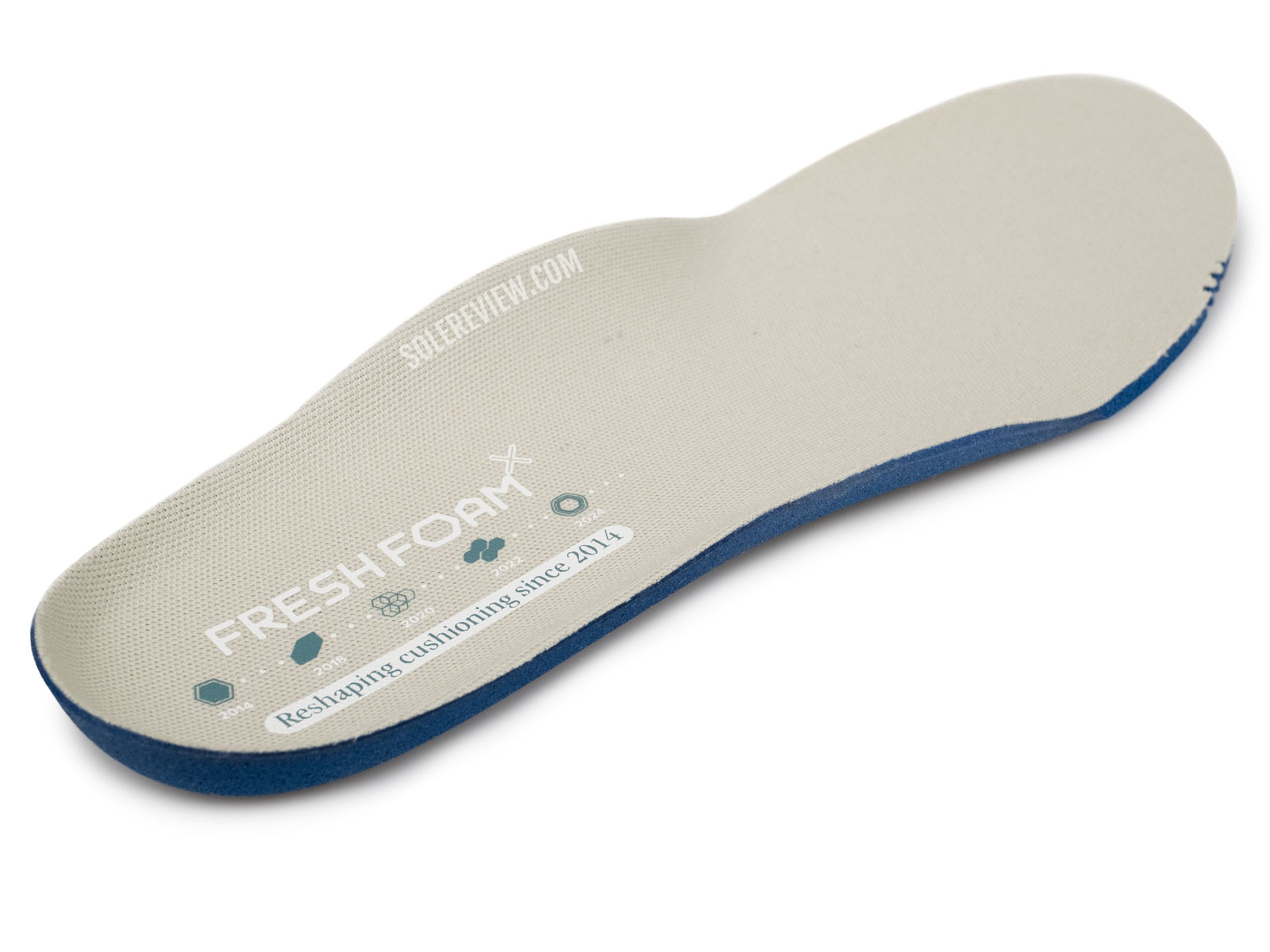
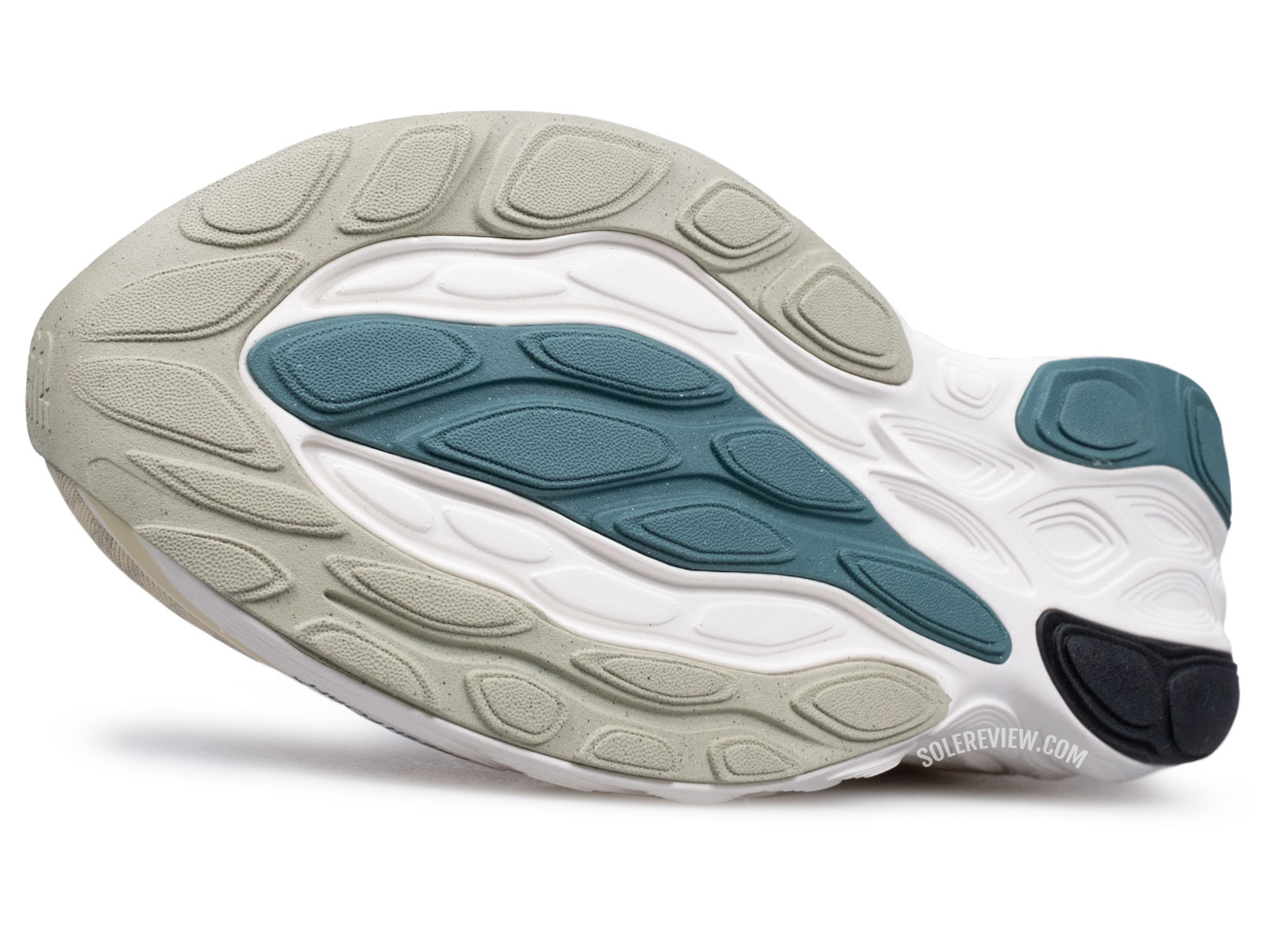
The larger and stiffer outsole lugs alter the 1080's ride dynamics.
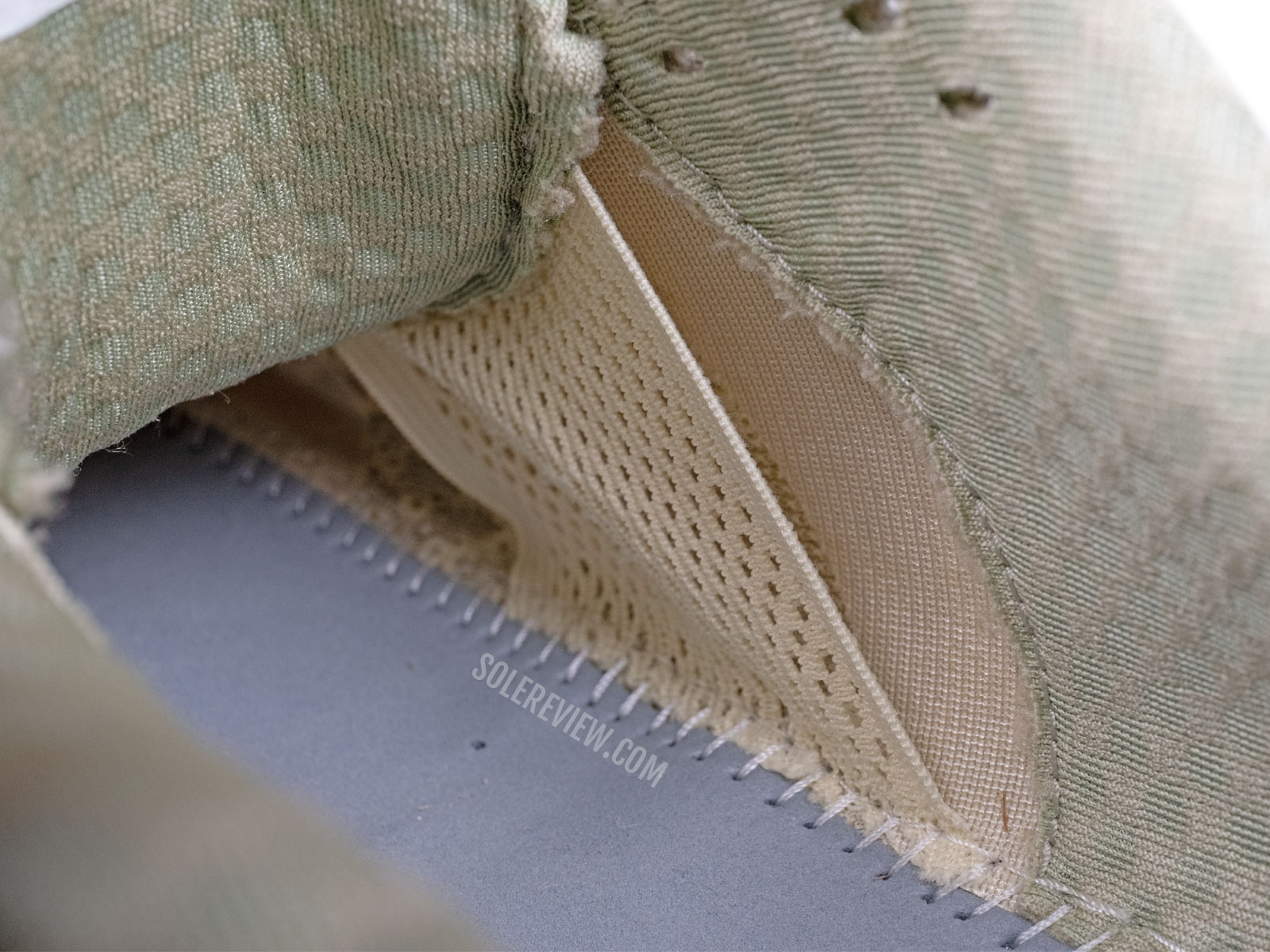
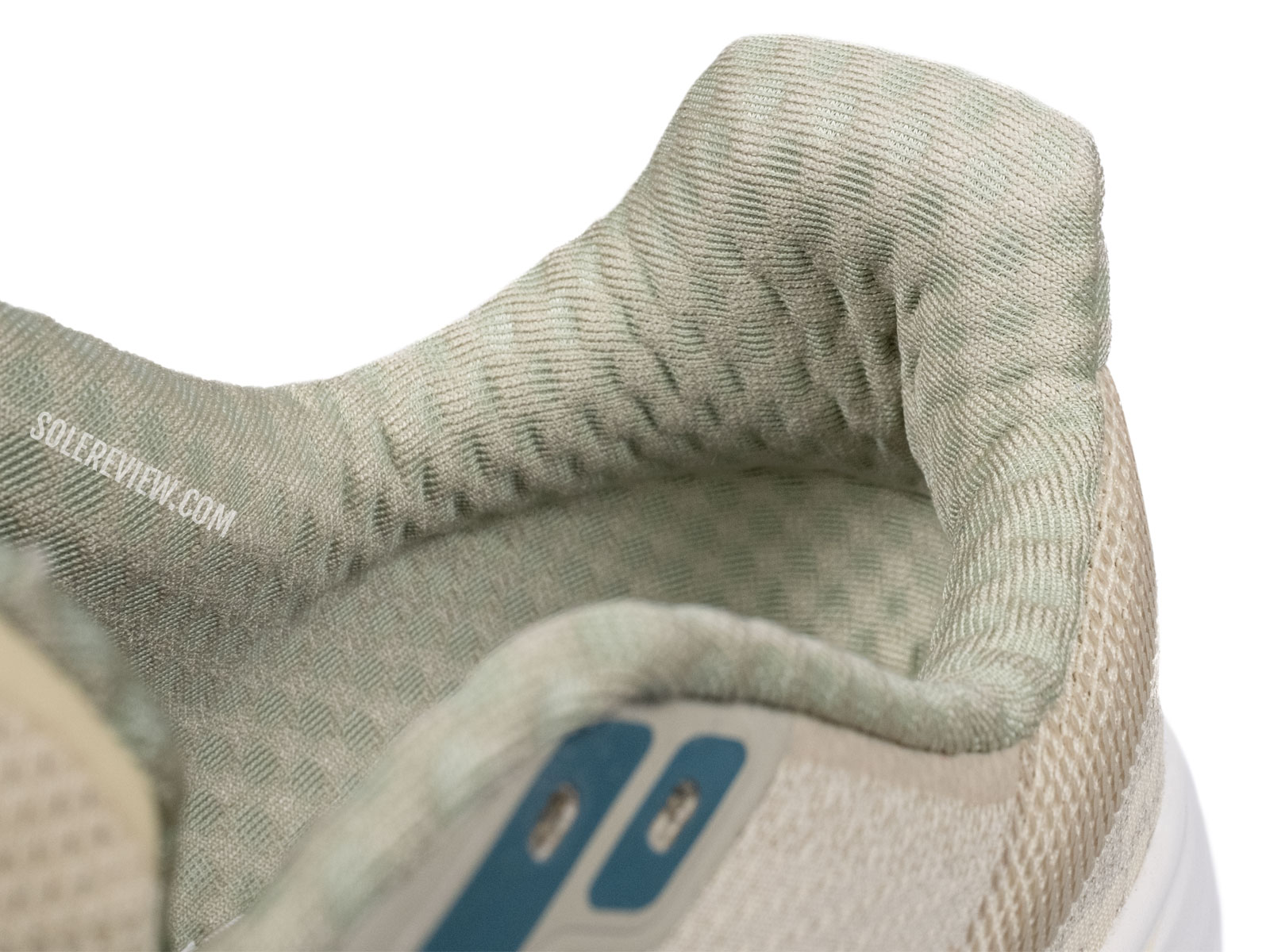
A tighter fit doesn’t mean that the upper is uncomfortable. Quite the opposite; the spacer mesh has a nice sponginess to it. Also, the top of the forefoot is mildly stretchy for a conforming fit. The 1080V14 offers more than just larger sizes. If you’re a Clydesdale with broad feet, just know that the 1080 V14 is available in four widths (in select colors) and till a size US 16.
- New Balance’s marketing pitch: Reliable comfort and high performance.
- Upper: Engineered mesh, gusseted tongue.
- Midsole: Full-length Fresh FoamX foam, 6 mm heel drop.
- Outsole: Softer rubber under the forefoot, harder rubber in the rear.
- Weight: 298 gms/ 10.5 Oz for a half pair of Men’s US 9/UK 8.5/EUR 42.5/CM 27.
- Stack heights: 39 mm (heel), 33 mm (forefoot).
- Available widths: B (narrow), D – regular (reviewed), 2E (wide) 4E (extra-wide).
- Previous model: New Balance 1080V13.
- Country of origin: Vietnam.
- Recommended use: Daily training, tempo runs, marathons.
- Footstrike orientation: Heel, midfoot/forefoot (full contact).
- Median lifespan: 400 miles.
- Recommended paces: Slower than 4:00 min/km (6:30 min/mile).
- Recommended temperature range: Warmer than -5° C/23° F.
Pros
- Versatile ride, more propulsive
- Quick transitions, effective rocker
- Secure and plush fit
- Long-distance comfort
- Multiple widths
Cons
- Lower forefoot and heel stability than v13
- Weaker proprioception and ground feel vs. v13
- Scarce reflectivity
Also consider:
- Asics Nimbus 26
- Saucony Triumph 22
- Puma Magnify Nitro
- Brooks Glycerin 21
- Mizuno Wave Sky 8
- Hoka Skyflow
- Use the New Balance 1080v14 for daily runs, recovery, and long runs
- Use the New Balance SC Elite V4 or Saucony Endorphin Pro 4 for marathons
- Use the New Balance Rebel v4 or Hoka Mach 6 for intervals, tempo runs, and short races
Hoka popularized the max-cushioning shoe concept, and the Bondi 9 is its truest ambassador. For this year, Hoka has improved the midsole foam to make it softer and bouncier than the Bondi 7 and 8. But don’t get your hopes high – the midsole isn’t made of high-tech foam that the adidas Ultraboost 5X or Brooks Ghost Max 2 uses. It’s still an EVA foam blend, so don’t expect sparks to fly.
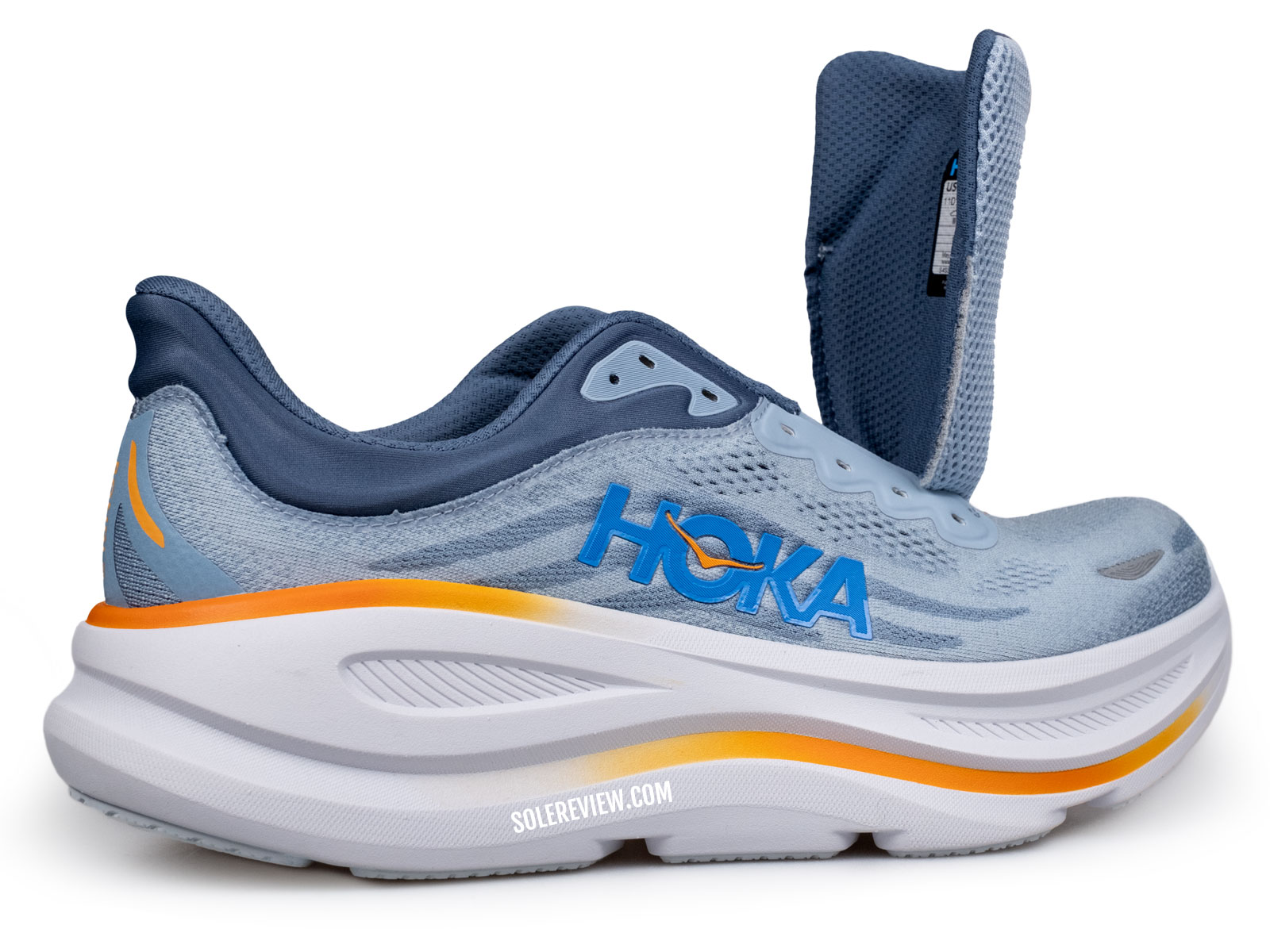
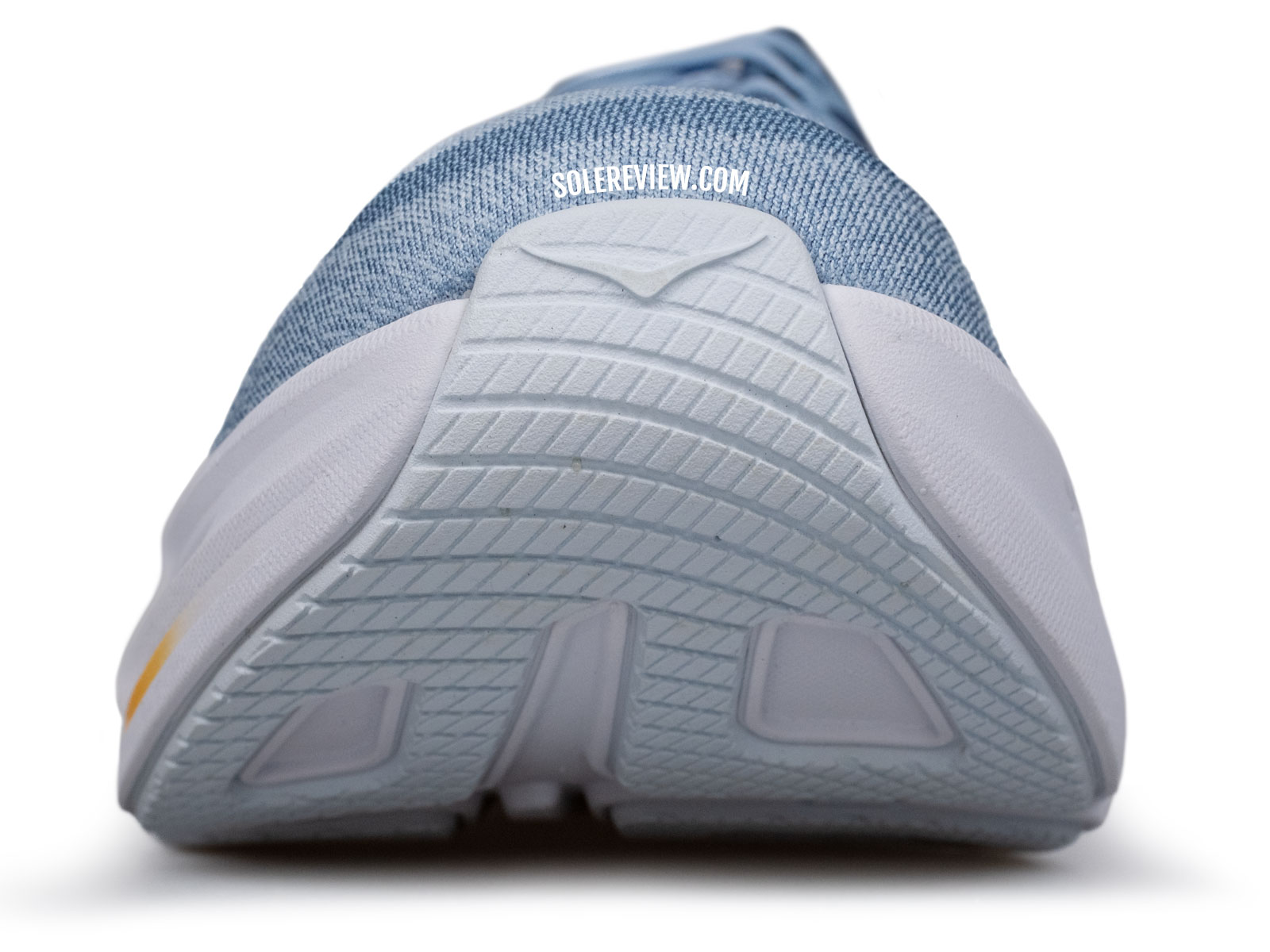
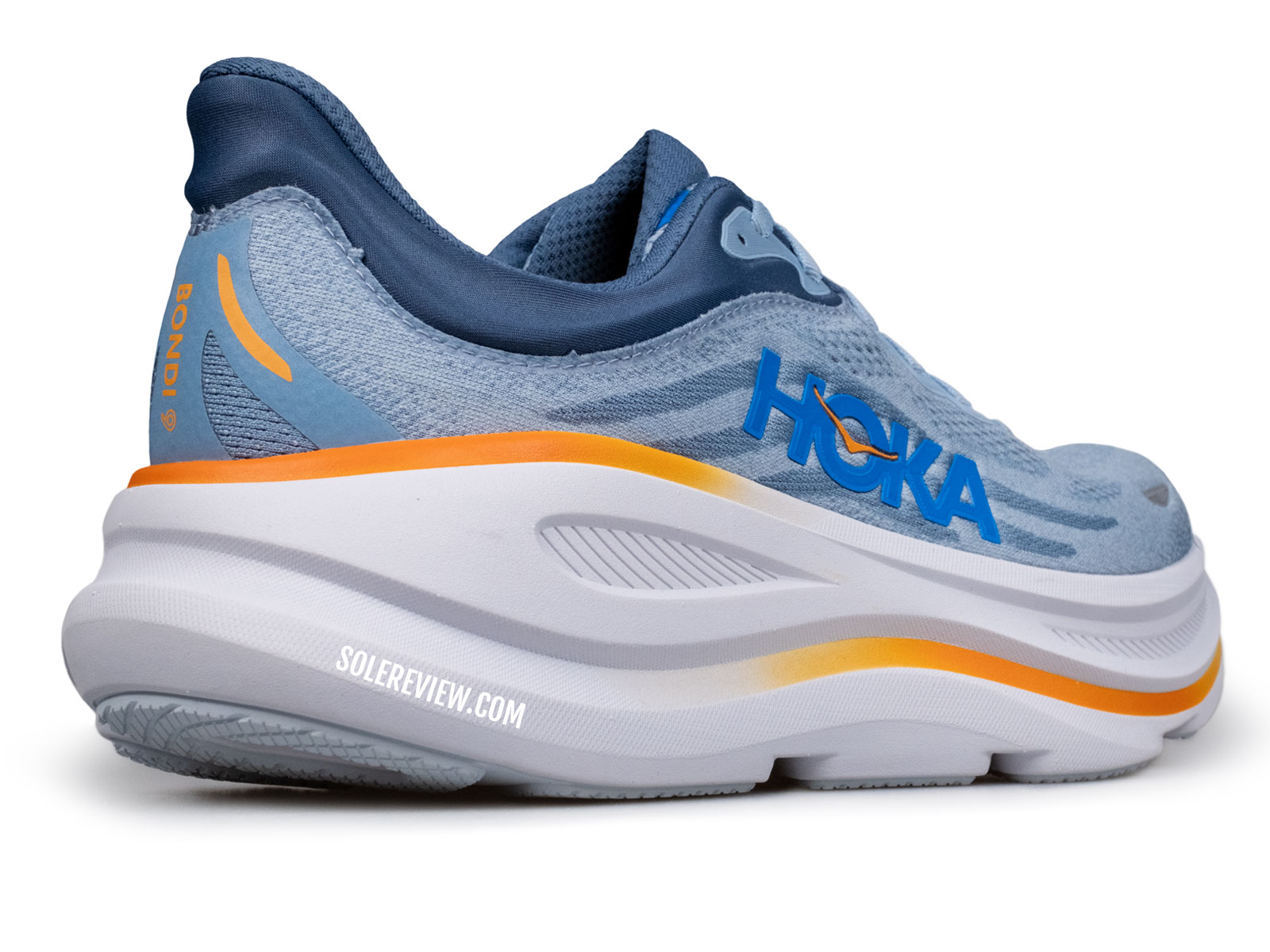
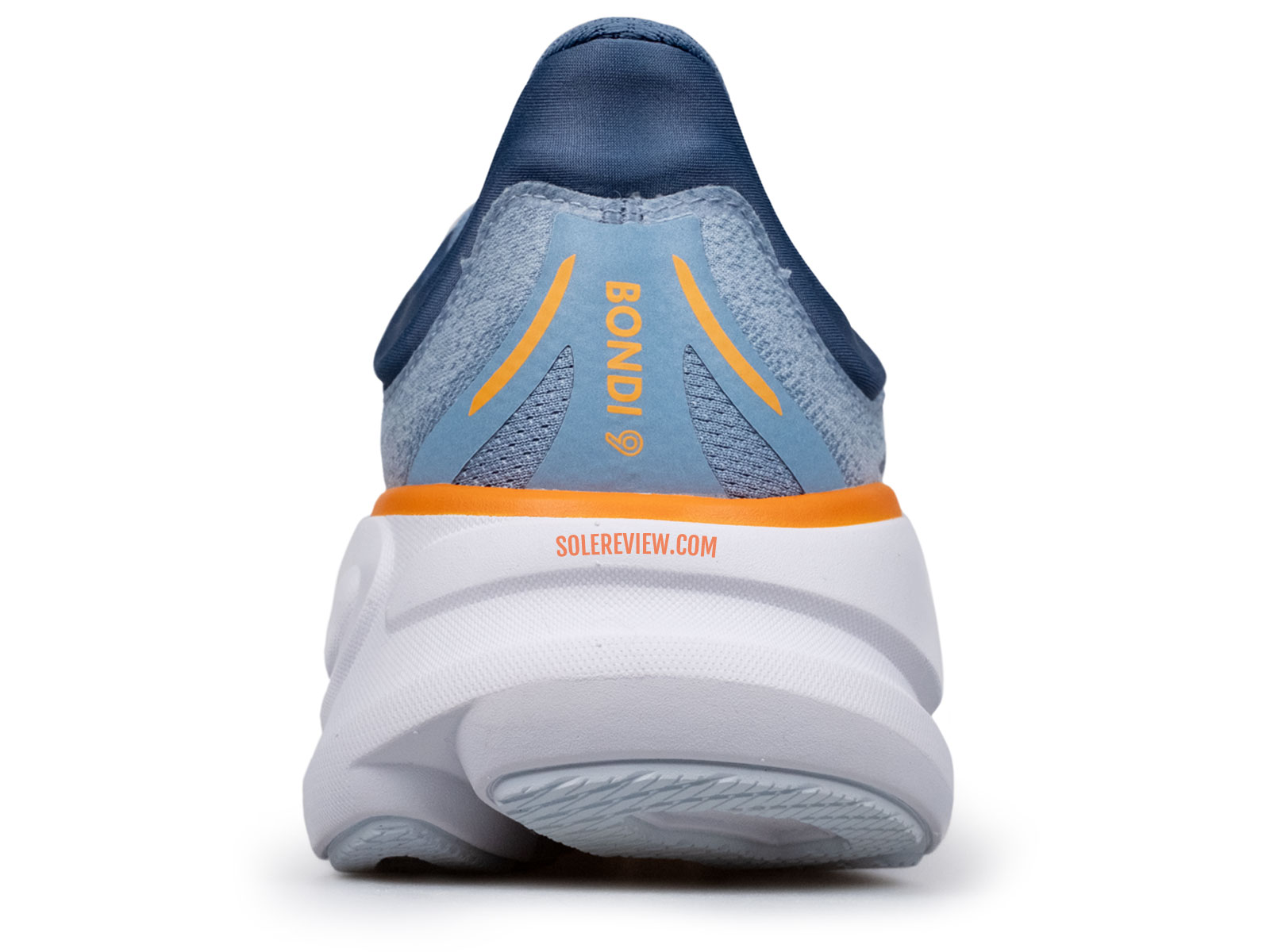
The Hoka Bondi 9 has a cushioned yet supportive midsole.
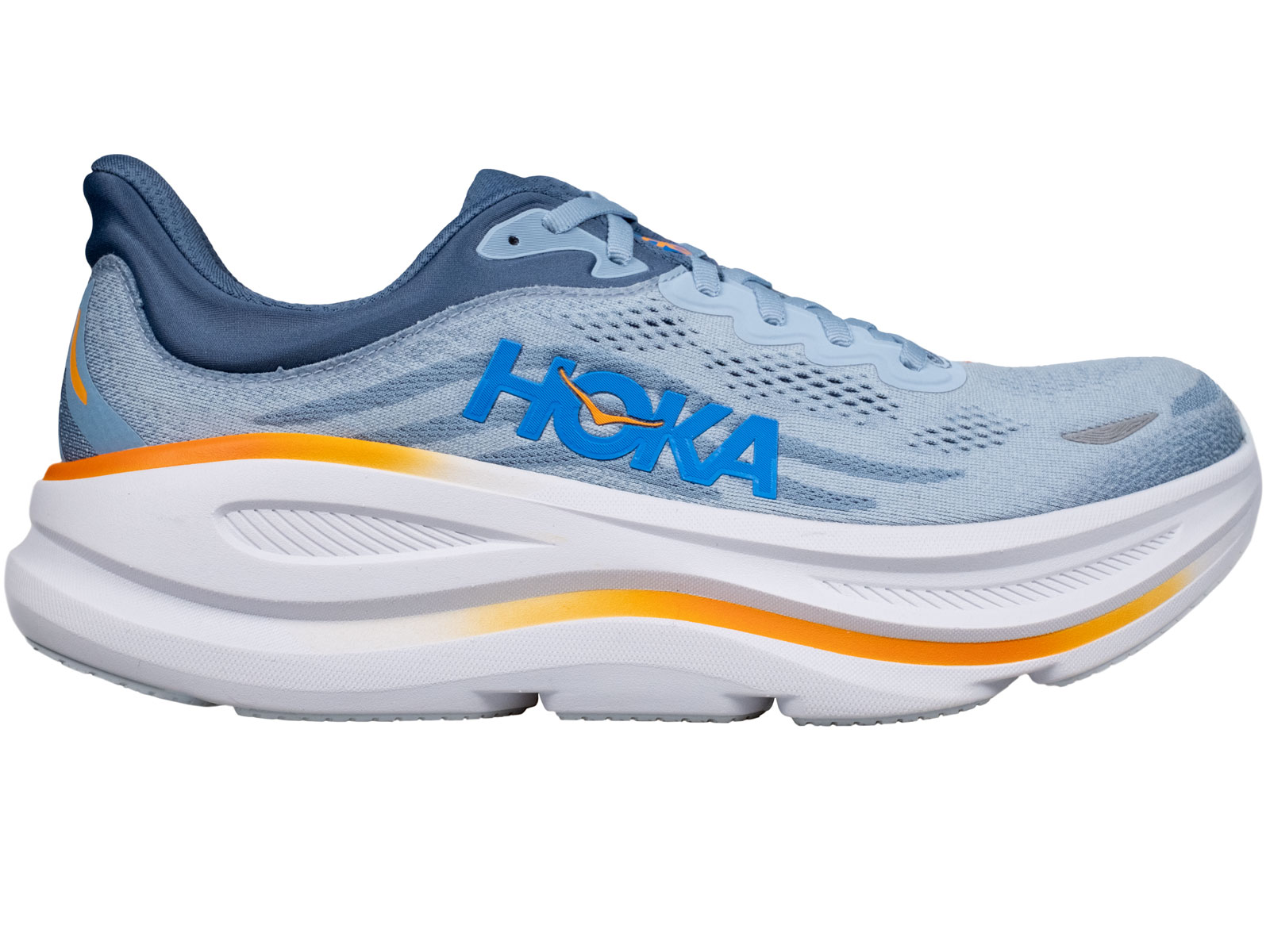
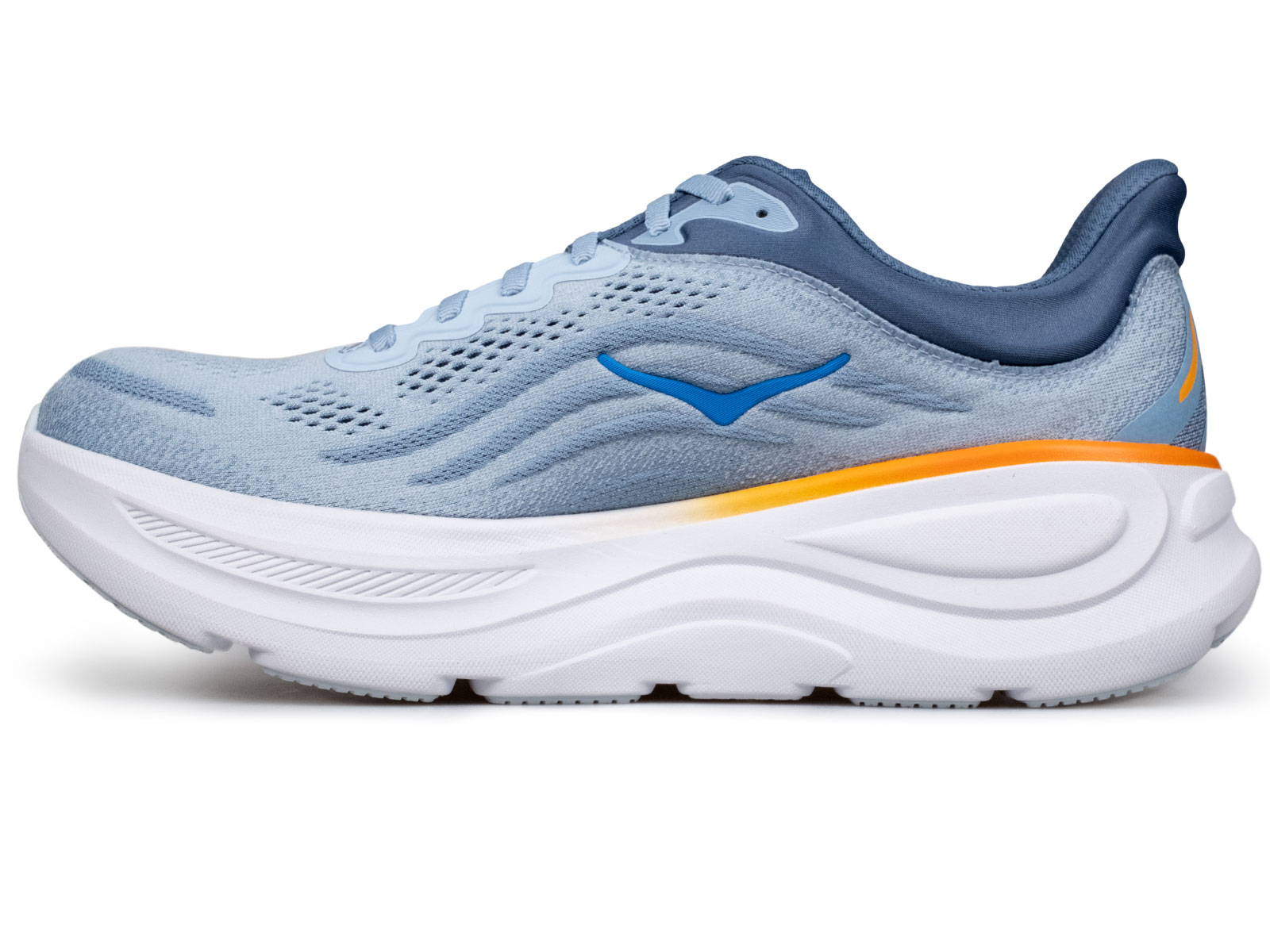
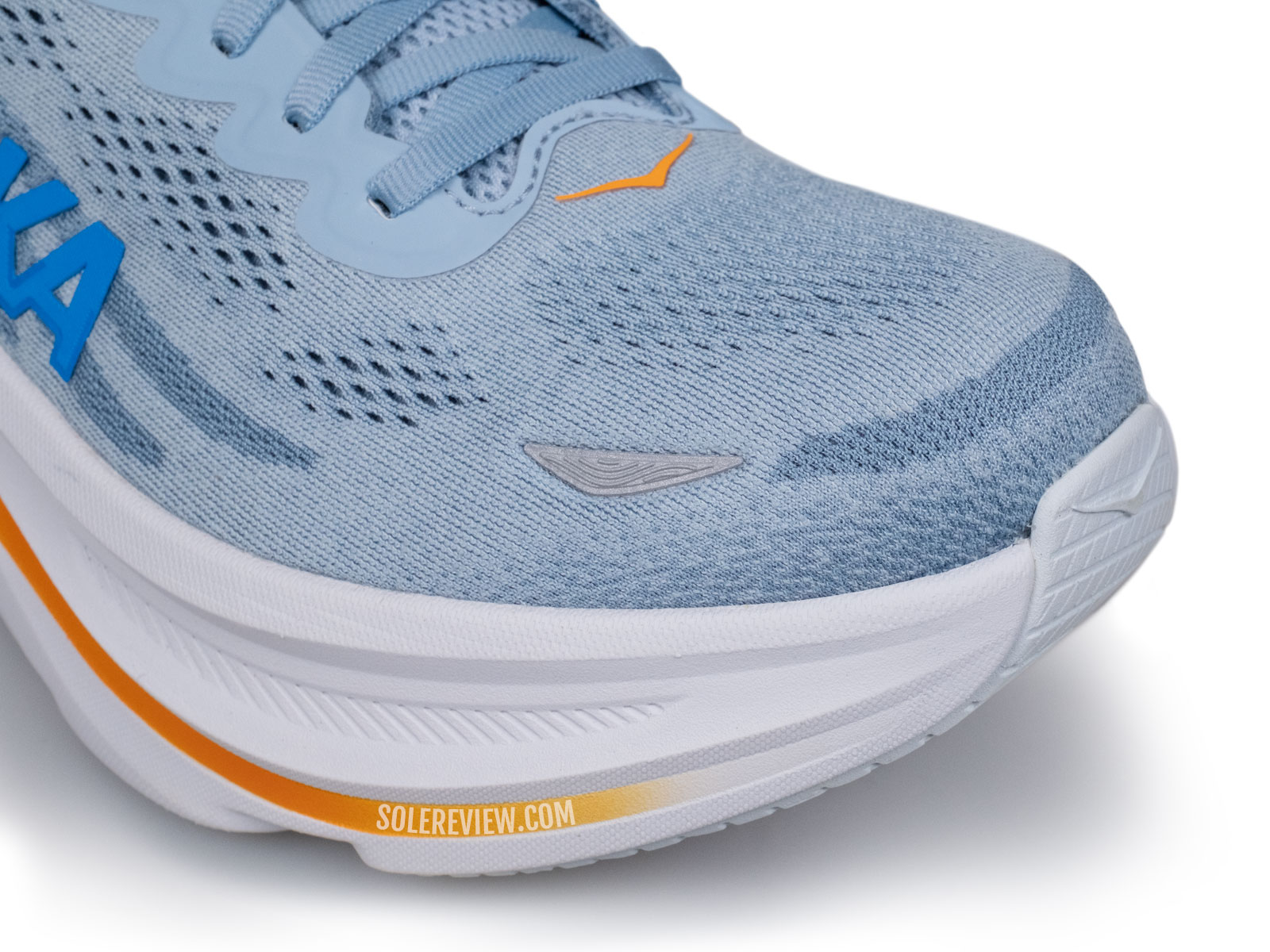
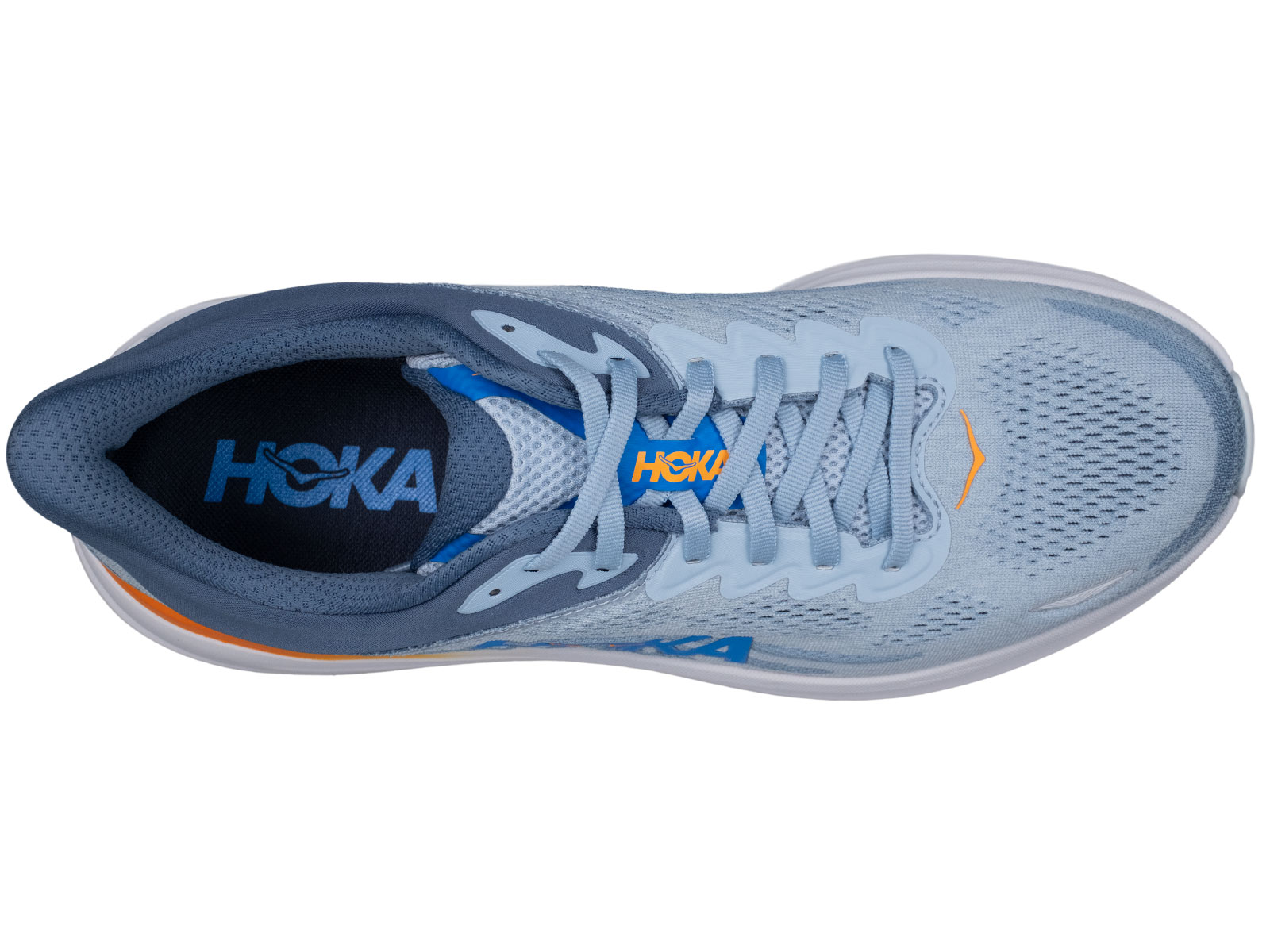
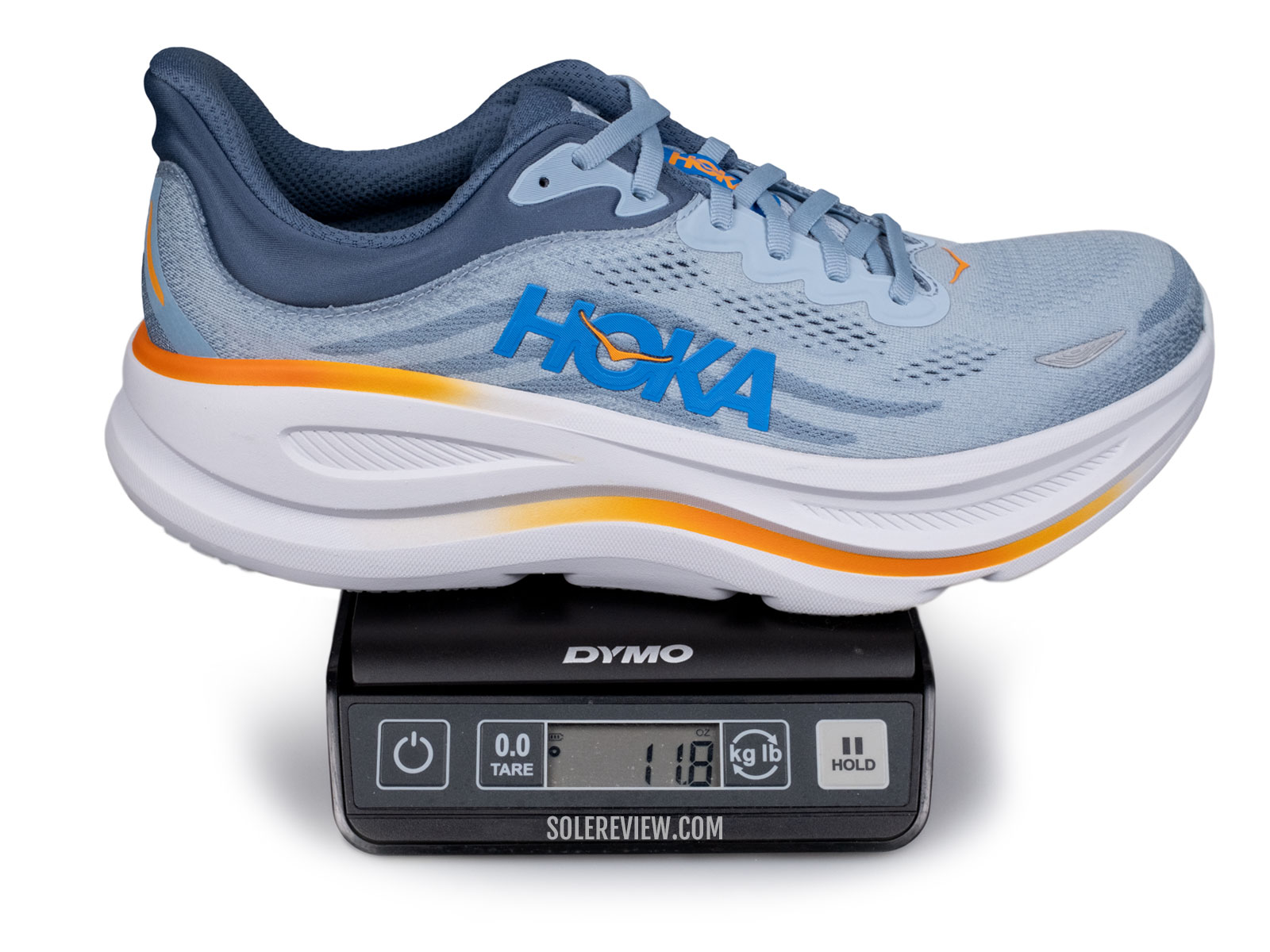


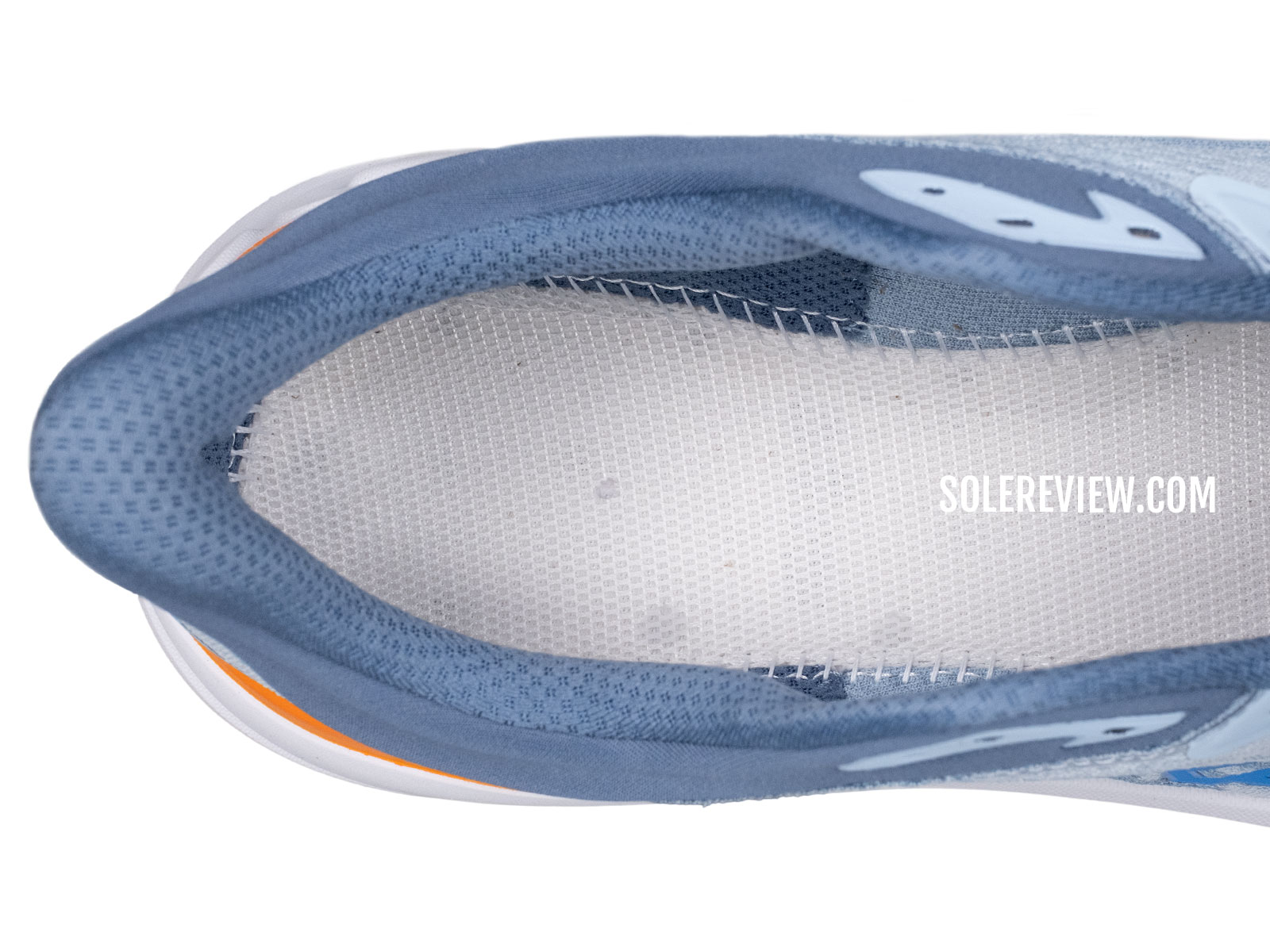
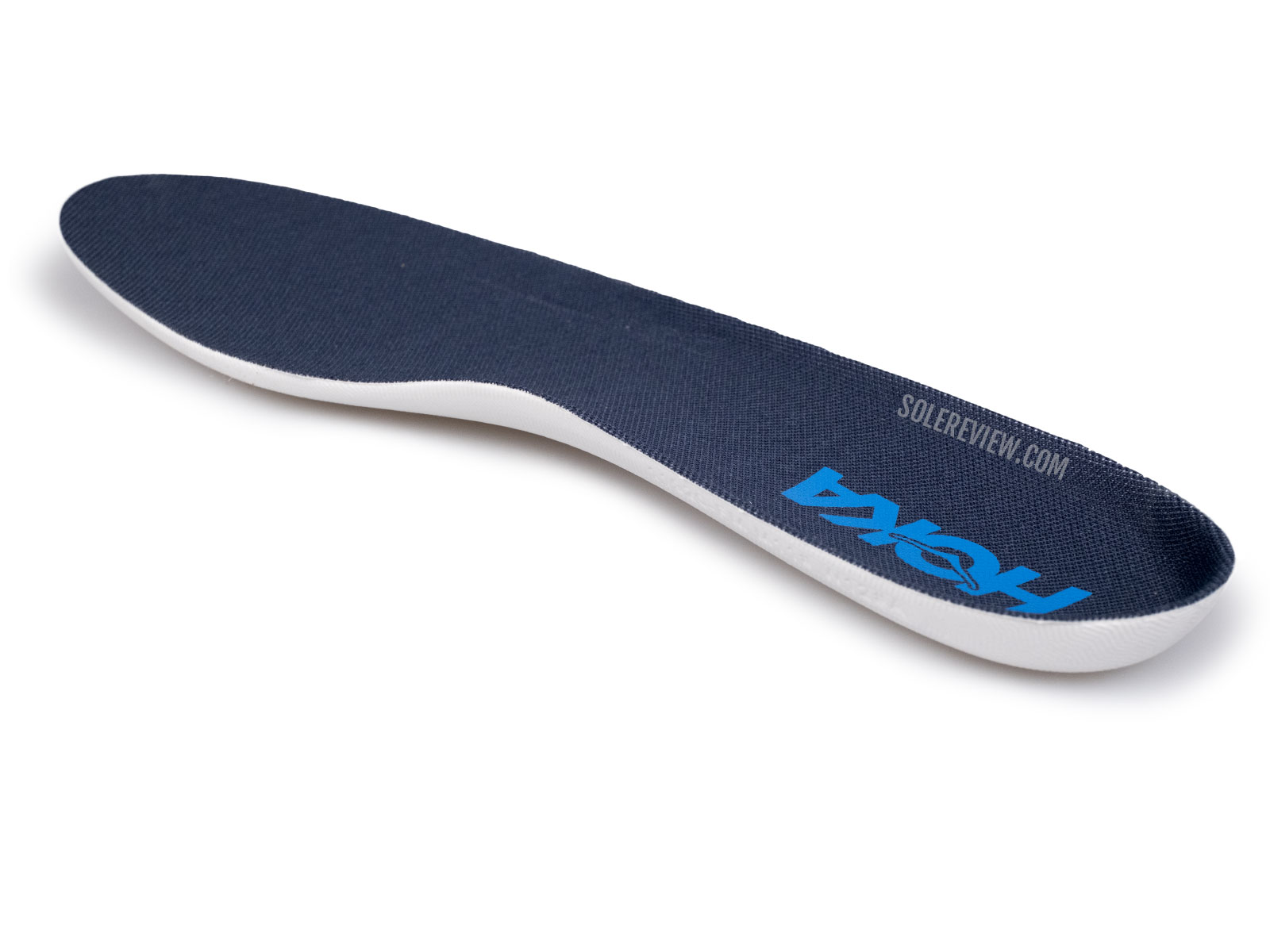
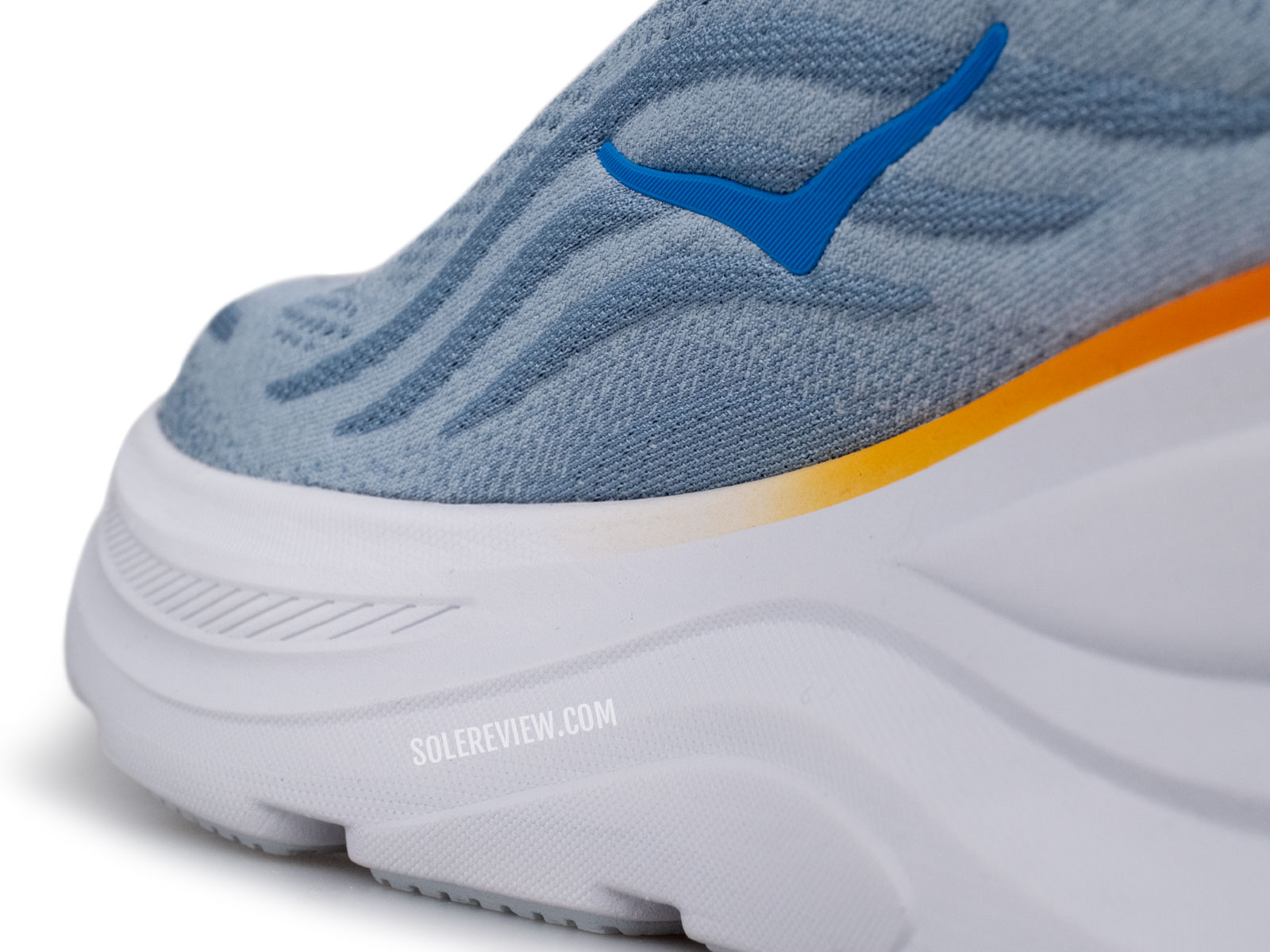
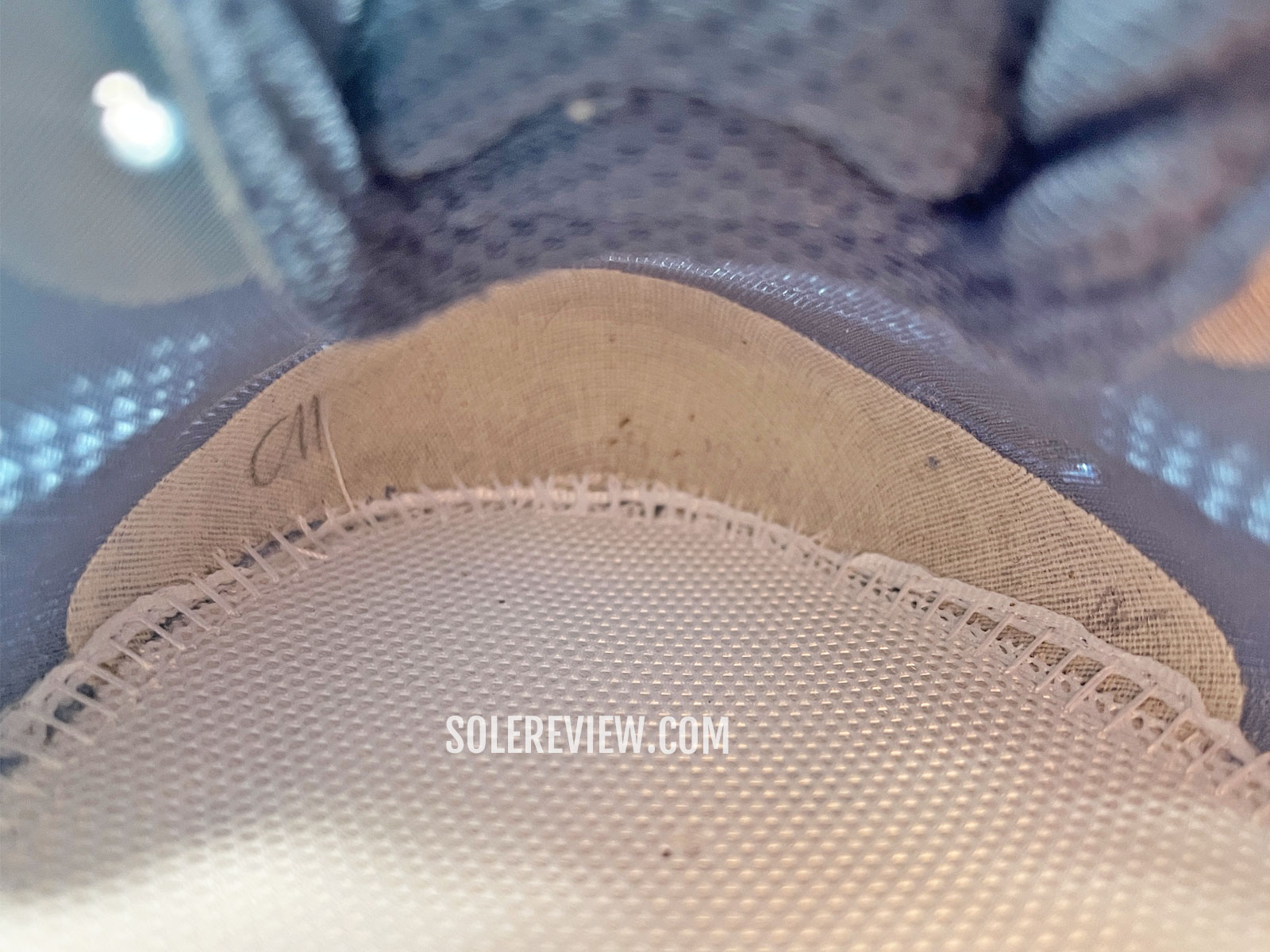
The thick midsole delivers high-mileage comfort for up to a marathon distance. The rocker midsole and wide base create a supportive yet nimble platform.
Though the upper is somewhat narrow, the Bondi 9 now sells 2E (wide) and 4E (extra wide) widths. The shoe is offered till a size 16. If you’re moving up from the Bondi 8, it would help to know that the v9 lacks a tongue gusset. On the bright side, the mesh is softer than before.
- Hoka’s marketing pitch: The ultra-cushioned game-changer.
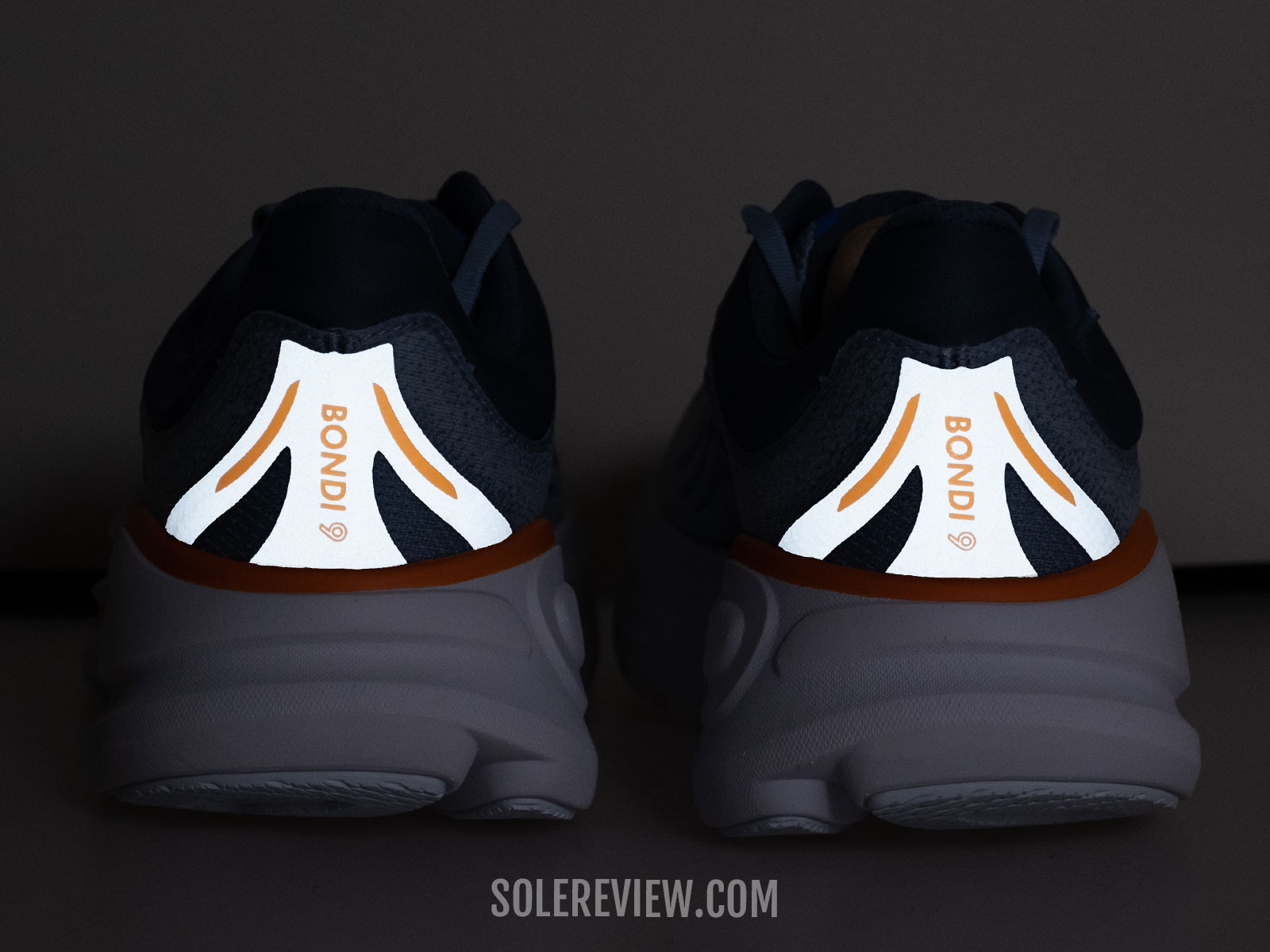
- Upper: Perforated engineered mesh, reflective details. No tongue gusset.
- Upper fit: True to size, narrow.
- Midsole: EVA foam and footbed. 5 mm heel drop.
- Outsole: Carbon rubber, exposed EVA foam.
- Weight: 298 gms/ 10.5 Oz for a half pair of Men’s US 9/UK 8.5/EUR 42.5/CM 27.
- Stack heights: 44 mm (heel), 39 mm (forefoot).
- Available widths: D – regular (reviewed), 2E – wide, 4E – extra wide.
- Previous model: Hoka Bondi 8.
- Country of origin: Vietnam.
- Recommended use: Everyday training, marathons.
- Footstrike orientation: All types (heel/midfoot/forefoot).
- Median lifespan: 450 miles.
- Recommended paces: 5:00 min/km (8:00 min/mile) and slower.
- Recommended temperature range: Warmer than -5° C/23° F.
Pros
- Cushioned and stable ride
- Reflective details
- Smooth transitions
- Secure upper fit
- Optional widths
Cons
- Antiquated cushioning tech
- Heavy
- Overpriced for what it offers
- Mild tongue slide
Not many plated racers sell till a size US 15, but the Nike Vaporfly 4 and Saucony Endorphin Speed 5 are exceptions. For the sake of brevity, we’ve going to feature just the Vaporfly 4 here. If you’re new to the Vaporfly, here’s a brief description. It’s a lightweight long-distance racing shoe with a PEBA foam midsole and a Carbon plate. The S-curved plate creates a strong midsole rocker for quick transitions; it also creates a propulsive springboard effect. The Vaporfly 4 features a midsole cut-out exposing the carbon Flyplate, increasing softness and enhancing the snappy feel of the plate. The lightweight and bouncy foam complements the snappy character of the plate.


The upper has been fine-tuned with a snugger fit which does a better job of transferring the power from the foot to the midsole. The loose upper fit of the Vaporfly 3 was the reason why we awarded a low score to that shoe. Well, that’s in the past now. The Vaporfly 4’s breathable and true-to-size upper fits exactly how it should – snug but not narrow.
Also consider: The Saucony Endorphin Speed 5 – available till a US 15.
- Nike’s marketing pitch: A fine-tuned shoe that’s trusted from a mile to a marathon.
- Upper: Perforated mesh, no sleeve.
- Upper fit: Secure, true-to-size fit.
- Midsole: Full-length ZoomX foam with carbon plate. 6 mm heel drop.
- Outsole: Carbon rubber in high-wear areas.
- Weight: 190 gms/6.7 Oz for a half pair of Men’s US 10/UK 9/EUR 44/CM 27.1
- Stack heights: 35 mm (rear), 29 mm (forefoot).
- Available widths: D – regular (reviewed).
- Previous model: Nike Vaporfly 3.
- Country of origin: China.
- Recommended use: 10K races, marathons.
- Footstrike orientation: Midfoot/forefoot (full contact).
- Median lifespan: 300 miles.
- Recommended paces: 4:30 min/km (7:00 min/mile) and quicker.
- Recommended temperature range: Warmer than -0° C/32° F.
Pros
- Lightweight and springy ride
- Seamless plate-foam integration
- Ventilation
- Secure upper
Cons
- No innovation except for minor updates
- No widths
- Not ideal for heavy runners and overpronators
Our favorite tempo shoe for speedwork is the Hoka Mach 6, but that shoe is sold only till a size 14. We also recommend the Brooks Hyperion 3 – another lightweight trainer that maxes out at a size 15.
But it’s the only New Balance Rebel V5 that’s available till a US 16 and in two widths. The Rebel V5 is similar to the Rebel V4, so runners will find the cushioning and upper fit familiar. The Fuelcell (PEBA and EVA foam blend) midsole is great for everyday runs up to a half-marathon distance.
The Rebel V5 may not particularly bouncy as the adidas EVO SL, but the wide forefoot and base make it the most supportive trainer in this segment. The cushioning feels consistent, just the kind of ride one needs for tempo runs and steady-state workouts. The lightweight build disappears over the foot, and the rocker shape helps with quicker turnovers. Forefoot transitions come slightly quicker on the Rebel V5 because of the larger (and uniform) outsole patch.
The true-to-size upper has a spacious forefoot that breathes well because of the thin mesh. The tongue has been updated with padding to make the midfoot more comfortable than the Rebel V4, as it’s better at preventing lace bite over the instep. While standard fit has plenty of space, New Balance sells an optional wide as well.
- New Balance’s marketing pitch: Ideal for those miles when you want to feel fast.
- Upper: Engineered mesh, tongue gusset.
- Upper fit: True-to-size with spacious forefoot.
- Midsole: Full-length PEBA-blend Fuelcell foam. 6 mm heel drop.
- Outsole: Carbon rubber in high-wear areas.
- Weight: 227 gms/ 8 Oz for a half pair of Men’s US 9/UK 8.5/EUR 42.5/CM 27.
- Stack heights: 38 mm (rear), 32 mm (forefoot).
- Available widths: D – regular (reviewed), 2E – wide.
- Previous model: New Balance Rebel V4.
- Country of origin: Vietnam.
- Recommended use: Everyday training, tempo runs, half-marathons.
- Footstrike orientation: Heel, midfoot/forefoot (full contact).
- Median lifespan: 400 miles.
- Recommended paces: 4:00 min/km (6:30 min/mile) and slower
- Recommended temperature range: Warmer than -0° C/32° F.
Pros
- Tempo-friendly ride comfort
- Midsole stability
- Smooth transitions
- Lightweight and breathable upper
- Optional width
Cons
- Roomy fit makes power delivery less effective
- Low foam responsiveness compared to adidas EVO SL
The Hierro V9 and Nike Pegasus Trail are two of the best road-to-trail running shoes. Both are not meant for serious off-road use, but are rugged enough for mild grades, gravel/chip trails, and park runs. The toned-down feature set also makes them comfortable road running shoes.
The Fresh FoamX cushioning is excellent for long-distance trail runs. The foam stack adds ride comfort and protection on uneven terrain. The 2025 model is a cushioning upgrade from the Hierro V8; the midsole is taller, wider, and softer. The new midsole also benefits from a dual-density set-up. A softer top layer brings plushness closer to the foot, while a firmer base supports the foot.
While not designed for technical grades, the Hierro is versatile enough for mildly technical trails. The aggressive lugs of the Vibram rubber outsole act as a rock shield. The V9’s new outsole geometry, wider footprint, and 6 mm lugs result in improved traction. On a related note, if you’re looking for a higher level of on-trail performance, the Brooks Cascadia 18 is excellent. However, the size run stops at US 15.
The tightly woven mesh and fused layers on the upper shield the foot; the gusseted midfoot delivers a secure fit while keeping the debris outside. The midfoot has an external midfoot strap for better lock-in. But here’s the real reason why the Hierro V9 is on this guide – it retails till a US size 17. If that wasn’t good enough, New Balance sells the shoe in optional wide (2E) and extra-wide (4E) widths.
Also consider: The Nike Pegasus Trail 5 – available till a size US 15. Just like the Hierro, the Pegasus Trail is a proven road-trail hybrid with a comfortable ride. It sells till a US 15.
We loved Nike Free shoes like the 4.0 Flyknit, and it’s a pity Nike no longer produces such models. You know, simple running shoes with a collapsible upper and ultra-flexible midsoles that have a do-it-all character. The Nike Flex Experience Run 12 is as close it gets to the Nike Free. The soft mesh and synthetic upper wrap the foot gently without any hot spots. The true-to-size upper provides a secure lockdown and doesn’t occupy a lot of room in the gym bag – it’s nearly collapsible.
Having said that, the flexible midsole is where the shoe comes into its own. The all-foam midsole is very easy to bend, thus allowing the foot to move freely during different activities – be it gym workouts, casual wear, or daily runs. The EVA foam midsole and insole offers enough cushioning for most runs. This Nike shoe sells till a size US 15.
HOW WE SELECTED
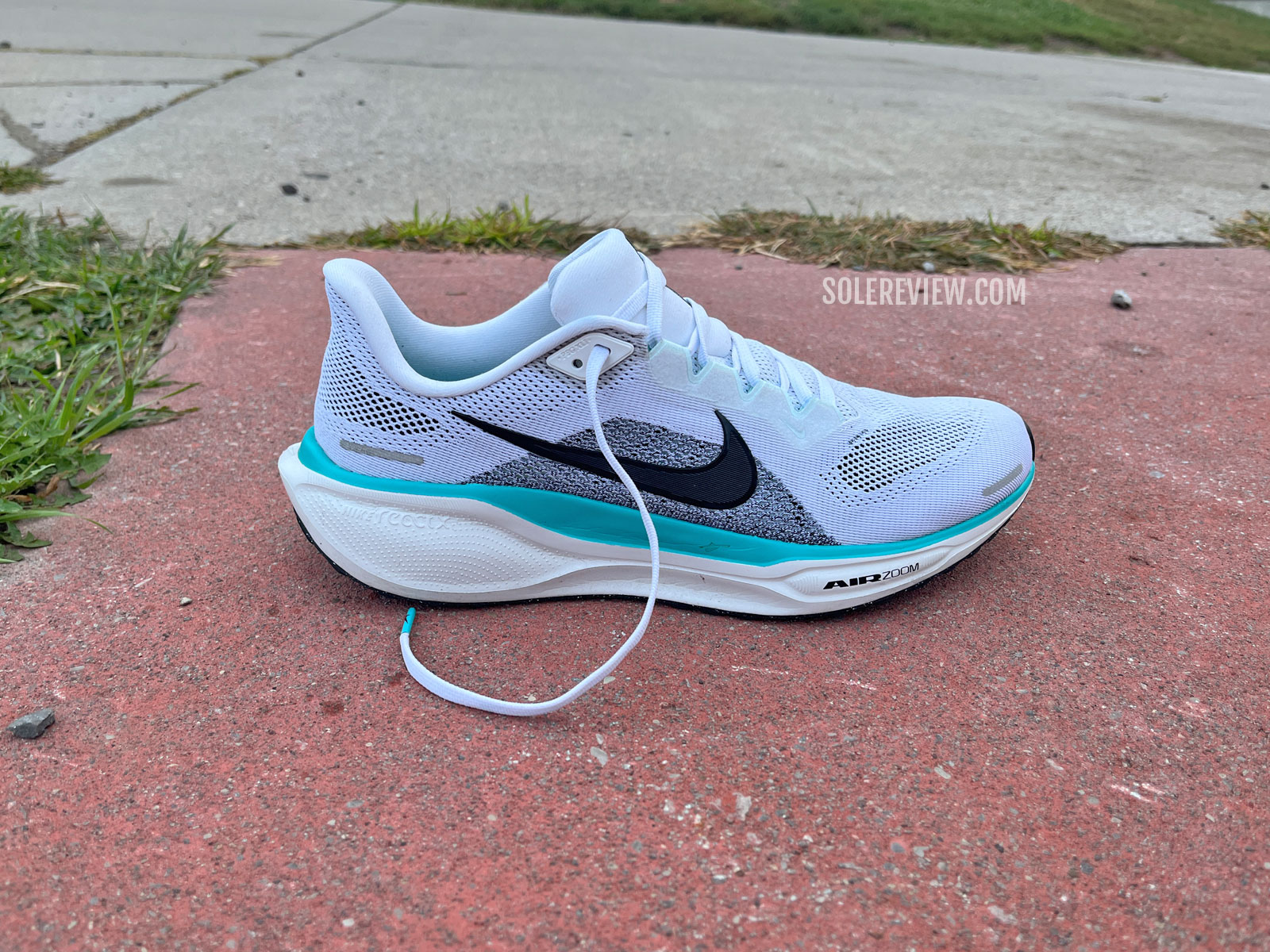
Models like the Nike Pegasus are sold till a size 16.
From a sizing perspective, a lot has changed in the last few years. While sizes 17 and 18 are still relatively uncommon, there’re plenty of running shoe models that sell till a US 16. We believe that the transition from brick-and-mortar to online shopping is the catalyst. In the traditional wholesale model, offline retail chains and independent stores did not stock these larger sizes due to merchandising guidelines. The budget was allocated to higher-selling sizes to ensure a higher stock turnover. Anything above size 13 is usually considered a stock risk.
Also, the footwear manufacturing molds and dies are made by size. Additional investment in the production tools of larger sizes has a detrimental effect on the retail price of the shoe. After all, the costs are spread across the entire model. You get the idea. There’s a very good reason why larger sizes weren’t easy to find in the past – because they were not produced in the first place.
However, a natively-owned digital shopping experience allows the brands to stock larger sizes because of the higher visibility. The way we see it, the scarcity of large-sized running shoes makes them less of an inventory risk. After all, runners who wear that size are less picky about the styling. Outlet malls are a good place to find plus-size shoes. Stores are usually arranged to promote a self-service model where the shoes are arranged by size. Online retailers make it easy to filter the products by size, so that’s not the problem. However, the shoes are not grouped by their use cases. That’s where this guide tries to help.
On a related note, one of our readers told us about a useful shoe e-retailer called www.oddball.com. They sell large shoe sizes 14 and up. Solereview isn’t affiliated with oddball in any form, but it’s a great resource for plus-sized shoes – and not just running. Runners with larger feet generally tend to be taller than the average person. A larger frame also equates to more weight, so the shoe needs to be (somewhat) supportive. We’ve kept that in mind while compiling this buyer’s guide, so overly soft shoes are excluded.
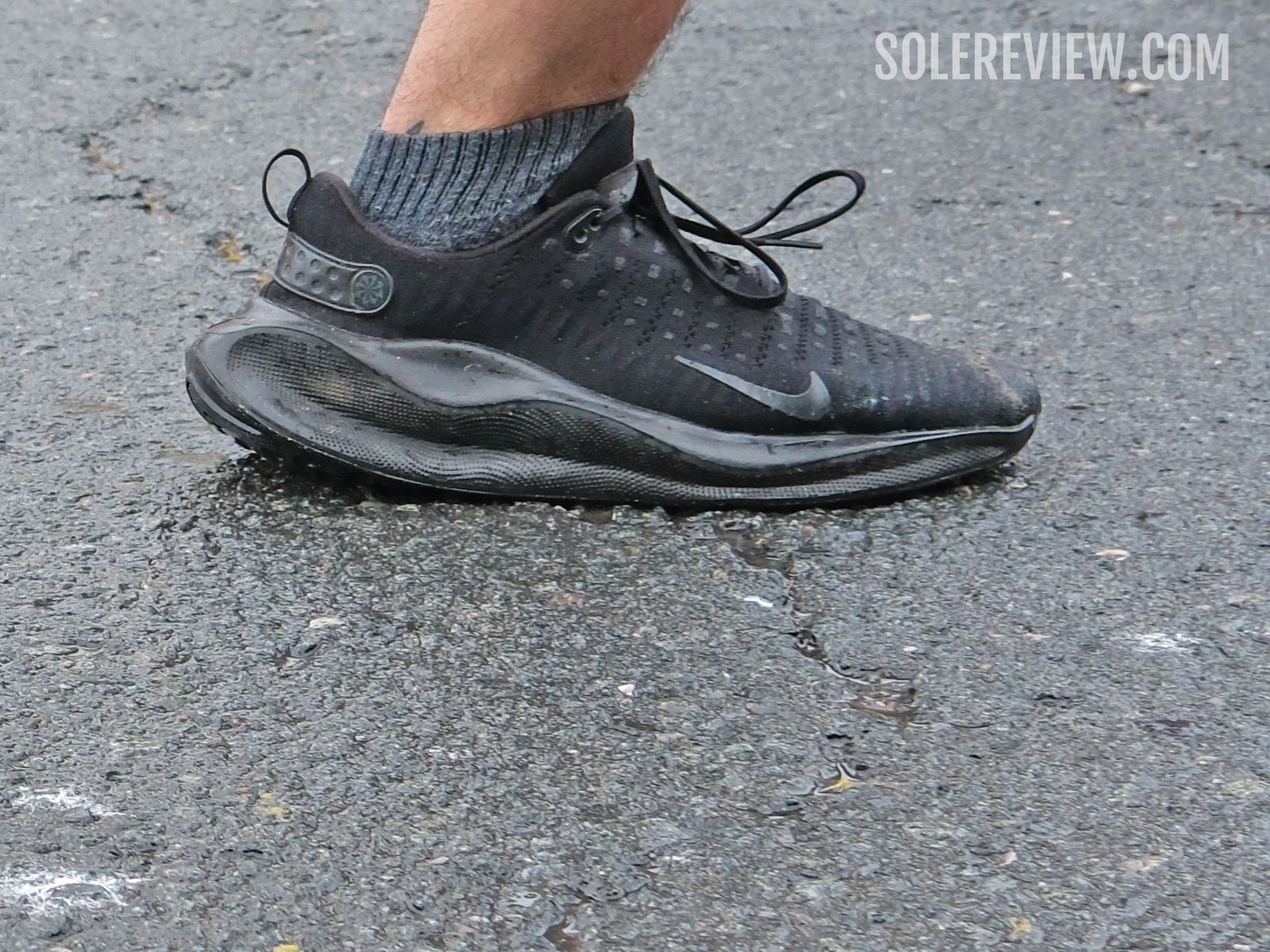
The InfinityRN 4 sells till a size US18.
It’s not surprising that New Balance offers some of the largest sizes. Also, the brand has always offered multiple widths in most of its shoes. So if walk into a New Balance store – be it online or brick-and-mortar – there’s a high chance that you’ll find a plus-sized running shoe. Nike is catching up too, with the Pegasus 41 being sold till a size US 18.