
Product guide updates
(4 total)- 2026-08-26 — Updated with minor edits and corrections
- 2026-08-25 — Created FAQ with relevant question and answer pairs
- 2026-08-25 — Migrated product guide to new editorial format
- 2026-08-25 — Updated all recommendations
In this product guide:
How we selected
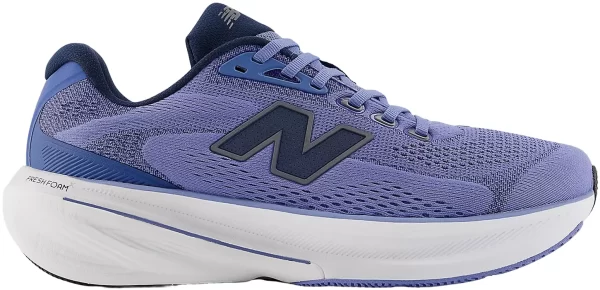
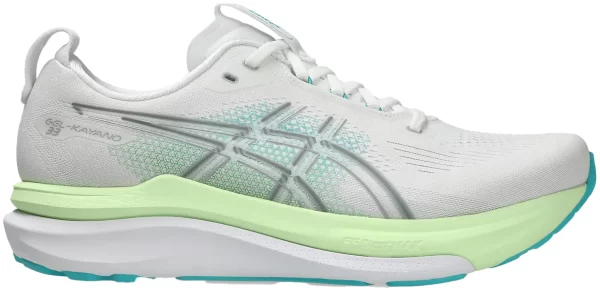
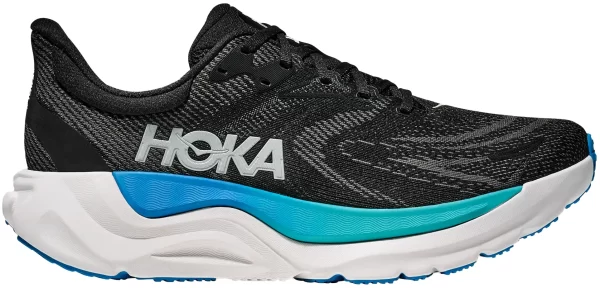
Our recommended shoes for wide feet are grouped by use cases – daily training, 10Ks and marathons, overpronators, and trail. By connecting each feature with its respective function, the “Why it works” section explains why a particular shoe (in its respective class) is suitable for its recommended use case. Alternatives are suggested under each recommended category. For example, the alternatives to the Saucony Guide 19 (our overpronation pick) are the New Balance 860 v15 (for a lateral tilt), the Asics Kayano 33 (for a higher level of cushioning), and the Hoka Arahi 8 (for a firm ride). Please note that the secondary recommendations for marathons and overpronators are not roomy by default, but instead offer optional widths. On the other hand, all the recommendations in the daily trainer and trail categories have accommodating interiors in their default (regular) width. When combined, this product guide contains 16 different running shoe recommendations for wide feet. Here’s a quick, one-line summary of our recommended categories:
- Best for daily runs: Versatile running shoes with a roomy fit.
- Best for 10Ks and marathons: Carbon-plated shoes that accommodate wide feet.
- Best for overpronators: Roomy running shoes with medial support.
- Best for trail: Off-road running shoes with spacious interiors.
Our recommendations combine our influence-free, expert-led wear-testing with biomechanical data sourced from over 33,000 high-speed images captured during actual road races. We combined our wear-test observations with an evidence-based screening of design features that make a running shoe suitable for wide feet. Visit our FAQ section at the bottom to learn more about why and when spacious uppers help, and under which circumstances they should be avoided.
Why it works (the basics)
- No gusset or sleeve → makes forefoot/midfoot spacious
- Molded bumper → produces a roomy toe box
- Full-length Lightstrike Pro midsole → delivers versatile comfort
- Plastic shank → adds torsional rigidity and support
🔍 Deep Dive
The adidas EVO SL has found success at scale with both the serious running community and streetwear adopters alike. This achievement is harder than it sounds, because the typical Venn diagram for a performance running shoe doesn’t have wide overlaps with athleisure segments. Unless that shoe is a product like the Hoka Clifton, Bondi, and more recently, the EVO SL. In hindsight, the reasons are plain to see. The EVO SL’s Lightstrike Pro midsole delivers versatile cushioning for serious runners, which is not surprising in the very least, considering we described this shoe as an ‘Adios Pro 3, but without its Energy Rods’ in our review. The combination outsole (Continental and clear rubber) delivers dependable traction, and the spacious upper accommodates different foot profiles. This is a shoe that works equally well for daily runs, tempo training, 10Ks, and marathons.
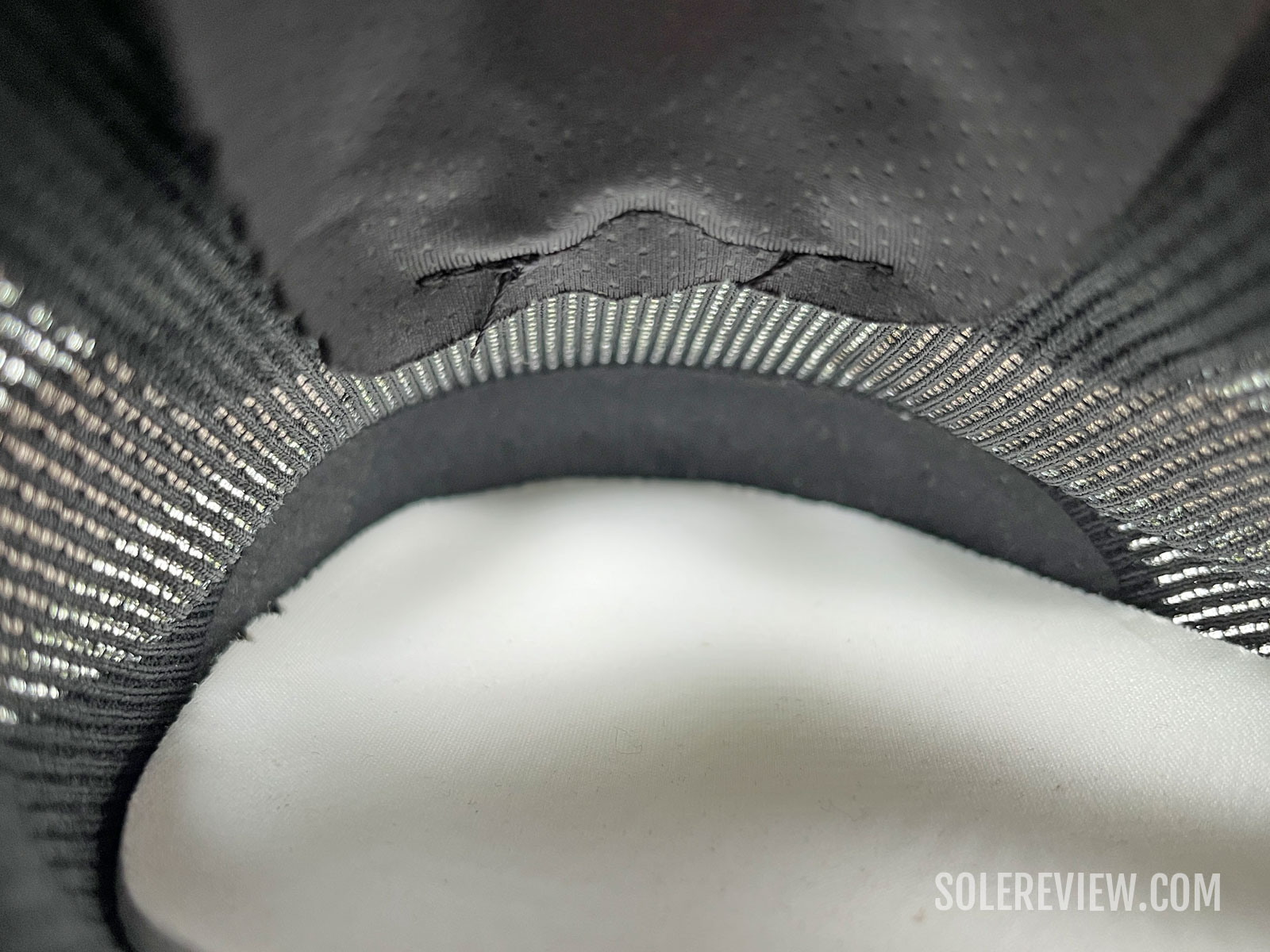
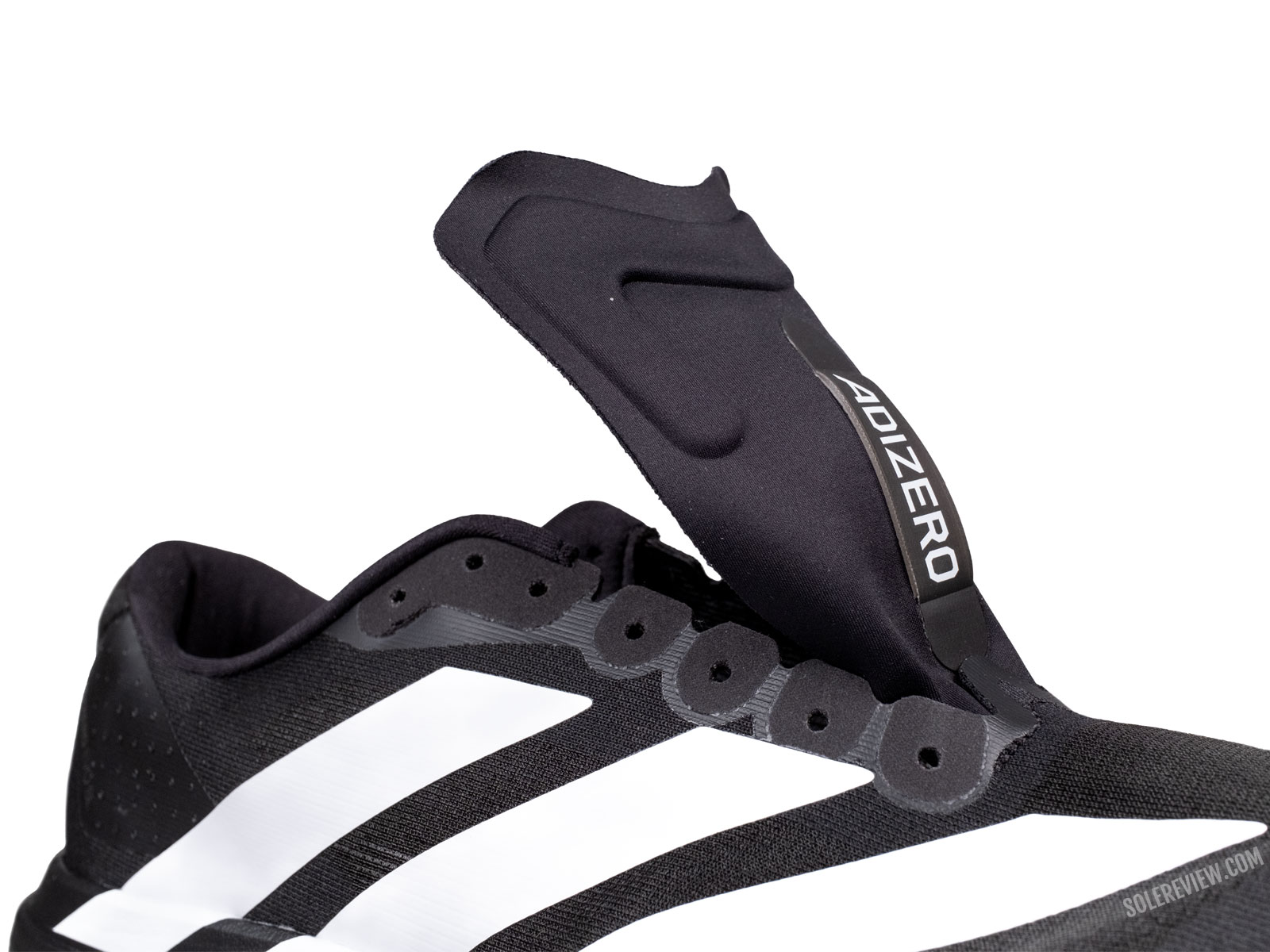
The no-sleeve, gusset-free construction makes the interiors spacious. The lack of tongue foam padding and the use of a thin, breathable mesh also help. The heel collar padding isn’t overly plush, letting the foot sit closer to the heel and away from the forefoot – thus making the upper roomy.
Pros
- Do-everything ride
- Spacious toe box
- Accommodating forefoot
- Outsole grip
- Ventilation
Cons
- Minor tongue slide
- No optional widths
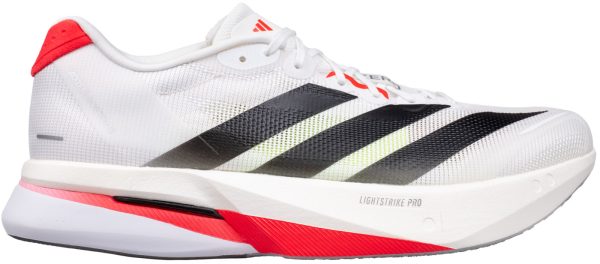
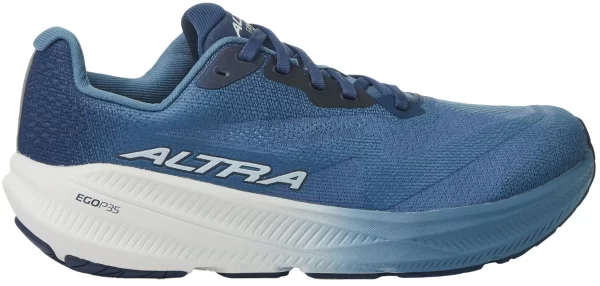
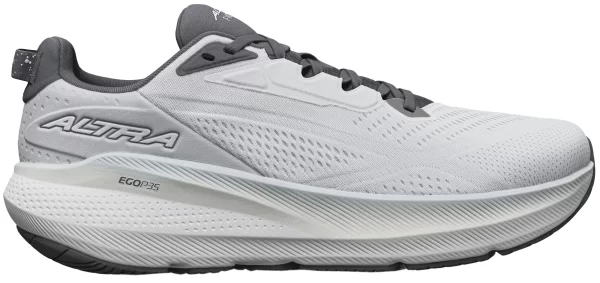
Other versatile trainers with a roomy fit
Fit Notes
True to size with a spacious forefoot/midfoot and toe box. Tongue slides due to the lack of a gusset. Excellent ventilation. No optional widths.
Gallery

Specs
- Heel stack: 39 mm
- Forefoot stack: 33 mm
- Drop: 6 mm
- Weight: 7.9 oz / 224 gms
- Widths: Regular
- Midsole: Lightstrike Pro, plastic shank
- Insole: Molded, removable
Why it works (the basics)
- Decreased heel padding → relocates the foot rearward for more space
- Minimal, gusset-free tongue → frees up interior space
- Ultra-lightweight mesh upper → accommodates wider feet
- Dual-density midsole with firmer rearfoot → is more stable than the Sky model
🔍 Deep Dive
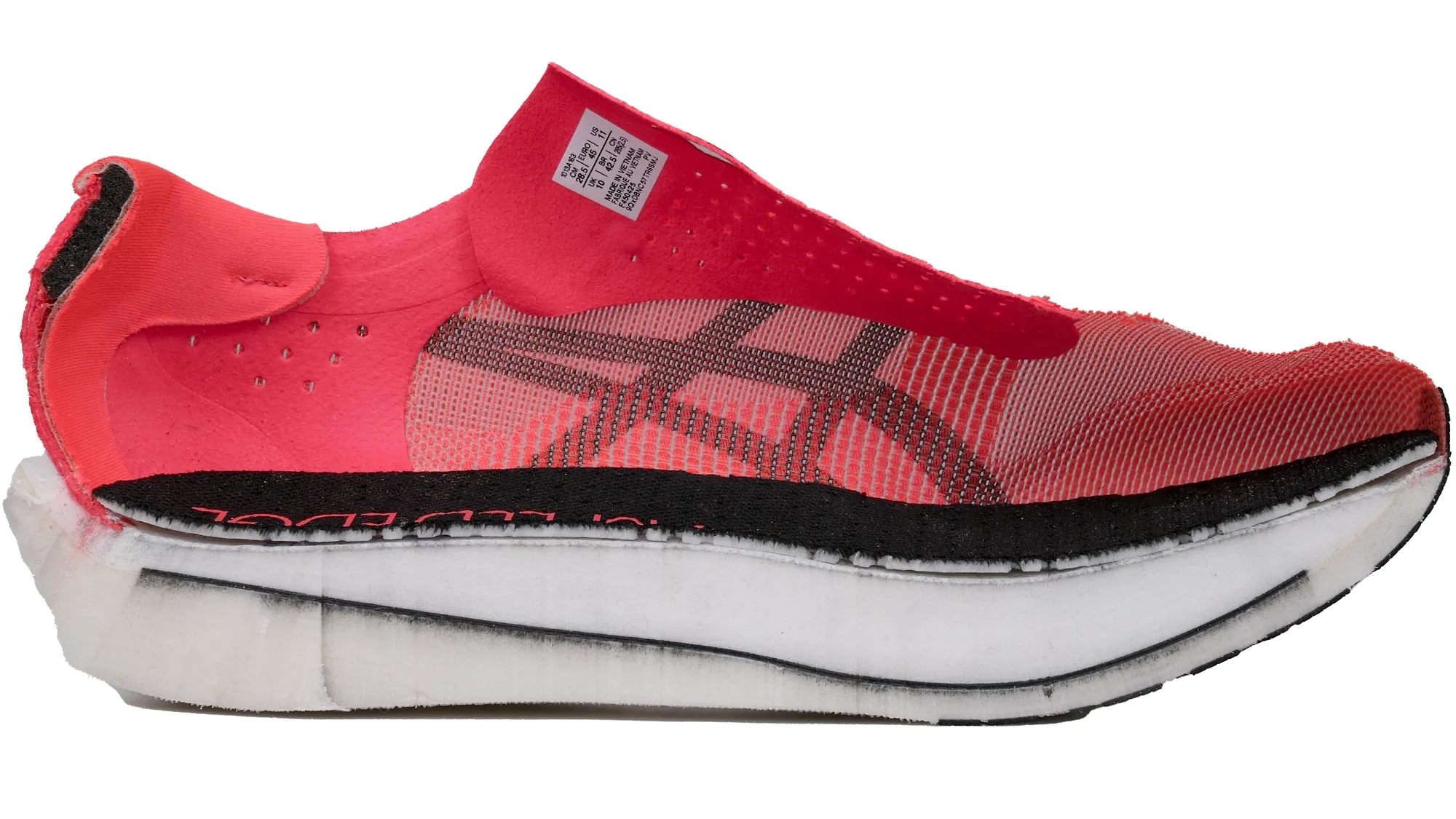
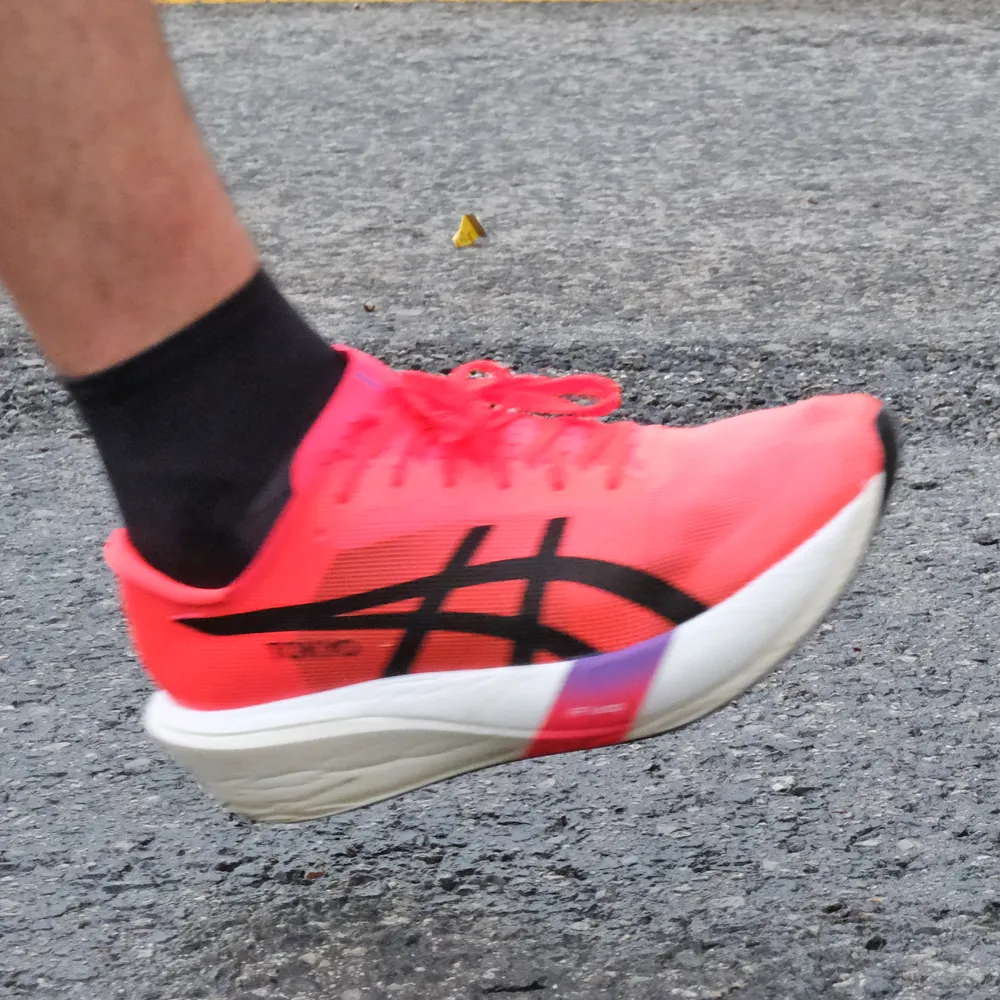
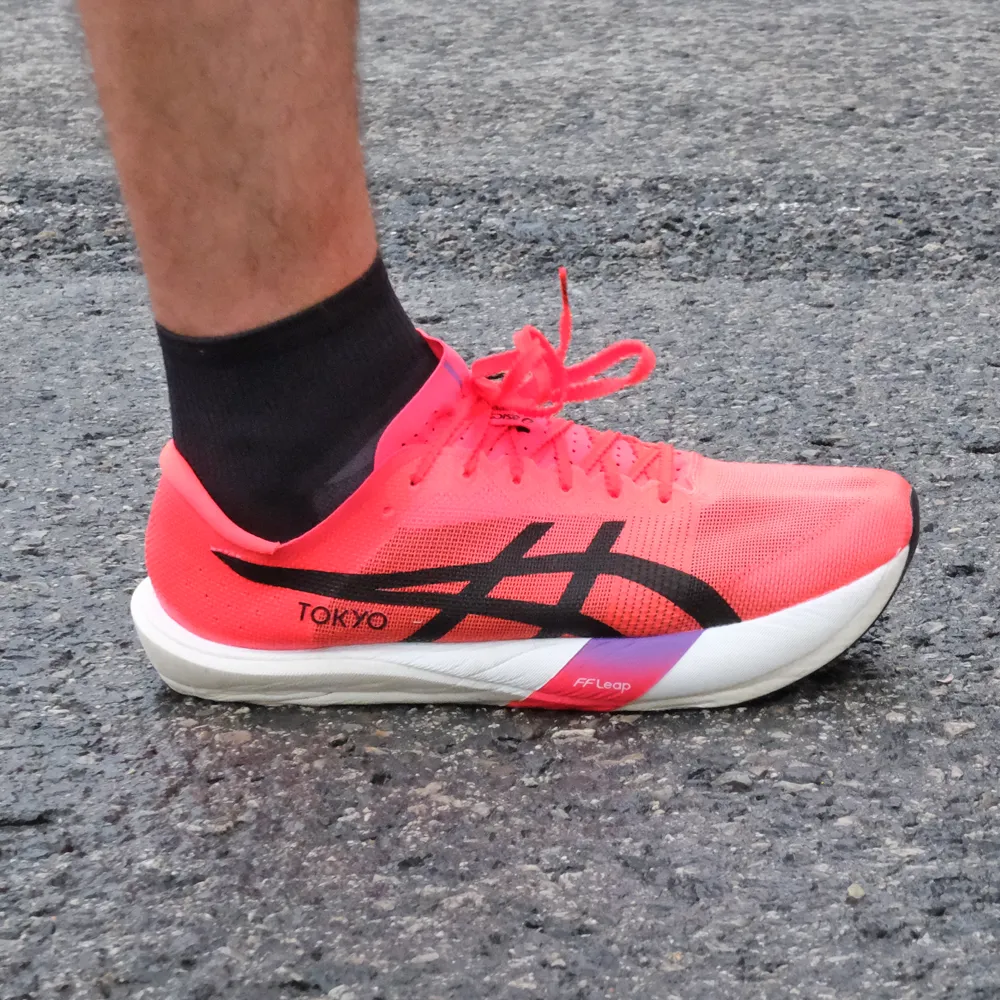
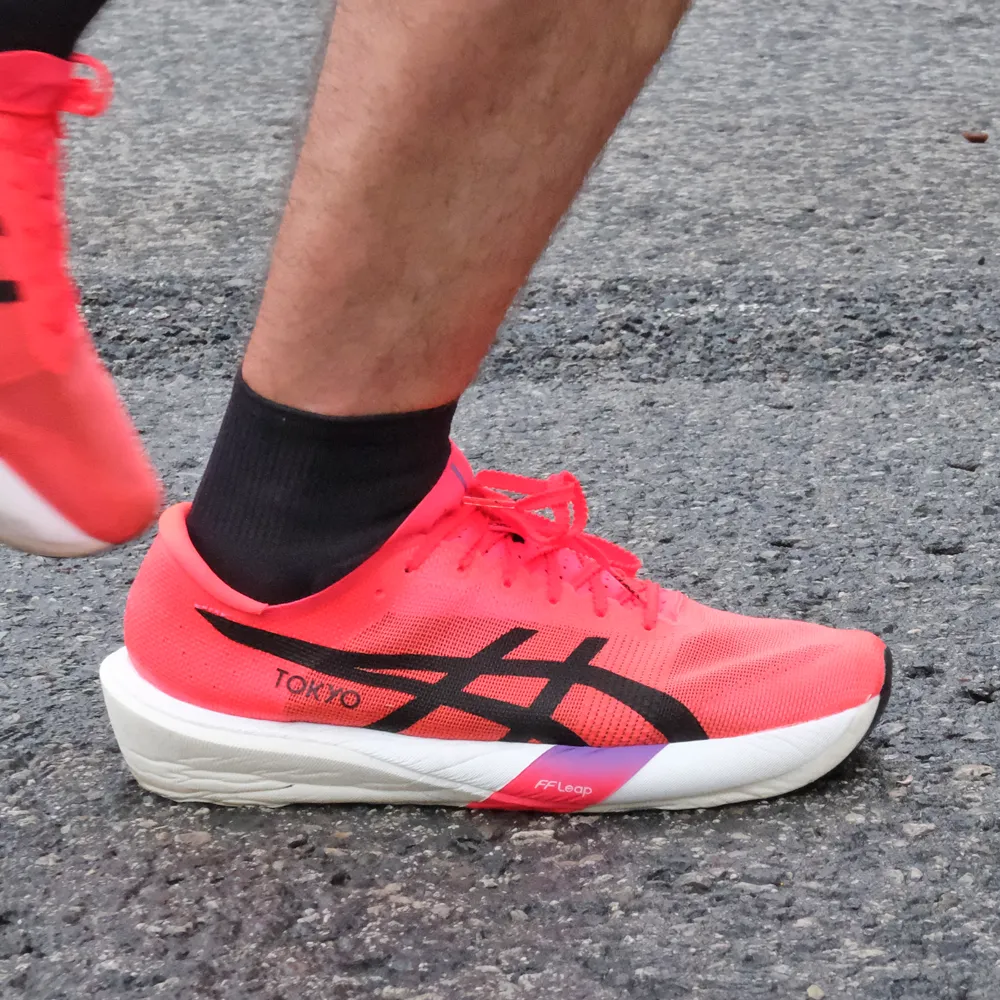
If we had to rank current carbon-plated racers, the Metaspeed Edge Tokyo would not make it into the top three. Even the top five would be a stretch. The upper is too spacious for a racer, and we noticed excessive foot movement during the gait cycle. The FF Leap and FF Turbo+ midsole is too soft and lacks stability. This Metaspeed variant uses more of the less mushy FF Turbo+ than the Metaspeed Sky, so it’s marginally more supportive, but only just. Sure, it has a soft and bouncy ride, a propulsive carbon plate for racing, a featherweight build, and all that jazz, but there are better plated racers out there. We view the previous-gen Metaspeed Paris Edge as the superior version.
But hey – this guide is about running shoes for wide feet, and there’s no other plated racer with as much forefoot room as the Metaspeed Edge and Sky Tokyo. If you’re a wide-footed, midfoot- or forefoot-striking runner with excellent form, then the breezy and spacious upper of the Metaspeed will be a good fit.
Pros
- Spacious forefoot
- Ventilation
- Propulsive carbon plate
- Weight efficiency
Cons
- Weak lockdown for regular feet
- Lack of widths
- Unstable ride
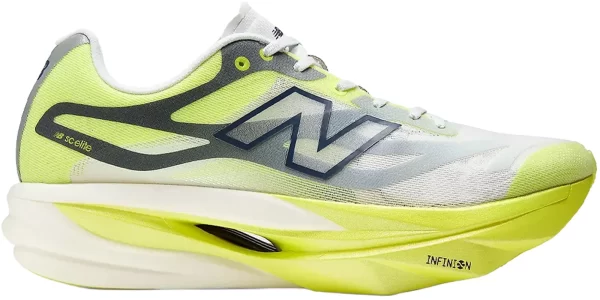
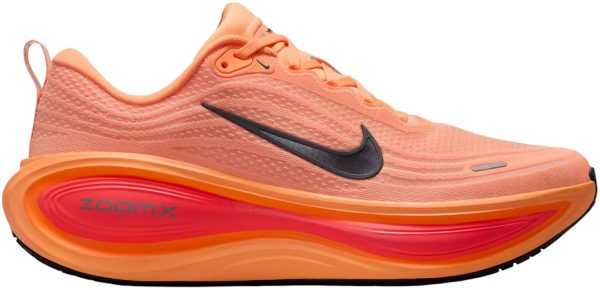
Other 10K and marathon-friendly shoes with optional widths
Fit Notes
Runs half size longer. Roomy forefoot and toe box, but weak lockdown. No gusset. Superb breathability. Single width only.
Gallery
Specs
- Heel stack: 36 mm
- Forefoot stack: 33 mm
- Drop: 3 mm
- Weight: 5.9 oz / 170 gms
- Widths: Regular (single)
- Midsole: FF Turbo+, FF Leap foam, carbon plate
- Insole: Non-removable.
Why it works (the basics)
- Semi-stretchy spacer mesh → accommodates wide feet
- Midfoot-only tongue gusset → doesn’t encroach on forefoot space
- Formed toe bumper → creates splaying room for the toes
- Wide midfoot, E-TPU insole → adds comfort and stability
🔍 Deep Dive
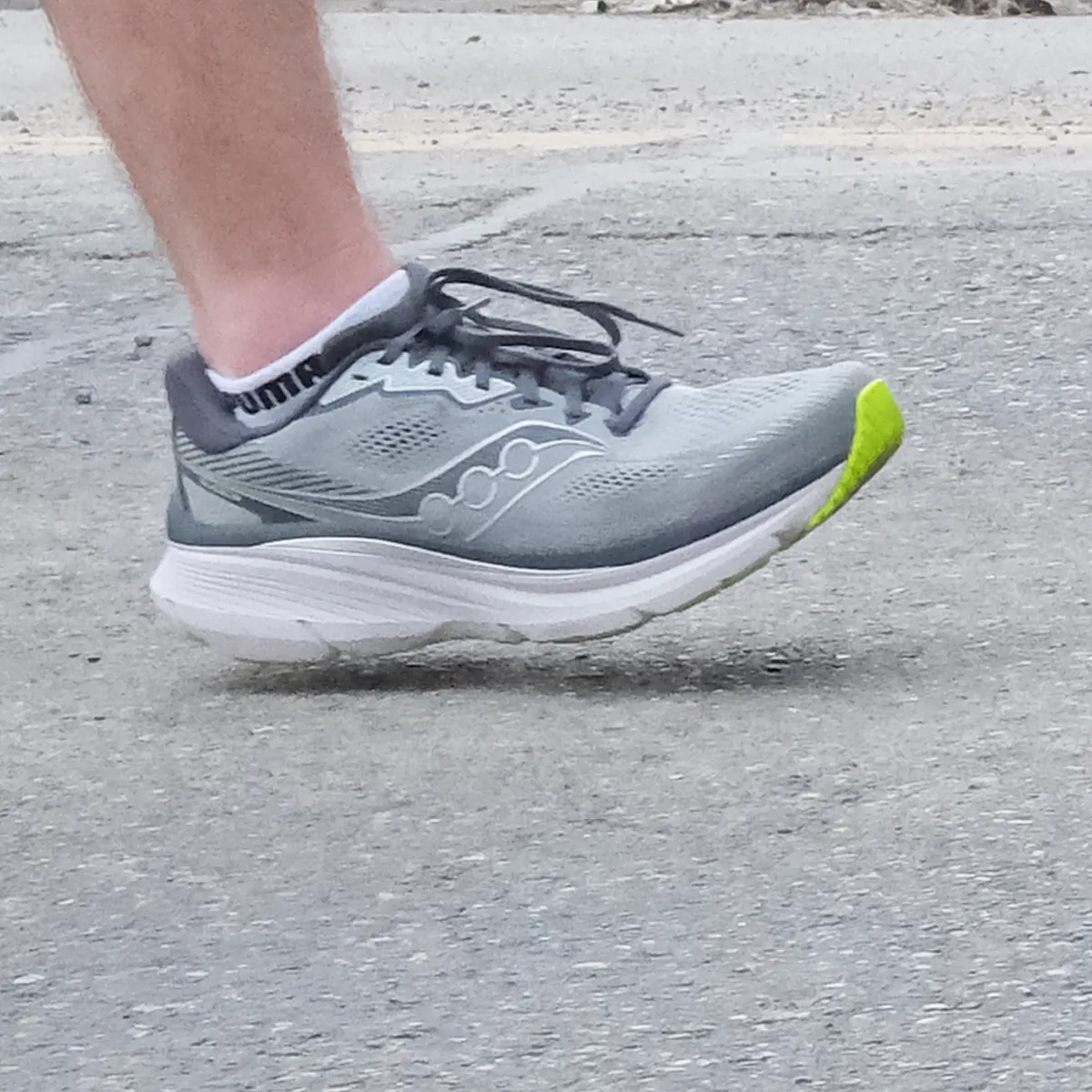
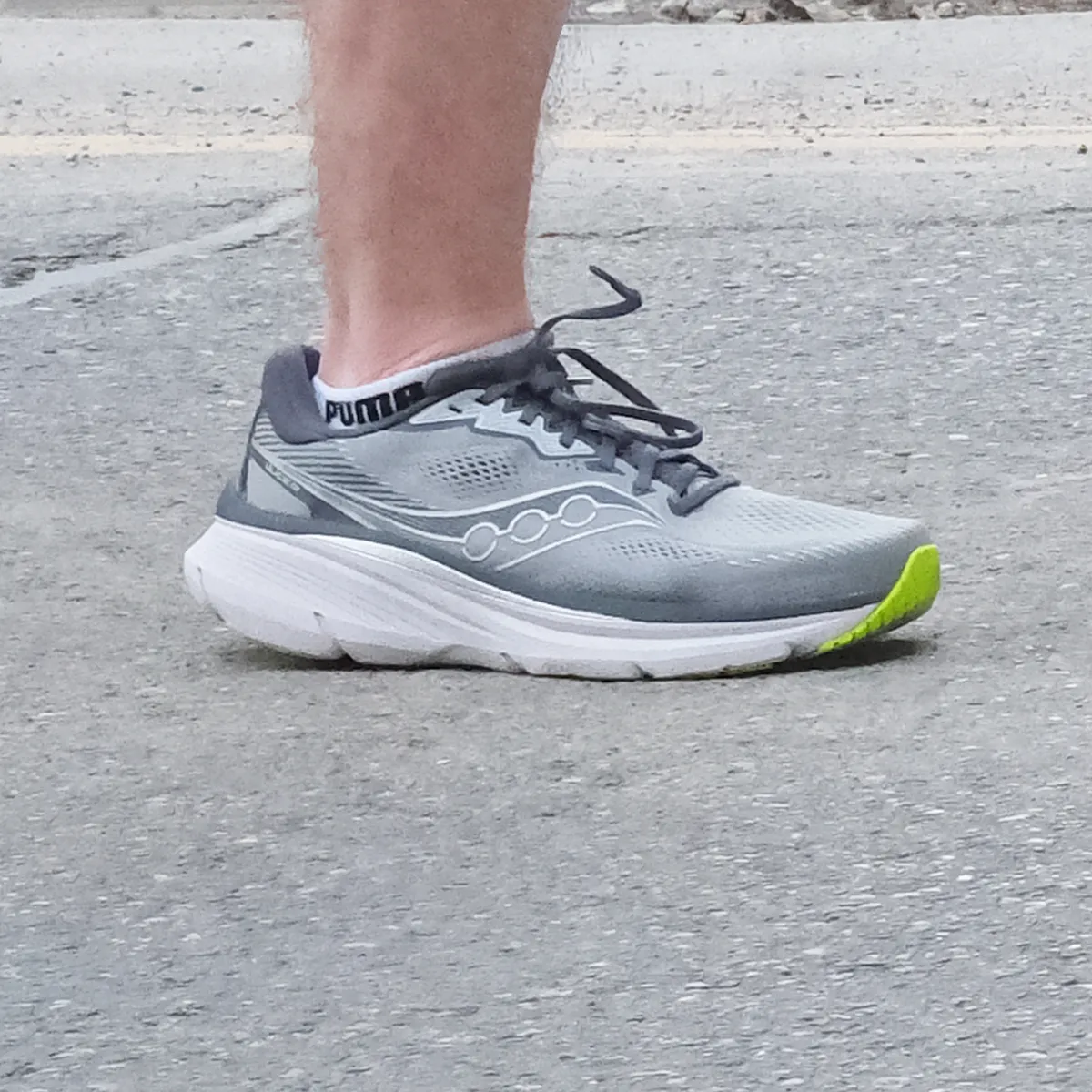
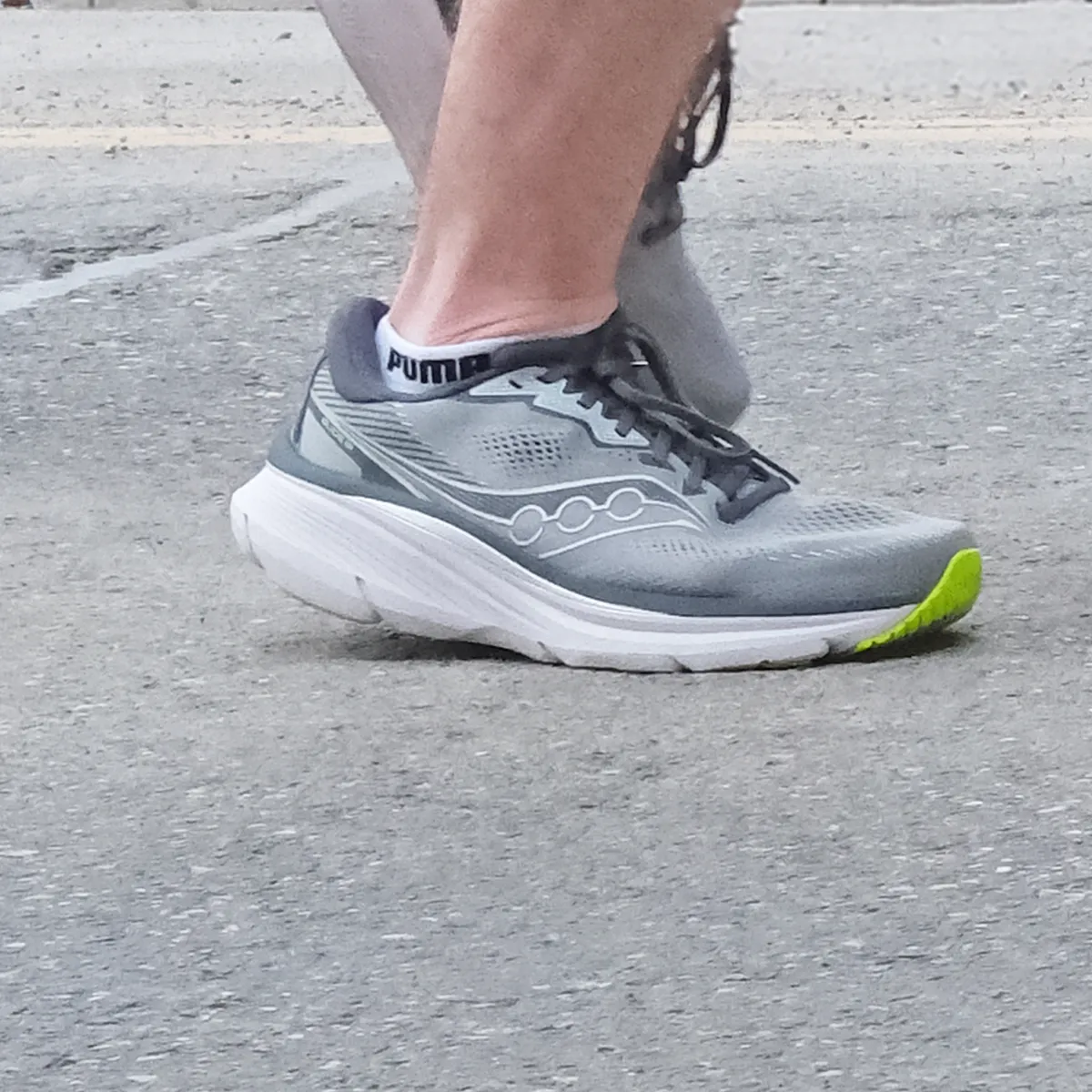
The Guide 19’s spacer mesh upper has partial elasticity, allowing it to accommodate a variety of foot shapes. The absence of stiff overlays allows the inherent stretchy upper to wrap around wide feet, with the molded internal bumper creating dedicated room around the toes. The fit is accommodating, but not loose; there is a distinction. If the standard width feels too narrow for wide-footed runners, Saucony sells wide and extra-wide sizes in this model.
That was a short description of the fit. What else does the Guide do? It’s a stability trainer that takes the term ‘stability’ quite literally. Rather than relying on a prescriptive midsole design, the Guide 19’s forte is its ultra-wide midsole and footprint. The removable E-TPU (PWRRUN+) footbed adds step-in comfort and can be replaced with a thinner insole for more space. The rest of the midsole features supportive PWRRUN (an EVA-blend foam) that delivers a planted ride for everyday training, 10Ks, and marathons at moderate paces (slower than 5:00 min/km, 8 min/mile). It’s best to temper expectations, as the PWRRUN+ foam is not as soft and bouncy as PEBA or A-TPU/TPE-based materials.
Pros
- Partially stretchy, accommodating fit
- Space-saving tongue gusset
- Ultra-stable ride
- Thick footbed can be swapped with a thinner kind for more room
- Optional wide and extra-wide widths
Cons
- Struggles at faster paces
- Lacks cushioning bounce of contemporary foams
Other overpronation-friendly trainers sold in an optional wide
Fit Notes
True to size. Spacious toe box, accommodating forefoot. Gusseted tongue. Wide and extra-wide widths are optional.
Gallery
Specs
- Heel stack: 39 mm
- Forefoot stack: 33 mm
- Drop: 6 mm
- Weight: 9.7 oz / 275 gms
- Widths: Regular, wide, extra-wide
- Midsole: EVA-blend PWRRUN foam
- Insole: Molded, removable
Why it works (the basics)
- Minimally layered mesh upper → has room for wide feet
- FF Blast Max midsole → delivers versatile off-road comfort
- Articulated woven rock plate → offers proprioceptive protection
- Asicsgrip outsole → offers multi-surface, wet-dry traction
🔍 Deep Dive
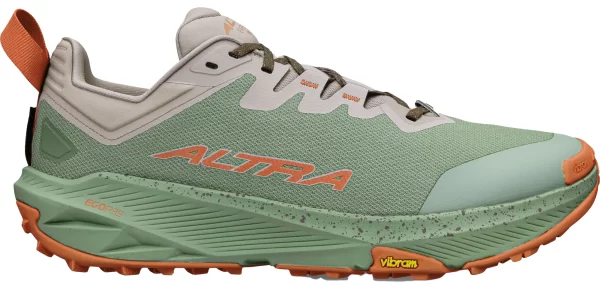
Asics has updated the Trabuco 14 with a softer ride and enhanced ground feel. The softer ride comes from the new FF Blast Max midsole and a new rear outsole window that exposes more foam. The outsole and woven rock plate are also separated by an exposed channel under the forefoot. On one hand, the higher outsole articulation improves the trail feel and proprioceptive feedback. The FF Blast Max foam also increases the overall comfort on the trail. As for the upper fit, it’s spacious enough for wide feet with just enough layering on the toe box and sides for abrasion resistance.
But there are tradeoffs. The Trabuco 14 is slightly less grippy and protective than its predecessor due to the reduced outsole coverage. Also expect accelerated scuffing on the exposed foam window. The best kinds of surfaces for this shoe are packed trails and gravel, with limited capability on technical and rocky terrain.
Pros
- Accommodating mesh upper
- Articulated outsole for ground feel
- 4 mm lugs grip well on low-gradient trails
- Protective, woven rock shield
- Comfort for gravel and packed trails
Cons
- Average stability due to soft FF Blast Max
- Lower grip and protection because of decreased outsole coverage
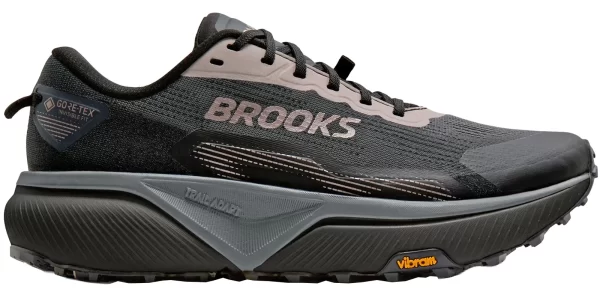
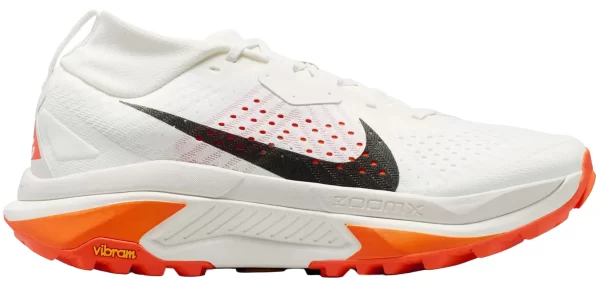
Other trail running shoes with a roomy fit
Fit Notes
Fits true to size with above-average forefoot and toe box space in its category. A waterproof (Gore-Tex) variant is also available. Use a gaiter for enhanced debris entry resistance.
Specs
- Heel stack: 38 mm
- Forefoot stack: 30 mm
- Drop: 8 mm
- Weight: 9.9 oz / 293 gms
- Widths: Regular
- Midsole: FF Blast Max, rock plate
- Insole: Molded, removable
The research behind our picks
How do spacious uppers benefit runners?
Even if a runner doesn’t have wide feet, an accommodating fit works better for high-mileage training or daily runs. The feet increase in volume during long runs, so having a spacious upper makes the ride experience enjoyable. We use the term ‘accommodating or spacious’ to describe the midfoot and forefoot fit. A wide fit should not be conflated with a wide toe box – these are two separate areas on a shoe.
So how does one go about finding a running shoe with a spacious fit? Except for adidas, Altra, and On, most brands do a great job of offering optional widths. New Balance, in particular, offers wide (2E) and extra-wide (4E) sizes for most of their running shoes. They even sell a wide version of their SC Elite racer, which is a rarity for that category. There are some running shoes with a standard width that fit most foot profiles. Our ‘daily trainer’ and ‘trail’ recommendations feature such models.
Some retailers also mention 2E and 4E as EE and EEEE. They might also use the terms ‘standard’, ‘wide’, and ‘extra-wide’ instead of alphanumeric sizes. Don’t be confused; they all mean the same thing. At times, even 2E or 4E widths aren’t what they seem. For example, if a D width shoe is based on a very narrow last, then a 2E (wide) width will be snug instead of being roomy. There’s a trick that we often utilize to create more forefoot room. First, remove the laces, and then re-lace the shoe by skipping the first row of eyelets. Most of the time, this works as an easy fix to free up interior space. Or in the case of the Saucony Guide 19, its thick PWRRUN+ footbed can be replaced with a thinner insole to create a wider fit.
Which design features make a shoe spacious?
The first factor is the last profile, or the basic shape that defines the interior dimensions of any shoe. However, the last profile doesn’t always decide how a shoe fits, since other possible factors influence the ‘sensory’ fit profile. The materials and construction have a role to play; for example, a partially elastic mesh upper does a better job of accommodating wide feet than a stiff mesh upper with thick overlays on top. The presence or absence of a tongue gusset or full inner sleeve makes a significant difference in how the shoe fits. A running shoe without a full sleeve (eg., Nike Vomero Plus) will feel wider than a fully-sleeved one (eg., Nike Vomero 18).
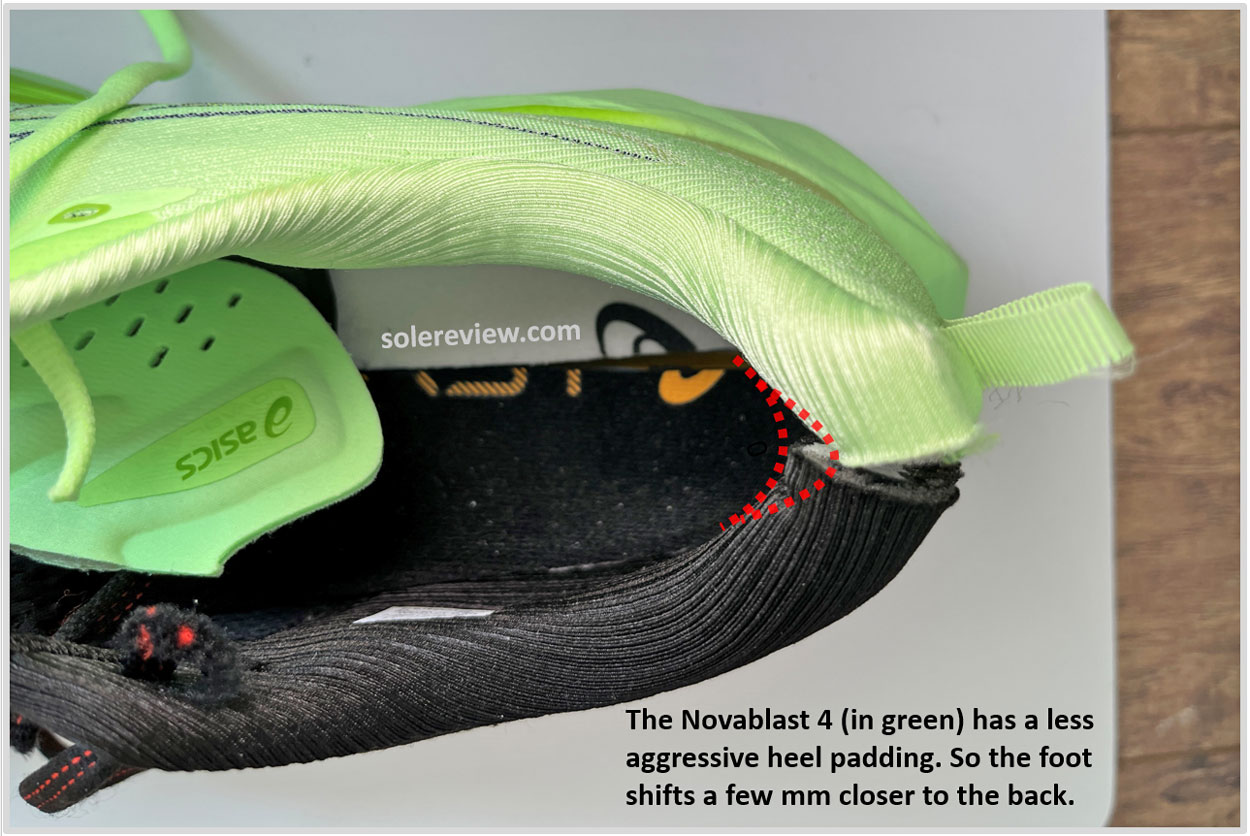
We’ve rarely come across other sources mentioning the heel collar design as one of the major influences on the upper fit. But we’ve called it out on numerous occasions on this website. A plush, padded heel collar will push the foot forward, making the midfoot and forefoot narrower than a shoe that’s made on the same last, but with sparser heel padding. The Novablast 4 vs. 5 was a good example, and we highlighted that through an explainer infographic.
Under what circumstances should a roomy running shoe be avoided?
Any form of running event or training run that involves high speeds requires a snug forefoot and midfoot fit. That would include short-distance road races, marathons, intervals, track training, and speedy trail runs. Such aggressive workouts require a superior lockdown for three reasons. First, a tight upper does a far better job of transferring the power from the foot to the midsole (and hence to the ground) for better transition efficiency. Also, if a midsole is rocker-shaped, a locked-in upper will enhance the roll-forward effect. Second, with high-speed runs comes a greater chance of excessive foot movement, something a snug fit will prevent. Third, a secure foot-to-midsole connection helps enhance the ground feel; this is of greater relevance in trail running shoes and racing flats.
The toe box can be wide, no problem. However, the forefoot and midfoot fit need to be secure at higher speeds, more so during fast corners. In short, all carbon-plated racers and track-use shoes should have a narrow fit, period.