
Product guide updates
(5 total)- 2026-09-20 — Added 'Top recommendations summary' module
- 2026-08-21 — Updated with minor edits
- 2026-08-20 — Created FAQ with relevant question and answer pairs
- 2026-08-20 — Migrated product guide to new editorial format
- 2026-08-20 — Updated all recommendations
In this product guide:
How we selected
Our recommended running shoes with a 12 mm drop are grouped by use cases – daily runs, heavy runners, overpronators, and trail. By connecting each feature with its respective function, the “Why it works” section explains why a particular shoe (in its respective class) is suitable for its recommended use case. Here’s a quick, one-line summary of our recommended categories:
- Best for daily runs: A daily trainer with a 12 mm offset.
- Best for heavy runners: A 12 mm drop running shoe with max support and cushioning.
- Best for overpronators: Compression-resistance stability shoe with a high heel drop.
- Best for trail: Off-road running shoe with a 12 mm drop.
Our recommendations combine our influence-free, expert-led wear-testing with biomechanical data sourced from over 33,000 high-speed images captured during actual road races. Visit our FAQ section at the bottom to learn more about how a 12 mm drop midsole may benefit a runner.
Why it works (the basics)
- Nitrogen-infused DNA foam → makes daily runs comfortable
- Firm midsole and midfoot footbridge → adds ride stability
- 12 mm heel-to-toe drop → minimizes strain on the Achilles
- Spacer mesh upper → provides secure ventilation
🔍 Deep Dive
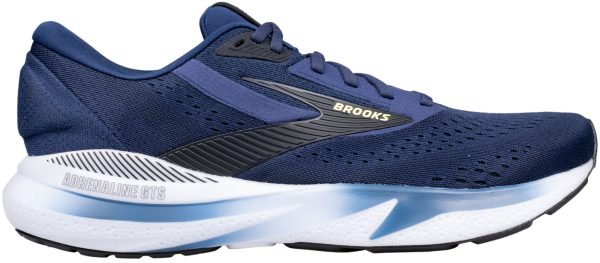
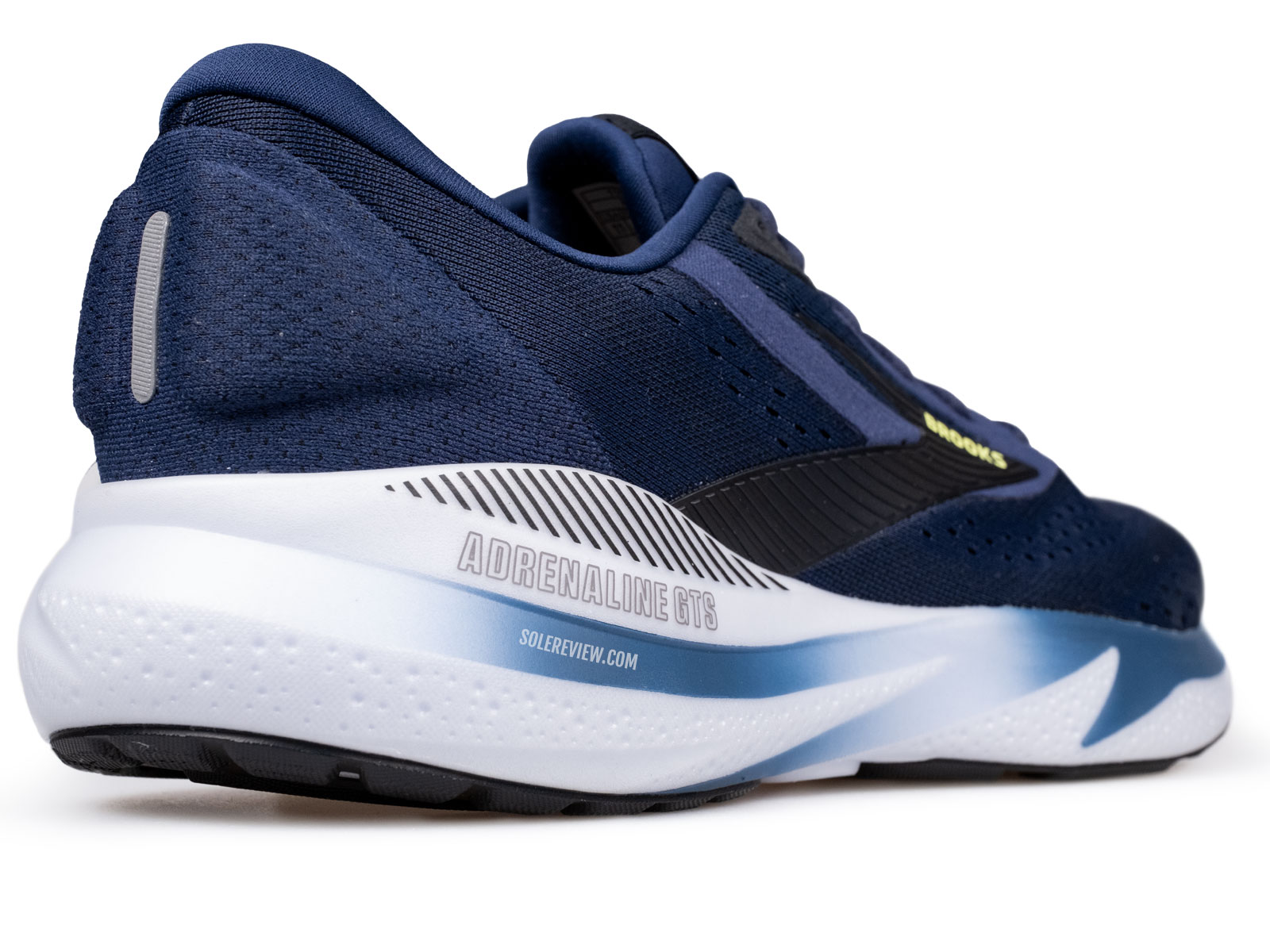
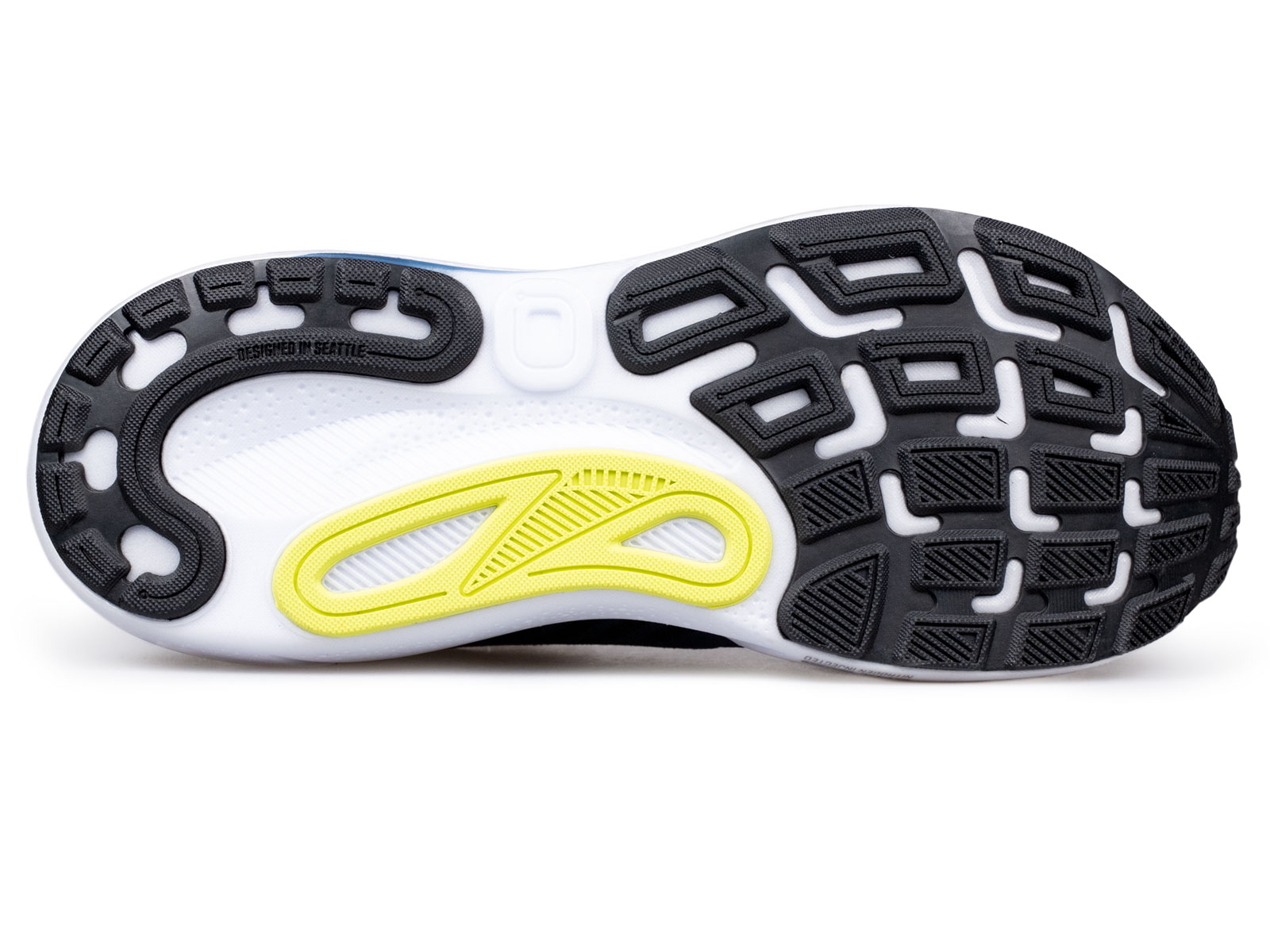
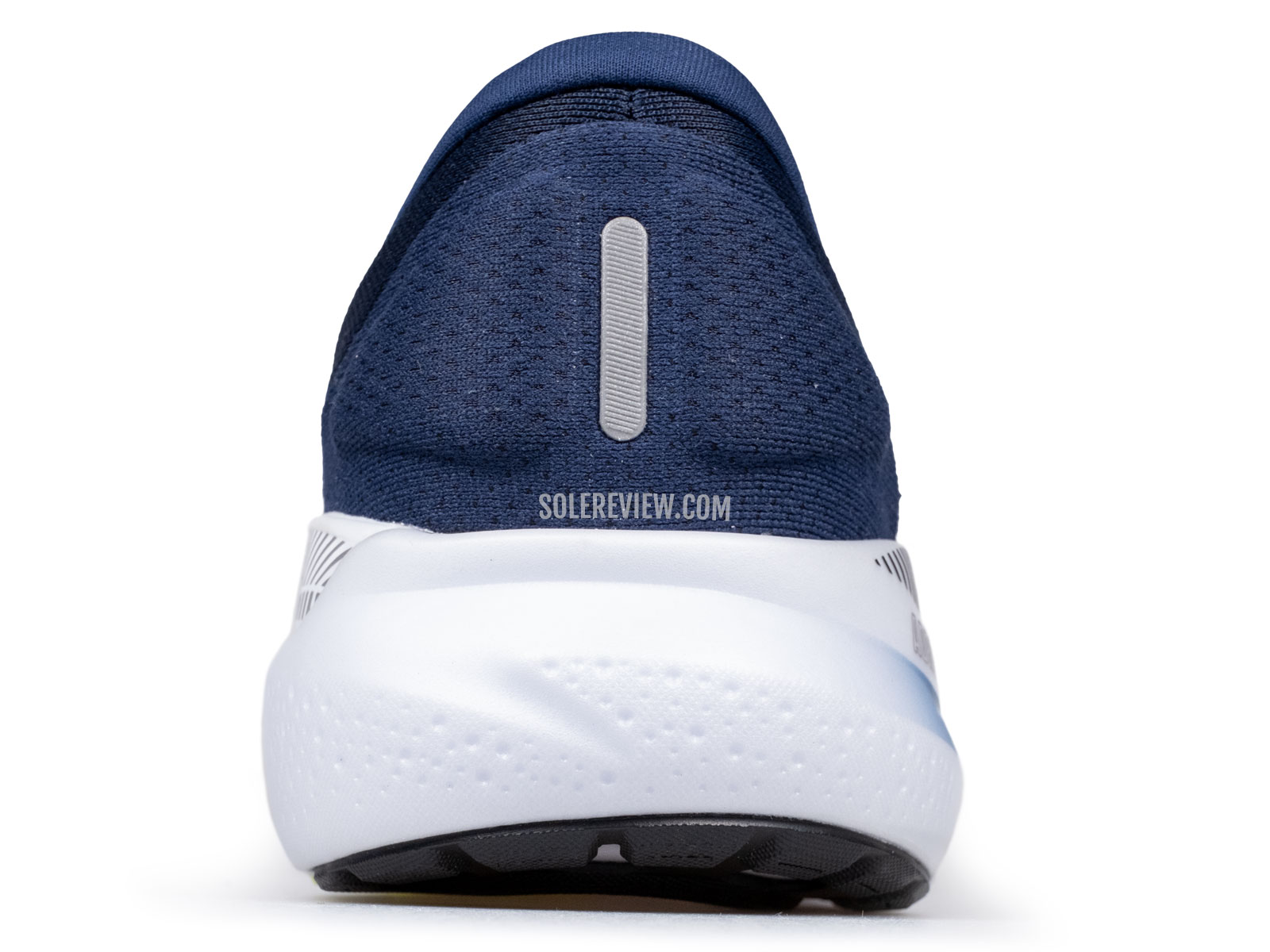
The Adrenaline GTS 25 has lowered its heel offset to 10 mm, so the Adrenaline GTS 24 is your shoe for that extra 2 mm of heel drop. Besides the marginal difference in heel drop, the GTS 24 differs from the GTS 25 in two ways. While both models feature raised sidewalls called ‘GuideRails’, the GTS 24 uses a separate and firmer density foam for the GuideRails. On the GTS 25, the GuideRail and midsole are made of the same material. The second difference is the GTS 24’s firmer ride that delivers a higher level of stability than the current-generation GTS 25.
Do the GuideRails work? As in, influence the gait during runs? We highly doubt it. That said, the GTS 24 does offer a cushioned and stable ride with a heightened sense of under-arch support. As always, the GTS 24’s upper is accommodating yet secure. It won’t be a stretch to call it plush due to the use of spongy spacer mesh and a foam-quilted heel.
Pros
- Smooth, stable ride
- Supportive 12 mm drop is Achilles-friendly
- Firm DNA Loft resists excessive compression
- Secure fit
- Outsole grip
Cons
- Guiderails are a gimmick
- Widths may be unavailable due to model obsolescence
Fit Notes
True to size with a snug fit. Decent ventilation. Optional widths may be unavailable due to the GTS 24 being discontinued.
Gallery
Specs
- Drop: 12 mm
- Widths: Regular (single)
- Midsole: Nitrogen-infused DNA Loft
- Insole: Molded, removable
Why it works (the basics)
- Nitrogen-injected DNA Loft foam → is resistant to compacting
- Ultra-wide base → offers high stability
- 12 mm drop → relieves stress on the calves and Achilles
- 38 mm, 26 mm stack → makes slow runs and walks comfortable
🔍 Deep Dive
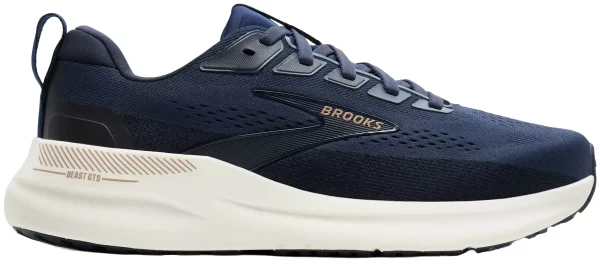
The Brooks Beast GTS 26 weighs 12.5 ounces (354 grams), so it’s not your everyday trainer. The ultra-wide midsole offers greater stability than lighter trainers. The women’s version of the Beast GTS 26 is the Ariel GTS 26; both are the same shoe except for gender-specific size runs and colors. Brooks’s DNA Loft midsole foam is inherently stable and resistant to bottoming out. The Beast is like a wider Glycerin GTS, but with raised midsole walls and more outsole rubber. While the Beast is a decent shoe for slow-paced runs and walks, its versatility is limited because of its high weight.
The plush and secure upper is a good match for the cushioned midsole. It keeps the foot locked down, with wide and extra-wide sizes being optional.
Pros
- Ultra-stable and cushioned ride
- Gentle on the calves and Achilles
- Superior upper plushness
- Choice of wide and extra wide
- Good for orthotics
Cons
- Noticeably heavy
- Limited versatility
- Runs warm due to all the padding
Fit Notes
True to size. Snug fit. Average breathability. Optional wide, extra wide widths.
Specs
- Heel stack: 38 mm
- Forefoot stack: 26 mm
- Drop: 12 mm
- Weight: 12.5 oz / 354 gms
- Widths: Regular, wide, extra-wide
- Midsole: Nitrogen-injected DNA Loft
- Insole: Molded, removable
Why it works (the basics)
- Firm, EVA-blend DNA foam → creates a stable foundation
- Generous outsole coverage → maximizes contact area
- Stable ride → offers compression resistance for overpronators
- Plush and spacious upper → has room for spacious orthotics
🔍 Deep Dive
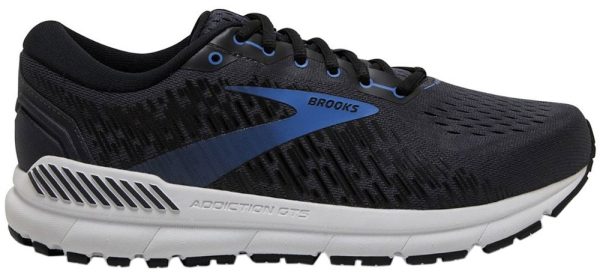
We’d classify the Addiction GTS 15 as a walking shoe rather than a running shoe. The 12.2-ounce/346-gram weight makes it difficult for the Addiction to do anything other than easy-pace runs. In return for its 12.2-ounce bulk, the Addiction GTS 15 offers an ultra-supportive midsole for overpronators with plenty of cushioning. The high 12 mm drop is good for beginners and for runners who want to avoid stressing their Achilles.
The engineered mesh upper is soft, spacious, breathable, and sells in three additional sizing widths. So how are the Addiction GTS 15 and Beast GTS 26 different? The Addiction uses a firm midsole foam (similar to traditional EVA rather than DNA Loft), offers wider outsole rubber coverage, has a roomier fit, and features a legacy design language. On the road, it delivers marginally higher stability and more upper space than the Beast.
Pros
- Ultra-stable ride
- Generous outsole coverage
- Spacious upper
- Wide range of widths
Cons
- Dated midsole tech
- Heavy
Specs
- Drop: 12 mm
- Weight: 12.2 oz / 346 gms
- Widths: Narrow, regular, wide, extra-wide
- Midsole: EVA-blend DNA foam
- Insole: Molded, removable
Why it works (the basics)
- 29 mm, 17 mm stack → delivers proprioceptive ground feel
- Heel TPU stabilizer → prevents heel slippage
- Firm midsole foam → retains high heel drop when loaded
- Padded one-piece Nylon upper → secures the foot on packed trails
🔍 Deep Dive
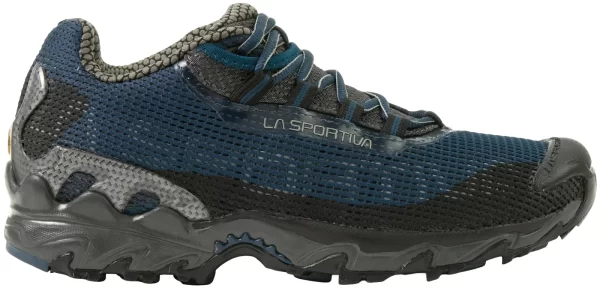
La Sportiva is better known for its climbing shoes (we love the TC Pro), but the brand also makes excellent mountaineering (like the Nepal Cube and G-Summit) and trail running shoes. The gnarly-looking Wildcat Trail running shoe stands out in stark contrast against more ‘modern-looking’ trail runners like the La Sportiva Prodigio 2 and Prodigio Max and their nitrogen-infused, supercritical foam midsoles.
Not only is the Wildcat Trail’s 12 mm drop midsole made of dense EVA foam with a nylon shank, but it also has a low-to-the-ground construction. With stack heights of a mere 29 mm and 17 mm, the midsole manages to deliver excellent stability and ground feel on packed trails. Its heavy build (12.4-ounce weight) delivers a planted ride and protection on the trail. The grippy outsole with its bi-directional lugs also forms a protective bumper over the secure nylon mesh upper.
Pros
- Excellent ground feel
- Off-road stability
- Good compression resistance
- Secure fit
- Comfortable OrthoLite Hybrid footbed
- Toe protection bumper
Cons
- Lacks cushioning of current-gen trail shoes
- Extremely bottom heavy
- Lack of optional widths
- Absence of gaiter D-rings
Fit Notes
Fits true to size with a narrow and secure fit. Single width only.
Specs
- Heel stack: 29 mm
- Forefoot stack: 17 mm
- Drop: 12 mm
- Weight: 12.4 oz / 328 gms
- Widths: Regular (single)
- Midsole: EVA foam with Nylon shank
- Insole: Removable OrthoLite Hybrid
Key considerations
Why should any runner buy a running shoe with a 12 mm drop when an 8-10 mm drop is the standard?
The heel drop – which is the difference between the forefoot and heel thickness of a midsole – can be one of the deciding factors for a running shoe buyer. At the time of publishing this guide, running shoes with an 8-10 mm drop occupy the ‘sweet spot’ of heel-to-toe offsets.
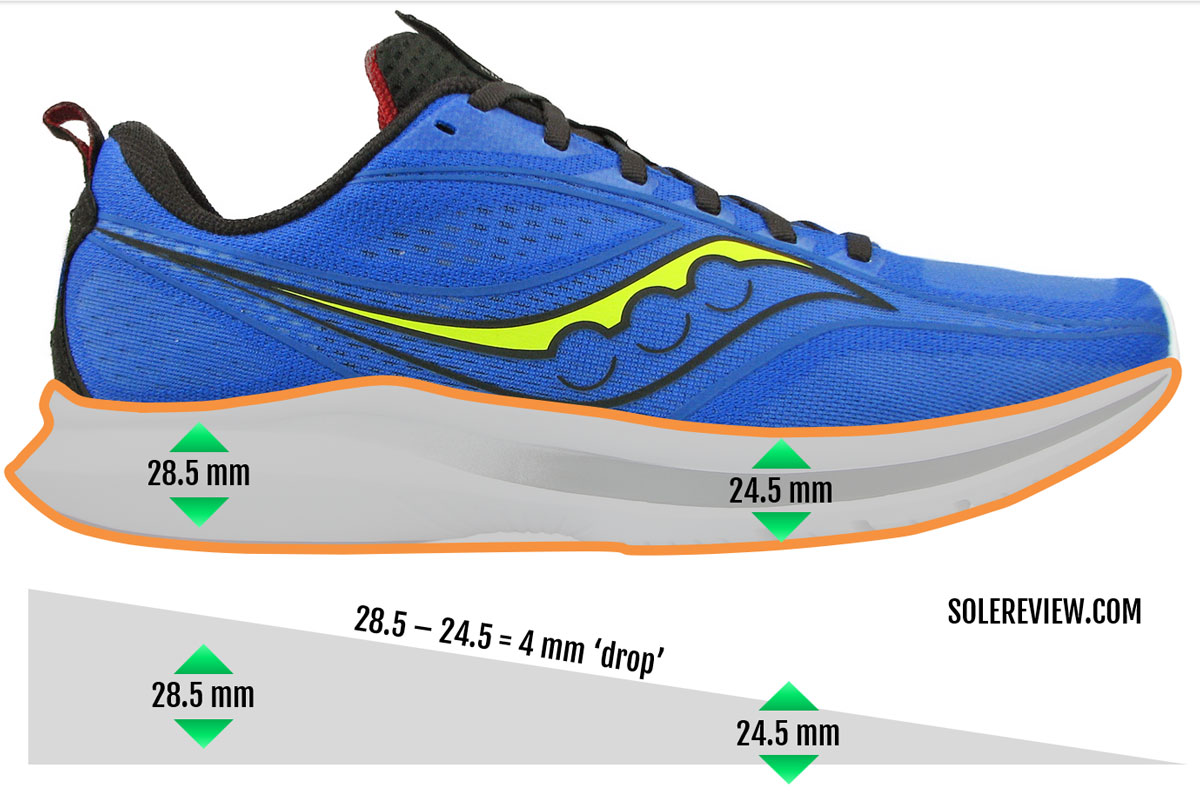
It’s fair to say that psychology, not a hard number, dictates running shoe choices. The same psychology also draws a line with 12 mm drop running shoes. Most people view a 12 mm offset as the mental cut-off; anything higher is a difficult sell. Today, while a 12 mm drop is considered on the higher side, there’s some history behind it. Let’s explore some of those reasons, and why a lot of them still matter today.
A 12 mm heel-to-toe drop makes running easier for beginners
A higher heel-to-toe drop reduces stress on the Achilles tendon. This makes it easier for new runners to get comfortable while minimizing the risk of soreness. Therefore, a 12 mm drop is a good starting point for new runners and less stressful for runners who are recovering from injuries.
Rearfoot landing is still the preferred way of foot-striking
Despite full-contact or midfoot landing’s rise in popularity, a rearfoot landing continues to be the preferred foot-strike pattern. There is plenty of epidemiological data to support it.
A thicker heel with a beveled design and a cushioned midsole makes the rearfoot landings smooth and comfortable.
In the past, a higher heel-to-toe drop meant a taller heel
We have to remember that gigantic 40 mm stack heights are a relatively modern phenomenon. In the era (pre-2015) when 10-12 mm drop running shoes were popular, the midsole stack heights generally maxed out at 33-35 mm, so heel strikers would look for a 10-12 mm drop for increased comfort. Modern cushioning foams and ultra-tall midsoles have made that logic redundant.
Is there a difference between a 10 mm drop shoe and a 12 mm drop shoe?
Not really; they are interchangeable for all practical purposes. Don’t get stuck on an absolute number; on modern running shoes, the heel drop matters way less than what most people think.