
Product guide updates
(5 total)- 2026-09-19 — Added 'Top recommendations summary' module
- 2026-09-04 — Updated with minor edits
- 2026-09-03 — Created FAQ with relevant question and answer pairs
- 2026-09-03 — Migrated product guide to new editorial format
- 2026-09-03 — Updated all primary and secondary recommendations
In this product guide:
How we selected
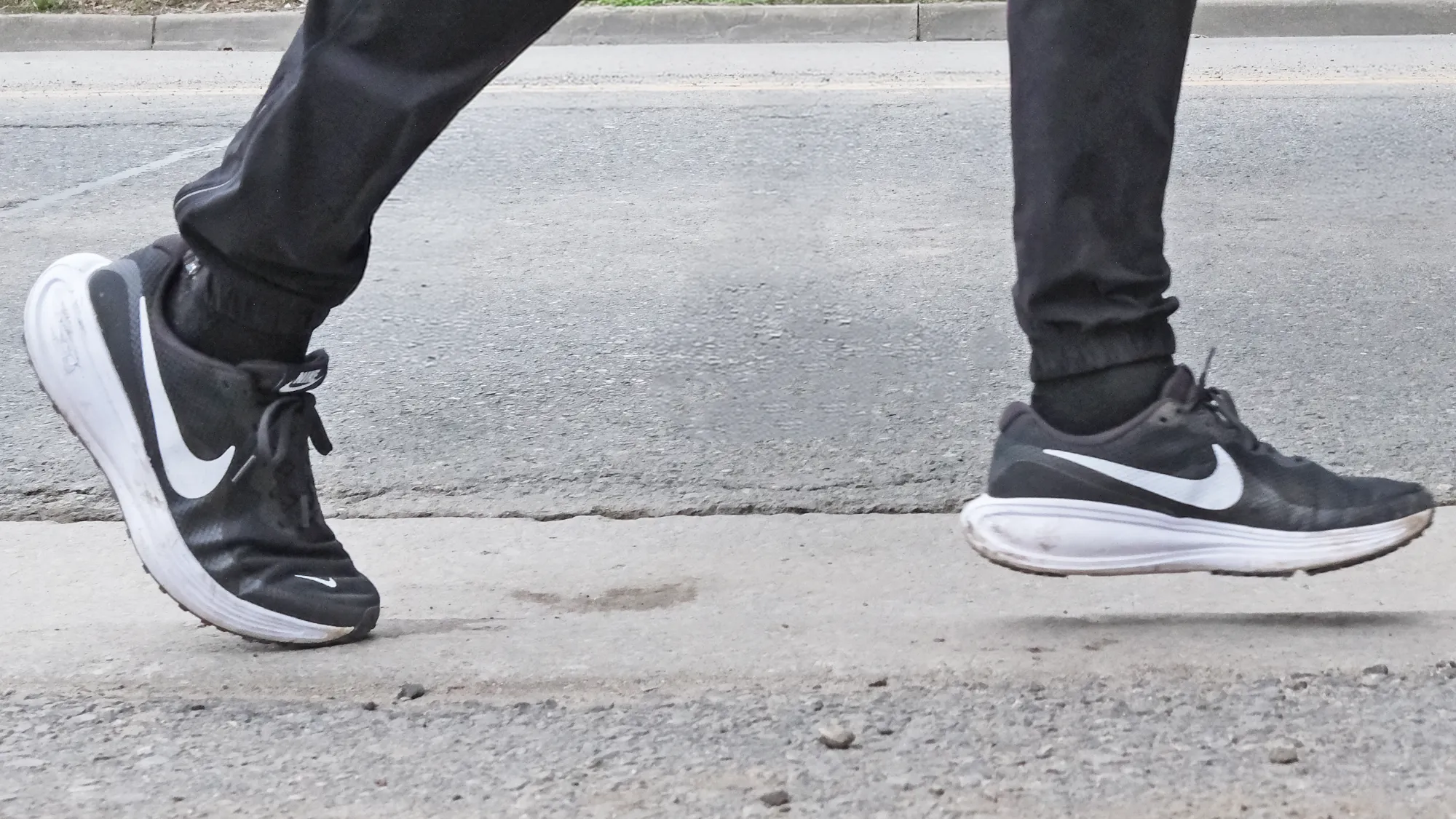
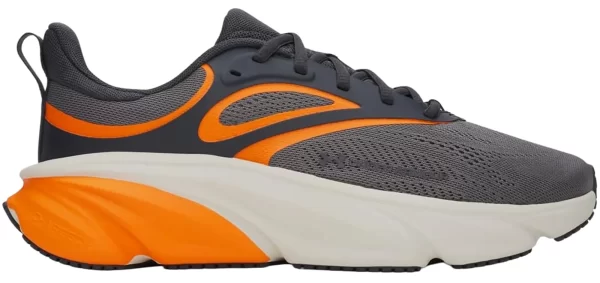
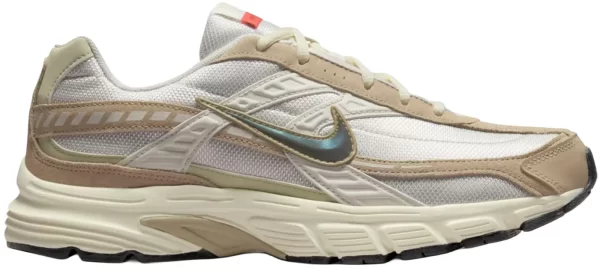
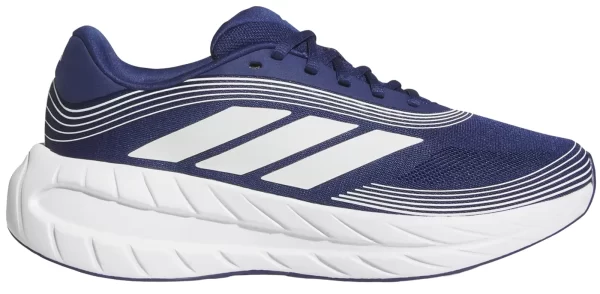
Our recommended affordable shoes (MSRP US $100 and under) are grouped by use cases – daily training, long runs and marathons, overpronators, and trail. By connecting each feature with its respective function, the “Why it works” section explains why a particular shoe (in its respective class) is suitable for its recommended use case. Alternatives are suggested under each recommended category. For example, the alternatives to the Puma Electrify Nitro 5 (our overpronator pick) are the UnderArmour Charged Rogue 6, the Nike Initiator (for firm neutral support), and the Adidas Adipure Shift (for a compression-resistant ride). When combined, this product guide contains 16 different affordable running shoe recommendations. Here’s a quick, one-line summary of our recommended categories:
- Best for daily runs: Sub-$100 shoes for multi-speed, high-mileage daily sessions.
- Best for slow runs and marathons: Budget-friendly comfort for long runs and races.
- Best for overpronators: Affordable shoes with targeted or neutral support.
- Best for trail: Off-road running shoes – $100 MSRP and under.
Our recommendations combine our influence-free, expert-led wear-testing with biomechanical data sourced from over 33,000 high-speed images captured during actual road races. We combined our wear-test observations with an evidence-based screening of design features to choose which running shoes offer the best performance for their price. Visit our FAQ section at the bottom to learn more about what to look for in an entry-level running shoe.
The research behind our picks
Other than the recommended shoes in this guide, where can I find affordable running shoes that cost $100 and under?
Before making any purchase based on our recommendations, we suggest that you search for popular out-of-season or soon-to-be-discontinued models first. More often than not, these shoes are available on generous markdowns, bringing down their effective sale price to below $100. This way, you get a premium model (like the previous versions of the Nike Pegasus, Asics GT-2000, and Saucony Peregrine) for significantly less than their original retail price. You can look for them online or visit your neighbourhood discount shoe stores (like Ross, Marshalls, and brand factory outlets, for example). Thrift stores rarely sell running shoes in good condition, so we don’t recommend going there.
Which brands do a good job at offering budget running shoes?
adidas offers a wide assortment of sub-$100 shoes, most of which are offered with promotional discounts. As you can see in this guide, a number of adidas shoes are recommended. They have been doing this for a long time, so they have the experience and scale to consistently target this price segment. Nike comes a close second. Not all affordable Nike running shoes are sold through their website. The Nike Initiator – which is a renamed Nike Dart from 2008 – is sold on Amazon and Zappos. Kiprun (from Decathlon) also sells a couple of nice models, like the KS-900 Light and current Kipcore series.
Skechers is not bad, but finding actual running shoes is like finding treasure in the rough, given their heavy casual-wear focus. Asics does okay, but their existing line-up of Excite, Contend, and others feel downmarket as compared to adidas and Nike products. We have excluded Chinese brands like XStep, Anta, and Li-Ning from this guide due to their limited retailer reach; otherwise they also make excellent value-for-money running shoes.
Which brands have a poor assortment of affordable running shoes?
Brooks has always focused on targeting the premium segment, so no surprises there. If possible, look for models like the Hyperion, Revel, and Launch on markdown sales. Saucony and New Balance models feel cut-price, while Hoka and On skip that segment altogether.
Why it works (the basics)
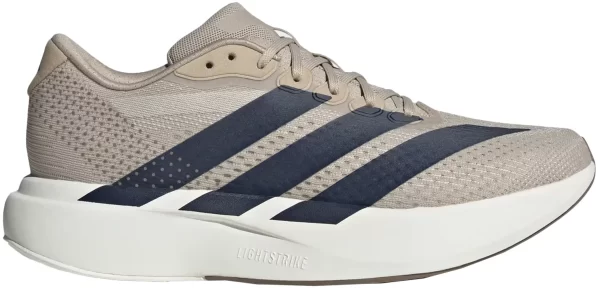
- Lightstrike EVA-blend midsole → offers speed-friendly comfort
- Perforated Adiwear outsole → delivers flexible traction
- True-to-size upper → for soft and breathable fit security
- Ortholite footbed → provides underfoot softness
🔍 Deep Dive
Okay, this is interesting. The adidas EVO SL was like the Adios Pro 3, but minus its Energy Rods. The Adizero Pacer is like the EVO SL, but without its Lightstrike Pro midsole and Continental/Lighttraxion outsole. To sum up, the Adizero Pacer is two technology tiers below the Adios Pro 3. To maintain its sub-$100 price, the Adizero Pacer borrows the silhouette and sole geometry from the EVO SL, but features cushioning and outsole technologies that reflect its lower price. The midsole is Lightstrike (presumably an EVA blend), and the outsole uses Adiwear rubber, a tried-and-tested compound that wears and grips well. The comfortable upper fits true to size, and it’s snugger than the EVO SL because of the thicker mesh. Unlike the EVO SL, the tongue is padded and does a better job of filtering the top-down lacing pressure.
While many adidas shoes use Lightstrike midsoles (e.g., the Duramo Speed 2), the Adizero Pacer uses a slightly softer variant for better responsiveness. The marginally higher softness delivers ride comfort during everyday runs without sapping speed. The midsole is generously stacked (38 mm, 31 mm), so the Adizero Pacer is more than just an everyday trainer. Use it for 10Ks, marathons, tempo, intervals, or just for slow cruising.
Pros
- Versatile character
- Outsole traction
- Snug, comfortable fit
- Propulsive rocker
- Genuine Adizero pedigree
Cons
- Lack of widths
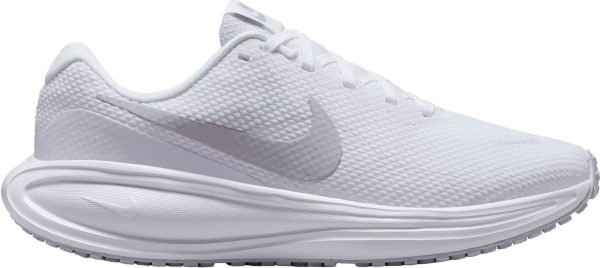
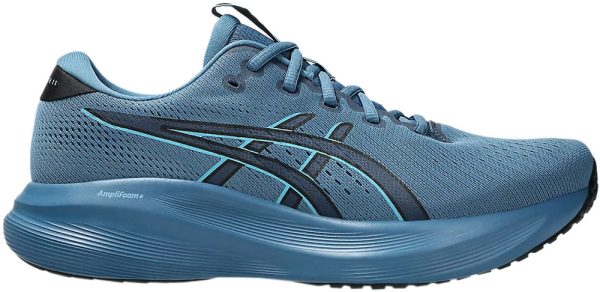
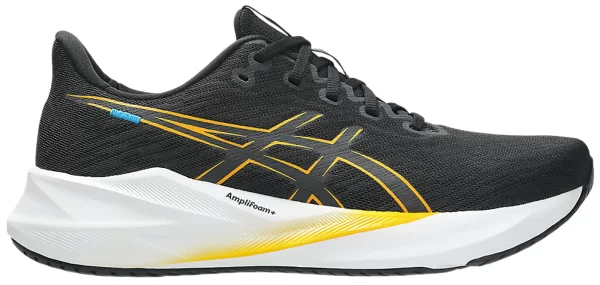
Other affordable daily trainers
Fit Notes
True to size with a snug forefoot and roomy toe box. No optional widths.
Specs
- Heel stack: 38 mm
- Forefoot stack: 31 mm
- Drop: 7 mm
- Widths: Regular
- Midsole: Lightstrike EVA-blend
- Insole: Molded OrthoLite, removable
Why it works (the basics)
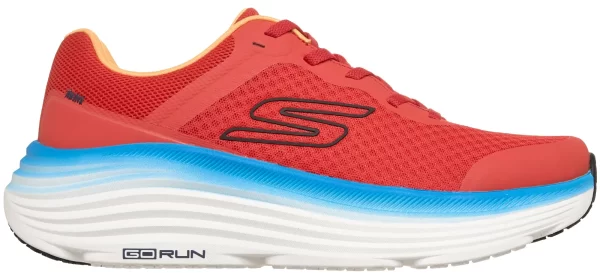
- 46 mm, 37 mm stack → cushions landing impact
- Firm foam density → adds ride stability
- Spacious upper → accommodates increase in foot volume
- Soft, drop-in footbed → delivers step-in comfort
🔍 Deep Dive
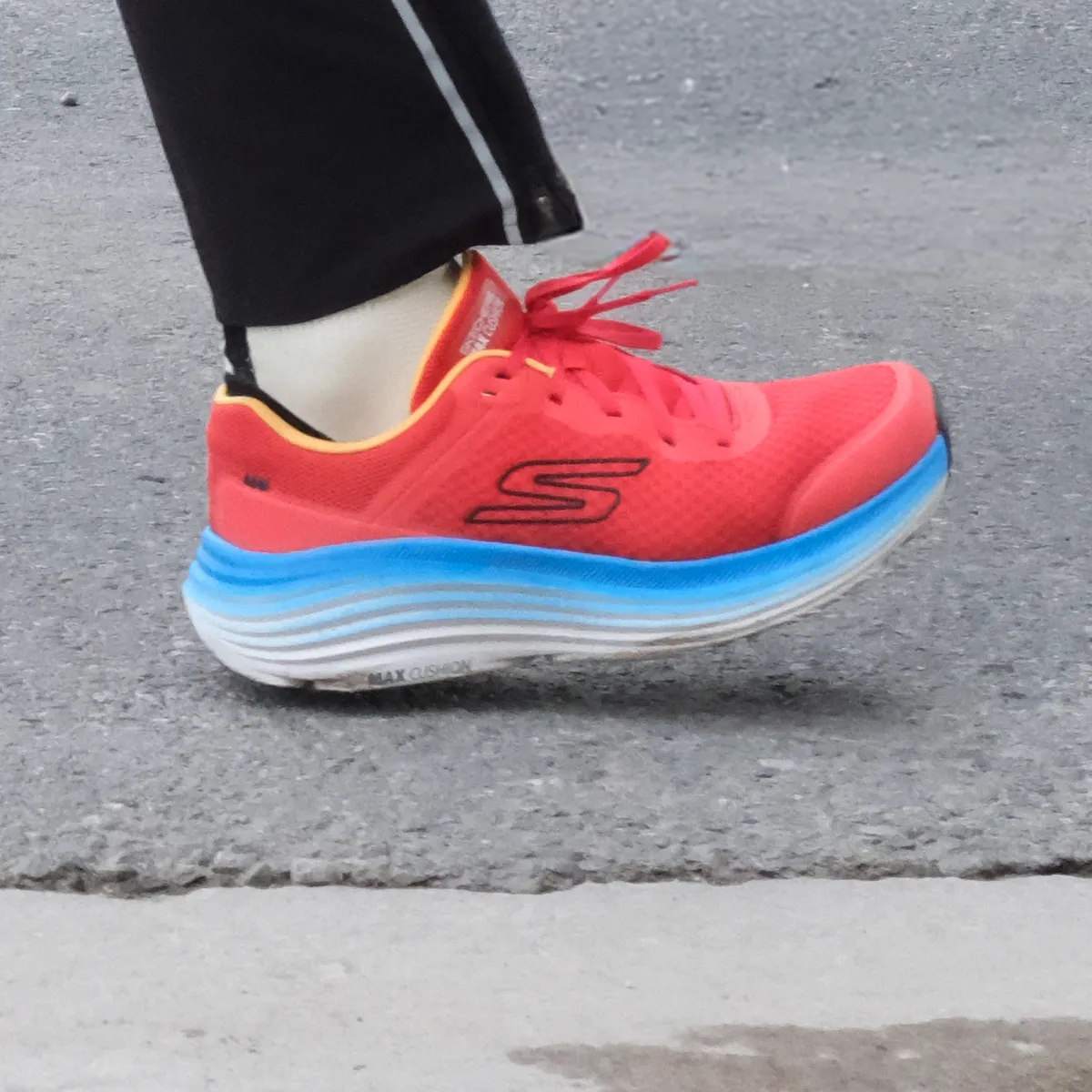
Going by the midsole stack heights and overall silhouette, this Skechers shoe is clearly inspired by the Hoka Bondi. That being said, this shoe is designed with the constraints of an $80 retail price, so it’s unfair to expect a 1:1 Bondi experience. Unlike the Hoka shoe, the EVA-blend midsole has a firm and stiff ride, so managing expectations is essential. To be fair, there’s no dearth of cushioning, given the 46 mm and 37 mm stack-height midsole. It’s just that runners will not experience the soft ride expected from shoes of similar stack heights. But the midsole gets the job done – its inherent firmness makes the ride stable while providing ample impact absorption during long training runs and marathons. The 7-piece articulated outsole grips well during heel or midfoot strikes without adding stiffness.
The upper isn’t bad, but there are a few things worth mentioning. The heel padding is sparse, so it positions the foot away from the forefoot and toe box. As a result, the standard version fits like a 2E (wide), and the heel fit doesn’t feel 100% secure. That’s not necessarily a bad thing when the foot swells in volume during a marathon, but runners with narrow feet should consider one of the recommended alternatives below.
Pros
- Firm cushioning for long runs
- Wide base adds stability
- Outsole grip
- Mildly propulsive rocker
- Roomy and breathable fit
- Optional extra-wide
Cons
- Firm cushioning feels flat
- Risk of heel slippage due to sparse collar padding
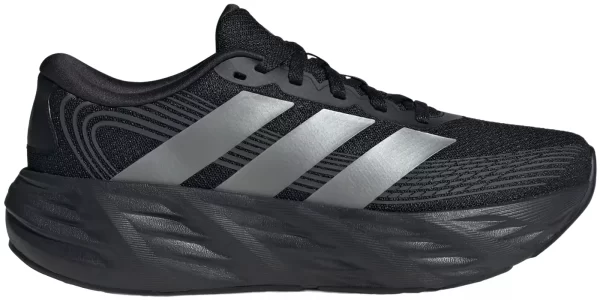
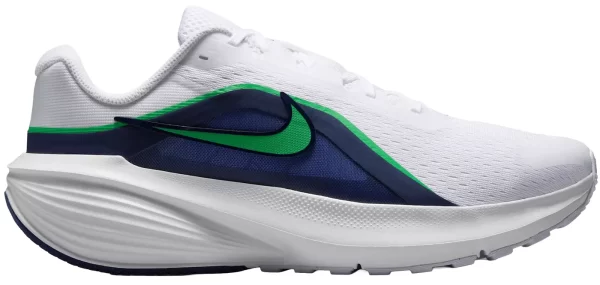
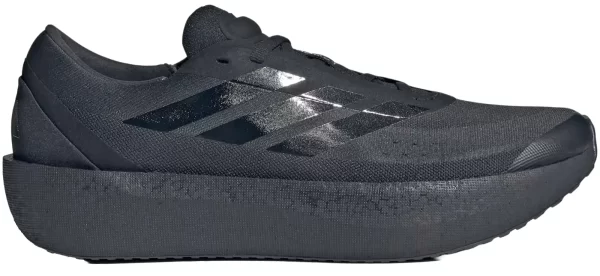
Other affordable shoes for long runs and marathons
Fit Notes
Fits true to size with a roomy forefoot and toe box. Average heel fit due to sparse heel collar padding. Also sold in an extra-wide.
Gallery
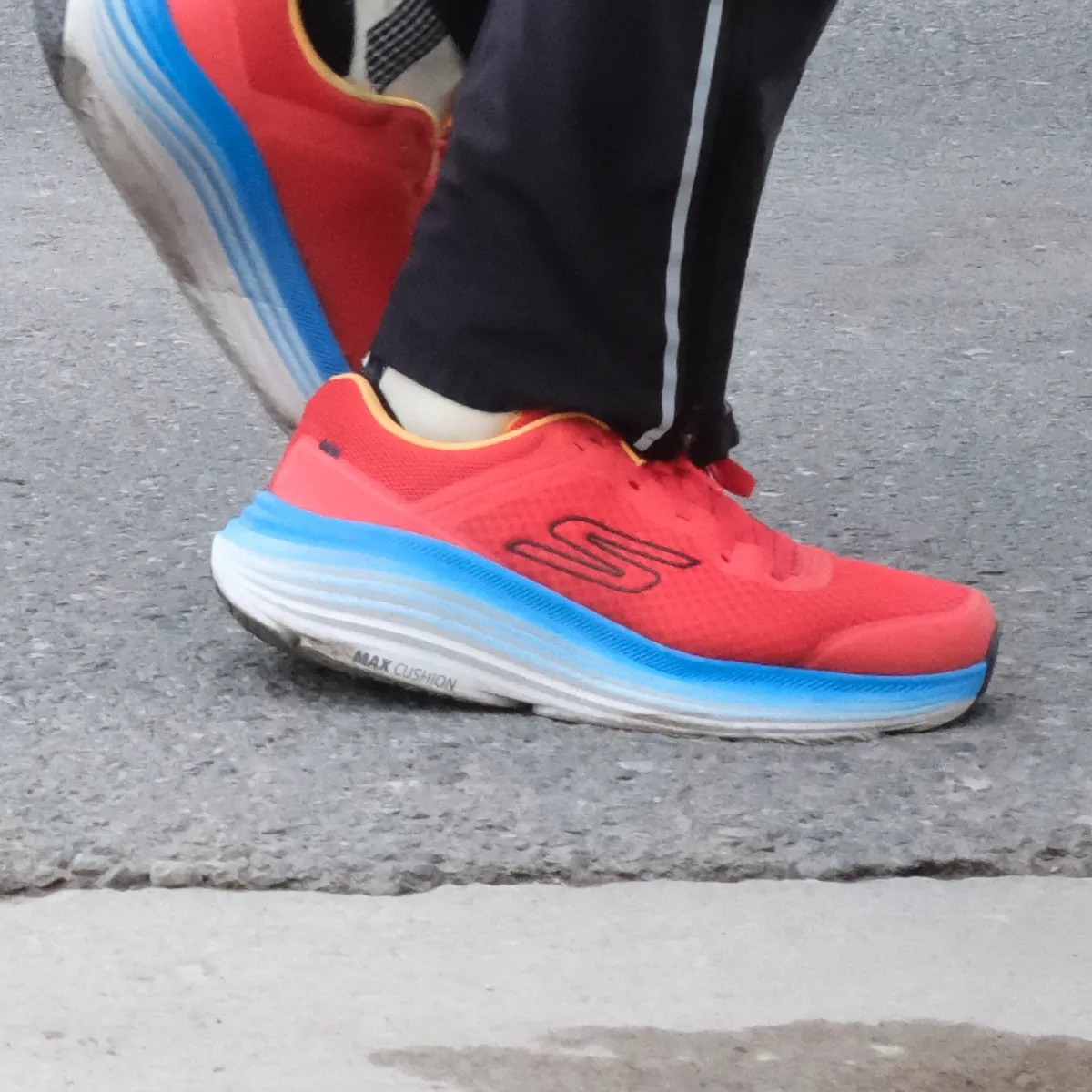
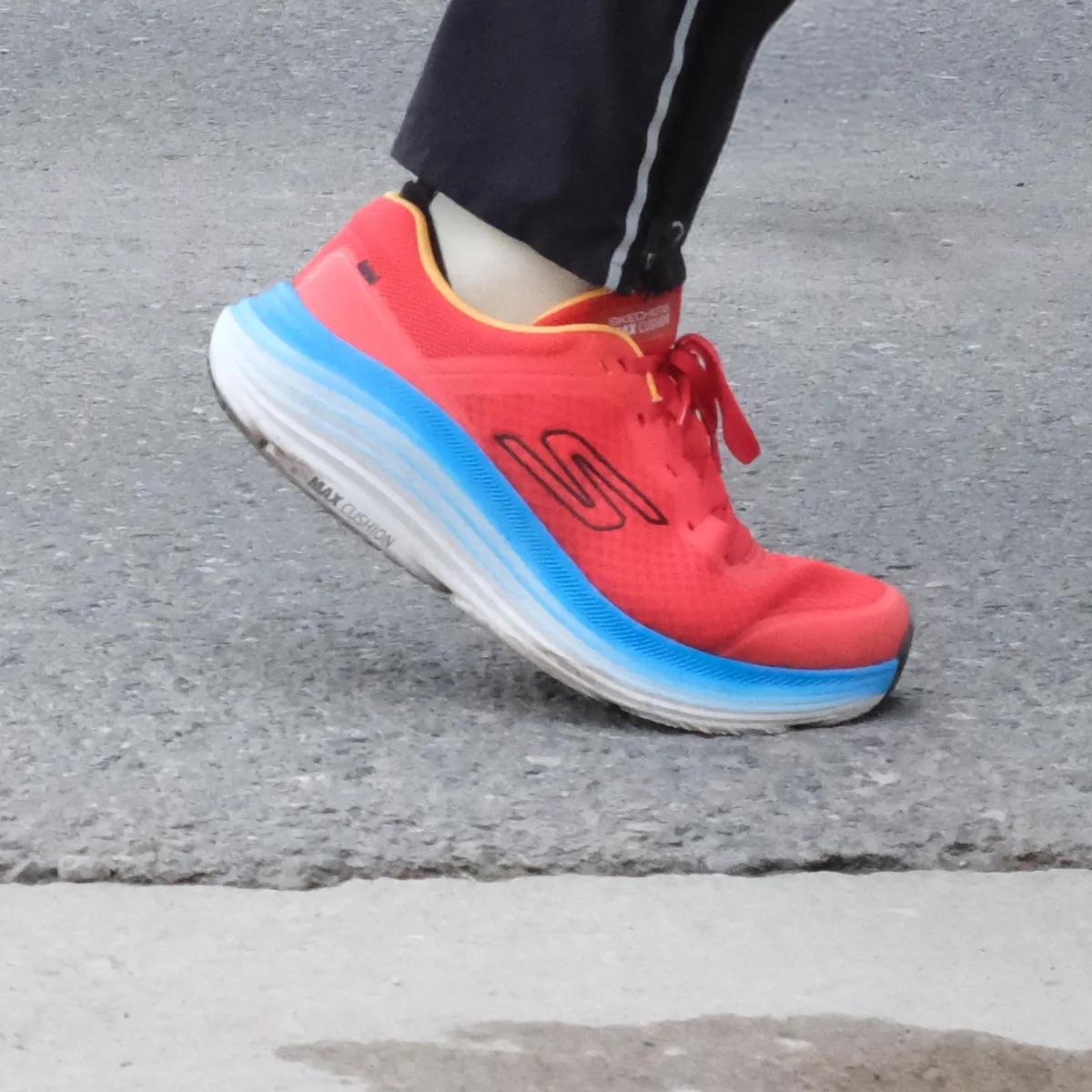
Specs
- Heel stack: 46 mm
- Forefoot stack: 37 mm
- Drop: 9 mm
- Weight: 11.7 oz / 326 gms
- Widths: Regular, extra-wide
- Midsole: EVA-blend foam
- Insole: Molded foam, removable
Why it works (the basics)
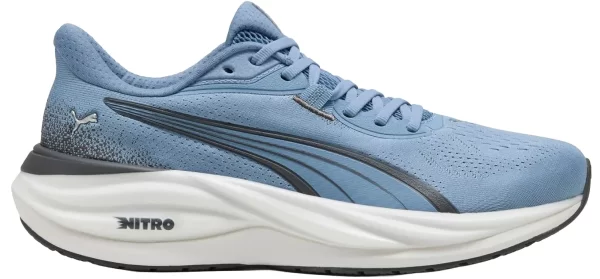
- Soft NitroFoam top stack → adds comfort, prevents pressure hotspots
- Firm ProFoam base → offers compression-resistance during overpronation
- Pumagrip outsole → delivers superb traction
- Padded engineered mesh upper → provides fit security and comfort
🔍 Deep Dive
None of the recommendations – be it the Puma Electrify Nitro 5 or the alternatives listed below – have active gait management features. You know, like shoes such as the New Balance 860 v15 do. What all these shoes have in common is a supportive neutral ride based on a structured midsole that doesn’t collapse during an overpronated inward roll. Here, the Electrify Nitro’s dual-density midsole delivers. On top is a soft stack of NitroFoam; it’s not mushy and does not collapse during excessive inward roll, nor does it create a pressure hot spot under the arch. The firmer ProFoam (EVA-blend) base helps the midsole maintain its structure during overpronation.
For a shoe that retails at $100, the Electrify Nitro 5 is surprisingly well kitted. It’s not just about the NitroFoam midsole; the outsole uses Pumagrip for superlative traction on the road. The secure and padded upper punches above its price band, delivering a secure and comfortable fit. While we’ve recommended this shoe for overpronators, this is a true supportive-neutral shoe for most runners. Ideal use cases would be daily runs, tempos, 10Ks, and even half-marathons.
Pros
- Supportive ride comfort
- Outsole traction
- Secure fit
- Excellent structural integrity
Cons
- Lack of optional widths
Other budget-friendly running shoes for overpronators
Fit Notes
True to size. Snug forefoot and toe box. Single width only.
Specs
- Widths: Regular
- Midsole: NitroFoam, ProFoam
- Insole: Molded, removable
Why it works (the basics)
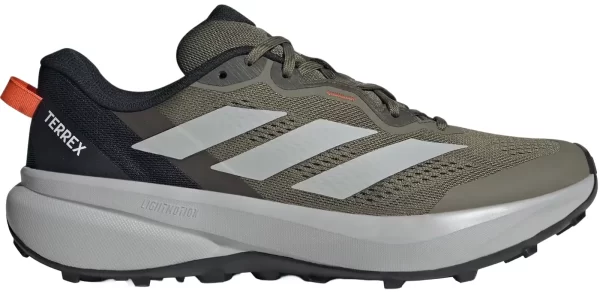
- Lightmotion EVA-blend midsole → adds comfort on gravel and packed trails
- Articulated off-road outsole → blends grip with ground feedback
- Variable, loop-assisted closure → offers secure, adjustable fit
- Reinforced upper with inner padding → adds protective plushness
🔍 Deep Dive
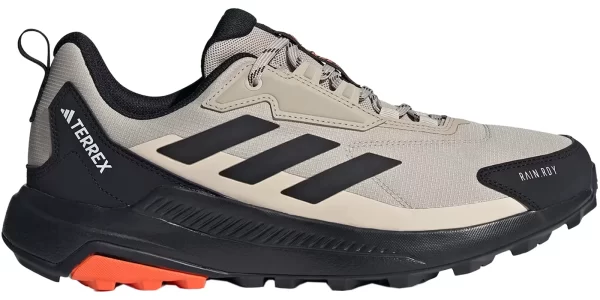
The Terrex Tracefinder Plus isn’t a hardcore trail running shoe, but it outperforms most ‘TR’ (trail) versions of standard road running shoes. If our definition of ‘trail’ is limited to short-distance gravel paths, chip, and packed trails, then this shoe delivers affordable off-road performance. The Lightmotion midsole delivers protective comfort without robbing the ride of ground feel. The articulated Traxion outsole also helps sense the trail, as the openings help it adjust to uneven terrain.
The upper fits like a comfortable road trainer, but with trail-friendly features. The toe bumper is reinforced for abrasion resistance, and the midfoot lacing loops make the fit easily adjustable. The heel pull loop is also a thoughtful touch. The engineered mesh upper breathes well, but is thick enough to prevent debris from entering. The tongue and heel are foam-quilted to enhance interior comfort.
Pros
- Functional comfort on gravel and packed trails
- Flexible outsole for grip and ground feedback
- Lacing adjustability for fit
- Breathable true-to-size upper
- Helpful heel pull loop
Cons
- Lacks chops for serious terrain
- No widths
- Under heel groove may trap rocks
Other affordable trail running shoes
Fit Notes
Fits true to size with a snug forefoot. No optional widths.
Specs
- Heel stack: 35 mm
- Forefoot stack: 28 mm
- Drop: 7 mm
- Weight: 11.1 oz / 315 gms
- Widths: Regular
- Midsole: Lightmotion EVA
- Insole: Molded, removable