
In this product guide:
Barring extreme conditions, the winterized Nike Vomero 18 has all the necessary features for cold-weather runs. The Gore-Tex lining keeps the feet dry during winter rains and splashes from snow-melt puddles. Unlike the standard Vomero – a shoe that we rated highly – the Vomero 18 GTX’s technical mesh upper is more effective at blocking wind. Reflective accents add visibility in low-light conditions. The outsole is purposefully updated for winter, featuring Nike’s proprietary Storm-Tread compound for wet-weather traction.
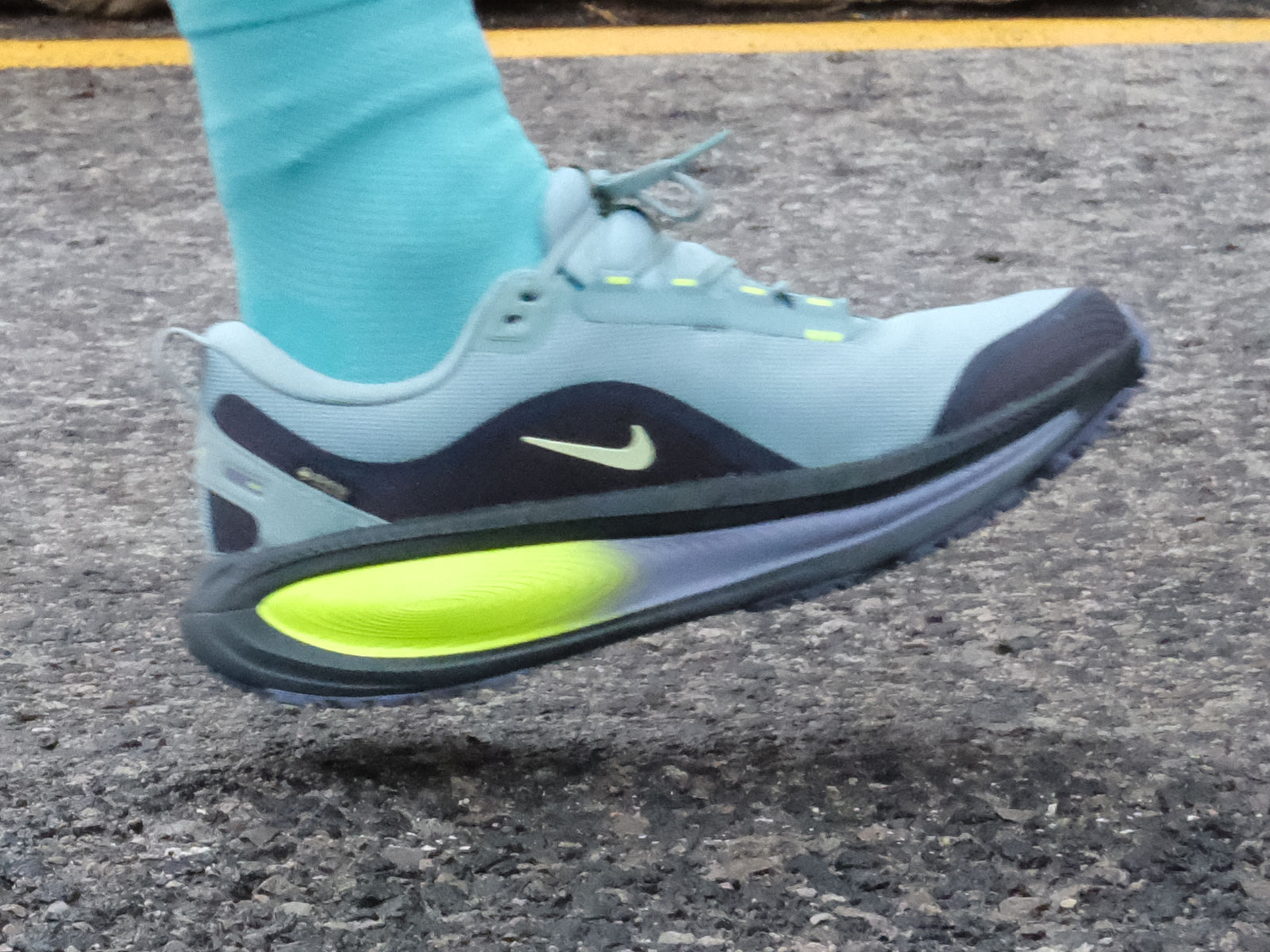
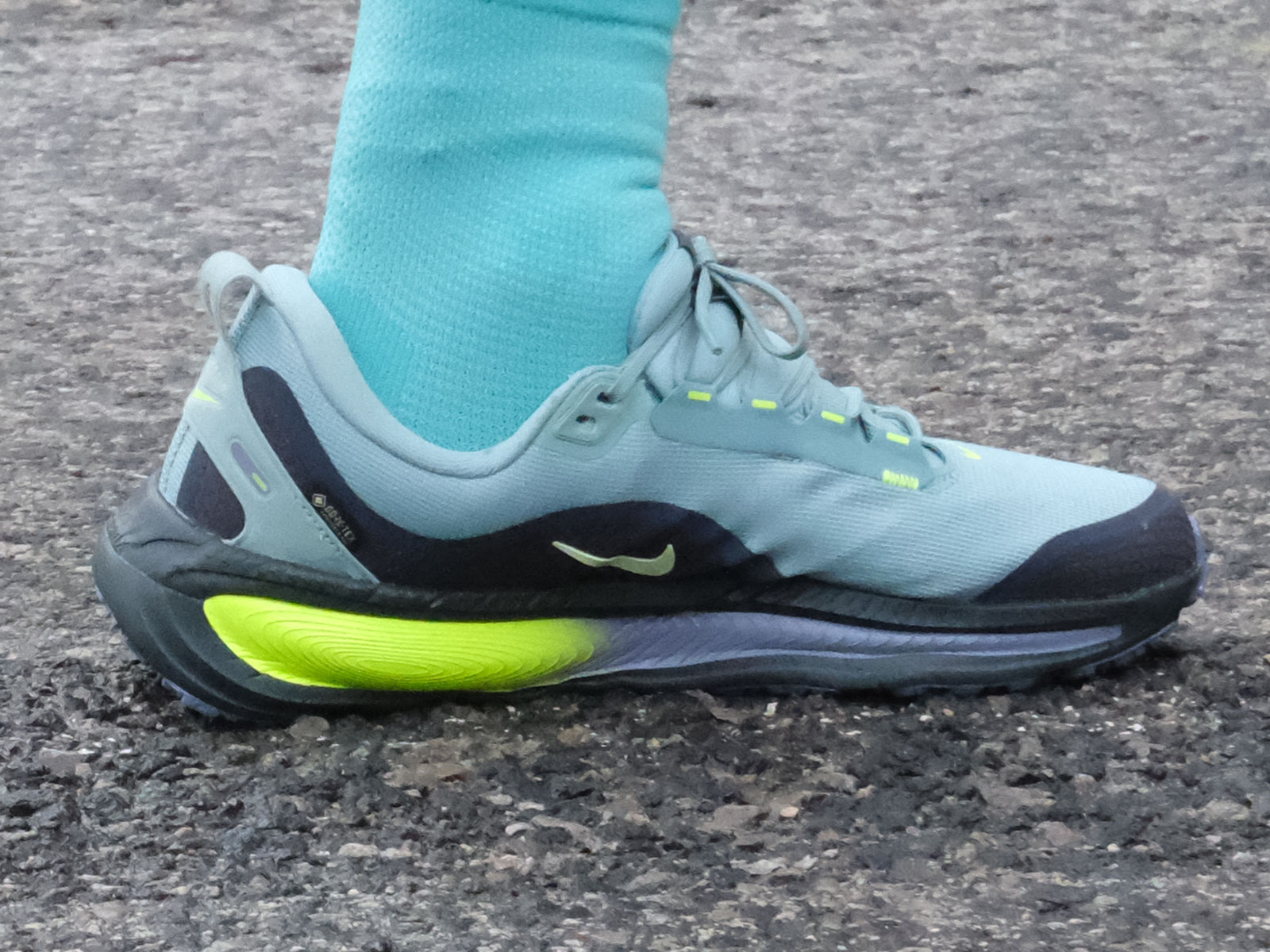
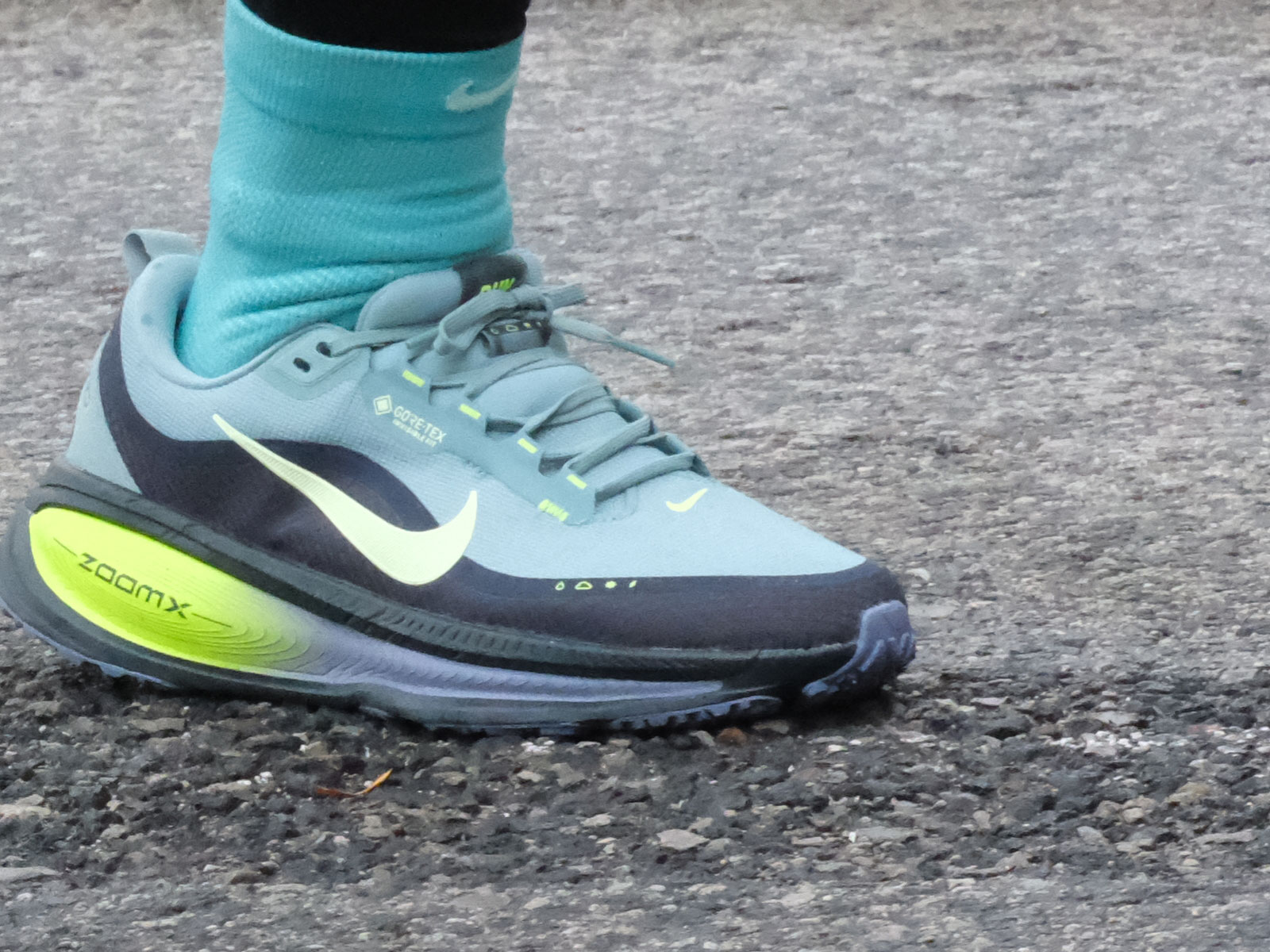
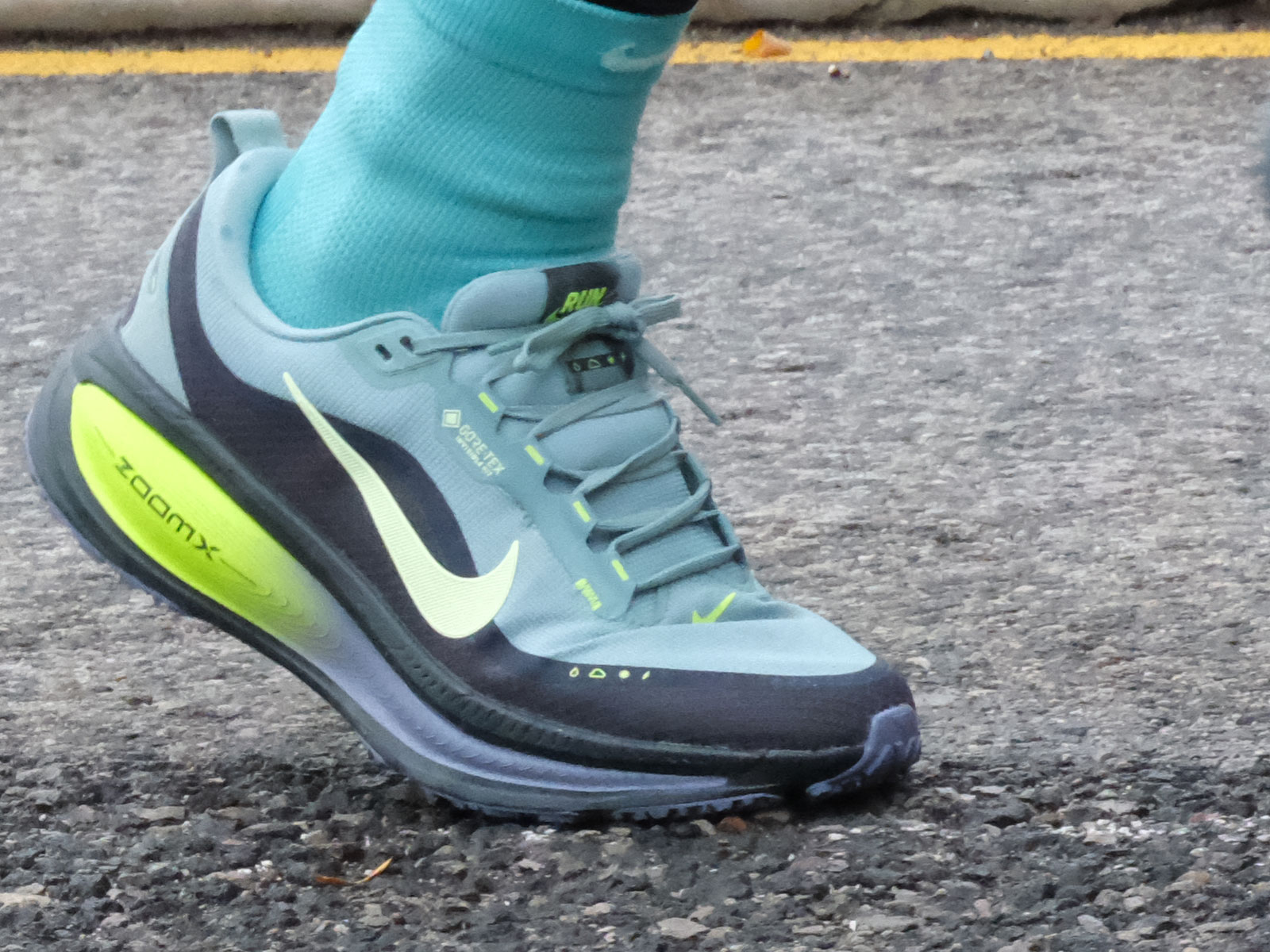
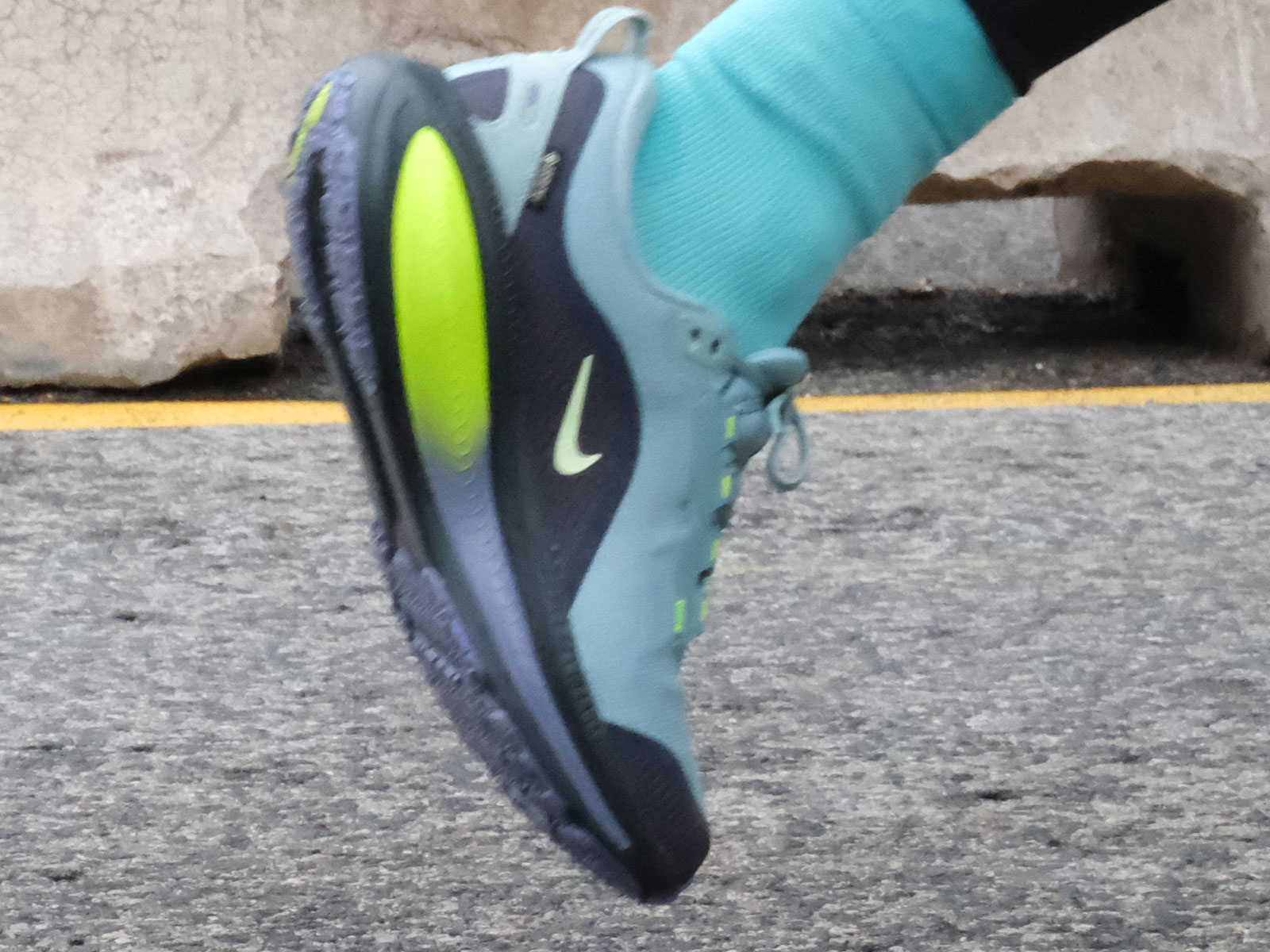
The ZoomX and ReactX midsole is shared with the standard model. The tall midsole delivers ride comfort without feeling slow or unstable. The rocker helps with quicker turnovers, while the firmer ReactX base adds support for runners of all weight classes. This shoe is ideal for everyday runs as well as marathon training for the upcoming spring and summer races.
Also consider: Nike Pegasus 41 GTX.
Purely from a functional standpoint, the mid version of the Hoka Speedgoat 6 GTX is a better winter shoe than the low-cut version. The Mid-cut upper bridges the gap between the hem of the pants and the shoe, so it’s better at preventing moisture, cold, and debris from entering. The technical mesh upper has a Gore-Tex membrane, so you’re covered (literally) during the wet and cold months.
We call the Speedgoat 6 a road-trail hybrid because it’s perfectly capable of dual use. The outsole lugs aren’t very deep, and the exposed midsole makes the landings softer than a fully covered outsole would. The stack height matters too. The EVA foam midsole is 37 mm and 32 mm tall under the heel and forefoot, so there’s plenty of comfort – be it long trail runs or on hard concrete. The Megagrip outsole offers all-weather traction – except for frozen surfaces, of course.
What Arc’teryx has done with its footwear line-up is impressive, to say the least. The brand went from a virtually unknown player in the outdoor footwear segment to one of the fastest-growing brands. In hindsight, the brand’s design ethos helped it stand out in a crowded marketplace. Their shoes blend understated minimalism with functional performance and robust build quality; their premium image also doesn’t hurt. The Sylan GTX is a good example of these aspects coming together.
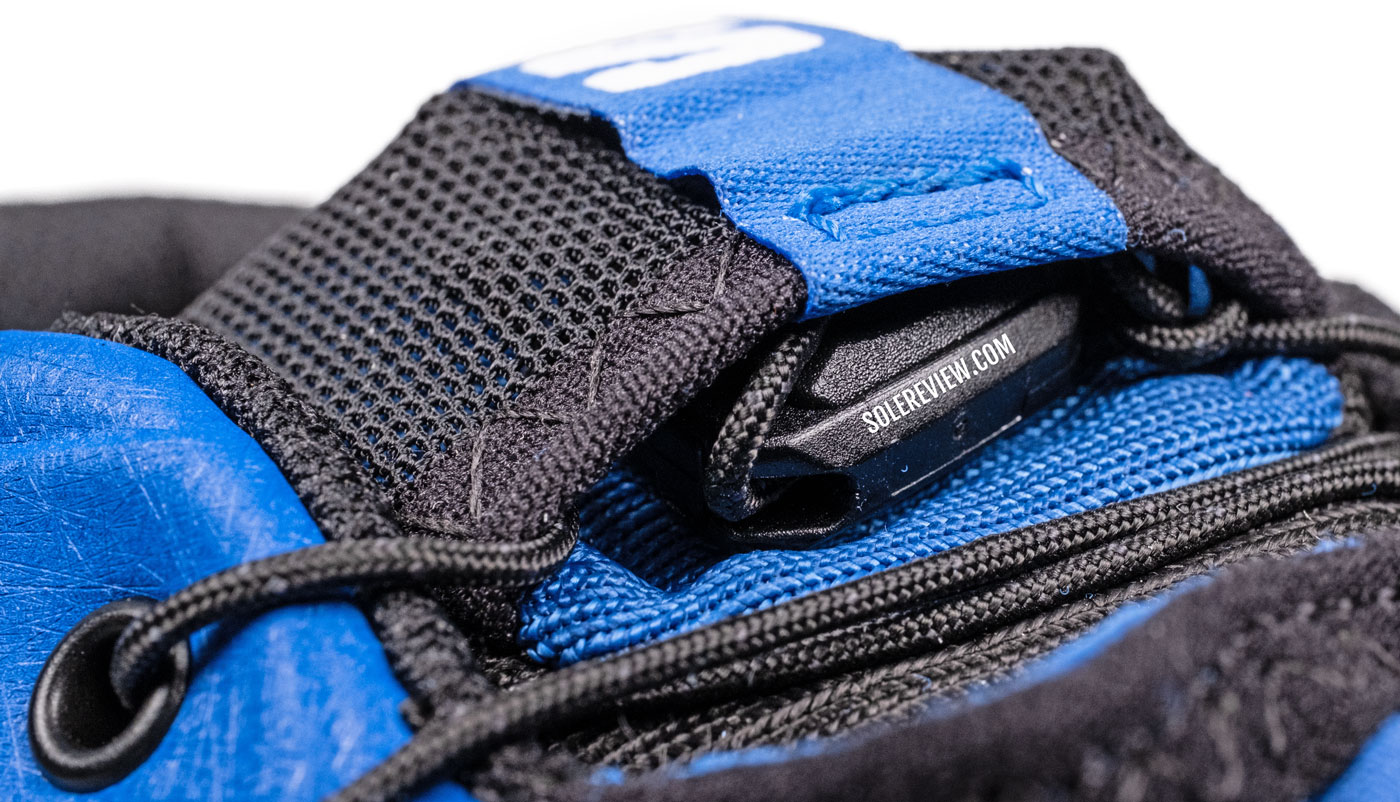
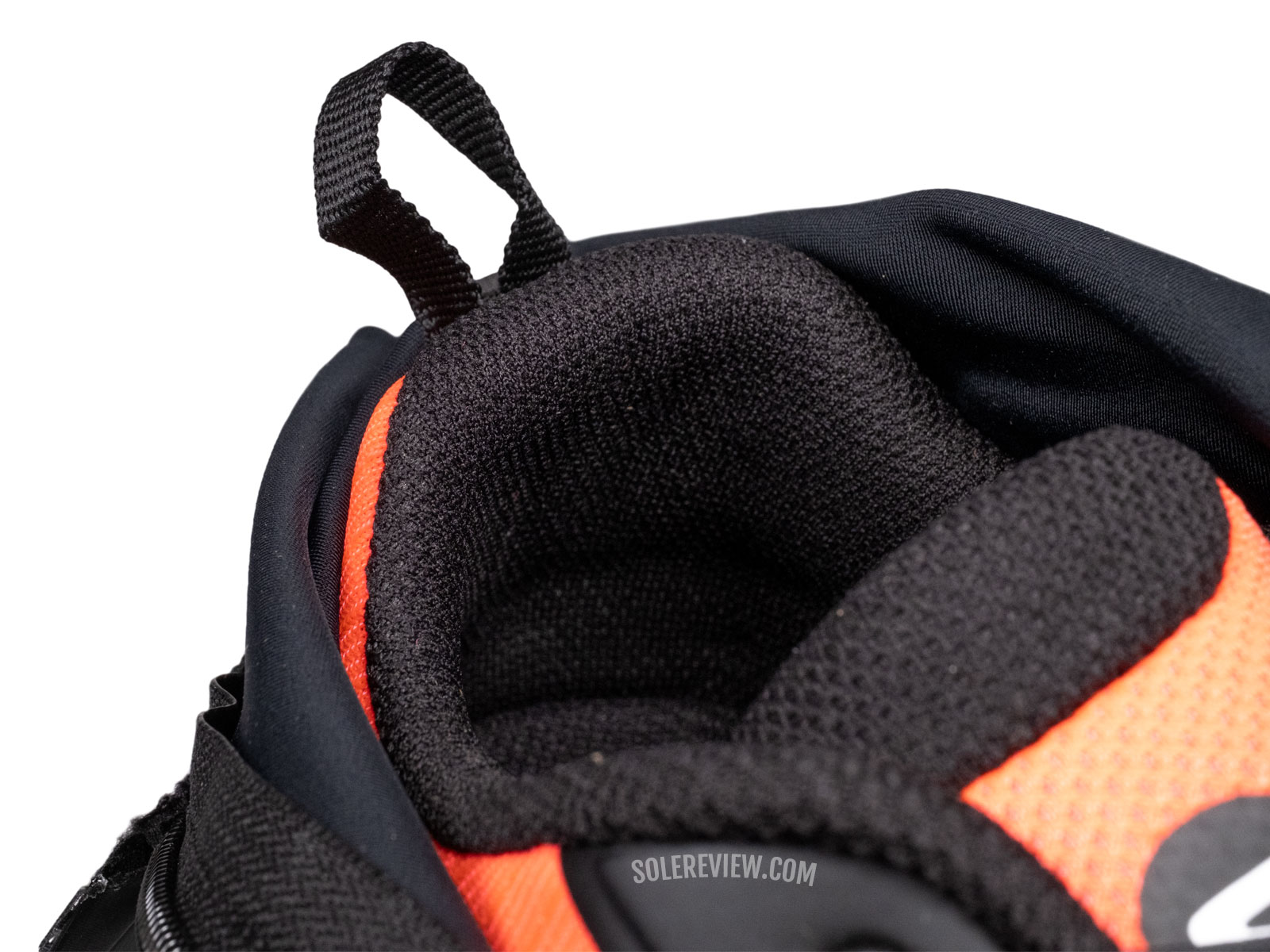
The waterproof upper is lined with Gore-Tex Invisible fit, making the shoe waterproof without decreasing interior space. The mesh is treated with a DWR finish to repel water. The tightly woven shell is reinforced with abrasion-resistant TPU for protection. There are other thoughtful details, like the extended u-throat that makes flexing the upper easier. The tongue has a pocket to stow away laces, similar to Salomon’s ‘lace garage’ feature. The padded tongue and heel add comfort to this true-to-size and secure-fitting upper. The pull loop on the heel (reflective) is practical. The layered upper is great at keeping the wind and weather out during winter.
The dual-density midsole (EVA and Polyolefin foam) is designed to deliver cushioned stability for frequent trail mileage. The rocker geometry adds a propulsive quality when running trail surfaces with low grades. While the midsole is relatively low-profile (29 mm and 23 mm stack) and lacks a plate, the dense foam and Vibram Megagrip outsole protects the feet on rough terrain.
This extreme adaptation of the Salomon Speedcross 6 adds a dozen spikes to an already sticky Contagrip outsole. The spiked outsole delivers universal traction on loose/compact snow and ice. Mind you, both the SpikeCross and the Snowcross are not meant for use on the roads, cleared sidewalks, or indoor floors.
Just like the Speedcross 6 GTX, the upper is protected from the outside by a full Gore-Tex bootie. Cinching the shoe is easy with the bungee quick-lace system – which is just the thing for gloved hands during the cold winters. The upper has a snug fit that is true to size.
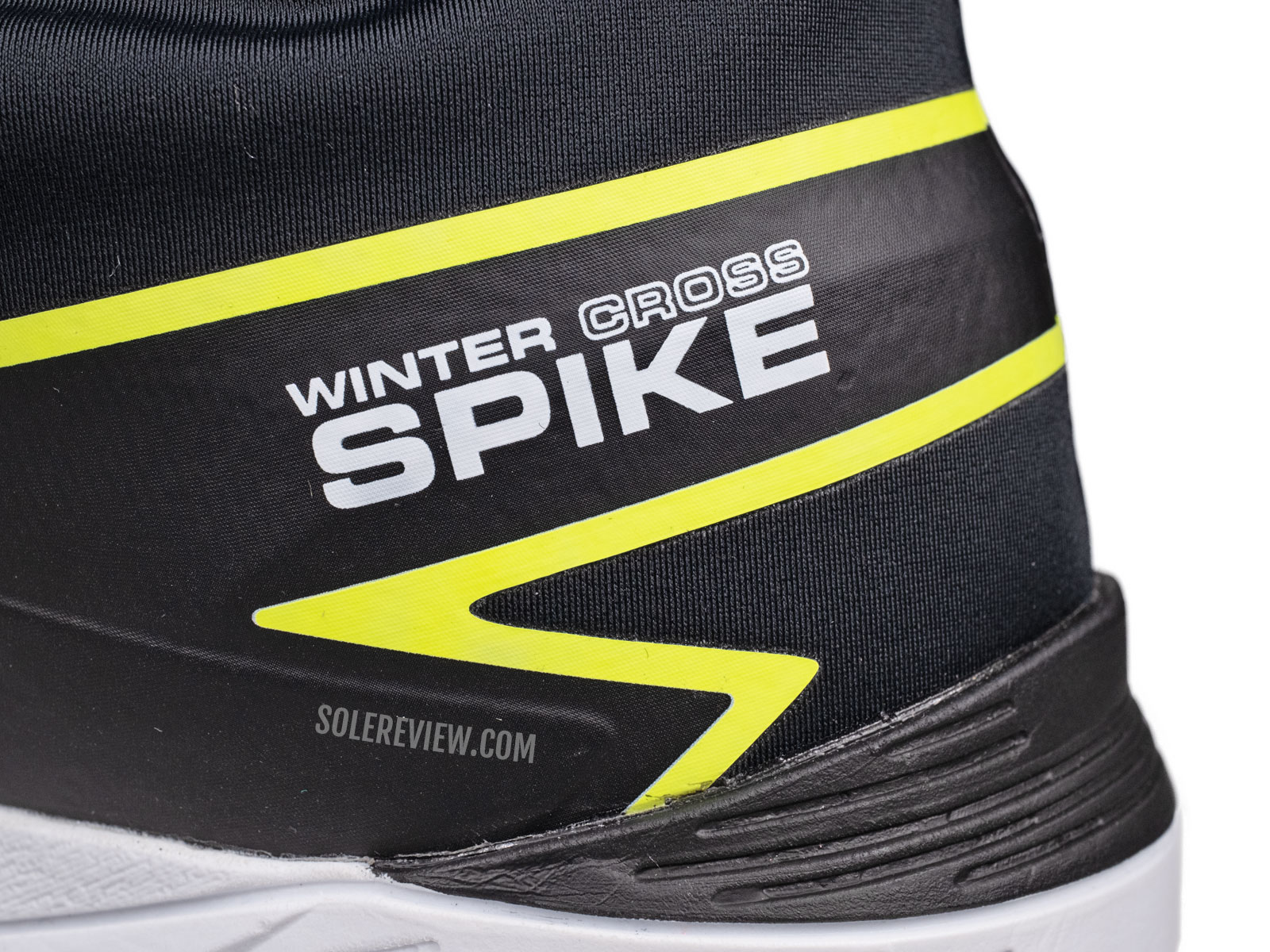
The Winter Cross Spike is the unofficial successor to the Snowspike CSWP, a shoe that we reviewed on this site a few years ago.
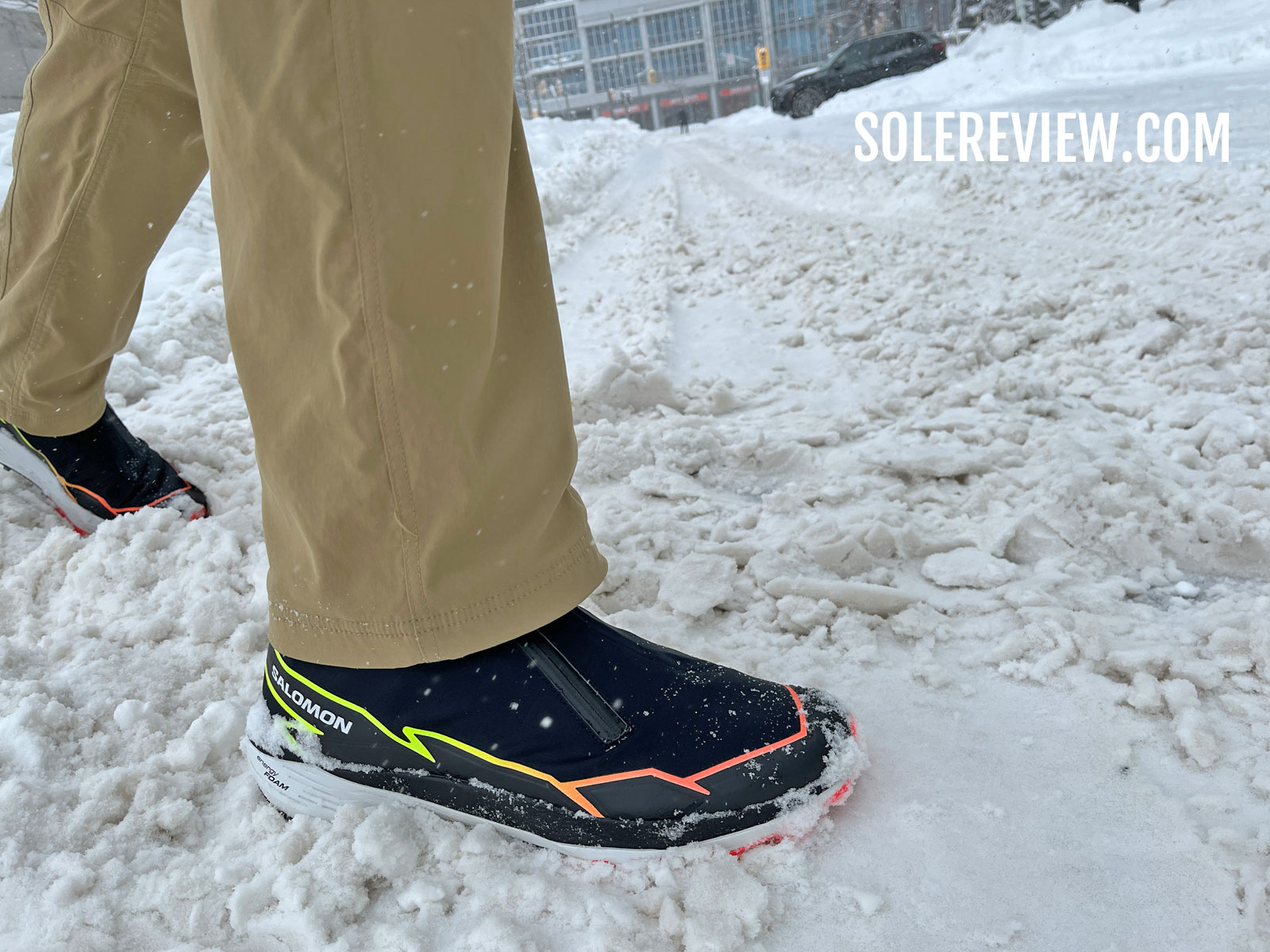
So what has changed? The Winter Cross Spike uses a regular running shoe midsole (with a 4 mm drop) instead of the double-lasted (same as Speedcross) midsole that the CSWP had. This makes the Winter Cross lighter as well as a softer shoe to run in. There is some trade-off in the stability department, so the Winter Cross is better suited for urban environments and non-technical trails. A full shoe upper with a bungee quick lacing system is covered by an ankle-high water-resistant shroud. The zipped bootie is also a wind blocker so the feet stay warm when it’s freezing outdoors.
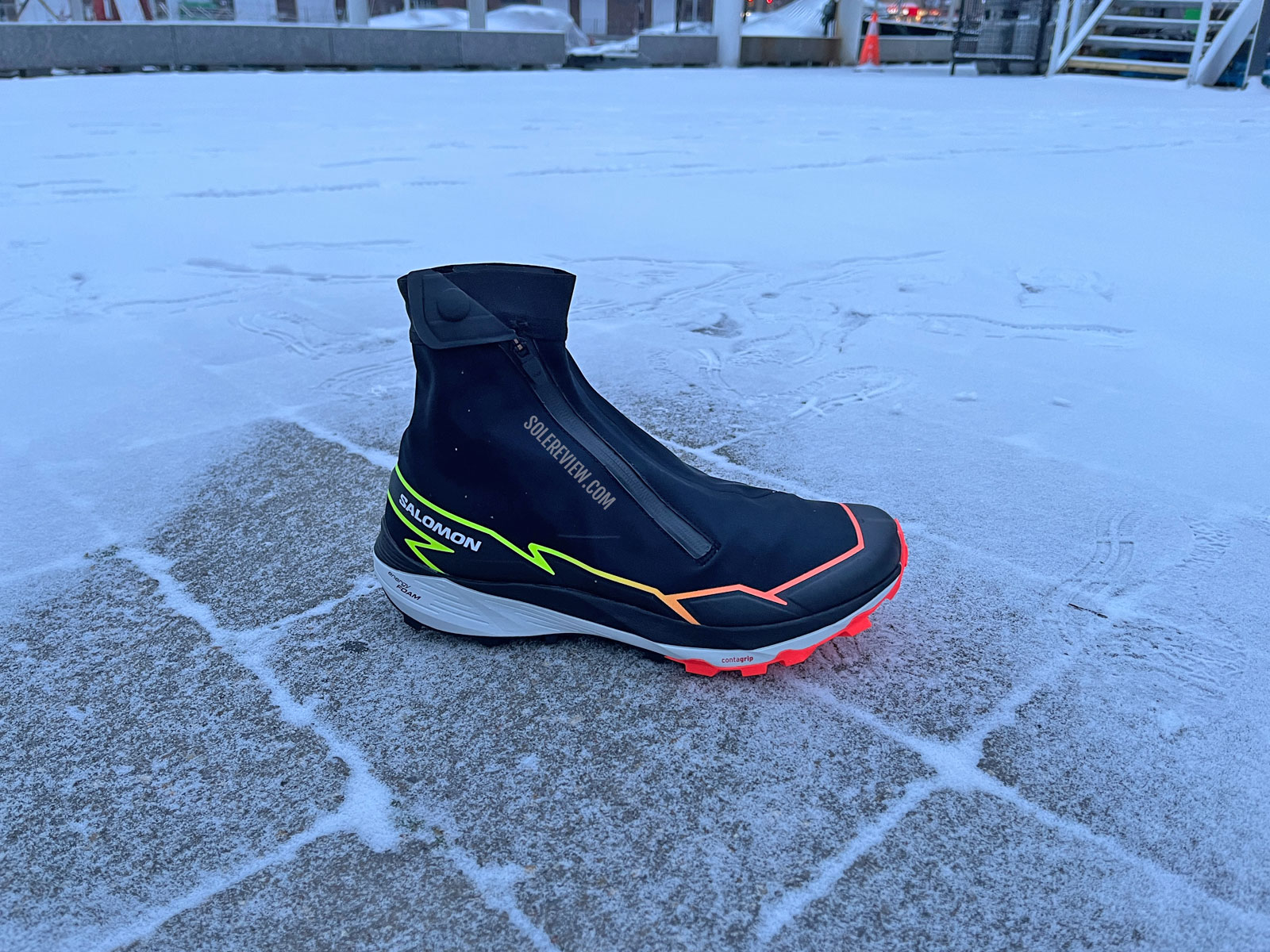
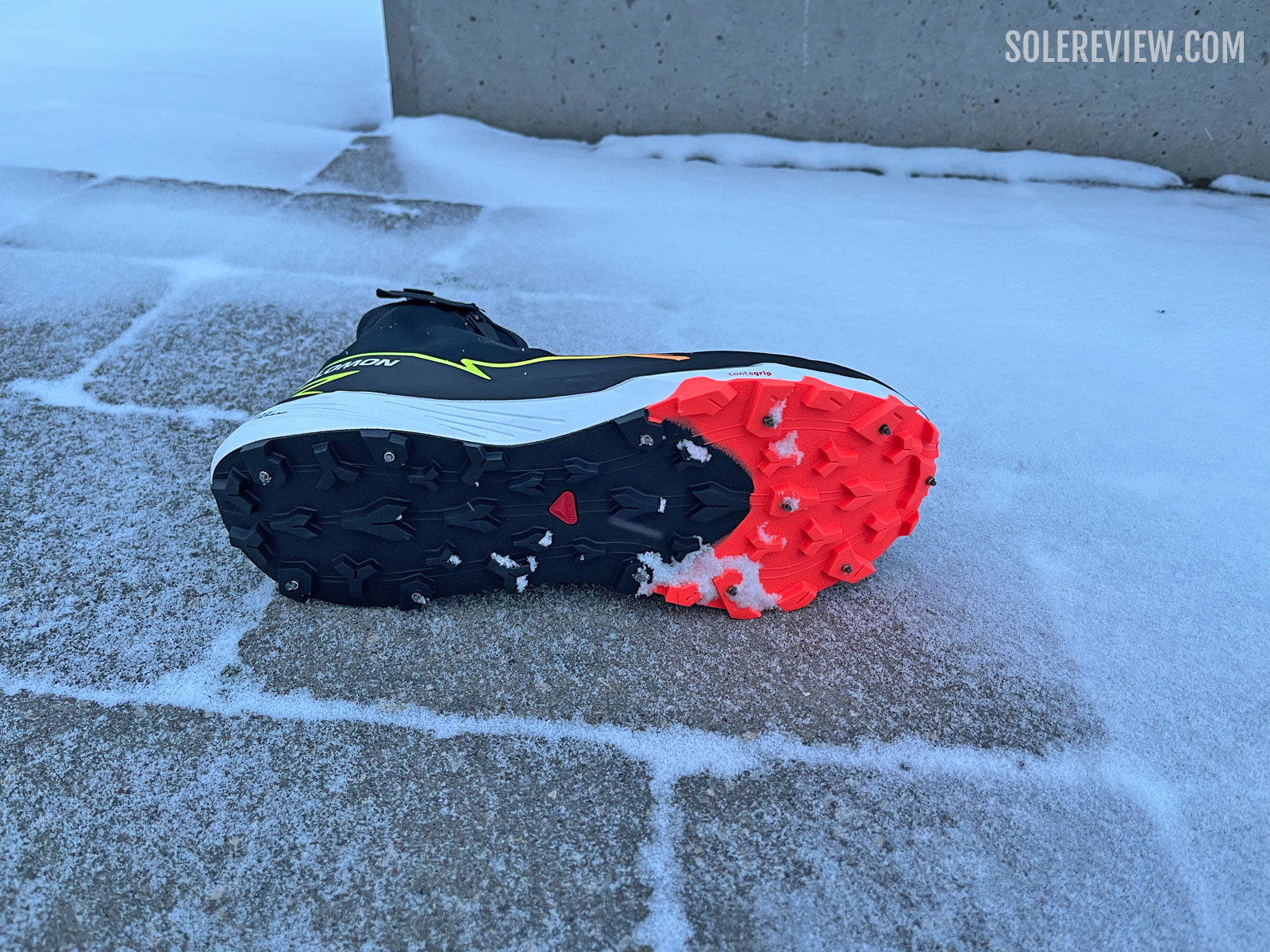
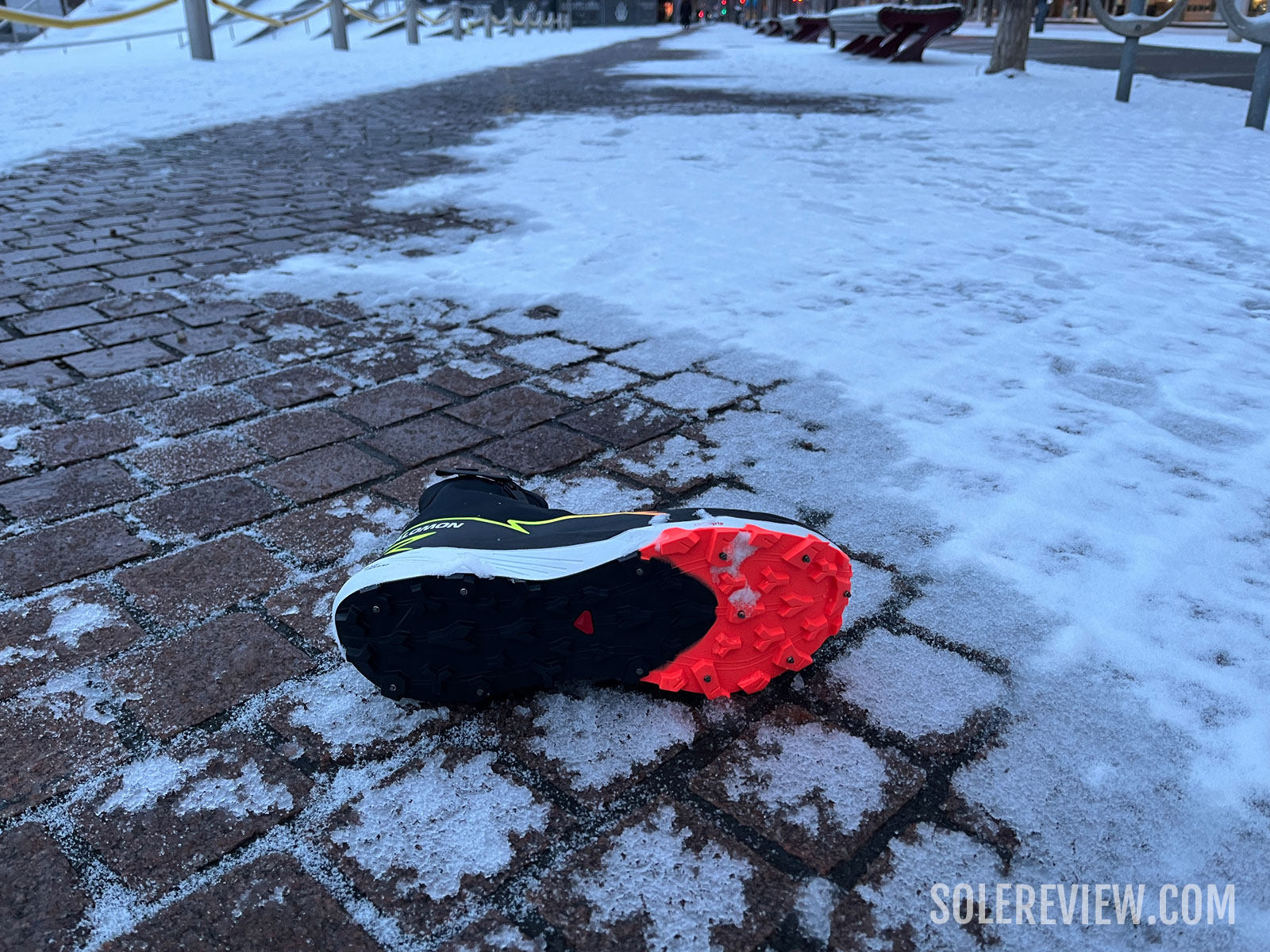
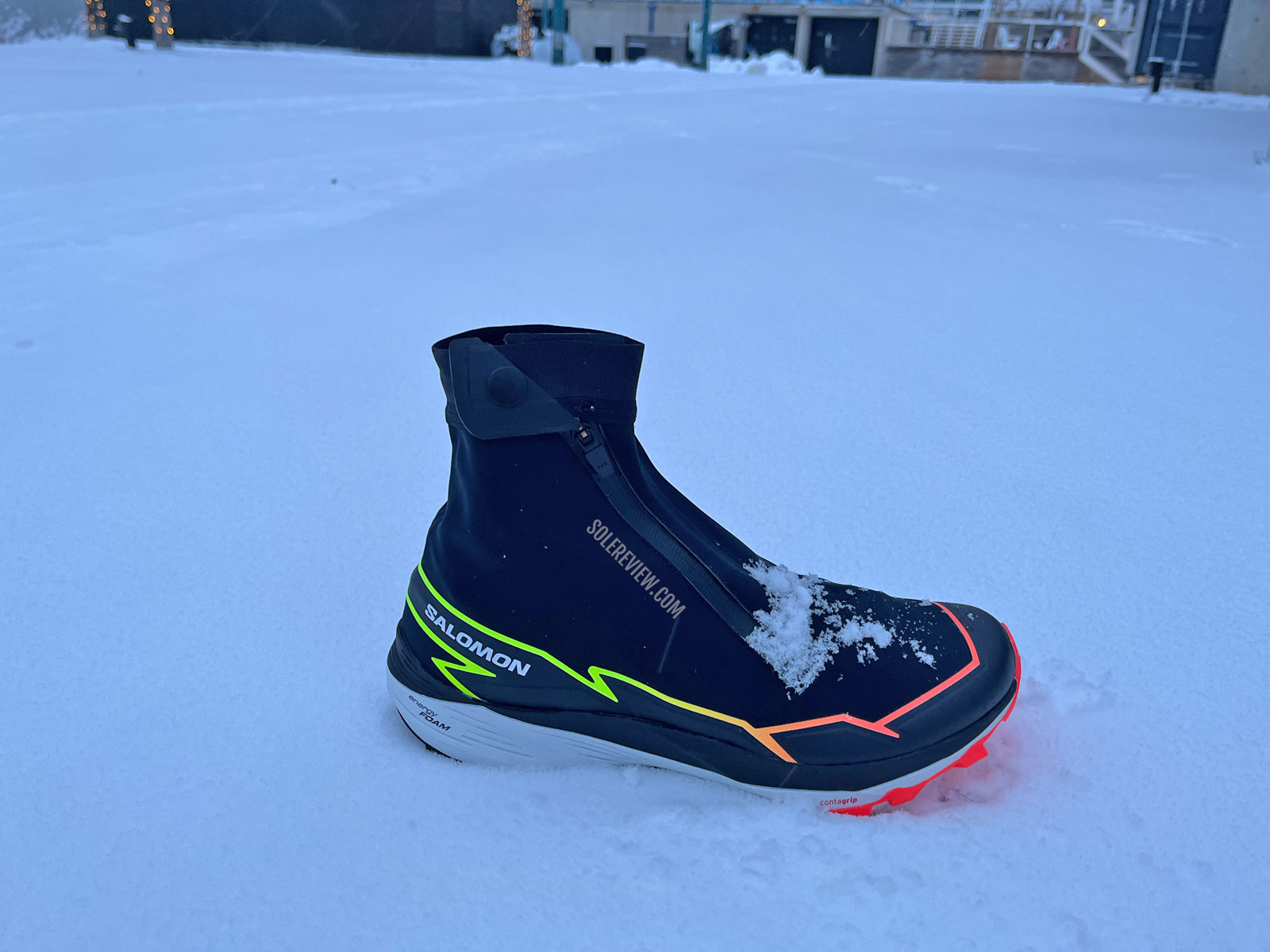
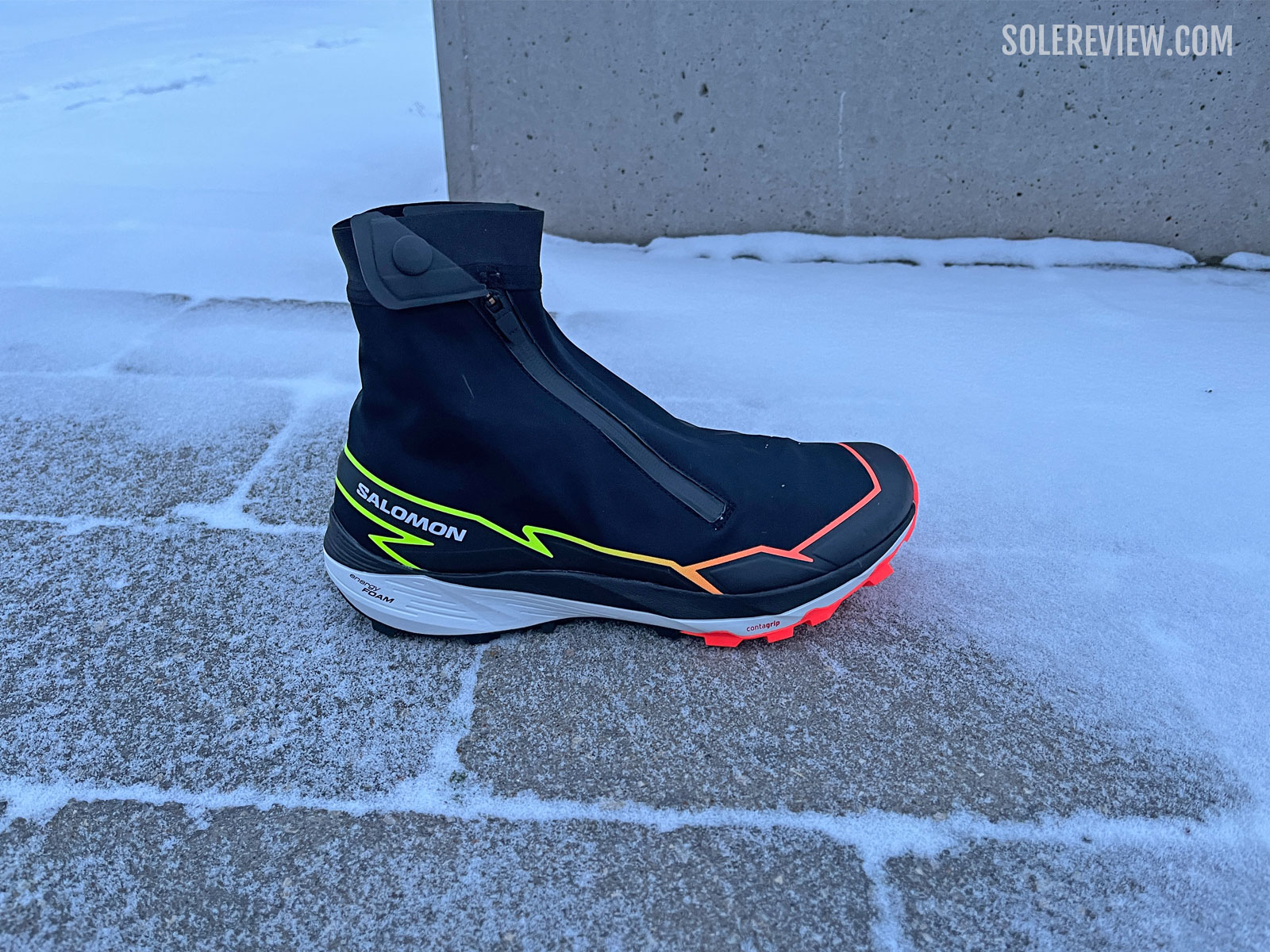
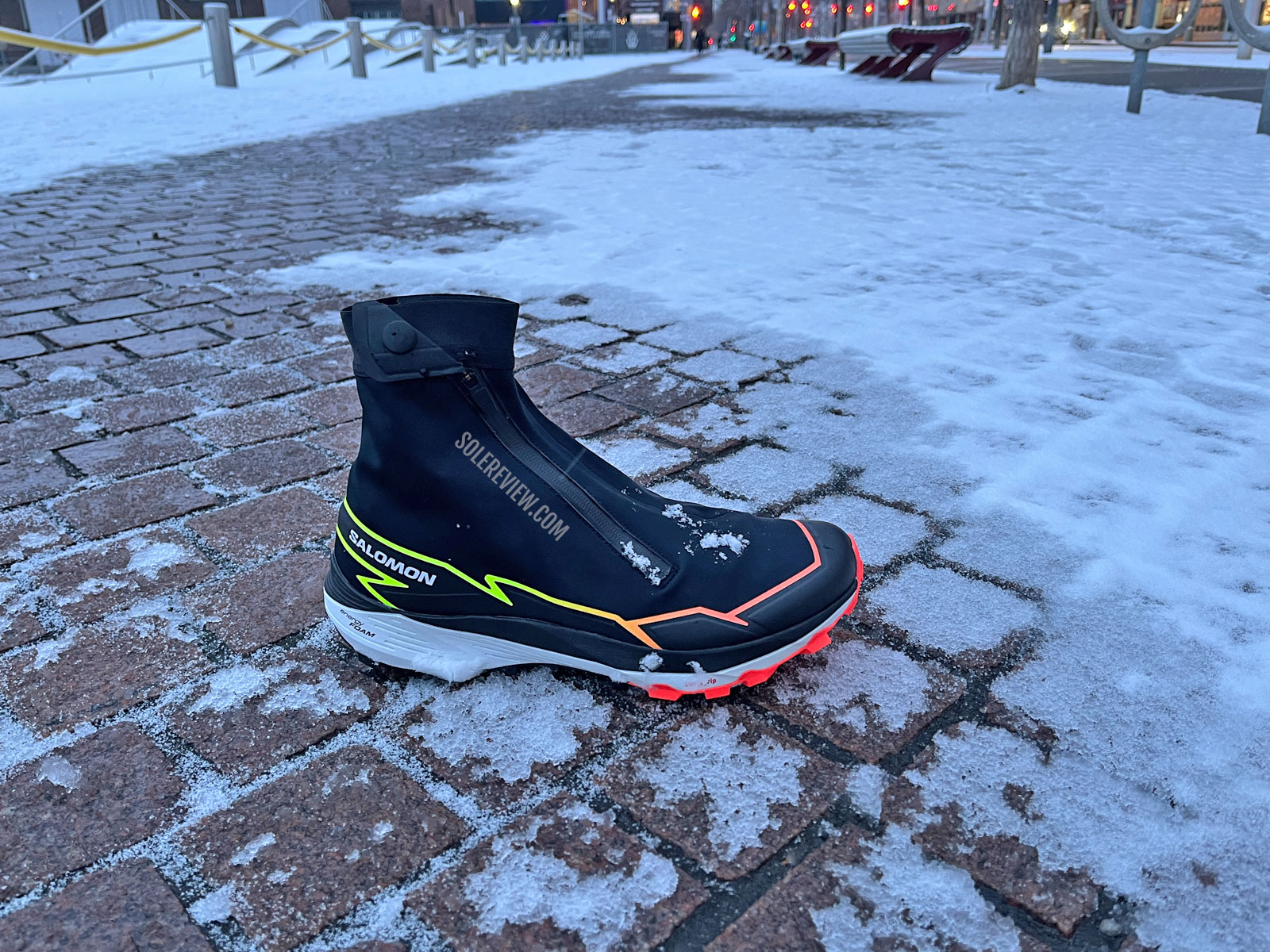
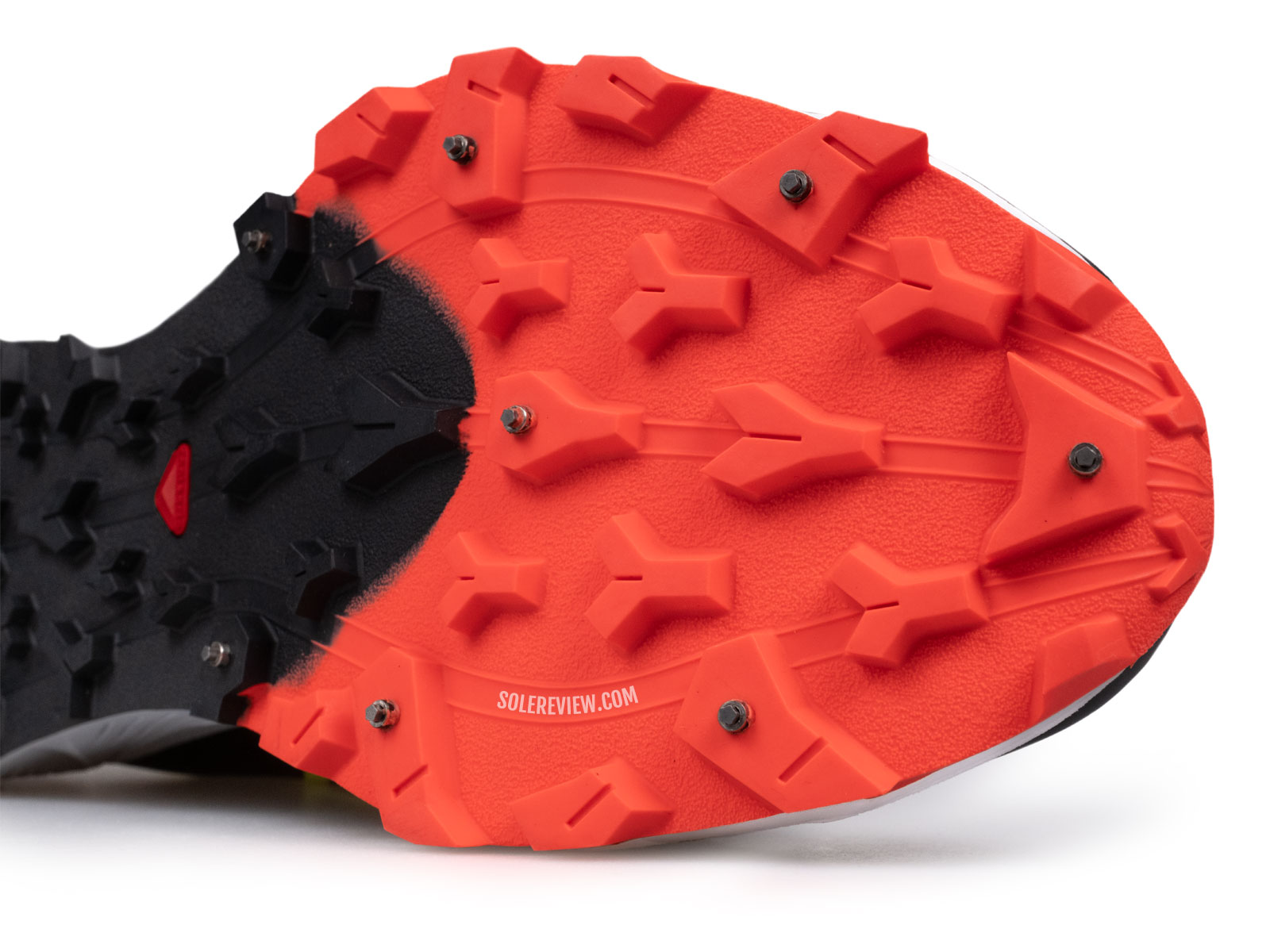
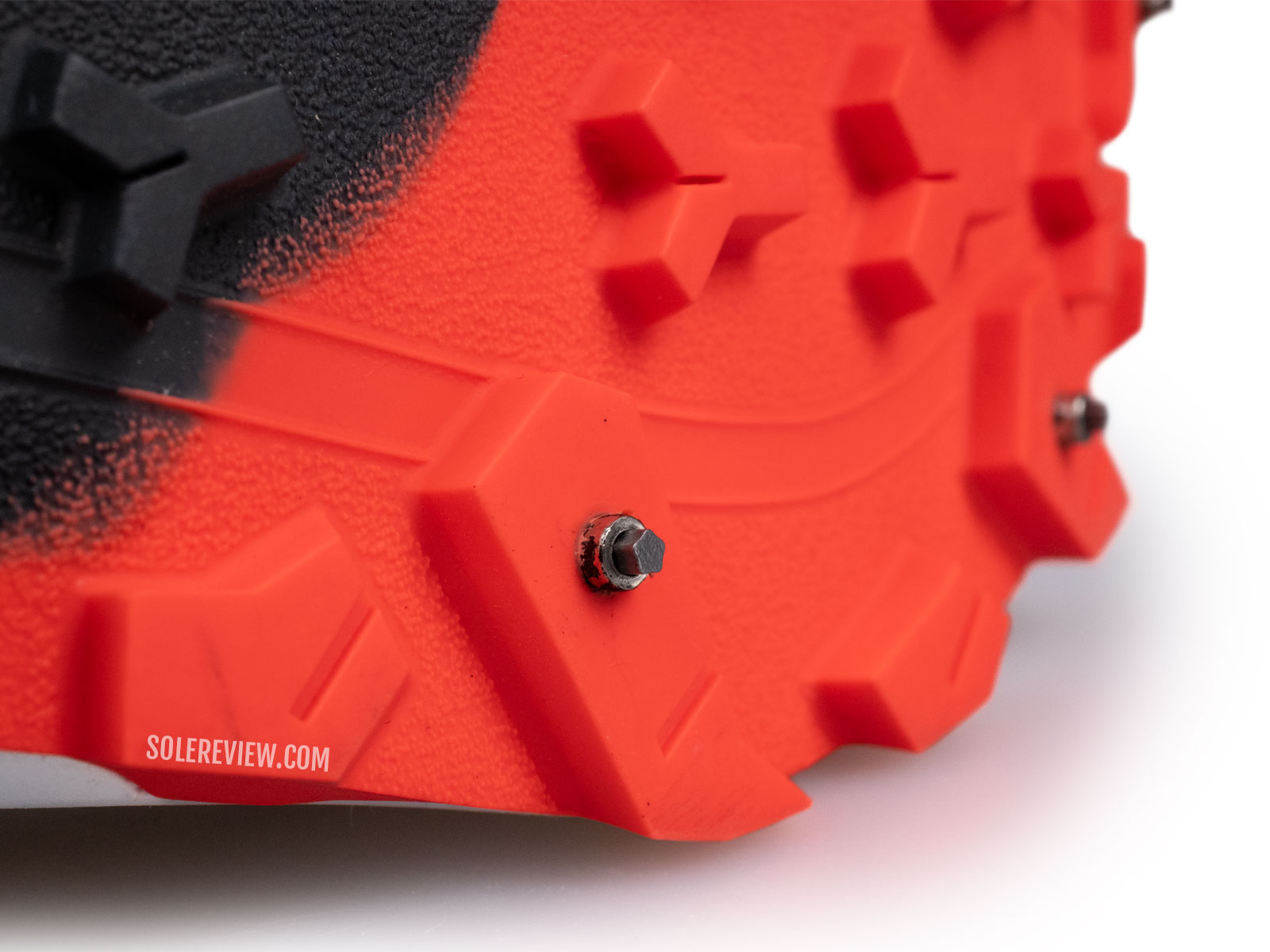
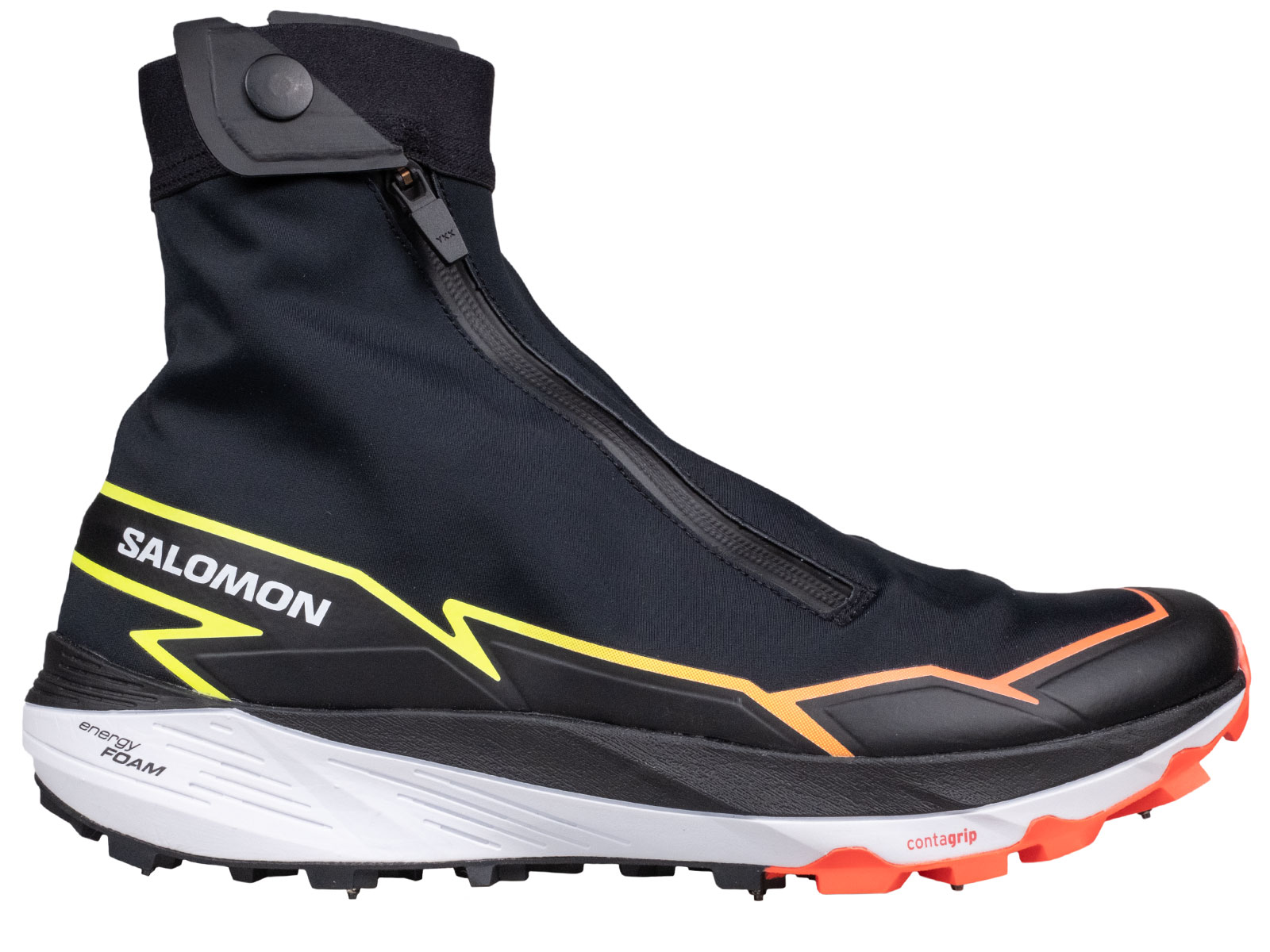
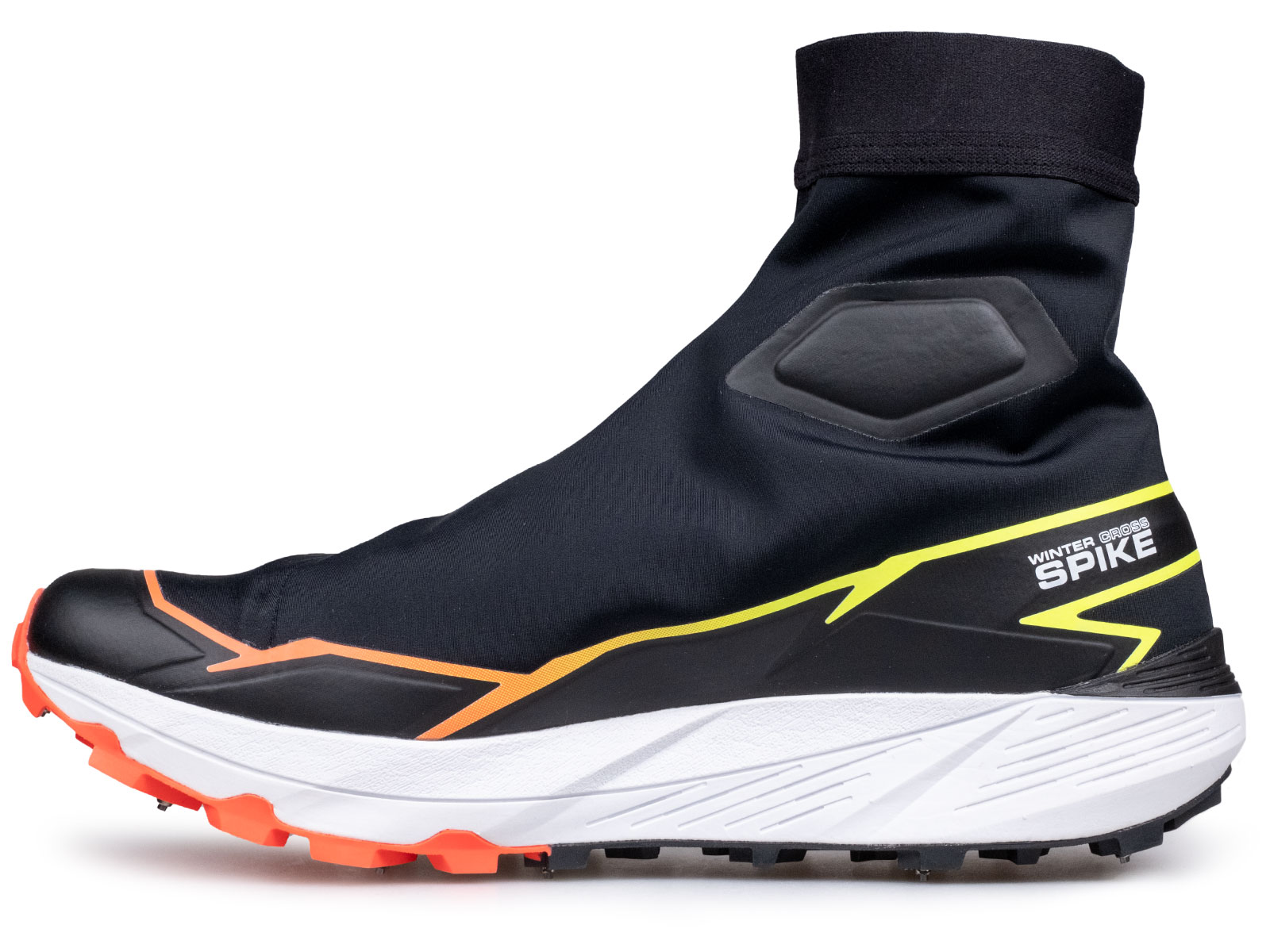
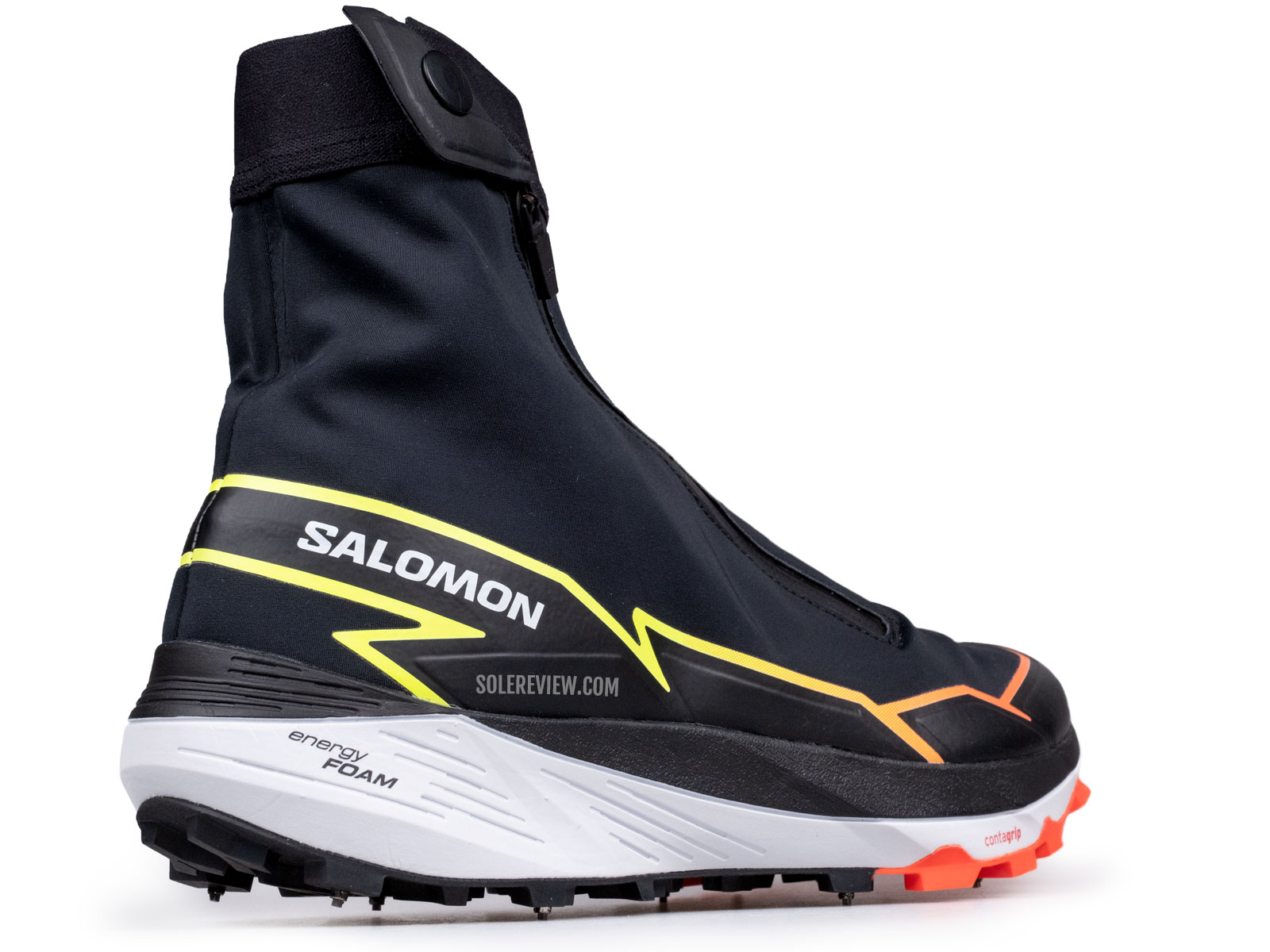
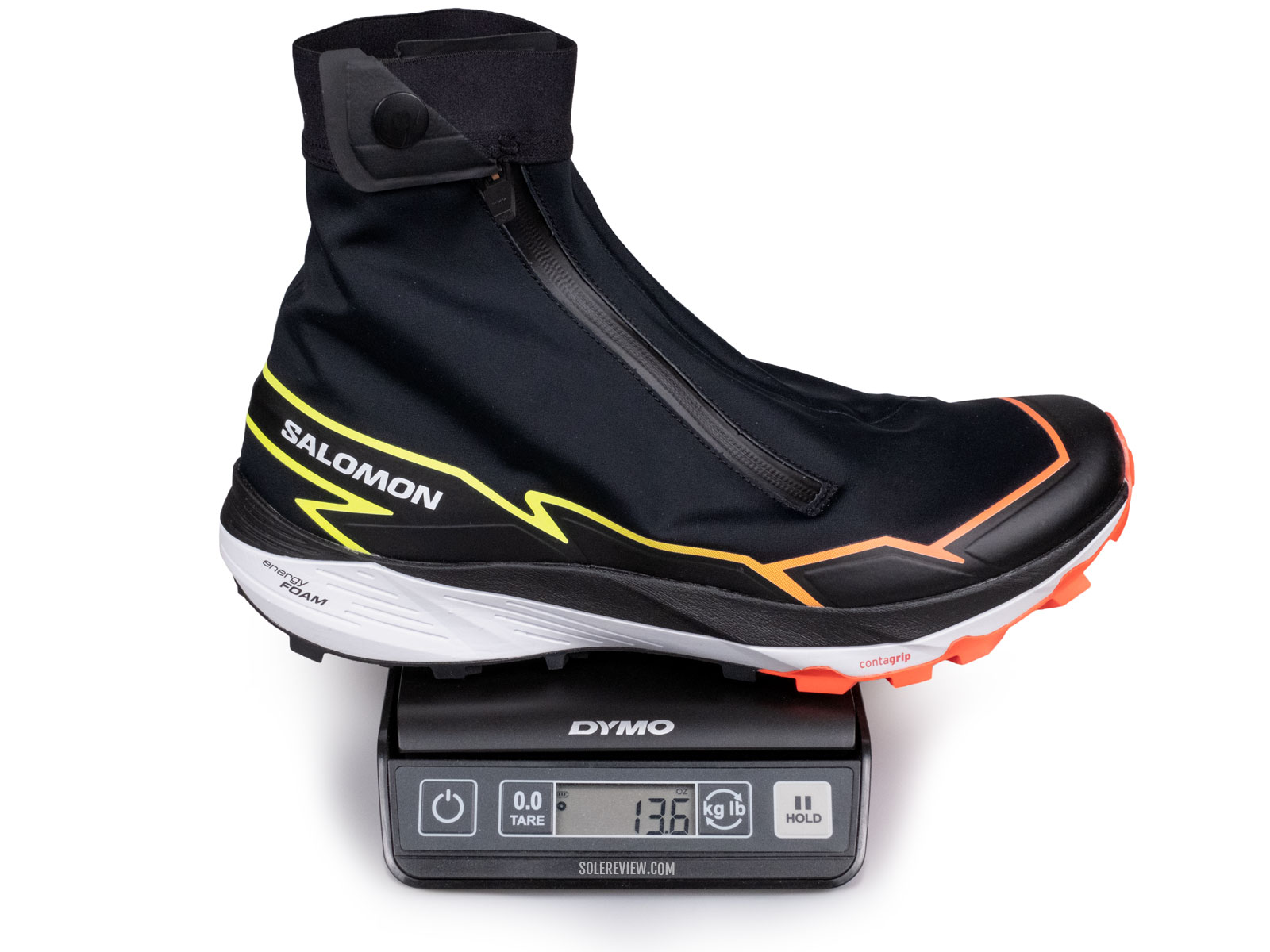
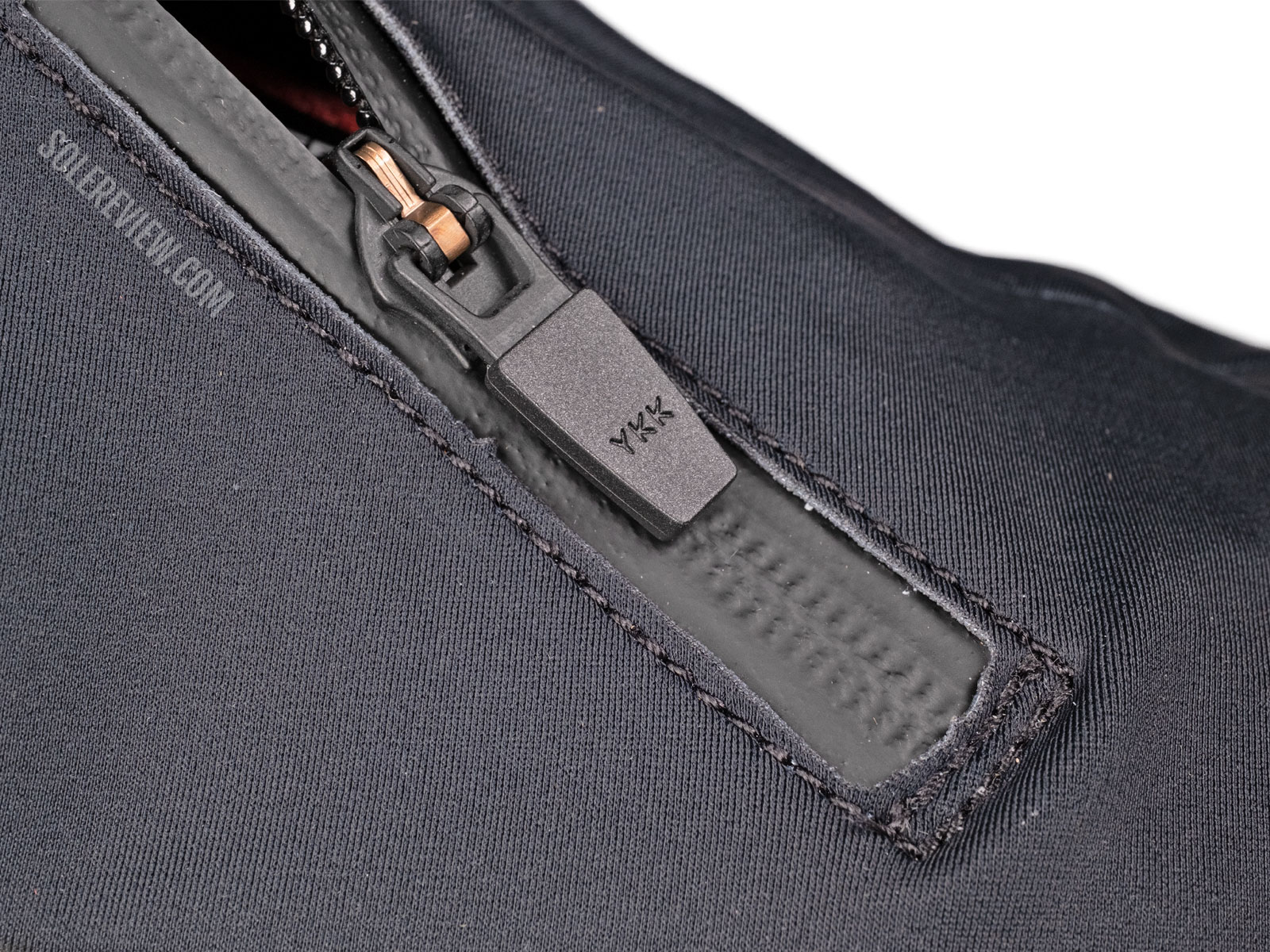
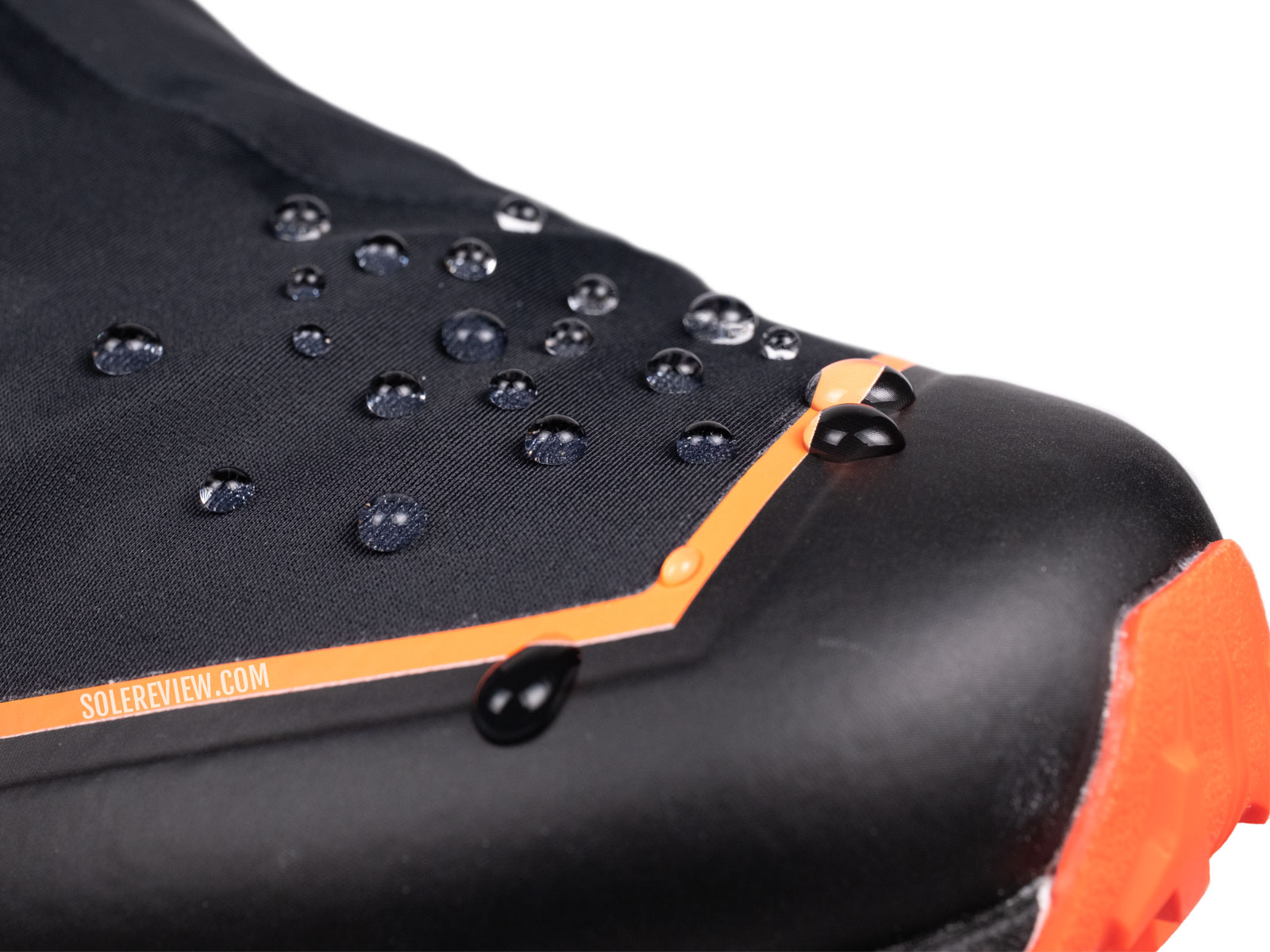
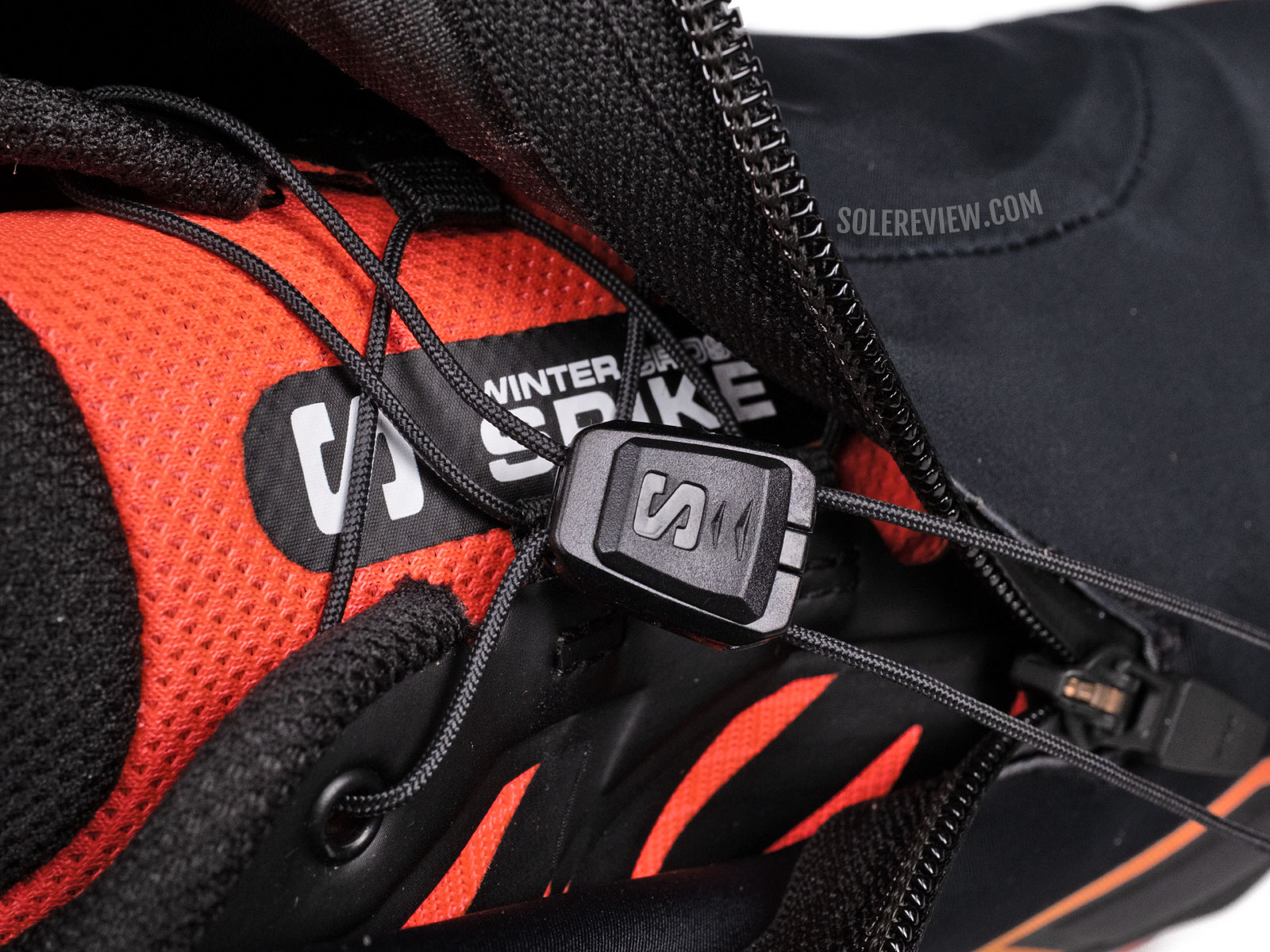
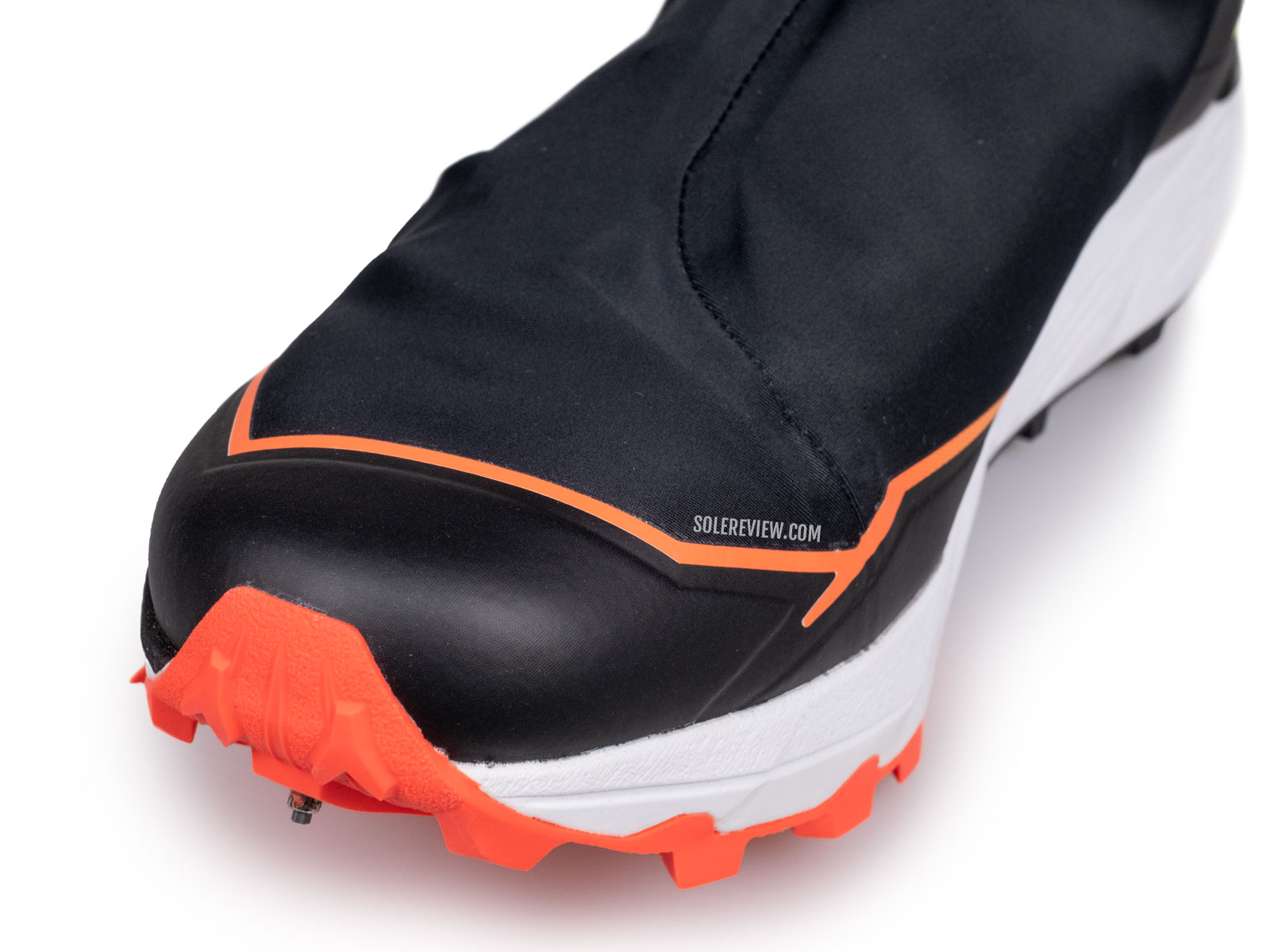
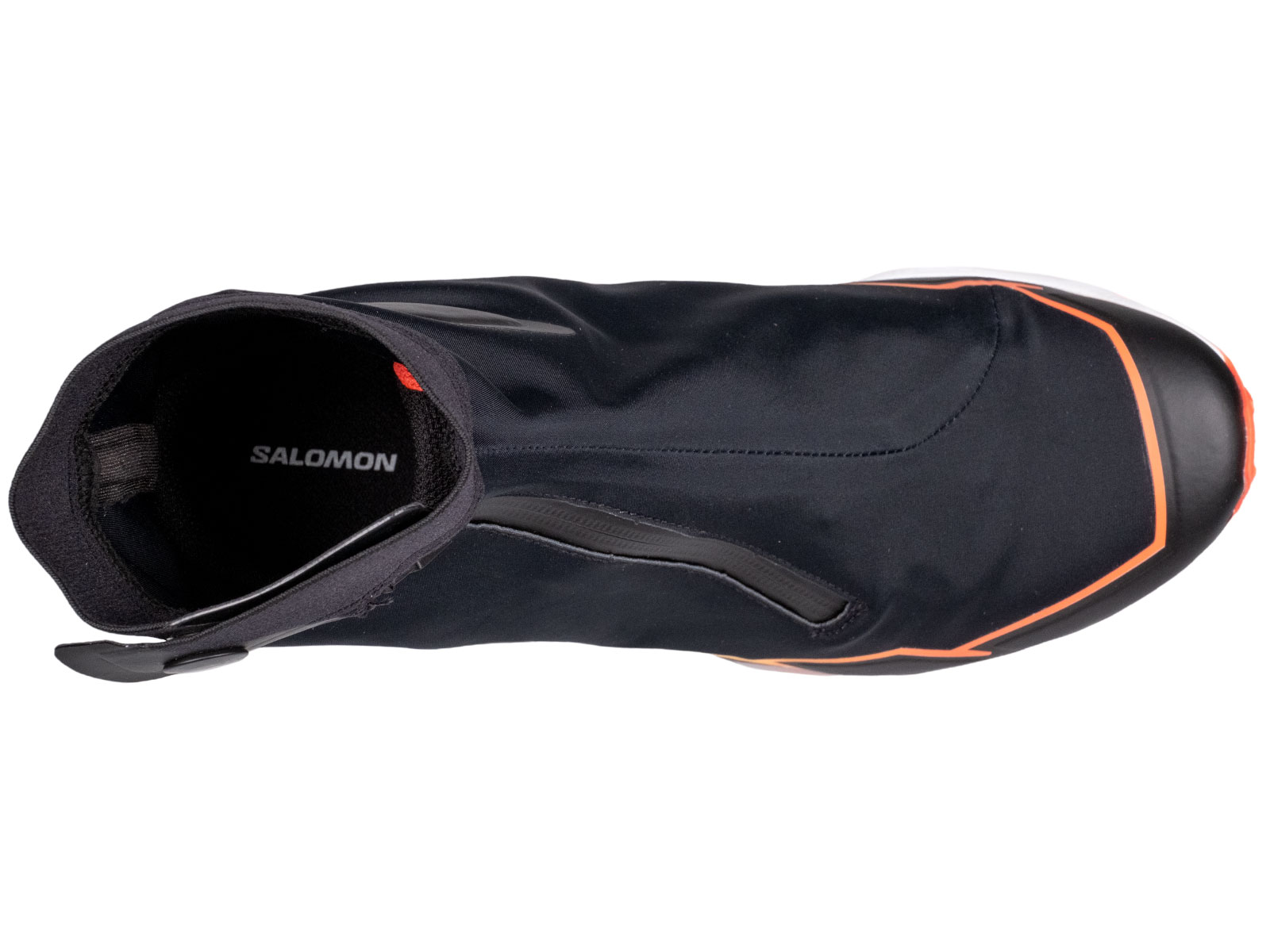
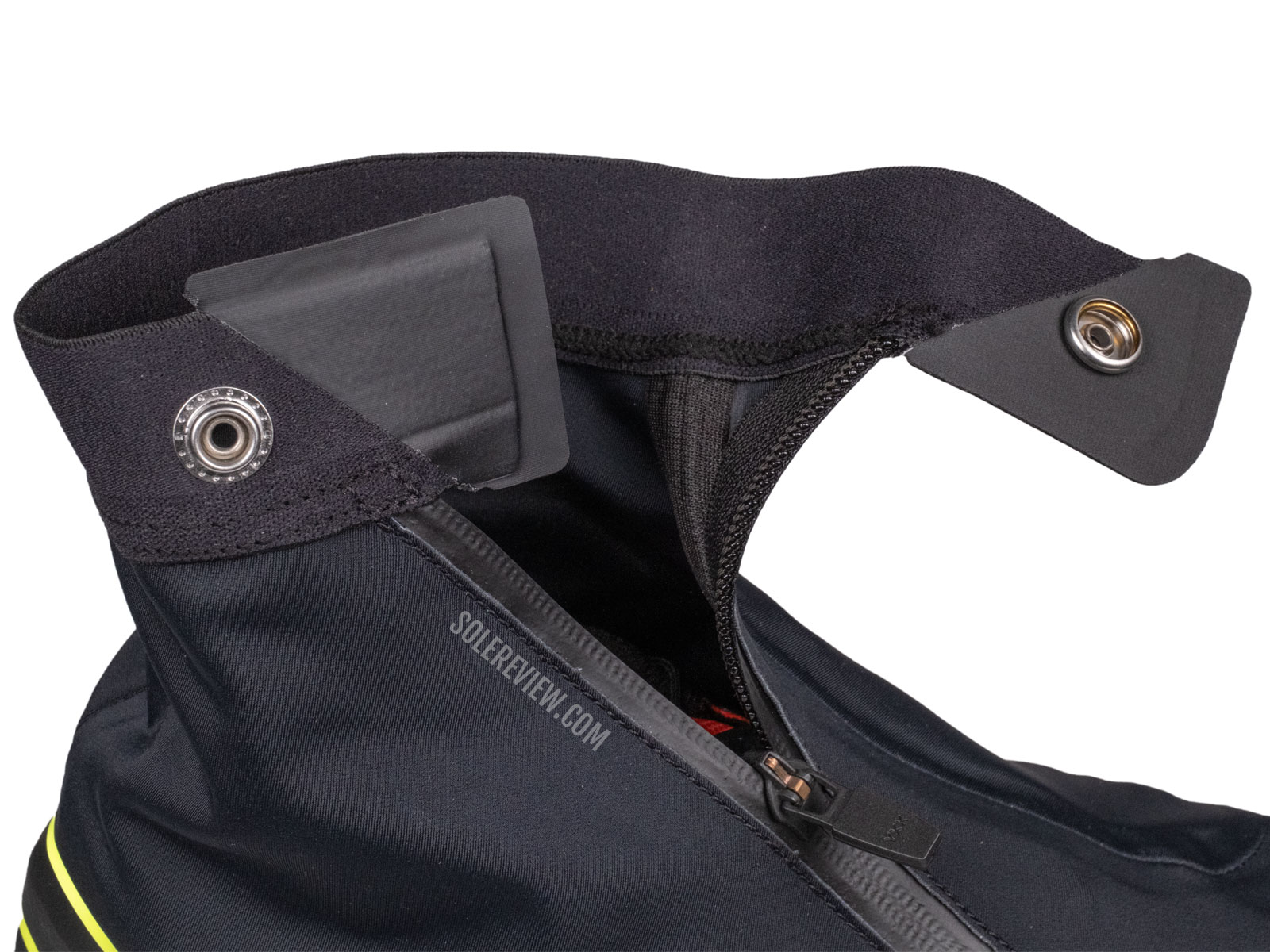
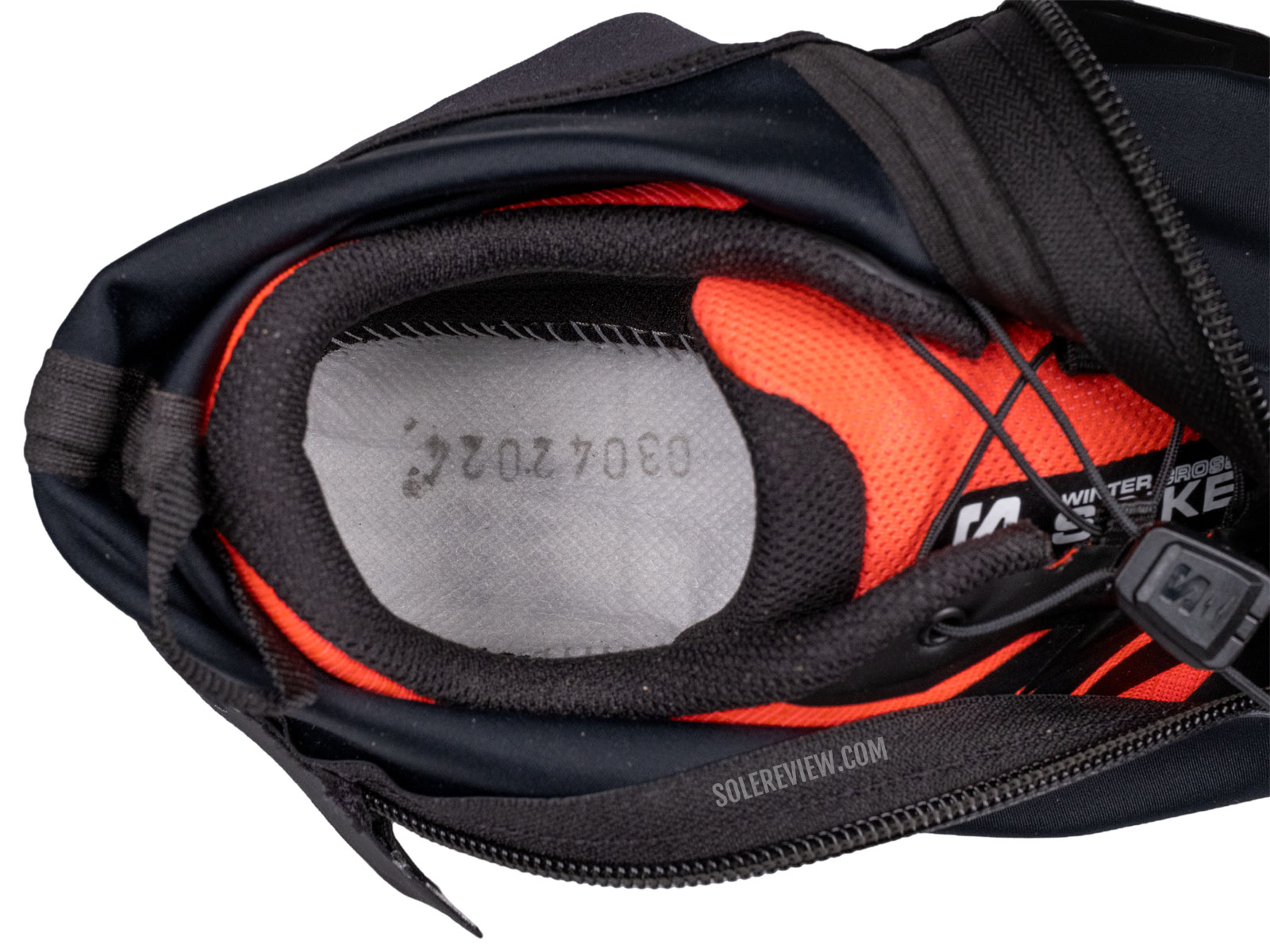
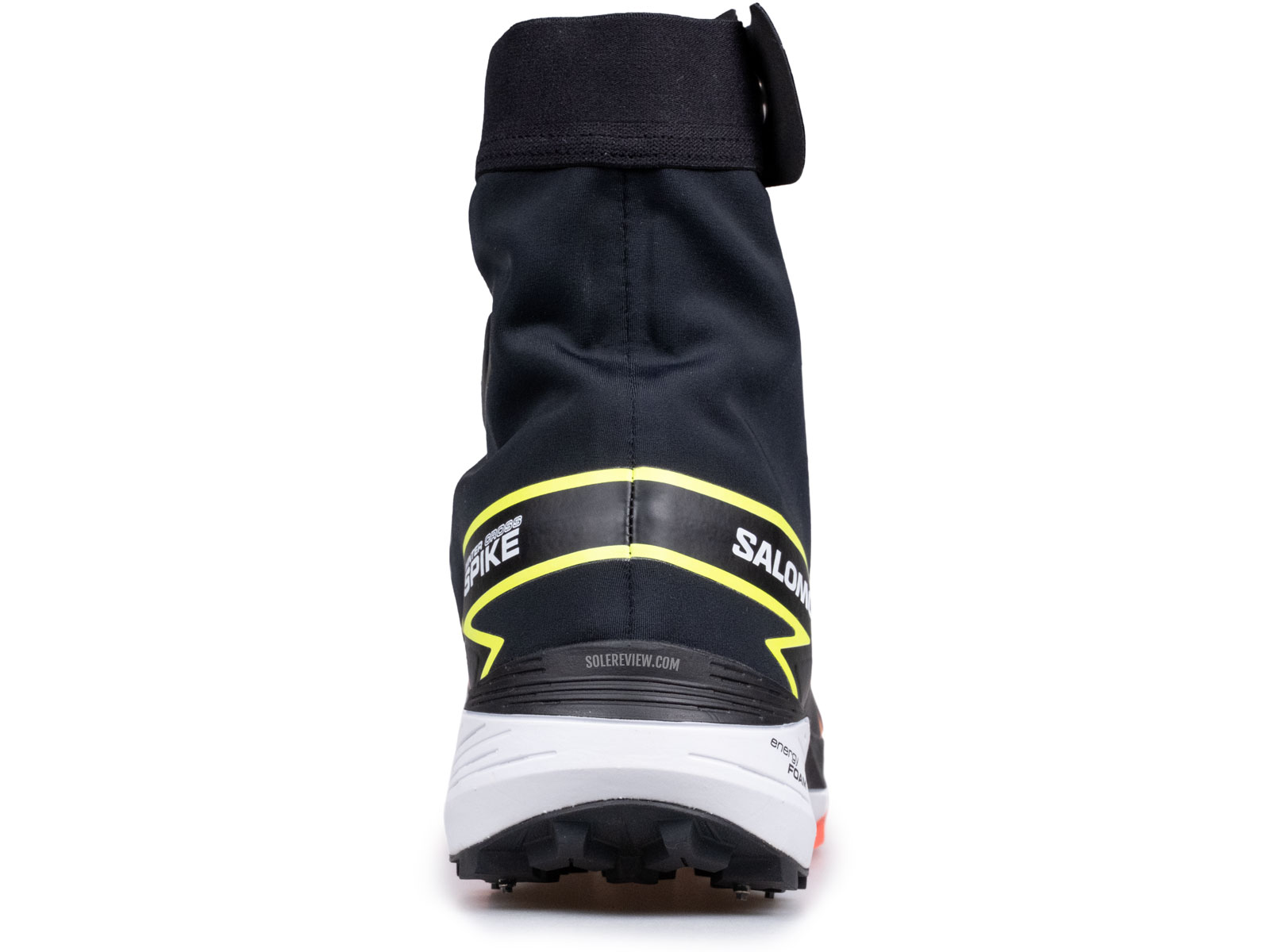
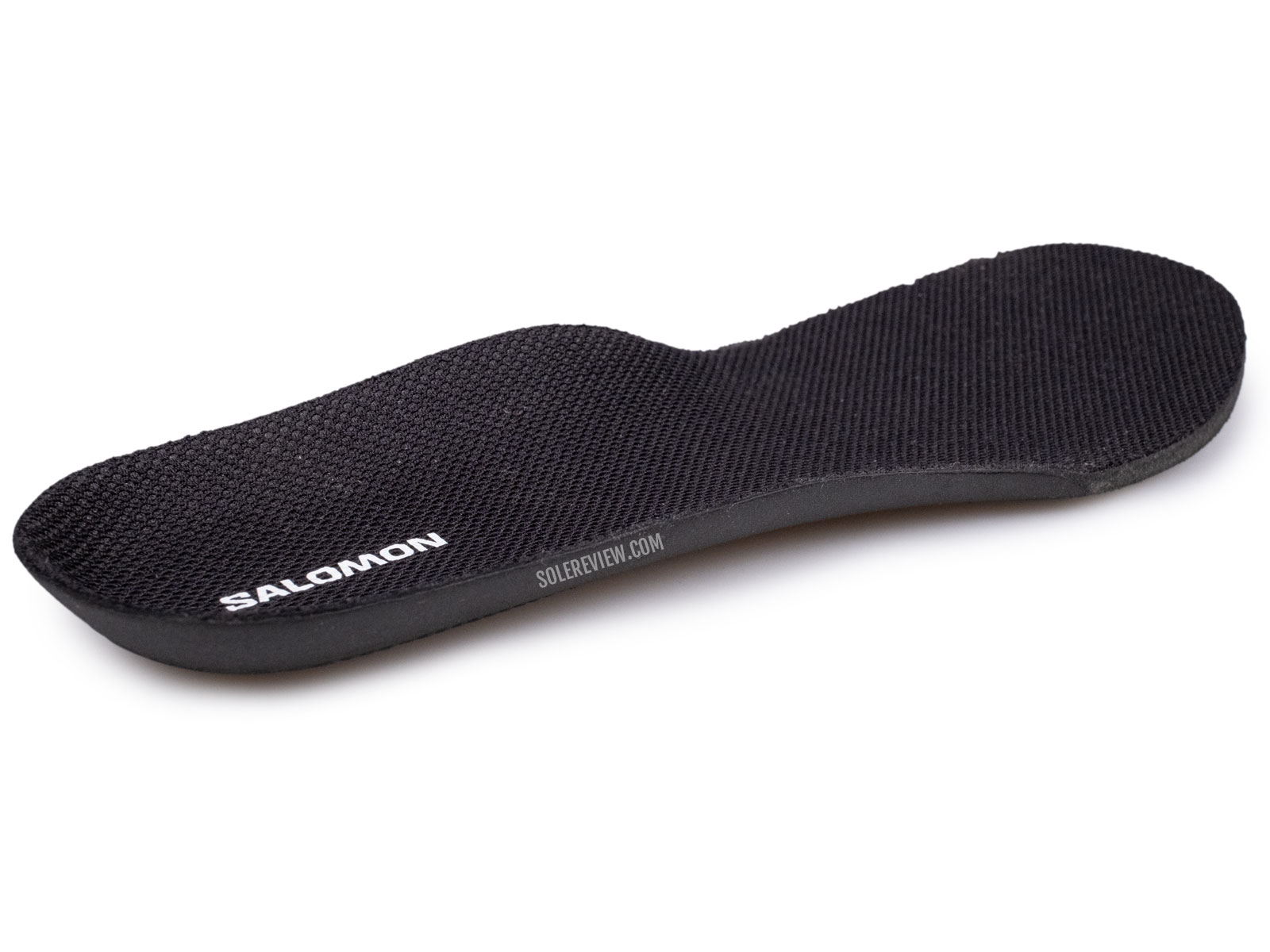
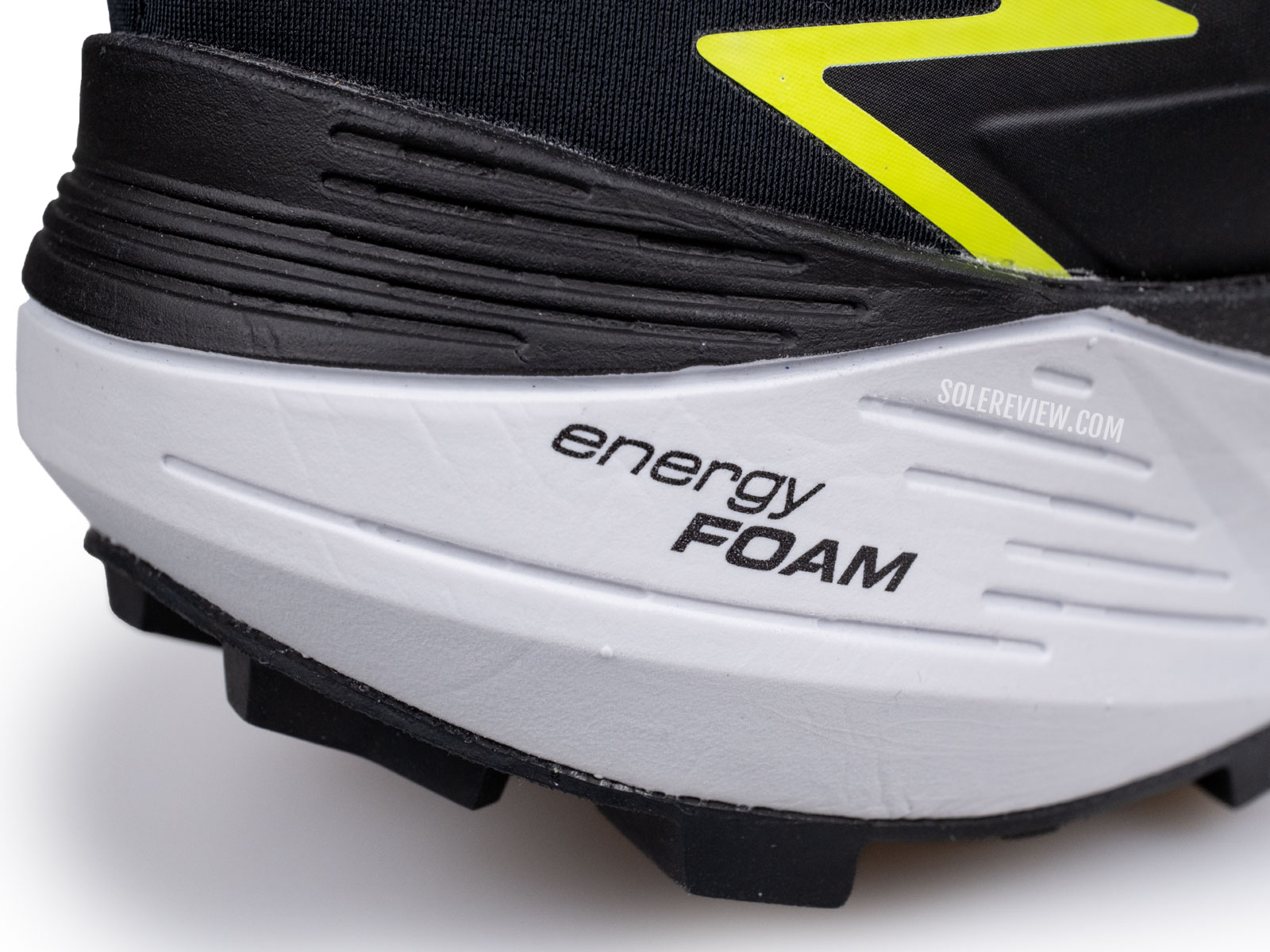
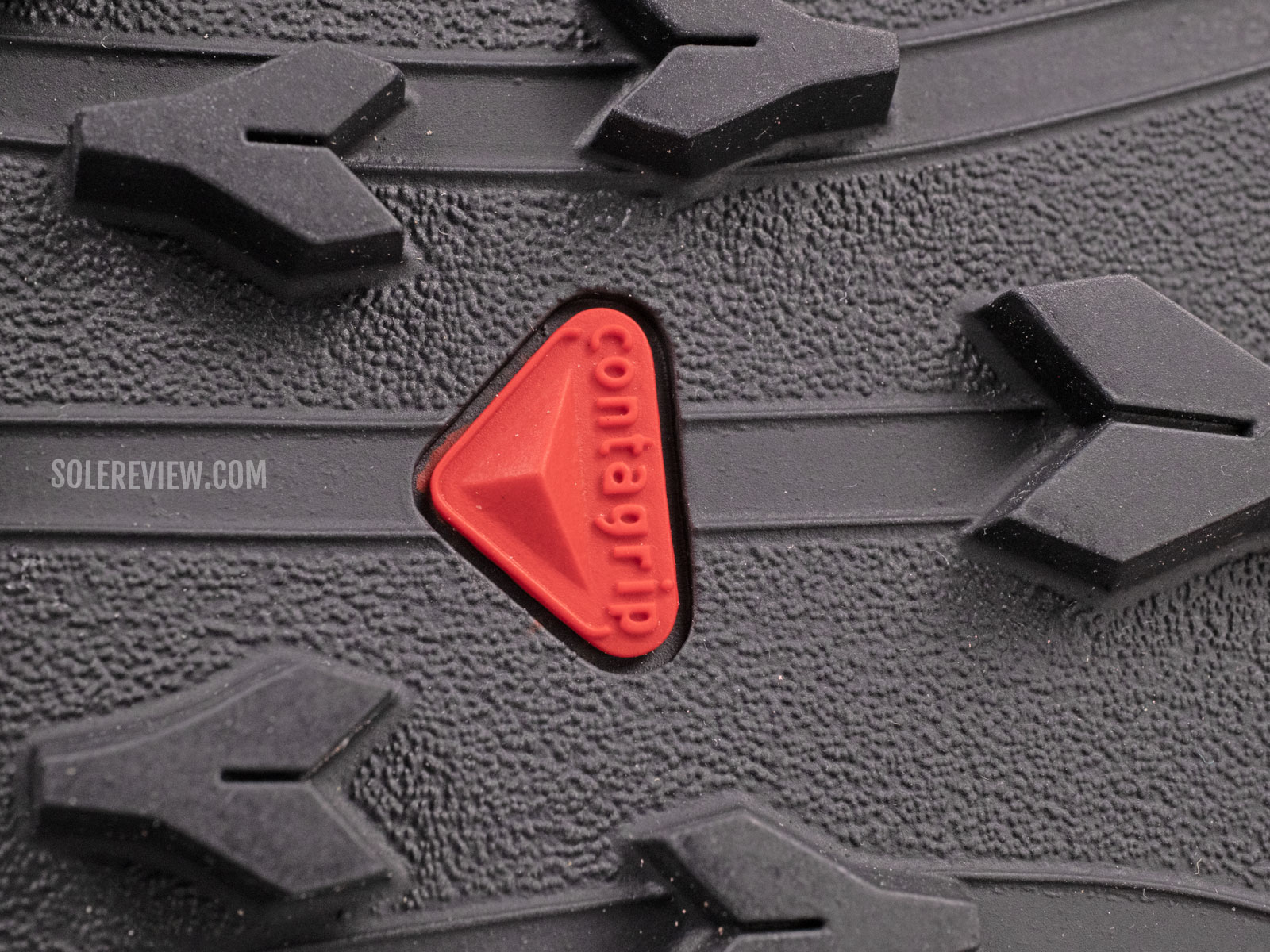
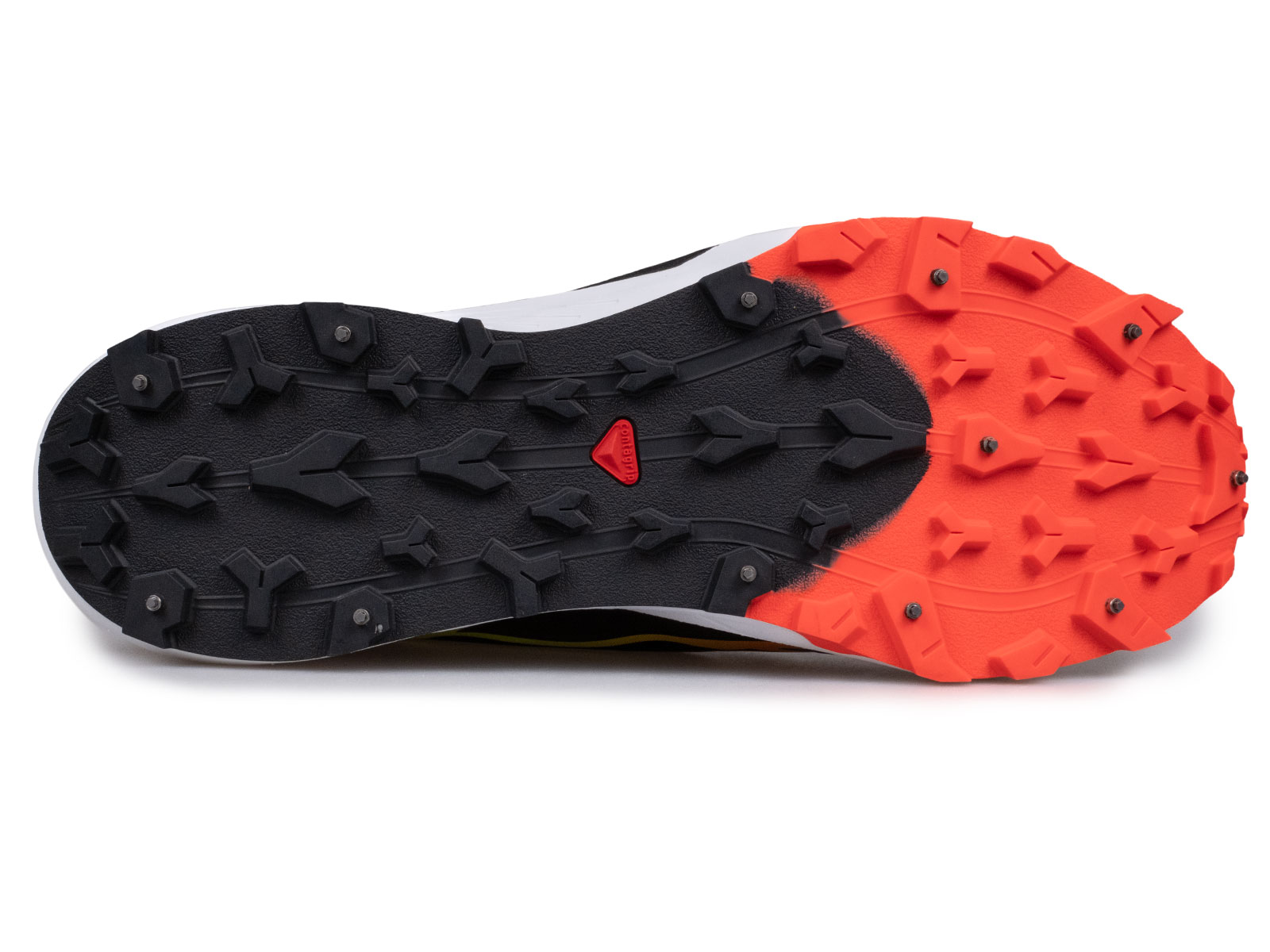
Just like the SpikeCross GTX, the Winter Cross spike’s outsole combines a traction-friendly rubber compound with a dozen Tungsten Carbide spikes. All-weather traction is what makes a running shoe truly winter-worthy, and this is where both the Salomon shoes deliver. The 5 mm deep lugs offer a dependable grip in soft snow while the spikes make running on compact ice worry-free. The molded footbed over the midsole adds comfort – both at a step-in level and over longer distances.
While the shoe is easy to wear and take off, the fit is snug when worn with a pair of thick woolen socks. Buying a half-size larger will solve that problem.
- Salomon’s marketing pitch:Designed for adverse and unpredictable conditions.
- Upper: Water resistant and wind-blocking zipped gaiter over an inner shoe.
- Midsole: EVA foam, 4 mm heel drop.
- Outsole: 5 mm Contagrip rubber lugs with 11 Carbide metal spikes.
- Weight: 340 gms/ 12 Oz for a half pair of Men’s US 9/UK 8.5/EUR 42.5/CM 27.
- Available widths: Single, D (regular).
- Country of origin: China.
- Recommended use: Running on icy roads, slush and snow. NOT for indoors or bare concrete.
- Footstrike orientation: Heel, midfoot/forefoot (full contact).
- Median lifespan: 400 miles.
- Recommended paces: Slower than 4:00 min/km (6:30 min/mile).
- Recommended temperature range: Warmer than -10° C/14° F.
Pros
- Metal spikes grip well on frozen surfaces
- Weather resistant upper
- Secure upper
- Supportive comfort
- Optional wide, extra-wide sizes
Cons
- Cannot be used in normal weather conditions
- Lack of widths
- Absence of reflective elements
- Heel pull loop too small to be effective
How we selected
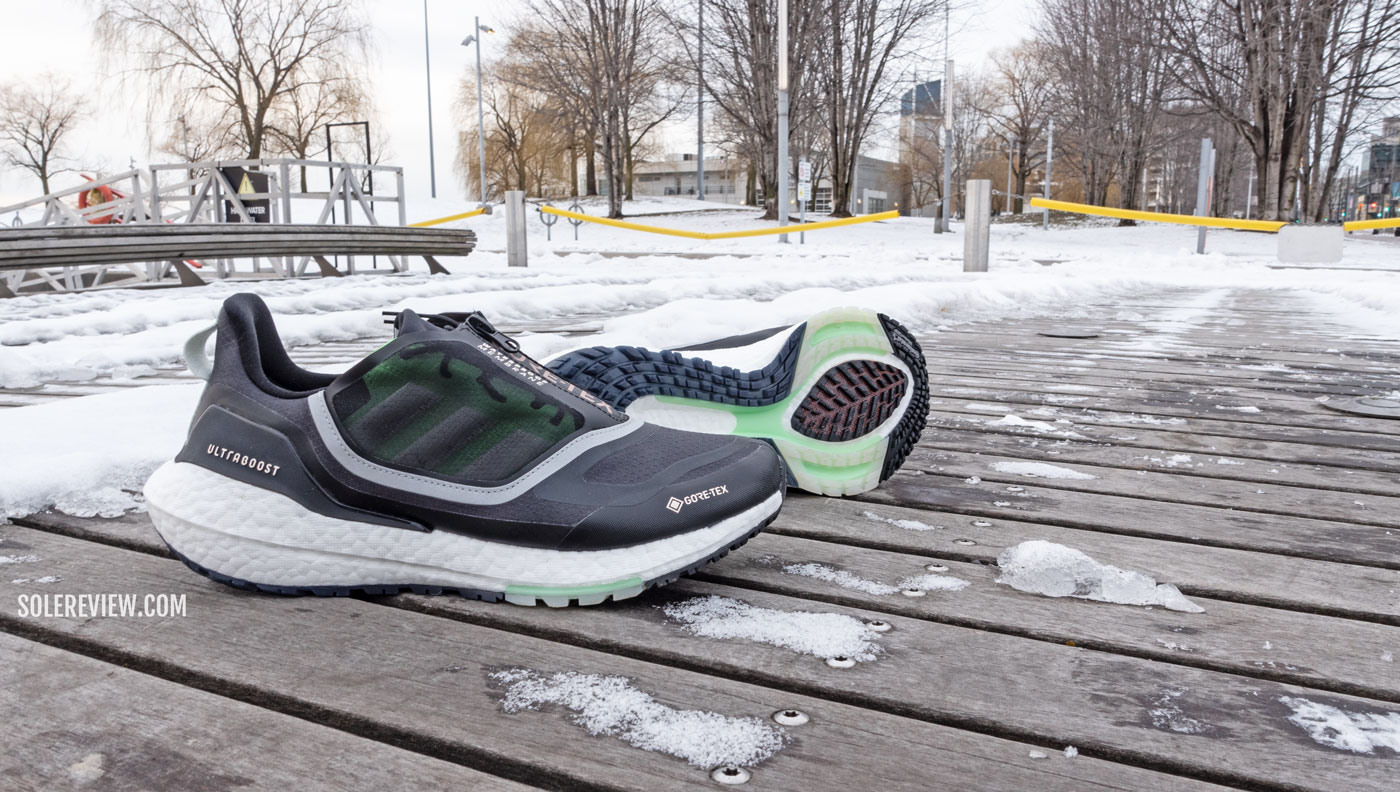
Not all winters are the same. There are places where the ‘winter’ temperatures hover at a comfortable 18° C/65° F. If that’s the case, you don’t even need to read this article. Just refer to any of our neutral or stability buyer’s guides to pick a shoe. And if waterproofing is all that you need, this article will help.
This curated list has shoe recommendations for both mild and freezing winters.
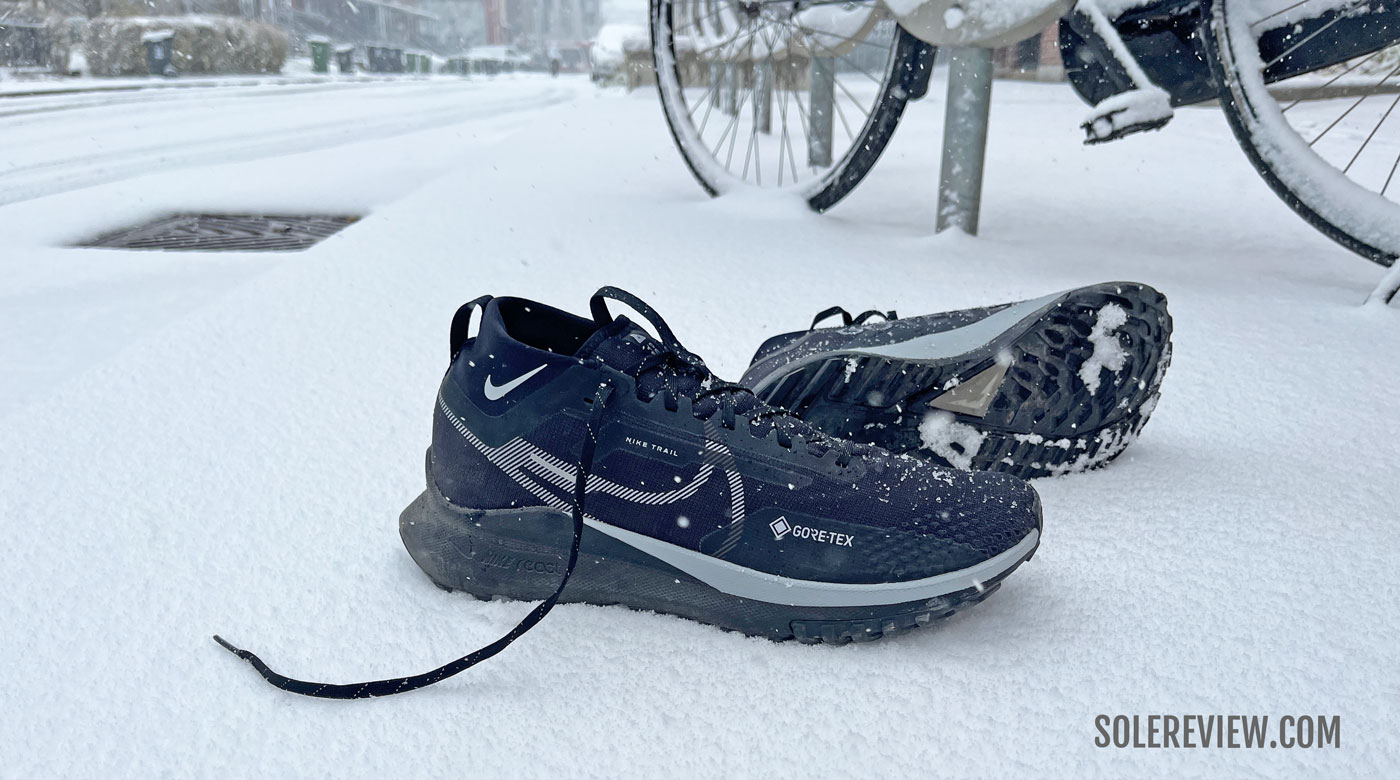
For light snow, even the Pegasus Trail 4 Gore-Tex (now Trail 5) works just fine. You’ll just need a pair of warm socks, that’s all.
A mild winter never goes below freezing, so a running shoe that repels rain and blocks wind is all that one needs. On the other hand, freezing winters have temperatures of 0° C/32° F and colder. With severe winters also come snow and sidewalks with dangerous surface ice. That brings us to another topic. Are you going to be running in an urban environment or outdoors? If winter running for you means doing so on snowy trails, then you’re going to need a lot more than mere waterproofing. Running on ice requires a different set of footwear features – one that includes an outsole designed for ice.
Longer lugs made of soft rubber work well at times, but metal spikes are the only way of getting foolproof traction. On icy roads, even an otherwise ‘sticky’ rubber compound will fail to provide the necessary grip.Given the context, it makes sense to recommend shoes based on the severity of winter.
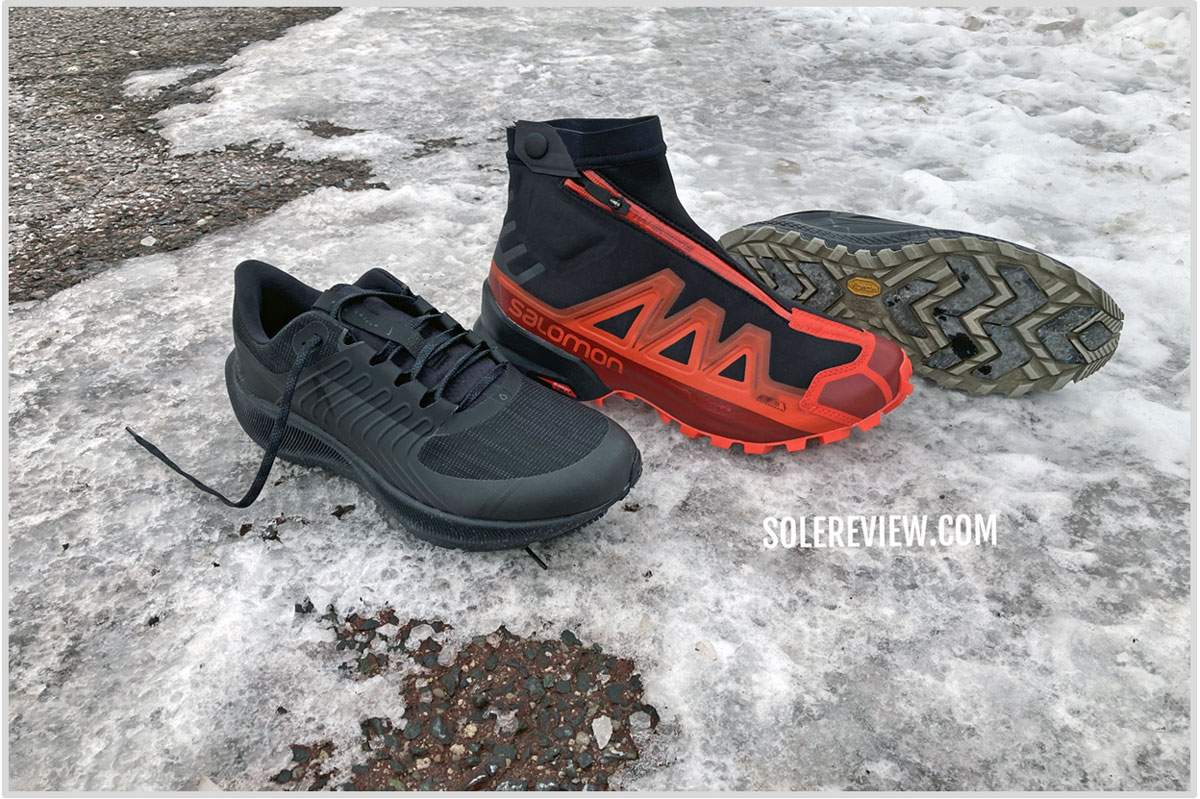
Not all winter running shoes are the same.
We’ll kick off with shoes for mild winters. These all-purpose road running shoes are waterproof (or at least water-resistant) for protection from the winter rains. When worn with the right pair of socks, the upper provides sufficient insulation as well.
The next group has snow-worthy running shoes. A typical scenario would involve running on snowy and slushy sidewalks or flat park trails. Waterproof trail running shoes perform well under these conditions. An aggressively lugged outsole with special rubber will provide decent traction as long as it’s not icy. Here, gaiter attachment points are a bonus.
A different kind of snow running happens outdoors on flat, open trails or in the mountains. Unfortunately, these running paths usually fall outside the jurisdiction of snow-clearing machines. You’re pretty much on your own, so you need an ankle-high running shoe that grips well while keeping the feet dry and toasty.
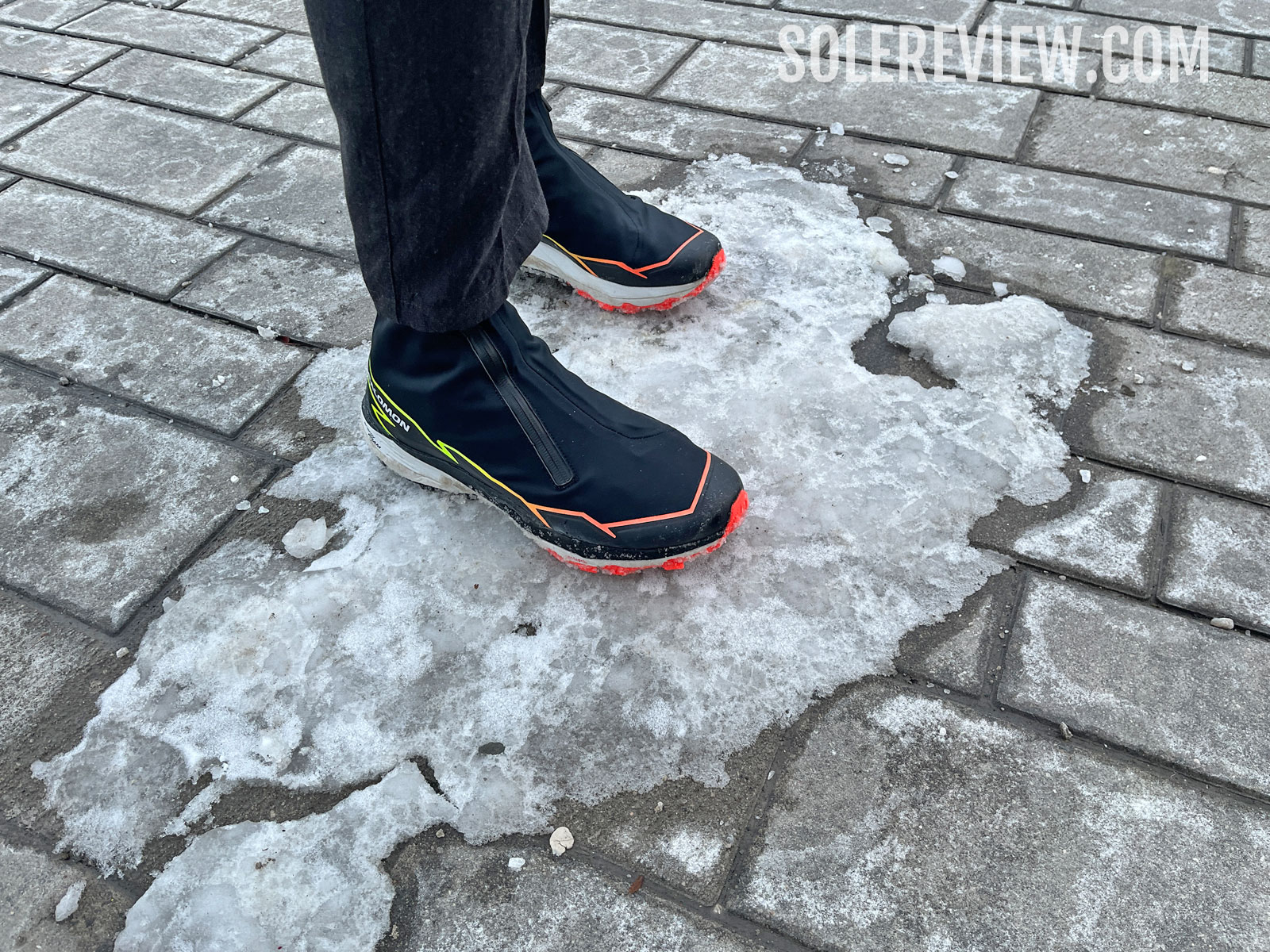
The last kind of winter running is hardcore, as it involves running on ice-covered surfaces. Unlike snow or wet roads, slippery ice-covered surfaces are the last place anybody would want to run on. But you know what? Some runners do run on ice, so the fourth category covers ice-friendly running shoes. Based on our experience, here are the features a winter-running shoe should have. The weightage of each attribute will depend on the severity of winter, but most shoes on this guide have them in some form or the other.
A) Waterproofing: Regardless of whether you’re running in snow-free winters or a snowstorm, a water-repellant upper is a must-have. The use of a Gore-Tex membrane is a good marker of waterproofness but proprietary technologies from Salomon are equally effective.
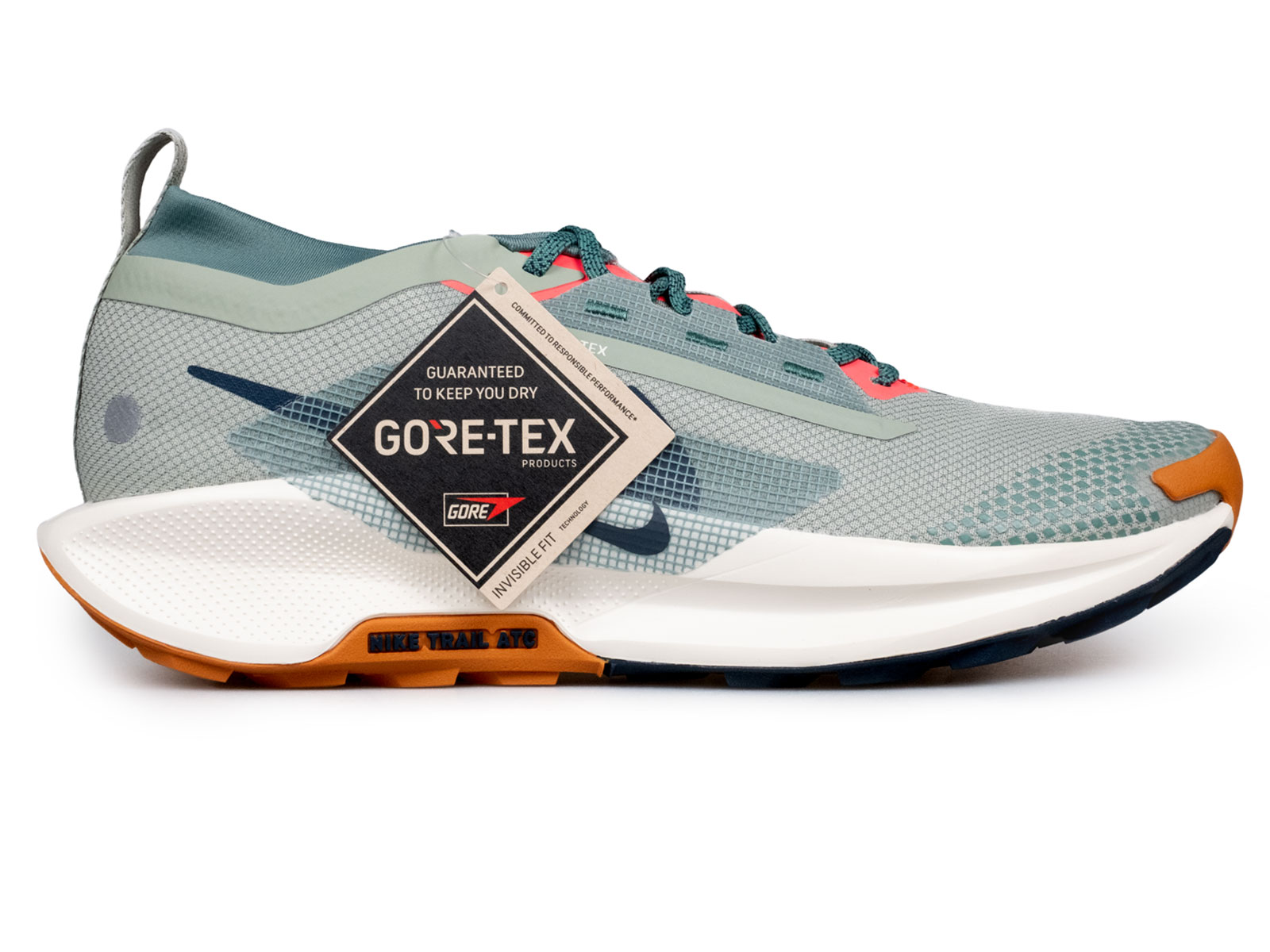
B) Thermal insulation: Most waterproof shoes meet this criterion when combined with a pair of winter socks.
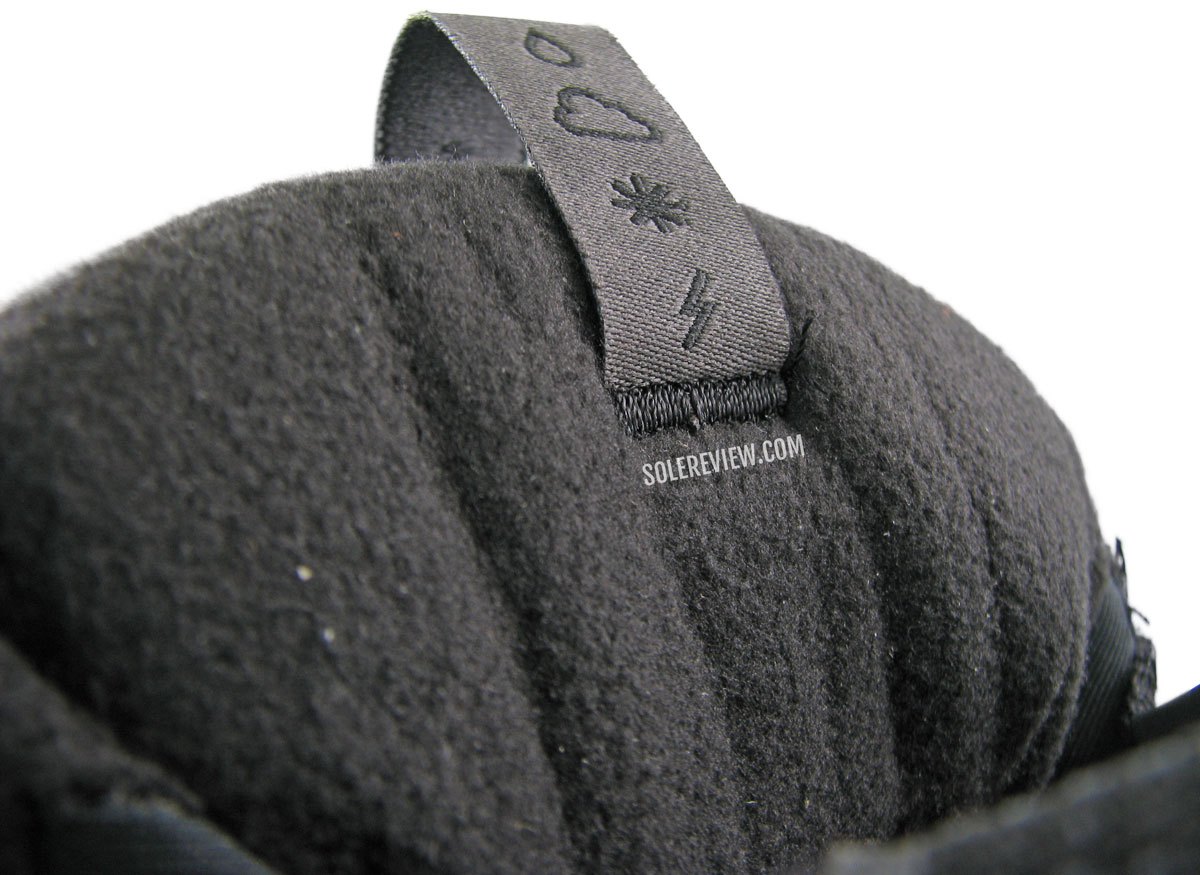
Some winterized running shoes – like the Pegasus Shield here – have insulated interiors.
Running shoes meant for extreme winter will also be made of a durable exterior that blocks the wind.
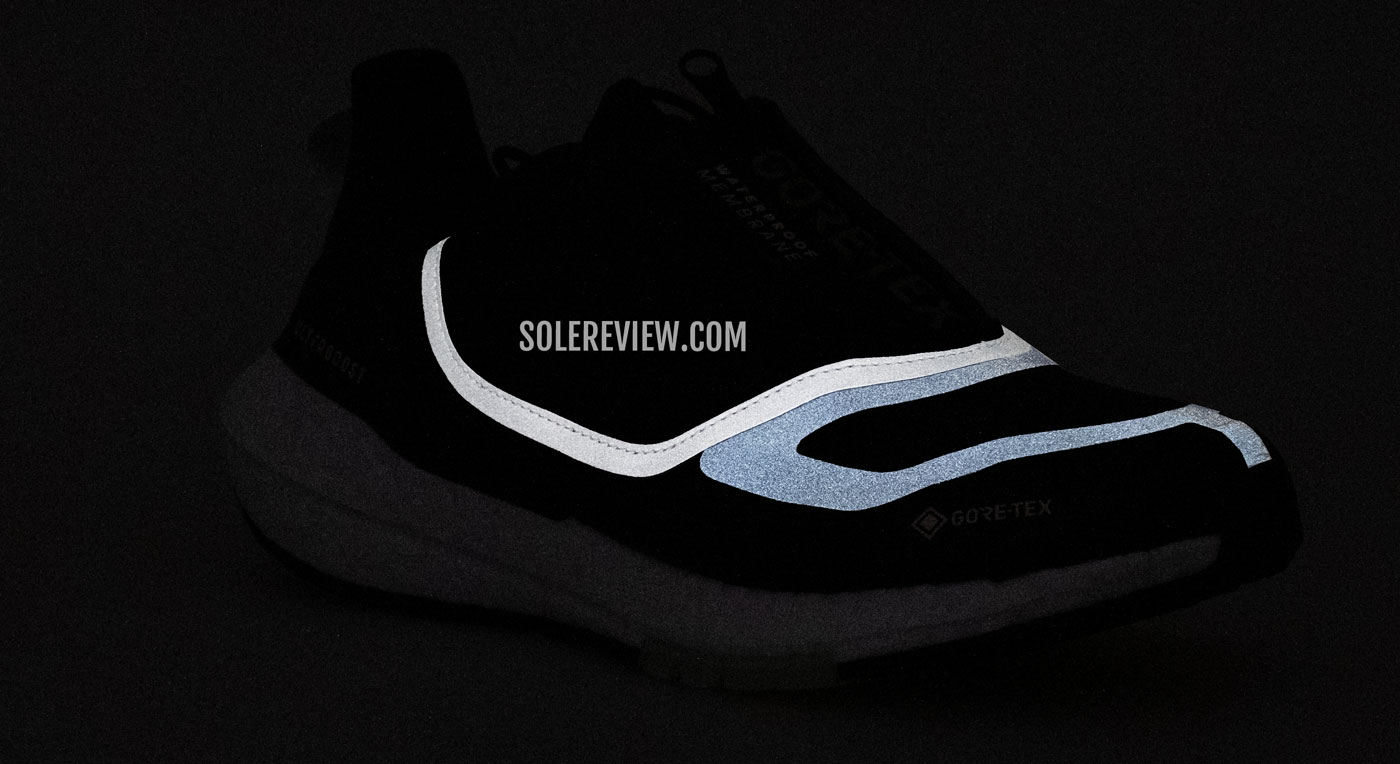
C) Low light visibility: One doesn’t get a lot of sun during snowy winters, so being seen in low-light conditions is extremely important. Here, a reflective upper is very helpful. For more options, read our buyer’s guide dedicated to reflective running shoes.
D) Choice of a low or high top silhouette: An ankle-high shoe is necessary for off-road winter runs. When worn with a waterproof bottom or gaiter, the extra height will keep the snow, debris, and water out.
E) Outsole traction: Dry, wet, snowy, and icy conditions each demand a different kind of rubber compound and lug geometry. Foolproof ice-running shoes even come equipped with Tungsten Carbide spikes. It is similar to the difference between all-season and winter car tires. This is particularly true of running on the ice where even ‘sticky’ rubbers won’t cut it.
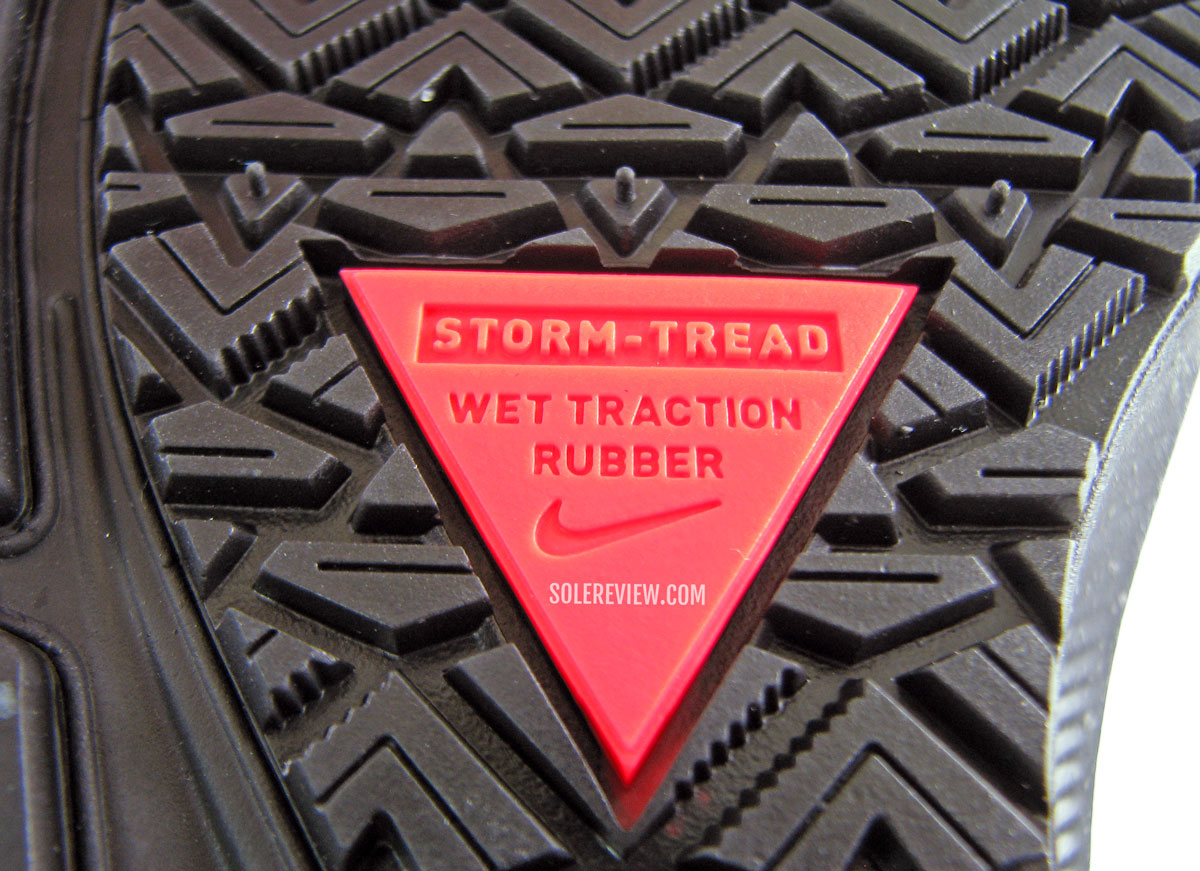
The specially designed compound offers traction on wet roads.
Vibram launched its Arctic Ice outsole with a lot of hype, but Solereview’s experience with this outsole was underwhelming. The Arctic Grip outsole grips phenomenally on wet surfaces, but it does not inspire confidence over icy surfaces.
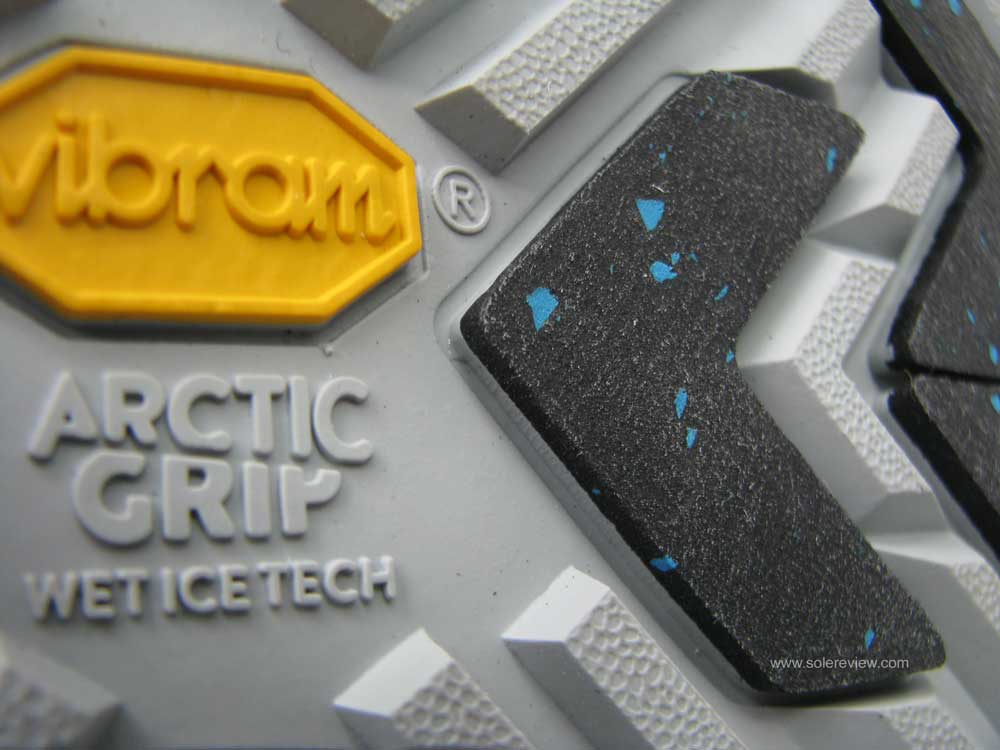
While it is certainly better than regular outsoles, our experience demonstrated that it lacks the ice-gripping tenacity that Vibram so enthusiastically advertises.
Then there are other universal requirements. Like a cushioned and supportive ride under a comfortable and secure fit. Until a couple of years ago, only Nike was consistent with a winter-friendly running shoe assortment. For example, here’s one of our reviews from exactly 10 years ago. In 2011, the Nike Lunarglide 3 Shield was the only purpose-built cold weather adaptation with water resistance and blinding levels of reflectivity.
Today, there’s so much to choose from. Saucony has their Runshield running shoes. Asics sells AWL (All Winter Long) versions of their popular models that complement the Gore-Tex variants.
For running in cold winters with little to no snow:
These shoes are meant for mild winter conditions without snow. But you might encounter the occasional winter rain and misty conditions that will soak summer running shoes. Here, water-repellent and slush-resistant uppers keep the feet dry.