
Product guide updates
(5 total)- 2026-09-19 — Added 'Top recommendations summary' module
- 2026-08-22 — Updated with minor edits
- 2026-08-21 — Created FAQ with relevant question and answer pairs
- 2026-08-21 — Migrated product guide to new editorial format
- 2026-08-21 — Updated all recommendations
In this product guide:
How we selected
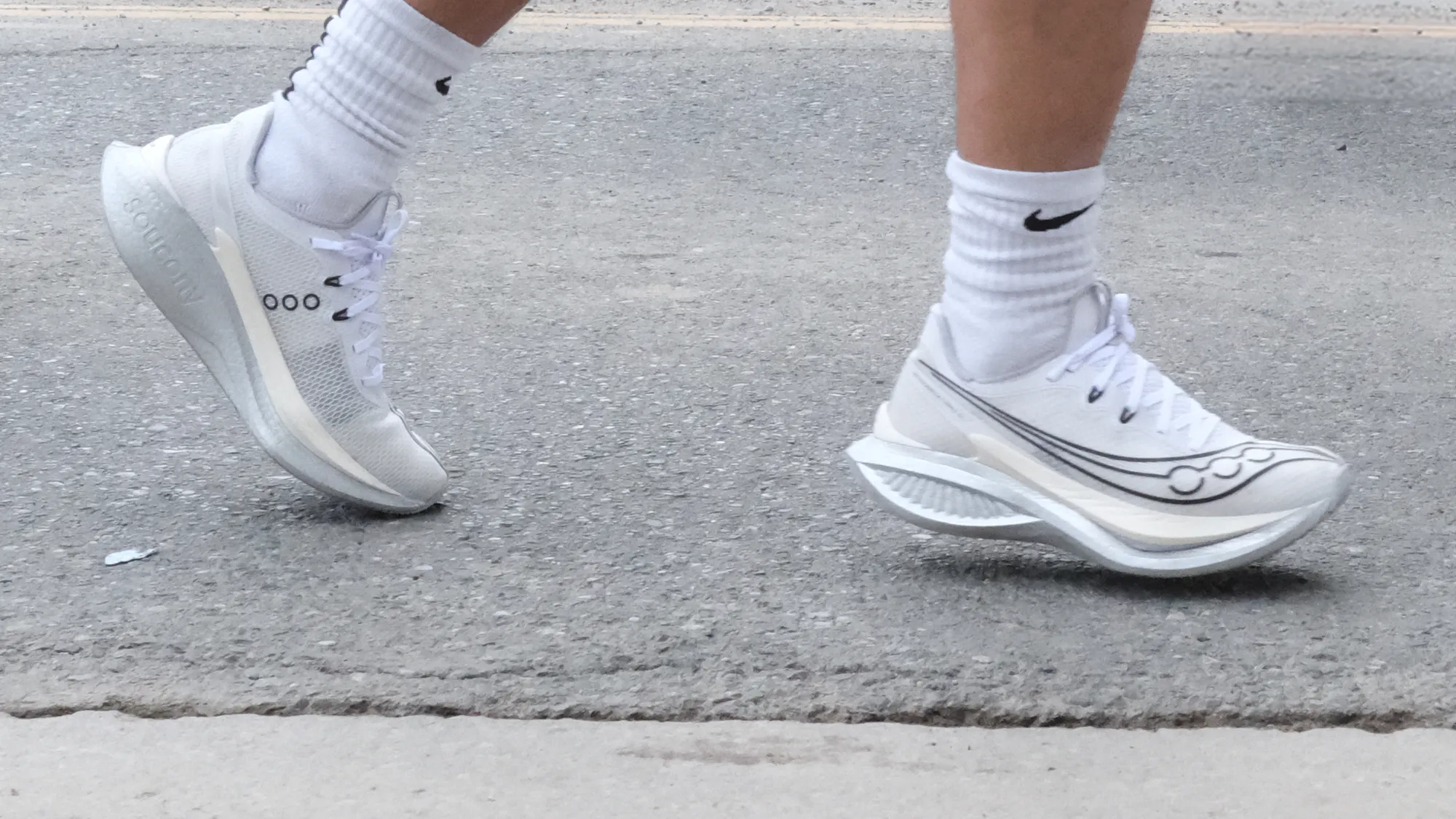
Our recommended plated running shoes for overpronators are grouped by use cases – daily runs, 10Ks and marathons, heavy runners, and recovery runs. By connecting each feature with its respective function, the “Why it works” section explains why a particular shoe (in its respective class) is suitable for its recommended use case. Here’s a quick, one-line summary of our recommended categories:
- Best for daily runs: Plated trainer that resists inward midsole collapse.
- Best for 10Ks and marathons: Speed-friendly super-shoe with medial compression resistance.
- Best for heavy runners: Plated shoe with a firm and stable foundation.
- Best for recovery runs: A plated shoe that delivers maximum comfort for overpronators.
Our recommendations combine our influence-free, expert-led wear-testing with biomechanical data sourced from over 33,000 high-speed images captured during actual road races. We combined our wear-test observations with an evidence-based screening of design features that make a plated running shoe suitable for overpronators. Visit our FAQ section at the bottom to learn more about specific design features that make a plated shoe ideal for overpronators, and the kinds of plated shoes one should avoid.
Why it works (the basics)
- Firmer SR-02 midsole base → improves stability
- Molded sidewall ridges → adds structural reinforcement
- Carbon FlyPlate → makes transitions efficient
- Rigid heel counter → prevents heel slippage
🔍 Deep Dive
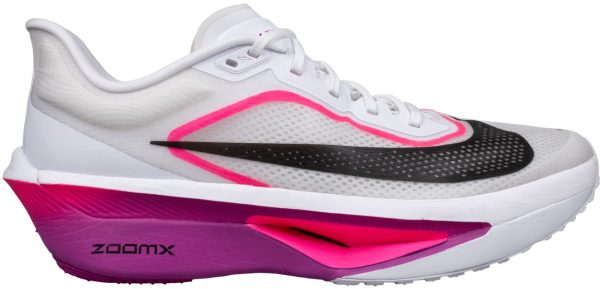
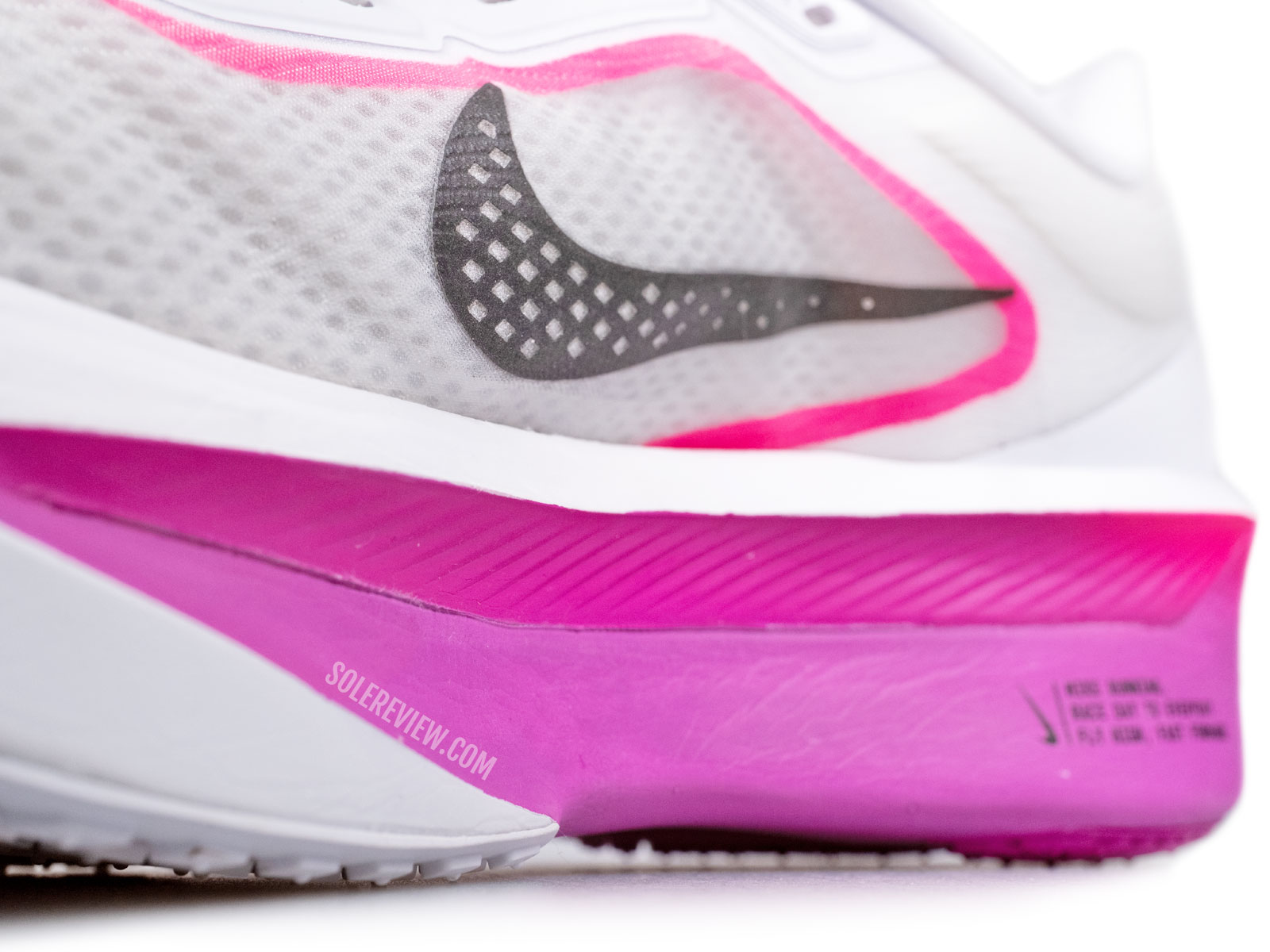
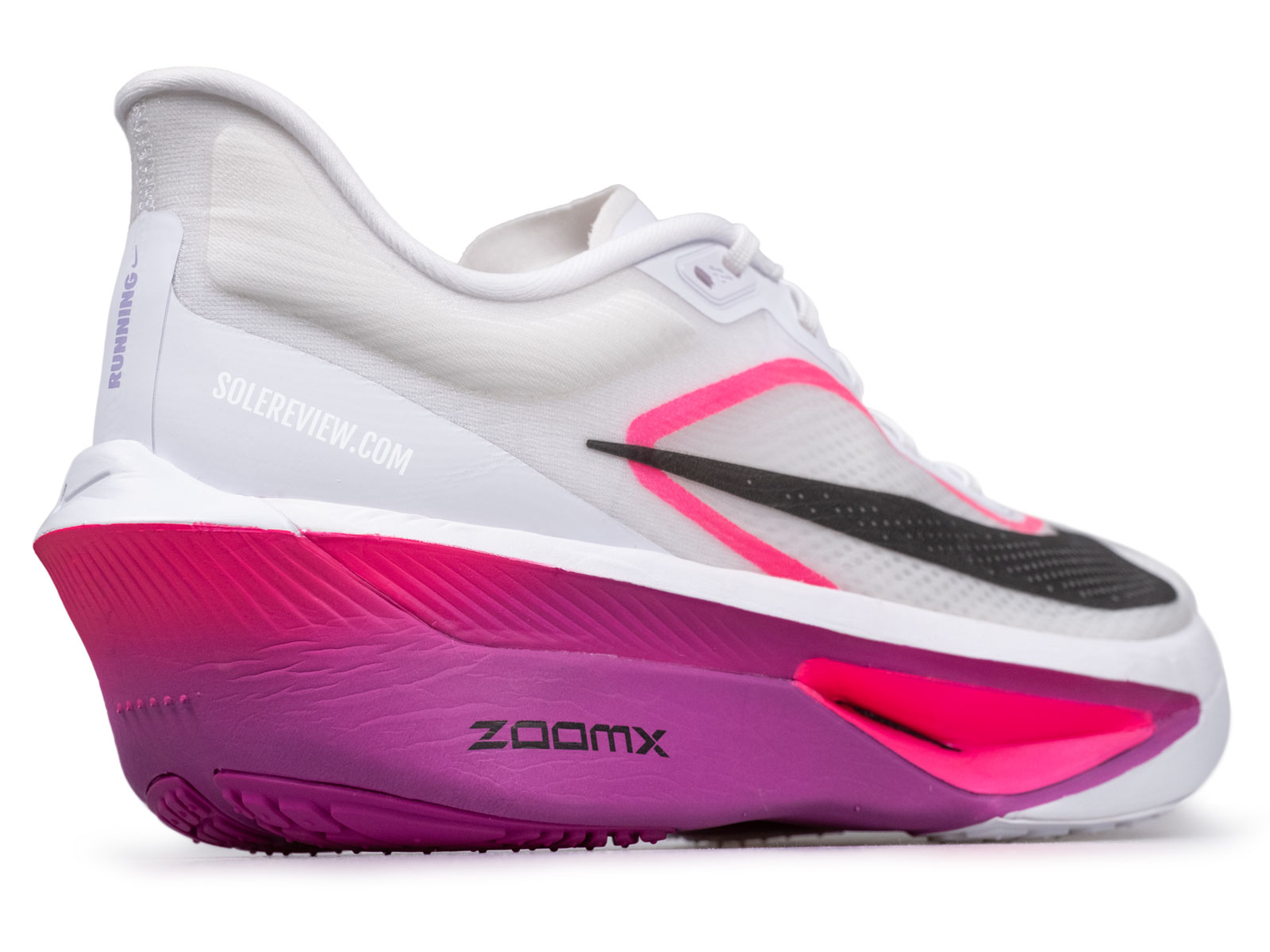
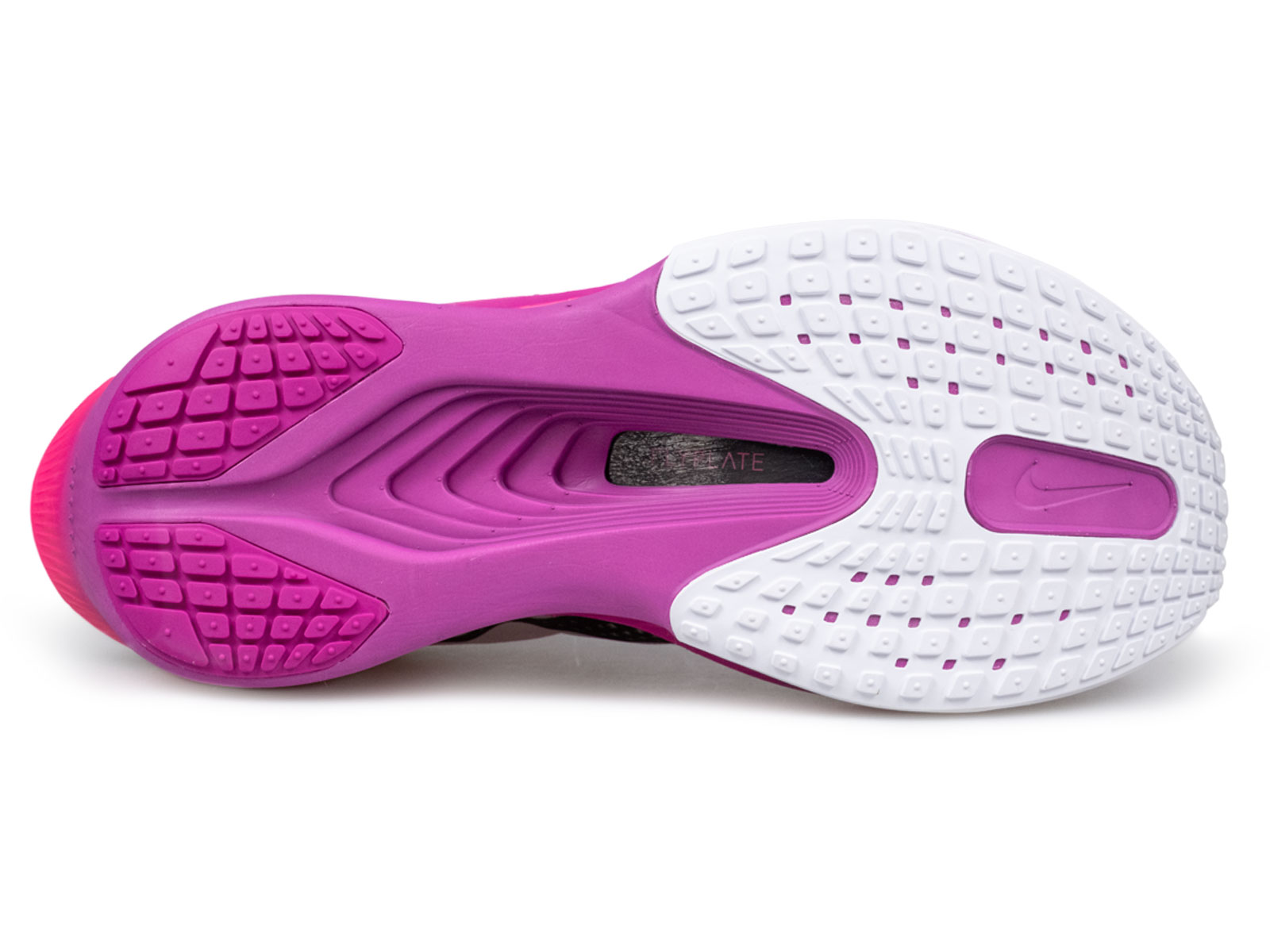
Like the Vaporfly 4, the Zoom Fly 6 has a carbon Flyplate. However, the foam surrounding the plate has better overpronator-compatibility. Rather than using 100% ZoomX (PEBA) foam, the midsole has a SR-02 (presumably an EVA blend) foam base and a broad outsole contact area. It is solid under the heel with a wider midfoot waist; these features minimize excessive midsole compression. The relative firmness of the SR-02 compound benefits the overall stability and midfoot rigidity. The molded ‘ridges’ on the upper sidewalls make it harder for the midsole to collapse under an overpronating gait.
Nike advertises this shoe as a racer-trainer hybrid, which is accurate. The carbon plate makes the Zoom Fly 6 quick enough to race or run tempos in. At the same time, it delivers the comfort that one expects during everyday runs. It’s worth noting that the upper has a narrower fit than the previous model. The true-to-size fit is excellent at establishing a strong bond between the foot and the plated midsole, but you’re out of luck if you need a roomy forefoot.
Pros
- Supportive dual-density midsole
- Molded ridges add compression resistance
- Decent stability for a carbon-plated trainer
- Secure upper fit
- Works well for slow speeds
Cons
- Runs slightly warm
- No optional widths
Fit Notes
True to size with a narrow fit. Average ventilation. No optional widths.
Gallery
Specs
- Heel stack: 40 mm
- Forefoot stack: 32 mm
- Drop: 8 mm
- Weight: 9.3 oz / 265 gms
- Widths: Regular (single)
- Midsole: ZoomX, SR-02, Flyplate
- Insole: Molded, non-removable
Why it works (the basics)
- Firm PWRRUN PB base → prevents medial side collapse
- Soft PWRRUN HG layer → makes landings and transitions comfortable
- Shallow under-heel channel → improves compression resistance
- Carbon Speedroll plate → adds propulsive ride character
🔍 Deep Dive
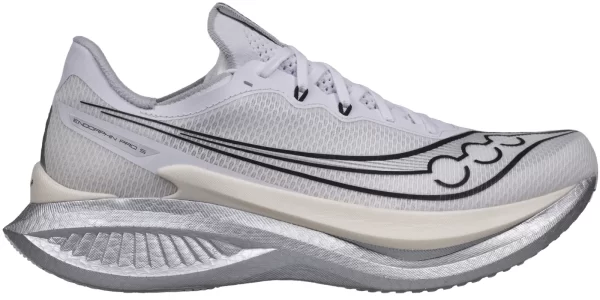
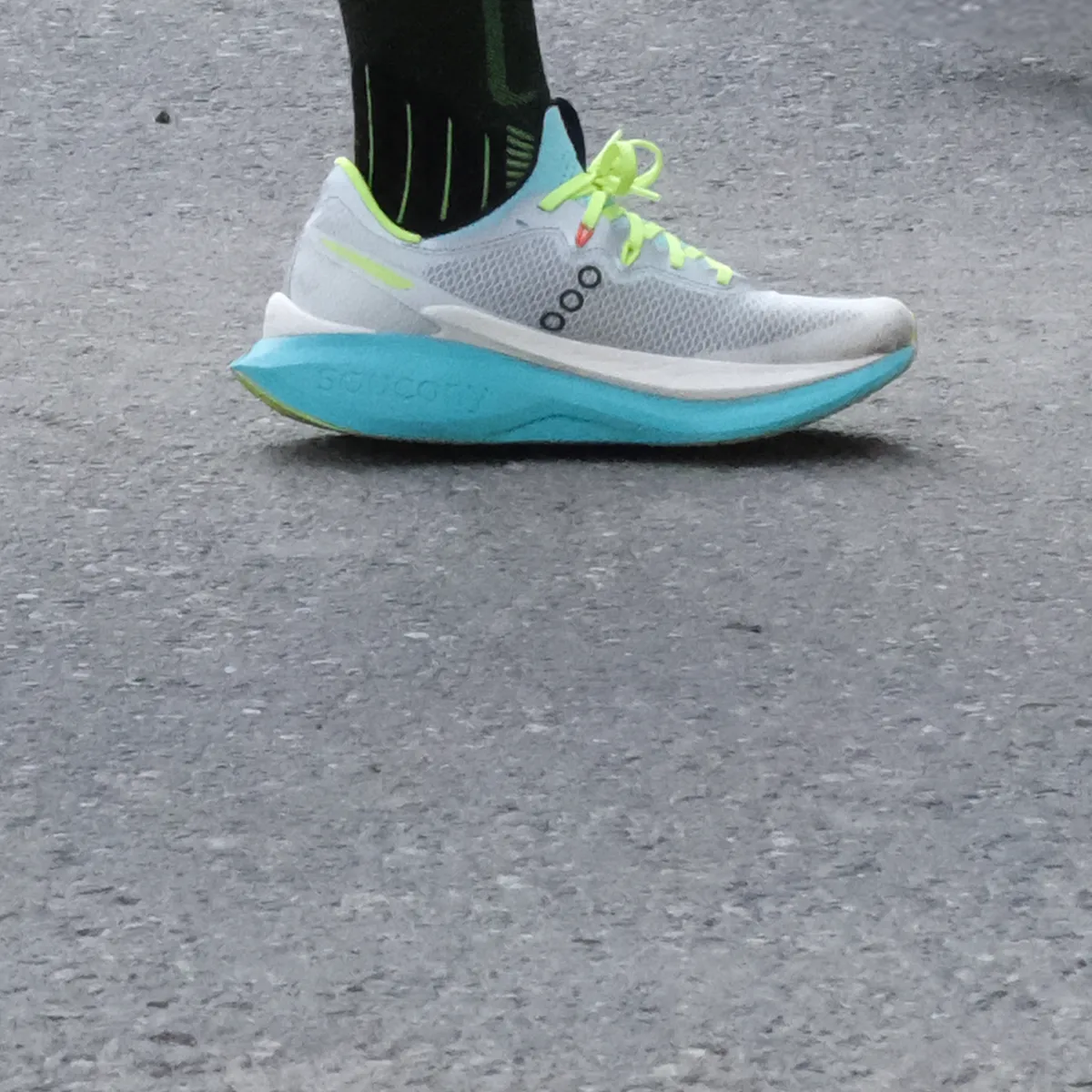
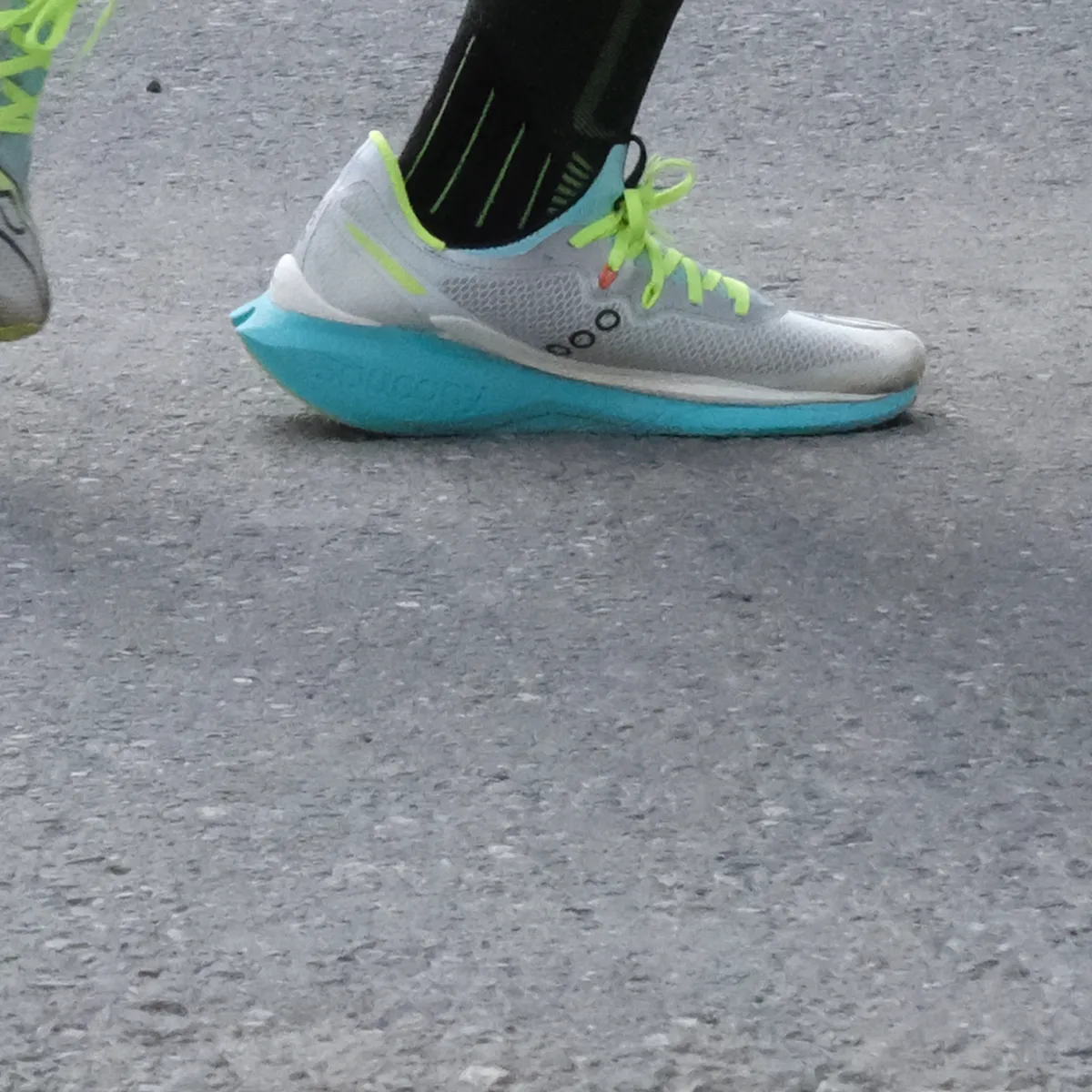
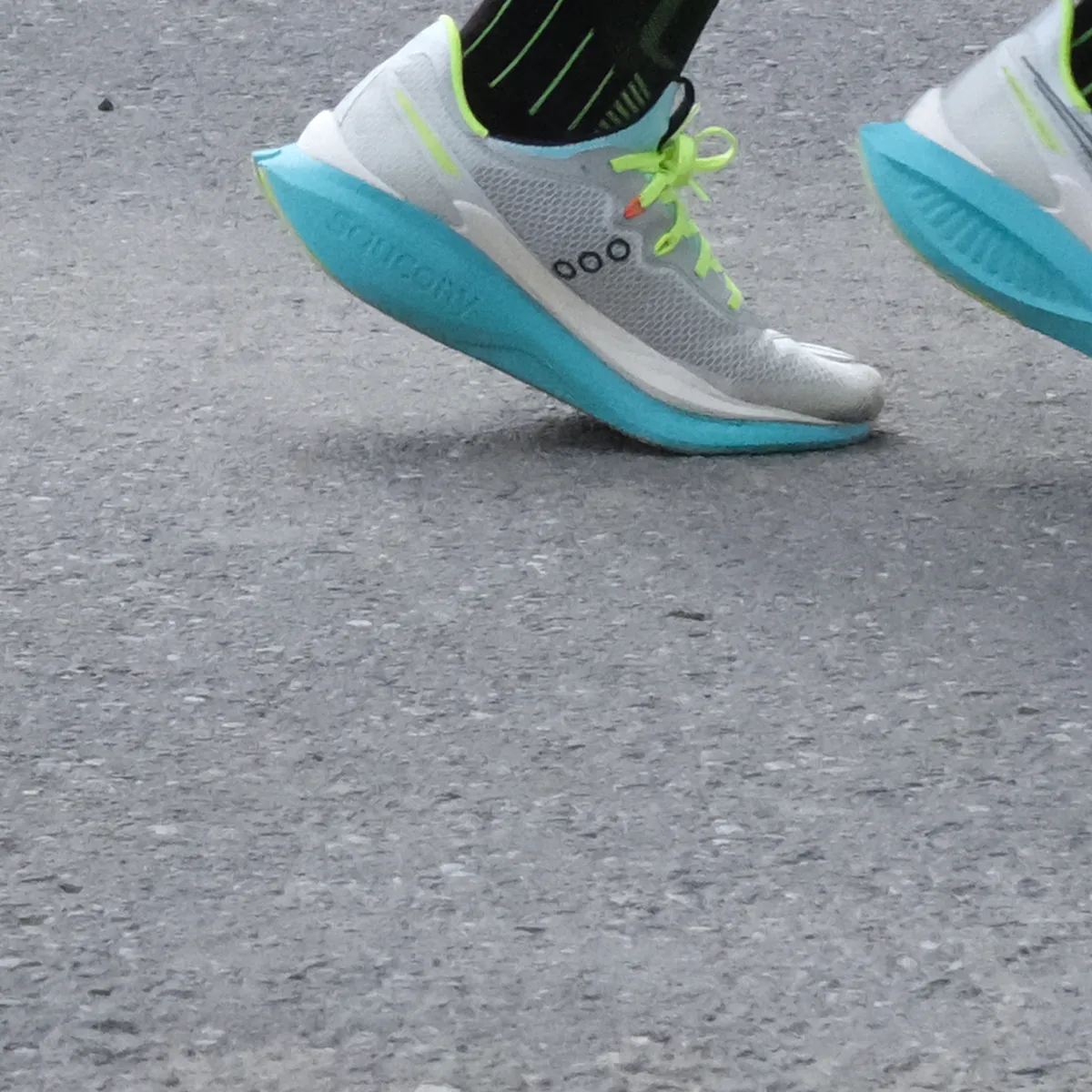
The Saucony Endorphin Pro 5’s midsole displays above-average compression resistance during overpronation. The PWRRUN PB foam is the firmest of all PEBA foam variants, making the midsole inherently supportive. The heel has a wide base without a void, and the midsole sidewall is flared. The stiffness of the carbon plate adds stability by complementing the supportive midsole.
These features make the Endorphin Pro versatile enough not only for overpronators, but also for heavier runners and easy runs. The 8 mm heel drop also makes it user-friendly, as it doesn’t stress the Achilles. And what about the softer PWRRUN HG? Well, that’s just a thin layer over the heel and midfoot, so the firmer PWRRUN PB does most of the heavy lifting. The Endorphin Pro 5 can be your race-day shoe for a 10K, a half, or a full marathon. Use our six-profile biomechanical module to see how the Endorphin Pro 5 performs during an actual road race. Our image gallery below also shows how the medial midsole behaves when loaded.
Its breathable upper has a secure and true-to-size fit. The new heel collar design is nowhere near as comfortable as the one on the Endorphin Pro 4. The top part tends to close in over the heel, potentially causing chafing in rare cases. We didn’t notice any signs of chafing when analyzing our high-speed biomechanical frames, but we thought this issue merits highlighting.
Pros
- Resists medial compression
- Most stable heel in its category
- Race-ready ride quality
- Doesn’t penalize slow speeds and heel strikes
- Ventilation
Cons
- Stiff heel collar may irritate skin
- Lack of widths
Fit Notes
True to size with an accommodating fit and spacious toe box. Updated heel collar may chafe skin in rare instances.
Gallery
Specs
- Heel stack: 39.5 mm
- Forefoot stack: 31.5 mm
- Drop: 8 mm
- Weight: 7.3 oz / 206 gms
- Widths: Regular (single width)
- Midsole: PWRRUN PB, PWRRUN HG
- Insole: Non-removable
Why it works (the basics)
- Firm EVA foam base → creates a stable platform
- PEBAX plate → stabilizes transitions
- Heel/midfoot EVA frame → provides compression resistance
- Secure upper and heel counter → prevents excessive movement
- PEBA foam top layer → enhances ride comfort
🔍 Deep Dive
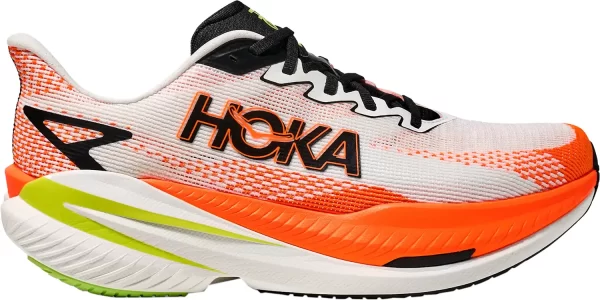
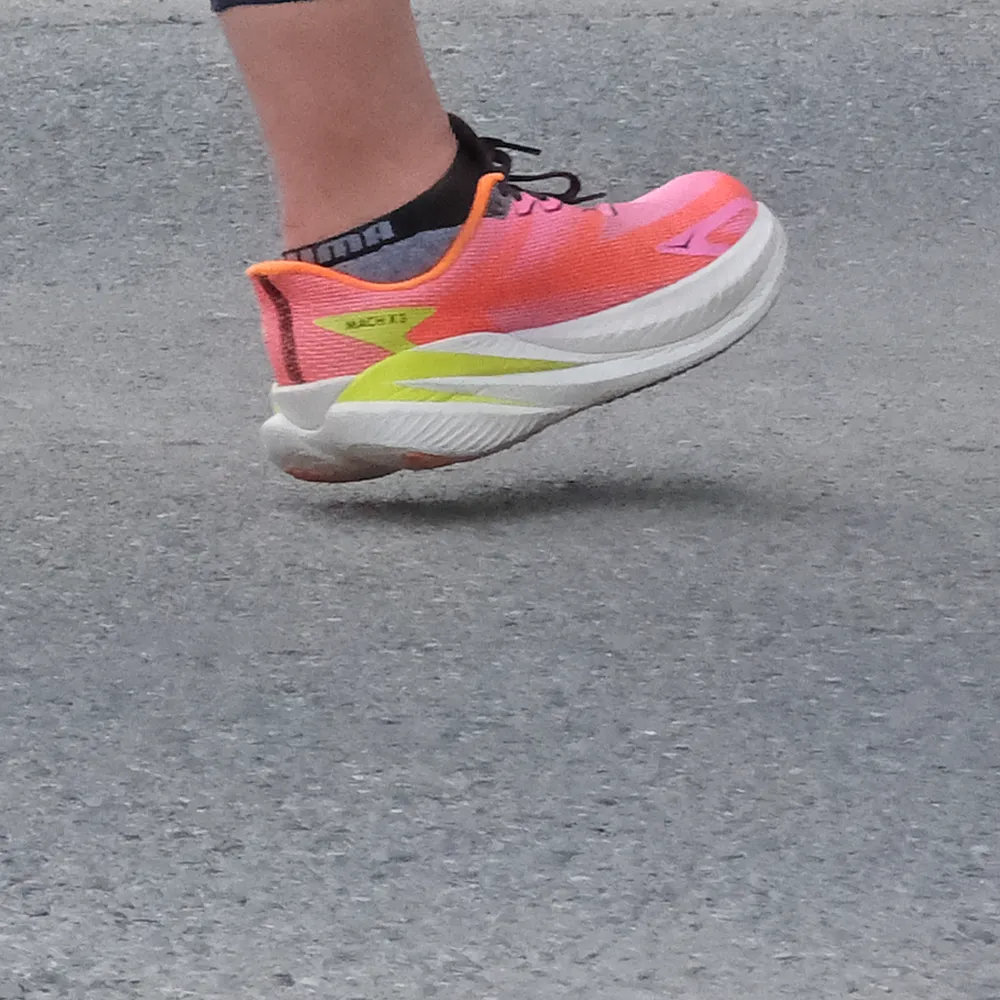
Pebax plates are less stiff than carbon composites, so by that logic a running shoe with a Pebax plate should be less supportive. That logic holds on a shoe like the Saucony Endorphin Speed 5, where its PWRRUN PB midsole and nylon plate deliver a less stable ride than the more expensive Saucony Endorphin Pro 5. But not all shoes are built the same, and the Hoka Mach X 3 is proof of that. Its dual-density midsole makes it the ideal plated running shoe for overpronators; Hoka plays it safe by combining a firm, compression-molded EVA foam base with a softer PEBA foam top layer. This setup is optimal for ride comfort and stability.
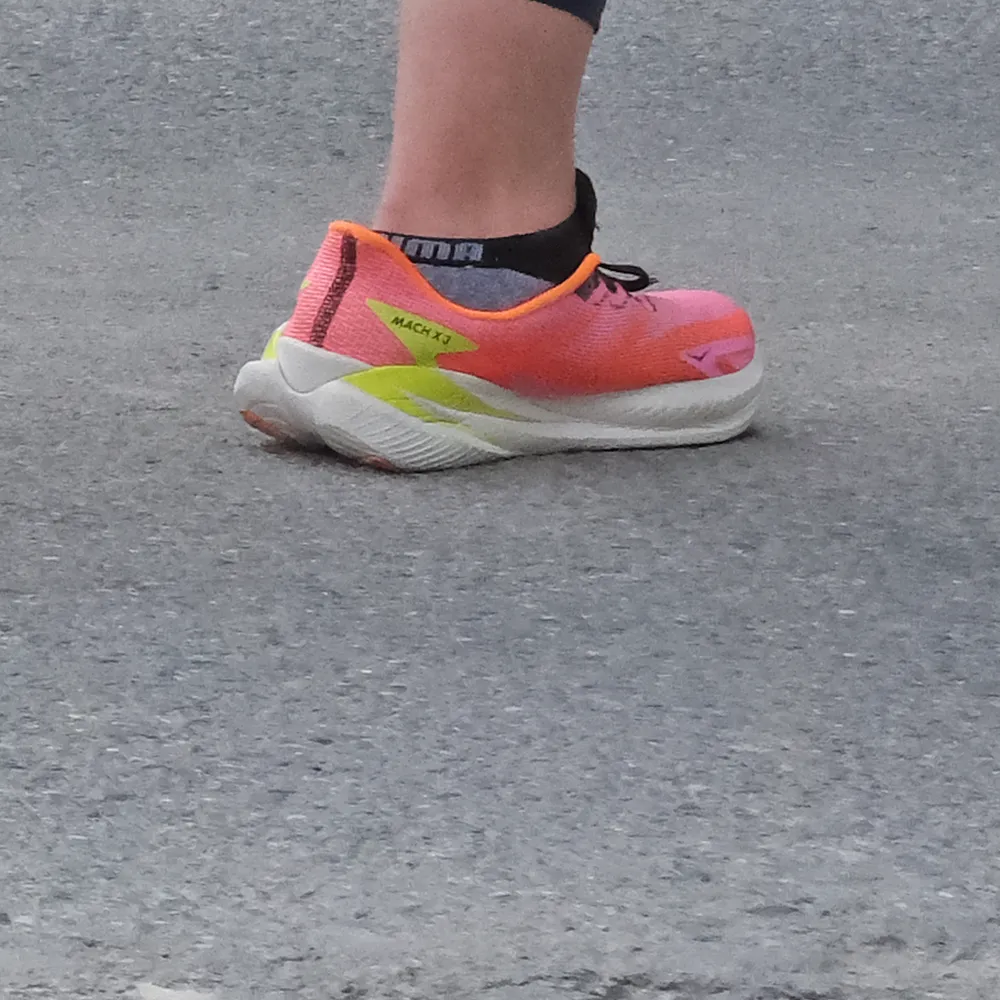
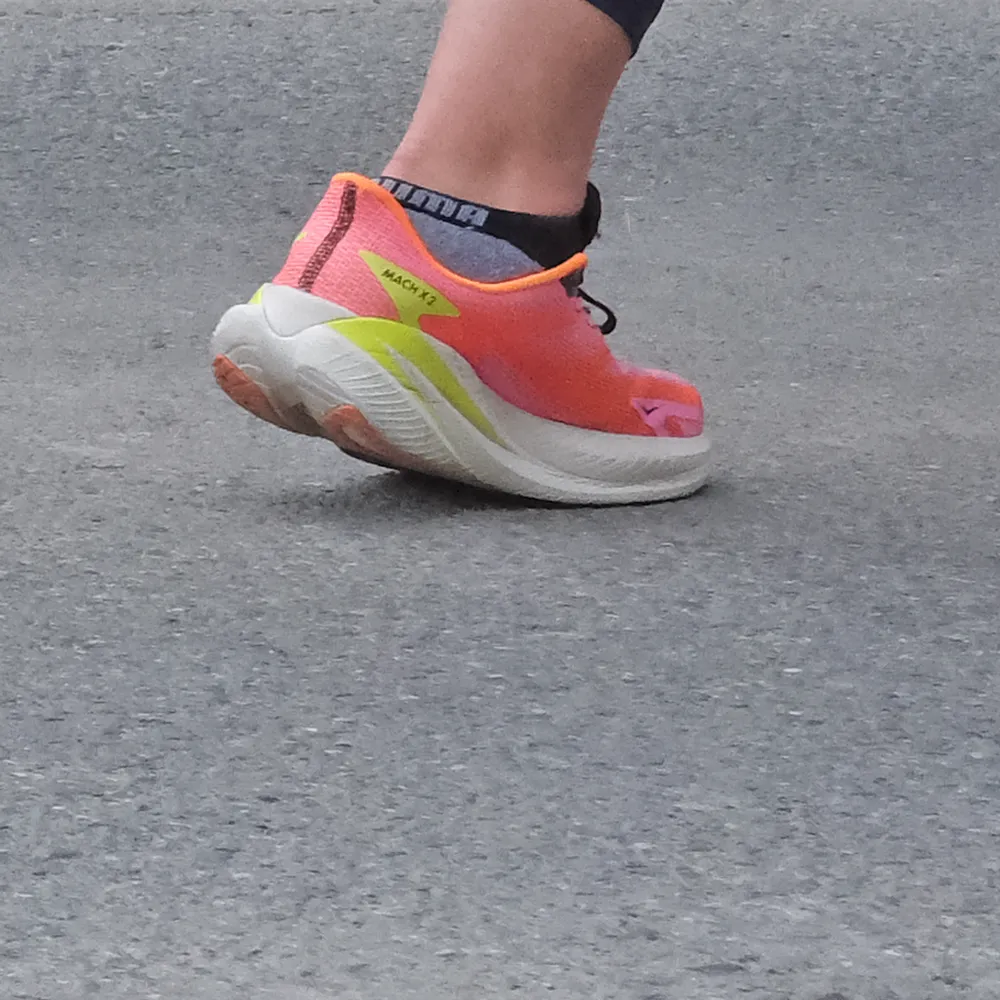
Under the heel and midfoot, the supportive EVA foam frame provides ample compression resistance (see our image gallery) during an overpronating inward roll. In other words, the midsole doesn’t fold on its side. You can jump to the biomechanical animation in our review, where you can see how the Mach X 3’s midsole behaves for an overpronating marathon runner. The Mach X 3’s durable build quality makes it an ideal candidate for tempo runs, everyday training, and races. It lacks the snappy, propulsive feel of carbon-plated racers, but in return, it delivers best-in-class support for overpronators.
Pros
- Supportive neutral ride
- Resists inwards roll
- Stable heel crash pad
- Upper lockdown
- Most durable in its class
Cons
- Heavy
- Weak rocker effect
Fit Notes
Fits true to size with a snug fit. No tongue gusset. Is also available in a wide.
Gallery
Specs
- Heel stack: 45 mm
- Forefoot stack: 40 mm
- Drop: 5 mm
- Weight: 10.2 oz / 289 gms
- Widths: Regular, wide
- Midsole: EVA, PEBA foam, PEBAX plate
- Insole: Molded, removable
Why it works (the basics)
- Toe-to-heel edge Speedboard → adds longitudinal stiffness
- Raised sidewalls → creates a supportive cupping effect
- Wide midsole and outsole footprint → improves overall stability
- 40 mm, 32 mm stack → makes recovery runs comfortable
🔍 Deep Dive
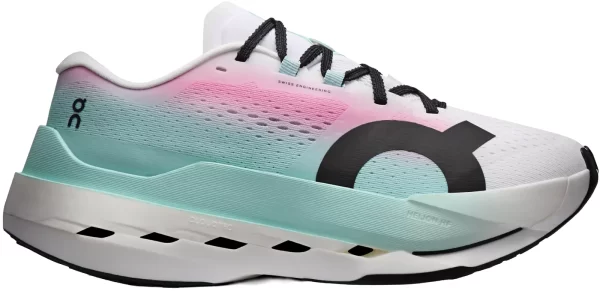
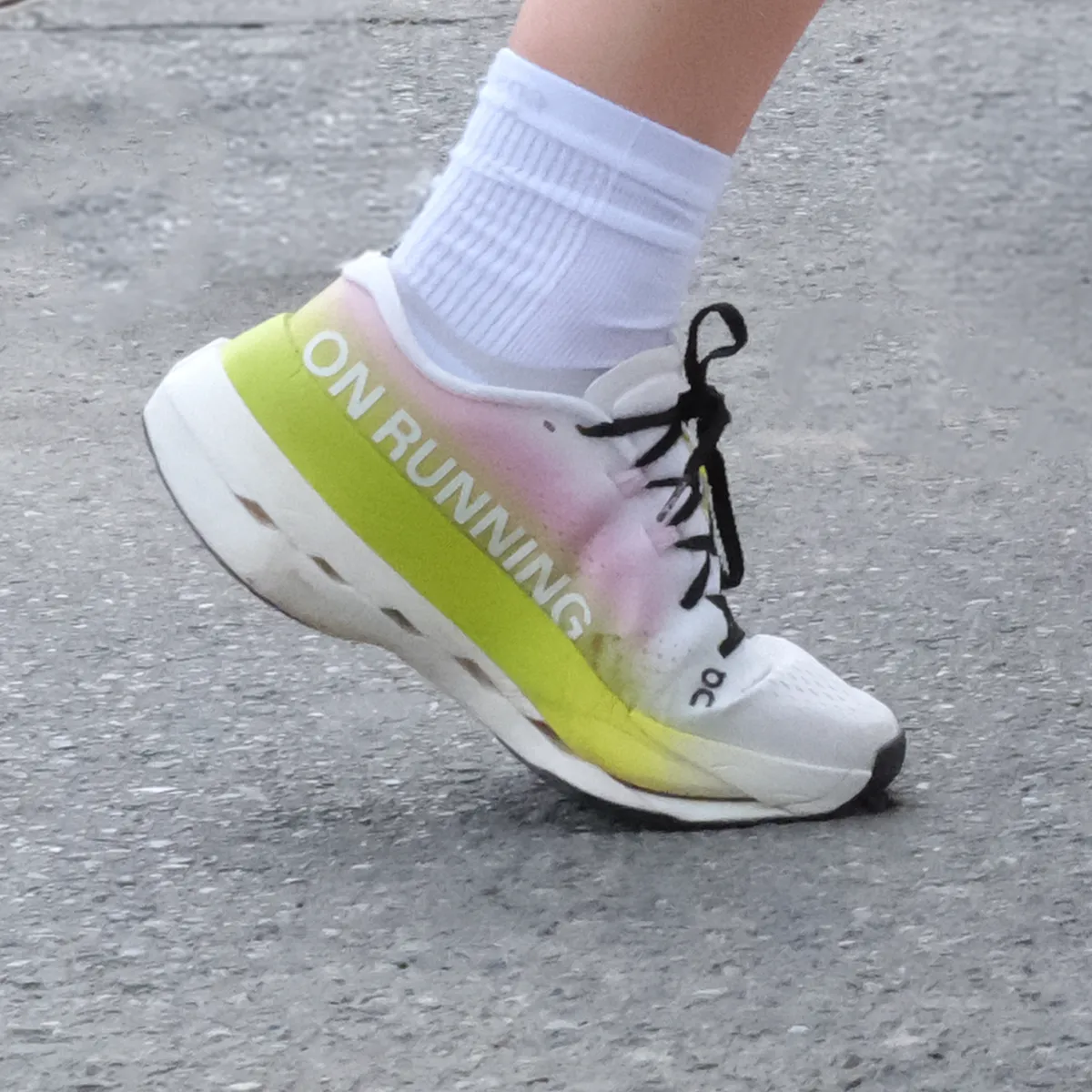
The On Cloudboom Max is unlike any plated running shoe, for its suite of unique features sets it apart from the crowd. The first feature is the end-to-end Speedboard (made with a glass-fiber-infused composite) with a heel cutout and a split-toe design. This plate is easily the longest among all the existing plate varieties, ensuring the foot benefits from its transition-enhancing qualities from landing to takeoffs. The plate’s heel cutout benefits overpronators, as it helps center the weight and reduce the extent of inward roll. The split-toe end allows for more powerful push-offs than a traditional plate.
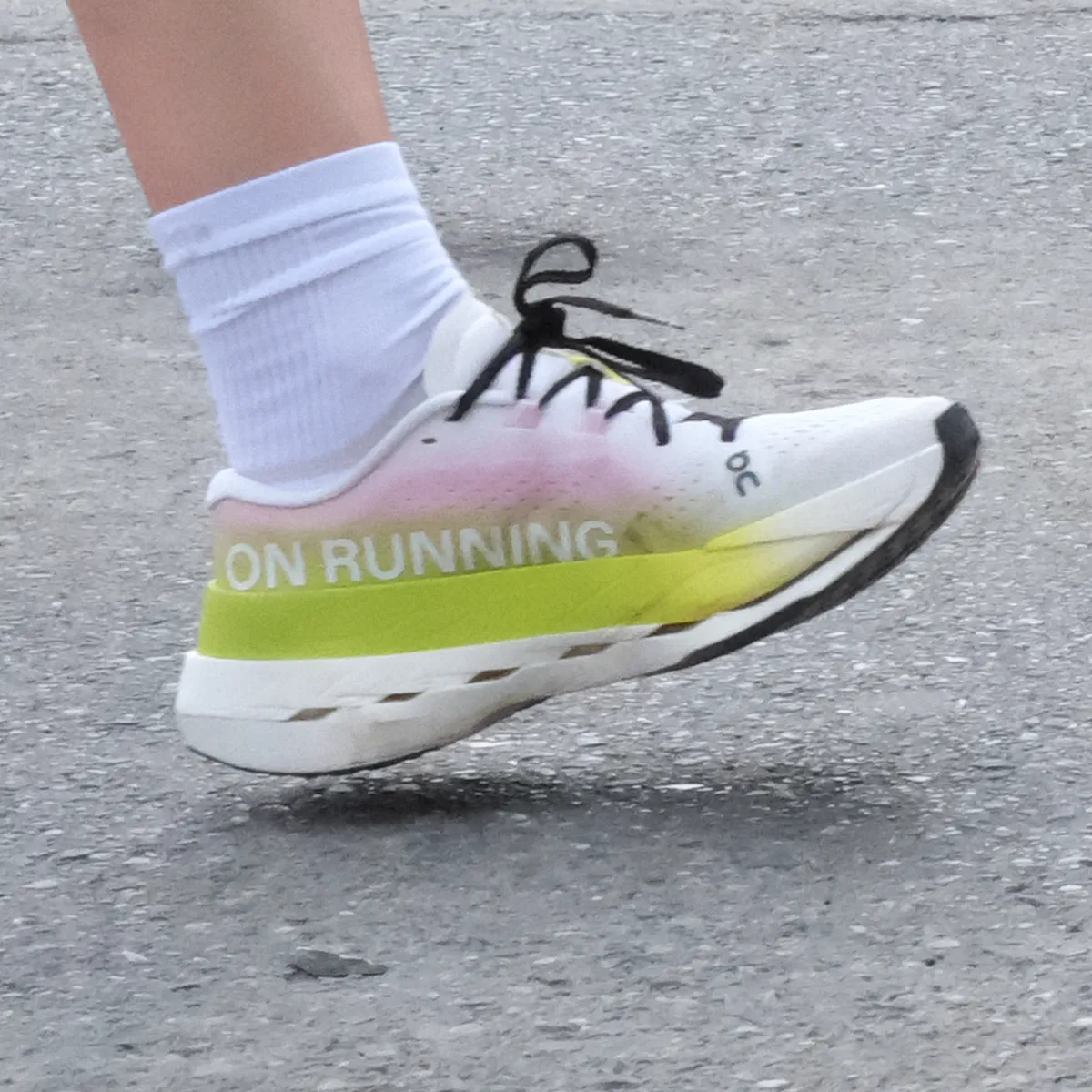
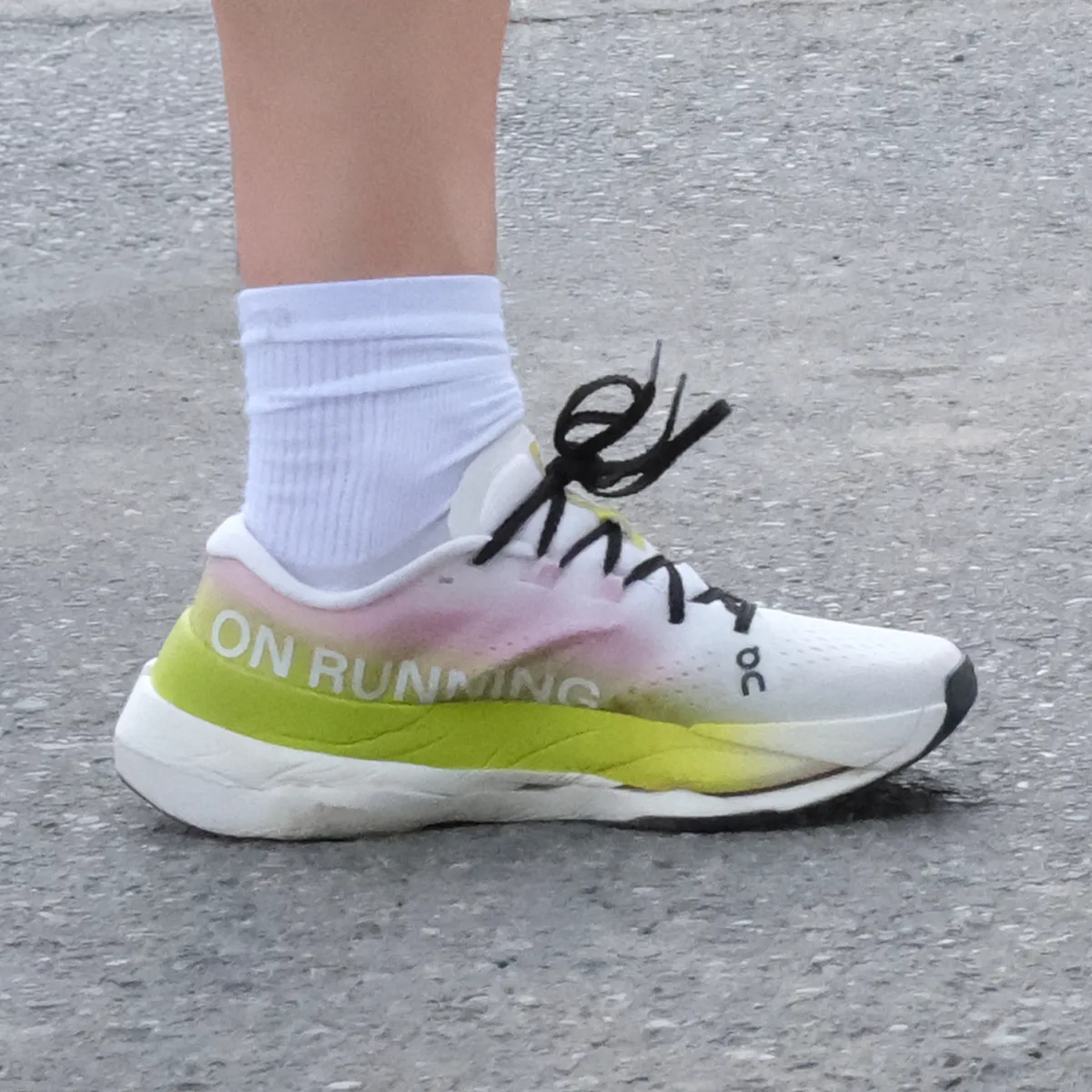
The more supportive (lower) half of the dual-density midsole offers a higher level of compression resistance to benefit overpronators. The high sidewalls keep the foot seated, and the wide footprint supports the gait cycle. And there’s cushioning for long and easy runs – lots of it, in fact, courtesy of the 40 mm and 32 mm stack heights. Based on specs alone, the Cloudboom Max may appear heavy, but then it offers a lot more durability than most plated super-shoes.
Pros
- Weight-centering split-toe plate
- Cupped midsole keeps foot seated
- Max comfort for recovery runs
- Wide base and plate minimizes inwards roll
Cons
- No optional widths
- Heavy by super-shoe standards
Fit Notes
Fit true to size with soft interiors and an accommodating fit. Single width only.
Gallery
Specs
- Heel stack: 40 mm
- Forefoot stack: 32 mm
- Drop: 8 mm
- Weight: 10.4 oz / 296 gms
- Widths: Regular (single)
- Midsole: Helion HF Hyper
- Insole: Molded, removable
The research behind our picks
Which design features should an overpronation-friendly plated shoe have?
Pronation, or the process of the foot rolling in during a run, is a natural part of the gait process. A ‘neutral’ gait is associated with a normal rate or angle of pronation. During overpronation, the foot rolls in excessively over the inner midsole; underpronation is the opposite. That’s why stable or supportive shoes are recommended for runners who overpronate. A soft midsole may lose its structure and collapse when loaded, making overpronation worse.
Carbon-plated racers are inherently less stable than regular running shoes. Their slim-waisted midsoles are usually made of a soft and bouncy foam, allowing the plate to deliver its characteristic springboard snap. Such a design makes the shoe very enjoyable to run in, but the heel and midfoot stability usually suffer.
How do we know which plated racers perform well during overpronation? Along with in-house wear-testing, we conduct observational studies during road races on different aspects of a running shoe. In any given year, we review close to 300,000 individual frames from road races (we’re serious) to understand how running shoes behave under different loads, rates of pronation, footstrike patterns, and speeds.
Are there other plated shoes that perform well for overpronators? The Nike Alphafly 3 is surprisingly resistant to overpronation. For the sake of brevity, we’ve left it out – but it is also an option nonetheless. The Nike Vaporfly 4 is passable, but the midsole collapses if the overpronator also happens to be a heavy runner. The New Balance SC Trainer v3, now discontinued, is great if you can find one.
Which plated running shoes should overpronators avoid?
Most high-end plated shoes do not offer sufficient compression resistance on the medial side. The Asics Metaspeed series (Edge, Sky, and Ray variants), adidas Adios Pro 4, and the Saucony Endorphin Elite 3 are strictly no-go for overpronators. The Brooks Hyperion Elite 6, New Balance SC Elite 6, and Hoka Rocket X 3 are just okay, yet far from ideal.