
Product guide updates
(4 total)- 2026-10-15 — Added 'Top recommendations summary' module
- 2026-10-15 — Added 'key considerations' section
- 2026-10-15 — Migrated product guide to new editorial format
- 2026-10-15 — Updated all primary and secondary recommendations
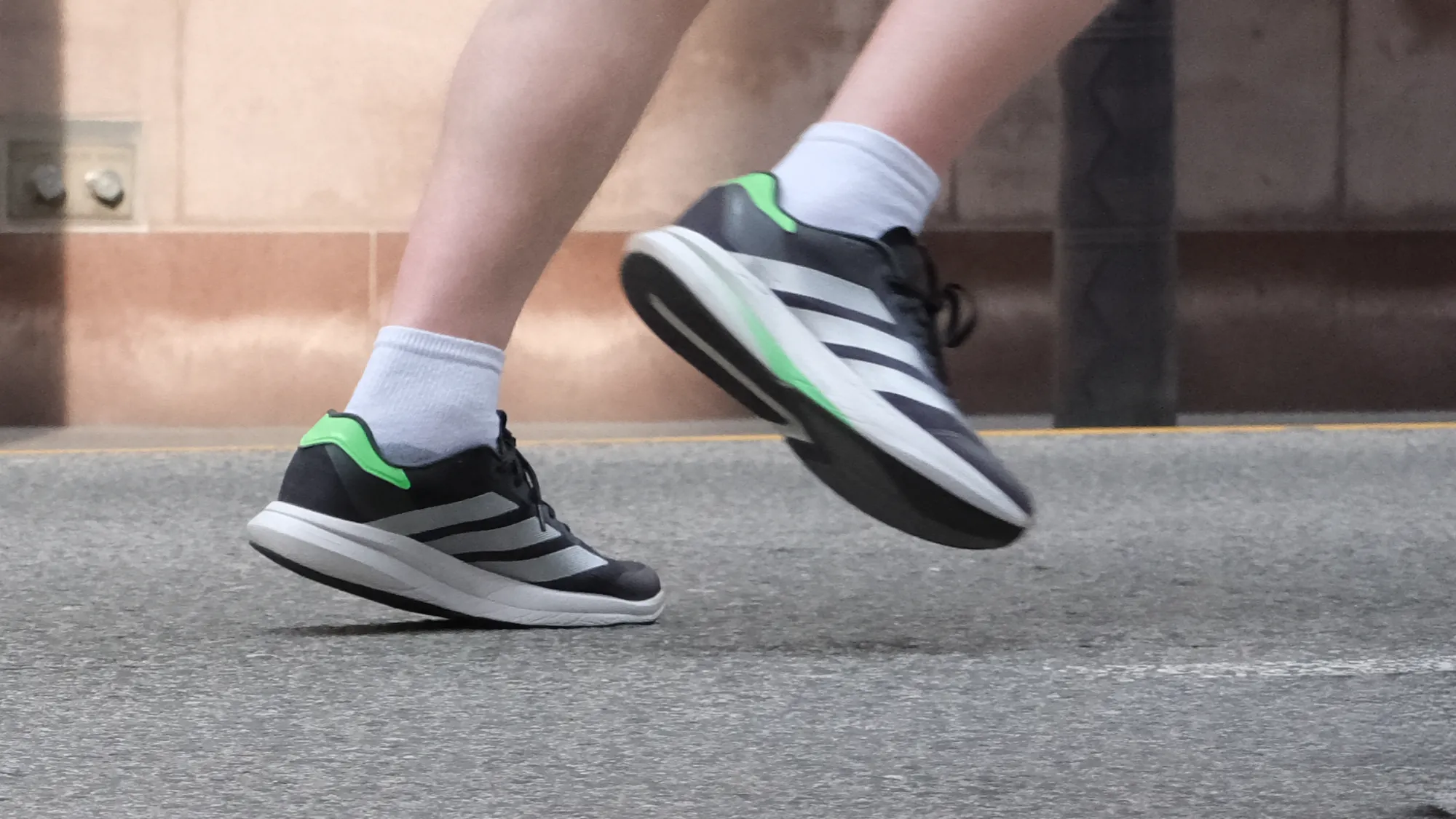
In this product guide:
How we selected
Our recommended affordable adidas running shoes are grouped by use cases – daily runs, 5K and 10K races(includes tempo runs), heavy runners, and trail. By connecting each feature with its respective function, the “Why it works” section explains why a particular shoe (in its respective class) is suitable for its recommended use case. Alternatives are suggested under certain recommended categories. For example, the alternative to the adidas Response 2 (our daily trainer pick) is the Run Falcon 6 (for a firmer ride). When combined, this product guide contains 6 different affordable adidas running shoe recommendations. Here’s a quick, one-line summary of our recommended categories:
- Best for daily runs: Multi-role budget-friendly running shoes.
- Best for 5K and 10K: Affordable adidas shoes with speed-friendly comfort.
- Best for heavy runners: Cushioned shoes that do not bottom out under heavy loads.
- Best for trail: Entry-level shoes for off-road runs.
Our recommendations combine our influence-free, expert-led wear-testing with biomechanical data sourced from over 33,000 high-speed images captured during actual road races. The ‘key considerations’ section below explains our selection criteria and the feature gap between entry-level and high-performance adidas running shoes.
Key considerations
What are some of the key differences between, say, a $75 and $150 Adidas running shoe?
The best way to explain the differences would be to pick two actual models that fit the price tiers and compare them across different areas. For this exercise, let’s choose the Adidas EVO SL ($150 MSRP) and Duramo SL ($70 MSRP).
Entry-level adidas running shoes use a lower-tier midsole technology
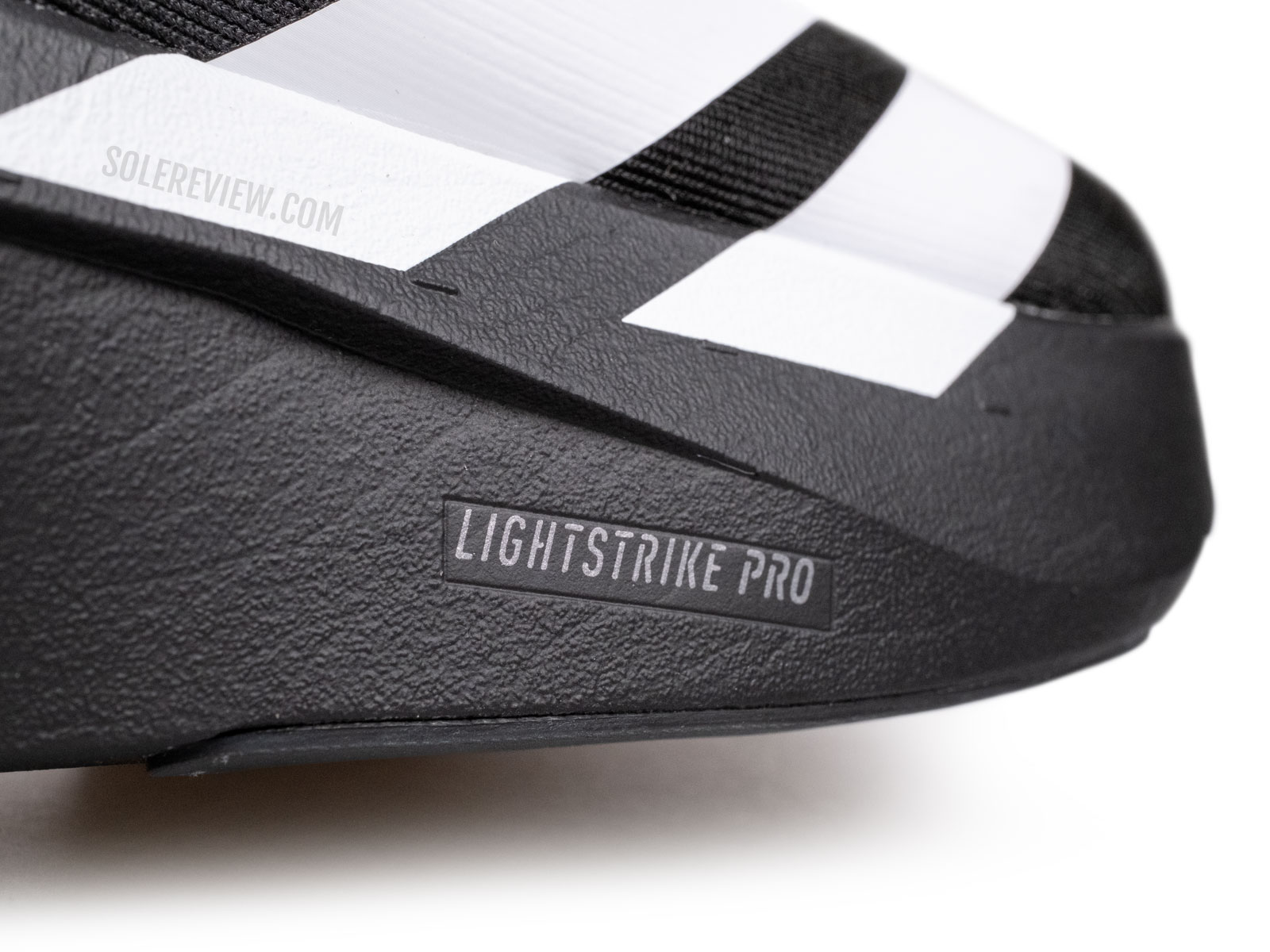
The adidas EVO SL’s midsole uses Lightstrike Pro, a soft and bouncy foam that was also used on the Adios Pro 3. On the other hand, the Duramo SL has a Cloudmotion midsole (an EVA foam-blend) that is less expensive to produce. The difference in the midsole technologies influences the shoe’s behavior on the road. While the EVO SL delivers a propulsive ride because of the Lightstrike Pro and rocker midsole, the Duramo SL will feel ‘flat’, as it lacks the energetic response of the LS Pro midsole.
The absence of Continental, Lighttraxion, or clear rubber outsoles
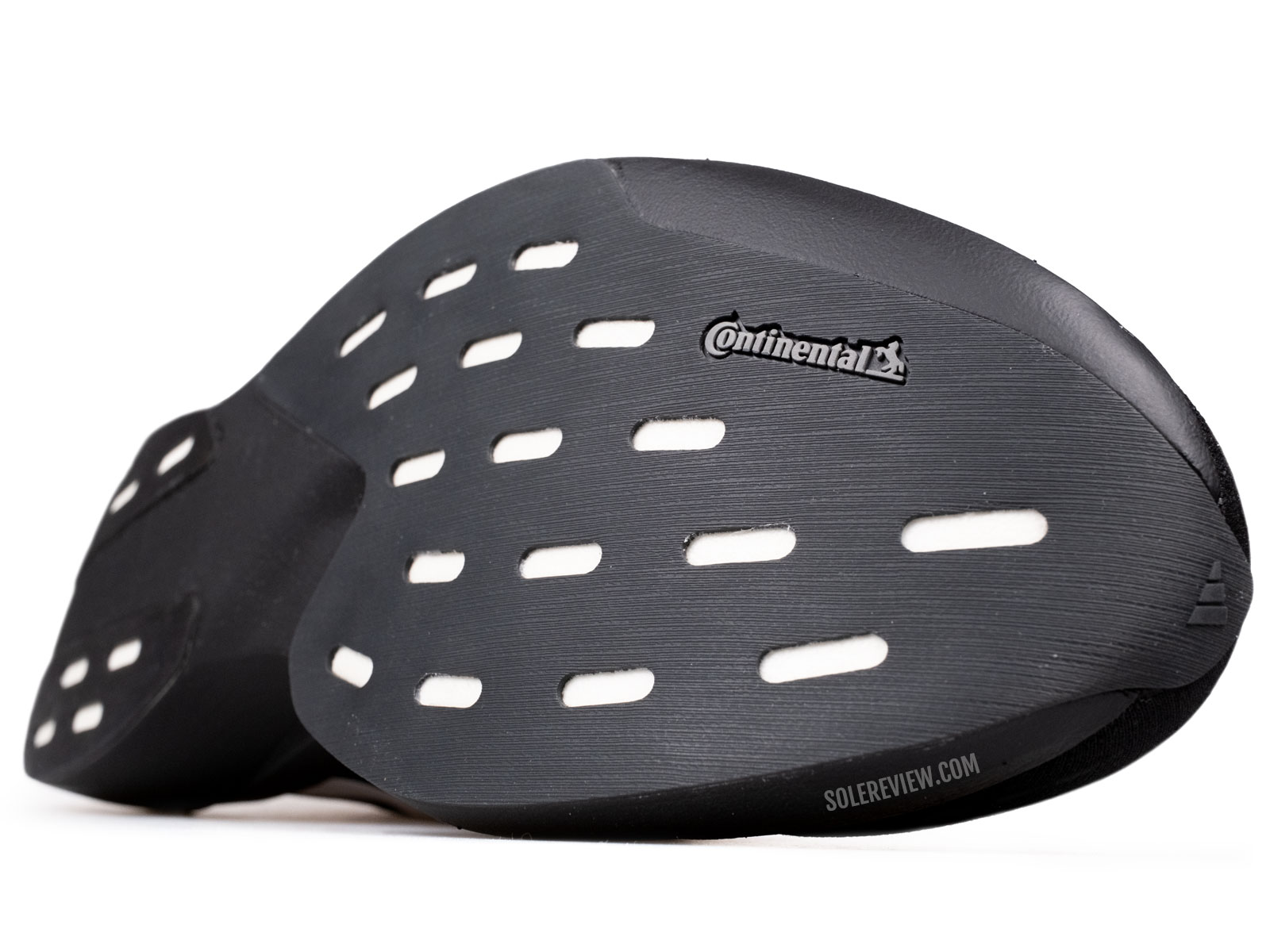
Generally speaking, sub-$100 adidas running shoes do not use Continental rubber, Continental Wintergrip, clear rubber, or Lighttraxion rubber outsoles. Instead, affordable shoes will feature legacy outsole materials like Adiwear. To be clear, the traction on lower-end shoes is not inferior, but the thicker Adiwear (or similar carbon rubber outsoles) tend to make the shoe heavier and the ride stiffer. In contrast, advanced rubber compounds keep the weight low and flexibility high without compromising durability.
Conventional uppers and basic colors
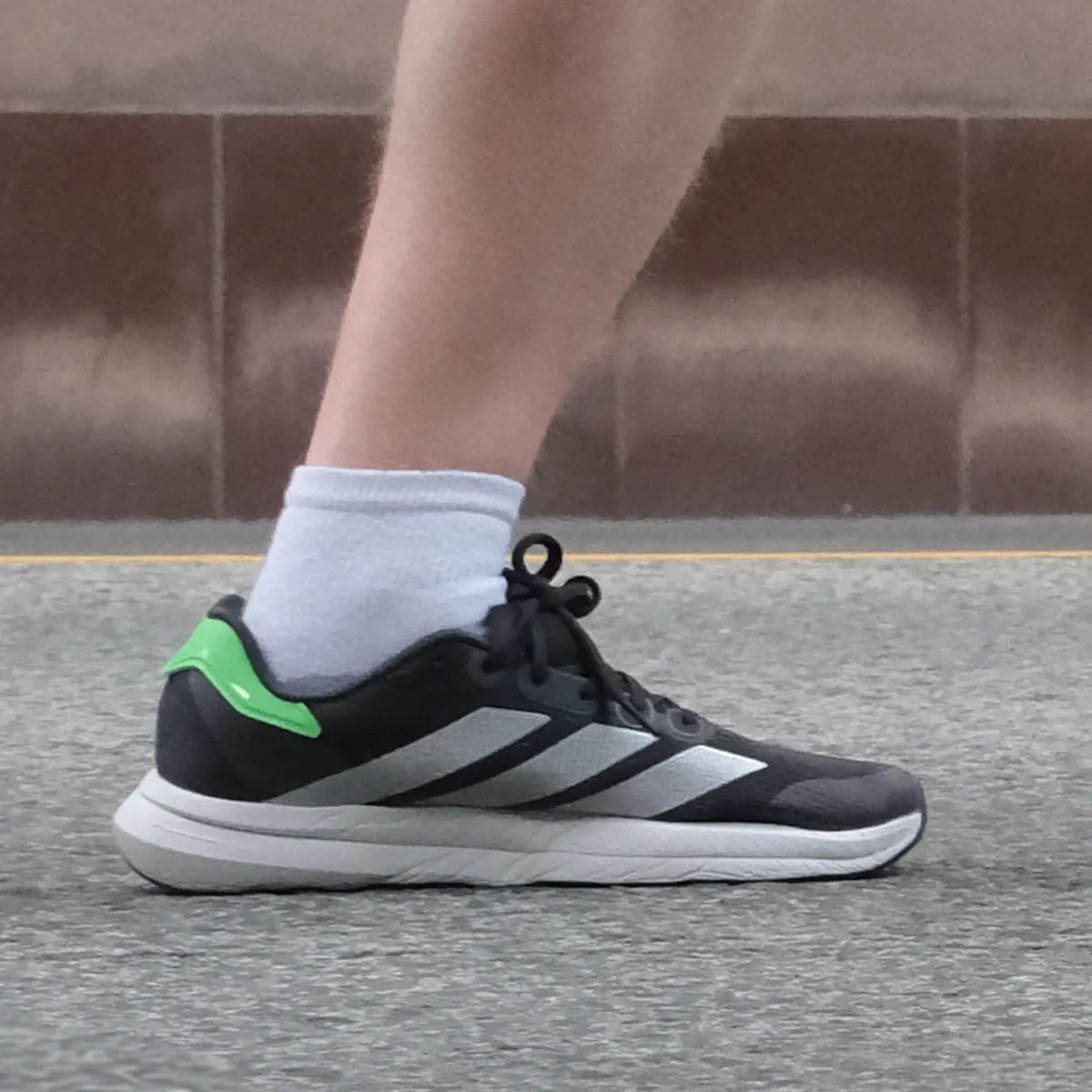
The adidas Duramo SL clearly borrows its aesthetics from the high-performance Adizero line, but that’s where the similarity ends. More expensive shoes, such as the EVO SL, use lighter outer mesh materials and plusher lining materials. So from the outside, the shoes may appear somewhat similar. However, upon wearing, the two shoes deliver different tiers of sensory experiences. The EVO SL’s upper wraps the foot in lightweight and distraction-free comfort; the Duramo SL isn’t uncomfortable, but the wearer will clearly feel the difference. Unlike the EVO SL, the Duramo SL uses a thicker spacer mesh upper with a thicker lacing eyestay.
Less expensive shoes also lack an expressive color palette, usually sticking to basic black, white, navy, and gray color combinations to keep the costs low.
Why it works (the basics)
- 32 mm, 24 mm stack EVA foam midsole → has a versatile ride character.
- Segmented full-length outsole → delivers adaptable traction
- Layered mesh upper → offers a true-to-size and secure fit
- Generously padded tongue and heel → adds interior plushness
🔍 Deep Dive
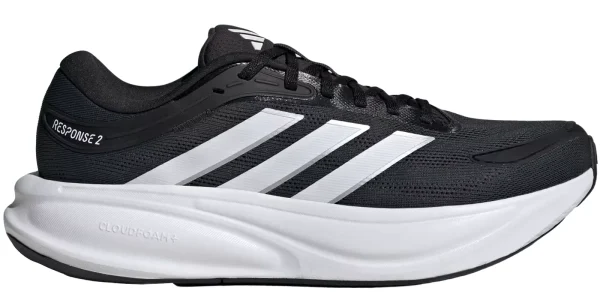
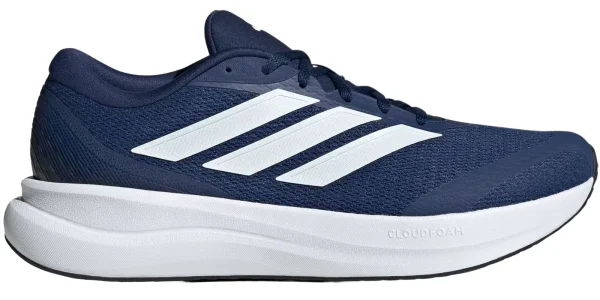
adidas has always taken its sub-$100 assortment seriously, so none of its affordable running shoes feel like design afterthoughts. The Response 2 retails for $75, but is often available on promotional offers, making it a compelling value daily trainer. The midsole uses a firm EVA foam-blend called Cloudfoam with stack heights of 32 mm and 26 mm, making it cushioned enough for distances up to 10K, but also stable at the same time. The rubber outsole, while full-length, has long channels of exposed midsole foam. This layout allows the shoe to offer adaptive traction, depending on where it’s needed most. It’s beveled at the heel edge for smoother landings as well.
As you can tell by the stack heights, the forefoot midsole isn’t very tall. Forefoot strikers may find landings somewhat harsh, but a lower stack height improves stability and transition efficiency. If it’s any consolation, a die-cut OrthoLite footbed adds step-in comfort. The true-to-size upper offers a plush interior for its price, thanks to the generously padded heel collar and tongue. An internal gusset is absent, so expect minor tongue slide.
Pros
- Stable ride comfort
- Adaptive outsole traction
- Plush heel and tongue
- Beveled heel edge for smoother landings
- OrthoLite footbed for step-in comfort
Cons
- No optional widths
- Midsole setup favors heel strikers
- Tongue slide due to lack of gusset
Fit Notes
True to size with snug forefoot and roomy toe-box. No gusset, mild tongue slide. Plush heel and tongue. No optional widths.
Specs
- Heel stack: 34 mm
- Forefoot stack: 26 mm
- Drop: 8 mm
- Weight: 10.6 oz / 300 gms
- Widths: Regular (single)
- Midsole: Cloudfoam EVA foam
- Insole: Die-cut OrthoLite, removable
Why it works (the basics)
- Lightstrike EVA midsole → delivers speed-friendly comfort
- Combination TPU-rubber sole → provides long-lasting grip
- Reinforced mesh upper → offers ventilated and secure fit
- 35 mm, 27 mm stack heights → minimizes ride harshness
🔍 Deep Dive
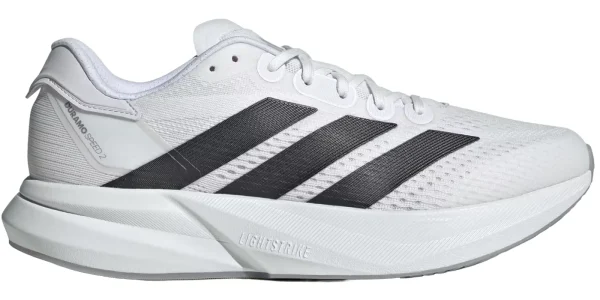
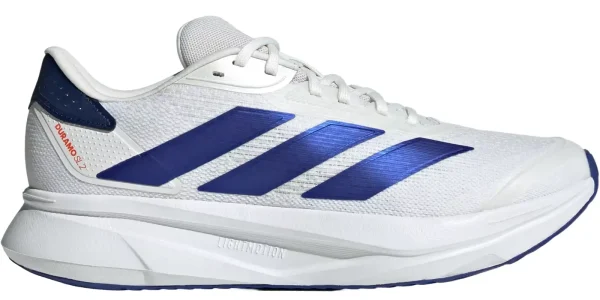
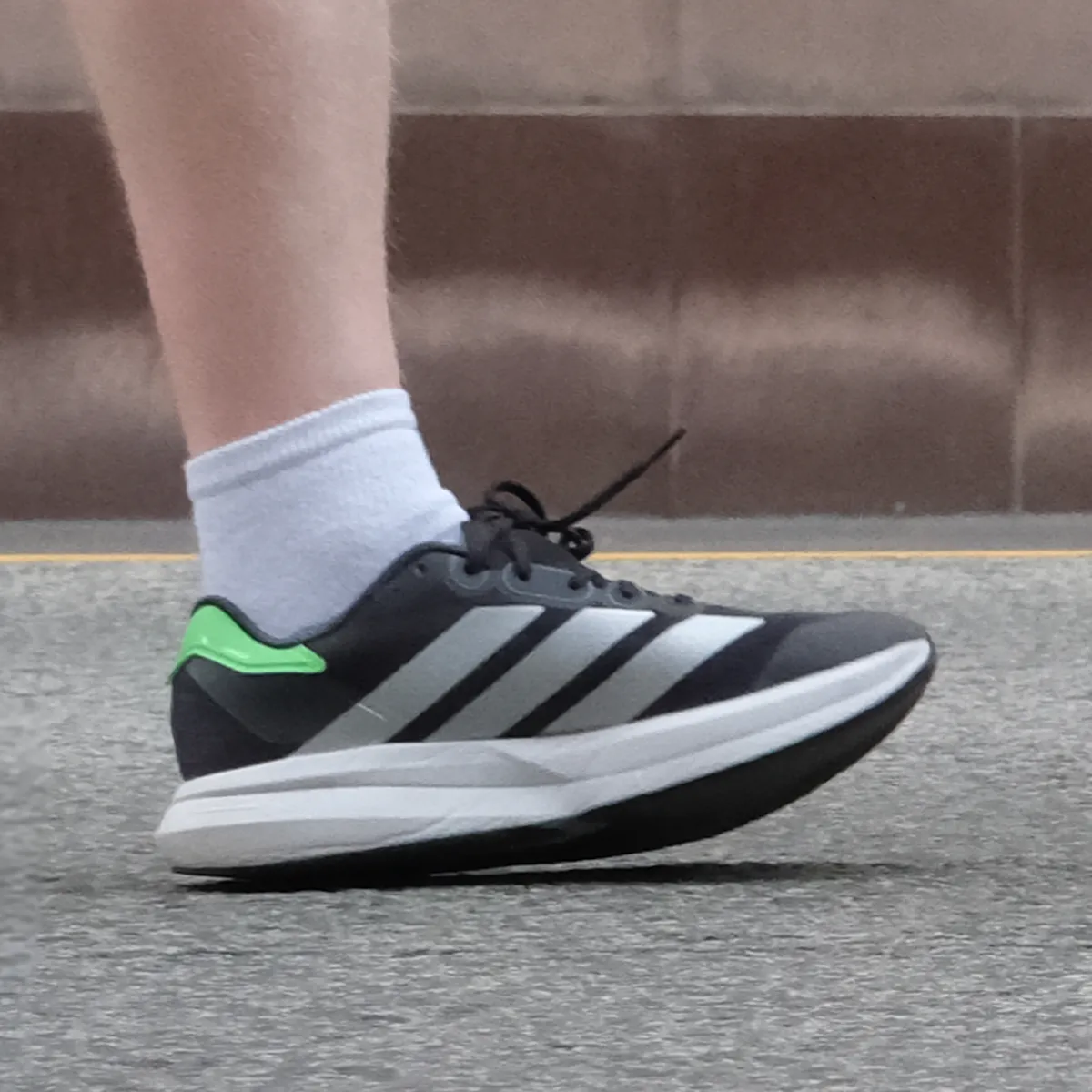
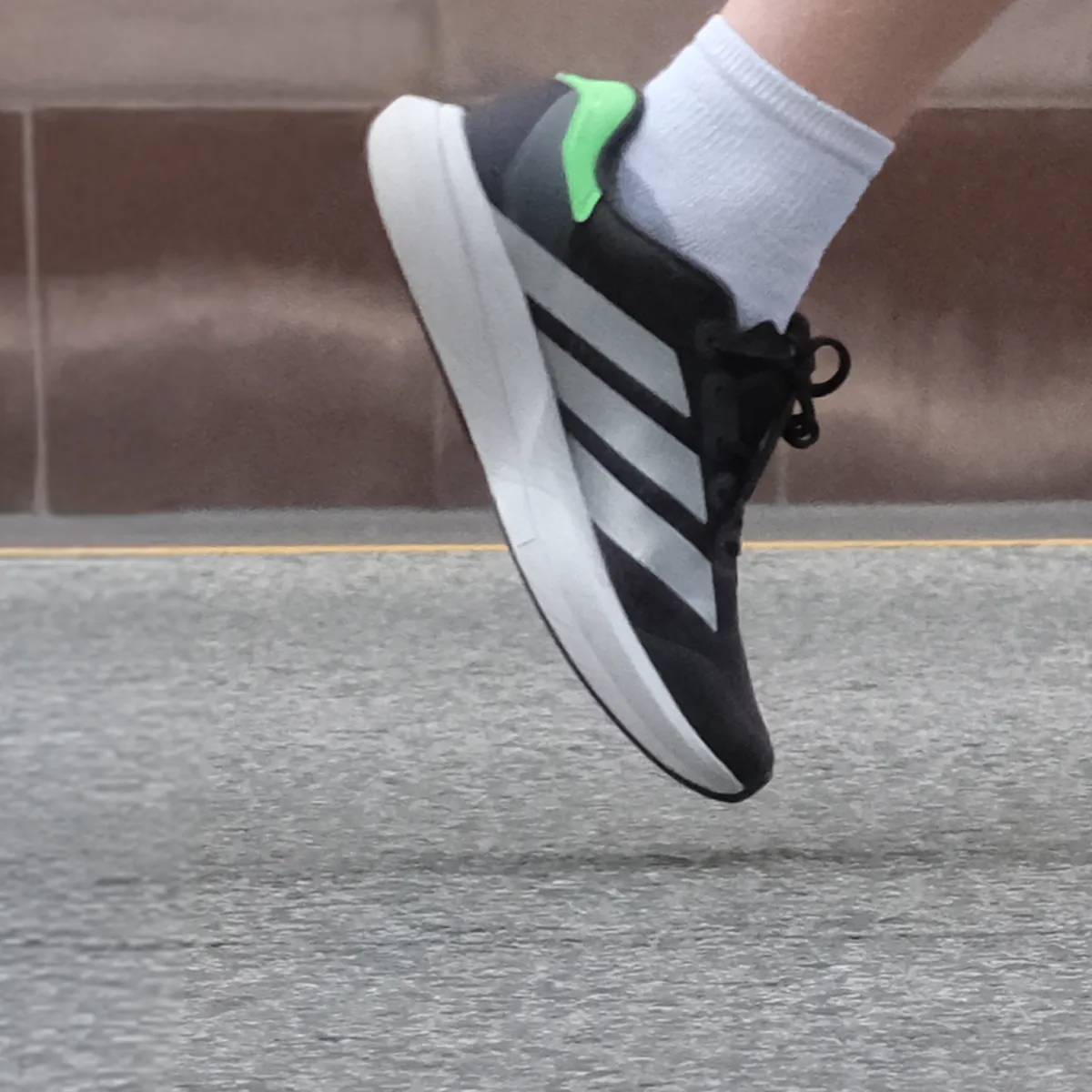
If the Duramo Speed 2 shoe looks familiar, that’s because its aesthetics are borrowed from the more expensive Adizero models. Or to be more specific, the adidas Boston 13. While it doesn’t feature high-end components like the EnergyRods or Lightstrike Pro foam, the Duramo Speed 2 carries some of the performance DNA, making it an excellent speed trainer under $100. The midsole uses an EVA foam-blend called Lightstrike, the same compound that the very capable Adizero SL had a few years ago. This foam isn’t particularly soft, making it efficient during tempo runs and 5K races up to 4:00 min/km (6:30 min/mile). The sparsely padded tongue is also a straight lift from the Adizero catalog, delivering a distraction-free, yet secure and true-to-size fit.
The dual-compound outsole has been thoughtfully designed to deliver long-lasting grip. The forefoot has a large rubber pad for traction, surrounded by a durable TPU outsole. With very little exposed foam under the forefoot, the Duramo Speed 2 lasts longer than most shoes in this segment. The Lightstrike EVA midsole is also fatigue-resistant, maintaining its cushioning over a few hundred miles.
Pros
- Speed-friendly transitions
- Ride stability
- Outsole grip and life
- Secure and breathable fit
Cons
- No widths
Fit Notes
True to size, snug forefoot. Single width only.
Gallery
Specs
- Heel stack: 35 mm
- Forefoot stack: 28 mm
- Drop: 7 mm
- Weight: 9.5 oz / 265 gms
- Widths: Regular (single)
- Midsole: Lightstrike EVA foam
- Insole: Molded, removable
Why it works (the basics)
- 38 mm, 32 mm stack → delivers supportive comfort
- Firm Cloudfoam EVA foam → doesn’t bottom out
- All mesh upper construction → assists ventilation
- Two-piece Adiwear outsole → for targeted grip
🔍 Deep Dive
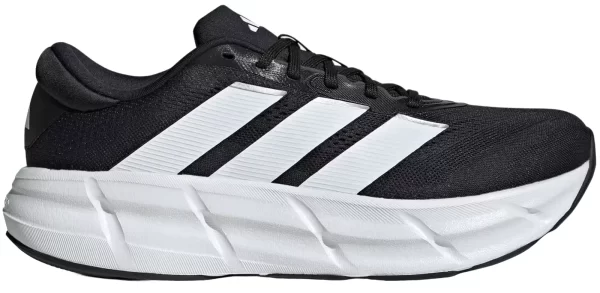
In a heavy runner context, the Cloudfoam EVA midsole scores higher than even super foams like Lightstrike Pro. Firm EVA foam-blends are more resistant to bottoming out than softer foams, making them ideal for heavy runners. The high level of compression resistance doesn’t mean the Questar 4 is lacking in cushioning. For a budget running shoe, its 38 mm and 32 mm stacks are as high as it gets, ensuring long-distance comfort – both for heavy runners and recovery runs. The two-piece outsole is laid out in zonal strips, allowing the shoe to deliver targeted grip. For example, landing on the outside heel edge only activates that rubber strip, rather than pulling the rest of the outsole inwards. This also enhances the overall cushioning quality.
The Questar is often found discounted, but even at its full retail price ($75), the upper is surprisingly well-kitted. The tongue and heel use perforated textile linings with generous foam padding for comfort. As with most entry-level adidas running shoes, the fit is true-to-size with a snug forefoot and roomy toe box.
Pros
- Long-distance comfort
- Compression-resistant midsole
- Targeted outsole grip
- Secure and breathable upper
- Plush heel lockdown
Cons
- Lack of widths
Fit Notes
True to size with a snug forefoot and toe box. Sold only in a single width.
Specs
- Heel stack: 38 mm
- Forefoot stack: 32 mm
- Drop: 6 mm
- Weight: 10.7 oz / 303 gms
- Widths: Regular (single)
- Midsole: Cloudfoam EVA foam
- Insole: Molded, removable
Why it works (the basics)
- Aggressive lug geometry → for grip on mild unpaved paths
- Exposed outsole zones → enhances ground feel and flexibility
- Lightmotion EVA midsole → delivers firm and stable comfort
- Reinforced upper → for secure, abrasion-resistant fit
🔍 Deep Dive
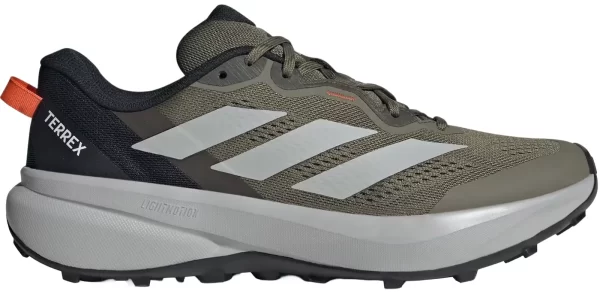
We come across many road running shoes that are marketed as ‘TR’ variants just by retrofitting an existing upper design with a slightly modified outsole. Well, the Tracefinder Plus isn’t one of those shoes. We wouldn’t categorize the Tracefinder as a shoe capable of serious off-road duties, but it is a relatively affordable road-trail hybrid. It has a clean-sheet design – meaning it doesn’t share parts with other (existing) adidas shoes – and a form factor that appeals to runners who want a stable and comfortable ride for concrete and unpaved trails. The breathable and secure upper isn’t waterproof, but has a reinforced toe bumper for a higher level of abrasion resistance than a comparable all-mesh exterior.
There’s no fancy foam underneath, but a reliable Cloudmotion (EVA foam-blend) midsole attached to an outsole with exposed zones and aggressive lugs. The firm ride adds stability on off-road runs; the exposed outsole layout blends ground feel with dependable traction.
Pros
- Blends comfort with stability
- Ground feel
- Outsole grip
- Secure fit
- Interior comfort
Cons
- Limited to light hikes and park runs
- No optional widths
Fit Notes
Fits true to size. Single width only.
Specs
- Heel stack: 35 mm
- Forefoot stack: 28 mm
- Drop: 7 mm
- Weight: 11.1 oz / 315 gms
- Widths: Regular (single)
- Midsole: Lightmotion EVA foam
- Insole: Molded, removable