

In this product guide:
The Revolution 8 is a basic running shoe that delivers functional performance. The Vomero 18-inspired EVA foam midsole has the performance chops for easy runs and casual wear. At $75, this shoe is the price of entry into Nike running. The non-removable footbed provides step-in softness and works together with the EVA foam cushioning. Nike hasn’t compromised on outsole coverage; the Revolution 8’s waffle rubber outsole provides better traction and durability than an all-foam design that’s usually found on
Three changes make the Revolution 8 better than the Revolution 7. The first is the availability of an extra-wide width, something that the previous model lacked. The more breathable mesh is the second improvement. Finally, the mesh features pressed TPU on the sides for durability and partial splash resistance. The true-to-size upper offers a comfortable interior environment, thanks to the plush tongue and heel padding.
17 years ago, the Downshifter was a part of the original affordable shoe squad along with the Nike Dart, its then partner-in-crime. The shoe is still going strong because it is an excellent value proposition for $75. When discounted, it’s even better value. You don’t get fancy cushioning or upper tech at this price, but the shoe gets its basics right. A single-density EVA midsole over a segmented rubber outsole delivers above-average levels of ride comfort and transition. Unlike the Winflo, there’s no Nike Air bag inside the midsole.
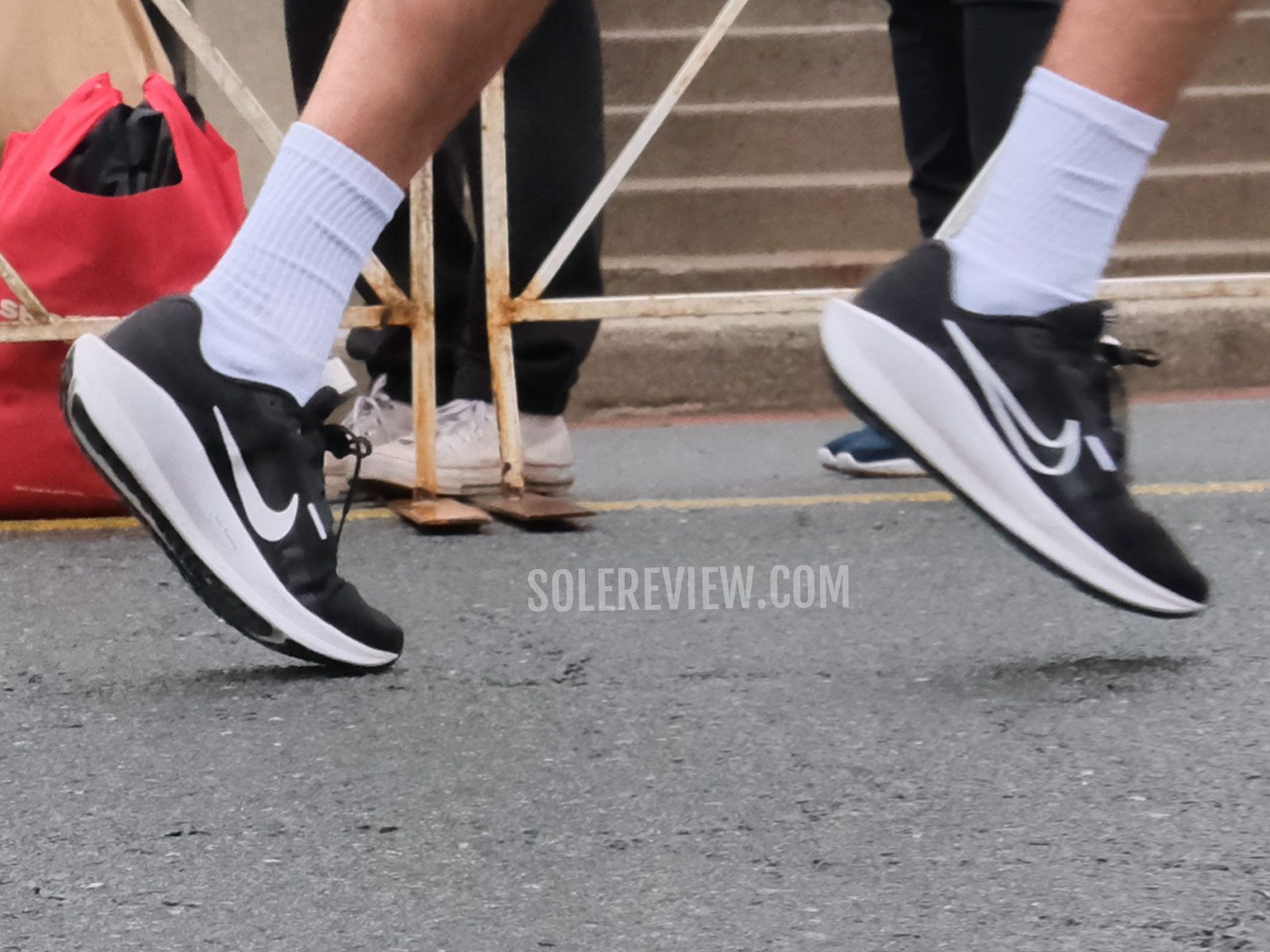
The ride feels ‘flat’ when compared to Nike running shoes with superior cushioning tech. We recommend the Downshifter to be used for shorter daily runs under 10K. The upper is nearly all mesh for breathable and secure comfort; fused reinforcement adds durability and structural support to the upper. Like the Pegasus and Winflo, the strap-based midfoot offers quick and effective lacing. An extra-wide width is an optional buy.
The Flex Experience 12 is inspired by the Nike Free, a running shoe with an ultra-flexible midsole. We used the word ‘inspired’, because the $75 Flex Experience 12 is a toned-down version of the Nike Free. Unlike the latter, only the forefoot has deep grooves. The rearfoot has a solid midsole for better stability under the heel. The all-foam monosole (there’s no outsole here) has deep flex grooves in a side-to-side configuration for generous flexibility. Though the outsole lacks rubber lugs, the traction is decent – except on slimy and dusty surfaces.
We love how the upper fit and feel complements the flexible character of the midsole. The heel counter is collapsible, and there aren’t any stiff overlays. As a result, the soft upper has a near seamless and secure fit.
The Zoom Rival 4 is Nike’s most underrated running shoe by far. Unlike most of the shoes on this guide, the Rival isn’t an everyday trainer, but a speed training shoe. It also offers better value than competing products like the adidas adizero SL and Asics Hyper Speed 5. This is a lightweight trainer to do your tempo runs, intervals, and 5K races in. The lightweight build (258 gm, 9.1 oz), plastic midfoot shank, and forefoot Zoom air work together to deliver speed-friendly cushioning. The Cushlon EVA foam midsole adds comfort for up to a 10K distance. The stiff Zoom Air bag and rubber outsole make the forefoot transitions quick and grippy.
There’s a reason why the shoe looks familiar. The design is strongly influenced by the Zoom Fly 6 and Vaporfly 4. The outsole rubber is applied sparingly to reduce weight, and the midfoot window exposes the plastic shank.
The upper gets the racing shoe treatment. A minimally-padded racing tongue is attached to a lightweight and breathable mesh upper. The heel gets a padded collar for comfortable lock-down. On the arch side, the mesh upper is reinforced with a midfoot band and fused forefoot overlay. The midfoot band secures the fit by being a part of the lacing system.
The Juniper Trail 3 is a watered-down Pegasus Trail. Like the latter, it has a road-friendly outsole made of the ATC (All Terrain Compound) rubber. The articulated outsole allows it to flex with the midsole to reduce stiffness. The lugs are shallow, so the Juniper Trail 3 isn’t meant for serious trail runs. A rock plate is absent too. All being said, the Juniper Trail 3 offers great value for its $90 price. The EVA foam midsole makes running on roads and mild trails comfortable, but don’t expect a lot of under-foot protection.
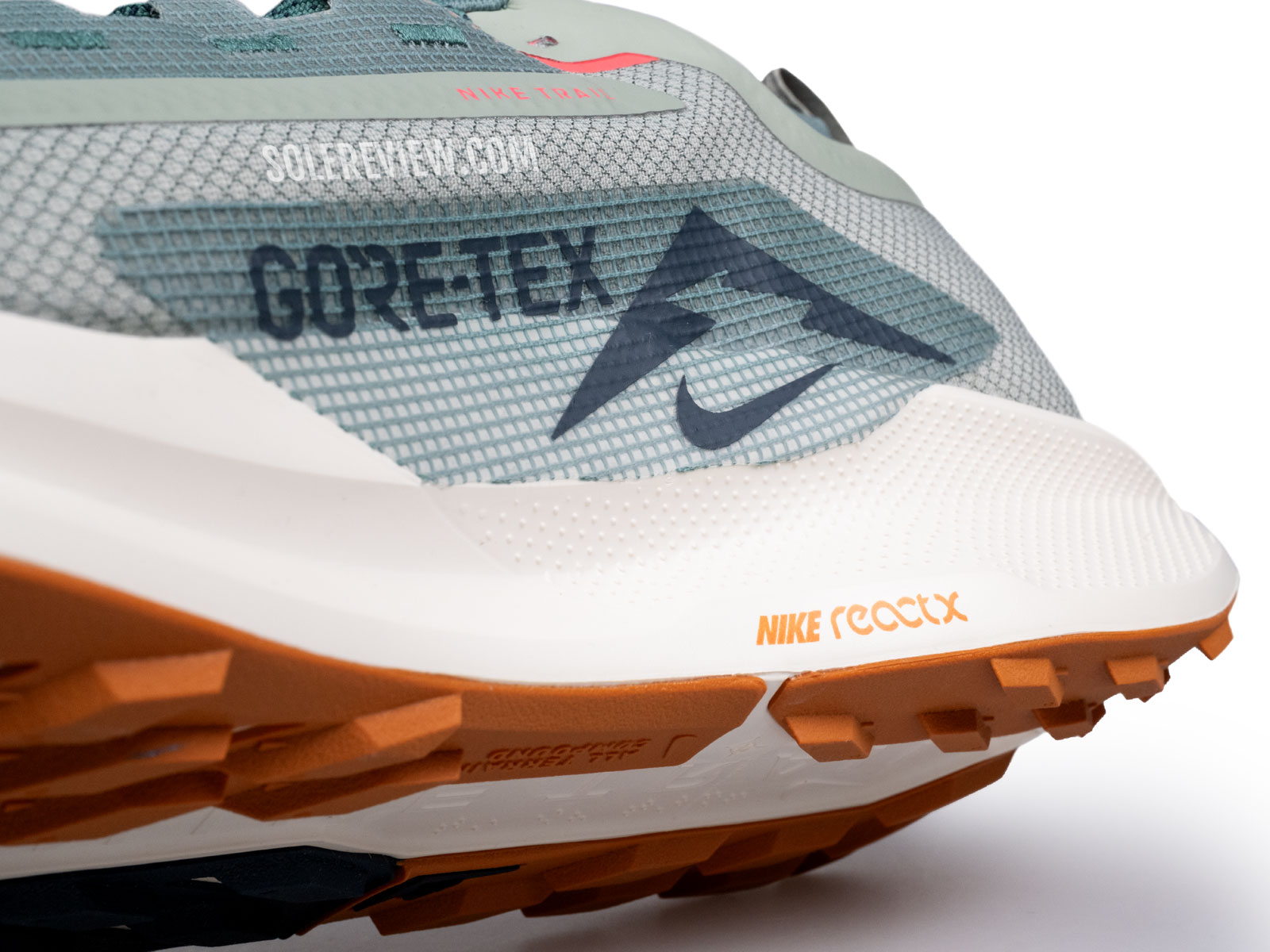
The upper is relatively better protected, as it benefits from Pegasus Trail-inspired features. The rubber outsole forms a protective toe bumper, and the upper has a reinforced toe-box and midfoot. A padded tongue and heel collar add secure comfort.
The Rival Waffle 6 is a serious track and field (T&F) shoe, so don’t expect the comfort and fit levels of a regular trainer. The EVA foam midsole has bare minimum cushioning; the upper has a tight fit and pointy toe box. The minimal cushioning and tight fit exist for a reason. The low-profile midsole allows quick landings and take-offs during a track or XC race. At the same time, the tight upper keeps the foot locked down for efficient power delivery during sprints. The rubber outsole grips well on synthetic tracks, roads, and unpaved XC trails.
When on road, the Rival Waffle 6 is useful as an interval trainer. The tight upper excels at driving power to the midsole, so this shoe can also be used as a 5K racer. Racing flats are now a rare commodity in an era of carbon-plated trainers, so the Rival Waffle 6 is a purist’s racer.