
Product guide updates
(6 total)- 2026-11-04 — Replaced Hoka Mach X 3 with On Cloudboom Max
- 2026-09-20 — Added 'Top recommendations summary' module
- 2026-08-05 — Updated carousel with Saucony Hurricane 26.
- 2026-06-08 — Added alternatives to scrollable carousel under each recommendation.
- 2026-06-08 — Created FAQ with relevant question and answer pairs.
- 2026-06-08 — Migrated product guide to new editorial format.

In this product guide:
How we selected
Our recommended shoes for heavy runners (over 190 lbs/86 kg) are grouped by use cases – daily training, 10Ks and marathons, recovery runs, and overpronators. By connecting each feature with its respective function, the “Why it works” section explains why a particular shoe (in its respective class) is suitable for heavy runners. The scrollable carousel contains alternatives within each recommended category. For example, the alternatives to the Hoka Mach X3 (our 10K/marathon pick) are the Nike Alphafly 4 (for forefoot strikers), the Asics Megablast (the non-plated option), and two others. When combined, this product guide contains 20 different running shoe recommendations for heavy runners.
- Best for daily runs: Offers versatile cushioning with controlled softness.
- Best for 10K, marathons: A curation of plated and non-plated shoes capable of handling heavy loads.
- Best for recovery runs: Ultra-cushioned shoes that do not bottom out.
- Best for overpronators: Running shoes with pronation resistance.
Our recommendations combine our influence-free, expert-led wear-testing with biomechanical data sourced from over 33,000 high-speed images captured during actual road races. We also performed an evidence-based screening of design features most likely to benefit heavy runners. Visit our FAQ section at the bottom to learn more about running shoes that work for heavy runners, and the shoes they should stay away from. The FAQ also contains sources for cited clinical research that supports our product selection methodology.
The research behind our picks
What makes a running shoe good for heavy runners?
A running shoe that resists excessive compression under heavy loads is ideal. Using a firm foam decreases the likelihood of the midsole bottoming out. Other than midsole firmness, a wide base, a secure upper, and a neutral ride character also make a shoe more compatible with heavy loading. This means embracing some discomfort – namely, foregoing a soft midsole and a roomy upper in favor of a firm/hard ride and a snug fit.
As a heavy runner, which shoes should I avoid?
Any shoe with an overly soft midsole that can potentially bottom out under heavy loads. A midsole that’s too soft also increases the workload for the foot, as the body makes micro-adjustments to compensate for weak proprioception and low stability. Research proves that runners in excessively soft or compliant shoes exhibit higher ankle joint stiffness as a compensatory strategy to maintain dynamic stability. For heavy runners, this increased stiffness can lead to a greater mechanical burden on the ankle and hip joints. [1]

Also, if the midsole bottoms out as the new 1080 V15 does, it may increase vertical impact forces, potentially leading to stress fractures over time. Heavy runners should also avoid low-profile midsoles that use soft foams. [2], and [3]
If you want the names of specific shoe models to avoid, here’s a short, non-exhaustive list: adidas Adios Pro 4, Asics Metaspeed Sky/Edge Tokyo, Asics Metaspeed Ray, Brooks Glycerin Max 2, Brooks Hyperion Max 3, Brooks Hyperion Elite 5, New Balance 1080 V15, Nike Vomero Premium, and the Nike Pegasus Premium.
Do certain midsole foam technologies work better for heavy runners?
The answer depends on the overall shoe design, as relying on the foam durometer or density alone only paints a partial picture. Generally speaking, adidas Boost, Puma’s Nitro Foam, Brooks DNA Tuned, Saucony PWRRUN+ and PWRRUN PB, and EVA midsoles (often used by ON and HOKA) offer decent stability for heavy runners.
Why it works (the basics)
- EVA-blend outsole → creates a stable base for heavy runners.
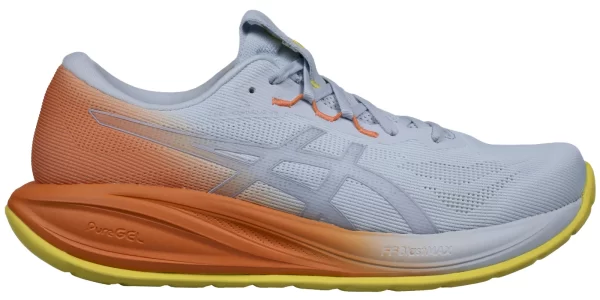
- Flytefoam Blast Max midsole → provides everyday comfort.
- Mildly cupped sidewalls → seats the foot for stability.
- Secure, true-to-size upper → locks the foot over the midsole.
🔍 Deep Dive
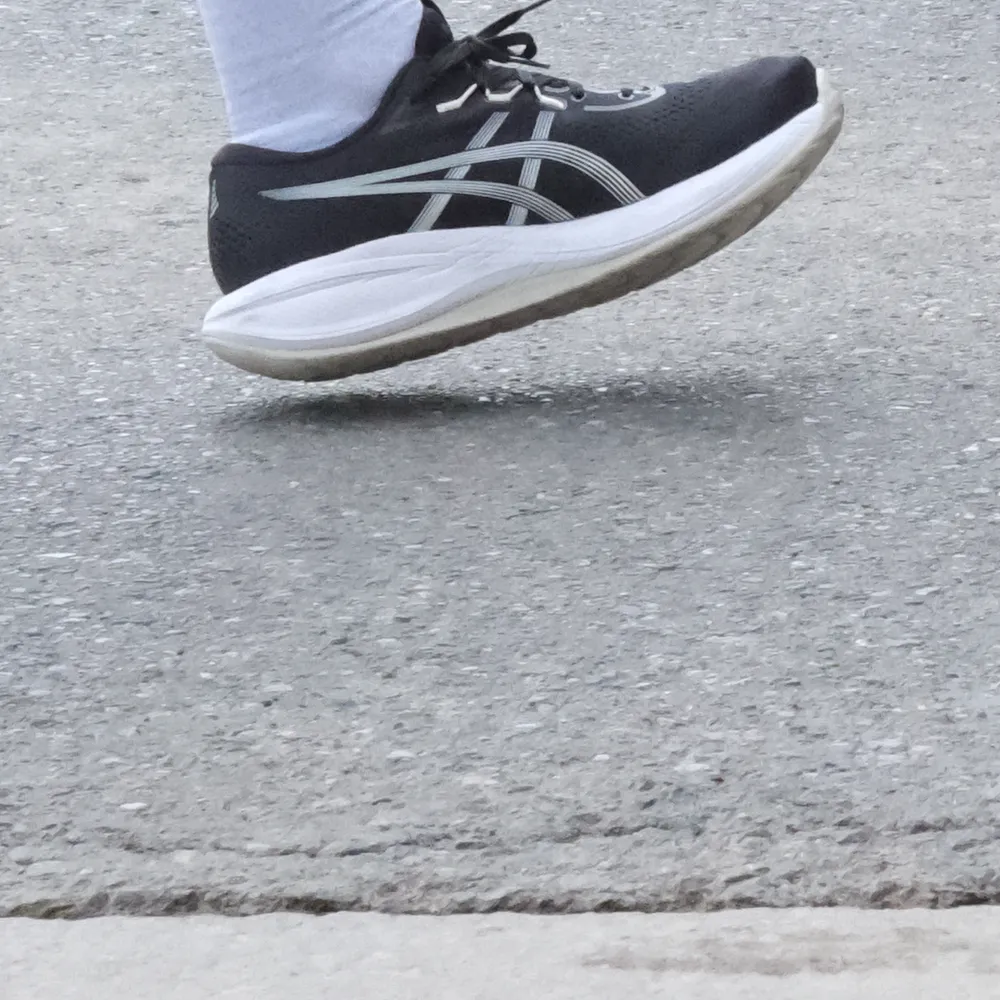
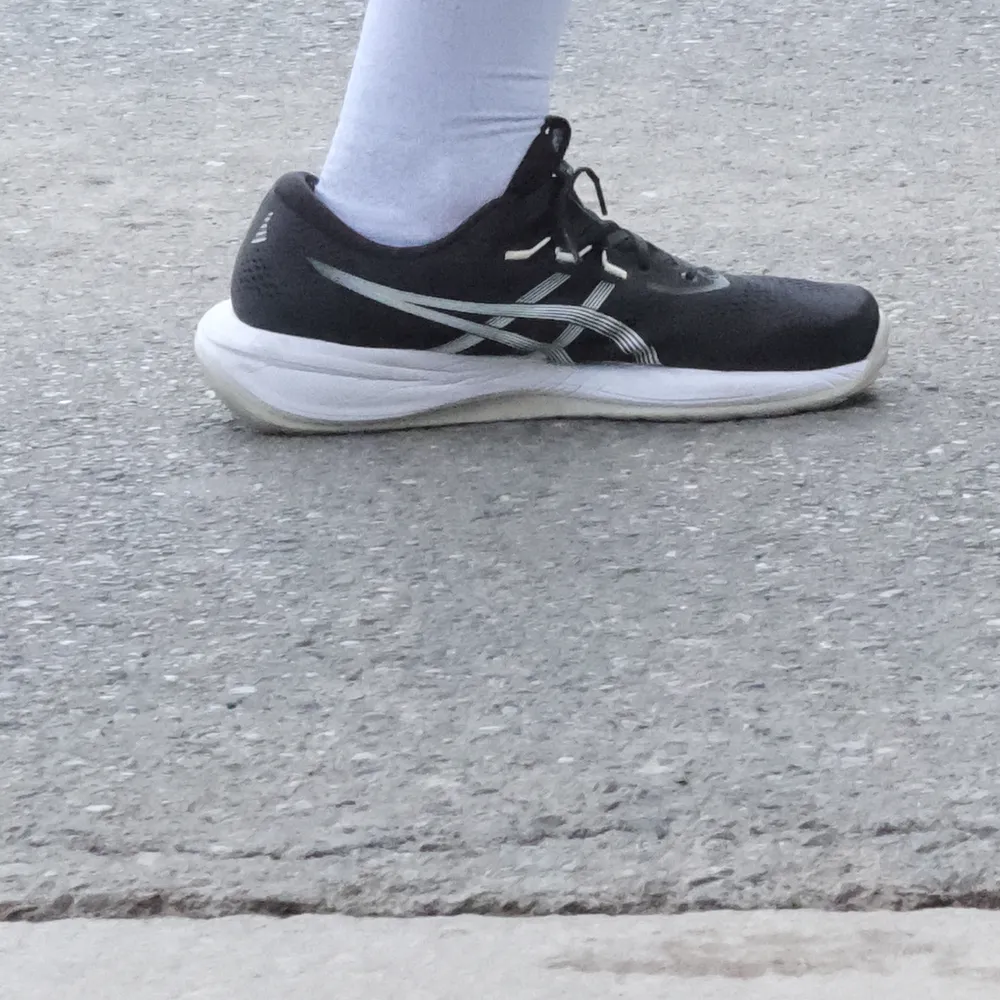
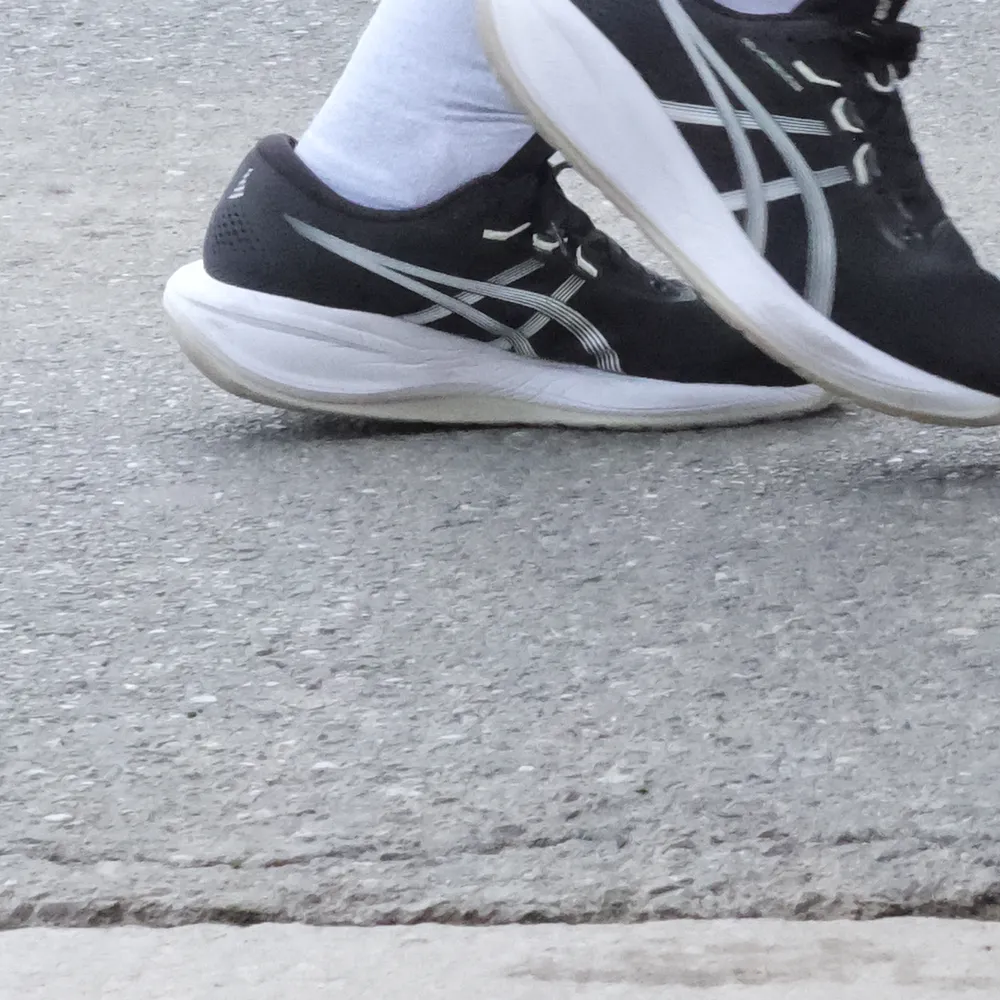
The Asics Cumulus 28 is like a breath of fresh air in a world full of ultra-soft and unstable running shoes. Its versatile character isn’t the result of a springy foam material, a carbon plate, or an aggressive rocker – because the Cumulus has none of those. This shoe sticks to the basics, offering a cushioned ride that also offers support when needed. At the same time, it’s comfortable enough for a marathon. The no-nonsense upper secures the foot without pressure hotspots or excessive tightness. Sure, this is a running shoe where the foot has to do most of the work, but that’s also what makes the Cumulus a safe pick for most runners, heavy runners included.
Pros
- Supportive comfort, wide base
- Forefoot and midfoot strike friendly
- Exposed under heel/forefoot areas for support
- Secure, true to size fit
- Optional widths
Cons
- Average grip in wet conditions.
- Heel pull loop (from the 27) removed
Other daily trainers for heavy runners
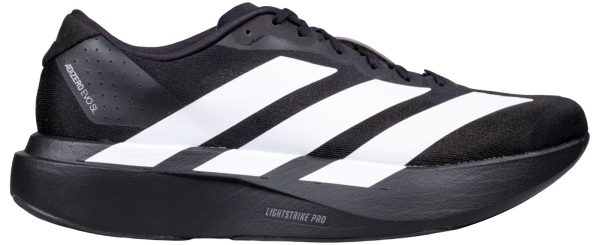
adidas EVO SL
A superfoam trainer for quicker runs.
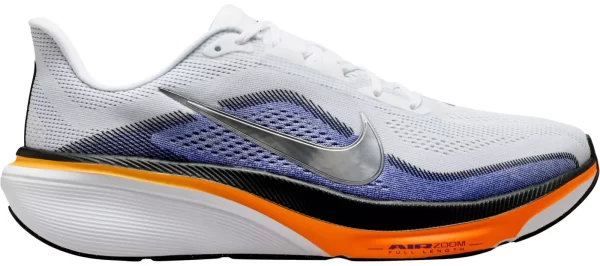
Nike Pegasus 42
For a stiffer ride than the Cumulus.
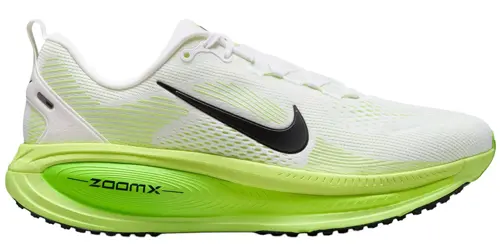
Nike Vomero 18
Offers more cushioning and better rocker performance vs. the Cumulus
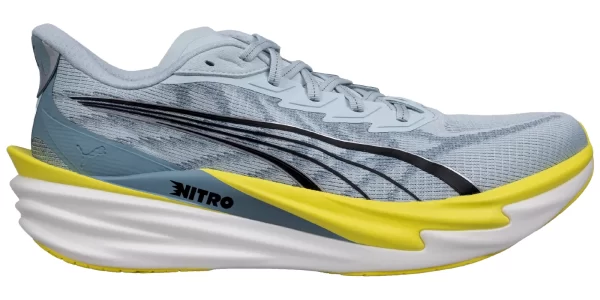
Puma Deviate Nitro 4
A plated trainer capable of high speeds and heavy loads.
Fit Notes
True to size with a secure fit. No surprises or gotchas. Optional widths available.
Gallery
Specs
- Heel stack: 40 mm
- Forefoot stack: 32 mm
- Drop: 8 mm
- Weight: 9.0 oz / 255 gms
- Widths: Regular, wide.
- Midsole: Flytefoam Blast Max.
- Insole: Soft blown foam, removable.
Why it works (the basics)
- Glass-fiber-infused Speedboard plate → prevents midsole sink
- Wide midsole platform → stabilizes high-impact loading
- Deep under-heel groove → keeps the weight centered
- Raised rear midsole walls → ‘cup’ and support the foot
🔍 Deep Dive
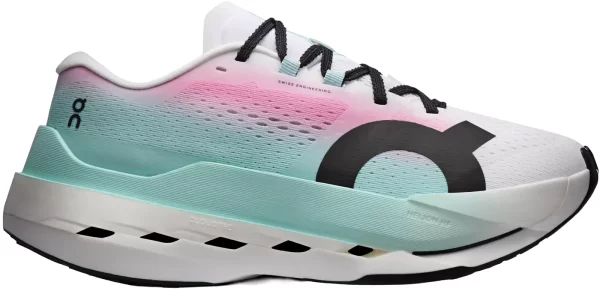
If you weigh more than 190 lbs/86 kgs, the On Cloudboom Max delivers the stability and cushioning comfort that heavy runners need. The Cloudboom Max’s midsole stack heights (40 mm, 32 mm) deliver marathon-friendly max-comfort without compromising stability. The shoe owes its relatively high levels of support (by super-shoe standards) to four distinct features – a true full-length plate, a wide platform, an under-heel channel, and raised midsole sidewalls.
The glass-fiber-infused plate covers the whole midsole length between the toe box and heel edge. It doesn’t have a 100% solid shape, as it’s cut in a horseshoe shape under the rearfoot for softer landings. In the front, the glass-fiber-infused plate has a split-toe geometry for more control during toe-offs. Also, the Cloudboom Max has the widest midsole among all plated super-shoes, and its dual-density construction also features a firmer base. A deep transition channel centers the weight, and the raised midsole walls ‘cup’ and seat the foot. Outsole coverage is generous under the forefoot and heel, a relative rarity in this segment due to weight targets. On uppers have always looked and felt good, so the Cloudboom Max is no exception, securing the foot in a plush and true-to-size environment. You won’t get additional widths, though.
Pros
- Load-bearing full-length plate
- Wide midsole platform for support
- Functional under-foot comfort
- Supportive raised sidewalls
- Generous outsole coverage for durability
- Under-heel groove enhances softness
Cons
- Heavy by super-shoe standards
- Lack of widths
Other 10K and marathon shoes for heavy runners
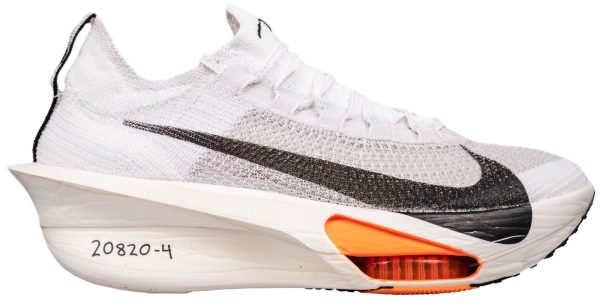
Nike Alphafly 3
For forefoot and midfoot striking heavy runners.
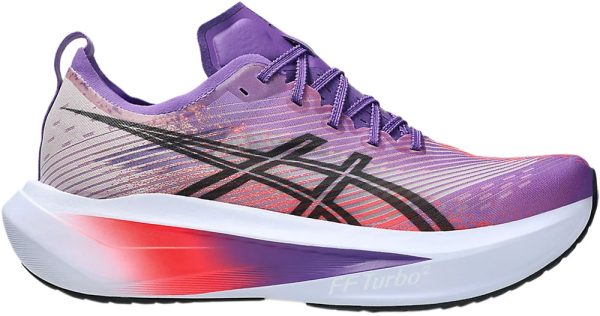
Asics Megablast
If you don't care for a plate.
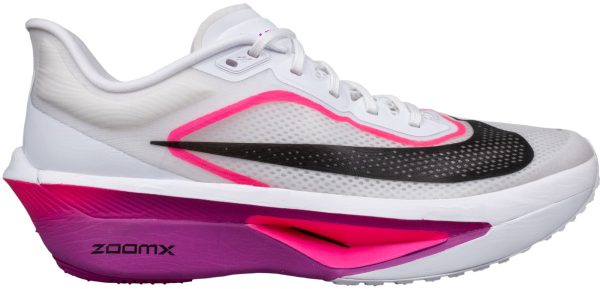
Nike Zoom Fly 6
Delivers a softer ride than the Mach X3.

Adidas Prime X3
Has many plates and regulation-busting stack heights.
Fit Notes
Fits true to size. Accommodating forefoot and wide toe box. Excellent upper finishing, soft interiors. Single width only.
Specs
- Heel stack: 40 mm
- Forefoot stack: 32 mm
- Drop: 8 mm
- Weight: 10.4 oz / 296 gms
- Widths: Regular (single)
- Midsole: Dual-density Helion HF Hyper, glass fiber-infused plate
- Insole: Molded, removable
Why it works (the basics)
- Firmer DNA-Tuned forefoot → helps with stability and transitions.
- Softer heel foam → produces supportive cushioning.
- Ribbed outsole lugs → delivers multi-surface traction.
- Ultra-plush and secure upper → creates true-to-size interiors.
- Nitrogen-infused EVA foam → resists bottoming during peak vertical loads.
🔍 Deep Dive
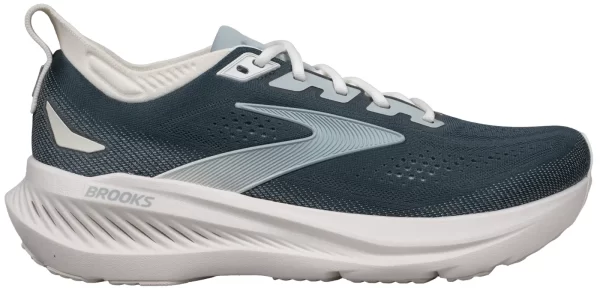
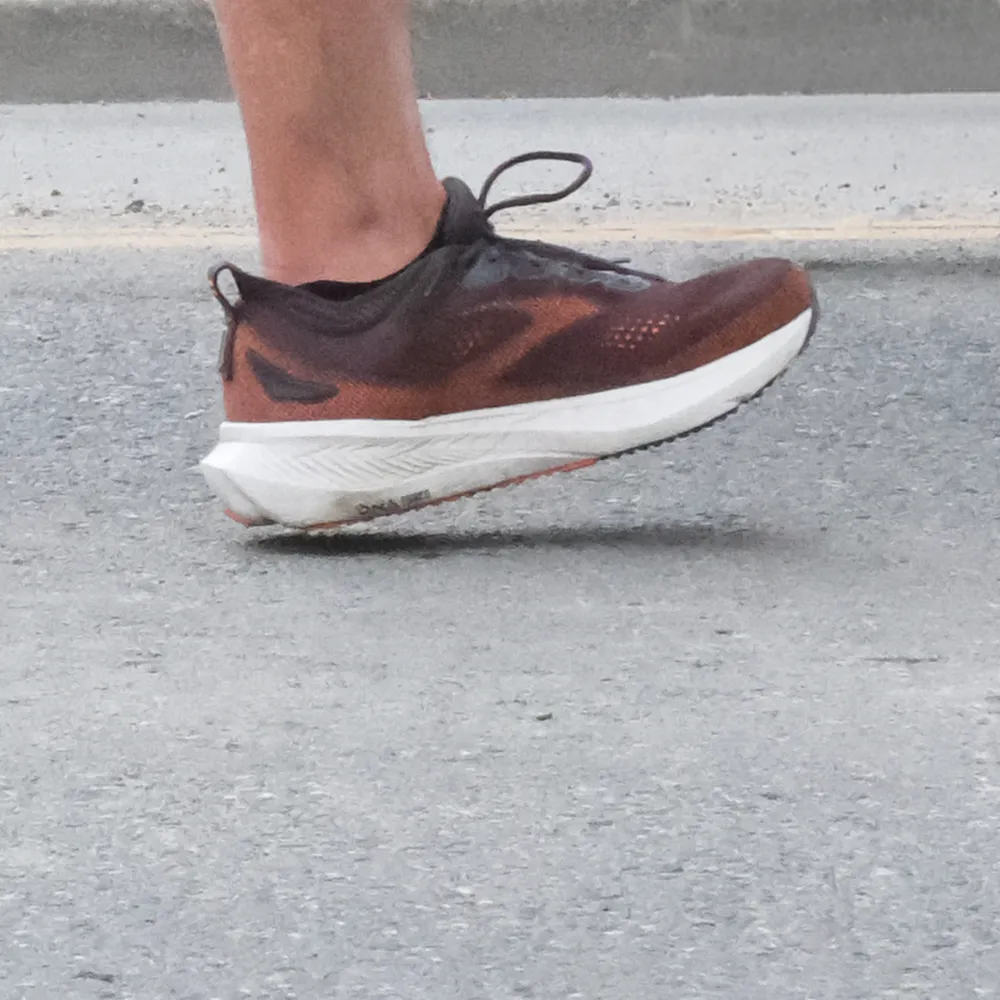
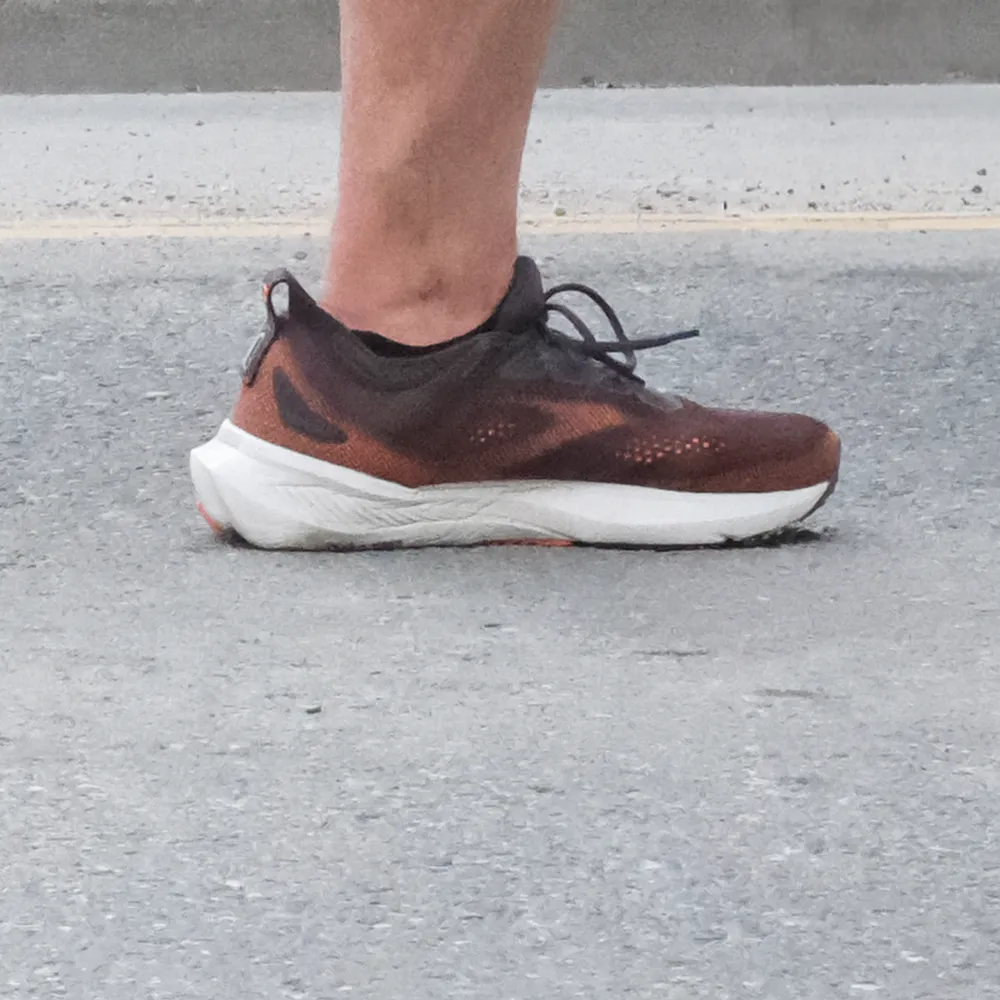
If you’re a heavy runner, a cushioned trainer like the Glycerin 23 is a much safer choice than taller and softer shoes like the Nike Vomero Plus or Hoka Bondi 9. The nitrogen-infused EVA foam midsole is more resistant to bottoming out under heavy loads. The other feature unique to the Glycerin series is its DNA Tuned midsole design. The forefoot uses a firmer (smaller-celled) foam, while the rear is relatively softer because of the larger-celled foam structure. The firmer forefoot adds stability and transition efficiency; the softer heel makes rearfoot landings comfortable. The secure upper has one of the plushest interiors we’ve experienced in 2026. The only use case where we don’t recommend the Glycerin 23 is for an oversupinated gait; the laser-cut openings on the lateral side create a cushioning bias towards the outer side.
Pros
- Nitrogen-infused EVA foam resists bottoming.
- Firmer forefoot supports heavy loads.
- Extremely plush upper.
- Excellent outsole grip.
- Choice of wide and extra-wide.
Cons
- Upper runs warm.
- Lacks stability for oversupinators
Other recovery trainers for heavy runners
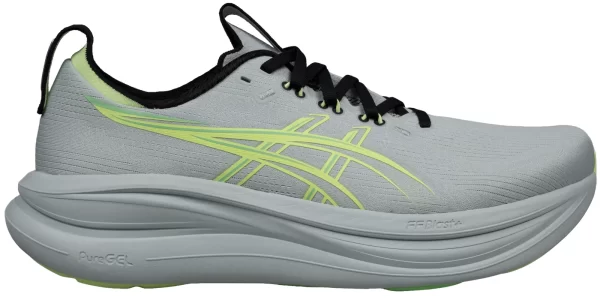
Asics Nimbus 28
Similar to the Glycerin, but without the DNA-Tuned midsole.
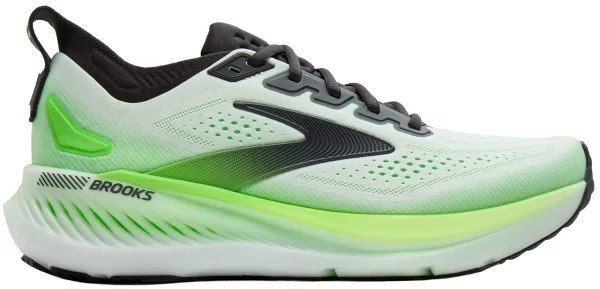
Brooks Glycerin GTS 23
Except for the raised 'Guiderail', it's the same shoe as the standard Glycerin 23.
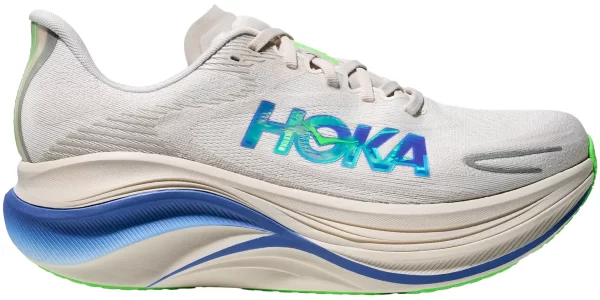
Hoka Skyward X2
Delivers max-cushioning with a transition-assisting plate.
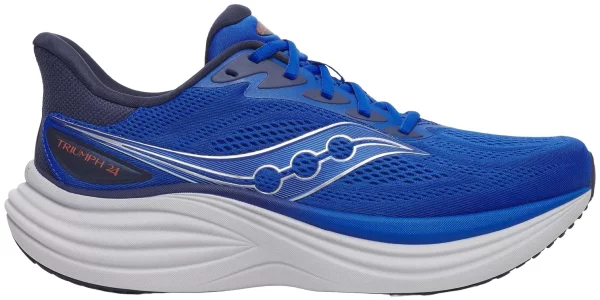
Saucony Triumph 24
For a softer ride and higher level of step-in comfort.
Fit Notes
True to size. Accommodating toe-box, snug forefoot. Superb interior plushness. Runs warm.
Gallery
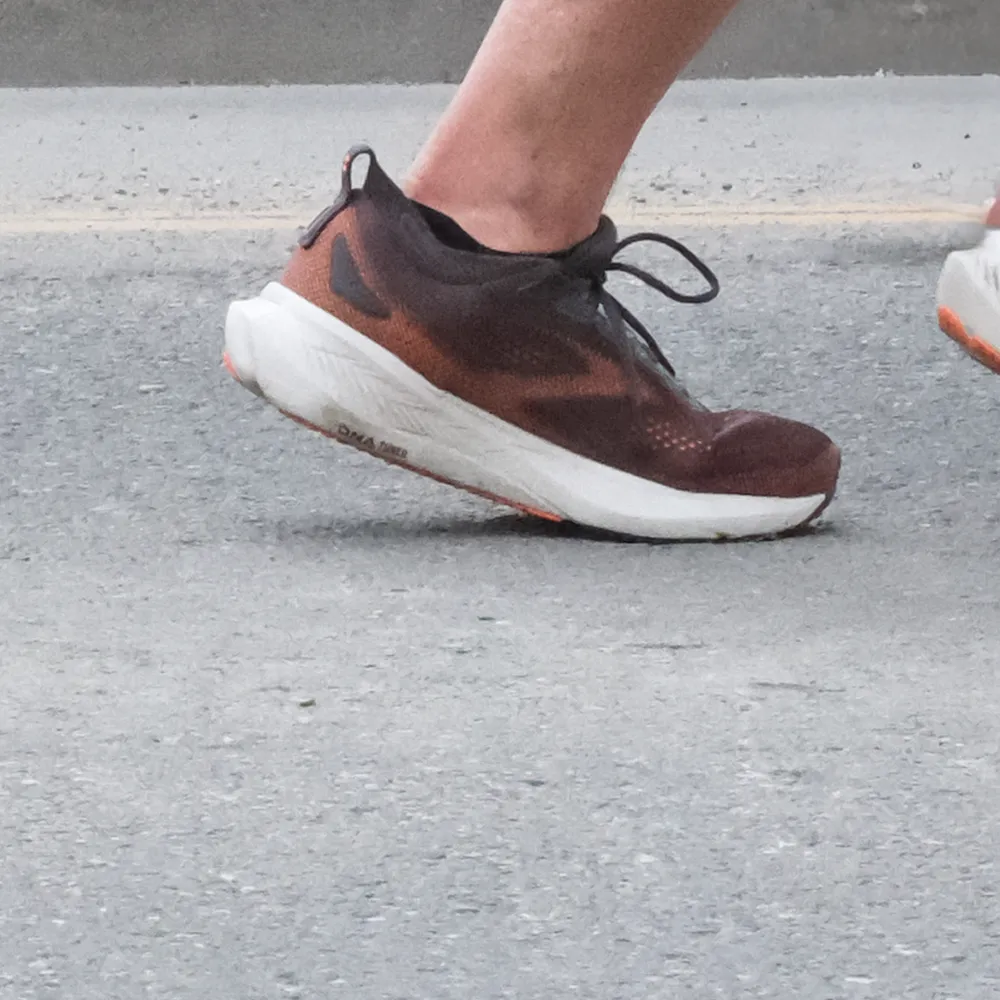
Specs
- Heel stack: 38 mm
- Forefoot stack: 30 mm
- Drop: 8 mm
- Weight: 10.6 oz / 300 gms
- Widths: Regular, wide, extra-wide.
- Midsole: Dual-density DNA Tuned foam.
- Insole: Molded, removable.
Why it works (the basics)
- Dual-density midsole → is collapse resistant
- Ultra-firm ride → supports heavy runners
- Wide midsole base → produces stable landings
- Secure, true-to-size fit → stabilizes foot over midsole
🔍 Deep Dive
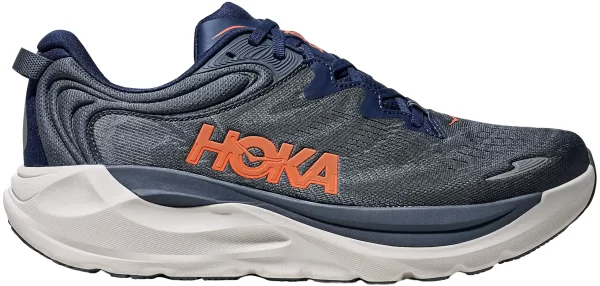
Hoka claims the Gaviota 6 will “prevent excessive inward roll”. That’s not true; no running shoe will prevent overpronation. We prefer to use the term ‘pronation resistance’, as it’s a more appropriate description. What it actually means is that the midsole is designed to resist excessive compression, or that it should not collapse when the arch loads over it. That’s something that the Gaviota’s dual-density midsole does fairly well, packaged with 38 mm and 32 mm stack heights and a secure upper. Unlike the Bondi 9 and Clifton 10, the Gaviota has a firm ride – exactly what makes it suitable for heavy overpronators.
Pros
- Collapse resistant midsole
- Wide, supportive base
- Plush interior, secure fit.
- Multiple widths.
Cons
- Runs slightly warm
- Inconsistent (shorter) fit than V5
Other shoes for overpronating heavy runners
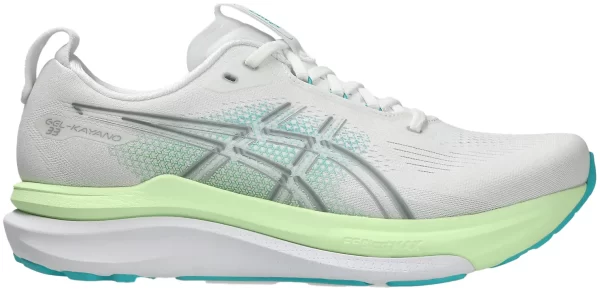
Asics Kayano 33
For a softer ride than the Gaviota

Nike Structure Plus
A wide platform with a 10 mm drop.
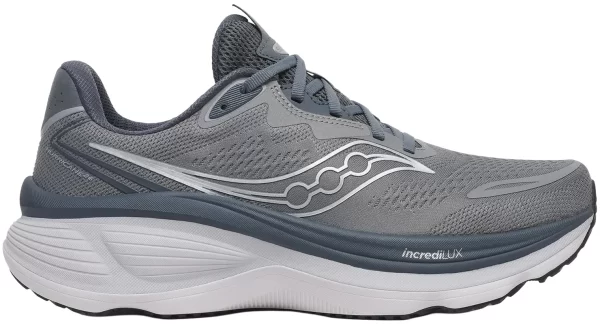
Saucony Hurricane 26
Offers a cupping action for cushioned stability.

Saucony Omni ST 23
If you rather prefer a traditional medial post
Fit Notes
True to size; fits shorter than the Gaviota 5 due to the increased heel collar padding. Runs a bit warm. Wide and extra-wide sizes also available.
Gallery


Specs
- Heel stack: 40 mm
- Forefoot stack: 32 mm
- Drop: 8 mm
- Weight: 10.25 oz / 291 gms
- Widths: Regular, wide, extra-wide.
- Midsole: Compression molded EVA.
- Insole: Molded, removable.